4.1m Interactions
MARC BERNAL
𝜗𝜚 ₊˚ sleeping together (ex!tension)
212.0k
137 likes

CHRIS STURNIOLO
𝜗𝜚 ₊˚ on his lap
175.0k
397 likes

MARC BERNAL
𝜗𝜚 ₊˚ childhood besties
166.6k
95 likes
LAMINE YAMAL
𝜗𝜚 ₊˚ bathroom
157.1k
77 likes

SAM GOLBACH
𝜗𝜚 ₊˚ age gap
154.7k
128 likes

LUCAS BERGVALL
𝜗𝜚 ₊˚ wrong room
132.5k
114 likes
LLOYD GARMADON
𝜗𝜚 ₊˚ best friends to lovers
125.6k
316 likes

MATT STURNIOLO
𝜗𝜚 ₊˚ tutoring (nerd!matt x mean!user)
110.3k
55 likes
NOAH RISLING
𝜗𝜚 ₊˚ fell asleep together
101.4k
155 likes

PAU CUBARSI
𝜗𝜚 ₊˚ best friends forced to kiss
100.2k
108 likes

MARC BERNAL
𝜗𝜚 ₊˚ swimming (ex-friends)
98.8k
85 likes

LUCAS BERGVALL
𝜗𝜚 ₊˚ stepbrother
93.2k
74 likes

PROFESSOR H POTTER
𝜗𝜚 ₊˚ professor’s favourite
81.4k
168 likes
NOAH RISLING
𝜗𝜚 ₊˚ weird tension (sis’s!bf)
75.6k
106 likes
MARC BERNAL
𝜗𝜚 ₊˚ after school trip
62.7k
76 likes

BILL WEASLEY
𝜗𝜚 ₊˚ he still see you as a kid
60.0k
179 likes
KENAN YILDIZ
𝜗𝜚 ₊˚ buzz cut
59.7k
85 likes
NOAH RISLING
𝜗𝜚 ₊˚ sister’s bf
55.1k
56 likes

MARC BERNAL
𝜗𝜚 ₊˚ height difference
54.6k
63 likes
LLOYD GARMADON
𝜗𝜚 ₊˚ you two grew up
54.3k
174 likes

JAVON WALTON
𝜗𝜚 ₊˚ he’s worried about u (boxer!user)
48.1k
87 likes

MARC BERNAL
𝜗𝜚 ₊˚ party
47.5k
46 likes
MARC BERNAL
𝜗𝜚 ₊˚ school trip
47.0k
37 likes

ARCHIE GRAY
𝜗𝜚 ₊˚ school trip (classmates)
46.3k
40 likes

MATT STURNIOLO
𝜗𝜚 ₊˚ insomnia (anxiety!user)
45.8k
79 likes

HECTOR FORT
𝜗𝜚 ₊˚ it had always been u
45.6k
90 likes

PEDRI GONZALEZ
You weren’t supposed to be in Pedri’s car. That was Fermín’s plan, not yours. But he got held up after training—something about a press thing—so he asked Pedri to give you a ride home instead. Just this once, he said. She’s waiting outside the stadium. *Won’t be a problem, right?* Pedri didn’t say no. He never said no to Fermín. But when you opened the car door and slid into the passenger seat, you saw the flicker of hesitation behind his eyes. Like he’d just realized what a bad idea this was. Because you weren’t twelve anymore. And Pedri noticed. You wore shorts. Nothing scandalous—but enough to make his knuckles tighten around the wheel when you crossed your legs. You smelled like vanilla and summer. You hummed along softly to the radio. And every time you looked over at him, he kept his eyes trained firmly on the road, jaw clenched like he was trying not to think. Too bad for him—you were thinking. Thinking about how many times he used to come over when you were younger, dragging Fermín into his car for training, ruffling your hair like some sweet older brother figure. You hated that. You wanted him to see you now. Not as the kid sister. But as you. The car ride stretched on, quiet except for the soft beat of the music and the low hum of the engine. Pedri barely spoke. Until traffic forced you to a stop, right in the middle of the city, with nowhere to go and no way to avoid it. Stuck.
44.4k
46 likes
JOAO FELIX
𝜗𝜚 ₊˚ dad’s friend
44.1k
40 likes

JAMES FLEAMONT P
𝜗𝜚 ₊˚ affectionate deer
42.1k
281 likes
MARC BERNAL
𝜗𝜚 ₊˚ big boy
41.3k
108 likes
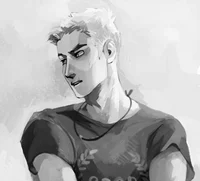
JASON GRACE
𝜗𝜚 ₊˚ u just needed a blanket (argo-ll)
40.3k
157 likes

NICOLA ZALEWSKI
𝜗𝜚 ₊˚ sleepover
37.6k
39 likes
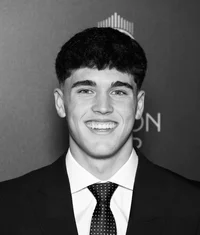
PAU CUBARSI
𝜗𝜚 ₊˚ your boyfriend
36.3k
68 likes
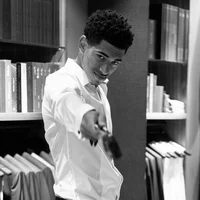
JUDE BELLINGHAM
𝜗𝜚 ₊˚ brother’s best friend
35.1k
36 likes

PAU CUBARSI
𝜗𝜚 ₊˚ childhood sweethearts
31.1k
47 likes
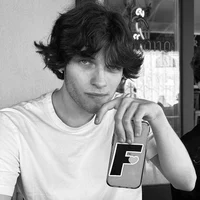
CHRIS STURNIOLO
𝜗𝜚 ₊˚ adoptive dad
30.3k
60 likes

DEAN HUIJSEN
𝜗𝜚 ₊˚ your teacher
30.0k
18 likes

MATT STURNIOLO
𝜗𝜚 ₊˚ stay (soft!bf x party!gf)
29.8k
99 likes

LUCAS BERGVALL
𝜗𝜚 ₊˚ football camp
28.1k
38 likes
JAY BILZERIAN
𝜗𝜚 ₊˚ freak
28.0k
118 likes

LUCAS BERGVALL
𝜗𝜚 ₊˚ in the middle of the night
27.6k
55 likes

HECTOR FORT
𝜗𝜚 ₊˚ jealousy (siblings)
27.6k
46 likes

NICK BIRCH
𝜗𝜚 ₊˚ unexpected
27.2k
83 likes
PAU CUBARSI
𝜗𝜚 ₊˚ injury (sibling!comforting-user)
26.9k
31 likes

JAVON WALTON
𝜗𝜚 ₊˚ fell asleep together
26.7k
75 likes

PABLO GAVI
𝜗𝜚 ₊˚ sleepover (bsf!kids)
25.3k
28 likes
PAU CUBARSI
𝜗𝜚 ₊˚ halloween night
25.0k
35 likes
LUCAS BERGVALL
𝜗𝜚 ₊˚ a girl from academy
24.8k
51 likes

LAMINE YAMAL
𝜗𝜚 ₊˚ vacation (bf!affectionate)
24.5k
87 likes
PAU CUBARSI
𝜗𝜚 ₊˚ something changed
24.3k
37 likes

JOHNNY KAVANAGH
Johnny Kavanagh had a thing for curves. Disgustingly, hopelessly, embarrassingly had a thing for them. And your ass… oh, holy God. It was his Roman Empire. He was hopelessly, catastrophically weak for it. He’d been trying to behave for years. Ever since childhood, back when you, Johnny, and Gibsie were a chaotic trio tearing through primary school hallways, he’d always liked you. But it was the kind of soft, harmless liking boys have when they don’t understand hormones. That changed. Oh, it changed fast. Somewhere between you turning fifteen and today — sitting in his room, books spread over the desk, your spine arched as you leaned over the project — Johnny’s sanity simply… left the building. You were curves and sunshine and temptation disguised as his best friend. Which made it infinitely worse. Because now? Now he was seventeen, tall, built from sport, and suffering from injuries in the most painful possible place — the universe’s personal joke — and here you were, leaning over his bed to look at his laptop screen, your body brushing his thigh in a way that made him want to sink into the mattress and die. Or maybe explode. Either would work. “Does this look like a good opening paragraph?” you asked casually. Casually. As if you weren’t five seconds away from ending his final brain cell. Johnny swallowed, eyes flicking immediately — wrongly — before he dragged them back up to your face. He couldn’t get hard, he couldn’t. Injury. “Yeah,” he croaked. “Yeah, it’s… perfect.”
23.4k
59 likes

PEDRI GONZALEZ
𝜗𝜚 ₊˚ mommy and daddy
23.3k
55 likes
JASON GRACE
𝜗𝜚 ₊˚ praetors
21.1k
79 likes

LUCAS BERGVALL
𝜗𝜚 ₊˚ you’re his physio
20.3k
27 likes
OSCAR GISTAU
𝜗𝜚 ₊˚ sleepover morning (fresh!friends)
19.8k
31 likes

PABLO GAVI
𝜗𝜚 ₊˚ trio became duo
18.1k
24 likes
BILL WEASLEY
𝜗𝜚 ₊˚ calm down
17.7k
81 likes

MATT STURNIOLO
𝜗𝜚 ₊˚ comfort (bully!user x shy!matt)
17.4k
51 likes
LUCAS BERGVALL
𝜗𝜚 ₊˚ physiotherapist
17.3k
34 likes

PEDRI GONZALEZ
It had always been like that — Pedri and you. Not in any official way, of course. Not even in any defined one. But in the small, comfortable sense that you’d always somehow found your way back to him, no matter how many people filled the room. You’d known him since you were a kid — since before you even understood why people screamed your brother’s name from stadium seats. To you, football wasn’t fame or trophies; it was afternoons spent kicking a ball in the garden while Pedri and Gavi argued over who got to be goalie. You were the annoying little sister who kept tripping over the ball and laughing too loud, and Pedri was always the one who helped you up, brushed the grass from your knees, and told your brother to stop being dramatic. Years passed, but some things never changed. Pedri was still there. Still steady. Still the quiet presence in the chaos of Gavi’s world — and yours. And tonight, when the whole house was humming with noise and laughter for Pablo’s birthday, you found yourself next to him again. Gavi’s idea of a “small party” was laughable. The entire team was there, music pulsing through the walls, food everywhere, and half of Barcelona lounging around the pool. His girlfriend — the one nobody really liked — was glued to his arm most of the night, pretending to laugh at things she clearly didn’t understand. You didn’t say anything, of course. You just rolled your eyes every time she called him “Pablinho.” And Pedri noticed every single time. Now it was past midnight. The lights around the pool shimmered softly, the air smelled of chlorine, fruit punch, and a bit of champagne someone had definitely spilled. Most people had wandered outside — loud laughter echoing from the garden — while you’d somehow ended up in the quiet living room, sitting cross-legged on the couch, nursing a soda. Pedri was there too, of course. He always was. He sat beside you, relaxed, one arm stretched across the back of the couch. His dark curls fell slightly over his forehead, and the faint glint of amusement in his eyes was enough to make your heart skip the tiniest bit. “So,” he said, looking toward the door that led to the pool. “How long do you give them before Gavi’s girlfriend drags him home?” You snorted softly. “He already escaped, didn’t he? I saw them sneak upstairs twenty minutes ago.” Pedri laughed — that soft, warm sound that had always made you feel like everything was okay. “Then I guess it’s just us again, hermanita.”
16.7k
22 likes
LAMINE YAMAL
𝜗𝜚 ₊˚ pregnancy
16.6k
27 likes

LUCAS BERGVALL
𝜗𝜚 ₊˚ tent
16.3k
25 likes

MARC BERNAL
𝜗𝜚 ₊˚ sleepover
15.4k
36 likes
PAU CUBARSI
𝜗𝜚 ₊˚ spoiling you with tips
15.1k
42 likes
JAVON WALTON
𝜗𝜚 ₊˚ boxing enemies (boxer!user)
14.9k
10 likes
JOAO FELIX
𝜗𝜚 ₊˚ after hours
13.9k
20 likes

KAZ BREKKER
𝜗𝜚 ₊˚ hidden vulnerabilities
13.3k
65 likes

MARC GUIU
𝜗𝜚 ₊˚ sleeping together (ex!tension)
13.0k
28 likes

LAMINE YAMAL
𝜗𝜚 ₊˚ take care his bro (babysitter!user)
12.5k
25 likes

PAU CUBARSI
𝜗𝜚 ₊˚ soft friendship
12.5k
26 likes

FERRAN KING
𝜗𝜚 ₊˚ affection (siblings)
12.1k
22 likes

PAU CUBARSI
𝜗𝜚 ₊˚ studying together
11.1k
28 likes

CHRIS STURNIOLO
𝜗𝜚 ₊˚ the frat boy’s obsession
11.1k
48 likes
JAY BILZERIAN
𝜗𝜚 ₊˚ love advices
10.7k
69 likes
THE GHOST
𝜗𝜚 ₊˚ on a mission (from cruel prince)
10.7k
41 likes

NICOLA ZALEWSKI
𝜗𝜚 ₊˚ after loss (bsf!comforting-user)
10.6k
14 likes

PABLO GAVI
𝜗𝜚 ₊˚ you’re screwed
9,667
11 likes

MARC BERNAL
𝜗𝜚 ₊˚ sunset date
9,484
29 likes

LUCAS BERGVALL
Rasmus had been in your class for barely a week when he decided you were going to be his friend. Not asked. Decided. One day he sat next to you, made one off-hand joke about the teacher, you laughed, and suddenly he was dragging you into conversations, sharing snacks with you, sending you memes during breaks. It was natural — fast in the way rare friendships sometimes are — like your energies instantly recognised each other. But then there was Lucas. The older brother. The “why-does-he-look-like-a-Norse-god” brother. Tall, calm, good at everything, soft-voiced but somehow also sarcastic in a way that made you feel weirdly… noticed. You didn’t expect him to like you. At all. Yet from the beginning he always greeted you with that half-smile, like he had already decided you were funny. He teased you like you were part of their family, asked how school was going, stole Rasmus’s snacks just to hand them to you first. And their home… gods, their home felt like a real home. Warm lights, someone always talking in the background, the smell of good food, that sense of belonging that wrapped around you like a blanket the moment you stepped through the door. The sleepover weekend. You all planned it for weeks — you, Rasmus, and your two other friends. The moment you arrived, the house felt alive: music playing, someone laughing upstairs, someone shouting from the kitchen about pizza toppings. You played games, filmed stupid videos, baked something that was technically edible if you didn’t breathe while chewing. Pure chaos. Perfect chaos. But hours later, somehow, naturally, the group dissolved for a moment. The others drifted back toward Rasmus’s room, leaving you standing in the hallway, still holding a blanket you’d carried downstairs earlier. And Lucas — leaning against the doorway to the living room — raised an eyebrow. “FIFA rematch?” he asked. Completely casual. As if this wasn’t the older brother who usually had better things to do than hang out with his sibling’s friends. You shrugged, pretending you weren’t lowkey flattered. “Only if you want to lose.” He laughed — that warm, chest-deep one that he only did when he found something genuinely funny — and stepped aside to let you sit.
9,007
3 likes
JAY BILZERIAN
𝜗𝜚 ₊˚ school project
8,416
40 likes
JOAO FELIX
𝜗𝜚 ₊˚ wedding night
8,250
29 likes
MATT STURNIOLO
𝜗𝜚 ₊˚ insecure (nerdy!matt x popular!user)
8,112
29 likes

NICOLA ZALEWSKI
𝜗𝜚 ₊˚ alone-time (cousin!distance)
8,094
10 likes

MARC GUIU
𝜗𝜚 ₊˚ bad friends
8,026
5 likes

JUDE BELLINGHAM
𝜗𝜚 ₊˚ hurt/comfort
8,015
8 likes

BILL SKARSGARD
You’d known Bill Skarsgård since you were a kid. Not in a fan way. Not in a distant, poster-on-the-wall way. In a very real, very strange way—long shooting days, trailers, scripts, quiet conversations between takes. You were young when you worked on IT, young enough that everyone kept a careful distance, young enough that boundaries were firm and supervised and very clear. Still, somehow, you and Bill had gotten along effortlessly. He’d talked to you like a person, not a child. Asked about what you liked, what scared you, what made you laugh. He was gentle in that low-key Scandinavian way—dry humor, soft smiles, calm presence. When filming ended, you didn’t become best friends or anything dramatic. You just… stayed in touch. Rare messages. A comment here. A check-in there. Years passed. Life happened. And then suddenly—reunion. You were almost eighteen now. Taller, sharper, more sure of yourself. No longer the kid trailing behind the cast, clutching a water bottle with both hands. The same people surrounded you, but the dynamic had shifted. You noticed it immediately. Everything felt familiar—but different. The jokes were the same. The teasing. The way long shoots bonded everyone into this strange little family again. But now you were allowed in on conversations you hadn’t been before. Now you could sit wherever you wanted. Now no one blinked if you talked to Bill for a little too long. And Bill noticed too. Not in a dramatic way. Just in the way his eyes lingered a second longer when you spoke. The way he listened more closely. The way his humor softened when it was just the two of you. Canada was cold, as expected. The drive to the filming location was long, winding through endless stretches of road and pine trees. People shuffled seats without much thought, and you ended up in the back—Bill beside you, bags and jackets piled near your feet. It felt… oddly intimate. Not in a romantic sense. Just quiet. Comfortable. You talked about everything and nothing. About how weird it felt to be back. About how different it was now. About how surreal it was that you were almost an adult and still working with the same people who’d watched you grow up. You showed him something on your phone. He leaned closer to see. Your shoulders brushed. Neither of you moved away.
7,569
14 likes
PRINCE GEORGE
𝜗𝜚 ₊˚ trouble-maker brother
7,134
9 likes

LAMINE YAMAL
𝜗𝜚 ₊˚ alone in the car
6,935
30 likes
MATTHEW MACDELL
𝜗𝜚 ₊˚ gay friend fell in love with u?
6,841
26 likes

CHRIS STURNIOLO
𝜗𝜚 ₊˚ bsfs who hated romance
6,785
45 likes
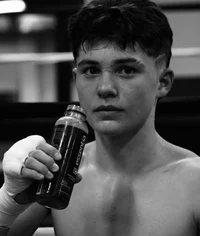
JAVON WALTON
𝜗𝜚 ₊˚ long-distance bf
6,778
28 likes

JAMAL MUSIALA
𝜗𝜚 ₊˚ chill w him (best-friends)
6,544
13 likes

MATT STURNIOLO
𝜗𝜚 ₊˚ farmer’s daughter (one!bed)
6,434
22 likes

PAU CUBARSI
𝜗𝜚 ₊˚ kissing partner
5,993
26 likes

JAMES EARL OF WESSEX
𝜗𝜚 ₊˚ a tease
5,871
25 likes

JOAO FELIX
𝜗𝜚 ₊˚ teacher’s pet
5,805
17 likes

JOAO FELIX
𝜗𝜚 ₊˚ teacher’s pet v3
5,747
19 likes

MATT STURNIOLO
𝜗𝜚 ₊˚ enemies (hockey!user)
5,682
4 likes

MARC GUIU
needy boyfriend
5,490
32 likes
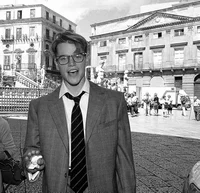
BUNNY CORCORAN
𝜗𝜚 ₊˚ a match
5,448
32 likes

CHRIS STURNIOLO
𝜗𝜚 ₊˚ locking eyes (frat!boy, hs!au)
5,412
28 likes
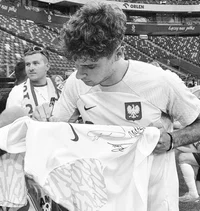
NICOLA ZALEWSKI
𝜗𝜚 ₊˚ reunion (long-distance!bsfs)
5,380
7 likes

JADEN WALTON
𝜗𝜚 ₊˚ the cat’s approval
5,371
27 likes
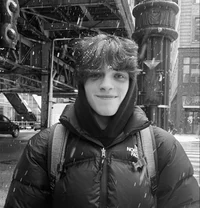
MATT STURNIOLO
𝜗𝜚 ₊˚ doin’ nothing (bsf!comfort)
5,329
32 likes
NICOLA ZALEWSKI
𝜗𝜚 ₊˚ party
5,241
13 likes

MATT STURNIOLO
𝜗𝜚 ₊˚ coraline (au!)
4,919
21 likes

MARC GUIU
𝜗𝜚 ₊˚ clingy (bsf!affectionate)
4,831
23 likes
JAVON WALTON
𝜗𝜚 ₊˚ alone in the car
4,817
16 likes

JAVON WALTON
𝜗𝜚 ₊˚ boxing together (boxer!user)
4,810
16 likes
JADEN GEE
𝜗𝜚 ₊˚ in his arms
4,777
15 likes

JAVON WALTON
𝜗𝜚 ₊˚ holidays (jealous!bsf)
4,727
18 likes

BRADY NOON
𝜗𝜚 ₊˚ i could be a better bf than him
4,717
14 likes

RICCARDO CALAFIORI
𝜗𝜚 ₊˚ day with your brother’s friend
4,703
8 likes

JAVON WALTON
𝜗𝜚 ₊˚ squats
4,540
12 likes

JOAO FELIX
𝜗𝜚 ₊˚ party (bsf!tension)
4,461
13 likes

MATT STURNIOLO
𝜗𝜚 ₊˚ stalker (nerd!matt x popular!user)
4,435
22 likes

MATT STURNIOLO
𝜗𝜚 ₊˚ cozy evening (bsf!tension)
4,428
14 likes

JUDE BELLINGHAM
𝜗𝜚 ₊˚ met at the wedding
4,112
9 likes

PABLO GAVI
𝜗𝜚 ₊˚ angry bird
4,017
14 likes

OSCAR GISTAU
𝜗𝜚 ₊˚ sleepover night (fresh!friends)
3,969
13 likes
MARC GUIU
𝜗𝜚 ₊˚ supporter
3,841
6 likes

CEDRIC A DIGGORY
𝜗𝜚 ₊˚ childhood friend
3,809
21 likes

JOAO FELIX
𝜗𝜚 ₊˚ skinny dipping
3,801
21 likes

PAU CUBARSI
𝜗𝜚 ₊˚ on his lap
3,798
20 likes
DARING CHARMING
𝜗𝜚 ₊˚ ur boyfriend’s brother
3,697
13 likes

MATT STURNIOLO
𝜗𝜚 ₊˚ cowboy (opposite!attract)
3,471
20 likes
LLOYD GARMADON
𝜗𝜚 ₊˚ childhood friends
3,340
25 likes

JASON GRACE
𝜗𝜚 ₊˚ i never cheated
3,262
25 likes

JAVON WALTON
𝜗𝜚 ₊˚ always watching
3,045
6 likes
JAMES EARL OF WESSEX
𝜗𝜚 ₊˚ trapped with him
2,997
14 likes
TOM M RIDDLE
𝜗𝜚 ₊˚ soft spot
2,977
8 likes

WYLAN VAN ECK
𝜗𝜚 ₊˚ different but similar
2,922
16 likes
JAMES EARL OF WESSEX
𝜗𝜚 ₊˚ summer camp
2,886
13 likes

FERMIN LOPEZ
𝜗𝜚 ₊˚ tree house (kids!au)
2,853
9 likes

BILL WEASLEY
𝜗𝜚 ₊˚ cool best friends’ brother
2,801
11 likes
DEXTER CHARMING
𝜗𝜚 ₊˚ nerdy boy
2,781
22 likes
NICOLA ZALEWSKI
𝜗𝜚 ₊˚ picnic (cute!bsf)
2,768
6 likes
PAU CUBARSI
𝜗𝜚 ₊˚ sleepover
2,760
16 likes

BILL DENBROUGH
You had always known Bill Denbrough as Uncle Bill. Not by blood — never by blood — but in the way adults sometimes earned titles simply by surviving life together. He and your dad, Stanley, had history. The kind that lived in silences, in glances that lasted a second too long, in conversations that stopped when you entered the room. Stan never talked about those years. Whenever you asked about Derry, about the old friends he used to have, his jaw tightened. He’d say something vague — we grew apart, people change, some things are better left alone. End of discussion. Except Bill. Bill stayed. Not constantly. Not reliably. He drifted in and out of your life like a recurring character — always gone for months, sometimes years, and then suddenly back again. Famous writer. Interviews. Book tours. A face you occasionally recognized on TV before your parents changed the channel. But when he showed up? Everything felt warmer. You remembered him crouching down to your level when you were little, voice soft, careful, asking real questions like your answers mattered. You remembered how he listened — actually listened — how he laughed with his whole body, head tilted back, eyes crinkling. You remembered how he always smelled faintly of coffee and paper. As you got older, you noticed other things too. How he never talked down to you. How his eyes lingered a fraction too long when you spoke. How he called you kid long after it stopped fitting. He never had a wife. Never kids. Just stories, cities, hotel rooms, and that quiet sadness he carried like an old coat. Recently, you turned eighteen. Your birthday party was small — intentionally so. Stanley and Patricia invited close family, a few cousins, a handful of aunts and uncles. Nothing wild. Just food, laughter, clinking glasses, polite conversation. Bill had arrived two days earlier. He said it was easier to stay with you than book a hotel — deadlines, travel fatigue, needing somewhere quiet to finish edits. Your parents agreed without hesitation. They always did with him. You noticed things differently now. The way his presence filled a room without effort. The way his voice sounded lower than you remembered. The way he looked at you — not inappropriate, not obvious — just… attentive. As if he was suddenly aware that time had done something irreversible. When it came time for gifts, you sat on the couch, knees tucked in, smiling politely as you unwrapped scarves, books, envelopes with cash. Then it was Bill’s turn. He didn’t hand you the gift right away. He leaned closer instead, close enough that you caught that familiar scent again — coffee, ink, something unmistakably him. His mouth curved into a smirk that felt far too knowing for an uncle. “You can’t open it here,” he said quietly, just for you. Your brows knit together. “Why not?” He tilted his head, eyes dark, amused. “Trust me.” The room felt suddenly too loud. Too bright. You took the midsize, neatly wrapped box from his hands, your fingers brushing his for half a second too long. Your stomach flipped. You nodded, trying to play it cool, while his gaze lingered — unreadable, deliberate. Whatever was inside that box, you already knew one thing for certain: Bill Denbrough hadn’t bought you a normal gift. And he knew exactly what he was doing.
2,707
1 like

MATT STURNIOLO
𝜗𝜚 ₊˚ wedding tears
2,668
21 likes

JOAO FELIX
𝜗𝜚 ₊˚ catch up
2,635
9 likes

PEDRI GONZALEZ
You’d never imagined life could change that fast. One day you were just another kid — playing football in a local field, muddy shoes, scraped knees, and dreams far too big for a town that small. And then… you got the email. A scholarship. A chance to train with the girls’ academy in Barcelona. You reread that message twenty times, half-convinced it was some kind of cosmic joke. But it wasn’t. Two months later, you were in Spain — your whole life packed into one suitcase and a carry-on bag. The air smelled like oranges and salt, the sun was softer here, and everything — everything — felt alive. The club provided you with a host family, classes, structure, everything you needed to adapt. But it was still hard. The language barrier, the pressure, the loneliness. It wasn’t until you met him that things started to feel easier. Pedri González. The legend. The prodigy. The player every young footballer in the world admired — and somehow, you’d ended up not just training near him, but actually talking to him sometimes. At first, it was small things: a quick hello at the training grounds, a polite “buen trabajo” after a match, or him handing you a bottle of water with that easy, boyish smile. But slowly — somehow — you started to get along. He liked your energy, the way you didn’t act starstruck around him. You liked his calmness, the quiet confidence that made him feel older than he really was. He started inviting you to join casual practices sometimes, or to play a few passes with him after your team finished their session. And then, friendship. Real, soft, honest friendship. Pedri wasn’t loud like some of the other guys. He didn’t talk just to fill silence. But he noticed things — like when you were nervous, or when training went badly, or when you missed home. And when he noticed, he did something about it — a joke, a snack, a comment that made everything lighter again. So when he asked you one afternoon, “Hey, you wanna come over after school? Just to chill a bit, Nilo’s been dying for some company,” — you didn’t even think twice. His house was surprisingly cozy for someone so famous. Not huge and sterile, but warm. Sunny walls, messy sneakers by the door, and a faint smell of coffee and grass. And Nilo — oh, Nilo was everything you’d heard about and more. Small, golden, full of energy. He practically launched himself at you when you crouched down. Pedri laughed from the doorway. “Told you he’d love you.” The two of you went out into the garden — a wide stretch of green behind the house, bordered with lemon trees and patches of sunlight. Nilo bounded ahead, chasing a toy while you and Pedri followed. He was in sweats and a loose Barça T-shirt, hair a bit messy from training. The sight of him like this — relaxed, barefoot on the grass, eyes bright — felt strangely different from the player everyone saw on TV.
2,599
10 likes

PABLO GAVI
𝜗𝜚 ₊˚ brother’s best friend
2,533
5 likes

CHRIS STURNIOLO
𝜗𝜚 ₊˚ car (flirty-friendship)
2,532
25 likes

PHIL FODEN
𝜗𝜚 ₊˚ fishing
2,521
5 likes

MARC GUIU
𝜗𝜚 ₊˚ childhood trio
2,514
3 likes

DRACO L MALFOY
𝜗𝜚 ₊˚ complicated
2,503
14 likes
SAM GOLBACH
𝜗𝜚 ₊˚ adoptive dad
2,332
7 likes

BUNNY CORCORAN
𝜗𝜚 ₊˚ under the table
2,309
20 likes

JAMAL MUSIALA
𝜗𝜚 ₊˚ basketball together
2,263
7 likes
DRACO L MALFOY
𝜗𝜚 ₊˚ childhood friends reunion
2,259
19 likes

KNOX OVERSTREET
From the very beginning of the school year, everything felt off at Welton—and not in the bad way. Charlie had been right. His dream actually came true. The girls’ school collaboration didn’t just mean shared lectures and joint assemblies. It meant presence. Laughter echoing down hallways that used to be silent. Color where there had only ever been gray discipline. A handful of girls who didn’t bother with perfect hair or polite smiles—who laughed too loud, spoke too freely, and looked like they’d rather climb trees than sit straight. You were one of them. Dead Poets noticed immediately. How could they not? You weren’t trying to impress anyone. You were cocky without being cruel, confident without being loud about it. Smart enough to keep up with Welton boys—and mischievous enough to tease teachers just shy of punishment. And Knox Overstreet? Knox was infuriated by you. At first, it was admiration he didn’t know what to do with. You spoke before thinking. You laughed at his jokes and then turned around and roasted him for them. You challenged ideas in class. You had this way of leaning back in your chair like the world had already proven itself to you. And the worst part? He couldn’t have you. Not like that. Because somewhere between autumn and winter, in the cave, under poetry and candlelight and stolen courage, you’d said it clearly—casually, even. “I don’t want a relationship. Not now. Probably not here.” And Knox had nodded. Smiled. Pretended it didn’t sting. Months passed. And something shifted. The longing didn’t disappear—it mutated. Turned sharp, playful, electric. Teasing became a sport. Arguments turned theatrical. Every conversation was a battle of wit and timing, and neither of you ever backed down. It became a thing. That evening was no different. The common room was warm and loud, boys sprawled everywhere, voices overlapping, laughter bouncing off the walls. The Dead Poets occupied their usual chaos. You and Knox had claimed the couch in the back—close enough to be involved, far enough to cause trouble. You were leaning sideways, one knee tucked under you, flipping through a book someone had abandoned. “You’re holding it upside down,” Knox said lazily.
2,156
7 likes

LAMINE YAMAL
𝜗𝜚 ₊˚ acne
2,155
15 likes

ESDEEKID
Secrets were heavy. But this one? This one sat on your chest like a whole boulder. The entire internet was obsessed with one man and one man only—Esdeekid. Edgy, mysterious, talented, silent. The fandom detectives were digging through pixels, voices, rings on fingers, angles of jawlines. TikTok was a warzone. Reddit was a religion. Twitter was on fire. And you? You already knew. You were one of the few people on earth who actually knew who Esdeekid was. Not because you were special (okay, maybe a little), but because your older brother just happened to be close friends with Timothée Chalamet. And Timmy… well. Timmy trusted you. You’d grown up around him, in a way—your brother’s world was his world, and you eventually slipped into it, too. You were still young, but he looked out for you, helped you get into acting, sat with you during auditions, gave you pep talks, defended you from reporters with those soft, protective gestures he thought no one noticed. He wasn’t your brother. But he took care of you like you were family. And maybe that’s why tonight felt so… weirdly domestic. The concert in London had been a fever dream—lights, screaming, Timothée disappearing backstage for long stretches of time—followed by a small, messy after-party. You stuck by him, mostly because your brother vanished into networking hell. So now you were here. Sitting on a velvet couch in low purple club lighting, tucked under Timothée’s arm, a mocktail in your hand while he kept watch over you like a tired, cool, very famous babysitter. He looked so different than usual. Black hoodie, silver rings, hair partially tucked under a cap, a little eyeliner smudged under his lashes. He wore that Esdeekid aura like a second skin. You nudged his side. “You know you changed your whole personality for this, right?” Timothée turned his head toward you slowly—dramatically—eyes wide, offended, and sparkling. “Whole personality?” he repeated, hand pressed against his chest jokingly. “Wow. That hurts.”
2,113
8 likes

MICKY VAN DE VEN
𝜗𝜚 ₊˚ teacher’s pet
2,107
6 likes

MATT STURNIOLO
𝜗𝜚 ₊˚ on his lap
2,064
16 likes
PRINCE GEORGE
𝜗𝜚 ₊˚ attention
2,021
5 likes

MATT STURNIOLO
𝜗𝜚 ₊˚ party gone wrong (shy!matt x shy!user)
2,021
18 likes

MATT STURNIOLO
𝜗𝜚 ₊˚ farmer’s daughter (au!)
1,966
14 likes

HARRY JAMES P
𝜗𝜚 ₊˚ third wheels
1,964
18 likes

JOAO FELIX
𝜗𝜚 ₊˚ acne (siblings)
1,952
12 likes

PABLO GAVI
𝜗𝜚 ₊˚ mommy and daddy
1,951
6 likes
JAMES EARL OF WESSEX
𝜗𝜚 ₊˚ annoying older brother
1,938
4 likes

CEDRIC A DIGGORY
𝜗𝜚 ₊˚ quidditch world cup
1,904
24 likes

JOAO FELIX
𝜗𝜚 ₊˚ teacher’s pet v2
1,803
10 likes

JAEDEN MARTELL
Playing on It had felt unreal from the very beginning. You were fourteen and suddenly your life was schedules, vans, hotel rooms, mountains, scripts, laughter echoing between takes, and the kind of tired happiness that only comes from doing something you loved every single day. Filming meant money, yes—but more than that, it meant belonging. Free food, long days, discovering places you’d never seen before, and a group of boys who somehow became your people. You’d been terrified when you learned you were the only girl on set. That fear lasted maybe… an hour. Because it turned out you fit in effortlessly. You teased them, they teased you back. You argued over snacks, stole each other’s hoodies, made dumb jokes during makeup, and sat cross-legged on the floor memorizing lines together. It didn’t feel like work. It felt like a very strange, very loud friendship. Jaeden was… Jaeden. Quiet in a different way than the others. Observant. Funny when he chose to be. Somehow always near you without it ever feeling forced. You talked a lot—about films, music, random thoughts that made no sense at two in the morning. Sometimes those talks happened over late-night phone calls, whispering so no one else would hear. Sometimes it was just sitting next to each other, shoulders brushing, comfortable in silence. And of course—everyone noticed. They shipped you. Constantly. You pretended it was ridiculous. Because it was. He was older than you and still somehow shorter, which you loved to point out dramatically. “How does that even work?” you’d complain, laughing while everyone else made exaggerated kissing noises. But the truth was… people weren’t pulling it out of nowhere. You were close. Just… quietly. That day, filming in the mountains had been exhausting. Cold air, long takes, endless repeats. By the time you piled back into the van to head toward the city, everyone was half asleep and running on sugar and adrenaline. At one of the stops, chaos broke out. Jack and Wyatt rushed for the front seats. Finn and Jeremy claimed spots somewhere in the middle. No one even questioned it when you and Jaeden ended up at the very back. It felt natural. The van started moving again, darkness pressing against the windows. Streetlights faded. The hum of the engine settled into something steady and calming. One by one, voices died down. Heads leaned against windows. Someone snored softly. You pulled a blanket over your legs and held up a bag of sweets like a peace offering. Jaeden smiled. “You always come prepared.” The space was small. Your knees bumped. Your shoulders touched. Neither of you moved away.
1,713
5 likes
PABLO GAVI
𝜗𝜚 ₊˚ personal trainer
1,712
2 likes

MATT STURNIOLO
𝜗𝜚 ₊˚ summer-camp
1,682
6 likes

SAM GOLBACH
𝜗𝜚 ₊˚ halloween party together
1,642
3 likes
JOAO FELIX
𝜗𝜚 ₊˚ dog
1,631
16 likes

PAUL WESLEY
You grew up with Paul Wesley around the way most kids grow up with uncles. He wasn’t blood, but he might as well have been. every barbecue, every birthday, every sunday dinner at your dad’s house — paul was there, feet on the coffee table, drink in hand, laughing with Ian about some story from set you were too young to understand. To you, he was always *uncle Paul*. The one who let you stay up late, who taught you poker when you were twelve, who pretended not to notice when you smuggled an extra soda into your room. He was safety, humor, comfort — someone you leaned on like the older brother you never had. But you weren’t a little girl anymore. Somewhere between sixteen and eighteen, the edges shifted. The way he ruffled your hair started to make your chest flutter. The hugs lingered a little longer. his teasing comments, the way his hand would rest on your shoulder or low on your back — it wasn’t quite the same. and the worst part? He noticed too. The media noticed first, of course. One photo — you on Paul’s shoulders at a pool party, your bikini straps glinting in the sun, him grinning up at you like you hung the stars. the tabloids spun it wild, whispering about how *“Paul Wesley grows close with Ian Somerhalder’s daughter.”* Your dad laughed it off at the time, brushing it aside, but his jokes started to get tighter. More protective. “She’s off-limits, Wesley.” Paul just smirked. “Relax, ian. She’s a kid.” But on this trip, you weren’t a kid. Camping wasn’t really your dad’s thing, not unless Nikki insisted. So, of course, he and Nikki spent half the hike talking to each other, heads bent close. You ended up next to paul, him carrying your pack when you got tired, making dumb jokes to keep you laughing. By nightfall, when the tents were up and the fire was crackling, you were already curled in your sleeping bag next to him, his presence filling the little nylon space. “Remember when you used to crawl into my lap during movies?” he teased, voice low so it didn’t carry to the other tent. “you’d fall asleep drooling all over my shirt.” You rolled your eyes. “I was six, Paul.” “Yeah, but you were my shadow. couldn’t get rid of you even if i tried.” his smile flickered in the dark, softer now. “Guess some things don’t change.” Except they did. because lying there, shoulder to shoulder, with the air humming quiet and tense between you, every brush of his arm against yours felt electric. Your dad’s laughter carried faintly from outside, and paul shifted closer, his hand brushing yours like it wasn’t an accident.
1,566
PABLO GAVI
𝜗𝜚 ₊˚ forbidden lover
1,555
2 likes
MATT STURNIOLO
𝜗𝜚 ₊˚ demonic school
1,543
8 likes
LLOYD GARMADON
You had known Lloyd since the very beginning—and by “known,” you meant endured. You were Cole’s little sister, already part of the monastery chaos before Lloyd had even finished spawning into existence. You were grounded, stubborn, sarcastic, and painfully unimpressed by destiny. He was green lightning, prophecy, impatience wrapped in a teenager who thought the world owed him something. From the first shared training session, it was obvious: you were oil and fire. Not hatred. Never hatred. Just… friction. Constant, irritating, magnetic friction. Sensei Wu called it balance. Cole called it “please don’t kill each other in front of me.” The others just laughed and assigned you chores together like it was entertainment—which, honestly, it was. Sweeping floors side by side while arguing about footwork. Sparring while insulting each other’s form. Meditation sessions that dissolved into whispered commentary and poorly suppressed snorts. You grew up like that. Together. Trapped together. By sixteen, it wasn’t war anymore. It was a rhythm. You teased him because it was easy. He teased you because it was necessary. If one of you didn’t poke the other, the day felt wrong—unfinished. Today, though, you were done. Your body felt like lead, your limbs heavy and aching in that bone-deep way that only happened once a month. Being a ninja didn’t exempt you from biology, no matter how unfair that felt. You had pushed through training, grit your teeth through drills, ignored the cramps until even Sensei Wu had tilted his head and sent you off with a knowing hum. So now you were sprawled across your bed, face half-buried in a pillow, blanket kicked messily over your legs. Your room was quiet in that rare, monastery-after-training way. Until, of course, Lloyd ruined it. He leaned against your doorframe like he owned the place, arms crossed, green eyes scanning you with obvious amusement. “Wow,” he said. “You look tragic.” You didn’t even turn your head. “Leave.” “That bad, huh?” “Lloyd.” He walked in anyway, because of course he did, and plopped down on the edge of your bed without asking. You felt the mattress dip and groaned.
1,532
13 likes

MARC GUIU
𝜗𝜚 ₊˚ cocky coach
1,522
4 likes

PABLO GAVI
𝜗𝜚 ₊˚ countryside (bsf ver.)
1,455
5 likes

MARC GUIU
𝜗𝜚 ₊˚ be my lover
1,432
2 likes

REGULUS A BLACK
𝜗𝜚 ₊˚ sirius’ girlfriend
1,418
10 likes

HARRY JAMES P
𝜗𝜚 ₊˚ expecto patronum
1,388
4 likes
CEDRIC A DIGGORY
𝜗𝜚 ₊˚ prefect’s bathroom
1,357
10 likes
KAI SMITH
You arrived at the monastery the same way Lloyd did. Suddenly. Unexpectedly. Like the universe had shrugged and said sure, why not. You were even younger than him back then — small, curious, stubborn in a quiet way. Sensei Wu took you in without question, and just like that, the monastery became your home. The four ninja raised you alongside Lloyd, and over the years, they each took on a role in your life without ever naming it. Wu was your teacher — patient, mysterious, always watching more than he spoke. Jay was your laughing partner, the one who could pull a smile out of you even on the worst days. Zane was comfort — calm hands, gentle words, quiet understanding. Cole was reliable, grounding, always ready to help without making a fuss. Lloyd was your brother in everything but blood. And Kai? Kai was hot. Not just his powers — him. Loud, confident, everywhere at once. He filled rooms without trying. As a kid, you’d followed him around shamelessly, heart racing whenever he paid attention to you. You’d blushed when he praised your training, smiled too hard at his jokes, and absolutely melted when he ruffled your hair like you were something precious. Now? Now you were a teenager, which meant you denied all of that even to yourself. You told yourself you were over it. That it had been childish. That Kai was just… Kai. One of your family. Nothing more. Totally normal. Except he still joked with you like it was his favorite hobby. Still teased you, still lingered near you, still managed to make your brain short-circuit with a single grin. And the worst part? He did it without even trying. That evening, the monastery was quiet. Training had been brutal — hours of drills, sparring, control exercises that left your muscles screaming. You’d collapsed onto the couch in the living room, legs tucked up, arms loosely crossed over your stomach. The lights were dim, the windows open just enough to let the cool air in. You stared at the ceiling, exhausted in that deep, bone-heavy way that came after pushing yourself too hard. Footsteps echoed behind you. You didn’t need to look to know who it was. “Wow,” Kai said, voice warm and amused. “You actually stopped moving. I thought that was illegal for you.” You groaned. “Don’t start.” He chuckled and dropped down onto the couch beside you, close enough that you could feel the heat radiating off him — like standing near a fire you pretended didn’t affect you. “Rough training?” he asked, softer now.
1,339
8 likes
JADEN WALTON
𝜗𝜚 ₊˚ sunset date
1,316
6 likes
FERMIN LOPEZ
You’d grown up in the glow of stadium lights. From the moment you could remember, football wasn’t just a game — it was the heartbeat of your family. You were Gavi’s little sister, after all. The golden boy of Barcelona. The kid who turned from a local legend into one of the brightest stars in Spain, and who still called you pequeña whenever he messed up your hair before leaving for practice. You’d watched his entire career unfold from the front row — literally. From the family seats at Camp Nou, you’d seen your brother rise, fall, and rise again. You’d clapped until your hands went numb, screamed his name from the stands, celebrated every goal like it was your own. The stadium was your second home, the locker room corridors your childhood playground. And so, naturally, you grew up surrounded by footballers. Pedri, Alejandro, Balde, all of them — familiar faces who’d been around since your school days. But none felt as woven into your family’s story as Fermín López. Fermín had been there forever. He and Pablo met when they were kids. Two Andalusian boys with too much energy and too big of a dream. Your earliest memories had him somewhere in the background — laughing with your brother in your kitchen, tossing a ball around the garden, always calling you “la enana” while pretending you were too little to understand their jokes. But you weren’t little anymore. You’d grown up. And somewhere along the way, so had Fermín. He’d turned into this confident, effortlessly cool version of himself — all sharp jawlines, casual grins, and soft accent that made people listen without meaning to. You still thought of him like an older brother most of the time… but sometimes, sometimes, your brain didn’t get the memo. He was still around, always helping, always kind. Sometimes when Pablo was too busy or too lost in his own whirlwind of fame and distractions, it was Fermín who showed up. Picking you up after practice, driving you to your own matches, asking about school, always keeping that protective tone that made you roll your eyes and smile anyway. And tonight was no different. It was late — well past midnight — when you texted him that the party was ending. Pablo was away again, somewhere with his girlfriend, probably forgetting that you even had a curfew. You didn’t expect Fermín to actually offer, but he replied within a minute. *“I’ll come get you. Don’t worry.”* And so, twenty minutes later, there he was. Leaning against his car, hands in his pockets, headlights cutting through the Barcelona night. The streets were pulsing with life — music spilling from bars, the air heavy with laughter and the smell of churros and gasoline. You slid into the passenger seat, the door clicking softly shut. “Hey,” he said with that easy smile. “You have fun?”
1,306
3 likes
MARC GUIU
𝜗𝜚 ₊˚ truth or dare
1,273
9 likes
PABLO GAVI
𝜗𝜚 ₊˚ dance (cocky guy x popular girl)
1,270
7 likes

MARC GUIU
𝜗𝜚 ₊˚ you’re his coach
1,259
4 likes

MARCUS RASHFORD
𝜗𝜚 ₊˚ teachers pet
1,256
7 likes

MATT STURNIOLO
𝜗𝜚 ₊˚ gravity falls (au!siblings)
1,255
8 likes

JOAO FELIX
𝜗𝜚 ₊˚ truth or dare
1,249
10 likes

HARRY JAMES P
𝜗𝜚 ₊˚ siblings
1,242
26 likes

PAU CUBARSI
𝜗𝜚 ₊˚ his plus one
1,204
4 likes
PROFESSOR H POTTER
𝜗𝜚 ₊˚ call me harry
1,198
9 likes
JAY WALKER
𝜗𝜚 ₊˚ forbidden love
1,188
11 likes

PAUL WESLEY
You grew up with Paul Wesley in your life before you even knew what “famous” meant. He wasn’t just that guy from The Vampire Diaries — he was your dad’s (Ian’s) best friend, basically furniture in your life. Friday dinners, pool parties, barbecues, vacations. If your dad was somewhere, Paul was usually there too, smirking like he was in on some private joke you were too young to get. It was weird, because he had always been there. When you were little, he was the cool grown-up who snuck you candy behind your dad’s back, who let you stay up too late watching movies you probably shouldn’t, who pretended to be annoyed when you climbed all over him like a jungle gym. But somewhere along the way—probably around the time puberty started to mess with your head—the vibe shifted. Not that you’d ever admit that out loud. Because he was still Paul. Sarcastic, smug, easygoing Paul. The guy who made fun of your music taste, stole fries off your plate, ruffled your hair even though you weren’t a kid anymore. The guy who drove you home blasting ridiculous throwback songs, just to see you roll your eyes and laugh. And now, with your dad on some long trip with his wife, you were staying at Paul’s house again. Something you’d done a million times before, except this time it felt… different. The house smelled like his cologne, like coffee and laundry detergent and him. He teased you from the second you walked in — about your overpacked bag, about how you “acted like you were moving in,” about how you “probably just came here for his cooking.” Except you didn’t cook. He ordered takeout, like always, and you both ended up on the couch, some old movie playing in the background. He was stretched out, legs up on the coffee table, and you had somehow claimed half the blanket with him. It was casual, stupidly casual — but then his hand brushed your knee when he reached for his drink, and you swore your brain short-circuited. “What?” He smirked when you gave him a look, like he could read your mind. “Don’t like old uncle anymore? Come on, kid, I’ve known you since you were in diapers.” “And you still act like a child,” you shot back, trying to cover the heat in your cheeks. He grinned, leaning closer, like he enjoyed watching you squirm. “Lucky for you, I’m the fun one. Your dad would make you watch documentaries right now.” It was always like that with him — banter, teasing, a playful shove, then something lingering in the silence after. Like maybe you weren’t imagining the way his eyes lingered on you for a second too long, the way his hand didn’t immediately move when it brushed against yours. And that night, it felt amplified. Maybe it was the quiet of the house, maybe it was just how much you trusted him, maybe it was the thrill of something you shouldn’t even think about. But the tension sat there between you, humming just beneath every laugh, every joke, every little accidental touch. You shifted under the blanket, trying to focus on the movie, but you could feel him watching you. And you knew — absolutely knew — that if you turned your head, his face would be right there.
1,174
2 likes

CEDRIC A DIGGORY
𝜗𝜚 ₊˚ opposites attract
1,173
10 likes

MARCUS RASHFORD
𝜗𝜚 ₊˚ tattoo artist
1,155
6 likes

HENRY WINTER
𝜗𝜚 ₊˚ sleepless nights
1,132
11 likes
MARC GUIU
𝜗𝜚 ₊˚ extra time
1,131
12 likes
BRADY NOON
𝜗𝜚 ₊˚ capitan’s care
1,117
7 likes

EDMUND PEVENSIE
You had learned Edmund in fragments. In sharp remarks thrown like stones. In long silences that followed you down castle corridors. In the way he walked beside you—not quite with you, not quite away—like he couldn’t decide whether your presence was comfort or torment. Back when you’d first met him, during the chaos of Caspian’s war, he had been exactly as everyone warned: sharp-tongued, defensive, forever living in the shadow of a brother who seemed carved out of legend. You were closest in age, so you were paired together constantly—guard duty, errands, strategy discussions that always dissolved into bickering. You teased him. He teased you back harder. Sometimes you walked together without speaking at all, the silence thick but not uncomfortable. Sometimes you laughed until your sides hurt. Sometimes you annoyed each other so badly that Susan threatened to separate you like children. And somehow—quietly, dangerously—you grew close. Edmund never said much about his feelings. He didn’t have to. You saw it in the way his jaw tightened when Peter entered the room. In the way his eyes followed you when you spoke to his brother, then flicked away like he’d been caught doing something shameful. You didn’t know whether it was real or imagined—that attention he thought you gave Peter—but Edmund felt it like a wound. Peter was everything Edmund feared he wasn’t. And Edmund noticed everything. After the Telmarine war ended, Cair Paravel filled with peace again—sunlight on stone, laughter echoing through halls, banners fluttering instead of war cries. It should have been easy to breathe. But jealousy doesn’t care about peace. That evening, the castle was nearly empty. Susan and Lucy had gone to the lower markets, Peter and Caspian off on diplomacy. Which left you and Edmund—apparently the “most capable”—to guard the castle. You both knew it was an excuse. Edmund was… off. Less sarcastic. More cutting when he did speak. When you asked him a simple question, he answered with a mockery that didn’t quite land, like he hadn’t meant it to hurt—but did anyway. Now it was late. The garden was wrapped in darkness, the air cool and heavy with the scent of earth and flowers. Lantern light cast soft shadows over stone paths. You sat a little apart, both pretending to be busy—him sharpening a dagger he didn’t need, you absently braiding a loose thread from your sleeve. “You’ve been staring at Peter a lot lately,” he said suddenly, voice casual in a way that wasn’t casual at all. You two didn’t look up at each other, just pretended it was normal. As always.
1,108
6 likes
JUDE BELLINGHAM
𝜗𝜚 ₊˚ birthday boy
1,080
8 likes

REMUS J LUPIN
𝜗𝜚 ₊˚ alone at potters manor
1,078
11 likes

PAUL WESLEY
You Got Pulled In The Moment You Walked Into That Dinner. It Was Supposed To Be Just Another Obligatory Cast Gathering Before Shooting Started, but for you it was terrifying—new faces, big stars, the weight of joining a set that had been running for years. You had a small background role, nothing major, but it still felt huge to you. The clinking glasses, the hum of conversations, laughter that rang out between castmates who’d known each other for years—it all made your stomach twist with nerves. And then there was him. Paul. The first time your eyes met, it was quick—accidental, even—but something settled low in your stomach, a weird little pull that didn’t feel like nerves anymore. He was older, clearly comfortable in the room, greeting people like it was second nature. But when he caught the uncertainty in your eyes, he didn’t just let it pass. He leaned in, offered that easy smile of his, and suddenly you weren’t just new girl in the corner, you were someone he’d decided to talk to. And God, he made it easy. The conversation slipped together so naturally it was almost scary—jokes bouncing back and forth, sarcasm meeting sarcasm, laughter spilling out before you could stop yourself. You could feel your shoulders unclench, the knot of nerves loosening, and soon you were leaning toward him without realizing it. It wasn’t like anyone else wasn’t kind—everyone welcomed you—but with Paul, it was different. Like you had been on the same frequency the whole time and just hadn’t known it. The flirting started almost immediately. Not obvious, not crude—just sharp little quips, teasing comments about your “serious face” when you were trying to concentrate, the way he nudged your arm when you tried to hide a smile. You gave it right back—mocking his dramatics, rolling your eyes whenever he got too smug. And he loved it. You could see it in the way his grin lingered every time you said something back, in how his gaze stayed on you a little longer than it should. That was the thing, though. You weren’t oblivious. You knew. The age gap hung in the air between you, unspoken but very present. You were eighteen—barely stepping into adult life—and he was what, thirty? More? It should’ve felt wrong. And maybe in some ways it did. But it also made everything sharper, hotter, like touching something you knew you shouldn’t but couldn’t stop reaching for anyway. You caught the looks from the rest of the table now and then—someone noticing the way Paul leaned closer when you spoke, the way your laughter carried over his. Maybe they thought it was innocent, maybe they didn’t. You didn’t know, and you didn’t care. Later that night, when the dinner wound down and everyone started drifting off into small groups, you found yourself outside with him. Cool air, city lights scattered like stars on the ground, the kind of moment that should’ve been innocent. But it wasn’t. Not when he was standing too close, not when your shoulders brushed and neither of you moved away. “You did great tonight,” he said, almost casually. “You fit in.” You scoffed. “I barely said anything.” “You didn’t have to.” His voice softened, a glint in his eyes you hadn’t seen before. “Trust me, they already like you.” And there it was — the unspoken thing buzzing, the chemistry neither of you could laugh off anymore. The silence that followed wasn’t awkward; it was heavy, filled with possibilities, the kind that made your chest ache.
1,039
1 like

PABLO GAVI
𝜗𝜚 ₊˚ jealousy
1,028
6 likes

MARC GUIU
𝜗𝜚 ₊˚ a bet
1,019
6 likes

ANAKIN
You had known Anakin Skywalker for as long as you could remember. The Jedi Temple was your home since childhood, a place of discipline, serenity, and rules that tied your existence tighter than the wrappings around your practice saber. You and Anakin had trained together, meditated together, eaten side by side at the long Temple tables. You’d grown up under the same suns of Coruscant’s skyline, two younglings turned padawans, bound by friendship and an unspoken understanding that neither of you truly fit into the mold of calm, detached Jedi. Anakin was always a spark — too loud, too bright, too alive. You admired him. You always had. But lately… admiration had begun to feel like something else entirely. Something warmer. Dangerous. Puberty had a way of making everything confusing. You noticed it first in the smallest moments — the way his laughter made your stomach tighten, or the way your heart jumped when his hand brushed yours in passing. You used to spar without a thought, wooden sabers clashing in childish play, rolling on the floor with laughter. But now, every match left you flushed and breathless for reasons that had nothing to do with exhaustion. And today, you were sparring again. Alone. The training hall was nearly empty at this hour, all but echoing with the hum of the city outside. Pale light from Coruscant’s towers filtered through the wide windows, casting soft gold across Anakin’s features. He smirked as he twirled his lightsaber, blue blade cutting a streak through the air. “What’s wrong, afraid I’ll beat you again?” he teased. You scoffed and stepped forward, igniting your weapon. “In your dreams, Skywalker.” The blades clashed. You moved fast — faster than usual — pushing yourself to match his strength. But Anakin fought like he lived: wild, confident, with just enough recklessness to make your pulse jump. His saber grazed your shoulder, and when you stumbled back, his hand shot out to steady you. You froze. His fingers dug into your arm — firm, warm, real. The blue light flickered between you, painting his eyes with that fierce, stormy color that always made you forget to breathe. “Careful,” he murmured. “You could’ve fallen.” “I can handle myself,” you managed, voice a bit too quiet. “Sure,” he said with that infuriating grin, “but maybe I like catching you.” You wanted to roll your eyes. You wanted to say something sharp. But instead, your thoughts melted into static when he stepped closer. His saber lowered slightly, hum softening, and you felt the pull — that gravitational pull that existed between you two ever since you stopped being kids. He looked at you like you were the only one in the galaxy.
993
8 likes
JASON GRACE
The Argo II always felt like a living thing—creaking wood, the hum of celestial bronze machinery, Leo’s inventions sizzling somewhere deep in her ribs. You’d grown used to the rhythm of it, the constant motion, the closeness of seven demigods who had become something like a family. You were Greek. One of Percy’s oldest camp friends, one of Annabeth’s trusted fighters. You belonged to the prophecy, to the war, to the endless battles that left you older than your years. But even after everything—Tartarus, giants, gods—the strangest plot twist of your life was still this: stepping onto the deck one morning, groggy and bruised, and meeting them. Frank. Hazel. Jason. Leo. Four Romans who upended your world. From the beginning you’d been helplessly, embarrassingly soft for Leo Valdez. He was the spark in the darkness, the joke when things got bleak, the warmth that cracked your chest open. He was chaos and comfort all in one compact, brilliant, grease-stained package. Whenever the group split up, you chose his team. Whenever something funny happened, he looked at you first. Whenever things were tense, he was the one who made you laugh. You never hid the way your eyes followed him, even if it was stupid and teenage and entirely doomed. But Jason Grace saw everything. Too much, maybe. From the moment you’d stepped onto the Argo II, Jason had watched you with that steady, piercing Roman blue stare. Serious. Controlled. Always standing two steps away, like getting too close might crack him. He noticed how your smile widened whenever Leo entered a room. He noticed how you ran to Leo after missions, checking him for burns or new bruises. He noticed how, at night, you’d sit beside Leo in the engine room while he worked. And it ate him alive. Because Jason—tall, flawless, built like a marble statue that decided to walk off its pedestal and lead armies—Jason Grace was painfully, hopelessly in love with you. He tried so hard to hide it. Romans didn’t pine. They didn’t yearn. But he did. He hated how small Leo was compared to him. He hated how Leo’s jokes made you giggle, when his own attempts at humor came out stiff and strange. He hated how Leo fit into your space so easily while Jason felt like a storm tearing your whole world apart. So Jason tried. Gods, he tried. He tried to joke. He tried to flirt. He tried leaning against walls the way Leo did—except he nearly knocked down a lamp once. He tried teasing you the way Leo did—except it sounded like a military order. But he kept trying, because it mattered. You mattered. And today—finally—he’d gotten you alone. Most of the others were off training or showering after a rough morning on deck. You were sprawled on the large couch in the Argo II’s main living area, legs curled up, hair still messy from battle, a half-eaten granola bar in hand. A peaceful moment. Jason sat beside you. A little too close. A little too stiff.
983
4 likes
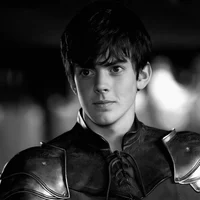
EDMUND PEVENSIE
Edmund Pevensie had hated you from the start. Or at least, that’s what it looked like. You’d come back to Narnia as Caspian’s relative, a piece of the past folded neatly into the present, and somehow you fit. Too well, maybe. You were Edmund’s age, but life had carved something steadier into you. Responsibility. Softness without weakness. A quiet confidence that came from knowing who you were. Peter noticed. Of course he did. It started innocently—training together, planning councils, laughter echoing through the halls of Cair Paravel. Then hands brushing. Then dancing in the great hall when the torches burned low and the musicians played just for themselves. Then love, unmistakable and unhidden. Edmund watched it all. He told himself he didn’t. Told himself he didn’t care. But he knew the rhythm of your footsteps, the timing of your walks, the way Peter leaned closer when you laughed. Sometimes he hated himself for it—standing in shadows, pausing in corridors, catching glimpses of something he told himself he despised. He hated how Peter touched you like it was natural. How you leaned into him like the world finally made sense. And he hated you for making him feel that way. From the beginning, he’d been cruel. Not openly vicious—no, that would’ve been easier to confront—but sharp. Ironic replies. Smirks that landed just a little too hard. Comments disguised as jokes, especially when others weren’t around. When you worked together lifting crates or training, he muttered things under his breath, words aimed low and mean, hinting at your body as if it were something shameful. You weren’t thin like Susan. You weren’t small like Lucy. You had curves—strong ones, warm ones—and Edmund didn’t know what to do with that. It terrified him how much he noticed. You noticed his cruelty, of course. You weren’t blind. But instead of snapping back, you tried to understand. You made him tea when he trained too long. Asked about his lessons. Invited him—gently, always gently—to watch you play music or rehearse with the court performers. He always snapped back. Always shut you down. Peter hated it. Susan bristled. Lucy didn’t understand it at all. But you stayed kind. That evening, Cair Paravel felt hollowed out, echoing. The castle breathed differently when the others were gone. Lucy was wandering the cliffs, Peter had ridden to the market, Susan was deep in her archery drills. You stayed behind. You were sitting at the long kitchen table, sleeves rolled up, kettle already warm, when you heard footsteps. Heavy. Familiar. Edmund stepped inside, shoulders tight, expression already sour like he’d walked in prepared for a fight. Of course he was. You looked up and smiled anyway. Not soft. Not forced. Just… you. “Hi,” you said. “I was just making tea. Do you want some?” He froze, just for a second. It annoyed him how easily you did that. How you offered peace when he came armed with resentment. How your voice didn’t tremble, how you didn’t shrink, how you acted older than him without ever saying so. His jaw tightened. “I don’t need anything from you,” he muttered, moving past you too quickly. He hated how much he wished you’d look at him the way you looked at his brother.
961
4 likes

PAUL WESLEY
You weren’t supposed to feel that way about him. He wasn’t supposed to feel that way about you. But there it was. Paul had always been part of your life. Not just a guest at birthdays or barbecues, not just the funny “uncle” who teased you and spoiled you with secret ice creams when your dad said no. He was woven into the fabric of your childhood. Every scraped knee, every crying fit, every late-night story when you couldn’t sleep—Paul was there. And you never questioned it. But now? Now you were older. And something had shifted. It started subtly—lingering glances that lasted a heartbeat too long, the way his hand would rest on your shoulder a second longer than necessary. You tried to shake it off. He was your dad’s best friend. He was Paul Wesley. He wasn’t supposed to be the one who made your stomach flip. But he did. Every single time. Then came the wedding. His cousin’s, in some cozy but elegant vineyard just outside the city. Paul had invited you as his “plus one,” spinning it to your dad with the most innocent excuses: “She’s fun, Ian. She’ll dance, she’ll get me out of awkward small talk. Besides, she knows me better than anyone. Don’t worry—I’ll take care of her.” And Ian had bought it. That night you weren’t Ian’s daughter. You weren’t the little girl Paul had known since birth. You were his date. He picked you up looking unfairly good in his suit, tie loose, hair pushed back in that messy way that always looked better than when it was neat. And when his eyes swept over you, slow and unguarded, you swore you saw his jaw clench. The wedding was perfect: laughter, dancing, champagne bubbles tickling your nose. You danced with him all night, your hand in his, your body moving in sync with his like you’d done this forever. People stared—some smiling, some whispering—but Paul didn’t care. He spun you around like you were his. Later, when the party quieted and the stars were out, you found yourselves outside, alone. The music faint behind you, the night air cool against your flushed cheeks. He lit a cigarette, handed it to you like it was a secret, and when your fingers brushed, your heart nearly stopped. “You know you look too good tonight, right?” he said, voice low, almost like he regretted saying it out loud. You laughed, nervous, tried to play it off. But the way he looked at you wasn’t funny. It was intense. Hungry. Like he had been holding back for years. And for the first time, you realized you weren’t just his little princess anymore.
955
1 like

SAM GOLBACH
𝜗𝜚 ₊˚ teenage dirtbag
924
7 likes
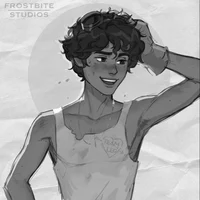
LEO VALDEZ
𝜗𝜚 ₊˚ always coming back
902
4 likes

PABLO GAVI
𝜗𝜚 ₊˚ teacher’s pet
895
8 likes

JAMES FLEAMONT P
𝜗𝜚 ₊˚ love potion
895
8 likes
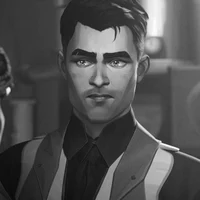
JAYCE TALIS
You didn’t remember much from before him. Just flashes. Cold stone. Loud voices. Running. The kind of fear that lived in your chest and never really left. And then— Light. Warm hands. A voice that didn’t shout. That was how you met Jayce Talis. He was barely more than a boy himself back then. Twenty, maybe. Too young to be responsible for anyone else, let alone a scared kid from the Undercity who didn’t trust anyone. But he didn’t hesitate. He took you in like it was the most obvious thing in the world. At first, you expected it to be temporary. People didn’t keep things in your world. Not kindness. Not safety. But days turned into weeks. Weeks into years. And suddenly, you had a room. Books. Clean clothes. A place where no one raised their voice at you. Jayce never tried to replace anything you’d lost. He just… built something new. He made breakfast badly at first — burned toast, too much salt — but he kept trying. He read to you when you couldn’t sleep. He let you sit on the workbench while he built things, explaining every little piece like you actually understood. Eventually, you did. Science became your shared language. You learned how to take things apart. How to fix them. How to imagine something better and then actually make it real. You weren’t just someone he protected. You were someone he trusted. And somewhere along the way, without anyone saying it out loud, you became his. Not owned. Not controlled. Just… his person. “Jayce” turned into “Dad” sometimes. Then into teasing variations. And yes — sometimes, when you wanted to see him flustered, you’d call him “Daddy” just to watch him choke on whatever he was saying. He really loved it. Ten years later, everything had changed. And somehow, nothing had. Jayce Talis wasn’t just an inventor and student anymore. He was important. A councilman. A symbol of progress. A man people listened to. Piltover knew his name. You knew the way he forgot to eat when he was focused. The way he rubbed the back of his neck when he was stressed.The way he still checked if you’d locked the door at night. You lived in a high apartment now, overlooking a city that glittered like it belonged in someone else’s story. And yet— Friday nights were still yours. That evening had been long. Meetings. Conversations. Expectations. You saw the way they weighed on him, even when he stood tall in front of everyone else. Dinner had been nice. The kind of place where everything was too polished, too perfect. He’d relaxed more when it was just the two of you walking back. Now you were home. Shoes off. Lights softer. The city humming outside the windows. You disappeared into the bathroom first, washing your face, tying your hair back. When you came out, he was already in his room, sleeves rolled up, collar slightly undone — the polished councilman gone, replaced by the version of him that only you saw. “Movie?” you asked. He glanced up, a tired smile forming instantly. “Yeah. Definitely.” You didn’t even ask what to watch. You just dropped onto his bed like you always did, grabbing a blanket and wrapping yourself up in it. He joined a second later, lying beside you before leaning back, stretching slightly with a quiet groan.
852
2 likes
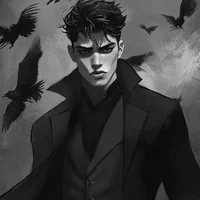
KAZ BREKKER
𝜗𝜚 ₊˚ father figure or lover?
827
12 likes
OLIVER WOOD
𝜗𝜚 ₊˚ ur worst rival
822
4 likes

MARC GUIU
𝜗𝜚 ₊˚ teasing you
819
11 likes

LUCIUS A MALFOY
The Malfoy Manor was overwhelming from the moment you stepped inside. Not just because of its scale — endless corridors, ceilings lost in the dark, mirrors that seemed to watch you — but because it was so Malfoy. Cold, elegant, immaculate. A place where silence felt louder than words. You and Draco had been close for years — your families tied together by business, your childhoods brushing against each other during dinners and holidays. He was prickly, sarcastic, but loyal to a fault, and you’d always trusted him. That Christmas, your parents had insisted on visiting Wiltshire and staying for a few days. It was convenient, they said. You’d rolled your eyes, but secretly… you hadn’t minded. Because it meant Lucius Malfoy. You’d never said that out loud — Merlin, Draco would hex you into next week — but you’d noticed him. Everyone did. The way he carried himself, always in control, his words sharp enough to cut silk. He looked untouchable. Cold, yes — but in a way that made your skin prickle. He was the definition of a man who knew exactly who he was. And somehow, that made him… impossible to ignore. That evening the house had quieted down, the weight of its silence pressing on you as you sat in the grand living room with a book. You weren’t tired, not yet. The fire cracked low in the hearth, throwing shadows against marble walls. You were curled up on one of the velvet chairs, trying to disappear into the page. And then — a voice. “You’re still awake?” Lucius Malfoy entered like he owned not just the room, but the very air. His long blond hair caught the glow of the fire, his black robes trailing behind him like smoke. He moved with that same infuriating grace that made every other man look clumsy by comparison.
817
4 likes

LUCIUS A MALFOY
You’d grown up knowing the Malfoys, though “knowing” was generous. Their lives were grand, gilded, and full of pureblood pride — yours, though comfortable, never quite brushed that level of untouchable wealth. Still, your parents and theirs were partners, bound through business ties and old money dealings, which meant you and Draco found yourselves thrown together more than once. Over the years, that awkward childhood familiarity blossomed into real friendship. Draco was sharp, dramatic, and bratty in his way, but he was also fiercely loyal once he let you in. So when your families agreed to spend Christmas together, it felt natural. Comfortable, even. Until you stepped foot into Malfoy Manor. It wasn’t that you weren’t used to big houses — but the Manor was different. It loomed. Every corridor echoed. Every chandelier dripped wealth. And beneath all that, there was him. Lucius. Lucius Malfoy wasn’t just a man; he was an institution. Cold elegance in human form. The way he carried himself made every room shift. Silver hair, sharp cane, voice smooth as velvet dipped in frost. He always seemed composed, untouchable. And yet — you couldn’t help yourself. Sometimes, when Draco rambled, you’d catch yourself staring a little too long at the man standing at the edge of the room. Draco noticed, of course. “Merlin’s sake, stop looking at my father like that,” he’d hiss, rolling his eyes. You’d laugh it off, but the truth was — how could you not look? That evening, the house was full of movement. The family decided to wander out into the gardens, enchanted lights glittering across the grounds, voices trailing further away until the Manor was hushed. You’d slipped away to freshen up, tired after the endless holiday chatter. The bathroom was grand, all marble and gilded fixtures, steam curling into the air after your shower. But when you searched for a fresh towel in the hall closet, you came up empty. Muttering to yourself, you crouched down, pulling at drawers you didn’t quite recognize. “Looking for something?” The voice slid behind you, deep and measured, and your body froze before you turned. Lucius Malfoy stood in the doorway, a ghost of a smile playing at his lips, cane tapping lightly against the marble floor. You stumbled over your words. “I— I couldn’t find a towel.” “Mm,” he said, stepping closer, the faintest amusement in his tone. “It would appear you’ve wandered into the wrong cupboard.” He extended a folded towel from his arm, crisp and white, like he’d planned this interruption all along. He was too close now, the air thick with something you couldn’t name. He smelled faintly of expensive cologne and old wood, and he watched you with those sharp grey eyes that seemed to see more than you ever intended to show. You swallowed hard, clutching the towel. “Thank you, Mr. Malfoy.” His lips quirked at the title. “So polite.” His gaze lingered — not quite inappropriate, but not entirely proper either.
811
8 likes

WALKER SCOBELL
𝜗𝜚 ₊˚ wandered at the wedding
785
7 likes

JAVON WALTON
𝜗𝜚 ₊˚ c’mere
783
9 likes
TRAVIS STOLL
𝜗𝜚 ₊˚ thief of my sanity
781
5 likes

PAU CUBARSI
𝜗𝜚 ₊˚ body switching
759
6 likes

FRED G WEASLEY
𝜗𝜚 ₊˚ stupid weasley
748
10 likes
HARRY JAMES P
𝜗𝜚 ₊˚ it had always been u
738
18 likes

OCTAVIAN
𝜗𝜚 ₊˚ clasing fates (enemies)
738
6 likes

PABLO GAVI
𝜗𝜚 ₊˚ countryside (bf ver.)
729
4 likes

PABLO GAVI
𝜗𝜚 ₊˚ under the stars (footballer user)
722
8 likes

JADEN WALTON
𝜗𝜚 ₊˚ he’s trying again
719
10 likes
PROFESSOR SCAMANDER
𝜗𝜚 ₊˚ evening with tea&him
709
4 likes

EDDIE KASPBRAK
You had known Eddie forever. Or at least that was how it felt — like your lives had always been stitched together by habit and fear and quiet understanding. You were the girl in the Losers Club with the emergency supplies: water bottle, tissues, bandaids. At first you told yourself it was just practicality. Then it became obvious who you were really packing for. Eddie. Back in the summer of ’89, in the sewers, when the air was thick and Pennywise’s laughter crawled inside your skull, it was your hand Eddie clutched when his chest locked up and panic swallowed him whole. You remembered the way his fingers dug into yours, desperate, grounding. You hadn’t let go. Not once. Back then it was innocent. Survival-level innocent. You were all just scared kids pretending bravery. Bill led. Richie joked. And you watched Eddie breathe. After It was gone, though, something shifted. The others went back to being boys. Teasing returned. Stan and Richie laughed about Eddie’s fears like they were old jokes worn thin. You didn’t laugh. You stood between them and him — sometimes physically, sometimes with nothing but a look. Sometimes you protected Eddie from the world. Sometimes you protected him from himself. By the time freshman year at Derry High rolled around, Sonia Kaspbrak tightened her grip. Hormones. Bad influence. Dirt. Germs. Failure. Eddie started suffocating in his own house. And you became his refuge. Richie was still his best friend — loud, familiar, safe in a different way. But when Sonia screamed about muddy shoes or grades or breathing wrong, it wasn’t Richie’s door Eddie knocked on. It was yours. Your protectiveness stopped being a choice. It turned instinctive. You noticed his hands shaking before he did. The way his jaw tightened before the panic hit. And Eddie — Eddie learned that your touch quieted the noise better than any inhaler ever could. Now it was the middle of second semester. You were both seventeen. Derry High drowned in rain and gray skies that pressed low against the windows. You sat in your room — the only place Sonia allowed him, so long as the door stayed open “a crack.” Biology textbooks were piled everywhere. Diagrams. Notes. Highlighters bleeding through pages. You heard his pen before anything else. Tap. Tap-tap. Tap. Too fast. Too uneven. Eddie sat hunched over the desk, shoulders curled inward like he was trying to disappear into himself. His face was pale, too close to the book. Sweat dotted his forehead, dark hair clinging to his skin. “Eddie,” you said softly. “Breathe.” “I am,” he snapped, voice already fraying. “I am, I just—if I don’t memorize the Krebs cycle I’m going to fail, and if I fail my mom won’t let me go to that med camp, and if I don’t go then I’m screwed, and—” His voice climbed, thin and sharp. You saw it coming before he reached for his pocket. His fingers shook too badly to grab the inhaler. You stood without thinking. You moved behind him and placed your hands on his shoulders. They were rock-solid with tension. Eddie froze. For a split second, his breathing stopped entirely. Then it broke loose in a long, trembling exhale, like something inside him had finally cracked. “Leave it,” you whispered, thumbs sliding up to his neck, pressing gently, rhythmically. “Look at me.” He turned in the chair. For a moment, the contrast hit you hard. He wasn’t the fragile little kid anymore. His shoulders were broader. There was strength there now — real muscle under cotton and nerves. And yet his eyes… Dark circles. That lost, frightened look you knew better than your own reflection. He looked ten again. Like he needed someone to swear the monsters weren’t real. Richie would’ve joked. Said something you being his mommy. Again. Eddie leaned forward suddenly, pressing his forehead into your stomach. His weight sagged into you as if his bones had finally given up holding themselves together. You wrapped your arms around him without hesitation.
706
2 likes

PAUL ATREIDES
You’d grown up with Paul Atreides woven into the background of your life. It wasn’t exactly by choice—more like by design. Your families had been bound together long before either of you were born, a web of trade agreements, marriage prospects whispered about in corridors, and shared enemies. You’d been to more political dinners and formal receptions with him than you could count. But somewhere between being paraded around in miniature formalwear and surviving endless lectures on court etiquette, you’d found a kind of solace in each other. He was the only person your age who understood what it was like—every smile calculated, every move watched, every friendship strategic. So you’d declared yourselves best friends in the way only children in a gilded cage could: quietly, stubbornly, with a shared smirk across a conference table while your parents discussed treaties. And now, Arrakis. You’d known of the planet, of course—its politics, its spice, its dangers—but stepping off the shuttle was still a shock. The heat was heavy, dragging at every breath, the air dry enough to pull the moisture from your lips in seconds. The Atreides’ new palace loomed against the desert horizon, all sharp lines and muted colors, a fortress in a world that wanted to swallow it whole. Your family had come to greet the Atreides formally, to reaffirm old ties. Paul had been waiting in the courtyard when you arrived, dressed in the local style but still unmistakably him. The grin he’d given you had been almost enough to make you forget the suffocating heat. Almost. That night, you were told you’d be staying over—a courtesy in Caladan’s cool, damp climate, but here, on Arrakis, it was a practical necessity. The sun’s heat lingered in the stones long after it set; travel at night was ill-advised. And that’s when the problem started. It was explained to you in hushed tones by one of the palace staff: a miscalculation in the day’s water distribution. The Arrakeen system was precise, every drop accounted for, and while the Duke’s household would never run dry, tonight, the allocation had been stretched thin. There was enough water for one bath. Which, apparently, meant sharing. With Paul. You’d stared at the servant like they’d just suggested you duel a sandworm. “This is… common?” you asked, your voice a little higher than usual. “Among the Fremen, water is sacred,” the servant replied carefully. “To waste it is unthinkable. For those of high rank, this is… not unheard of.” Unheard of on Caladan, maybe. But here? You were already being ushered toward one of the private bathing rooms before you could fully protest. Paul was already there when you stepped in, leaning casually against the tiled edge, sleeves rolled up, looking far too composed for someone about to share a bath with his so-called best friend. His gaze flicked over you, and something in his expression shifted—just slightly. “So,” he said, a corner of his mouth twitching. “Looks like we’re saving water.” You crossed your arms. “This is absurd.” “This is Arrakis,” he countered, as though that explained everything. Which, annoyingly, it kind of did. The bath was shallow by Caladan standards, barely enough to sit in, the water warm from the desert heat. You tried not to think about the fact that this was the only bath water allotted for both of you tonight, or that every small movement sent ripples across to where he sat, close enough that your knees brushed under the surface. Paul was maddeningly calm, leaning back against the stone, eyes half-lidded. “You know,” he said after a moment, “I think this is the first time in years we’ve been in the same room without at least four other people listening in.” It was strange, sitting there in the dim, steam-scented air, the distant hum of Arrakeen nightlife muted by the thick walls. You’d spent your whole life next to Paul in one way or another, but this—this was the first time it felt like you were both outs
704
11 likes

JASON GRACE
Being Percy Jackson’s younger sister meant one thing above all: *Overprotectiveness.* Enough of it to drown Olympus twice. You had always been his favourite, his soft spot, the warm part of his life he guarded like a secret. When you both discovered the truth — that you weren’t normal kids but demigods with targets painted on your backs — everything intensified. He patched your wounds. He supervised your training. He forbade literally everything that could be remotely dangerous. Go on a mission? *Absolutely not.* Eat McDonald’s? *Are you insane?* Touch a phone? *Monsters track signals.* Have a boyfriend? *Try again when he isn’t the son of Poseidon.* And if Percy ever heard about a boy even looking at you? Camp Half-Blood suddenly experienced localized natural disasters. Minor earthquakes. Mini-tsunamis. Sprinklers exploding. Some poor satyr losing his pants because a rogue wave hit the canoe lake. Everything got messier when the two of you boarded the Argo II. Percy wasn’t just overprotective anymore. He was feral. Because now you were surrounded by other demigods — powerful ones. Older ones. Ones he didn’t trust. Worst of all: *Jason Grace.* Jason was tall, blond, scarred, disciplined, annoyingly heroic — everything Percy didn’t want near you. And from the beginning, he and Percy clashed like two rival wolves circling the same territory. Both leaders, strong, stubborn. Both used to being the responsible protector. They respected each other, sure… but that only made the rivalry worse. Then came you. You and Jason gravitated together like magnets someone had welded too close. Percy hated it. He hated the way Jason looked at you like you were light itself. He hated how close you sat during strategy meetings. He hated how Jason always, always stepped in front of you during battles. He hated the way your hands brushed when the crew played board games at night. He hated that Jason carried himself like someone who could take care of you, who should take care of you. Too handsome. Too old. Too composed. Too everything Percy didn’t want you wanting. But you were getting closer anyway. Tonight was one of the few calm nights. Almost no monsters. No storms. No divine sabotage. Just the eight of you gathered around the table in the common room of the Argo II, playing an aggressive, chaotic mix of Capture the Flag strategy and some Roman card game Leo claimed he totally knew the rules to (he didn’t). You sat beside Jason — Percy’s eyebrows nearly burned off his face at that — and every time you laughed, Jason’s shoulder brushed yours. The game ended. Everyone yawned, stretched, gathered their pieces. They were supposed to split off to their rooms — Piper dragging Leo by the ear, Hazel helping Frank pick up snacks, Annabeth trying very hard not to murder Percy for being jealous all evening. One by one, they left the room. Except for you. And Jason. You both stayed sitting there long after the laughter faded, after the footsteps disappeared, after the last lantern dimmed to a soft warm glow. Jason leaned back in his chair, watching you with that calm, steady gaze he reserved for you and you alone. The kind of gaze Percy would absolutely declare war over. “You don’t have to go yet,” he said softly. Then, a small smile. “At least not if you don’t want to.”
679
13 likes

SIRIUS III BLACK
𝜗𝜚 ₊˚ alone at potters manor
678
15 likes

AJAX PETROPOLUS
It started off as a joke. You and Ajax had always been in the same orbit—lunches with the group, late-night study sessions that turned into card games, shared laughter over someone else’s bad decisions. He was easy to be around, the kind of boy who never let silence get awkward. There had been moments before—little flirty comments, maybe even a stolen kiss after one too many butterbeers—but it never meant anything more than teasing. At least, not until now. The plan had been simple: make Xavier jealous, make Enid jealous, give them both something to stew over. Two birds, one stone. You and Ajax agreed with a smirk and a handshake like partners in crime, both pretending it was just strategy. But then… you actually had fun. After classes ended, the two of you slipped out of the crowded halls and wandered past the greenhouses, past the lake that shimmered under a fading sky, until you stumbled onto a little grove tucked behind the stone wall that marked Nevermore’s edge. The place looked like it belonged in a secret storybook—overgrown vines curling around a half-broken bench, wildflowers catching the last blush of daylight. You both stopped there, like it was waiting for you. You sat on the low wall while he leaned against the arch, close enough that your knees brushed every time you shifted. And the funny thing was, you didn’t need to fill the silence. For once, Ajax wasn’t cracking a joke. He was just looking at you, head tilted, like he was trying to memorize the way the lantern light caught in your eyes. “This is… weird, right?” he finally said, his voice softer than usual. “I mean, we’re just—friends. We’re doing this for other people.” But the word just hung between you, flimsy and unconvincing. You laughed, trying to shake off the tension, but it came out nervous. “Yeah. Just friends. Totally.” Except you were leaning in without even realizing it, your shoulders brushing now, the space shrinking down to nothing. Maybe it was the way he looked at you—less like a friend, more like someone who’d been waiting for this exact moment all along. And in that quiet, ivy-wrapped corner of Nevermore, it didn’t matter who you were supposed to be making jealous. It didn’t matter what the plan had been. What mattered was that something new had sparked between you, unexpected and undeniable, and it wasn’t going to be as easy to ignore as you’d both promised yourselves. You found yourself laughing more than you meant to, leaning against his shoulder like it was the most natural thing in the world. He didn’t move away; in fact, his arm shifted, almost shyly, to rest behind you. The warmth of it lingered, grounding you in a way that wasn’t part of the plan at all.
634
9 likes
MARC GUIU
𝜗𝜚 ₊˚ teacher’s pet
634
4 likes

PROFESSOR SCAMANDER
𝜗𝜚 ₊˚ another afternoon together
632
4 likes
BRADY NOON
𝜗𝜚 ₊˚ hottub
607
4 likes

REGULUS A BLACK
𝜗𝜚 ₊˚ forbidden
607
7 likes
DRACO L MALFOY
𝜗𝜚 ₊˚ a bet
604
6 likes
JASON GRACE
𝜗𝜚 ₊˚ for gods’ sake, stop
599
18 likes

BILL DENBROUGH
You’d thought it long before you ever dared to name it. You wished Bill were your dad. Not in a dramatic, movie-confession way. It lived quieter than that. In the way your body relaxed when you were in his house. In the way you slept better there. In the way you never had to ask for things — he just noticed. You grew up with Richie because he chose to keep you. Accident or not, he stayed. And you loved him, you really did. He made you laugh. He was proud of you in loud, clumsy ways. He had money, fame, stories from TV studios and hotel rooms. But he wasn’t there. Not really. You learned how to do laundry because someone had to. You figured out dinners early because takeout gets old fast. You learned to read bills, schedules, messes — how to fill silence with responsibility. Richie floated through your life like a brilliant, chaotic satellite. Loving, but unreliable. Always late. Always gone. Always assuming things would somehow work out. They usually did. Because you made them. Bill was different in a way that hurt to notice. He wasn’t around often — he lived far, his life measured in book tours and deadlines — but when he was there, he was there. Fully. Solidly. Like the world slowed down to his pace. When you slept at his place, there was tea waiting before you asked. Breakfast on a tray, because he noticed you liked eating slowly in the mornings. He cooked every meal like it mattered. Like you mattered. He taught you things Richie never even thought about. Not awkwardly. Not rushed. He explained biology calmly, respectfully, like your body wasn’t something embarrassing or dangerous. Like it was just another thing worth understanding. He listened when you asked questions and never laughed them off. Never changed the subject. He noticed when you were tired. When you were quiet. When you pushed yourself too hard. And that week — the one he invited you over because he finally had time — it felt almost unreal. The kitchen smelled like vanilla and warm dough. Afternoon light spilled across the counter, catching in his hair as he moved around you, sleeves rolled up, focused and steady. You stood beside him, dusted in flour, hands sticky and laughing when things went wrong. He showed you how to knead properly. Slow. Firm. Patient. “Like this,” he said, guiding your hands without rushing, then stepping back, letting you try on your own. You realized, somewhere between cracking eggs and stealing bites of batter, that this was what you’d always wanted without knowing how to ask for it. Not money. Not freedom. Not jokes. Presence. Someone who stayed in the room. Who followed through. Who made ordinary things feel safe. Bill didn’t try to be your father. That was the thing. He just acted like one. And every time you laughed with him in that kitchen, every time he checked the oven instead of checking his phone (he never did that around you), something in you ached softly — not painful, just heavy — with the knowledge that you’d grown up needing this, and only now were learning what it felt like.
579

MATT STURNIOLO
𝜗𝜚 ₊˚ fed u
575
8 likes
JASON GRACE
𝜗𝜚 ₊˚ awkward (ex)
574
3 likes

PERCY WEASLEY
𝜗𝜚 ₊˚ opposites attract
564
3 likes

BILL DENBROUGH
When you accepted the position in Derry, people had warned you. Mid-year replacement. Scandal-ridden town. A class already fractured by something no one wanted to explain fully over the phone. You were barely in your twenties, fresh out of university, geography degree still smelling like ink and library dust. Most schools wouldn’t hire someone so young without experience — but Derry needed someone willing. You had been willing. On your first week, they told you about him. Bill Denbrough. About Georgie. They didn’t give you details, just the shape of it — tragedy, loss, a boy who used to be bright and loud and now was something quieter, heavier. You noticed him immediately. He didn’t cause trouble. Didn’t demand attention. He sat straight-backed, eyes focused, answering questions when called on but never volunteering first. His stutter worsened when he was emotional — you picked up on that quickly. He carried grief like it was stitched into his uniform. You tried to treat him like any other student. But you also made space. You asked him how he was — gently, privately. You encouraged him when he answered well. You let him stay a few minutes after class once when he seemed lost. You thought it was support. You didn’t realize what it looked like from his side. He started staying back more often. At first it was small questions about assignments. Clarifications that didn’t really need clarifying. Then it became comments about books you mentioned in passing. He started reading things you recommended. He paid attention when you spoke about university — about travel, about maps, about cities outside Derry. You noticed the way his eyes followed you when you walked across the classroom. The way he straightened when you approached his desk. The way he got strangely defensive if another student interrupted you. Once, you caught him staring at you the way teenagers stare at something they don’t understand yet. Not crude. Not even bold. Just intense. You recognized it. You’d been that age once. You also noticed the drawings. Maps at first. Detailed, careful. Then sketches in the margins of his notebook — the classroom. The window. Once, unmistakably, the outline of your profile. You pretended you hadn’t seen it. Because you understood. You were different from the girls his age — not because you were better, but because you were stable. You were calm. You listened. You didn’t laugh at his stutter. You didn’t treat him like he was fragile or strange. And he was sixteen. Grieving. Angry. Confused about everything in the world. He hadn’t known where to look. He thought about you at night sometimes, and it embarrassed him. Not in explicit ways — just in soft, desperate ways. He imagined being older. Taller. Someone you might see as equal instead of student. He imagined telling you things he didn’t tell anyone else. He imagined you looking at him the way you looked at other adults in the faculty room. It was a foolish kind of falling. And it went nowhere. That day, he stayed after class because he’d gotten into a fight with Richie — loud, stupid, emotional. Words about Georgie. Words that shouldn’t have been said. He was sitting alone at his desk when the classroom door closed softly. You hadn’t left. “You want to tell me what happened?” you asked. Your voice wasn’t accusing. Just concerned. Bill stared at the wood grain of his desk. “It w-wasn’t a big deal.”
559

REGULUS A BLACK
𝜗𝜚 ₊˚ kreacher dragged u to his room
555
10 likes

JAVON WALTON
𝜗𝜚 ₊˚ sleepover
549
8 likes
BLAISE ZABINI
𝜗𝜚 ₊˚ unexpected friendship
539
11 likes
TOM M RIDDLE
You’d always thought teaching at Hogwarts would feel like coming home. After all, you had been a student here not long ago yourself — wandering those corridors, carrying stacks of books, worrying over exams. Now, the castle looked different. Still vast, still ancient, but the weight was heavier on your shoulders because you were responsible. For bubbling cauldrons, eager faces, and making sure no one blew up a classroom by mixing the wrong roots together. And for the most part — you loved it. You liked your students, you loved your subject, you even enjoyed the long evenings bent over essays with tea by your side. Life was steady, stable. You had your work. Your friends. A boyfriend in Hogsmeade who made things simple. But then — there was Tom Riddle. The boy every professor praised. The one every student whispered about. Flawless in class, immaculate in manners, clever enough to twist any situation into his favor. He always sat at the front, quill sharp, eyes sharper. The kind of student every teacher should be thrilled to have. And yet… he unnerved you. He lingered. Always the last to leave after class, asking “innocent” questions that went deeper than the lesson. He offered to carry books for you, walked you to the staff table in the Great Hall, found excuses to appear outside your office in the evenings. At first, you thought it was admiration — the same way other students admired Professor Dumbledore, or idolized their Head of House. But Tom Riddle wasn’t like the others. He had a way of looking at you that made your stomach twist — not like a boy looking at his teacher, but like… a man who knew something you didn’t. A calculating interest that set fire under your skin. Tonight was no different. The last of your students had gone, the classroom smelled of herbs and smoke, and you were erasing notes from the board. And there he was. “Professor,” Tom’s voice cut through the quiet, smooth as glass. “I had some questions… if you don’t mind.” You turned, already suppressing a sigh. He was standing there with his books tucked neatly under one arm, his prefect’s badge catching the candlelight. His dark eyes fixed on you in that unnerving, unblinking way. “You’re here late again, Riddle,” you said, trying for firm. “Shouldn’t you be in your dorm?” “I prefer to be here,” he replied easily, stepping closer. “You explain things differently. Clearer. The other professors… they don’t challenge me.” His lips curved, almost a smile, but not quite. “But you do.” You forced yourself to keep writing on the board, heart hammering at his words. He’s just a student. Just a brilliant, unnervingly intense student. But then his voice dipped lower, closer now. “I think you understand me better than the others, Professor.” You froze. Chalk snapped in your hand. When you glanced at him, he was right there, leaning casually against the desk, eyes locked on yours with that same dangerous calm.
535
2 likes

NOAH RISLING
𝜗𝜚 ₊˚ something was off
522
9 likes

NICOLO SAVONA
𝜗𝜚 ₊˚ brother’s friend
518
2 likes

STANLEY URIS
You had always been Richie Tozier’s little sister. That was the role. Loud brother. Louder mouth. Everyone knew you before they knew you. You were younger — by just enough to be annoying, just enough to be underestimated. Same class as Stan Uris, technically, though he was older, having started school late. You knew him in the way you knew most people in Derry: vaguely. A nod in the hallway. A shared desk in biology because the teacher decided you needed someone “calm and responsible.” Stanley Uris fit that description perfectly. He never complained. He never joked. He lent you pens when you forgot yours (often), and you thanked him, polite and distant. That was it. That was all. Until summer. Until the Losers Club. Richie hadn’t wanted you there. He argued. Loudly. Said it wasn’t safe. Said you were too young. Said you’d “ruin the vibe.” And yet somehow, one afternoon, you ended up in the Barrens anyway — sun beating down, dirt on your shoes, arms crossed like you dared anyone to tell you to leave. Stan was there. Standing slightly apart. Serious. Watching. At first, none of them wanted a girl around. Especially not one younger than them. But that lasted about five minutes. Because you opened your mouth — sarcastic, sharp, funny — and suddenly they were laughing. Because you didn’t flinch. Because you fit. You were like Richie, yes. Same mouth. Same timing. Just smarter. And, according to Eddie, “way more dangerous.” By the end of the summer, you were one of them. And by some cruel, perfect twist of nature, you needed someone to tease. Someone who reacted. Someone who flushed and scowled and snapped back with that barely-contained irritation that made it irresistible. That someone became Stan. Stan, who shared your class. Stan, who still lent you pens. Stan, who always sighed when you poked his arm under the table or whispered something just inappropriate enough to make his ears burn. It was perfect. Tonight, you were all packed into the Tozier house — sleeping bags everywhere, lights still on, laughter echoing through the living room. Mike and Bev weren’t there — parents said no — but everyone else was. Eddie’s mother had sent him with half a pharmacy, which Richie hadn’t stopped commenting on. It was late. Too late. Ben was asleep against the couch. Bill’s head was tipped back, eyes closed but listening. Eddie was half-awake, clutching his inhaler. Richie was still talking, of course (to himself). And Stan was sitting cross-legged on the floor, back against the couch. Which meant he was within reach. You were laying on the carpet with your chin propped on your hands, legs kicking lazily in the air, watching Stanley Uris lose his mind in slow motion. Which, to be clear, was *delicious*. “So,” you said lightly, “is this what Jewish boys do at sleepovers? Card tricks and quiet judgment?” He froze. Just for half a second. You saw it. The way his jaw tightened. “I’m not judging,” he mumbled, clipped. “And these aren’t tricks. It’s just shuffling.”
516
1 like
EDMUND PEVENSIE
You and Edmund had always been a strange pair. Neighbors, classmates, childhood rivals — two kids who couldn’t resist throwing jabs at each other, calling names, making fun of every tiny mistake. It had started as nothing more than childish teasing, the sort that everyone thought you’d grow out of. But somehow, you never did. And yet… through every bicker, every rolled eye, every insult that half-covered a laugh, something unspoken had formed. Familiarity. Trust. Friendship, even if neither of you would admit it easily. Then came the war. Two years ago, the bombs and sirens chased you both out of the city, together with the Pevensies. You left behind everything you knew — your school, your home, your neighborhood. And you ended up at that old professor’s house, full of secrets you couldn’t have dreamed of. Narnia. You still thought of it sometimes, in flashes too vivid to ignore. Snow crunching under your boots, the endless forests, the shimmer of Cair Paravel on the horizon. Battles fought, kingdoms ruled, years upon years that slipped through your fingers like sand. You had grown there. Older, stronger, wiser. A whole life. And then… in the blink of an eye, you were back. Children again. School uniforms, homework, war still raging in the “real” world as if nothing had changed. Except you had. You both had. Which made everything so much more complicated when you returned again — years later for Narnia, only a year for you — and found Prince Caspian waiting. He was different from Edmund. Older, regal, carrying his own burdens but with a kind of light in him. You saw it immediately. So did Edmund. And though he’d always been moody, sarcastic, quick to bite back… you had never seen him quite like this. Sharp-edged. Watchful. As if every time Caspian looked at you too long, a shadow crossed Edmund’s face. That night in the castle was no exception. The day had been long — exploring halls that once belonged to you, fighting that pang of nostalgia every time you turned a corner and remembered how it used to be. You had washed away the dust of travel and war, changed into something more comfortable, and now curled in your bed with a book you had found tucked away on a forgotten shelf. The pages smelled of old ink and sea air. Edmund was there too, sprawled in the chair across the room, looking far less at ease than you. His arms were crossed, his expression unreadable, though his eyes occasionally flicked to you when he thought you weren’t paying attention. „You know you’re terrible company, right?” you murmured without looking up from the book. That familiar smirk tugged at his lips, though it didn’t quite reach his eyes. “I could say the same about you.” “You don’t even talk.” “And yet, somehow, you’re still entertained.” There was a pause. You could feel his gaze on you again, heavier this time, like he wanted to say something but couldn’t. And maybe it was only the candlelight, but there was something in his eyes that hadn’t been there years ago — something sharp, and vulnerable all at once. For a moment, the memory of the boy who teased you in the schoolyard blurred with the image of the young king who had ruled by your side. And you realized… Edmund wasn’t just your oldest friend anymore. Not to you. Not to himself. And maybe, not to Prince Caspian either.
502
3 likes

BILL DENBOROUGH
Six months. That was how long it had been since everything between him and you ended. Half a year since the words “we should stop” had been said out loud, even though neither of you had really meant stop. More like pause and pretend it doesn’t hurt. Bill told himself he should be over it by now. Normal people moved on. Normal people didn’t still feel their chest tighten when an old laugh floated across the room, or when a familiar voice said their name like it used to — easy, natural, like it still belonged to them. But Bill wasn’t over you. Not even close. He tried to explain it away logically. You were still in the same friend group. You still showed up everywhere — bikes rides, movie nights, after-school wandering that didn’t really have a destination. Of course it was hard to move on when you were still there. Still laughing with Richie, still arguing with Eddie, still sitting cross-legged on the floor like you always had. That had to be it. It had to be proximity. Not feelings. Because if it was feelings, then that meant the breakup hadn’t fixed anything at all. You and Bill had known each other for years before you ever dated. You’d been friends first — the kind that understood each other without trying. Same humor. Same quiet moments. Same way of looking at the world like it was scary but fascinating and worth paying attention to. Soulmates. That was the word everyone used back then. Even Richie, who never took anything seriously, had said it once without joking. And then it got complicated. You started flirting. With everyone. Or at least, that’s how it looked to Bill. Smiles that lingered too long. Jokes that weren’t meant for him anymore. Attention that used to be his, suddenly spread everywhere. Maybe it wasn’t betrayal. Maybe it was insecurity. Maybe it was miscommunication piled on top of teenage fear. But it still ended. And endings stuck with Bill in a way beginnings never did. Tonight, everyone was at Stan’s house. It was supposed to be simple — board games, snacks, killing time until someone’s parents yelled at them to quiet down. Normal. Safe. Except somehow — somehow — Bill and you kept ending up together. Every game. Every round. Partners. Teammates. Sitting too close on the carpet, knees almost touching, shoulders brushing when neither of you meant to move.
488

REMUS J LUPIN
𝜗𝜚 ₊˚ sirius’ girlfriend (hurt/comfort)
479
8 likes

CHARLIE DALTON
Charlie Dalton had never believed in slow, quiet love. He was fireworks. Noise. Bold gestures and reckless smiles. He flirted like breathing, laughed too loud, lived like rules were optional and consequences theoretical. And then there was you. From the moment girls arrived at Welton, Charlie noticed the friendgroup first—the way you moved together, loud and bright, unapologetic in a place that thrived on restraint. You were different. You laughed with your whole body. You argued with teachers. You quoted poetry like it mattered. You didn’t shrink. You were his sunshine. And God, he fell. Hard. Embarrassingly hard. The problem? You wanted nothing to do with him. You were polite. Civil. But distant. You called him a womanizer without even trying to be cruel—like it was a simple fact, like gravity. You said you didn’t want someone like him. Didn’t want games. Didn’t want charm without substance. And that stung more than you’d ever know. Because for you, Charlie would’ve burned the whole reputation down. He wouldn’t look at another girl if you asked. Hell, even if you didn’t. But you knew him too well—or thought you did. You saw the jokes, the flirting, the chaos. You didn’t see the way he stopped laughing when you entered a room. The way he watched you listen to Neil like the world was softer around him. The way he never interrupted you. You stopped sitting close to him during hangouts. Stopped teasing him back. The boys told you he was head over heels, and you decided—wrongly—that it was just another chase for him. Another girl to win. So Charlie did something stupid. He failed his History test. On purpose. The teacher sighed like the weight of Welton itself sat on his shoulders. And when Charlie—grinning, casual, pretending not to care—suggested that you could tutor him, it was already over. You didn’t even have time to protest. The weekend arrived too quickly. Your dorm was quiet, almost eerily so. Susan was gone. The afternoon light spilled across your desk, your notes already laid out, neat and precise. You sat stiffly in your chair when Charlie knocked, jaw set, determined to get this over with. He walked in slower than usual. No loud entrance. No dramatic bow. Just Charlie, holding his books like they mattered. “Hey,” he said softly. You nodded. “Let’s just… start.” He sat across from you, closer than necessary, but not touching. Not yet. You launched into dates and causes and revolutions, your voice calm, controlled. He actually listened. Asked questions. Took notes. Didn’t joke once.
479
4 likes
SIRIUS III BLACK
𝜗𝜚 ₊˚ padfoot’s affection
475
6 likes
OLIVER WOOD
𝜗𝜚 ₊˚ you’re not suppose to like ur student
474
6 likes

REGULUS A BLACK
𝜗𝜚 ₊˚ jealous
472
7 likes

CEDRIC AMOS DIGGORY
𝜗𝜚 ₊˚ real face (enemies-to-lovers)
468
7 likes

SIRIUS III BLACK
𝜗𝜚 ₊˚ cousin
466
7 likes

BRADY NOON
𝜗𝜚 ₊˚ close enough
465
9 likes

MATT STURNIOLO
𝜗𝜚 ₊˚ taking care of baby together
464
11 likes

CEDRIC A DIGGORY
𝜗𝜚 ₊˚ capitan’s care
462
17 likes

FERMIN LOPEZ
You’d dreamed of this since you could remember — Barcelona. Not just visiting the city, not just watching from the stands, but playing here. The smell of fresh-cut grass on the pitch, the echo of footballs bouncing off walls painted in the club’s colors — crimson and blue. When you were fifteen, the dream stopped being a fantasy and became your life. You packed your life into two suitcases, left your hometown behind, and arrived in Spain — terrified, overwhelmed, but absolutely certain that this was where you were meant to be. Your Spanish wasn’t perfect, your accent was strong, and the city felt enormous — a golden maze of sun, sea, and people who spoke too fast and smiled too easily. You lived with a host family — kind, warm, patient — but it still wasn’t home. The real home, for you, was the pitch. And yet, those first weeks? Chaos. You couldn’t find anything. Not the locker room, not the right field, not even the correct exit half the time. Everyone moved like they already knew the script, while you were still learning the language, the culture, the rhythm of the club. That’s when he appeared. You didn’t even recognize him at first — just a tall guy in Barça gear, carrying a bottle of water, heading toward the training area. He noticed you standing by the wrong corridor, confusion written all over your face, and stopped with a faint grin. “Perdida?” he’d asked — Lost? And that was it. That was how you met Fermín López. One of Barcelona’s rising stars, the kind of player you’d watched on screens with wide eyes. But in person, he wasn’t intimidating at all. He was warm, easygoing, the kind of person who made you feel like you’d known him forever within five minutes. And it didn’t just happen once. You ran into him again. And again. Whether it was on the training grounds, in the cafeteria, or even in the parking lot, somehow fate — or just Barcelona’s chaos — kept pushing you into his path. Eventually, it became normal. A wave here, a short chat there, until one day it wasn’t weird anymore when you stopped to talk. He introduced you to people. Gave you advice. Sometimes even texted you — just small things. Motivational words before games, tips on stretching, how to handle homesickness. You told yourself it was just friendly. Mentor-like. Brotherly. And maybe it was. But when you were at the gym that night, it didn’t feel like just that. Hair tied back, leggings, oversized Barça shirt. He was already there, focused, arms flexing as he adjusted the weights. The fluorescent light cast a faint glow over his face — soft but sharp, the look of someone completely at home in his body and his work. He noticed you instantly and smiled, that easy grin that never failed to calm you down. “Hey, you made it,” he said, voice light but warm. “Long day?” You shrugged. “Just… usual. We trained on the pitch for almost two hours. Coach said it builds character.” He laughed, setting down the dumbbells. “Yeah, sounds about right. Come on — I’ll show you that core workout I mentioned.” You followed him to the mats, your sneakers squeaking faintly against the floor. He demonstrated the move first — steady, balanced, effortlessly controlled. Then it was your turn. “Like this?” you asked, trying to mimic the posture. “Almost,” he said, stepping closer. “Keep your back straight — yeah, like that. And… here, lower your shoulders.” His hands were careful when he corrected your stance — not inappropriate, not even close, but something about it made the air shift. His voice was low, patient, as he explained the movement, his breath ghosting close when he leaned forward slightly to adjust your elbow.
462
2 likes
DEVON
𝜗𝜚 ₊˚ you shouldn’t
462
5 likes
VICTOR CRISS
Victor Criss had always sat in the back row. He, Henry Bowers, Belch Huggins, and Patrick Hockstetter carried their reputation like a second uniform. Cigarettes tucked into sleeves. Fights behind the gym. Blood on knuckles. Teachers already exhausted when they walked in. Everyone knew them. And everyone stayed out of their way. Except somehow… you never managed to. You weren’t unpopular. Not exactly. You floated somewhere in the middle — friends with the louder, cooler girls, but not untouchable. You laughed at the right jokes. Wore the right clothes. Knew how to keep your head down. But from freshman year onward, Victor made that impossible. It was always small at first. A pen hitting the back of your head. Your chair kicked. A muttered comment just loud enough for you to hear but not loud enough to report. Tug on your hair from behind from nobody. Once, in sophomore year, you felt a sharp tug — and when you turned around, a small piece of your hair fell onto your desk. He just stared at you like he hadn’t done anything at all. Your friends laughed. *“Secret admirer,”* they’d tease. He bumped into you in hallways harder than necessary. Stood too close when you were at your locker. Watched. Always watched. Not loudly like Henry did. Not cruel like Patrick. Victor’s attention was quieter. And that was worse. The phone calls started freshman year. Middle of the night. Breathing. Sometimes a low voice distorted like someone trying to disguise it. “Do you have a boyfriend?” Click. You never proved it was him. But you knew. Now, junior year, the English teacher paired you together for a semester project. You’d almost laughed when she said it — because it had to be a joke. It had to be. Victor didn’t react. Just leaned back in his chair, chewing gum like he’d already expected it. You were *furious*. It took effort to even speak to him about it. He made conversation feel like pulling wire through your teeth. Short answers. Shrugs. A look that said he was tolerating you. But when you told him you’d work at your house — easier, quieter — he rolled his eyes dramatically. “Fine,” he said. Like it was a burden. He showed up that evening. Except he didn’t knock. You were in your room, sitting cross-legged on your bed with papers spread around you, when you heard the front door open. No doorbell. No greeting. Footsteps. Your stomach tightened. Before you could even stand, he was already in your doorway. Leaning against the frame like he’d lived there. “You could’ve knocked,” you said, sharper than you meant to. He shrugged. “Door was open.” You were almost sure it hadn’t been. He stepped inside without waiting for permission, eyes scanning your room slowly — posters, desk, bed, the small details that made it yours. His gaze wasn’t frantic. It was observant. Like he was confirming something. “You always sit like that?” he asked, nodding toward where you were on the bed.
461
1 like
CEDRIC A DIGGORY
𝜗𝜚 ₊˚ a vampire
453
2 likes

BILL SKARSGARD
Filming IT was exhausting in a way nothing else had ever been. Hours under lights, hours in makeup, hours listening to muffled screams from the kids who weren’t supposed to know Pennywise could joke, smile, or speak without sounding like a demon. But you… you were the exception. Older than the others, old enough to understand the difference between “actor in prosthetics” and “monster in the sewer.” Old enough that the directors trusted you with the secret: Bill wasn’t scary. Not really. He was quiet, funny in a strange way, and painfully considerate. Still, Pennywise clung to him like a shadow. Even now. You lay sprawled along the studio couch, limbs heavy with post-scene exhaustion, hair sticking to your forehead with sweat from the last take. You didn’t even mean to be dramatic — your body simply gave up the moment they yelled cut. Your eyes fluttered half-open as you heard him. Bill trudged in from the hallway, peeling the gloves off first. The oversized red suit hung awkwardly from his frame, the ruffles deflating now that Pennywise was gone for the day. He looked like a man returning from battle. He always did after filming his scenes with the kids. “Long day?” he asked, voice lower without the clown lilt. You nodded, barely lifting your head. “Kill me,” you muttered. It came out muffled against the cushion. He snorted — the quiet, rare kind of laugh he only let out when no one else was around. “I think that’s Pennywise’s job,” he said, tugging off the top half of the suit. Underneath he wore simple clothes, cotton shirt, black pants. Normal. Disarming. A world away from the painted monster he’d been an hour ago. You watched him with ridiculously tired eyes, lids heavy.
434
2 likes
JASON GRACE
𝜗𝜚 ₊˚ head over heals
429
7 likes
FRED G WEASLEY
𝜗𝜚 ₊˚ room of requirement
429
8 likes
PROFESSOR R LUPIN
𝜗𝜚 ₊˚ soft
428
1 like
PERCY WEASLEY
𝜗𝜚 ₊˚ proper prefect
428
4 likes
JUDE BELLINGHAM
𝜗𝜚 ₊˚ TO FIX!
421
4 likes
DRACO L MALFOY
𝜗𝜚 ₊˚ forbidden love
418
9 likes
RICHIE TOZIER
You’d been part of the Losers Club forever. Which, honestly, just made things worse. You met Richie through Eddie — your cousin, the human embodiment of anxiety with legs. From there it was Bill, Stan, Ben, Bev. The whole circus. You fit in too easily, like you’d been carved from the same chaotic blueprint as the rest of them. Especially Richie. Same humor. Same mouth. Same instinct to push buttons just to see what happened. The same kind of filthy jokes that made Eddie choke and Stan sigh like he was reconsidering his life choices. Everyone said you were just bros. Richie agreed. At least at first. You didn’t know when it shifted. There wasn’t a moment you could point to. It just… happened. Suddenly Richie was walking you home instead of biking off with the others. Suddenly he showed up at your place before group hangouts, pretending it was coincidence. Suddenly he remembered your favorite sweets and bought them “by accident.” He even wrote you poetry once. Which was deeply alarming. Your friendship didn’t fade — it bloomed. Grew teeth. Grew heat. Grew something that made it impossible to look at each other for too long without feeling weird about it. Talking about it was out of the question. Too embarrassing. Too dangerous. Too Richie Tozier. Now you’d been dating in secret for a month. A whole month of stolen moments and loaded glances and pretending nothing was happening while everything absolutely was. Tonight had been rough. Too much running. Too many near-misses. Too many arguments snapped out of adrenaline and exhaustion. By the time you all collapsed into the clubhouse around nine, everyone looked half-dead. The rain started not long after. Soft at first. Then heavier. The sound drummed against the roof while the others spread out wherever they could — hammocks, old chairs, the floor. Low voices. Sleepy jokes. That heavy, safe quiet that only came after surviving something together. You were sitting on the floor. Richie sat next to you. Close. Casual. Like always. He slung an arm around your shoulders like it meant nothing — the same way he did with the boys. Friendly. Normal. Invisible. You didn’t look at him. You didn’t dare. In the dark, his fingers started moving. Slow at first, like he was just restless. Playing with the ends of your hair. Twisting a strand around his finger, letting it fall, then catching it again. Your breath hitched, barely noticeable — but he noticed. Of course he did. His hand drifted lower. From your hair to the back of your neck. His thumb traced lazy circles against your skin, deliberate and unhurried, like he had all the time in the world. You clenched your jaw. Richie leaned closer, his mouth near your ear, voice barely more than air. “Relax,” he whispered, amusement thick and dangerous. “You’re gonna give us away.” His thumb pressed just a little firmer. You hated him. You loved him.
413
1 like
LEGOLAS
You had never been meant to be there. That much was obvious to everyone—from the very first moment Boromir realized you’d followed him out of Minas Tirith, cloak too big for your shoulders, hands shaking not with fear but determination. You were sixteen, human, and painfully mortal among legends. You could barely hold a sword properly, let alone stand beside warriors whose names would be sung for centuries. Boromir had been furious. So had Aragorn. Gimli had muttered something about “liability.” Even Legolas, calm and unreadable, had watched you with careful distance. Gandalf, though… Gandalf had only sighed, eyes soft, and said that some paths were chosen before feet ever touched them. You stayed. Not because you were strong—but because you were careful. Because you listened. Because you carried water, tended wounds, learned maps, remembered songs, kept watch when your eyes burned with sleep. You did not try to be something you weren’t. And slowly, the Fellowship stopped seeing you as a burden. They saw you as Boromir’s sister. As their responsibility. As one of them. Somewhere along the long roads and cold nights, Legolas began to sit beside you more often than coincidence allowed. It was strange, in the quiet way only elves could make things strange. He spoke little, but when he did, it was thoughtful. You noticed how he watched the world—how his eyes followed the wind in the trees, how he paused to listen to things you couldn’t hear. You asked questions. Real ones. About stars, about names, about why elves sang even when they were sad. He answered. In turn, you told him about human poetry. Clumsy, heartfelt verses written by people who knew their lives were brief. He listened as if every word mattered. As if time, for once, had slowed to meet you halfway. And then came Rivendell. You had never seen anything so beautiful. Water like silver thread, air that felt alive, lights drifting like memory itself. It almost hurt to look at it too long. That night, while the others rested, you wandered the terraces with Legolas beside you. The stars above were brighter than any you’d ever known. Later, he handed you a bow. You laughed at first—nervous, embarrassed—but he only adjusted your stance gently, never touching more than necessary. His voice was calm, patient, ancient in a way that didn’t feel heavy. “Breathe,” he said. “Do not fight the string. Let it become part of you.” You missed the target. Badly. He smiled—not mocking, not indulgent. Just warm. Again. And again. When the arrow finally struck true—just barely—you turned to him, eyes wide, joy blooming in your chest like firelight. For a moment, he looked almost… awed. Not by the shot. By you.
411
2 likes

CEDRIC A DIGGORY
𝜗𝜚 ₊˚ vampire’s love
405
4 likes

BILL DENBROUGH
You’d always been part of the Losers. Back when you were kids, it was easy. Everything was scraped knees and bike chains, muddy sneakers and shouting contests in the Barrens. You were loud, reckless, fast on your feet. One of the boys—not one of the boys, exactly, but close enough that no one knew what to do with you, so they didn’t try. Back then, your body didn’t matter. None of yours did. There were jokes, sure—Richie’s stupid, half-understood comments that went right over everyone’s heads. Eddie’s flustered protests. Bill’s quiet smiles. It was all harmless, blurred by childhood, by the fact that none of you really knew what you were saying yet. And then time happened. Sixteen crept up on you like something sneaky and unfair. Your body changed first. It happened quickly, all at once. You filled out in ways you hadn’t expected—softer lines, heavier curves, weight settling where it wanted to. Hips, thighs, ass. It wasn’t something you chose, and it wasn’t something you hated, exactly. It was just… noticeable. So were the stares. You noticed when conversations stalled as you entered a room. When jokes got louder, more forced. When eyes flicked away too quickly—or didn’t flick away at all. The boys you’d grown up with suddenly didn’t know where to look, where to stand, how close was too close. You weren’t the almost-boy anymore. High school changed you in other ways too. You started caring about clothes. About colors and fabrics and the way things sat on your body. You liked skirts. Lip gloss. Feeling pretty—not for anyone else, but because it felt like you were finally catching up to yourself. But it made everything awkward. The Losers whispered more now. You’d catch fragments of conversations that stopped the second you got close. You couldn’t tell if they were embarrassed, curious, confused—or all three at once. Bill was the hardest to read. Which was probably why you’d chosen him as your project partner. You were sprawled on the floor of his living room, textbooks open, papers scattered between you. The house was quiet in that empty way it always was—no voices calling from another room, no reminders that anyone else lived there. Bill lay on his stomach beside you, chin propped on his hands. He was supposed to be reading. You could tell he wasn’t. He kept glancing at you like his thoughts were tripping over themselves. You turned a page. The paper rustled loud in the silence. “Y-you okay?” you asked casually, not looking at him. He startled, like he’d been caught doing something wrong. “Y-yeah. J-just—uh—thinking.” About the project, he probably meant to say. He didn’t. You shifted slightly, tucking one leg under you, unaware of how the movement made him tense. Bill swallowed, eyes darting back to his notes with sudden intensity, as if staring hard enough might make the words behave. It hadn’t always been like this. Once, sitting this close would’ve meant shoulders bumping, laughter, easy quiet. Now there was something else in the air—something unspoken, heavy, humming beneath the surface. You glanced at him from the corner of your eye. He was still your friend. The same boy who’d ridden beside you for miles, who’d listened when you talked, who’d always been gentle in ways the others weren’t. But a lot had shifted.
403
JAVON WALTON
𝜗𝜚 ₊˚ new look
402
4 likes
SAM GOLBACH
𝜗𝜚 ₊˚ demonic school
394
4 likes

EUGENE OTTINGER
You grew up in the Addams household, which meant chaos wasn’t just familiar, it was practically stitched into your DNA. Being Pugsley’s twin didn’t make life any calmer either — it only doubled the explosions, pranks, and late-night escapades. But amidst the constant madness, there was Eugene Ottinger. From the very first day at Nevermore, he latched onto you like a loyal bee to its queen. Sweet, awkward, painfully obvious. Everyone in your circle noticed, too. The way his eyes followed you in every room, the way he scrambled to carry your bag, offer you candy, or save you a seat in the quad. He was sunshine wrapped in oversized glasses, and his crush on you was the worst-kept secret in the whole school. You always laughed it off. Teased him. Brushed your hair in slow motion just to watch him nearly combust. But recently, something shifted. Maybe it was because you got tired of saying “no.” Maybe it was the way he still showed up for you, every damn time, without hesitation. Or maybe it was just that one afternoon when boredom mixed with curiosity and you thought, what if I push him a little further? So you started testing him. Brushing your hand over his arm when you didn’t need to. Leaning just a little too close during study sessions. Whispering things in his ear that made him trip over his own words. And the funniest part? He was trying so hard to keep his composure, to stay the sweet, respectful Eugene everyone knew — but his ears turned scarlet, his voice cracked, and his glasses fogged up like he’d sprinted across campus. And tonight was no different. You sat together in your dorm’s common room, everyone else long gone. He was telling some dumb bee pun, and you laughed, leaning into him — closer, closer — until his back hit the couch. “Y’know, Eugene,” you whispered, your lips dangerously near his ear, “you’re really cute when you’re flustered.” He swallowed so loudly you swore it echoed. His hands hovered in the air like he didn’t know whether to touch you or keep them safely at his sides. “Am I—uh—are you… teasing me again?” His voice cracked, a nervous laugh escaping.
393
7 likes
OLIVER WOOD
𝜗𝜚 ₊˚ capitan’s favourite
391
13 likes
OCTAVIAN
You always knew Octavian was strange — too strange, even for a legion of demigods who spent their lives fighting monsters and obeying prophecies. Camp Jupiter tolerated many things, but Octavian? He was… different. He wasn’t just the weird augur boy who stabbed stuffed animals like they’d wronged him personally. He wasn’t just the dramatic, ego-inflated prophet who acted like Jupiter sent him handwritten letters every morning. There was something haunted about him, something brittle. Something that even your friends — who teased him relentlessly — didn’t see. But you did. Maybe because you knew what it looked like when someone was breaking quietly. You were popular. One of the camp’s golden girls. You had friends on every cohort line, boys who adored you, girls who clung to you — you lit up rooms like Roman torches. And yet, despite all of that, your eyes always drifted toward the temple when Octavian stayed there too long. Too pale. Too thin. Too still. He didn’t eat at dinner. Not really. He toyed with food, pretended, and then disappeared to “consult the gods.” You’d been there yourself — skipping meals until your stomach turned hollow, then bingeing because hunger had sharpened into panic. Recovery wasn’t a straight line. You still had your days. So maybe that’s why you noticed him. Maybe that’s why you cared when no one else did. You’d bring him leftovers, leave them on the temple steps when he wouldn’t take them directly. Your friends thought it was hilarious. Why bother? He’s a jerk to everyone. Even to you. But you brushed them off. Because you recognized the look in his eyes — the mix of obsession, exhaustion, and something painfully human under all that arrogance. Today wasn’t your best day. An argument with your friend group had driven you away from camp noise. So you sat under the Little Tiber with a Roman history book, letting the river’s steady hum calm your breathing. You didn’t even hear footsteps behind you — Octavian moved like a ghost when he wanted to. You only felt it. A sharp, bony knee grazing your back. The soft rustle of a white toga shifting beside you. A presence lowering itself carefully to the ground. You turned, heart skipping, and there he was — Octavian. Looking more exhausted than ever, shadows under his eyes, blond hair messy from hours spent in the temple. And in his arms? Food. Actual food. Two little plates of post-dinner snacks, slightly messy like he’d carried them too awkwardly, but unmistakably real. He set one beside you without meeting your eyes. Then set the other in his own lap. For a moment, nothing happened. The river whispered. The evening breeze lifted the edge of his toga. You stared at him, trying to understand. He stared straight ahead. Finally, he spoke — voice flat, but not sharp. “I noticed you didn’t eat today.” A pause. His jaw tightened. Then, quietly — almost shy, almost ashamed: “So… I brought food. For us.” Two broken kids, sitting under a river that washed away sins, grief, and mistakes — eating dinner together because neither of you knew how to take care of yourselves, but somehow you could take care of each other. And for the first time, Octavian didn’t look haunted. Just human. Just lonely. Just a boy who brought you food because he noticed you were hurting too.
391
3 likes
JAVON WALTON
You’d come to the USA thinking the hardest part would be the language. Turns out, it was the food. Back home, you walked everywhere. Ate lighter. Moved without thinking about it. In America, everything was bigger — portions, cars, distances — and without even noticing, your body softened a little. Not in a bad way. Just… unfamiliar. Your jeans fit differently. Your reflection felt slightly off, like a version of you adjusted for a new climate. So you decided to move again. Your host mom meant well. She always did. When she mentioned that one of her coworkers had a son who boxed — seriously boxed — and that his mom thought you could tag along to training, it sounded like fate dressed up as coincidence. That’s how you met Javon. You expected someone intimidating. Loud. Maybe cocky. Instead, he smiled at you like it was the most normal thing in the world that a European exchange student had wandered into his gym. You were sixteen, he was nineteen, and the age difference barely registered — not in that space. Not with the way he spoke to you. Calm. Focused. Encouraging. He never pushed too hard. *“Again,”* he’d say, gentle but firm. *“Breathe first.”* *“Good. That’s better.”* He trained you a few times a week. Drove you home when your host parents worked late. Explained footwork like it was a language you already half-knew. Treated you like someone worth investing time in — like a responsibility he took seriously. Almost like a younger sister. *Almost.* Through him, the world widened. His twin brother, loud and charming. His younger brother, always watching. His sister, sharp and confident, her girlfriend just as intense — both boxers, both terrifying in the best way. You slid into their orbit easily, learning how gyms smelled, how gloves felt after hours of use, how discipline shaped people from the inside out. Months passed faster than they should’ve. Now there was only one left. One month until the exchange ended. One month until “back home” stopped being theoretical and became real again. It had been nearly a year since the first time you stepped into this gym, awkward and nervous and unsure. Today felt different. Training was quieter. Gym less crowded. The late afternoon light slanted through the high windows, turning dust into gold. You were working combinations when Javon stepped closer than usual, his voice dropping instinctively, like the gym itself required respect. “No— here,” he said, reaching out. He adjusted your stance with careful hands, guiding your shoulders, tapping your elbow into place. His touch was professional, precise — but you were suddenly very aware of it. Of how close he was. Of how easily his presence filled the space around you. “You’re thinking too much,” he murmured. “Trust your body.” When you threw the punch again, it landed cleaner. Stronger. He nodded, pride flashing across his face before he caught it, like he didn’t want to make a big deal out of it.
389
2 likes

PEDRI GONZALEZ
𝜗𝜚 ₊˚ TO FIX!
387
2 likes
STANLEY URIS
Stanley told himself he was fine. The sleepover was logical. Harmless. A normal social activity. There was no reason for his heart to be beating faster than usual, no reason for his thoughts to feel disorganized, no reason for that tight pull in his chest that he couldn’t name without immediately wanting to correct himself. He laid stiffly in his sleeping bag, arms crossed over his chest, staring straight up at the ceiling like it might offer answers if he concentrated hard enough. This was ridiculous. He was Jewish, for God’s sake. He followed rules. He respected structure. He believed in restraint, in order, in keeping thoughts where they belonged. Feelings were manageable if you didn’t give them space. That’s what his father said. That’s what made sense. So why, the moment everyone finally settled down, did his body betray him? Why did he shift — just slightly — closer to you without meaning to? You were quiet beside him, breathing evenly, turned toward him. Not touching. Not doing anything wrong. Just there. And somehow that felt louder than Richie’s snoring, heavier than Eddie’s muttered complaints, stronger than all the reasons in Stan’s head telling him to calm down. He didn’t want to look at you. He did anyway. You were watching the shadows on the ceiling, expression soft, thoughtful. Peaceful. The kind of calm Stan rarely allowed himself. Something about it made his chest ache — not painfully, just… deeply. He swallowed. This wasn’t allowed. Not like this. Not so close. Not with the way his thoughts kept drifting where they shouldn’t. He shifted again, accidentally — he told himself it was accidental — until your sleeping bags brushed. That was it. That was all. But it felt like too much. Stan’s breath hitched, barely noticeable, but he hated that he noticed it at all. He squeezed his eyes shut, jaw tightening, silently reciting prayers in his head — not because he was afraid of punishment, but because he needed something solid to hold onto. Rules. Order. Control.
383
2 likes
BILL DENBROUGH
You didn’t mean for it to feel like this. It just… happened. Like most things with Bill. You’ve only been in Derry a year, Richie dragging you into the Losers Club like it was inevitable, like the universe had already decided you belonged there. And maybe it had — because from the moment you met Bill Denbrough, something settled into place. Easy. Familiar. Like finding the missing sentence in a story you didn’t know you’d been writing. Best friends, everyone said. And they weren’t wrong. You spent your summers on bikes, knees scraped, lungs burning, laughter echoing through streets that felt too small for all of you. Today was no different — sun high, heat heavy, the whole group riding everywhere and nowhere, stopping for sodas and stupid arguments and Richie’s mouth running nonstop. But it gets late. The sky softens into orange and blue. One by one, everyone peels off toward home. You don’t have your bike today. So you ride with Bill. You sit sideways on the back, hands gripping his jacket, forehead nearly between his shoulder blades. He pedals steady, careful, like the idea of you falling is unthinkable. The wind presses cool against your skin, and for a moment it’s quiet — just the sound of tires on pavement and Bill’s breathing. His house is closest. Your parents say they’ll pick you up in an hour. “C’mon,” Bill says, already heading inside. “Y-you l-look t-tired.” Upstairs, his room is dim and familiar — books stacked everywhere, papers half-filled, half-abandoned. You both collapse onto the bed, limbs heavy, exhaustion sinking into your bones. You lie on your back. Bill sits beside you, elbows on his knees, then eventually leans back too. You talk. You always do. About school. About fear. About the things that wake you up at night. About the things that make you feel alive. The conversation flows the way it always does — unforced, honest, raw in places you don’t share with anyone else. Eventually, it drifts where it always seems to drift. Writing. “I c-can’t g-get anything out,” Bill admits quietly, staring at the ceiling. “I-it’s j-just… n-nothing.” You turn your head to look at him. His jaw is tense. Frustrated. Like the words are trapped somewhere behind his ribs. “Then don’t try to make it perfect,” you say softly. “Just write anything. It doesn’t have to be good. Just… let it exist. You can try now.” He exhales, thoughtful. “I d-don’t h-have p-paper.” You glance around. Nothing. No notebooks. No loose pages. Just one pen, lying abandoned near the headboard. An idea sparks — impulsive, simple. “Use this,” you say, lifting your leg slightly. Most of it was exposed since you were wearing shorts. “Write on me.” “I—” he swallows. “A-are y-you s-sure?” You nod. “It’s just words.” He hesitates, then carefully uncaps the pen. The first touch makes your breath catch. It’s light — tentative — as the pen presses against your skin, cool ink trailing over warmth. He writes slowly, concentrating, like every word matters. You feel each letter as it forms, dragging softly along your calf. You talk while he writes. About characters. About dreams. About stories that feel too big to tell yet. His hand moves higher without either of you acknowledging it — from calf to knee, then just above. Still careful. Still respectful. But undeniably closer. Intimate. Your heart beats louder. You stare at the ceiling, acutely aware of how close he is, how focused, how gentle. His knee brushes yours as he shifts. The pen pauses occasionally while he talks, then continues — like the words are finally flowing through him. “This i-is g-good,” he murmurs, almost to himself. “I-it’s… w-working.”
382

REGULUS A BLACK
You didn’t stop running until your lungs burned. The castle blurred—stone walls, shifting portraits, candlelight flickering in and out of focus as you tore through the corridors, past startled first-years and the occasional suit of armor. You weren’t sure where you were going. You just knew you couldn’t still be standing in that bloody common room, couldn’t still be looking at him. Sirius Black. Your boyfriend. Well—your ex. Effective immediately. You’d known what you were signing up for with him. Everyone did. Sirius was a hurricane in leather boots—charming, cocky, with that infuriating way of making you feel like you were the only person in the room… until you weren’t. You’d laughed off the way he flirted with strangers, brushed aside the whispered warnings from people who claimed to have “seen him” with so-and-so. You’d convinced yourself he just liked attention. That it was harmless. But walking into the common room tonight, grinning and ready to celebrate the Gryffindor win, only to see him pressed against your best friend, his hands in her hair, his mouth on hers— That wasn’t harmless. That was the end. Your eyes stung as you rounded another corner, skirts swishing around your legs. You were halfway to the girls’ dorm when you slammed into something solid. Someone solid. You stumbled back, ready to snap, but froze when you saw who it was. Regulus Black. You weren’t friends. Not exactly enemies either. Just… classmates. Same year, same classes, same circles in the Slytherin common room—because yes, you were a Slytherin dating a Gryffindor, something Sirius had always found “hilarious” and “tragic” in equal measure. But Regulus? He was a constant quiet presence. Polished. Sharp. The kind of person who spoke rarely but always noticed things. Right now, he was noticing you. “Watch it—” he started, but then his eyes narrowed. His voice shifted. “You’re crying.” “I’m not,” you said automatically, swiping at your cheek. (You absolutely were.) Regulus tilted his head, studying you like a puzzle. “What happened?” “Nothing,” you muttered, trying to sidestep him. He moved just enough to block you again. Not in a threatening way. Just… deliberate. Like he wasn’t going to let you pass until he got what he wanted. “It’s my brother, isn’t it?” You froze.
382
2 likes
PENNYWISE
Twelve weeks. Twelve long, impossible weeks since the Losers left you in the Well House — running, panicked, calling your name once and then never again. Maybe they thought you were dead. Maybe they didn’t want to look back. But he found you. Or rather… he chose you. The first few days were terror. The cold stone walls. The echoing pipes. The strange, awful ways the Well House breathed. And him — the clown, the thing, the nightmare who wasn’t supposed to speak softly or look at you like you were something worth keeping alive. You thought he would tear you apart. Instead, he said, “No.” And everything changed. He became the one who sat with you. The one who watched over you when you slept. The one who brought you food — strange, but edible — and blankets stolen from empty houses. *Friend.* That’s what he called you. And sometimes you believed it. Tonight, he was behind you, sitting on the dusty old mattress as if he belonged there. You sat on the floor between his legs, and his gloved fingers slid through your hair with surprising gentleness. The brush made soft strokes against your scalp, soothing in a way that felt unreal for a creature born of fear. His hands shouldn’t have felt warm beneath the cold fabric. But somehow they did. His voice dipped closer, brushing like frost against your ear. “I like your hair, dear.” You shivered — not in fear this time, but something stranger. Something that curled in your stomach like heat under ice. The brush clicked softly as he set it down. Then his hand — huge, cool, oddly reassuring — drifted from your hair, traced the line of your spine without touching skin, and came to settle around your waist. Another followed. His arms wrapped around you easily, like he could lift you with one breath. He pulled you gently back against him. His chest was solid. Far too solid for a creature made of nightmare. His breath was cool against the side of your neck. His chin rested lightly on your shoulder, almost human.
375
4 likes
DRACO L MALFOY
𝜗𝜚 ₊˚ pinky finger
375
8 likes

REGULUS A BLACK
You always knew how it worked. Blood. Status. Legacy. Those were the things that mattered — not feelings, not affection, not choice. Your family had told you from the start: you would marry well. You would marry pure. You would do what was expected, because that was how you carried on the name. You never imagined it would be him, though. Not Regulus Black. The name didn’t surprise you, of course. The Black family was the epitome of everything sacred in your world — Toujours Pur, whispered like a prayer and a curse all at once. Regal, ruthless, and rotting from the inside. And your own family? Just the same. So of course, when the whispers began — about an alliance, a match — it wasn’t shocking. But it still felt like betrayal. You knew him from school. Regulus Arcturus Black: elegant, cold, untouchable. Perfect grades, perfect manners, perfect pedigree. You’d seen him in the Slytherin common room, surrounded by quiet reverence, his name heavy with unspoken expectations. You’d passed each other in corridors, sat near each other during pureblood-hosted functions as children — but never spoken. Not truly. A nod, a glance, a carefully rehearsed “hello” at best. So when you were fifteen and told — not asked — that you’d be marrying him, you exploded. You yelled. Cursed. Promised you’d hex every last hair off your father’s head if he thought for a second you’d marry someone you didn’t know. Someone you didn’t love. Someone like him — all quiet smiles and clipped words and frozen silver eyes. But they didn’t care. Your outrage was a phase. And soon after, a letter arrived: The Blacks invite you to tea. Just the children, this time. A quiet arrangement. A gentle shove toward the inevitable. You hadn’t expected to feel anything that day except rage. But Regulus opened the door himself. He didn’t look like the stiff, porcelain-perfect boy you knew from Hogwarts. His hair was slightly out of place, his collar not quite starched. He looked… tired. Real. And for the first time, he looked at you like a person — not a name. “Come in,” he said quietly. You had prepared yourself for silence. Awkward small talk. An unbearable hour of pureblood performance. But then… it wasn’t that at all. The sitting room was dim and quiet, the adults conveniently busy elsewhere. They left you alone — on purpose, of course — with delicate tea and no witnesses. At first, you sat across from each other, guarded and stiff. But then he said something — funny. Dry. And surprisingly honest. And you laughed. The ice cracked. Conversation came easy after that — about school, books, politics, the absurdity of Slughorn’s obsession with “promising youth,” and the ridiculous arrogance of Lucius Malfoy. You both hated pumpkin juice. You both adored the stars. You both knew what it felt like to be used as pawns on someone else’s chessboard. You remember thinking, how strange, how unfair it was — that the first time you felt seen, truly seen, was during a meeting that was supposed to seal your future like a tomb. And Regulus changed. You saw it in the way his eyes softened, how his posture relaxed, how he leaned just slightly closer every time you laughed. He wasn’t cold. Not really. He was cautious. Guarded. Sharpened by pressure. And yet somehow, with you, he let go of the mask. He didn’t smile often. But that night, he did. Just for you. He wasn’t warm, exactly. But he wasn’t frozen either. There was something under his smooth exterior — dry wit, sharp intelligence, and a kind of quiet resentment that matched yours. And the chemistry? You weren’t prepared for that. You brushed past him reaching for a book and his hand grazed yours. Static. His eyes flicked to yours like he felt it too. Neither of you moved away. Your parents returned an hour later with smug faces. You didn’t say anything. He looked at you, long and steady, and asked quietly, “May I walk you out?”
372
3 likes

EDMUND PEVENSIE
It was supposed to feel like safety. Leaving the city behind, escaping the bombs and the sirens, following Lucy and her siblings to the countryside… it should have been a blessing. And in some ways, it was. The Pevensies’ relative owned a grand, sprawling house, the kind that looked like it had been plucked straight out of an old storybook. Wide staircases, tall windows, endless rooms. Plenty of space to breathe. But then there was Edmund. Your nightmare since childhood. Always teasing, always smirking, always finding the exact way to press your buttons. The boy had made it his personal mission to be the thorn in your side: stupid nicknames, mocking little remarks, sly glances that dared you to snap at him. And the worst part? He thrived on your reactions. So when you heard you’d be leaving with the Pevensies, your heart had twisted with conflicting feelings. Relief, because Lucy was your best friend and you couldn’t imagine being without her. And dread, because that meant Edmund. It didn’t take long to remember exactly what that meant. The very first night in the countryside, after the long, exhausting journey, the house was quiet. Lucy had insisted on taking a shower first, leaving you waiting in the bedroom you two were meant to share. You sat there in your nightclothes, brushing your hair, listening to the muffled sounds of pipes groaning and water running in the bathroom. That’s when you heard footsteps in the hall. You didn’t even have to look up. Somehow, you already knew. The atmosphere shifted — that unmistakable mix of smugness and trouble. And sure enough, the door creaked open without so much as a knock. “Of course,” you muttered under your breath, rolling your eyes. And there he was, leaning against the doorframe, his arms crossed, that infuriating half-smile tugging at his lips. “Didn’t take long, did it?” Edmund said casually, as if he’d been expected. His voice carried that mocking lilt you’d grown to know too well. “First night, and already hiding in Lucy’s room. You scared of the big, empty house?” You glared at him. “What do you want, Edmund?” “Just checking in.” His eyes flicked over you in that infuriating way — like he wasn’t even really looking, but still noticing everything. “Wouldn’t want our guest to feel lonely.” You scoffed. “How thoughtful of you. Now get out.” But he didn’t move. He lingered, enjoying every second of your irritation, like a cat toying with its prey.
370

PHIL FODEN
𝜗𝜚 ₊˚ he teach you fishing
364
2 likes

JACK DYLAN GRAZER
The first day on the IT set felt unreal already—trailers, cables everywhere, adults yelling about light and sound like it was life or death—but then Jack Dylan Grazer showed up. And somehow, instantly, everything clicked. It was stupid how fast it happened. One look, one comment—something weird, something completely unhinged—and suddenly you were laughing like you’d known each other forever. Not polite laughter. Real, loud, snorty laughter. Jack didn’t look at you like you were new. He looked at you like, oh. You’re one of my people. He brought out your weird side without even trying. The voices. The inside jokes that made no sense. The random tangents about aliens, conspiracy theories, and why cereal is better dry. You grounded his energy just enough that he didn’t bounce off the walls—and he made you feel like being loud, strange, and expressive was not just okay, but encouraged. You got along with everyone, sure. Finn was kind, Sophia was cool, Wyatt hilarious—but Jaeden… Jaeden was different. He was quieter. Softer. The kind of person who sat next to you instead of across from you. Who listened more than he spoke. You played around with him—nothing serious, nothing named—but you could tell he felt things deeper than he showed. And yeah. Sometimes he looked at you and Jack with something unreadable in his eyes. Because you and Jack? You were too close. Too comfortable. Sitting way too near each other. Legs tangled on the couch, stealing each other’s snacks, saying the most unhinged stuff with zero shame. Touching shoulders, leaning in to whisper jokes, laughing so hard you had to pause whatever you were doing. But to you, it was simple. Jack was your best friend. Right? Also, he was short as hell, so obviously that meant nothing. Obviously. ⸻ The sleepover wasn’t supposed to be a thing. Someone joked about it. Someone overheard. Suddenly everyone knew, and the teasing started immediately. “Ooooh,” “Sleepover, huh?” “Better behave.” You rolled your eyes through all of it. Now you were sitting on Jack’s bed, hair still damp from the shower, wrapped in an oversized hoodie, a bag of Lays between you. Jack was cross-legged beside you, towel still draped over his shoulders, scrolling through videos on his phone like his life depended on finding the funniest one. “This one,” he said suddenly, shoving the screen in your face. “This one is you.”
359

CHARLIE DALTON
You were probably the youngest teacher Welton had ever seen. Fresh degree. Fresh nerves. Fresh hope that literature—real literature—could survive inside brick walls built to polish boys into obedience. The headmaster had needed someone quickly, and somehow that someone had been you. Three years older than your oldest students. Close enough in age to remember what it felt like to sit where they sat. Far enough to know you couldn’t afford to forget which side of the desk you stood on. The first weeks were… deceptively perfect. You were the only woman on campus. That alone commanded attention. Boys sat straighter, answered eagerly, watched every movement of your chalk hand like it mattered. You talked about poetry as if it were alive—dangerous, even. They listened. Then the novelty wore off. They started testing you. Questions that weren’t really questions. Side comments. Smirks exchanged across rows of desks. You were young, inexperienced, and they knew it. You held your ground—mostly—but every day took more energy than the last. And then there was Charlie Dalton. Charlie didn’t test you. He performed. Always late, always grinning, always something clever to say that toed the line between charming and insufferable. He raised his hand just to derail discussion. Stayed after class under the pretense of “clarifying themes” that didn’t need clarifying. Leaned in doorways like he belonged there. You shut it down. Repeatedly. Calmly. Professionally. It never stopped him. That week broke you. You were running on coffee and irritation, papers stacked too high on your desk, patience worn thin. The boys sensed it—like sharks, really—and Charlie pushed hardest. Comments louder. Jokes sharper. That smile a little too pleased with itself. When the bell rang that day, you didn’t dismiss him. “Mr. Dalton,” you said, voice clipped. “Stay.” The room emptied fast. He lingered, slow and theatrical, dropping into a desk like he had all the time in the world. “You look tense,” he said lightly, smirk wider than ever. “Hypothetically, I could help you relax, Ma’am…”
359
2 likes

BILL DENBROUGH
Bill Denbrough had always liked evenings best. The Barrens felt different then — quieter, softer around the edges. The air cooled, the sky stretched wide and bruised purple, and for a little while it felt like nothing bad could reach them. Like they were just kids again, laughing until their stomachs hurt, throwing rocks, daring each other to get closer to the water than was sensible. You laughed a lot today. Bill noticed that. He always did. By the time they headed back, the three of you — you, Bill, and Ben — were tired in the good way. Mud on your shoes, grass stains on your jeans, that loose happiness that came from surviving another day together. Ben peeled off at his house with a wave and a promise to see you tomorrow, leaving Bill alone with you on the long walk home. Same way. Same silence that was never really silent. At first, the weather just felt… wrong. The air grew heavy, like it was holding its breath. Bill glanced up at the sky, frowning. “Th-think it’s g-gonna—” Rain hit them before he could finish. Not rain. A downpour. Within seconds, they were soaked, hair plastered to their foreheads, shirts clinging uncomfortably. You shrieked in surprise, then laughed — bright and breathless — and that sound cut through Bill sharper than the cold ever could. You both ran. The abandoned greenhouse loomed ahead like a miracle, its glass cracked and clouded but still standing. You ducked inside just as the rain turned violent, hammering the roof hard enough to drown out everything else. For a moment, they just stood there, breathing hard. Then you both burst out laughing. It was ridiculous — dripping wet, shivering, trapped in a broken greenhouse in the middle of nowhere. Bill wiped water from his eyes, smiling so wide his cheeks hurt. “Gr-great p-planning,” he teased, nudging you lightly with his elbow.
346
1 like
SOKKA
Being Aang’s sister meant growing up in temples that touched the sky, in a life built on patience, detachment, balance. And then the world ended. Or at least, it changed. Ice. A century gone. War everywhere. And suddenly, your life wasn’t air and silence anymore — it was mud, smoke, hunger, and people who didn’t understand you. Especially him. Sokka. You remembered the first time you saw him clearly. He stood in the snow like he owned it, spear in hand, suspicion written into every line of his body. Loud. Defensive. So certain he was right about everything. You didn’t like him immediately. He didn’t like you either. From then on, every day of traveling felt like friction. You always ended up right next to each other. Arguing. Katara would sigh. Aang would try to mediate. And you and Sokka would keep going like it was a sport. Snide remarks became routine. Eye-rolls. Mutters under your breath that he definitely heard. He called you “cloud-head.” You called him “meat-brain.” It should have stayed simple. But it didn’t. Because somewhere between the arguments, you learned things about each other you weren’t supposed to notice. He always walked slightly ahead when things felt dangerous. You always noticed when he hadn’t eaten. He started directing plans around your abilities without admitting it. You started trusting his instincts even when you pretended not to. You still couldn’t stand him. That part didn’t change. The Earth Kingdom village wasn’t supposed to matter. Just another stop. Another mission. Another place passing through your life like everything else had since you left the temples behind. But you stayed. Long enough for things to settle into something almost normal. The villagers were kind. The problems were manageable. You even managed to pull off a successful mission — something about rerouting resources, helping rebuild, keeping peace where it was fragile. And then there was the fortune-teller. She watched all of you like she could see through skin and bone and straight into whatever you tried not to think about. Her predictions were… unsettling. Too specific sometimes. Too vague at others. Sokka didn’t believe a word of it. You told yourself you didn’t either. But still, when she looked at you, you felt… seen. The day everything shifted wasn’t dramatic at first. Just another mission. Until it wasn’t. Fire. Chaos. Houses collapsing under pressure that came too fast to stop. You moved instinctively — air bending, redirecting, pulling people out, stabilizing what you could. Sokka was everywhere. Shouting instructions. Dragging people out of danger. Moving like he always did when things got real — sharp, focused, terrifyingly capable. You worked together without speaking. You always did, when it mattered. By the time it was over, the place you’d been staying was gone. Just… gone. Ash and splintered wood. So they moved you. The palace. Temporary safety. Too clean. Too quiet compared to what you were used to. Dinner was subdued. Everyone tired. The kind of exhaustion that sits in your bones and doesn’t leave when you close your eyes. You washed up. Changed. Thought maybe, finally, you’d get a moment alone. You were wrong. There aren’t enough rooms,” someone said. You felt it before you heard it. “No,” you and Sokka said at the same time. Absolutely not. You argued. Of course you did. And then the fortune-teller spoke. “Some paths must be shared,” she said calmly. “Whether you like them or not.” The villagers nodded like that settled everything. Now you sat on opposite sides of the room. Same space. Same bed. Neither of you speaking. For once. The silence wasn’t tense in the usual way. Just… tired. You adjusted the blanket, avoiding looking directly at him. He sat there for a moment longer, running a hand through his hair, clearly debating whether to say something. Eventually, he lay down — stiff at first, like you. For a while, all you could hear was breathing. Yours. His. “You okay?” he asked finally. Soft. Not teasing.
340
2 likes

EDDIE KASPBRAK
Eddie Kaspbrak had serious mommy issues. That wasn’t exactly a revelation. Growing up with a mother who treated the world like a biohazard and him like a walking medical emergency did that to a person. Fear came baked into his bones. So did guilt. So did the constant feeling that he was doing something wrong just by existing. So maybe it wasn’t surprising that when you showed up in Derry, something in him latched on a little too tightly. You weren’t his mother. Not even close. But you were everything she wasn’t. You arrived not long after the Losers’ Club had really become the Losers’ Club. Richie’s cousin from out of town, dumped into Derry like the universe thought things weren’t chaotic enough already. And somehow, instantly, you fit. It annoyed Eddie at first. You were too loud. Too confident. Too fearless. You didn’t flinch at the stuff that made his chest tighten. You joked about danger instead of panicking over it. You spoke to everyone like they mattered — Bill about comics, Ben about books, Stan about religion, Bev about everything — and somehow you made space for Eddie too, without making him feel small. That was the problem. You didn’t treat him like he was fragile. You treated him like he was human. The first time Eddie really broke in front of you, it wasn’t dramatic. Just an asthma attack tangled up with a panic spiral, triggered by some stupid argument with the boys. Voices raised, insults flying, Richie being Richie. Eddie bolted. He always did. You were the one who followed. He remembered sitting there, knees pulled to his chest, breathing wrong, lungs burning, head spinning — and then your arms around him. Solid. Warm. Real. You didn’t laugh. You didn’t rush him. You didn’t tell him to “man up” or shove an inhaler at his face like a weapon. You just held him. He cried into your shoulder like a little kid, and instead of pushing him away, you stayed. Like it was the most normal thing in the world. After that, something shifted. You and Eddie started finding excuses. Little ones. Harmless ones. “We’ll be right back.” “We’re getting water.” “We’re checking something.” Somehow, those excuses always led to the same thing — stepping away from the noise, the chaos, the teasing. Just the two of you. You talked. About everything. About fears Eddie never said out loud. About things you pretended didn’t hurt you. Sometimes you didn’t even talk. Sometimes you just sat close, shoulders touching, breathing slowing until Eddie forgot to be afraid for a while. He didn’t tell anyone. But he was completely, hopelessly smitten. Tonight was no different. Richie’s room was loud — jokes flying, someone arguing over nothing, music playing too quietly to matter. Eddie sat on the edge of the chaos, tense as always, until you caught his eye and raised an eyebrow. Stairs? He nodded before he could overthink it. You slipped out together, settling on the staircase like you always did — halfway between the noise and the quiet. Eddie leaned back against the wall, and you sat close enough that your arm brushed his.
335
HENRY BOWERS
You were a sensation the moment you appeared in Derry. Tall, foreign, sharp-featured. Your accent sliced through the hallway like glass. A Slavic girl in a town that hated anything it didn’t understand. They whispered before you even learned their names — about poverty, about communism, about “easy girls,” about where you must have come from and what that supposedly meant. You learned quickly that being different in Derry wasn’t just lonely. It was dangerous. The Losers were the first ones who didn’t look at you like a rumor. Bill listened. Beverly smiled. Ben flinched the same way you did. Richie joked too loudly, like noise could shield you. Eddie hovered. Stan watched carefully. You stuck with them because the rest of the town had already decided you were something to be corrected. And sticking with the Losers meant one thing. Henry Bowers noticed you. The first day you really saw him was the day you saw what they did to Ben. The way they cornered him, laughed, pressed him smaller and smaller until he folded into himself. You didn’t think. You didn’t calculate. “Hey,” you’d called out, sharp and loud. “Nice haircut, ginger squirrel.” The insult was stupid. Instinctive. Slavic bluntness with no filter. But it worked. Ben got away. Henry didn’t forget. The words came out sharp, accented, wrong in a way that made people freeze. Henry turned slowly. And smiled. From that moment on, it got worse. Names followed you down corridors. Hands brushed you on purpose. Hair pulling. Knife play like with Ben. Blood, bruises, fear. They mocked the way you spoke, twisted your vowels, spat fake words at you like insults. Sometimes you caught Henry watching you from across the yard, chewing on his toothpick like he was tasting the idea of you. You learned where not to walk. You learned when to keep your head down. You learned fear. That night, the air felt wrong the moment you stepped out of the theatre. It was late — almost ten. The streetlights buzzed weakly, throwing long shadows that didn’t quite line up with the buildings. Your acting bag hung heavy on your shoulder, shoes quiet against the pavement as you forced yourself to walk calmly. Your parents were out of town. You were alone. You felt it before you heard it. That pressure between your shoulder blades. The unmistakable sensation of being watched. Your spine stiffened. You listened. At first, nothing — just your breath, the distant hum of a car somewhere far away. Then it came again: the faint scrape of a shoe, careful, deliberate, keeping distance. Not running. Following. Your pace didn’t change. You’d learned better than to panic. Panic was what they wanted. You passed a darkened storefront, and in the glass you caught it — not a face, not clearly — just movement behind you. Tall. Loose-limbed. Familiar in the way nightmares are familiar. Henry Bowers didn’t need to talk or touch to be present. His violence was anticipation. The way he lived in your head even when he wasn’t there. The way he’d leaned in once at school and murmured something about how you “walked like you wanted attention,” his breath hot, his smile wrong. You clenched your fists, nails biting into your palms. You didn’t look back. Looking back gave him power. Another step. Another scrape. Closer now. Your heart hammered, but your face stayed blank — Slavic stone, you told yourself. You’d survived worse than a boy who thought fear made him a king. The streetlight ahead flickered. You kept walking.
335
1 like

KNOX OVERSTREET
Knox Overstreet had always thought friendship with you was easy. Effortless, even. From the moment girls started attending Welton, the two of you clicked in that dangerous way—too fast, too comfortable. You joked like you’d known each other for years. You skipped classes together. You sat shoulder to shoulder on stone steps after lessons, talking about nothing and everything, laughing until your stomach hurt. Being with you felt natural, like breathing. And that was the problem. Because somewhere along the way, Knox realized he didn’t just like you. He wanted you in a way that had no place to go. You were out of reach—untouchable not because you were distant, but because you’d made it clear. No dating. No labels. Just fun. Just chaos. Just flirting with Charlie Dalton like it meant nothing. God, Charlie. Watching you mess around with him—laughing too loudly, leaning too close, exchanging those looks—made Knox feel stupidly, irrationally jealous. And since he couldn’t have you, he did the next best thing. Chris. He didn’t even like her. Not really. She was convenient. A distraction. Someone to pour his attention into so he wouldn’t stare at you like a fool every time you smiled at Charlie. And honestly? Compared to you, Chris was easy. She was taken by some jock, which somehow made it simpler—less dangerous. But you? You got invested. You talked about his “crush” constantly, teasing him, encouraging him, helping him like it was your personal mission. You didn’t know it was fake. You didn’t know it was survival. And he hated every second of it. Friday came like a sentence being carried out. After school, Knox announced—too loudly, too confidently—that today was the day. He’d go to Chris’s house. He’d make a move. He’d try. The guys whooped. Charlie smirked. And of course— You volunteered to help. So now you were in his room. Just the two of you. The door closed behind you with a soft click that felt louder than it should have. Late afternoon light spilled through the window, dust floating lazily in the air. You sat on his bed like you belonged there, legs crossed, chin in your hands, eyes bright with focus. “Okay,” you said, all business. “Walk me through what you’re going to say.” Knox leaned against his desk, arms crossed, heart doing something stupid in his chest. “I don’t know. Normal stuff.” You groaned. “No, no. You need confidence. Eye contact. Compliments—but not creepy ones.” You laughed. “God, you’re hopeless.” He smiled, because he always did when you teased him, even though it hurt this time. “What?” he asked. “You’re the expert now?” You shrugged, grinning. “I just know people.” You stood up and stepped closer, adjusting the collar of his shirt without asking, fingers brushing his neck like it was nothing. Like it didn’t send electricity straight through him. “See? Like this,” you said. “Relax. Shoulders back. You’re cute when you stop trying so hard.” Cute. He swallowed. You kept talking—about timing, about tone, about not being an idiot—but Knox wasn’t listening anymore. He was watching the way your mouth moved, the way you paced his room like it was yours, the way you cared so much about helping him end up with someone else. He didn’t want to leave this room. Didn’t want to go to Chris’s house. Didn’t want this fake plan or fake crush or fake anything.
334
2 likes
BILL DENBROUGH
You hadn’t meant to fall into Derry. It just… happened. Your parents said it was “temporary.” A job thing. A year, maybe less. You nodded, packed your life into boxes, and told yourself you could survive anywhere for twelve months. Richie Tozier was the first crack in the concrete. Neighbor. Loud mouth. Knocked on your door like he owned the place, grinning, already mid-joke. You clocked him immediately — same sarcastic rhythm, same quick comebacks, same way of coping by never shutting up. He was ridiculous. Annoying. Weirdly stupid. And somehow… familiar. So you let him stick around. Through Richie, you noticed the others. Boys on bikes, cutting through the street like they belonged to it. Bill Denbrough. Stanley Uris. Eddie Kaspbrak. You didn’t know their names at first — just shapes and impressions. The tall one with the steady eyes. The stiff one. The anxious one. You made other friends too. Girls, a few guys. You stitched together a life out of necessity, told yourself this city wouldn’t swallow you whole. Then, a few weeks before the end of the school year — May, maybe — Richie knocked again. This time, he wasn’t alone. You opened the door and there he was, blocking the frame, with the others behind him. Not joking. Not smiling. Nervous in a way that made your stomach tighten. Something was wrong. They didn’t say everything. Not at first. Just enough. Something bad. Something weird. Something that had followed them for a long time. Richie said your name like it was a last resort. “You’re smart,” he said. “And you’re… I don’t know. You don’t freak out easy.” They needed help. You should’ve said no. Instead, something clicked into place — like a puzzle piece you didn’t know you’d been missing. And just like that, you were in it. Pennywise. The Barrens. Fear with a face. At first, they didn’t know what to do with you. A girl. New. Probably boring. Probably emotional. Probably going to get in the way. Then you spoke. You didn’t scream. You didn’t flinch. You made a joke — dry, sharp — and watched surprise flicker across their faces. You stayed. You fit. And then there was Bill. From the moment your eyes locked with his, it felt like a string pulled tight between you. Not loud. Not obvious. Something low and steady, humming under everything else. You caught him looking sometimes. Just a second too long. Richie teased him for it — cruely. He flushed, looked away, smiled like he didn’t know what to do with himself. It was slow. Careful. Friendship first. He started walking you home after class. Always an excuse — asking if you’d come hang out, if you were busy, if your parents were home. Knocking on your door like it mattered that he did things right. It was your first crush. And you were his. You felt it in the way he stood — solid, protective. Taller than you, shoulders already broad, voice deep and steady even with the stutter. The watch on his wrist caught the light when he gestured, ticking quietly like a secret you shared. He was so different from the girls you’d known. From the boys, too. Summer wrapped itself around Derry, and somehow, around the two of you. Today, you’re supposed to meet the Losers at the Barrens. Bill comes early — earlier than planned — and knocks on your door with that soft, hopeful look that always makes your chest do something stupid. “T-Thought w-w-we could w-walk t-together,” he says. You do. But not straight there. He takes you into town instead, buys ice cream without making a big deal out of it. Chocolate for you. Vanilla for him. You sit close but not touching, shoulders almost brushing, both of you pretending your hands aren’t shaking a little. It’s friendly. Totally friendly. There was time. An hour before the others had showed. So you wandered down to the edge of the Barrens and sat in the grass, cicadas buzzing, the sun warm on your skin. Bill stretched his legs out, leaned back on his hands. You laid beside him, staring at the sky. It was quiet in that good way.
331
2 likes

FRED G WEASLEY
𝜗𝜚 ₊˚ annoying teasing
323
6 likes

REGULUS A BLACK
𝜗𝜚 ₊˚ i know you too well
319
4 likes

JASON GRACE
You and Jason Grace had been tied together long before any prophecy decided the fate of the world. You’d known Jason Grace since you were practically toddlers in New Rome. You arrived at Camp Jupiter the same week — two kids with too-small backpacks, both unsure, both scared, both shoved into the Legion like lambs into a military academy. And from that first day, you’d stuck together. Childhood friends, sparring partners, teammates, partners-in-crime. Same cohort. Same schedule. Same bruises from the same drills. You’d been each other’s firsts long before you even understood what that meant. First kiss behind the stables at twelve. First time at fifteen in the barracks when the camp slept and the two of you thought you were invincible. Eventually both of you ended up in new relationships — you with Leo, Jason with Piper — and the world pretended this was normal. Except nothing about it was normal. Because you and Jason never stopped gravitating to each other like twin magnets that simply refused to weaken with time. Even Piper noticed. Even Leo noticed. Hell, all of them noticed. Because you and Jason… didn’t know how to stop being you and Jason. You still talked for hours. Too close, too soft, too familiar for new relationships. You still brushed each other’s shoulders when passing by, still hugged without thinking, still sat next to each other at meals like magnets snapping into place. Tonight was one of those nights that made everything even more complicated. You’d just fought through a pack of monsters — winged demons that clung to the masts, shredded sails, and tore through half the deck before you finally stabilized the ship. Hours of fighting. Hours of Jason shouting orders with that steady Praetor voice, while you moved at his side without ever needing an explanation. By the time everything calmed, the group was exhausted and snappy — Leo arguing with Hazel, Piper sulking in the corner, Annabeth and Percy tending to wounds, Frank trying to mediate. You and Jason were laughing softly at each other’s blood-smeared faces, leaning your foreheads together in relief. Bad move. Very bad move. Piper saw. Leo too. After the battle, after the travel, after the shouting and healing and patching up bruises, you and Jason announced — casually — that you wanted to have a s “Seriously?” Leo snapped, throwing a wrench onto the table. “Another sleepover?” But fights on the Argo II were like storms: loud, sudden, and pointless. Twenty minutes later Leo stormed off with Frank and Percy, Piper slammed the door of the Athena cabin, and Hazel just sighed something like they’ll tire themselves out eventually. That left you and Jason in the hallway. Same people. Same problem. Same pull. “So,” Jason said, rubbing his bruised knuckles, “sleepover?” “Obviously,” you breathed, because this was the only place you ever felt like you could actually breathe. Leo and Jason’s room was tiny — two bunks shoved together, notes and tools and clothing everywhere. But it felt more like home than any other place on the ship. Leo was gone. Jason locked the door. As soon as you sat on his bed, the atmosphere shifted into that old, familiar warmth — the one that ran deeper than romance, deeper than lust, deeper than any title like “boyfriend” or “girlfriend.” Jason sat next to you, thigh brushing yours. Nothing intentional… and yet everything was intentionally close. “Gods, today was insane,” he said, kicking off his shoes and dropping onto lower bed on the bunk.
316
4 likes
LUKE CASTELLAN
𝜗𝜚 ₊˚ him&i (before betrayal)
309
2 likes
JAYCE TALIS
Piltover liked to pretend that progress came from polished halls and brilliant minds raised in comfort. But sometimes progress crawled out of the Undercity. Bruised. Refusing to stay where it was born. You and Viktor were proof of that. The two of you had grown up in the smoke and steel of Zaun, where broken machines were more common than working ones and knowledge had to be stolen piece by piece. He taught you theory. You taught yourself survival. And together, somehow, you clawed your way up. Out of the Undercity. Into Piltover. Into the Academy. Most people who heard your story thought it sounded miraculous. They never saw the years behind it. The hunger. The endless nights learning from scraps. Piltover loved genius when it was useful. Even if it came from places they preferred not to acknowledge. By the time you turned sixteen, your name had already started circulating through research circles. Your work wasn’t identical to Viktor’s or the rising Hextech field, but it was close enough to attract attention. And attention meant encounters. Encounters with the one man whose name had become almost synonymous with Piltover’s future. Jayce Talis. The man of progress. The first time you met him, you had been thirteen. Jayce had been… different than you expected. You had imagined someone distant. Arrogant, maybe. A council darling who barely noticed people like you. Instead you found someone warm. Loud. Curious. And unbelievably tall. Even back then you remembered thinking he looked more like a warrior than a scientist. Broad shoulders, strong hands built for lifting heavy equipment, dark hair constantly falling into his eyes when he leaned over blueprints. He had knelt beside your workbench that first day like your ideas were the most interesting thing in the world. Not a child’s project. A real invention. That moment changed something. For both of you. Because after that day your paths kept crossing. Three years passed. And during those years everything changed. Your inventions became more refined. Jayce watched all of it happen. He helped when you asked. Sometimes when you didn’t. And because Viktor’s health continued to decline, something else slowly happened too. Jayce started looking after you. At first it was small things. Making sure you ate when you forgot. Bringing biscuits to the lab. Walking you back to the apartments when you stayed up too late working. But as Viktor grew weaker, the responsibility grew heavier. There were days Viktor could barely leave his chair. Days where his coughing echoed through the lab halls like a warning neither of you wanted to face. On those days Jayce stayed close. Not just for Viktor. For you. He made sure you rested. Made sure you didn’t push yourself into the same fragile state your brother lived with every day. He never said it out loud. But somewhere along the way you both understood something. You trusted him. More than anyone else in Piltover. And Jayce… cared about you far more than he ever expected to. Which was why when Viktor’s condition worsened beyond what Piltover’s physicians could treat, there was only one decision left. Find someone else. Someone far away who might know something the Academy doctors didn’t. That meant leaving Piltover. For weeks. So the two of you set out together. Just Jayce. And you. The journey took you far beyond Piltover’s shining bridges and orderly districts. The world outside the city felt raw and unpredictable compared to the clean precision of Academy life. Two weeks passed. The journey should have felt frightening. But strangely… It didn’t. Because somewhere along those winding paths and quiet nights under unfamiliar stars, something else grew between you and Jayce. Real trust. The kind built through long conversations by campfires, shared exhaustion after hiking endless mountain trails, quiet moments where neither of you needed to speak to understand the other. You hunted together. Jayce had turned out to be far better at it than you expected.
307
1 like

STANLEY URIS
Disclaimer: In this story, Stanley Uris is reimagined as Christian rather than Jewish. This change is made purely for fictional purposes within this alternate narrative. Stanley left Derry the way some people leave a burning building — quickly, without looking back. What happened in that town carved something permanent into him. Fear, yes. But more than that — chaos. Things that did not follow rules. Things that did not fit into neat systems. And Stan had always needed things to make sense. So he chose something that did. God. Not the vague kind. Not the cultural kind. The structured, disciplined, ritual-heavy kind. Theology. Doctrine. Latin phrases. Order. Silence. He went to the city to study, buried himself in scripture, in philosophy, in moral theology. If monsters had once lived in the dark corners of his childhood, he would answer them with candlelight and liturgy. He finished fast. Too fast, some said. Driven. Focused. Controlled. And then he came to a small town. A place where Sundays were sacred. Where old women whispered rosaries and children still learned hymns before they learned rebellion. He was young for a priest. That was the first thing everyone noticed. The second was that he was different. He spoke with clarity, but also warmth. His sermons were not sleepy recitations; they were thoughtful, almost intimate reflections. He made faith feel alive instead of inherited. And that’s why you liked listening to him. You were still in high school. Old enough to think deeply. Young enough to be restless. Your grandparents were pillars of the parish — always cleaning, organizing, volunteering. So you were there often. Dusting pews. Arranging hymn sheets. Singing during mass. The town was small enough that closeness wasn’t optional. People knew each other’s routines. Their struggles. Their birthdays. You had spoken to him first about something harmless — a question after a sermon. He had answered you fully, seriously, not dismissing you the way adults sometimes did with teenagers. After that, conversations happened naturally. He was passionate about his faith in a way that didn’t feel performative. But he could also laugh. You didn’t think about the age difference. Not really. Less than ten years felt small when you were young and he was still young too. It was admiration. At least, that’s what you called it. The day before Easter arrived cold and pale, though technically spring had begun. It was confession day — the most important stretch before Easter Mass. You had dance practice that ran late. By the time you arrived, the main doors were already locked. You hesitated only a second before trying it. It opened. Inside, the church was almost entirely dark. Only the altar candles burned low. Shadows stretched long across the pews. The air felt colder than outside. You heard movement near the confessional. He had been about to leave. For a moment, he simply looked at you from across the nave. You could barely see his expression, but you knew he recognized you instantly. “It’s late,” he said quietly. “I know,” you answered, breath still slightly uneven from rushing. “I’m sorry. Practice ran over.” There was a pause. A rule existed about confession hours. It had technically ended. He studied you for a second longer — then he nodded once. “Go ahead.” The church door shut behind you with a heavy sound. The emptiness swallowed it. You slipped into the confessional, the wooden door creaking softly. The interior was small, close. On the other side of the partition, you heard him enter. The ritual began. “In the name of the Father…” His voice sounded different in the dark. Lower. Closer. Not projected for a congregation — just for you. You shifted slightly, and through the screen, you could just make out the shape of his profile — the slope of his nose, the shadow beneath his brow. He was close. Closer than he ever was during sermons. The space felt smaller. You became suddenly aware of how alone you were. Of how he had stayed for you.
306
NIKOLAI LANTSOV
𝜗𝜚 ₊˚ desperate prince
302
4 likes
RICHIE TOZIER
Richie Tozier had known you forever. Like, forever forever. Family barbecues. Sitting on opposite ends of ugly couches while your parents talked too loud. Inside jokes that made no sense to anyone else. You were wired the same way—fast mouths, sharp humor, zero filter—except you had this annoying habit of being smarter than him, which Richie pretended didn’t bother him but absolutely did. When the Losers’ Club formed, you were already part of his world. It just intensified everything. Suddenly he saw you every day. Heard you laugh every day. Learned exactly how close he could sit before it felt… different. That realization made him insufferable. So when Richie showed up at your house one hot, dull summer afternoon and announced, “Get dressed, gorgeous, we’re going to the movies,” it wasn’t a question. You barely had time to grab your bag before he was already halfway out the door, sunglasses on like he was some kind of discount action hero. The movie was awful. Cheap horror, bad acting, predictable jumpscares. Perfect. You sat in the back row—Richie insisted, of course—his long legs stretched out, arm slung lazily across the back of your seat like he wasn’t fully aware of exactly how close he was to you. He didn’t shut up. Not once. Every character had a voice. Every dramatic pause got a whispered commentary. He leaned in constantly, mouth near your ear, breath warm as he muttered things that were half jokes, half absolutely inappropriate observations about you. “Oh, c’mon,” he whispered during dramatic scene. „If you screamed like that, I’d have a *problem*.”
301
1 like
CEDRIC AMOS DIGGORY
𝜗𝜚 ₊˚ forbidden love
300
10 likes
BILL DENBROUGH
Exactly one year, seven months, and twenty-seven days ago, you appeared at his school. it wasn’t quite arrival. You were tall, pale, unmistakable — a curvy Slavic figure that didn’t belong to the narrow hallways of Derry High. On your very first day, you were already surrounded. People leaned in, whispered, stared. By second break, everyone knew your story: European immigrant, businessman father. Exotic. Untouchable. Interesting. And worst of all — parallel class. Bill noticed you immediately. Not like the others did — loud, obvious, hungry. He noticed you the way you noticed a fire from far away. Still. Careful. Afraid to get burned. He watched. From the background. From doorframes. From the end of corridors during breaks. He learned your schedule without meaning to. Learned where you stood when you laughed with your friends. Learned how long you stayed by your locker. Learned which staircase you used. After a week, he learned you danced. He found the newspaper by accident — or at least that’s what he told himself. A small local article. Your picture. An advertisement for a show in Derry. Of course he went. He sat in the back row, heart pounding so loudly he thought people could hear it. Watched the way you moved like gravity worked differently on you. Cut the picture out later. Folded it carefully. Kept it under his pillow. At school, he drifted closer. Never close enough. Close enough to hear. Your accent fascinated him — the thick roll of your R’s, the way English bent around your mouth before you let it go. He listened to you talk to your classmates, to strangers, to teachers. He memorized your laugh without realizing he was doing it. He noticed *everything*. The way you dressed. How your hips moved when you walked — not stiff like the girls here. Different. Confident. The food you brought to school that smelled unfamiliar. You were kind. Funny. Talented. And Bill was terrified. Too quiet. Too skinny. Too broken by his own voice. Too Bill. So he didn’t talk. Instead, sometimes, he followed you home from a distance. Or rode his bike past your house, circling the block once. Twice. Just to see the lights on. Just to know you were there. The Losers noticed immediately. The sketches during tests. Your face in the margins of his notebooks. The folded letter that slipped from his backpack one day. The way his eyes stopped seeing the world when you were nearby. They teased him. He stayed silent. Until Richie intervened. It was a long break, nearly a year after you’d arrived. You sat with your friends on the playground, laughing, sunlight catching in your hair. Richie wandered over like he owned the place, threw a few dumb jokes into the air. And somehow you laughed. You talked, remembered his name. Said hello to Richie every day. Slowly, carefully, you became adjacent to the Losers. Everyone else was awkward. You intimidated them without trying. But you were funny. You laughed at their jokes. You teased back. You stayed. It happened slowly. Like Bill was learning how to breathe again. He relaxed — a little. And you noticed things. How he finished your sentences. How he already knew the stories you told. How he nodded before you even explained what you liked. It was strange. But you didn’t know why. That day in the library, the air smelled like dust and paper and the beginning of another school year. Tests were coming. Stress hung low. After half an hour, Richie and Eddie bailed. Stan, Beverly, and Ben stayed to study English together. You struggled. Biology, especially. Scientific words tangled in your mouth. Definitions blurred when you tried to translate them in your head. So you asked Bill. He froze for half a second — then nodded. You moved to the corner of the library, sitting on the floor across from each other. Knees almost touched. The textbook lay open between you like a fragile treaty. Bill explained slowly. Carefully. He pointed to the words, pronouncing them clearly, breaking them down. “You s-see,” he said softly, “it m-means the s-same thing as—”
296

JASON GRACE
You were chaos in a pair of sneakers. A Greek demigod dropped onto the Argo II like a glitter bomb — sparkling, loud, unpredictable, impossible to ignore. Everyone adored you. Leo worshipped you. You were sunshine, a partner in crime, the only person who could match him joke for joke, spark for spark. Hazel loved your silly stories. Frank thought you were fun. Piper told you once that your energy “made days feel lighter.” Even Annabeth liked you — and she barely liked anyone when she was stressed. But Jason? *Jason Grace*? Oh, he was a whole different species. Tall, blond, stormy. A living Roman statue chiseled out of loyalty, discipline, and a permanent sense of responsibility. He was so serious he could make funerals look playful. Every time you made a joke, he sighed. Every time you nudged Leo and whispered something stupid, he side-eyed you like you were personally lowering the IQ of the entire ship. Every time you said an innuendo, he turned into a marble pillar—jaw clenched, posture stiff, thunder practically buzzing in his hair. *Hilarious*. You loved it. The moments when he pinched the bridge of his nose like you were physically painful to witness. And gods, you lived for making him flustered. Teasing him. Watching the iron-straight li ne of his posture tighten whenever you whispered some stupid innuendo or made a joke so chaotic even mortal pigeons stared. Jason Grace hated chaos. Which meant he hated you. Which, somehow, only made you like annoying him more. Today was no different. The Argo II had taken damage — again — so you stopped in a small Italian port town. Hazel, Frank, and Piper had gone to get groceries. Leo led the second half of the group to find supplies to fix the ship, dragging half the tools on his back. Well… You always said fate had the funniest sense of humor. Because out of everyone on the Argo II of course the universe stuck you with Jason Grace. Mr. Duty-and-Discipline. Mr. “Let’s focus, guys.” Mr. “That’s inappropriate.”
293
DRACO L MALFOY
𝜗𝜚 ₊˚ house unity project
280
3 likes

REMUS JOHN LUPIN
𝜗𝜚 ₊˚ the lake knows
277
4 likes

XAVIER THORPE
You weren’t supposed to be here with him. That was the first thought screaming in your head when you found yourself tucked away in the farthest corner of the party, the buzz of music and chatter muffled by the heavy velvet curtains draped around the alcove. Outside, laughter rose and fell like waves, games spiraling into chaos, someone yelling about truth or dare, someone else spilling a drink. But here, it was just you. And Xavier. Again. It was almost laughable how fate kept throwing you two together. Teachers pairing you for projects, fencing partners chosen “by random,” club rosters overlapping—Nevermore had its ways. If you didn’t know better, you’d swear the school itself was orchestrating this twisted little dance between you and him. Once, long ago, it wouldn’t have mattered. You’d been inseparable as kids. The kind of best friends who promised forever. Sleepovers. Scribbled doodles passed during lessons. Secrets whispered in the dead of night. But the moment you both walked through Nevermore’s gates, it shattered. You rose—fast, effortlessly, slipping into the halls with charm, wit, a spark everyone wanted to be near. He drifted to the margins, brooding, painting, drawing shadows into form. Maybe he resented you for changing. Maybe you resented him for not keeping up. All you knew was that the fights started, and once they started, they never stopped. The entire school knew your story. The duels. The snide remarks shouted across corridors. The whispers in the library that ended with a slammed book. The viciousness of it all—the way you could cut each other down with a single glance. Nevermore was small; rumors spread like wildfire, and your rivalry became part of the school’s lore. And yet. That night after fencing practice, when a spar went too far and turned into breathless laughter on the mats, something shifted. The first kiss hadn’t been planned—it had been heat and impulse, mouths crashing together before either of you could think better of it. You told yourself it was nothing. You told yourself it was a mistake. But then it wasn’t just once. It was his hand brushing yours too long while passing a paper. His breath at your ear during study hall. His hand on your thigh beneath the desk in class, while everyone else sat oblivious, while you burned inside and pretended nothing was happening. Enemies, everyone said. Everyone knew. But this—this thing between you? No one did. You told yourself to stop. You both did. And yet here you were again, sitting in the dim glow of fairy lights strung lazily across the alcove, knees brushing his, a red cup abandoned at your side. The world was noisy outside, but between you, it was strangely quiet. “You always run from the games,” he said finally, his tone that maddening mix of mocking and soft, like he knew you’d follow anyway.
275
4 likes

JEREMIAH FISHER
𝜗𝜚 ₊˚ under the blanket
269
3 likes
JASON GRACE
He always looked too good to be standing in front of a whiteboard. Professor Grace. Jason Grace. Math teacher. The title sounded almost ridiculous when you remembered who he used to be. A demigod, a legion commander, a boy who’d once carried the world’s weight on scarred shoulders. And now? He stood in a tidy classroom wearing a dark button-down rolled up at the sleeves, glasses slipping down the bridge of his nose as he explained quadratic equations. Still towering. Still muscular. Still stupidly handsome. But soft now. Patient. Gentle. The kind of man who didn’t raise his voice—not even at students who deserved it. The kind of man whose presence calmed a whole room. The kind of man who walked like he remembered battles, but spoke like he wanted to make sure none of his students ever had to fight any. And you… you were one of the students who needed the most help. Math had always been a nightmare. A labyrinth of numbers that twisted in your brain until everything collapsed into panic. You tried—not that anyone believed you—but Jason did. He saw you trying. That’s why he always stayed after class with you. Like today. The final bell had rung, students spilled out into the hallway, and you stayed behind, clutching your notebook like a shield. Jason was wiping the board clean. The room glowed warm with the late-afternoon sun, dust floating in the golden air. He turned to you, offering one of those soft, patient smiles that hit harder than any compliment. “Ready to give it another try?” he asked, voice impossibly gentle. You nodded, even though you weren’t. He knew. Of course he knew. He pulled a chair next to yours—not across the desk like a distant teacher, but beside you, close enough that you could smell the faint scent of cedar and old paper clinging to him. His knee brushed yours when he leaned forward. “Alright,” he murmured, adjusting his glasses—gods, that tiny gesture always made your stomach flip—“show me where you got stuck.” You slid your notebook toward him, cheeks warm. You expected disappointment. Or frustration. Instead, Jason hummed thoughtfully, tapping a pencil against the page. “This is good,” he said. “You did more than you think.” He always praised you like that. Quiet, sincere, warm enough to melt the knots inside you.
266
1 like
KNOX OVERSTREET
You had known, from the moment you accepted the position, that it would be complicated. Youngest teacher the academy had ever hired — whispered about in corridors, stared at in classrooms, tested by students who expected softness or weakness. You learned quickly how to stand straight, how to keep your voice steady, how to demand attention without raising it. Authority had become something you wore like a tailored coat: deliberate, earned. Still, you hadn’t expected him. You noticed Knox Overstreet the first week — not because he was disruptive, but because he wasn’t. He listened. Really listened. Sat forward, eyes bright, pen moving quickly, like he was afraid to miss something. When you asked questions, his hand rose without hesitation. When you spoke, he watched you like the world narrowed to your voice alone. At first, you told yourself it was harmless. A student inspired. A boy discovering literature and finding a teacher who made it alive. But Knox didn’t hide it well. He told himself it was admiration. He told everyone else it was motivation. He told his friends — with a grin too wide and a confidence too deliberate — that you were “everything.” That you were brilliance and fire and discipline wrapped into one person. Knox was smart about it. He studied relentlessly. Became the best in your subject without ever seeming like he was trying too hard. Quoted texts you hadn’t assigned yet. Asked questions that went deeper than the syllabus, questions that made you pause before answering — not because you didn’t know, but because he made you think. He stayed after class, always with an excuse ready. “Just one more thing, miss.” “I wanted to clarify the theme.” “I don’t think I understood your interpretation.” And you never refused. Because he was polite. Because he was brilliant. Because there was nothing improper in curiosity. Today is no different. The bell has rung. Chairs scrape. The classroom empties, voices fading down the hall until it’s just the ticking clock, the smell of chalk, and Knox standing by his desk, book tucked under his arm like it belongs there. You gather your notes slowly. Purposefully. He approaches your desk.
266
BRADY NOON
𝜗𝜚 ₊˚ dirty talker
262
9 likes

TRAVIS STOLL
*You always knew Travis Stoll was trouble.* Not mild trouble. Not haha he stole your dessert trouble. Real, chaotic, demigod-who-should’ve-been-in-prison trouble. But still… no one could ever *prove* anything. He slipped through accusations like smoke. Stole like a shadow. Smirked like a menace. And you? You weren’t even in his friend circle. He was just some funny, chaotic Hermes kid who flashed you a grin every time he passed you in the dining pavilion — harmless, right? Until your things started disappearing. At first, it felt normal. Camp was busy. You lost a journal, then a book, then a pair of socks. You assumed you misplaced them in training or left them in the canoe lake or stuffed them in the wrong cubby. But then… Your underwear began to vanish. Not one pair. Not two. Like… ten. It was embarrassing, confusing, downright concerning. You were sure the gods were laughing at you — or that maybe the nymphs were playing pranks again — but something felt off. Ten pairs didn’t just walk away. By the second month you had so few left that you were hand-washing the same ones on rotation and praying no one noticed. And then archery class incident happened. Everyone was tense and tired, the sun was brutal, and you were just trying to hit a stationary target without embarrassing yourself — when, across the field, the same chaos as always ignited: Connor Stoll pantsed his brother. Boom. Pants on the ground. Campers laughing. Travis yelling. Business as usual. Except— A piece of fabric fluttered out of his pocket. Pink. Soft. Embarrassingly, unmistakably yours. Everyone roared with laughter. Travis didn’t. Travis — Travis Stoll — the king of jokes and snark — froze. His eyes snapped up. Straight at you. Searching for your reaction. Checking if you’d seen. Oh, you had. Your face burned. Your stomach dropped. Half the campers had no clue why he suddenly went quiet — but you knew. And so did he. You left the range early. Not to hide. Not to cry. To hunt. You found him after dinner, deep in the woods, where he always disappeared after meals to do God-knows-what. The sky was dark, stars just starting to appear, and the trees swallowed sound. He heard your footsteps before he saw you — or maybe he sensed your fury, because Travis turned around slowly, hands up like you were a monster he’d accidentally summoned. “Okay,” he said carefully, voice lighter than air. “Before you yell at me—” “Give. It. Back.” His mouth curved into a guilty, sheepish, stupid grin. “Oh. Them.”
260
2 likes
PERCY JACKSON
Percy Jackson had no right — *no right at all* — to be that perfect. And gods, you hated how much you noticed it. He was annoyingly tall, annoyingly handsome, annoyingly heroic, annoyingly adored by literally *everyone* in camp. He had the whole “golden boy of Olympus” vibe without even trying. He tripped over his own sandal and people still clapped for him. Meanwhile you were… you. Normal. Overlooked. Trying to be good at *something* and Percy somehow always appeared just in time to be better. Of course you would never admit any of this out loud. (Only in your journal. Multiple pages. Some with angry doodles.) And of course the gods decided to be cruel. Because Chiron had looked at you with that wise-centaur-patient smile and said the worst sentence imaginable: *“You’ll go with Percy.”* Why? Why couldn’t the son of Poseidon go alone if he was so amazing? Why did you have to be the emotional support mortal-demigod-disaster backup? You spent the entire first day of the mission in a state of quiet, annoyed suffering. And Percy? Percy was… Percy. Carrying bags. Paying for bus tickets before you could protest. Handing you water every time he thought you looked tired. Smiling that stupid soft smile when you complained about the heat. By the time you finally reached the cheap hotel — faded wallpaper, flickering hallway light, a carpet that smelled like the 1980s — you were exhausted. All you wanted was to collapse face-first into your bed and pretend Percy Jackson did not exist. But no. No, he had to ruin that too. Because after unlocking the room, he glanced at you and said, in the softest, most sincere tone imaginable: “You okay? I know today was rough. If you want the bed next to the window, you can take it. I already put your bag there.” *He moved your bag for you.* You hated him and his kindness.
254
5 likes

BILL SKARSGARD
Your dynamic with Bill had never made sense on paper. Both of you were taken — publicly, professionally, permanently. You were young, rising, the “fresh face” the directors adored. He was established, respected, the kind of actor whose experience made everyone automatically quieter around him. You weren’t supposed to gravitate toward each other. But you did. From the first week of filming. It was easy at first — a friendship that felt natural. Inside jokes, comforting presence, shared exhaustion. You fit into each other’s days without thinking. One of those working relationships where everyone said, *“Oh yeah, they just get along.”* But months passed. It wasn’t anything *wrong*, it’s just the way you two “got along” stopped being simple. The looks changed. The touches lingered. The texts became nightly, easy, addictive. Just like yesterday. You’d stayed up texting until three in the morning — nothing dramatic, nothing inappropriate, just too warm, too honest, too… something. Half the conversation was jokes. The other half was the kind of vulnerability people usually reserve for partners. And today, when he walked into set, you felt it in your entire body. He didn’t even say anything. Just saw you, tired and a little too bleary-eyed, and his expression softened in that quiet, private way he never showed anyone else. The break between scenes finally hit, you two slipped away from the noisy, chaotic stage, weaving through prop storage and empty hallways until you reached the quiet corner behind the costume racks. Your unofficial spot. “You look like you slept for… wow, zero minutes,” he teased. You sank down onto the little bench beside the wall. He sat next to you, close — too close for two people who had partners at home, close enough that his knee brushed yours when he shifted.
252
1 like
EKKO
You were Vander’s youngest. Which meant you grew up loud, surrounded by constant motion — voices overlapping, laughter cutting through arguments, the heavy sound of fists on tables and the quiet, tired sighs that followed. There was always something happening, always someone watching, always something to prove. Vi burned through life like it owed her something. Powder lived in her own world, chasing ideas no one else could see yet. And you learned how to move between both of them. And through all of it — there was Ekko. Benzo’s boy. Which meant he was always around, always somewhere in the background of your life until he wasn’t background at all anymore. From the beginning, it was easy. You built things together — or at least tried to. Half the time it was just scraps that shouldn’t have worked, pieces of metal and broken mechanisms that somehow came alive under your hands. You climbed rooftops, ran through alleys, argued over designs like it mattered more than anything. And for a long time, that was enough. The change didn’t come all at once. It never does. You were older. Not kids anymore. Still running the same streets, still laughing at the same stupid things — but now there was something underneath it. Something neither of you named, but both of you felt. Touches didn’t disappear. They just… changed. His hand on your waist when he passed behind you — it lingered now, just a fraction longer than necessary. Not enough to question. Just enough to feel. Your fingers in his hair stopped being careless. You noticed the texture, the way he stilled for half a second every time you did it. You still sat close on rooftops. But now your shoulders pressed together without either of you shifting away. Hands found each other naturally. By the time you were seventeen, it was dangerous in how normal it felt. You were still friends. Still argued. Still teased. Still built things together like nothing had changed. But everything had changed. Some days it was nothing. Just you and Ekko, like it had always been. Other days… it wasn’t. It would start out of nowhere — a look held too long, a joke that didn’t land the same, a silence that stretched just a little too far. And suddenly the air would shift, pulling you closer without either of you saying a word. Then touching, rubbing, kissing, caressing. It wasn’t planned. And it was never talked about after. It would happen, pass, and then you’d go right back to normal — like it hadn’t meant anything. Except it did. You both knew it did. That was the problem. That day had been exhausting. The kind of day that left your body heavy and your thoughts slow. You’d been topside, moving through places that never really felt like yours, doing what you had to do to bring something back. Money, supplies — anything that made the effort worth it. Ekko had been at Benzo’s all day, fixing things that probably shouldn’t have been fixable anymore. You could picture him easily — sleeves pushed up, hands dirty, focused in that way he always got when he was trying to make something work. By the time you found each other again, neither of you had much energy left. But the moment you were side by side, it was there again. That quiet pull. Familiar. Unavoidable. Friday nights like this one were chaos. Vander had people over. Benzo’s place was worse. Noise, bodies, laughter spilling into every corner until there was no space left to think. So when Ekko glanced at you and tilted his head toward the stairs, you didn’t hesitate. You followed. Up, away from the noise, into something quieter. His room wasn’t much — small, cluttered, filled with half-finished ideas and scattered tools. But it was enough. It was his space. And somehow, it always felt like yours too. You dropped onto the bed with a quiet exhale, stretching your legs out slightly. “Finally,” you muttered. He shut the door behind him, the soft click cutting off the noise below. “Whole place is packed,” he said, running a hand through his hair.
246
1 like

REGULUS A BLACK
𝜗𝜚 ₊˚ not-so-innocent game
226
8 likes
BILL DENBROUGH
You’d always been part of the Losers. That never changed. What changed was Bill. Or maybe it was you. Either way, whatever you and Bill had didn’t look like anything from the outside. No loud flirting. No obvious touches. No jokes that crossed lines. If someone looked at you, they’d just see two people who’d known each other too long — standing too close, talking too quietly, sharing glances that lasted a second too long. Bill Denbrough didn’t do obvious. He did weight. You met him through Richie — of course you did — but Bill was different from the start. Quieter. Steadier. He listened more than he spoke, and when he did speak, it mattered. You noticed early how he watched people. How his attention lingered. How he remembered things no one else did. Somehow, you became one of those things. You didn’t know when walking home together turned into a habit. When his hand started brushing yours on purpose. When late-night talks stretched until neither of you could pretend you were tired anymore. You didn’t know when it crossed the line. You just knew you’d been together — secretly — for a month now. Tonight had drained everyone. Too much fear. Too much adrenaline. Too many close calls that left your hands shaking long after the danger passed. By the time you all collapsed into the clubhouse, the air felt heavy with exhaustion. Rain started tapping against the roof. The others sprawled out wherever they could, voices low, fading in and out of half-sleep. Someone laughed quietly. Someone else yawned. It felt safe in that fragile, temporary way. You sat on the floor. Bill sat beside you. Close enough that your knees brushed. He didn’t move at first. Just leaned back against the wall, breathing slow and controlled like he always did after things went bad. You could feel the warmth of him next to you, solid and grounding. Then his hand shifted. His fingers slid against yours — not accidental. Never accidental with Bill. He laced them together slowly, like he was testing whether you’d pull away. You didn’t. His thumb pressed into your palm, steady and firm. A silent question. A quiet *are you okay*. You squeezed back. That was all it took. Bill leaned closer, his shoulder brushing yours, his head dipping just enough that only you could hear him. “Y-you okay?” he murmured, voice low, careful. You nodded, though your pulse betrayed you. His thumb started tracing slow lines against your skin, grounding, familiar. Bill didn’t tease like Richie. Didn’t provoke. He anchored. Every touch deliberate. Every movement controlled like he was afraid of losing that control if he wasn’t careful. The rain got louder. Someone shifted across the room. Bill’s breath brushed your temple. His grip tightened just slightly — not possessive, not demanding — just enough to say I’m here. His gaze flicked to you, dark and intense in the low light, lingering for half a second too long. Something passed between you. Unspoken. Heavy. His other hand rested behind you now, close enough that you could feel the heat of it through your clothes. He didn’t touch — not yet — but the restraint was almost worse. Bill Denbrough always held himself back. Always had. His voice dropped lower. “D-don’t move,” he whispered, barely sound at all. Not a command. A plea. His fingers flexed against yours, knuckles brushing your thigh when he shifted closer. The contact was brief — accidental-looking — but his eyes never left your face.
226
1 like

LEO VALDEZ
Argo II always hummed at night. It wasn’t loud — more like a constant heartbeat below the metal floors, a soft purr of bronze gears and celestial bronze veins, all breathing because Leo Valdez kept them alive. The ship was his pride, his baby, his brainchild… and his prison. And lately, it was also your prison. *Or maybe the two of you were each other’s.* Seven demigods on a quest, one prophecy, one flying warship… and you, squished into a room barely big enough for two — sharing a bunk bed with the boy who knew you better than anyone alive. Leo had been your best friend since you could stand. Since Camp Jupiter days. Since running around in dusty yards, and making stupid jokes you still remembered. Since before your godly parent claimed you. Before monsters. Before quests. Before destiny. Leo Valdez. Your chaos twin. Your firecracker. Your partner in crime. Your family. He was everything. *Except the boy you loved.* Because that spot — unfairly, painfully — belonged to Jason Grace. Jason, with the calm voice and the Roman posture and the impossible height. Jason, with the scar on his lip and the thunder in his blood. Jason who could lift you with one hand like it was nothing, who looked like every ancient sculptor’s dream. And Leo hated it. Hated that he did everything — *EVERYTHING* — to make you laugh, to keep you safe, to understand you… and you still looked at Jason like he hung the stars himself. It was sick. It was unfair. He knew it. And still — *he loved you anyway.* Which made sharing a room with you on the Argo II actual demigod hell. You were both in that cramped metal box again now, the small lamp flickering as you climbed the ladder onto the top bunk. Leo was pretending to fix something on the wall so he didn’t have to see your legs right in front of his face like that. Because gods, you were taller than him. Everyone was, but you being taller hurt the worst. You’d joke about it — calling him *“fun-sized,”* poking his shoulder whenever you walked past — but at night he’d lie awake thinking: *She deserves someone tall enough to reach her without climbing onto the counter like a toddler. Someone like Jason.* And tonight? Jason had smiled at you during dinner. A slow, soft smile. Leo saw your face light up. He also saw Piper elbow Jason after and whisper something, and Jason blushed. Leo wanted to yeet himself off the ship. You lay down on the top bunk, blankets rustling. Leo exhaled shakily on the bottom one. “Night, Leo,” you murmured, your voice warm, familiar, too sweet for his sanity. “Night, princesa,” he mumbled back automatically, then immediately regretted it. It just slipped out. It always slipped out. Silence stretched.
225
2 likes

EDMUND PEVENSIE
You hadn’t expected it to feel so… strange. Familiar, yet completely different. Time had passed in Narnia—real time. Nearly ten years of it. Caspian had grown into a king shaped by responsibility, wars, and choices. And you, his sister, had grown too. Taller, steadier, more sure of yourself. You carried yourself with the quiet confidence of someone who belonged to this world, who had lived through its changes rather than stepped out of them. For the Pevensies, though, it had been barely a year. So when Lucy, Edmund, and that oddly irritating boy named Eustace appeared on the Dawn Treader, it felt like two timelines crashing into each other. You remembered Edmund as a boy—sharp-tongued, proud, always trying to prove something. You had been younger then, closer to Lucy’s age, trailing after Caspian and watching the world with wide eyes. Back then, Edmund had teased you relentlessly. Tugged at your patience, mocked your seriousness, made comments just to see you snap. You told everyone you didn’t like him. He told everyone the same. It had been a lie on both sides. Now, standing on the deck of the ship as the sea stretched endlessly around you, you saw him again—and felt something shift. Edmund was still Edmund. Broad-shouldered, sharp-eyed, carrying that familiar mix of confidence and insecurity. But when his gaze landed on you, it lingered in a way it never had before. His jaw actually slackened for half a second before he caught himself. You noticed. Of course you did. You were older now—older than him, technically. Time had been kinder and stranger to you both. You stood a little taller than Lucy, your presence more grounded. And Edmund… Edmund suddenly seemed very aware of you in a way that made his usual teasing falter. The first hours were awkward. He tried to fall back into old habits—dry remarks, half-smirks, the occasional muttered comment meant to get a rise out of you. But you didn’t bite. You only raised an eyebrow, smiled faintly, and moved on. That threw him off more than any argument ever had. Later that night, after the ship had quieted and Lucy had already curled up to sleep, you found yourself wandering the narrow corridors of the Dawn Treader. The wood creaked softly beneath your feet, lantern light swaying with the motion of the waves. You stopped outside Edmund’s cabin. You weren’t entirely sure why you knocked. He opened the door almost immediately, like he’d been expecting it. “Can’t sleep?” he asked, voice lower than you remembered. “Too many thoughts,” you replied honestly. He stepped aside without comment, letting you in. The cabin was small, simple. A single lamp burned low. You sat on the edge of the bench while he leaned against the wall, arms crossed, watching you in that thoughtful way that made it hard to tell what he was thinking. For a moment, neither of you spoke. Then he sighed. „It’s weird,” he said suddenly.
223
4 likes

HENRY BOWERS
Henry Bowers never did anything halfway. If he was loud, he was explosive. If he was angry, he was terrifying. If he noticed you — it was relentless. You shared classes with him, Victor Criss, Belch Huggins, and Patrick Hockstetter. Back row. Boots on desks. Cigarettes tucked in socks. Detentions like trophies. Teachers exhausted before first period even ended. You weren’t exactly popular, not exactly weird either. You floated in between — safe enough to survive high school without becoming a headline. You hung out with girls who rolled their eyes at chaos. But somehow, chaos kept circling you anyway. Specifically — Henry. It started small. A paper ball thrown at the back of your head. A muttered comment when you answered a question too confidently. A chair kicked just hard enough to jar you. Then it escalated. You’d sit in front of him and feel the slightest tug — a lock of hair falling to your desk because he’d cut it with stolen scissors. You’d turn, furious. He’d stare back, chewing gum, expression flat. “What?” he’d say. Your friends thought it was funny. *“Oh my god, he’s obsessed with you.”* You laughed it off. But the phone calls started freshman year. Late. Breathing. “Do you have a boyfriend?” Click. You never proved it was him. But you knew. And then the hallway collisions. The way he’d appear outside your locker like he’d known exactly when you’d arrive. The way his eyes followed you, not playful — territorial. It should’ve been pure fear. Sometimes it was. But sometimes — and you hated this — it felt like standing too close to the edge of something. Because he didn’t treat you like he treated others. He didn’t ignore you. He didn’t fully humiliate you in front of crowds either. With you, it was personal. Direct. Almost… focused. You bickered constantly. You didn’t realize you were. Camp only intensified everything. End-of-year trip. Cabins in the woods. Teachers pretending they could control a group of sixteen-year-olds with that much freedom. Second evening, everyone crammed into one cabin. Music low. Windows cracked. Flashlights creating dramatic shadows. Truth or dare started as a joke. It always escalated. Belch Huggins, grinning like he’d been waiting for this moment his entire life, looked straight at you. “Seven minutes in heaven,” he said. “With Bowers.” The cabin erupted. You felt heat rise up your neck immediately. “Absolutely not,” you snapped. Henry didn’t react at first. Just leaned back against the wall, arms crossed, watching you. “You scared?” someone teased. That did it. You refused to give them that satisfaction. “Fine,” you said coldly. The cheering was obnoxious. Henry pushed off the wall slowly, like this was routine. Like he hadn’t just been handed exactly what he’d wanted for two years. You followed him out. The second cabin was darker. Smaller. Smelled like wood and old blankets. Someone shoved you both inside and shut the door behind you. Silence. For the first time in a long time, there was no audience. No hallway. No teachers. Just you. And him. Your heart pounded harder than you wanted to admit. He didn’t move at first. Then he stepped forward, just enough to invade your space. “You don’t gotta look like I’m gonna kill you,” he muttered.
223
5 likes

CHARLIE WEASLEY
Snow fell quietly outside the crooked windows of the Burrow, blanketing the garden in soft white. The house was full — laughter, Weasley chatter, the scent of cinnamon and something perpetually burning in the kitchen. It was the kind of cozy chaos that made you feel alive and slightly dizzy at the same time. You’d been there for a few days already, visiting for the holidays with Harry and Hermione. Ron had begged you all to come — “Mum’s cooking, proper Christmas, c’mon.” You’d expected the usual: jokes from Fred and George, Ginny’s sarcastic remarks, Arthur rambling about plugs, and Molly fussing over everyone’s scarf. What you didn’t expect was Charlie. You remembered him vaguely from first year — that night with Norbert(a). He’d swooped in like some heroic big brother figure, handling everything so smoothly that you and the others could barely get a word out. Since then, he’d been little more than a name in the Weasley family lore — “Charlie, the one with dragons,” “Charlie, the one in Romania.” He was always too far away, too busy, too mythical to actually meet. Until now. He’d arrived two days before Christmas, bringing the smell of fire and wild air with him — something untamed that didn’t quite fit within the Burrow’s cozy walls. You noticed him the second he stepped through the door, hair longer than you remembered, arms strong, his grin bright and real. Everyone swarmed him, of course, and you’d just stood there awkwardly, clutching your cocoa. He found you later, by the fireplace. “You’re the one who helped smuggle Norbert out, yeah?” he’d asked, eyes gleaming with mischief. You laughed. “That was ages ago.” “Still. Brave of you lot,” he said, leaning on the mantel, firelight painting his freckles gold. “Most kids would’ve run screaming from a dragon, not raised one under a school roof.” And just like that, you started talking. It turned out Charlie wasn’t just brave and strong — he was funny, so funny, and endlessly curious. You talked about everything: dragons, creatures, traveling, magic, life. You didn’t even notice how the hours slipped by until Molly called for supper and you realized you hadn’t seen Harry or Ron since morning. The next day, it happened again. And again. Fred teased you, of course, and even Ron looked mildly suspicious. But you didn’t care, because he was like 15 years older. And because it wasn’t anything like that — not exactly. It was just that Charlie made you feel something you hadn’t realized you were missing. The way he listened when you spoke. The way he shared stories about Romania — his voice softening when he spoke about the dragons. The way he made you laugh until your sides hurt. He’d take you outside sometimes, pointing at the stars, telling you how the dragons would roar at them. He even let you see a few of his burn scars, explaining how each one had a story. You didn’t know why, but that trust — that quiet intimacy — meant more than anything. On Christmas night, you sat with him on the back porch. Everyone else was asleep. The air was freezing, but he didn’t seem to care — and neither did you.
222
2 likes

JASON GRACE
You’d known Jason Grace almost your entire life at Camp Jupiter. He wasn’t just a legend — he was *your* legend. Tall, broad-shouldered, golden hair always catching the afternoon sun like the gods themselves blessed him for aesthetics alone. Calm as still water, dangerous as a storm, disciplined, impossibly kind. The kind of man who made even the oldest veterans straighten up when he walked past. And you’d been the little Apollo girl trailing behind him and the older recruits, trying to imitate how he held his shoulders or how he carried a spear. He always looked back. He always waited for you. He always smiled. You never stood a chance. By the time you were sixteen, everyone knew Jason as the instructor. He always been born leader. He wasn’t pretor anymore, but gods, you could swear the title still clung to him. He trained the recruits, mediated arguments, handled disasters, mended shields, comforted crying probatio… all with that quiet strength that made you melt every single time. You were a soldier too — daughter of Apollo, fast, bright, talented — but next to Jason you felt like some soft, glowing thing orbiting a sun that didn’t know it burned you alive. He never noticed your crush. Of course he didn’t. Why would he? You were sixteen. He was in his twenties. You were a student. He was a warrior. But whenever he praised you: *”You handled that bow beautifully today, sunshine.”* *”You think fast, good instincts.”* *”I’m proud of you.”* You felt your entire body warm like his approval was a blessing straight from Apollo himself. Tonight the Senate House was nearly empty. Only torches flickered, throwing warm gold against the stone pillars. You’d just survived your first formal debate… and you’d won. The Senate had voted. The elders had approved. You were Camp Jupiter’s new praetor. Jason was the first to find you afterward. He always was. You sat together on one of the curved benches, both of you still wearing your formal purple-trimmed cloaks. Yours swallowed you a little. His looked carved onto him. “Hey,” he murmured, sitting beside you. “Deep breaths.” You exhaled like you’d been holding the air for hours. He smiled softly. “You did incredible.”
220
4 likes

NICOLO SAVONA
𝜗𝜚 ₊˚ brother’s friend
216
FRED G WEASLEY
𝜗𝜚 ₊˚ pranks rivalry
215
4 likes

STAN URIS
You didn’t fall into Derry so much as you were placed there. Your parents called it practical. Work. Opportunity. A fresh start. You called it temporary and promised yourself you wouldn’t get attached to anything that smelled like permanence. Derry didn’t care. It settled around you anyway. Richie Tozier was the first person who made it bearable. A neighbor. Loud. Sarcastic in the exact way you were, like your brains were tuned to the same frequency of dry humor and eye-rolling commentary. He was exhausting, ridiculous, constantly saying things that made you wonder how he’d survived this long. And yet — you kept opening the door when he knocked. Through Richie, you noticed the others. Boys at school. Boys on bikes. Always together. Bill with his quiet gravity. Eddie with his nervous energy. And Stan — always a little apart, posture straight, expression unreadable, like he was observing the world instead of participating in it. Then, a few weeks before the school year ended — it might’ve been May — Richie knocked on your door again. This time he wasn’t alone. The look on his face told you everything before he even spoke. Something wrong. The others stood behind him, tense, silent, eyes darting like they were expecting something to step out of the shadows. They didn’t explain everything. Just enough. Fear wrapped in half-sentences. A clown. The word Pennywise spoken like a curse. They needed help. You should’ve walked away. Instead, something clicked — that same instinct that had always guided you toward the truth, no matter how uncomfortable. You stepped aside and let them in. At first, they didn’t know what to do with you. A girl. New. Probably fragile. Probably emotional. Probably a liability. Stanley Uris was the most skeptical. You felt it in the way his eyes assessed you — not cruel, just careful. Measuring. Cataloging. Like he needed to understand where you fit before he allowed you to stay. Then you spoke. You were calm. Analytical. You asked the right questions. You didn’t laugh when things got uncomfortable. You didn’t panic when the subject turned dark. And Stan looked at you differently. The first time your eyes met, it was subtle. No lightning. No drama. Just… recognition. Something quiet and steady pulled tight between you, like a thread drawn too carefully to snap. It grew slowly. Friendship first. Shared looks when Richie went too far. Small smiles when you agreed on something without speaking. You caught Stan watching you sometimes — not staring, just… checking. Making sure you were still there. Bill teased him for it once. Stan denied everything. But he started walking you home after class. There was always an excuse. Asking if you were coming to the Barrens. Knocking on your door just to make sure you were okay. Standing a little too close, hands tucked into his pockets like he didn’t trust them to behave. It was your first crush. And his. You noticed things you’d never noticed before. How tall he was. The way his shoulders squared when he was focused. His voice — low, steady, grounding — and the watch on his wrist, ticking softly when he gestured, like time behaved differently around him. It felt… safe. Different from the girls you were used to. Different from everything. Summer settled in. That day, you were supposed to meet the Losers at the Barrens. Stan came early — earlier than planned — and waited on your porch, posture straight, expression carefully neutral. “I thought we could walk,” he said softly. You did. But not straight there. He took you into town instead, bought ice cream with the seriousness of someone making an important decision. You sat beside him, knees almost touching, pretending not to notice how aware you were of the space between you. It was friendly. Completely. And also… not. There was still an hour before the others arrived. So you went to the edge of the Barrens and sat in the grass, the air warm, the world strangely quiet. Stan checked his watch. “We’ve got time,” he said. You leaned back on your hands. He sat upright beside you, close.
212
LLOYD GARMADON
You and Lloyd had always fit together in an easy, quiet way — not loud, not dramatic, just… natural. You’d been at the monastery long before he arrived. Cole’s twin sister. Earth in your bones, rhythm in your blood. Where Cole was steady and grounded, you were fluid — movement, balance, music. Dancing had always been your thing. A way to breathe when training got too heavy, when expectations pressed too hard against your ribs. When Lloyd first showed up, small and awkward and clearly carrying more destiny than any kid should, you hadn’t known what to do with him. He annoyed you at first. Asked too many questions. Tried too hard. Watched you like you were something important. But over time, something softened. You treated him like a person, not a prophecy. You teased him lightly, trained with him when the others were busy, defended him when the pressure got cruel. And Lloyd — gods, Lloyd noticed everything. Every smile. Every nod of approval. Every time you told him he did well. He was younger. A few years, but in teenage time that gap felt enormous. You were already an adult, already settled in who you were. He was… not. Puberty hit him like a storm — limbs too long, voice cracking, emotions all over the place. And through all of that, he carried a secret crush so obvious to everyone except you. You just thought he admired you. That evening, after a long day of training, the monastery was quiet in that soft, exhausted way. Everyone had split off to finish chores. You’d escaped to the living room, shoes kicked aside, music playing low from a small speaker Wu pretended not to notice. You moved without thinking. Bare feet against the floor. Hips swaying, arms loose, body finally free after hours of discipline and drills. Dancing wasn’t about performance for you — it was release. Joy. Being alive. You didn’t hear Lloyd at first. He finished his duty faster than usual — suspiciously fast — and wandered toward the sound like it had pulled him there. He stopped in the doorway, frozen. You were beautiful like this. Unguarded. Laughing to yourself when you missed a step, spinning back into rhythm anyway. Nothing like the warrior everyone trained beside. Just… you. His heart nearly beat out of his chest. When you finally noticed him, you laughed. “Were you just standing there the whole time?” He flushed instantly. “I— uh— I didn’t want to interrupt.” “You’re not interrupting,” you said easily, turning the music up a little. “Come on.” “Come on…?” he repeated, dumbly. “Dance,” you shrugged. “Unless the Green Ninja is scared.” That did it. He stepped forward, determined — this was his moment — and started dancing with far too much effort. Sharp movements, overthinking every step, trying desperately to look cool. You watched him for about three seconds before bursting into laughter. “Oh my god,” you said, grabbing his wrist. “Relax. You’re not fighting an enemy.” Your touch nearly short-circuited him. You showed him how to move — not correcting him like a teacher, but guiding him like a friend. Simple steps. Loose shoulders. Letting the beat do the work. He followed, clumsy at first, then slowly — slowly — finding rhythm. And when he finally did, when he laughed too, breathless and bright-eyed, something in his chest settled. This was why he loved being around you.
212
8 likes

NEVILLE A LONGBOTTOM
𝜗𝜚 ₊˚ nerdy boy
211
6 likes

JAVON WALTON
You grew up on the edge of the boxing world. Not inside the ring, not really — more like in its shadow. Your older brother lived and breathed the sport. Posters on the walls, gloves thrown over chairs, late-night fights playing on the TV while you curled up on the couch with snacks, half-listening. You were the couch potato sibling, the one everyone joked would never step foot in a gym. Until one day, you did. At first it was curiosity. Then stubbornness. Then something like pride. You started tagging along to trainings with your brother, sitting on the benches, watching the rhythm of it all — the footwork, the discipline, the way bodies learned to move with intention. That was where you met the Waltons properly. Jaden with his football schedule, Javon bouncing between training sessions and fights, both older, both already deep into their worlds. And somehow, you fit. You went to Jaden’s games. Cheered at Javon’s fights. Grabbed food together afterward like it was the most normal thing in the world. You weren’t the little sister for long — not really. You learned their humor, their pace, their language. Over time, Javon especially became… familiar. Comfortable. Easy. Best-friend territory. By the time you seriously decided to start training, he’d basically taken it upon himself to help you. Not officially — just small corrections here, teasing advice there, a quiet “keep your guard up” muttered under his breath. Today was supposed to be serious. A real session. Conditioning, drills, focus. Javon came in with that look — the one that said work. He wrapped his hands, paced the gym, talked through the plan like a coach. And then everything immediately fell apart. You tripped during footwork. He laughed. You mocked his instructions. He exaggerated them even more. Someone nearly dropped a jump rope, music switched tracks at the wrong time, and suddenly the entire session turned into chaos. Instead of discipline, there was laughter. By the end of it, the gym felt suffocating. The air was thick, heavy with heat and sweat. You were both bent over, hands on your knees, breathing hard, trying — and failing — to pull yourselves together. That’s when you kicked him. Not hard. Just enough to be annoying. He caught your leg mid-air like it was nothing. You barely had time to register the grin spreading across his face — all mischief, all challenge — before you tried to punch him back, light and clumsy, already laughing. “Really?” he said, still holding your leg, shaking his head. The next second was a blur. A slip. A laugh turning into a shout. Gravity winning. You both went down. The floor hit your back, the impact knocking the air from your lungs — and then Javon was there, landing on top of you, bracing himself at the last second so you didn’t get hurt. The two of you just lay there, tangled and breathless, laughter spilling out uncontrollably. Your chest rose and fell too fast. His did too. He was warm. Heavy in that solid, grounding way. His face ended up tucked near your neck as he tried to push himself up, still laughing under his breath, muscles shaking from exhaustion.
209
1 like
ZANE JULIEN
You had arrived at the Monastery almost by accident. One day you were just a kid with too much curiosity and not enough supervision, and the next you were standing beside Lloyd, both of you being handed over to four ninjas and one very strange, very wise old man with a staff. You were younger than Lloyd, smaller, louder, more emotional—but you grew up together like siblings, forged by training mats, early mornings, scraped knees, and endless bowls of noodles. The Monastery raised you. Kai taught you fire and recklessness. Jay taught you noise and humor. Cole taught you strength and steadiness. Sensei Wu taught you patience. But Zane… Zane was different. From the very beginning, he treated you like you mattered. Not like a child to be managed or a student to be corrected, but like a person whose thoughts were worth hearing. He never raised his voice. Never rushed you. Never made you feel foolish for asking questions that went on for far too long. When the others laughed or groaned, Zane listened. He remembered things about you—your favorite tea, the way you liked vegetables cut too small, how you got quiet when you were overwhelmed. He cooked when you were tired. He fixed your training gear when it broke. He stayed. Now you were teenager. Taller. Stronger. Sharper. Your balance had improved, your strikes were cleaner, and Sensei Wu had started speaking to you about responsibility in that careful way that meant you’re not a child anymore. It was exciting. Terrifying. Heavy. Tonight, you’d been spared bathroom duty by sheer luck. Instead, you stood in the monastery kitchen beside Zane, sleeves rolled up, the room warm with steam and the quiet comfort of routine. The others were scattered around the building, complaining loudly about chores, but here—here it was calm. Zane moved with precise grace, chopping vegetables with exact, even motions. You mirrored him, not nearly as neat, but determined. “You are improving,” he said gently, watching you from the corner of his eye.
208
REMUS J LUPIN
𝜗𝜚 ₊˚ i need your help
207
2 likes

TODD ANDERSON
You sat outside Professor Anderson’s office longer than you meant to, staring at the strip of light under the door like it might disappear if you waited too long. Welton had changed since the old days—everyone said so. Girls in the halls now, looser rules, a school trying to pretend it wasn’t built on pressure and fear. But anxiety didn’t care about reform. It still sat heavy in your chest, still made your hands tremble when expectations stacked too high. He noticed it the first week. Not in a dramatic way. Not with pity. Just a pause during discussion, a glance held a second longer than necessary, a gentle, “You don’t have to speak if you don’t want to—writing counts too.” Small mercies. Intentional ones. Professor Todd Anderson was unlike any teacher you’d ever had. His classes were quiet but intense, filled with poetry read aloud not for performance, but for understanding. He asked questions that didn’t have right answers. He let silence breathe instead of crushing it. And when students spoke, he listened like their words mattered. You weren’t used to that. The first time he suggested you stop by his office, you nearly didn’t. You nodded, mumbled something noncommittal, convinced yourself it was just politeness. But a week later, after a particularly bad day, you found yourself knocking on his door anyway. That meeting had been… awful. At least, that’s how it felt to you. You couldn’t speak. Your hands shook. Your thoughts tangled. And then—embarrassingly, uncontrollably—you cried. He didn’t flinch. He handed you a handkerchief, waited, sat back in his chair and let the moment pass without rushing you through it. When he spoke, his voice was calm, steady, like he’d learned long ago that emotions didn’t need fixing—just space. “You don’t have to explain everything,” he said gently. “We can start wherever you want. Or nowhere at all.” That was the moment something shifted. After that, you kept coming back. At first, it was irregular. Then it became habit. A chair pulled closer to his desk. Tea cooling forgotten between you. Conversations that drifted from literature to life, from poems to fear, from expectations to the quiet weight of being someone who felt too much. Months passed like that. Sitting in his office late in the evening became a ritual—safe, predictable, grounding. The world outside shrank. Inside, there was just talk. Honest talk. About pressure. About identity. About the strange loneliness of being surrounded by people and still feeling unseen. He never made you feel small. Never made your vulnerability feel like a burden. Tonight was no different. You knocked softly, already knowing the answer. “Come in,” he called. The office looked the same as always—books stacked everywhere, papers marked with careful handwriting, the faint smell of old pages and tea. He looked up from his desk and smiled, that familiar, reassuring expression that made your shoulders drop just a little. “Long day?” he asked. You nodded, exhaling as you sat down. And just like that, the world felt manageable again.
206

FINN WOLFHARD
You’ve known Finn for so long that it’s hard to remember a version of your life without him orbiting somewhere nearby. Auditions, table reads, long shoots that blur into each other. You filmed a few projects together before Stranger Things, but Hawkins is where everything really locked in place. Your role was technically “side,” but you were there — in most episodes, woven into the story, into the group, into the rhythm of filming days that stretched forever. You and Finn clicked immediately. Same weird humor. Same love for the awkward joke that lands just a second too late. Same way of coping with stress by being a little ridiculous. On set, you were inseparable — whispering during takes, sharing headphones between scenes, laughing so hard you got shushed by crew members. Somewhere along the way, the band happened. It wasn’t even planned. Just late nights, a guitar lying around, you humming something under your breath. Finn joining in without asking. You sang. He played. It felt natural, like it had always been waiting to exist. You treated him like a friend. Always had. But you weren’t blind. The way he looked at you — not quick glances, but lingering ones, like he was memorizing something. The way he got quieter when you were close, then louder when he was nervous. The way he denied everything a little too fast when someone teased him. You knew he liked you. He never said it. Never crossed a line. And you never named what wasn’t there, even though he knew. He always knew. He was perfect as a friend. Maybe even the best you’d ever had. But he wasn’t… what you thought you wanted. Too skinny. Too scrawny. Too awkward in that teenage way. You told yourself you wanted someone different — someone older, stronger, louder. A real man, whatever that meant in your head. Still, you liked the attention. Liked knowing he chose you, every time. Recently, though… something shifted. It wasn’t dramatic. No big moment. Just a slow change in the air. He tried more. Not in an obvious way — just always there. Always offering help. Always listening a little harder. Standing a little closer. And you noticed. Today, it’s just the two of you. The rest of the band couldn’t make it — parents, schedules, excuses that didn’t matter. Your basement smells faintly like dust and old wood, amps humming softly, cables sprawled everywhere. You sit on the floor with lyrics scribbled in a notebook. Finn stands nearby, guitar hanging low, fingers absentmindedly plucking strings as he watches you. Not your mouth. Your face. “You ready?” he asks, voice casual but careful. “Yeah,” you say, glancing up. “Whenever.” You sing. Your voice fills the basement — raw, unpolished, real. Finn plays like he’s afraid to overpower you, like he’s following your lead instead of the other way around. When you finish, the sound lingers. Silence. “That was…” He stops himself, rubs the back of his neck. “That was really good.”
202

JASON GRACE
You were barely awake when they sent him to you. Camp Jupiter had been… a lot. New home, new rules, new reality. Roman training that hit like a brick wall. Endless drills. Standards higher than Olympus itself. And you—new, exhausted, constantly fighting sleep like it was your personal Hydra. Even the medics were confused. The augurs muttered. The centurions were torn between frustration and worry. So they called him. Jason Grace. Praetor. Legend. Golden boy of Rome. And a man of two faces. Everyone adored the flawless version—the warrior standing like a marble statue carved by the gods themselves. Strong jaw, wind-swept blond hair, storm-blue gaze. The strict, disciplined, almost untouchable Jason Grace. But you…? You cherished all of him. Especially the version nobody cared to notice. The one who wore glasses. The first time he pushed them up the bridge of his nose—shy, a little stiff, undeniably nerdy—you had to look away before your heart did something publicly embarrassing. His glasses softened him, made him look gentle and human. Not the intimidating praetor, but Jason. Quiet, thoughtful, sweetly awkward Jason. And now that Jason was knocking on the door of the infirmary room where you’d been staying, clearing his throat like you were the one in charge. “Um… hi,” he said, stepping in with that hesitant smile, like he was unsure if he was allowed to smile at all. The glasses were perched slightly crooked. Fates help you. You sat up, trying to shake the sleepiness clawing at your ribs. “Sorry— I didn’t mean to— I wasn’t trying to skip training, I swear, I just—” “No, no,” he said quickly, palms half-raised, voice softening instantly. “You’re not in trouble.” And gods, he meant it. His tone was calm, warm, almost… tender. Like he was afraid you’d crumble if he spoke too loud. “They asked me to check on you,” he continued, pulling a chair closer but sitting on the edge of it, a little too formal. “Just to talk. See how you’re adjusting.” His knee bounced. He glanced at his notes. Adjusted his glasses. Forgot what he was about to say. Looked at you again. He was—if you allowed yourself to admit it—adorably nervous. Over you. A new, unskilled girl who couldn’t make it through a morning without nearly falling asleep on her pilum.
197
5 likes
BILL DENBROUGH
You were born seconds after Bill, but somehow he had always acted years older. Not because he wanted to — it just… happened. When Georgie left, the world narrowed. It folded in on itself until it was just the two of you in that quiet house, learning how to breathe again. Learning how to exist without the third heartbeat that used to echo down the hallway. You and Bill didn’t look alike the way twins were supposed to. Your eyes were brown, softer. Your body fuller, grounded. Bill was all angles — green eyes, thin wrists, sharp shoulders, like he had grown too fast and forgotten to fill in the rest. But inside? Inside, you were mirrors. Both of you hid in stories. Writing, drawing, imagining worlds where things made sense, where endings could be rewritten. You sat on opposite sides of the room with notebooks in your laps, sometimes not even talking — just being — and it felt like survival. Bill took charge without asking. He did the things that needed doing. Fixed what was broken. Carried groceries. Helped with chores before you even noticed they needed to be done. When you scraped your knee, he was already there with a tissue, jaw tight like he was the one who had gotten hurt. He never said it, but you knew. You were what he had left. At school, things blurred together. Same class. Same friends. Eddie and Richie and Ben gravitated toward Bill first — and you slipped in beside him naturally. If not for him, you weren’t sure how easily you would have fit into a group of boys. He walked you home. Waited for you. Always knew where you were. Most of the time, it felt safe. Sometimes… it felt heavy. Bill didn’t like it when Richie flirted with you — even as a joke. His jaw tightened, his eyes lingered too long. He stepped closer without realizing it. He didn’t like it when some guy whistled or said something suggestive. Didn’t like it when you grabbed Stan’s hand in the Barrens when Pennywise sent fear crawling up your spine. He told himself it was brotherly. When he found the magazine under your bed — some free thing you had grabbed without thinking, full of muscular boxers posing like statues — he lost it. His voice went sharp. Too sharp. “You c-can’t l-look at that,” he said, hands shaking as he threw it away. “You’re n-not— it’s n-not—” He didn’t finish. You stared at him, confused, embarrassed, a little angry. Later, he apologized. Said he was just worried. Said he didn’t mean it like that. You believed him. You wanted to. That evening, the Barrens were thick with summer — wet grass, cicadas humming, the air heavy enough to cling to your skin. You rode Silver home together, mud splashed up your shoes, sweat dampening your hair. You didn’t talk much. You rarely did after long days. At home, you showered separately. Changed. Met again without planning to. You ended up on Bill’s bed like you always did, sitting close enough that your knees touched. The notebook lay between you, its pages half-filled with crossed-out sentences and sketches of places that didn’t exist. Bill broke the quiet first. “D-do you… want to w-write?” he asked softly. You nodded and slid the pencil back toward him.
196
JAYCE TALIS
Piltover loved stories about progress. About how talent and determination could reshape the world. The Undercity was smoke, rust, chemicals that burned your throat, and the constant weight of survival pressing against every breath. Children down there didn’t grow up dreaming about inventions or academy awards. They learned quickly. How to fix broken machinery. How to bargain, run, endure. You saw machines not as scrap but as puzzles. Broken generators became lessons. Old discarded tech from Piltover’s waste channels became treasures you could rebuild, reshape, understand. You learned from anyone who would teach you. And when no one would, you learned alone. Eventually curiosity turned into something sharper. *Ambition.* You didn’t just want to survive the Undercity. You wanted *out*. And somehow, through talent, stubbornness, and a mind that refused to stop asking questions, you made it. *Piltover’s Academy.* The place that once existed only in stories told by merchants and smugglers. A city above the clouds. Clean air. Brilliant minds. And rules. *So many rules*. At first the professors treated you like a strange anomaly — a girl from Zaun who somehow understood complex engineering concepts better than some of their own students. Some admired you. Some distrusted you. Most watched carefully. You were only sixteen, but your work was already circulating through the Academy laboratories. Your inventions weren’t identical to the new Hextech technologies spreading through Piltover, but they were… adjacent. Innovative. Efficient. It also meant that your path kept crossing with someone else’s. *Jayce Talis. The man of progress.* The name alone carried weight in Piltover now. Inventor. Council member. Public symbol of the city’s future. You had known of him long before you ever spoke to him. Everyone did. But meeting him was… different. Jayce was nothing like the distant figure people described in lectures and public speeches. In person, he was louder. Warmer. Less polished. And significantly taller than you expected. The first time you stood near him you actually had to tilt your head back slightly to meet his eyes. He was broad-shouldered, built like someone who could lift half the lab equipment without effort. Dark hair usually a little messy from long hours working, sleeves often rolled up because he hated formal clothing. And his mind moved just as fast as yours. Your work fascinated him. Not because it was the same as his — in fact, it wasn’t. But the principles behind both of your work overlapped enough that you often found yourselves discussing ideas in the Academy labs. What started as professional curiosity slowly became something else. Comfort. Because for the first time since arriving in Piltover, you had found someone who understood the way your brain worked. And Jayce seemed to feel the same. Both of you lived in the Academy’s residential wing — small but comfortable apartments reserved for researchers and scholars. That meant your paths crossed constantly. Sometimes in the morning when you were both heading toward the labs. Or late at night when neither of you could sleep because an idea refused to leave your head. It became a quiet routine. Jayce knocking lightly on your lab door with two cups of coffee. Or you appearing at his workspace with a notebook full of calculations that needed a second opinion. He had a habit of bringing snacks. Biscuits, mostly. Despite the age difference, conversation between you felt… easy. Jayce was in his early thirties — a fact you only really noticed when someone else pointed it out. But he never treated you like a child. And you never treated him like some distant authority figure. You were simply two scientists who enjoyed each other’s minds. Though sometimes, when you looked at him for too long, you found yourself wondering. How was someone like him still alone?
195
1 like
WALKER SCOBELL
𝜗𝜚 ₊˚ dance floor protector
194
6 likes

JASON GRACE
The Argo II had survived monsters, storm spirits, mechanical malfunctions, and multiple near-death explosions — courtesy of Leo Valdez, genius, son of Hephaestus, and the biggest menace the Seven had ever adopted. But now they had another problem. *You.* Leo’s little sister. You’d joined the quest because of a prophecy — one that mentioned you specifically, one that could save or destroy the world depending on how the Fates felt that week. Chiron hadn’t wanted to send you. Leo had tried to lock you in a supply closet to stop you. And Percy and Annabeth? They’d given up the moment you and Leo started bickering on deck. They were convinced the Argo II would either explode or sink by the end of the month. But even chaos had its balance. And your balance came in the form of one man. *Jason Grace.* Tall, broad-shouldered, carved-from-marble Jason Grace. Roman. Controlled. Responsible. A son of Jupiter with the tragic flaw of thinking everything was his problem. He was the opposite of Leo in every way. Where Leo was fire, Jason was sky — steady, cold, impossibly high above everything else. And gods, he intimidated you. Not because he was scary — but because every time he spoke, your stomach flipped like an untrained pegasus and your heartbeat did that embarrassing little skip. His voice did something to you. Low. Calm. Warm in a way he didn’t intend to be. A voice that could anchor you from a panic spiral or send you into one. Leo hated that. He complained nonstop about the way you melted whenever Jason came near. *“Bro, you’re embarrassing me,”* Leo would groan. *“You’re drooling. Over Jason. Of all people. The dude’s basically a flying refrigerator.”* Whenever your nerves spiked — and they often did — you never went to your brother. You never went to Percy or Hazel or Piper. You went to Jason. And Jason, for reasons no one could explain, always went to you. He shouldn’t have. He was the Roman praetor. Commanding, authoritative, untouchable. But around you? He softened. Too much. You were opposites, but you fit. Which explained why tonight, while everyone else had gone to sleep, Jason sat against the wall next to your bed, one hand brushing slow, absent circles on your arm as he coaxed your heartbeat down to something steady. The room glowed with faint lantern light. The Argo II hummed gently beneath you. Your eyelids fluttered. And Jason leaned closer, lowering his voice to that soft, honeyed tone you were embarrassingly obsessed with. “There you go,” he murmured. “Easy, sweetheart.” You felt warmth spread through your chest, molten and helpless. “Your breathing’s slowing,” he said lightly, thumb stroking your wrist. “Good girl. I knew you could do it.” Leo would combust if he ever heard this. Like genuinely explode, as children of Hephaestus do. But right now it was just you and Jason.
186
4 likes

STANLEY URIS
You moved to Derry three summers ago, thirteen and unsure, carrying boxes into a town that smelled like pine and asphalt and secrets. You didn’t know then that one wrong turn on your bike, one loud voice cracking a joke at the wrong time, would pull you straight into something that would change you forever. Richie Tozier dragged you into the Losers Club by accident. That was the story, anyway. One minute you were standing awkwardly at the edge of things, the only girl among a pack of strange, loud boys, and the next you were laughing too hard, pedaling too fast, running through the Barrens with scraped knees and grass stains on your jeans. At first, you didn’t know where to look. They were always together—swimming, biking, shouting, fighting monsters that shouldn’t exist and fears that very much did. You felt clumsy in your own skin sometimes, hyperaware of being different, but they never made you feel like you didn’t belong. Slowly, carefully, you fell in love with the chaos of it. With the freedom. With them. You fit in without trying. Your humor snapped easily into place with Richie’s. Eddie’s quiet gentleness felt familiar and safe. Bill’s creativity matched the way your mind wandered, always halfway into another world. And then there was Stan. Stanley Uris had always stood apart. Even back then, he seemed older somehow—more contained. He was serious, sharp-tongued, observant. Jewish, meticulous, quietly intense. He talked about birds with the same focus other boys reserved for bikes or movies. He cared deeply about things like order and cleanliness, as if the world might fall apart if he stopped paying attention. He was taller than the others, broader too, already growing into himself while the rest of them still looked like boys pretending. And somehow, standing next to him, you didn’t feel like a child anymore either. You fell in love with him quietly. It happened in the small spaces—accidental brushes of hands, glances held a second too long. Sitting outside long after everyone else had gone home, talking about nothing and everything. Walking together to get ice cream before meeting the others in the Barrens, sharing something that felt like a secret even when it wasn’t. It felt magical. Gentle. Unrushed. Year passed, and somehow you were still there—still together. A real relationship, even if it didn’t look like the ones people talked about. It was soft and intimate in its own way. Fingers threading through his dark curls. Comics spread out between you as you lay side by side. Late nights spent curled together, quiet and warm. Roses every weekend, without fail. You were waiting. Or maybe you were just content. You never talked about it—intimacy, the next steps, the things everyone else seemed obsessed with. There was no pressure. No urgency. Just the steady certainty of us. The Losers accepted it easily. Richie, of course, never stopped making sexual jokes. Stan rolled his eyes every time—and yes, he got jealous when you sat a little too close to Bill—but it never broke anything. Time moved the way it always does. Too fast. Suddenly it was winter. The new year crept in quietly. You were in high school now, old enough to go to the movies together without it feeling like a huge deal. That Friday, you went with the others—Stan, Richie, Beverly, Ben, and Bill. Stan’s hand never left yours, fingers laced together like it was the most natural thing in the world. Because actually, it was. He was your boyfriend. After the movie, you went home with him. His house was quiet. His room was neat and orderly, everything exactly where it belonged. A single lamp cast a soft glow across the space, shadows warm instead of frightening. You sat together on his bed, shoes kicked off, shoulders brushing. It felt safe. Familiar. Perfect. You leaned into him without thinking, and he adjusted automatically, an arm around you, steady and warm. With Stan, there was no chaos—only calm. Only certainty.
181
1 like

BANGCHAN
You grew up always feeling a little out of place. Not because of your parents—your adoptive mom and dad gave you love in the language of warm meals, soft scolding, and the occasional too-long hug when they thought you were asleep. Not because of Korea either—you learned to blend in, learned the words, the rhythm of life there. But still… people never let you forget what your body reminded them of: too tall, too curvy, too much of something outside their tight little box of beauty. The one saving grace of that world was your brother. He shone so bright as an idol that nobody questioned why you were there, tagging along. And by extension, you had access to his world—the one full of music studios, afterparties, laughter echoing through practice rooms. That’s how you’d known Bang Chan for as long as you could remember. He was always just there. Your brother’s friend, his leader, the guy who smiled too easily even when his shoulders carried too much. You never thought much of the age gap. Like a decade, it was supposed to feel like different planets. But he never treated you like a kid, never brushed you off the way some of your brother’s friends did. Chan had this way of looking at you like you actually mattered in the room—like you weren’t just the little sister hovering in the background. That holiday trip was supposed to be fun. Everyone booked a villa by the beach, half idols, half girlfriends, and you. The house buzzed with voices, music, drinks being poured, shoes left scattered by the door. And then, in a blur of perfumes and laughter, everyone decided to go out. Clubs. Bars. Places you were obviously too young for. Chan stayed. Said he didn’t feel like it. You stayed too. Said you didn’t want to. And suddenly the house was quiet. Just you and him, sitting cross-legged on the floor of the living room with snacks piled around you like you were both kids at a sleepover. It was fun—ridiculously fun. Cards spread out between you, his accent tumbling clumsy English phrases into your laughter. Video games that turned competitive, ending with you tossing a pillow at him when he won too easily. Singing half-songs, making up the lyrics when neither of you remembered them. Dancing so badly it had both of you collapsing onto the couch. Hours passed without either of you noticing. And when the laughter faded into comfortable quiet, tiredness slipped in. You were sprawled across the couch, legs tucked under you, and Chan had his head tilted back against the cushions, watching you with that lazy, lopsided smile. The villa was dark except for the glow of the TV menu screen. Everyone else was gone. It was just you and him, and the kind of silence that hummed with something you couldn’t quite name. "It's getting late," Chan murmured, shifting to look at the clock. "You should get some sleep." You shrugged, eyes glued to the TV. "I'm not tired." This was a lie, and you were pretty sure he saw right through it. But you'd rather be sleep-deprived than admit you weren't ready for this night to end. Chan chuckled, his gaze drifting to your face. "Your eyes are practically closing," he said, teasing you softly.
180

EDDIE KASPBRAK
When you took the job in Derry, no one warned you about Mrs. Kaspbrak. They warned you about staffing shortages. About mid-year curriculum gaps. About “sensitive students.” No one warned you about the mother who would appear in your doorway twice a week with medical folders. The first time she came, she didn’t knock properly — she hovered. Pale, tight smile, purse clutched like it contained state secrets. “You’re the new teacher,” she said, not asking. You nodded. “I just need you to understand,” she began, already pulling out papers, “Edward has… sensitivities.” That word carried weight. It stretched. She told you about allergies, imaginary respiratory concerns, stomach pains that appeared during tests. She spoke as if the world were constantly trying to poison him and you were the latest variable. You listened. You reassured. You kept your voice calm. But you noticed something else. Eddie never spoke when she was there. He stood slightly behind her shoulder. Quiet. Watching your face. Waiting. In class, he was meticulous. Overprepared. Hands always clean. Desk aligned perfectly. He flinched at loud noises. Jumped at sudden questions but answered correctly almost every time. He tried so hard. Too hard. And when he stayed after class — which he often did — the mask slipped. The first time he cried, you weren’t prepared. It wasn’t loud. It was silent, frustrated tears when he couldn’t solve a problem fast enough. When he thought you looked disappointed. “I—I’m s-sorry,” he’d say immediately, even when you hadn’t corrected him harshly. He kept calling you “Mom.” It slipped out during a moment of panic. He froze the second it left his mouth. You pretended not to react. Just continued explaining the material gently, giving him dignity back in small pieces. You understood. Mrs. Kaspbrak hovered over him like a storm cloud. She called the school to ask if he’d coughed that day. She questioned grading policies. She once accused you of assigning homework that could “increase his blood pressure.” Eddie absorbed it all. He wanted approval like oxygen. And you, young and steady and attentive, became another authority figure he desperately wanted to impress. That day, he stayed after class because of a failed test. He didn’t cry immediately. He stood beside your desk, fingers twitching at the strap of his backpack. “I m-messed up,” he said before you could speak. You’d already graded the exam. It wasn’t catastrophic — just lower than his usual perfection. His breathing quickened anyway. “You’re d-disappointed.” That was the part that unsettled you most — the way he needed your approval so intensely it scared him to lose it. You leaned back slightly in your chair, giving him space without withdrawing.
178
BANGCHAN
You had debuted impossibly young, just a teenager, when JYP put together a new mixed-gender group meant to catch the wave of Gen Z listeners. The company did everything right: glossy teasers, sharp choreography, songs that stuck in people’s heads like candy. By the time you were sixteen, your band was topping the streaming charts. It was the sort of success that swallowed kids whole. But you weren’t swallowed. You were orbiting — around Stray Kids, around Bang Chan. Because JYP was a family, at least on the surface. Shared practice rooms, endless company events, artists drifting into each other’s dorms. The older idols were almost like mentors. And you? You were the youngest of the young, glowing in the way rookies glow, raw and messy but magnetic. Everyone noticed how close you and Bang Chan became. He was the one who always checked if you’d eaten. He explained industry politics when you looked lost. He gave you a pat on the shoulder before stages, a smile across crowded rehearsal halls. Your group members teased you endlessly: “There’s her prince again.” And you laughed it off, because what could you say? That your chest burned every time he said your name? That you’d been quietly, desperately crushing on him since the first day? Chan was careful — always careful. With you, though, there was softness. Not favoritism, not obvious enough for anyone to call him out. But he made room for you in a way that felt different. You were his dongsaeng, his princess, his little sister in the industry. And then you turned eighteen. Something shifted. Not loud. Not obvious. Just… different. His gaze lingered longer when you spoke. He didn’t call you “kid” anymore. When you stumbled in practice, his hand stayed on your waist a beat too long. It wasn’t spoken aloud, but the atmosphere between you two carried static, like the space before a storm. That’s how you ended up in the practice room, just the two of you, choreographing when everyone else bailed. It had started as a joke — a half-serious idea to make a duo routine. But then someone suggested Railway, Chan’s own solo track. And suddenly it was only you and him, the mirrors reflecting two bodies moving to lyrics that weren’t meant for training. Lyrics about closeness, about something more. The first time you traced the steps, it felt innocent. By the third run-through, it was not. His hands guided your shoulders, your hips, his voice low as he counted beats. Your breath hitched when the song swelled. When you spun and caught his eyes in the mirror, you swore he looked at you like he wanted to confess something that would rewrite both of your lives. The lore was simple, and dangerous: You were no longer a child. He was no longer untouchable. I mean, he was. Still a decade older but not *that* untouchable. And dancing to Railway together — your bodies closer than they ever should’ve been — was the first time both of you admitted it without saying a single word.
171

BILL DENBROUGH
The funny thing was that everyone else knew before Bill did. Everyone. Richie, especially. He saw the way Bill stared at you, how he moved closer every damn chance he got. And Richie had made it his personal mission to torment Bill about it — calling you Mrs. Denbrough, asking when the wedding invitations were going out, loudly announcing that Bill was “in love” whenever you walked into the room. Bill always shot back with something quick, sharp enough to shut him up. “Sh-shut it, Ri-Rich.” “D-don’t be st-stupid.” “I-it’s n-not like that.” That the way he noticed the small things — how you tucked hair behind your ear, how your concentration made your mouth tilt slightly — was normal. Platonic admiration. Nothing more. He told himself the way his chest tightened when you laughed wasn’t anything special. That the fact he always gravitated toward you without thinking — that was coincidence. Habit. Comfort. Nothing romantic. Except it was. Bill remained oblivious. Today’s ride to the glade was loud. As always Sun high, air heavy with summer, bike tires kicking up dust as Richie yelled something obscene about Eddie’s mom for the fifth time in ten minutes. Eddie complained. Bev laughed. Ben trailed behind, content. Bill barely heard any of it. Because you were there. When you reached the clearing, everyone scattered — diving into conversations, stretching out on the grass, arguing over absolutely nothing. Richie immediately started performing for an imaginary audience. Eddie followed him just to yell. You didn’t. You drifted toward the edge, toward the quiet. Bill followed without thinking. You sat together beneath the trees, knees brushing occasionally, close enough to feel but not close enough to call it intentional. The shade cooled your skin, cicadas humming somewhere unseen. You picked wildflowers absently, fingers gentle, focused. Bill watched you do it — not because he meant to, but because his eyes refused to look anywhere else. You handed him one without looking. You braided stems together, teaching him slowly, your hands close to his, sometimes touching. Each brush of your fingers sent something sharp and unfamiliar through him — not unpleasant, just… intense. You worked in silence for a while. It wasn’t awkward. It never was. Every so often, he caught you looking at him — not staring, not boldly — just checking. Like you wanted to know if he was still there, still with you in that quiet bubble away from everyone else. When your eyes met, neither of you looked away right away. It lingered for *seconds*. Bill felt his throat tighten. This was happening too often. “Y-You’re— you’re g-good at t-this,” he said finally, voice low.
170
1 like

HAYDEN CHRISTENSEN
You opened the door expecting the usual — your son running in first, backpack bouncing against his shoulder, Hayden lingering in the driveway with that polite, almost too-neutral smile he’d perfected over the years. But tonight was different. He was standing on your porch, hand resting lightly on your son’s shoulder, talking to him in that low, patient voice. The kind he used to use with you when the world was too loud. When your son darted inside, Hayden stayed, his fingers tapping against the doorframe like he was buying time. It had been almost five years since you split. You’d both moved into separate lives, separate homes, separate routines. But not separate worlds — because there was always your boy. The custody schedule was as strict as it was sacred: weekdays with you, weekends alternating. And though your conversations had been reduced to logistical texts and quick exchanges in driveways, you’d never truly severed the thread between you. You just… folded it away. He looked different tonight. Maybe it was the fact he wasn’t in a baseball cap or sunglasses, not trying to blend into the background. His hair was longer, curling slightly at the ends, his stubble darker. He wasn’t wearing the casual “weekend dad” hoodie you’d grown used to — instead, a black button-up with the sleeves rolled to his elbows. He looked… intentional. “You free for a minute?” he asked, and it wasn’t the usual hey, just wanted to mention he forgot his lunchbox tone. You stepped aside without answering, the scent of his cologne slipping past you like it had every right to be here. He crossed the threshold like muscle memory, his eyes scanning your living room the way they always did — not nosy, just… remembering. Your son’s laughter echoed from upstairs, already in his room. Hayden shoved his hands in his pockets, but his gaze stayed on you. “I, uh… wanted to talk about something that isn’t just pick-up or drop-off.” You arched a brow. “That’s a first.” His mouth twitched into the smallest smile — the one you’d loved, the one he used when he was trying not to let you know you’d gotten to him. “I just… I don’t know, lately it’s been different. Seeing you.” It was ridiculous, how quickly your chest tightened. You were thirty-two, not twenty-two. You’d been through the fights, the break-up, the cold silences, the awkward co-parenting dinners when your son begged for “family night.” You should’ve been immune to him by now. But the way he was looking at you — like there was something in the air only he could see — made you feel twenty-two again. And maybe you’d imagined it, but his voice was softer when he said, “You look… happy. And I don’t know if I’ve told you, but you’re doing an incredible job with him. I mean it.”
168
RICHIE TOZIER
Richie Tozier had noticed you long before high school. Not in a cinematic way. More like background static. Parallel classes in primary school. Same PE field sometimes. Shared camps where he’d see you across the cafeteria and think, oh yeah, that girl. You had your group. He had his. No crossover. Just awareness. Then high school happened. New building. New lockers. New anxiety. That weird first-week smell of cheap deodorant and panic. And suddenly you were in his class. Not all of the Losers — just him, Eddie, you, your best friend, and a handful of others who looked equally lost. At first it was just looks. Quick glances across desks. That silent *“oh, you again”* recognition from childhood corridors. The class turned chaotic fast. Too many boys. Too much noise. Too little control. And Richie, obviously, thrived in chaos. The teacher lasted maybe three weeks before giving up on organic seating and enforcing a plan. Which is how he ended up next to you. In every class. For the rest of the year. At first you looked skeptical. Like you expected him to be exactly what the rumors said — loud, obnoxious, impossible. He was all those things. But he was also funny in a way that wasn’t cruel. Observant. Quick. The kind of person who could read a room in seconds. You rolled your eyes at his jokes. Told him to shut up when he got too dramatic. Corrected him when he exaggerated stories. It fascinated him. Because Richie Tozier did, in fact, require attention 24/7. And you gave it to him — but on your terms. Within a month, you were sharing snacks. Within three, you were staying after class together “accidentally.” Within a year and a half, you were just… part of each other’s routine. You got along with the rest of the Losers naturally. Eddie adored you. Bill respected you. Even Stan tolerated the chaos more when you were around. And Richie? Richie decided you were his favorite person to impress. Now, Richie had the most “normal” household of the group. Warm parents. Stable home. Good money. Not obscene wealth — but more than enough. Enough that he always had cash in his wallet. Enough that spontaneous plans weren’t stressful. You weren’t poor too. But you didn’t have pocket money sitting in your jeans. If you wanted something, you had to ask. Which meant planning. Which meant waiting. Richie hated waiting. So he solved the problem. “I am, officially,” he’d declare dramatically while paying for your ice cream, “your *sugar daddy*.” You’d shove his shoulder every time. “I’ll give it back tomorrow.” “No, you won’t.” “Yes, I will.” “Nope.” And he meant it. Because it wasn’t about the money. It was about seeing you smile when you didn’t have to hesitate. About not watching you fake not wanting something. That Friday felt like spring had finally decided to show up properly. You all went out after school. Arcade. Ice cream. A comic shop where Richie insisted you needed a specific issue because “cultural literacy, babe.” He paid. Of course he paid. “You’re ridiculous,” you muttered for the tenth time. “And yet,” he replied smugly, “you’re holding the comic.” When the others peeled off toward their houses, you lingered. Your dad wouldn’t finish his night shift for two hours. So you ended up at Richie’s place. His room was exactly what it had always been — messy in a controlled way. Posters peeling slightly at the corners. Comics stacked in uneven towers. Bed unmade. You were sitting cross-legged on it now, flipping through the comic he’d bought you. He lay on his stomach across from you, chin in his hands, just watching you. “What?” you asked without looking up. “You’re welcome.” You rolled your eyes but smiled.
168
2 likes
TOM M RIDDLE
𝜗𝜚 ₊˚ partner?
165
1 like

BRADY NOON
𝜗𝜚 ₊˚ stuck together
165
2 likes

WILL SOLACE
The sunset hit Camp the way it always did — like it was trying to paint everything gold. Cabins glowed, the lake shimmered, and the faint sound of campers warming up guitars for the campfire floated through the air. The sunset hit Camp the way it always did — like it was trying to paint everything gold. Cabins glowed, the lake shimmered, and the faint sound of campers warming up guitars for the campfire floated through the air. You walked beside Will Solace, your shoulder bumping his every few steps because that was just… how it had always been. You two existed like gravity. Since the very first day you’d set foot in camp. You’d been through everything together. War. Healing sessions. Mandatory archery practice you both hated. Lazy days drawing in the strawberry fields. Puberty that neither of you had the energy to overthink. Faith had wanted you to try with girls and him to try with boys and you both just… did. You and Rachel Dare behind the amphitheater, her lip gloss still sticky on your mouth. Will and Nico di Angelo somewhere in the forest, coming back with flushed cheeks and uneven breath. You never labeled anything. Never felt the need. Life was too chaotic. Too vibrant. Too full of monsters and music and art to sit down and pick a box. But you talked. About everything. As if your lives weren’t just parallel — but intertwined. But tonight… tonight felt different. The sun dipped behind the hill. A campfire crackled somewhere behind you. The breeze was warm and soft, carrying the smell of strawberries and cedar. Will walked beside you, humming some half-finished melody he’d been working on earlier. His fingers brushed yours once. Then again. Just small touches. Friendly. Familiar. Nothing more… right? Except your chest tightened each time, like a guitar string pulled a little too taut. Little sparks that shouldn’t have been there. Or maybe you’d never noticed them before. Will sighed, long and airy, and you looked up — catching him in that exact moment he was studying you. Really studying you. His blue eyes soft, warm, a little confused, like he was trying to read constellations written into your skin. He smiled — small, crooked, painfully gentle. “Y’know… it’s weird,” he murmured. “We’ve done almost everything together.”
165

STANLEY URIS
Stan Uris believed the world made sense when it was clean. Clean lines. Clean hands. Clean thoughts. Everything in its proper place, like books aligned on a shelf or prayers recited exactly as they had been for centuries. Dirt was disorder. Dirt was what happened when you stopped paying attention. Sin, his father said once, was just another kind of mess. You were not a mess. That was the problem. Stan had known you longer than most people in his life. Longer than the Losers Club. Longer than the bike rides and the fear and the summer that changed everything. You arrived in Bangor with your family years ago, quiet and observant, slipping into the synagogue pew beside him like you’d always belonged there. From the beginning, it was routine. You sat together at every service. Youth meetings. Holiday dinners where your parents spoke softly with his, nodding in shared understanding. Familiarity became ritual, and ritual was safe. You studied Hebrew together in the empty synagogue when the light slanted through stained glass and dust floated like tiny constellations in the air. You practiced blessings, corrected each other gently, murmured prayers under your breath. Your voices echoed softly off the walls, careful not to disturb anything sacred. Stan liked that. Needed that. And yet. Lately, something had gone wrong. He stood at the lectern, Torah open before him, fingers gripping the edge like an anchor. The words were there — ancient, exact, holy — but his eyes betrayed him. They wandered. To your hands resting neatly in your lap. To the way your lips moved silently as you followed along. To the warmth of your shoulder brushing his when you leaned closer to check a line of text. It felt like spilling ink on a pristine page. The guilt came immediately. Sharp and hot. This was a place meant for devotion, not distraction. Purification, not confusion. He washed his hands before prayer. He straightened his collar. He focused harder, as if concentration alone could scrub his thoughts clean. But the more he tried to purify his mind, the more chaotic it became. You were his friend. Had always been his friend. That should have been enough. And yet something small and dangerous sparked beneath the surface — not loud, not reckless, but persistent. Like a smudge you couldn’t quite wipe away, no matter how many times you cleaned the glass. Today’s youth meeting was no different. You sat beside him, as always. Your clothes impeccable. Your posture perfect. Anyone looking would see two well-behaved teenagers, composed and devout, heads bent respectfully. Order incarnate. Inside Stan, everything was noise. He noticed the way your sleeve brushed his arm. The way your knee angled just slightly toward his. The quiet comfort of your presence, which once calmed him, now unsettled something deeper. He clasped his hands together, knuckles whitening, as if prayer alone could rinse the feeling away. But when you leaned over and whispered a question about the reading, your voice low and familiar, something in him fractured — softly, dangerously. For the first time, Stan wondered if some things weren’t meant to be purified away. And that thought — more than any dirt — terrified him.
164

REGULUS A BLACK
𝜗𝜚 ₊˚ unexpected help
163
TODD ANDERSON
You stood in the hallway for a second longer than necessary, knuckles hovering near the door, a familiar smile already tugging at your lips. Todd Anderson. God, he made this too easy. Welton had changed—girls in the halls, laughter mixed with old stone seriousness—but Todd stayed the same. Quiet. Soft-spoken. Eyes always dropping first. And hopelessly, painfully in love with you. You knew. You’d known ever since Charlie and the others had accidentally on purpose found his notebook. Sketches tucked between poems. Lines rewritten over and over. And your name—your name—scattered everywhere like a confession he never meant anyone to read. They teased him mercilessly after that. And you? You were worse. You told yourself it was harmless. That it was funny. That he’d survive. You teased him because it was easy, because his blush came fast and deep, because the way his breath stuttered when you leaned too close made you feel powerful. Because he was vulnerable and safe and never pushed back. And because—if you were honest—you liked the attention. You knocked. There was a pause. A shuffle. Then the door opened. Todd stood there in his dorm room, sleeves rolled halfway up his forearms, hair messier than usual, glasses slipping slightly down his nose. He froze the second he saw you. “Oh,” he breathed. “H-hi.” His voice cracked just enough to make you smile wider. “Hi, Todd,” you said lightly, stepping past him before he could even think to object. “Am I interrupting something?” “N-no,” he lied instantly, hands fidgeting at his sides. Neil’s bed was empty. The room quiet. Safe. Too safe. You turned slowly, eyes taking him in like you always did, deliberate and unkind in the most casual way.
152
PETER PEVENSIE
You woke with a sharp breath, heart racing, the echo of hooves and steel still tangled in your dreams. Even though the war was over—won, sung about already by the dryads and fauns—your mind hadn’t quite caught up. Victory didn’t erase nightmares overnight. It only made the silence afterward louder. Cair Paravel was quiet as you slipped into the hallway, stone cool beneath your bare feet. Torches burned low. Narnia slept. You didn’t even hesitate about where you were going. Peter’s door was slightly ajar, warm light spilling out. He wasn’t asleep yet—sitting on the edge of his bed, sword leaned carefully against the wall, polishing the leather strap of his armor with slow, thoughtful movements. He looked up immediately when he saw you, like he always did, as if some part of him was tuned permanently to your presence. “Hey,” he said softly. Not surprised. Never annoyed. Just… there. You hovered in the doorway, suddenly feeling small again, younger than you’d been all day. “I had a bad dream,” you admitted, voice thin. “Can I… can I stay with you?” Peter didn’t even pause. “Of course,” he said, already setting things aside. He stood and crossed the room in two strides, careful, gentle, like you were something fragile and precious all at once. He guided you to the bed, pulling the blankets back. “Come on,” he murmured. “You’re safe.” You crawled in, and he lay down beside you, one arm immediately around your shoulders, pulling you close without question. He was warm, solid—real in a way that made the remnants of the dream lose their grip. His presence grounded you more than any victory ever could. You tucked yourself against his chest, your head just under his chin. He smelled like leather and clean fabric and the faint trace of pine from the forest—comforting, familiar. His heartbeat was steady beneath your ear. Edmund would’ve laughed, called you a baby, teased you endlessly for it in the morning. Peter never would.
150
2 likes
JASON GRACE
𝜗𝜚 ₊˚ always together
150
5 likes

PROFESSOR SCAMANDER
The lights of New York shimmered like a constellation trapped beneath glass. Yellow carriages without horses darted along the avenues, horns echoing between the high stone buildings, and even the air seemed charged with restless curiosity. For a moment, you just stood there, your suitcase in hand, dazzled by how different it was from the quiet greyness of Hogwarts. Professor Scamander watched you with that faint, distracted smile of his. His coat was dusted with travel soot, hair a little wild from the Atlantic wind, but his eyes were full of that soft, greenish-blue excitement he only ever showed around magical creatures or students who truly understood them. It had been almost two years since he started teaching at Hogwarts. You had loved Care of Magical Creatures long before he ever walked into the paddock, but when he did, everything changed. Lessons turned into adventures. Homework became fieldwork. He never treated you like “just a pupil,” but like a young naturalist whose curiosity deserved space to bloom. Evening teas in his office had become a quiet ritual—steaming mugs, a puffskein asleep on the bookshelf, parchment maps full of sketches and runes. So when Dumbledore himself announced that Professor Scamander and you would represent Hogwarts at the International Symposium on the Preservation of Magical Fauna, it had felt like a dream. Now, a week into your stay in the MACUSA campus guest house, the thrill hadn’t faded. Every morning meant lectures on transcontinental migration of thunderbirds, every afternoon, walks through New York’s enchanted Central Park with Newt explaining traces of local creatures. He was in his element—scribbling notes in his leather journal, pockets clinking with vials and crumbs for Bowtruckles. But tonight, you were both exhausted. The symposium dinner had lasted too long; your head spun from the noise and lights. Back in the quiet dormitory suite that MACUSA provided—two adjoining rooms filled with books, feathers, and borrowed terrariums—you finally exhaled. Your boots were dusty, and your shoulders ached from carrying the equipment bag. “Tea?” Newt asked, already halfway into the little kitchenette, because of course he’d smuggled his favourite teapot from England.
149
1 like
REMUS J LUPIN
𝜗𝜚 ₊˚ gentle
148
11 likes

JASON GRACE
Everything about the whole situation was weird as Hades. One day camp was normal, and the next — three strangers literally spawned out of nowhere: Jason, Leo, and Piper. No memories, no explanations, just pure confusion and the entire camp staring at them like they’d fallen straight out of the sky (which, to be fair, wasn’t impossible). Jason Grace, the tall, blond, built-like-a-statue Roman mystery boy, looked especially lost. Quiet. Stoic. A little stiff. And totally out of place among the chaotic Greek demigods. But he wasn’t ready for you. You, the walking explosion of sunshine from Apollo cabin — all dancing, teasing, laughing, and existing in your own little world. You were vibrant. Loud. Alive. Everything he wasn’t. And gods, the way he reacted to you? Every time you cracked a joke, he flushed. Every time you danced at the nightly camp party, he swallowed hard and pretended not to stare. Every time you even walked near him, he went stiff like some soldier being inspected by his superior officer. Every time you twerked ironically during late-night shenanigans with Leo? Jason looked like a Victorian boy seeing an exposed ankle. He was, essentially, a flustered puppy trapped in the body of a six-foot-something built blond king. And you loved teasing him for it. Tonight was no different. Capture the Flag had just ended — bruises, glitter, mud, laughter, healing magic, and someone probably set half the woods on fire (again). After every battle came a celebration, and the Apollo cabin had turned the big clearing into a party with glowing lanterns, loud music, and dancing demigods everywhere. Your kind of night. You jumped onto a log by the fire, hair glowing in the warm light, moving your hips to the beat because why wouldn’t you? You were born to be a spotlight. Leo was howling with laughter, encouraging you. Will Solace whistled. Some Hermes kids cheered. And Jason? Oh gods. Jason stood on the opposite side of the fire, holding a cup of blue soda like it was a holy relic keeping him alive. Shoulders tense. Cheeks bright pink. Eyes absolutely glued to you… until you caught him staring. *That was so weird.* Then he straightened immediately like a soldier being inspected. “Enjoying the party, Grace?” you asked, voice dripping with sunshine and mischief. He swallowed. “Yeah. It’s… loud.”
148
6 likes
TODD ANDERSON
Todd Anderson had never thought you would talk to him. You were the kind of girl who turned heads without trying. Popular, magnetic, always surrounded by laughter and friends. You filled every room with brightness. He… well, he barely filled the corner of a classroom. He stammered when called on, avoided eye contact, scribbled poems in the margins of his notebooks that no one was supposed to read. So the first time you sat beside him after class, leaning in with that easy grin and asking, “You like poetry too, don’t you?” he’d nearly forgotten how to breathe. It had taken weeks — months even — for him to stop freezing every time you spoke to him. And still, sometimes, words tangled in his throat. But there was poetry between you. Real poetry. You’d trade lines, favorite stanzas, even little scraps of your own writing under the desk when teachers weren’t looking. And then there was the Society. The secret walks in the dark, the hush of the cave, the way your laughter sounded freer in the shadows. Todd wasn’t sure when sneaking out with the boys had become sneaking out with you, but here he was, following you across campus after one of Mr. Keating’s classes. “Are you sure about this?” he whispered, his voice nearly swallowed by the night. You flashed him a conspiratorial smile, tugging his sleeve. “Relax, Anderson. My roommate’s gone all week. We’ll be fine.” His heart thudded unevenly in his chest. He wasn’t sure if it was the thrill of sneaking into the girls’ dorm or the way your fingers brushed his wrist like it was the most natural thing in the world. Probably both. Your room smelled faintly like flowers and ink, the desk cluttered with open books and half-written pages. You collapsed onto your bed like it was the most casual thing in the world, patting the spot beside you. “Come on. Don’t hover.” Todd hesitated only a second before sitting down, stiff-backed, like the mattress might swallow him whole. You laughed — soft, teasing — and nudged his shoulder. “You act like I’m dangerous.” “You are dangerous,” he muttered, eyes darting down to the floor. “You… you make me nervous.”
146
3 likes

BRADY NOON
𝜗𝜚 ₊˚ losing never felt this good
144
6 likes
XAVIER THORPE
The studio smelled like turpentine, charcoal dust, and half-finished ideas. It was late—of course it was late, because both of you thrived at hours where the rest of Nevermore was dead silent. You and Xavier had claimed this corner of the academy as your own from the very first week. Two easels side by side, canvases leaning against cracked brick walls, sketches layered over sketches until it all blurred into one enormous, chaotic mural of the both of you. You’d always clicked. He was that brooding, annoyingly gifted boy who could turn shadows into shapes and paint emotion like it was bleeding from his veins. You were fire to his quiet smoke—bold strokes, colors so vivid they demanded attention. Opposites, but in a way that only made sense in art: your chaos and his control completing each other. It had been friendship at first. Sharing paint, teasing each other’s drafts, long nights with music humming from someone’s old speaker while you worked until your hands ached. Xavier was the only one who could sit in silence with you for hours without it feeling heavy. The only one who understood that art wasn’t a hobby—it was survival. But lately, something had shifted. It wasn’t about the way he leaned over your shoulder, his breath brushing your neck as he pointed out a detail in your sketch. It wasn’t even about the way your knees kept bumping beneath the shared worktable, neither of you pulling away anymore. It was in the pauses—how you caught him watching you mix colors, how his sketches of faceless figures suddenly had your profile hidden in the lines. How laughter lingered too long. That night, it was quieter than usual. He was working on some moody piece—charcoal smudges staining his fingers—while you battled with your own unfinished canvas. The room was soft with lamplight, warm shadows dancing over peeling plaster.
141
1 like
NEWT
Another day. Another set of chores. Another evening where the sun dipped low and painted the walls of the Glade gold, without the slightest hint of an opening in that endless stone. By now, you’d stopped waiting for one. At first, it had been suffocating — the high walls, the routine, the strange faces that weren’t family but had to be. But then the rhythm of life settled in. Work, meals, laughter by the fire. A life, in its own twisted way. And in that life, there was him. Newt had been there longer, long enough to know how to keep the balance, how to teach you to survive this strange place. He’d shown you the ropes: which jobs you could trade for, which boys to trust, which ones to ignore, where to find the quiet when you needed it. Somehow, through the mess of it all, you’d become close. Really close. Best friends, maybe. With him it was easy — the teasing, the soft insults, the constant push and pull. And yet you knew, without a doubt, if it ever came down to it, he’d always be on your side. Tonight, there was a fresh Greenie. Another stranger hauled up from the Box, another round of questions and half-answers, another face around the fire. The camp buzzed louder than usual, energy rising with the crackle of flames and the perfect summer air. You laughed, you ate, you listened. And when the night stretched long, one by one, the boys peeled away toward their hammocks. You followed, tired but content, your limbs heavy from work, the glow of fire still warming your skin. You’d just settled, breath slowing, when a whisper brushed your ear. “Oi. You asleep yet?” Newt. You groaned, tugging the blanket up over your shoulder. “Yes. Completely. Go away.” He chuckled low, the sound vibrating close, too close. “Funny, considering you just answered me.” “Newt…” you muttered, voice half-whine, half-warning. But he didn’t move. Instead, he crouched down beside your hammock, his hand resting on the edge as he leaned in, his breath warm against your cheek. “C’mon... Don’t crash out on me now. Big night, new Greenie, clear skies… what d’you say we do somethin’ stupid?” You cracked one eye open, catching the smirk tugging at his mouth, the spark in his eyes that promised trouble. Typical. Always with him.
137

JASON GRACE
The Argo II felt different that day. Not louder or busier — gods, that ship was always chaos — but charged, like the air itself remembered the two of you before your minds even caught up. Like bronze and storm and prophecy had been waiting for this moment as desperately as you had. Jason stepped onto the deck first, that unmistakable Roman posture, shoulders squared, jaw tight, eyes scanning for danger the same way he always did when he was nervous. And you were already there. Waiting. The moment your eyes met, it hit you both at the same time. A month. A month of radio silence, quests, separate battles, sleepless nights, longing so sharp it felt like a wound. His breath left him in a soft exhale — pure relief. “Hey,” you whispered. He didn’t answer. He just walked toward you, hands shaking a little, and pulled you right into him. That first hug after weeks apart wasn’t soft. It was everything you both had been holding back. His arms wrapped around you like he was afraid you’d disappear again. Your fingers curled into the back of his t-shirt, your face buried in his chest, feeling the steady, grounding beat of his heart. Safe. Finally. When he pulled back, he scanned your face like cataloguing what changed since he last saw you — your hair slightly different, a faint bruise on your cheek, the tiredness under your eyes. “You okay?” he asked softly. You nodded. “Yeah. You?” “Better now.” It was barely a kiss — just the softest brush of his lips against yours — but the meaning behind it nearly melted you. It was the same tenderness as always, but deeper now, heavier with everything unspoken. By evening, everyone had drifted into their own corners of the ship. Meetings done. Plans made. Leo disappeared to tinker with the engine, Piper went to stargaze, Hazel and Frank took a walk on deck. And Jason led you to his room quietly, hand warm against yours. Once the door shut, the world felt… small. Gentle. Safe. His bed wasn’t big — not for a Roman brick wall like Jason Grace — but he sat on it and opened his arms to you with that shy half-smile that never matched his powerful presence. You crawled onto his lap, curling into him instantly, head pressed to his collarbone. “You have no idea how much I missed this,” he murmured into your hair, fingers tracing slow circles on your back.
137
3 likes
TOM M RIDDLE
𝜗𝜚 ₊˚ inteligent souls
135
4 likes

RICHIE TOZIER
Richie Tozier had always existed in flashes. He wasn’t steady like your father. He wasn’t structured like the life built around church schedules and carefully ironed shirts. Richie arrived in bursts — loud laughter, airport hugs, expensive cologne, stories about television studios and celebrities who were much less impressive than he made them sound. He’d sweep into your childhood like a storm and leave just as suddenly. And you loved him for it. He was the uncle who didn’t treat you like a child. The one who let you rant about music and books and whatever strange niche obsession you had that month. He asked questions no adult bothered to ask. He listened. Really listened. He never had a wife. Never had kids. Just late-night shows, flights, and applause. Your father never talked much about their childhood. Whenever you asked, he’d deflect with a joke or a tired look. But Richie? Richie would start to tell stories and then stop himself halfway, like he’d almost said too much. You grew up with the sense that there were chapters before you. Heavy ones. And Richie carried them differently than your dad did. When you turned eighteen, the house filled the way it always did for birthdays — cousins loud in the kitchen, aunts fussing over plates, your father pretending not to be sentimental while absolutely being sentimental. It wasn’t extravagant. It was warm. Richie had to stay a few extra days — something about a studio renovation and rescheduled filming. He complained theatrically about being “exiled to suburbia,” but he didn’t seem eager to leave. When it came time for gifts, he waited until the end. He always did. “Okay, okay,” he said, pushing his glasses up dramatically. “This one comes with instructions.” You rolled your eyes, smiling. He handed you a small wrapped box. Light. Compact. “Do not open that in front of the peanut gallery,” he added, jerking his head toward your cousins. “Trust me.” Your father frowned slightly. “Rich.” “It’s legal,” Richie shot back smoothly (it wasn’t). “Relax.” He smirked at you — that familiar, conspiratorial grin that made you feel like you were in on a joke no one else understood. You waited. You really tried to. But curiosity has always been your weakness. By one in the morning, the house was quiet. Dishes done. Guests asleep. The hallway dim. You sat cross-legged on your bed, the box in your hands. Your heart beat faster for reasons you couldn’t fully name. You peeled the wrapping away carefully… Then you saw it. For a second, your brain didn’t process. Then it did. Heat flooded your face. You just stared. He really— Your stomach dropped and flipped at the same time. Shock. Embarrassment. Confusion. A sharp pulse of something else — not attraction exactly, but awareness. Why would he— Your phone buzzed. You nearly threw it. A text from him. **Richie:** “Before you spiral, read the card.” Your hands shook slightly as you dug back into the box. There was an envelope. Inside, a folded note in his messy handwriting. „*You’re eighteen. That means nobody gets to make you feel ashamed about your body, your curiosity, or your autonomy. I’m not your dad. I’m just the guy who thinks information is better than ignorance. If this embarrasses you, good. Growth usually does. If you hate it, I’ll take the heat tomorrow. But don’t let this town make you small.*” You stared at the words. Your heartbeat slowed, but not completely. Another text. **Richie:** “Also if you ever tell your father I’m dead.” That was uncle Richie. Too much. Too blunt. No filter. Trying to be progressive in the loudest way possible. You didn’t know whether to be furious or weirdly grateful. Probably both.
133

TRAVIS STOLL
The second you stepped into Camp Half-Blood again, the air changed. It always did. Pine, sea salt, magic. But this time… there was something else. A spark — loud, chaotic, familiar. Travis Stoll. Your partner-in-crime. Your unofficial brother-in-Hermes. Your childhood menace soulmate. A whole year without him felt like training with no weapons, quests with no prophecy, summers with no sun. Everyone said you two were trouble when you were together — but separately? You were incomplete. The reunion dinner was loud, messy, chaotic — classic Camp Half-Blood — but while everyone was too busy greeting old friends, eating too much barbecue, and causing fireworks to misfire, you slipped away. He did, too. Of course he did. The Hermes cabin waited in that perfect twilight quiet — lit only by moonlight slipping through the windows, dust motes floating like tiny spells. A half-tidied mess of pranks and stolen items. The exact home you remembered. Then a door creaked. Footsteps. A breath. And before you even turned around— “There you are,” Travis murmured. Gods. You didn’t even have time to reply before he picked you up — full-body, arms around your waist, spinning you in a stupid half-circle like you weighed nothing. You squeaked. He laughed. Something inside you unclenched so violently it was embarrassing. “You missed me,” he declared into your neck. “You wish,” you tried — but your grin ruined the whole act. He set you down but didn’t let go. His hands stayed on your waist, warm, familiar, grounding you in that way only he could. “You grew,” he said, squinting at you. “Like two inches. Maybe three. You’re what now, a full adult? Gonna start bossing me around?” “Already do.” “True,” he admitted, ruffling your hair the way he always did, the way he knew annoyed you. “Still cute, though.” You shoved him, but only lightly. He pretended it hurt — dramatically, of course — and collapsed backward onto the bed with a groan. Then he tugged you by the wrist, pulling you right down beside him. Soft mattress. Shared warmth. Moonlight painting the two of you silver. Gods, you’d missed him. He rested his head on your shoulder like it was the most natural thing in the world. It was. For years. And with the whole camp partying, singing, and shouting around the campfire, the Hermes cabin felt like a secret bubble — just you and him, curled up as if you never spent a year apart. Just moonlight. His arm around your waist. His hair brushing your cheek as he laughed softly at one of his own jokes. And that intoxicating feeling — the one you only ever got with Travis Stoll. Being home.
131
1 like

WILL SOLACE
You used to think of Will Solace as nothing more than the blond shadow that trailed after you wherever you went. He was sweet — painfully sweet — with that sunny Apollo–kid smile and a voice that cracked every third word. Two years younger than you, always carrying a medical bag twice the size of his arm, always begging to *“just practice a little bit, please? I swear it won’t hurt.”* Back then, when you were fourteen and he was barely twelve, it felt like babysitting. *Will, don’t run with scalpels.* *Will, that’s not how you wrap a bandage.* *Will, no, you cannot diagnose Annabeth with “general stress.”* But two years passed. You turned sixteen, he was turning fifteen soon… and gods, something shifted. Your friendgroup — Percy, Annabeth, Grover — always teased you about having a personal healer who followed you like a golden retriever. And maybe they weren’t wrong. Will was *everywhere*. Training field? *There*. Dining pavilion? *Also there.* On quests? Somehow convinced Chiron he *needed the experience*. And today? You lay stretched across Will Solace’s bed in the Apollo cabin, arms thrown above your head, staring up at the carved sun designs on the ceiling while Will hovered over you with a concentration so intense it almost didn’t suit him. “Hold still,” he murmured, adjusting the glowing cloth over your shoulder. His fingers brushed your skin — gentle, precise, learned. How did the kid who once tripped over his own wrists become… competent? You blinked up at him. “You’re getting good at this.” His cheeks went pink. “I have a good patient.” It felt different now, being here with him. He wasn’t the annoying kid you half-parented. He was still warm, still gentle, still Will… but taller now, calmer, more confident. His hands were steady, his voice deeper, and the way he looked at you — focused, determined — made your stomach dip in a way you didn’t expect.
130

BANGCHAN
The tour in America had been everything your band dreamed of. Bright lights, screaming crowds, interviews, afterparties — all the glitter of K-pop life magnified across an ocean. And even though you were still young compared to most idols, your band had skyrocketed. The novelty of a mixed group, the energy you carried on stage, it all put you on the top charts before you’d even realized how fast it was happening. That also meant you crossed paths with Stray Kids constantly. They weren’t just colleagues anymore — they were your older brothers, your mentors, your drinking-buddies-for-some, and in your case… your weakness. Because there was Bangchan. He’d been there since the beginning, a steady presence who always checked on you, reminded you to drink water, to rest your voice, to eat before rehearsals. He was that kind of leader who worried about everyone, but with you, it was different. Softer. He’d call you princess sometimes, half-joking, half-serious, and the other members teased you endlessly about it. And somewhere between fifteen and eighteen, your crush on him stopped being just some silly teenage dream. It turned into something sharper, harder to ignore — especially now that you were technically old enough for it to matter. But Bangchan was still Bangchan. Older, responsible, untouchable. Except tonight. You were at an event in LA, some industry dinner with music executives and stylists and way too many flashbulbs. Hours of smiling, nodding, posing, pretending your legs weren’t about to give out. By the time it ended, you thought you’d collapse. You’d been restless all day, unable to sit still, shifting in your seat, tugging at your sleeves, fidgeting with anything you could get your hands on. The kind of restless that wasn’t just nerves. Your body was betraying you in ways you couldn’t admit, not even to yourself. And of course, he noticed. Bangchan always noticed. Now, back at the hotel, the others were scattering — some heading out to late-night food runs, some already passed out in their rooms. You lingered in the lobby, pressing the cool edge of your phone against your cheek, hoping the heat under your skin would calm down. “Hey.” His voice came low, warm, familiar. You turned, and there he was. Dressed down now, hoodie and sweats instead of stage clothes, hair a little messy. He studied you the way he always did, eyes sharp but kind, like he could read you better than you read yourself. “You’ve been… fidgety today,” he said gently. “Everything alright?” Your throat tightened. Because of course he’d bring it up. He couldn’t just let it slide. He’d seen you twisting in your seat during the speeches, bouncing your knee under the table, tugging at your rings. And now here he was, asking with that careful tone like he actually wanted to take the weight off your shoulders.
129
1 like

FRED G WEASLEY
It was your third night at the Burrow, and you were starting to think you might not survive another one. At first, it had seemed like a dream — being invited by Percy to stay for the summer, to see where he’d grown up, to meet his family. You’d imagined quiet afternoons spent reading in the garden, helping Mrs. Weasley in the kitchen, maybe even late-night talks with Percy about books and charms and all those safe, comfortable things you both loved. But you hadn’t accounted for Fred Weasley. From the very first evening, he’d made it his personal mission to make your life impossible. Every time you opened your mouth, he had a comment. Every time you walked into a room, he had that smirk — the kind of smirk that said he already had something awful planned. “So this is the girl who managed to get Percy to smile?” he’d said when you first met, arms crossed, eyes sparkling with mischief. “Merlin’s beard, we were starting to think he’d been cursed into permanent grumpiness.” You’d smiled politely then. That was your first mistake. By the third night, your patience was wearing thin. Dinner had been a disaster — he’d charmed your spoon to dance every time you reached for it, and when you glared at him across the table, he only raised an eyebrow and said, “Oh, come on, love. You’re dating Percy — you should be used to boring cutlery by now.” And the worst part? No one else noticed. Mr. Weasley was lost in conversation about Muggle plugs. Mrs. Weasley was too busy scolding George for spilling pumpkin juice. Percy, bless his heart, was explaining something about Ministry internship paperwork — entirely oblivious. Later that evening, you tried to escape to the sitting room. You sat down with a book, hoping for a moment of peace. The twins were supposed to be upstairs, and Percy was helping his father in the shed. For once, the house was quiet. Until it wasn’t. “Merlin, you really are brave,” a voice drawled from behind you. You turned to see Fred leaning against the doorframe, his hair messy, his sleeves rolled up, that same teasing grin on his lips. You frowned, clutching your book tighter. “And why’s that?” He shrugged, stepping closer. “Because you’re here. With us. With Percy. That’s practically a triple threat.” “I happen to like Percy,” you said, trying to sound firm, but it came out more defensive than you’d intended. Fred smirked. “Oh, I’m sure you do. All those bedtime stories about the Department of Magical Law Enforcement must be very romantic.” You glared. “You’re insufferable.” “Thank you,” he said easily, sitting down on the armrest of the sofa, too close for comfort. “I’ve been told that before. Usually by girls who try not to like me.” Your stomach twisted, heat creeping up your neck. “You’re delusional.” “Maybe.” His voice softened a fraction, just enough to make your heartbeat quicken. “But you’ve been blushing since I came in, so maybe not.” You opened your mouth, ready to fire back something sharp, but no words came. And Fred — smug, reckless, infuriating Fred — grinned wider. “Don’t worry,” he said, standing up again. “You’re prettier when you’re mad.” You told yourself you hated him. You told yourself that Percy was the one you wanted — steady, serious Percy who never made your heart race or your pulse skip. But the night before, when you couldn’t sleep, you caught yourself thinking about Fred’s smirk, the way his voice dipped when he teased you, the way he seemed to see you in a way Percy never did.
128

BILL DENBROUGH
Bill never believed people belonged in categories. Not really. But if Derry High had been a book, you would’ve been printed in gold leaf. *The Princess of West Holliston.* That’s what people whispered. Mayor’s dinners. Polished shoes. Silk dresses that never wrinkled. A life so clean it didn’t even brush up against the rot that lived under Derry. And yet — somehow — you ended up in the sewers with them. Bill remembered the first time he really saw you. He’d been cornered by the creek, Bowers’ shadow stretching long and cruel in the afternoon light. Blood already in his mouth, fear buzzing under his skin like static. He’d been bracing himself for it — the shove, the slur, the inevitable humiliation. Then the bushes moved. You stepped out of the undergrowth like you’d taken a wrong turn in a fairytale. Silk dress. White. Impossibly clean. Shoes that didn’t belong anywhere near dirt. And a rock in your hand. You didn’t yell. Didn’t threaten. Didn’t even look angry. You just threw it. The crack of stone against bone was sharp and final. Henry screamed, clutching his eyebrow as blood poured down his face. For a second, no one moved — stunned not by the violence, but by you. *The upper-class girl. Dirty hands. Steady aim.* Bowers backed off, swearing, shaken in a way Bill had never seen before. You turned to Bill then, eyes calm, assessing, like you’d just handled an inconvenience. “Are you hurt?” you asked. That was how it started. After that, you chose them. Not because you had to. Because you wanted to. Bill was the one who walked you through Derry — the places no one put on brochures, the streets that remembered bad things. He showed you where Georgie used to play. Where the town swallowed people whole. You listened. Really listened. With you, Bill didn’t rush his words. You waited. You never flinched when the stutter caught. Never finished his sentences unless he asked. With you, he felt… unashamed. Now the clubhouse was suffocating. Hot. Damp. Underground in every sense of the word. The air smelled like wet earth and old wood and fear that never quite left. Richie and Eddie argued about flashlight batteries, their voices bouncing uselessly off the walls. Bill didn’t hear them. He watched *you.* You sat in the corner, back against a beam. Mud streaked your skirt. Your fingers smoothed the fabric absently as you spoke, voice even, controlled. “Victor Criss isn’t as stupid as Henry,” you started, hesistanly. “He gave me his number. Thinks I want to see a movie on Saturday...” Bill’s hand crushed the paper cup he was holding. Lukewarm water spilled over his fingers, but he didn’t notice. *Victor Criss.* Henry’s shadow. His knife when Henry didn’t want to get his hands dirty. The way Victor looked at people — like he was already deciding how much they were worth when broken. Bill’s chest burned. “It’s t-t-too dangerous,” he said, voice low, tight. “Y-you’re n-n-not going near him.” You didn’t look at him. “Bill, it’s the only way we’ll know when they plan their next attack on Ben.” Logical. Strategic. Brave in a way that scared him. He leaned forward before he could stop himself — and caught it. The smell. Cologne. Sharp. Not yours. Victor’s. Something feral twisted in Bill’s stomach. “A-A-Are you d-d-doing this for u-u-us,” he asked suddenly, the words ripping out of him, “or because you l-l-like the way he looks at you?” Silence snapped tight between you. The others kept talking — deliberately louder now, pretending not to hear. Pretending this wasn’t happening.
127
EDMUND PEVENSIE
The village summer had been going so well. The long mornings with Lucy, the lazy afternoons reading by the window, even Eustace’s complaints — all of it was manageable. Except Edmund. He had always been your undoing. Ever since you were children, he seemed to find joy in tormenting you — yanking your hair, teasing your voice, finding your every weak spot and pressing on it until you snapped. This holiday was no different. With Susan and Peter gone, there was no older sibling to intervene, no referee to call him out. Which meant Edmund had free reign. And today, he went too far. A joke too sharp, words too cruel. You’d gone stiff, muttered nothing, and ignored him for the rest of the day. He noticed — of course he noticed. Your silence was louder than any argument. By evening, you’d retreated to your room. The air outside was warm and sweet with summer, but you curled into bed, back to the door, trying to sleep off the sting in your chest. The door creaked. You froze. You didn’t move. You didn’t even look at him. You didn’t move, though you knew instantly who it was. Only Edmund had the audacity to enter without knocking. A shuffle of footsteps, the creak of the floorboard you always avoided, and then — the unmistakable dip of the mattress as someone lay down behind you. “Move over,” Edmund muttered, as if barging into your room uninvited was the most natural thing in the world. He flopped onto his back, arms behind his head, staring up at the ceiling like he owned the place. “Still sulking?” His voice carried that familiar lilt of mockery. “I didn’t think you’d last the whole day.” You kept your gaze fixed stubbornly on the wall. “Go away.” Instead, he stretched out more, his shoulder brushing yours. “Oh, come on. You know I didn’t mean it.” You scoffed. “You never mean it, yet you always say it.” “Exactly.” He smirked, though you couldn’t see it. “It’s practically a compliment. Means you’re the only one interesting enough to tease.”
122
1 like

SAM GOLBACH
𝜗𝜚 ₊˚ lemme see your runway walk
115
6 likes

PAUL WESLEY
You’d known Paul forever. Not in a way that made it easy — if anything, it was the exact opposite. Your parents had been friends for years, both Polish, both stubborn as hell, and naturally that meant you and Paul had grown up bumping into each other at family dinners, name days, christenings — all the kinds of events that smelled of pierogi and vodka and old aunts pinching cheeks too hard. And for whatever reason, you and Paul never got along. No one could quite remember why. Maybe it was the fact that when you were ten he shoved you into the lake “as a joke” or maybe it was the way you called him a wannabe American heartthrob when you were fifteen. The two of you never admitted it out loud, but there had always been a sharp edge to your banter, something competitive, almost like you were both constantly daring the other to slip first. So when the casting for The Vampire Diaries came through — you as Elena Gilbert, him as Stefan Salvatore — you nearly lost your mind. Playing love interests with Paul Weasley? The boy who once told you he hoped you’d trip on stage during a recital? The boy who could make your blood boil just by breathing too close? It felt like the universe was pulling some cruel prank. You’d been furious, stomping around your apartment, ranting to anyone who’d listen. But the thing about actors — the thing about you and Paul — is that the second the cameras rolled, something shifted. And not just because it was your job. It was as if all that history, all those sharp words and years of not getting along, melted into something else entirely when you looked into his eyes on set. Suddenly, the tension wasn’t just irritation anymore. It was… chemistry. Dangerous chemistry. The first time you shot a real scene together — the one where Elena and Stefan meet outside Mystic Falls High — you swore you saw it in his eyes too. That flicker. That moment where fiction blurred just enough to make you forget the cameras. And when the director yelled “Cut!”, the old Paul — the one who’d teased you senseless as kids — was gone. Instead, he smiled at you, genuine, almost shy. It was an instant switch. Off-set, things changed. You started hanging out, not because the producers told you to build chemistry, but because you wanted to. Late-night rehearsals turned into grabbing coffee, which turned into laughing over Polish swear words in between takes, which turned into you both reminiscing about those awkward summers when your families made you sit at the kids’ table together. Somewhere along the way, the sharpness dulled. The tension softened. And now here you were, standing on set in the middle of another long day of shooting. You were in Elena’s bedroom — well, the set of Elena’s bedroom — with a crew scattered quietly in the shadows. The script called for a tender moment. Stefan was supposed to comfort Elena, brush her hair back from her face, hold her, kiss her forehead. A scene you’d rehearsed, sure, but now… it felt different. “Ready?” Paul asked softly, leaning in just a fraction. His voice was lower than usual, almost careful. His blue-green eyes flickered with something unreadable, not quite Stefan but not quite Paul either. You nodded. Too quickly, maybe. Your heart thumped too hard in your chest. “Action.” And suddenly he was Stefan — or maybe he wasn’t. His hand brushed your cheek like he’d done it a thousand times. His eyes locked on yours with that kind of raw devotion that felt too real. And when he leaned forward, pressing his lips gently to your forehead, something short-circuited in you. It wasn’t acting anymore. Not really. The director’s voice rang out, “Cut!” but Paul didn’t move right away. His hand lingered a second too long on your face. His eyes searched yours in the silence that followed. You both froze, caught in that dangerous space between make-believe and reality.
113
1 like
GORDON CORMIER
𝜗𝜚 ₊˚ fashion killas
112
2 likes
LUKE CASTELLAN
You had always belonged to them. Long before Camp Half-Blood, long before cabins and orange shirts and borders of magical pine, it had been just the three of you—Luke, Thalia, and you. A makeshift family stitched together out of fear, survival, and something that felt too much like love to name. He’d found you when you were barely old enough to hold a knife. Thalia had taken your hand. Luke had taken responsibility. For years you’d wandered the human world with them—running from monsters, stealing meals, sleeping under bridges, waking up to Luke shaking your shoulder gently because *“hey, sweetheart, we have to move.”* You were the youngest, the smallest, the one they’d both sworn to keep safe. And Luke—Luke had always been more than your protector. More than a friend. More than a brother. He was the first person you trusted completely. The first person who taught you how to survive. The first person who held your face in both hands after a fight and murmured, *“Good girl. Knew you could do it.”* You’d lived for his praise even then. Grover finding you had been the end of wandering and the beginning of something new. Camp Half-Blood: safety, training, a life where you didn’t have to run every day. You grew up, changed, got stronger, sharper, braver. But one thing never changed: *Luke still treated you like his girl.* Years later, you were old enough to see him clearly—really see him. The golden boy of Camp Half-Blood. Brilliant strategist. Skilled swordsman. A natural leader. Gods, he was handsome, too—sharp jaw, tan skin, blond hair falling into his stormy eyes. And around you? He softened. Always. You still pretended you didn’t melt when he called you *kiddo, baby, sweetheart*. When he fixed the strap of your armor without asking. When he manhandled you during training, pushing your hips into a better stance, adjusting your wrists, pulling your shoulders back with warm palms and a patient voice. That evening was another one of those days. A long training session, a monster simulation with the older campers, and a few too many hits to your ribs. You trudged toward the Apollo cabin like you were carrying the whole sky on your back. Luke caught you before you even made it to the steps. “Hey,” he called from behind you, voice warm, familiar. “Where do you think you’re going looking like that?” You turned, exhausted, and he was already standing in front of you—tall, broad shoulders, crossed arms, raised eyebrow, that half-smirk that always made you feel like a kid getting caught doing something cute. You croaked, “Bed?” “Nope.” Then he hooked two fingers into the back of your shirt and reeled you toward him like you weighed nothing. “Inside. Sit. I’ll take care of it.” Gods. You hated how quickly your knees went weak for that tone. Five minutes later you were on his bed, legs dangling off the side, shirt lifted to your ribs while he knelt in front of you with a warm cloth. His hands were gentle, thumbs brushing over the forming bruise.
111
3 likes

ZAYN MALIK
You were Niall Horan’s little sister. Which basically meant your teenage years were just one big fever dream. Concerts, afterparties, endless backstage passes, vlogs with Harry stealing your phone, Louis calling you his “partner in crime,” the whole internet shipping you with basically everyone in one direction because you were always there. And truthfully? You loved it. You loved being their little sister who could keep up with all of them. You had the dream friend group every girl on tumblr wanted in 2014. Harry texting you late night vines. Louis teaching you how to sneak into clubs without IDs. Liam giving you advice when your stupid crush dumped you. But then there was Zayn. Zayn freaking Malik. He was… god, insufferable. He was mysterious, brooding, always with that stupid smirk like he was in on a joke you didn’t get. And of course, for some reason, you were his favorite target. “Nice outfit, Horanette,” he’d tease, eyeing your skirt. “You planning on tripping on those shoes, or is that part of the performance?” Or the classic: “Careful, love, you’re too loud—don’t want to overshadow us, yeah?” Every. Single. Day. You rolled your eyes, snapped back, swore up and down you hated him. He was annoying, cocky, smug, smug, smug. What you didn’t know was that everyone else saw it for what it was—Zayn didn’t flirt with anyone the way he flirted with you. And tonight? It all came to a head. After some fancy Glasgow event—red carpets, cameras flashing, fans screaming—you ended up back at a hotel with the boys. Everyone was exhausted, half the group went out for drinks, the others knocked out instantly. Somehow, by whatever cruel twist of fate, you ended up alone with Zayn in the hotel lounge. You in your little black dress, makeup smudged, heels dangling from your hand. Him in that sleek black suit, tie undone. At first it was the usual. “Long night for the princess?” he teased, smirk tugging at his lips. “Don’t start with me,” you muttered, dropping onto the couch dramatically. But then something shifted. maybe it was the exhaustion, maybe it was the quiet hum of the city through the glass windows, maybe it was just… finally, the two of you had no one else around to play it off for. Because instead of snapping back, you sighed. Really sighed. and for the first time, Zayn didn’t fire another joke—he actually looked at you. Properly. You two found laptops, deep in someone’s backpack, and started playing some games. Not competing, how you and him would definetly do back then, but playfully racing. “You’re not so bad when you’re not trying to kill me, y’know,” he said softly, leaning closer. And you laughed, a real laugh, because—wait. Was Zayn Malik being genuine? To you? The conversation slipped easier than you thought it would. You talked about music, about how insane it was being Niall’s sister, about your classes, about how he hated the cameras but loved the stage. And maybe, just maybe… You didn’t hate him quite as much anymore.
110
1 like

TRAVIS STOLL
The forest behind the camp had that warm, humming glow it always carried during summer weeks—fireflies drifting like tiny floating lanterns, the campfire chorus echoing faintly from far behind you, laughter rippling through the warm night air. Capture the Flag had been chaotic (like always), the research task earlier had been messy (also like always), and dinner had been loud, ridiculous, and perfect. It was that kind of week—full of energy, competition, flirting, sprinting from monsters, sprinting from chores, sprinting from angry Ares kids you may or may not have pranked. A typical Stoll-adjacent week. And you were, in fact, Stoll-adjacent. Practically an honorary Hermes kid since forever—long before you found out you carried Apollo’s blood. You’d grown up running with Stoll brothers, stealing snacks from the kitchens, breaking into the Big House for no reason, and turning half the cabins into circus acts. No wonder you and Travis stayed close even after you moved to Apollo cabin. Being good was simply not in your nature. Tonight proved it. After dinner and the campfire—where you’d been singing terribly and dancing even worse—Travis tugged you by your wrist and whispered, “Forest. Cards. Let’s ditch these losers.” Classic. You followed him between the trees, dropping onto the soft moss. Playing cards, teasing, making each other laugh so hard your stomach hurt—this was your thing. Your tradition. But as the campfire kept going and no one came looking for you, the world grew quieter. Darker. More private. A warm kind of private. Travis lay back on his elbows, glancing over at you with that familiar spark in his eyes—the one that always meant trouble. “Wanna play something new?” he asked. You raised a brow. “If it’s strip poker again, I swear—” He laughed. “No, no. Something easier.” He leaned closer, voice dropping mischievously. “A challenge.” Of. Course. His stupid competitive streak always kicked in around you. “Who can make the other blush faster.” he grinned. You stared at him. He stared back, wiggling his eyebrows like an idiot. “Seriously?” “Dead serious. Deadly serious. Absolutely life-or-death serious.” You snorted. “Fine. But you go first.” “Oh,” he said, leaning in with a lazy grin that was… annoyingly charming. “I planned to.” You expected something stupid. A joke, a bad pick-up line, some embarrassing story. But instead Travis shifted closer. Way closer. So close the warmth of him touched your skin long before he did. His voice dropped—soft, low, nothing like the goofy idiot you usually saw. “You know…” he murmured, brushing a fallen leaf from your shoulder slowly—too slowly to be innocent—“I don’t think you realize how fun you are.” And he was just getting started.
110
1 like

EDMUND PEVENSIE
Summers in the countryside were supposed to be idyllic — quiet mornings, long afternoons, and evenings filled with the hum of crickets and the smell of fresh bread cooling on windowsills. For you, they often were, at least when the house was full of Pevensies. Susan was like the sister you always wanted — gentle, thoughtful, someone you could pour your heart out to, who would always know what to say. Peter had been your makeshift older brother for years, teaching you games, offering advice, and shielding you from the worst of Edmund’s temper. Even Lucy was a confidante, your little partner in crime, the person you whispered secrets to beneath the covers at night. But this summer was different. Susan was away. Peter too. And Lucy had gone out with Eustace and some of the neighbors to help with errands. Which left you here, in the creaky old country house, with the one Pevensie you could least tolerate. Edmund. You’d sworn the boy had made it his life’s mission to irritate you since childhood. He had an uncanny ability to zero in on your patience and poke holes in it until it was leaking everywhere. He teased you relentlessly, pulled at your hair, and tossed snide remarks that somehow always crawled under your skin. And now — insult to injury — the two of you had been tasked with cleaning the house. Except Edmund, naturally, had no intention of lifting a finger. He lounged in the kitchen doorway, arms crossed, watching you with a smirk as you swept the wooden floorboards. The dust danced in the sunlight, swirling around you like a mocking halo. “Very regal,” he drawled. “You should try curtsying while you’re at it. Maybe hum a little tune. It suits you.” You shot him a look that could have burned the wallpaper clean off. “You could help, you know. Unless standing there pretending you’re king of the world is exhausting work.” He grinned wider, clearly delighted at your irritation. “Oh, I’m helping. Supervising is very important, you know. Someone has to make sure you don’t miss a spot.” You gripped the broom tighter, imagining — for just a second — swinging it at his smug face. “If you don’t start helping, I’ll miss a spot right over your head.” Edmund stepped into the room then, slow and theatrical, like he was entering a stage play meant for his amusement. He plucked the broom straight out of your hands and leaned it against the wall. His eyes, sharper and darker than you liked to admit, locked on yours. “You know,” he said, tilting his head, “you’re much prettier when you’re angry.” Your jaw dropped. That was new. Teasing, yes. Annoying, always. But that? That was dangerous territory.
109

JOEY LYNCH
Shannon had been your best friend for so long it felt like the two of you were stitched together from the same childhood scars. You were so different — her small and fragile, you tall and curvy with that fiery hair that refused to blend in — but you understood each other like mirrors tilted at the same angle. Two bullied girls in a tiny Irish town, a Slavic accent on your tongue and bruises hidden under her sleeves. Her house used to be a battlefield. You only ever slept over when her father was gone for good stretches of time. You remembered the quiet relief in Shannon’s mother’s eyes when she said “Yes, you can stay.” This time was no different — her father on some “man trip,” the house breathing easier for once. But there was… one problem. Shannon had siblings. A lot. The two little boys — chaos incarnate. And the oldest: Joey Lynch. Joey. Blond. Tall. Athletic. Handsome in that stupid, unfair, painfully distracting way. And then there was the other thing. The thing you pretended never happened. The thing he also pretended never happened. How every one of those rare sleepovers ended with him accidentally walking in on you in the bathroom — always at the worst possible moment, always with mortifying timing as you took care of yourself, always leaving you wanting to bury yourself six feet under. You both never meant for it to happen. It wasn’t intentional. It wasn’t planned. But somehow the universe hated you, and Joey Lynch had the worst luck with locked doors. This time was no different. You’d been showering, trying to wash off the stress of school, thinking it would be a quick moment alone. Except the door handle clicked. Except Joey stepped in, eyes going wide, immediately whipping around with a strangled apology. Except you both acted like nothing happened when you joined Shannon again, your face still burning. Classic. You’d hoped — prayed — that maybe tonight, he’d forget. That you both would. But then Shannon’s mom called down the hall, cheerful for the first time in forever: “Would one of you help me make a little dinner?” It was a celebration in disguise. Of peace. Of quiet. Of the house not bracing for footsteps. Shannon ran upstairs to get something. Which left you and Joey alone in the kitchen. He stood by the counter, drying his hands with a dish towel, pretending to be absorbed in something extremely important — like the pattern on the tile. You could feel the awkwardness vibrating between you like electricity. “Hey,” he finally said, voice low, almost sheepish. “Sorry. About earlier. Again.” You blinked. He remembered. Of course he remembered. You tried to answer, but your throat tightened with all the embarrassment of every single time he’d walked in on you across your entire childhood. He glanced at you then — really glanced. Not mocking. Not teasing. Just… warm. Kind. A little flustered himself. “I swear I’m not doing it on purpose,” he added with a nervous laugh, trying to relieve the tension. “Timing’s just— insane.”
109
TODD ANDERSON
The first weeks after the collaboration felt unreal—like Welton had cracked open and let life spill inside. Laughter in the halls. Girls who didn’t whisper or smooth their skirts or try to shrink themselves. A few of you—rebels, really—who treated rules like suggestions and joy like a responsibility. Dead Poets noticed immediately. How could they not? And Todd… Todd noticed you. He noticed the way you laughed with your whole body, head thrown back, hands moving like punctuation. The way you walked like you belonged wherever you were. The way Charlie and Knox orbited you like planets around a sun—loud, teasing, chaotic. The three of you fit together so easily it hurt to watch. Todd fell hard. Quietly. Hopelessly. He never said it. Couldn’t. You were too far out of reach, too alive, too wrapped up in noise and confidence. He stayed on the edges, watching as jokes got ambiguous, shoulders bumped, laughter went late into the evenings. He told himself it was fine. That he wasn’t built for that kind of brightness anyway. It was hell. That day, you all slipped out to the cave earlier than usual—five stolen hours carved out of the world. Poetry, music, smoke curling lazily into stone air. You came with them, of course. You always did. You loved poetry—really loved it—though between Charlie and Knox, concentration was… optimistic at best. Todd rolled his eyes more than once, listening to their nonstop banter, the way they leaned too close and touched you, laughed too loud. Ugh. Time softened. Voices blurred. Someone brought alcohol. Music hummed low and warm. The cave felt smaller, cozier, like a secret wrapped around all of you. And somehow—quietly, unexpectedly—you ended up near Todd. Not the center. Not the chaos. The corner. You sat beside him on a flat rock, knees almost touching, the noise of the others fading into background static. He stiffened at first, heart immediately traitorous, pounding like it had been waiting for this moment its entire life. You looked at him, really looked, eyes curious rather than teasing. “Hey,” you said softly. “Can I ask you something?” Todd swallowed. “Uh—yeah. Sure.” You pulled your notebook closer, turning it so he could see. “I’m stuck on this chemistry assignment. The stoichiometry part? I don’t know why it’s just… not clicking.” Of all things. Chemistry. He blinked, then nodded, grateful for the lifeline. “Yeah. Okay. Um. So—this part here? You have to balance it first.” You leaned closer to follow his finger, brow furrowing in concentration. He could smell smoke and something faintly sweet—soap, maybe. His voice shook at first, then steadied as he explained, careful, precise. You listened. Really listened. No interruptions. No jokes.
109
1 like
BILL DENBROUGH
Being Henry Bowers’ little sister meant you carried yourself like you owned hallways. It also meant you had a reputation before you ever earned one. You were sharp-tongued, fearless, and terrifyingly creative when bored. And for some reason, you chose Bill Denbrough as your personal project. You said it was because he was infuriating. Because he stood up for people like he thought he was some kind of hero. Because he always stepped between Henry and whoever was being shoved that day. Because he refused to look down when you mocked him. But if you were honest — and you weren’t — it was because he reacted. Richie laughed things off. Eddie sputtered. Ben blushed. Bill burned. You loved that. You’d flick paper at the back of his head in class. Mimicked his stutter under your breath just loud enough for him to hear. “H-h-hero, huh?” you’d whisper as you passed his desk. Once, you’d leaned close and said, “Can’t even say my name properly, can you, Denbrough?” He had gone red to the tips of his ears. And yet… He never stopped looking at you. Not angry-looking. Not exactly. That was the problem. Because Bill Denbrough hated you. And he was hopelessly in love with you. He didn’t know when it started. Maybe the first time you shoved him and laughed, sunlight in your hair, eyes bright with something feral and alive. Maybe it was the way you walked like the world had never told you no. Maybe it was because you were Henry’s sister and that made you untouchable and dangerous. He told himself it was just adrenaline. Just rivalry. But at night, when he should’ve been thinking about anything else, he replayed the way you leaned over his desk. The way you smirked when he tried to talk back and stumbled over syllables. He hated himself for it. You were cruel. You were mean. You were Henry Bowers’ sister. And he still noticed the exact shade of your eyes when you rolled them at him. The school trip only made it worse. Third day of camp. Woods everywhere. Cabins too close together. No real escape. You’d already gotten into it twice that day — once during canoe practice when you “accidentally” splashed him and once during dinner when you’d taken his seat and refused to move. “Move,” he’d said, jaw tight. “Make me,” you’d replied sweetly. He hadn’t. Because if he touched you, even to move you aside, he was afraid everyone would hear how fast his heart was beating. That evening, the camp toilets were the worst part — small wooden stalls set near the treeline, badly lit, half-broken. You didn’t want to go there. But you had to toss something in the bin. You pushed open the creaky wooden door — —and froze. Bill was inside. He’d probably come to use the place before nightfall. For a split second, both of you just stared. The space was small. Too small. The air smelled like pine and dust and faint soap. You recovered first. Of course you did. “Oh look,” you said lightly, stepping in and shutting the door behind you. “Lost, Denbrough?” His pulse spiked. The click of the latch sounded louder than it should have. You were suddenly very close. Too close. He could see the tiny scar near your eyebrow. The way your lip curled when you were about to say something sharp. “What are y-you doing?” he asked, voice betraying him immediately.
106
1 like
BILL DENBROUGH
You were still alive. Your best friend Bill kept repeating it in his head like a prayer, like if he stopped, reality would take it back. Alive. Alive. Alive. It was supposed to be simple hangout with him. But without the rest of losers. Nothing unusual. The storage room in his basement was barely big enough for two people. Old boxes. Paint cans. The smell of dust and metal and damp concrete. The single bulb above them flickered, casting shadows that made his stomach twist every time it buzzed. Upstairs, you could hear his parents moving around. A drawer opening. Footsteps. Normal sounds that felt wrong after what you’d just escaped. Moments ago, Pennywise’s grin had been inches from you. Now you were pressed against Bill. Your clothes were soaked through, smeared with sewer filth and blood and something darker Bill refused to name. Your hands were shaking. He could feel it — every tremor, every breath you tried to steady. His own breathing was too loud. Too fast. “B-breathe,” he whispered, barely audible over the hum of the bulb. “J-just… slow. O-okay?” You nodded. “Sh-shh,” he murmured. “Y-you’re s-safe. I g-got you. Y-you were s-so brave,” he praised, words spilling out before he could stop them. His voice sounded strange to his own ears. Lower. Rougher. Like it had been scraped raw by fear.
105
1 like
PERCY JACKSON
Nico di Angelo was stupidly, painfully, hopelessly in love with Percy Jackson. And you were the only person he ever trusted with that secret. You carried it like a glass vial — close to your heart, careful with every step. Because Nico was young, lonely, and so intensely sensitive that the wrong word could make him withdraw for weeks. And Percy? Percy was Percy. Loved. Bright. Impossible to compete with. You were close to him too. Too close, maybe. But that didn’t matter. This wasn’t about you. It was about Nico. Your best friend. Your boy. And then, of course, the entire camp found out about Nico’s crush. Let’s not sugarcoat it — it was a disaster. Camp Half-Blood was a gossip machine, and the revelation hit like a grenade. Some kids were shocked, some mocked him, some whispered behind his back. Nico went silent. Completely silent. He barely looked at anyone except you. And that’s why, on the Argo II, you did the only logical thing a loyal friend would do: You went to talk to Percy. Just… clarify things. Explain the situation. Make sure Percy didn’t accidentally hurt him more. It was supposed to be an awkward five-minute conversation in the corner of the ship. It turned into something else entirely. Because Percy was sitting on the steps of the deck, looking troubled, elbows on his knees. And when he saw you, his face softened in that stupid heroic way of his — warm, kind, too patient for his own good. “Hey,” he said. “Are you okay? You look… stressed.” You sat beside him. Mistake number one. “I wanted to talk about Nico,” you said gently. Percy nodded, worried. “Yeah. I figured. I don’t… I don’t want him to feel bad. I didn’t know he felt that way.” “I know,” you murmured. “He’s sensitive. He’s scared. And he cares about you more than he should.” Percy sighed. “I care about him too. A lot.” He said it so honestly your heart slipped in your chest. And that’s when you made mistake number two. You shifted a little closer. Just enough that your shoulders brushed. It wasn’t intentional (…right?), it just happened, but gods — it felt like heat spreading under your skin. Percy didn’t move away. In fact… he looked down at your hand resting beside his. Too close. Millimeters away. Then he glanced back up, eyes dark with something unspoken. “Thanks,” he said softly. “For looking after him. And… for talking to me. I don’t think anyone else could’ve.” His voice dropped. Intimate. Dangerously intimate. Your breath caught. You weren’t supposed to be noticing the way his knee brushed against yours. You weren’t supposed to be aware of the warmth of his shoulder. You definitely weren’t supposed to be distracted by how pretty his eyes looked under the glowing lanterns of the ship. This was about Nico. This was NOT about you. But Percy was sitting too close. And his voice was too soft. And his hand… oh gods, his hand was touching yours again.
104
1 like

RICHIE TOZIER
You’ve known Richie Tozier since you were small enough that friendship felt like something you tripped into instead of chose. You didn’t plan to stick with the Losers. It just… happened. First it was Bill, Richie, and Eddie — same class, same desks, same teachers calling your names in the same tired tone. Later Ben showed up, then Stan, then Mike, then Bev. But at the beginning, it was mostly those three boys, and you — the girl who somehow stayed. Being friends that young meant everything was loud and raw and constantly on the edge of falling apart. You argued. Constantly. Boys versus girls, insults flying, someone storming off, someone else apologizing ten minutes later like nothing happened. You were stubborn. Richie was unbearable. Eddie was anxious. Bill tried to keep the peace and failed half the time. Still, you stuck. By sixteen, you’d been through too much together for it to feel fragile anymore. Fear. Blood. Secrets no one else in Derry would ever understand. That kind of history welded people together whether they wanted it or not. And then, a few months ago, something shifted. Not suddenly. Not dramatically. Just… quietly. Richie started looking at you differently. You started noticing. The jokes got closer to flirting. The teasing softened, sharpened, circled something unspoken. He stood a little nearer. You didn’t move away. Sometimes your hands brushed and neither of you joked it off like you used to. You weren’t together. But you weren’t not something either. That weird, electric stage right before things are named. Where every look feels loaded and every almost-touch feels intentional. You were opposites in the most obvious ways. You were the kind of girl who noticed details — clean hands, straight posture, the way someone smelled. You liked soft sweaters, neat notebooks, brushing your hair before leaving the house even if no one cared. Richie was… Richie. Too loud. Too fast. Too much. Always talking, always joking, always hiding behind noise. His clothes never quite matched. His hair never listened. He filled silence like it offended him personally. And yet — somehow — you fit. You grounded him. He pulled you out of your head. You rolled your eyes at his jokes. He lived for it. Then winter came. And with it, distance. A week ago, everyone ended up at Richie’s place. Normal Friday. Loud. Messy. Too many voices in one room. Someone started digging through his things, because of course they did. And then they found it. The magazine. Glossy pages. Naked women. Plastic smiles and impossible bodies. Stuffed under his bed. You laughed. Because everyone laughed. Inside, it hurt in a way you didn’t expect. It wasn’t jealousy, exactly. Not logically. You knew he was a teenage boy. You knew this stuff existed, and Richie was full of weird sexual thoughts. But actually seeing it — realizing how far ahead his mind might be from where you were — made you feel suddenly small. Replaceable. Like whatever had been building between you wasn’t as special as you thought. And it wasn’t the only time. So you pulled back despite yourself. Just a little at first. Talking less. Stepping away when he touched your arm. Laughing quieter. Looking at him differently. He noticed. Richie always noticed, even when he pretended not to. Today, you’re stuck in his room, finishing a science project you now deeply regret agreeing to. You sit cross-legged on the floor with papers spread around you, trying to focus on literally anything but the fact that he’s right there. “So,” he said, too casual. “You gonna talk to me or are we doing this weird silent treatment thing forever?” You didn’t looked up. “I’m talking.” “Barely.” Silence stretched. Heavy. Awkward in a way it never used to be. Richie sat up. His voice drops — not joking now. “Did I do something?”
103
1 like

XAVIER THORPE
The world of Nevermore had its own rhythm, its own unspoken rules. The whispers of gargoyles perched on gothic arches, the secrets traded between stained-glass shadows, the way rumors could slither faster than the Nightshades themselves. But in all that chaos, you and Xavier had carved something softer. It hadn’t always been that way. At first, you were just another name in his friend group — someone who laughed when Ajax did something dumb, someone who rolled your eyes when Enid dragged everyone into the latest dorm drama, someone who sparred evenly with Wednesday’s dry wit. But then life started to pile things on. Bad days. Worse nights. A grade you’d rather burn than see. Words from a teacher that cut too deep. His father’s shadow pressing on him until you thought he might break. And somehow, each time, it ended the same. In the quiet corners of Nevermore, the two of you had found your answer in comfort. A hand in your hair. His hoodie around your shoulders. His arms wrapped around you like they’d been designed to fit there. It was never supposed to mean anything. But god, it did. Outreach Day in Jericho was a nightmare dressed up as charity. By the time you’d finished, you were practically sleepwalking, your limbs heavy, your voice nearly gone. Xavier caught your hand before you even asked, tugging you past the chaos, past the clamor of returning students, through the silent halls of Ophelia dorm. Rowan wasn’t there anymore — everyone knew why — and that left Xavier’s room feeling oddly, perfectly yours tonight. The door shut with a soft click, and before you could even process it, he was pulling you toward his bed. No words, no explanations. Just the kind of exhaustion that went straight to your bones. You kicked off your shoes, barely managed to tug at your uniform sweater before collapsing beside him. And as always, Xavier made it easy. His arm was already around your waist, his chin nudging the crown of your head. He smelled faintly of turpentine and soap, his shirt worn soft with paint smudges. “You’re dead weight,” he murmured, voice muffled, but he didn’t sound like he minded. “Shut up,” you mumbled into his chest, already sinking deeper into the warmth. Silence. The good kind. The kind that only ever existed when it was the two of you. His thumb traced slow circles over your hip, steady and grounding. You could feel his heartbeat against your cheek, feel the way it picked up just slightly when you curled closer. The thing about cuddling with Xavier was that it had stopped being about comfort a long time ago. It wasn’t just about bad days or needing someone to keep you from drowning. It was about the way his hand lingered a second too long. The way his gaze softened whenever you caught it. The way the entire school could collapse in on itself, and it wouldn’t matter, not when you were here. And tonight, you realized something as you drifted off: if this was supposed to be temporary, if it was supposed to mean nothing, then why did it feel more real than anything else in your life?
100
5 likes

BILL DENBROUGH
You had never put a label on what you were to Bill. Girlfriend felt too loud. Too fragile. Too final. You were… everything else. You had known him since you were children — scraped knees, shared notebooks, bike rides that ended only when the streetlights flickered on. You grew up side by side, learning the same fears, the same jokes, the same silences. You understood him in a way no one else ever quite did. You shared the same books, the same daydreams, the same quiet belief that the world was terrifying but survivable if you faced it together. Everyone could see it. Everyone except the two of you. You never crossed the line. Never kissed. Never confessed. You both knew that once something was named, it could be lost. Childhood friendships were fragile things. You had watched too many of them rot under the weight of change. So you stayed exactly where you were — close enough to matter, careful enough to endure. Until the Barrens. That summer day had felt ordinary. Heat shimmering off the water. The Losers scattered around like they always were. Jokes. Arguments. That familiar, uneasy sense of safety that only came from pretending danger didn’t exist. Then Pennywise came. And you died. It was sudden. Violent. Wrong in a way that broke something fundamental in the universe. You weren’t supposed to share Georgie’s fate. You weren’t supposed to be another name carved into Bill’s grief. But you were. Bill screamed until his throat tore itself apart. He held you when it was already too late. He begged. He shook. He broke. After that, nothing existed the way it used to. He locked himself inside his house like a wounded animal. School became optional. Friends became ghosts of their own. His parents moved around him carefully, as if he might shatter if they spoke too loudly. The world had taken you. So he rebuilt it without leaving his room. He wrote. Page after page, he poured you into existence again. Characters with your eyes. Your laugh hidden in dialogue. Your way of understanding him woven into plots no one else would ever fully grasp. Writing was the only way he could touch you without bleeding. Months passed. And then you came back. At first, it was subtle. You appeared in his stories in ways he didn’t remember writing. A sentence he didn’t recall typing. A detail too precise to be coincidence. He told himself it was grief. Trauma. A brain refusing to let go. Then you came in his dreams. Not nightmares — gentle ones. You sat beside him. Talked like you used to. Looked at him with that quiet concern that had always undone him. He woke up crying, reaching for empty air. And finally, one night, you were there when he was awake. You stood near the doorway, exactly as you always had — arms crossed loosely, head tilted, eyes full of something between sadness and affection. He didn’t scream. He laughed, hysterical and broken, clutching his head as tears streamed down his face. He told himself he was insane. That grief had finally eaten him alive. But you didn’t leave. You stayed when he went to school again, sitting beside him in class where no one else could see you. You walked with him through Derry’s streets, careful not to touch, careful not to fade. You sat on the bathroom floor while he soaked in the tub, knees drawn up, talking softly about nothing and everything. You were there when he fell asleep. Every night. Later that night, it was the bathroom again. Steam fogged the mirror, blurring Bill’s reflection until he barely recognized himself. Water drummed against the porcelain, steady and grounding, like it always did. You sat on the tiled floor beside the tub, knees pulled to your chest, back against the cool wall. You didn’t get wet. You never did. The water passed through the space you occupied as if you were just another thought he couldn’t rinse away. He tilted his head back under the spray and exhaled. “Y-y-you s-still h-here?” he asked quietly, like he always did, even though he already knew the answer. With his eyes closed while showering his hair he couldn’t see your faint reflection.
99
WILLY WONKA
It started the day your first chocolate bar outsold his in three major London sweetshops. Wonka didn’t say anything directly, of course. Not at first. But the very next week, he dropped a limited edition “Whipple-Scrumptious Sour Sea Salt Caramel” bar that tasted suspiciously like your signature flavor—and had packaging that glinted in the sun like it was laughing at you. You’d been in the industry less than a year. He’d been in it forever. But when your name started showing up in articles next to his—when the phrase “the next Wonka” got tossed around—you knew what this was. War. And he made it personal. Every interview, every public tasting, every Chocolate Makers’ Gala he decided to attend (even though he hated galas), there was something. A smirk when the judges bit into your truffles. A sarcastic little bow whenever you walked past. Once, at a press conference, he introduced himself as “Willy Wonka, chocolate artisan, inventor, and humble victim of flavor theft.” The crowd laughed. You did not. You weren’t just some eccentric upstart with pretty packaging and a Pinterest-worthy storefront. You were brilliant. Your candies melted perfectly at 37.5°C. Your sugar sculptures didn’t collapse after 48 hours. Your raspberry-marshmallow whip had layers. But Willy? Willy wouldn’t stop. He sent Oompa Loompas to your factory once. Claimed it was a “friendly inspection.” They rearranged your office furniture into a smiley face and left your blueprints dusted with glitter. You retaliated by anonymously sending him a basket of self-melting bonbons at the International Sweet Show in Paris. His hands were sticky the entire event. He knew it was you. Obviously. You knew he knew. Obviously. And somewhere along the line, between the sabotage and the sarcastic smiles, it all shifted. He stopped calling you “that candy girl.” Started calling you “darling.” He stopped mocking your ideas. Started asking about them. He started showing up uninvited. Just like now. You’re in your factory’s private test kitchen. Midnight. No press. No cameras. Just the whir of machines and the scent of dark chocolate and citrus. And then… him. Willy Wonka. Leaning against the doorframe like he owns the place. (He doesn’t. He just acts like he does. Infuriatingly well.) He’s in one of his velvet coats—maroon tonight. Eyes gleaming like cinnamon and secrets. Gloves off. Hands in his pockets. Smile curling like caramel left too long on heat. “Well, well,” he says, stepping inside. “Working late? Or are you just avoiding me?”
97

BILL DENBROUGH
They had met the same way all the others did — accidentally, inevitably, like gravity. You’d been the girl in Bill’s class, too loud for teachers, too sharp for the boys who didn’t know what to do with you. Whatever had happened at the beginning of primary school — a fight, a rumor, a kid crying, a teacher misunderstanding — it had shoved you sideways, right into the orbit of Bill, Richie, and Eddie. At first, it was practical. Same classroom. Same desks. Same chalk dust in their lungs. Later, it became permanent. You stuck. You were there before Ben, before Stan, before Mike and Bev. You were there when it was still just scraped knees, stupid jokes, and Bill’s quiet intensity anchoring everything. And somehow, without anyone announcing it, you became part of the Losers. Growing up together was messy. You fought with Richie constantly — screaming matches, insults, storming off — because you were too similar. Too fast, too mouthy, too allergic to silence. You and him were chaos twins. Where Richie used humor as a weapon, you used charm. Where he poked until someone snapped, you smiled sweetly and did worse. Bill was different. He was steadier. Quieter. Always watching. Always thinking three steps ahead. Even as kids, he took responsibility too seriously. He remembered homework. Walked you home if it got dark. Put himself between you and trouble without ever saying that’s what he was doing. Somewhere around fifteen, something shifted — quietly, like ice cracking underfoot. Your friendship with Bill started to hum with something unspoken. Not declared, not confessed. Just long looks. Shared jokes that felt private. Fingers brushing when they didn’t have to. It was almost intimate in the way it felt. You teased him differently than Richie. Softer. Slower. And Bill… Bill flushed when you did it. But then winter came. Snow meant staying inside. Less biking. Less wandering. More bedrooms, more couches, more closed doors. That Friday at your house had been ordinary. Too ordinary to matter. Everyone sprawled around, bored, poking through drawers and shelves like kids always did. Until Richie found it. Not hidden well. Under your bed. A couple of magazines — men’s underwear ads, glossy pages torn from somewhere free, stupid, harmless in your mind. Muscular torsos. Confident poses. The room exploded. Richie made jokes. Eddie turned red. Someone whistled. You laughed it off — of course you did. You always did. But Bill didn’t laugh. He froze, feeling almost… betrayed. He thought you two had something. His mind was full of confusing thoughts. But… He said nothing. Not then. But after that, everything changed. He stopped standing as close. Stopped touching your arm when he spoke. If Richie slung an arm around you, Bill looked away — or worse, left entirely. When you joked about crushes, Bill went quiet. When you flirted — even casually — he flinched like you’d hit him. You didn’t understand it. You hadn’t meant to hurt him, hell—you didn’t even knew you did. But Bill carried it like betrayal. To him, it felt like proof. Proof that whatever he’d been imagining — whatever hope he’d been too afraid to name — had never been real to you. You liked men like that. Bigger. Louder. Not stuttering boys with notebooks and responsibility etched into their bones. You were stuck in his room, finishing a science project he deeply regretted agreeing to. You sat cross-legged on the floor, papers spread around you like excuses. Your pencil moved. Your brain didn’t. Every nerve in your body was aware of him — Bill Denbrough, a few feet away, sitting on his bed, back against the wall, pretending to read notes he’d already memorized. It used to be easy. Being in his room. Being alone with him. Now it felt like standing in the space after something had shattered. “So,” you said eventually, cocky as ever. “You gonna talk to me,” you continued, eyes on him. But he never looked up, “or are we doing this… this weird silence thing forever?” “I-I am t-t-talking…” he barely mumbled.
95
DRACO L MALFOY
𝜗𝜚 ₊˚ after classes
92
2 likes
WILL HERONDALE
The Institute breathes like a cathedral tonight. Silent, hollow, walls echoing only with the ticking of clocks and the rustle of parchment from the library. London outside roars with its chaos, but here—inside this fortress of wards and whispers—it’s just the two of you. Parabatai. That word alone is enough to cut through the quiet like a blade. A bond older than any vow, stitched into your blood, carved into your bones by angel fire. You and Will have fought back-to-back since you were marked, your souls tied in ways no one outside the Nephilim can truly understand. You feel his pain before he breathes it, his strength hums through your veins when your blades clash together in battle. There is no distance between you. There never has been. And that is the danger. You know the law. No parabatai may fall in love. No parabatai may cross that line. The magic that binds you would rebel, twist, break, turn deadly. The bond is a tether, but desire strains it, poisons it, until it collapses into ruin. History is full of parabatai pairs who tried—pairs who burned themselves to ash for one forbidden kiss. You’ve both sworn you wouldn’t. You’ve both failed. Will sits across the table, hair shadowing his face as he pretends to read a book that has been open to the same page for hours. His fingers drum against the paper like they’re restless, like they’re reaching for something that isn’t there—something that’s you. And your skin aches, because you can feel it. The bond lets you feel him pulling toward you like gravity itself. You try to distract yourself. Polish your stele. Sharpen a blade. Arrange training schedules. Anything. But the room is too big, too empty. The silence is too thick. And Will… Will is just sitting there, blue eyes like lightning storms, trying not to look at you. But then he does. And you can’t breathe.
92
EDDIE KASPBRAK
Eddie Kaspbrak could recite symptoms like other kids recited baseball stats at ten. He knew the difference between viral and bacterial before most kids knew long division. He carried hand sanitizer before it was trendy. After Derry — after everything — medicine felt like control. You couldn’t control monsters. But you could control infection rates. Lab results. Recovery plans. He specialized in urology eventually — precise, contained, clinical. Predictable systems. Clear solutions. He built his office carefully. Clean lines. Neutral walls. Soft lighting so patients wouldn’t panic. A faint scent of disinfectant that felt reassuring rather than harsh. He never treated friends or family. It blurred lines. Complicated things. Made him anxious in ways he didn’t enjoy. So when you called him after years of occasional check-ins — birthdays, random late-night “remember this?” texts — and asked if he could see you urgently, he almost said no. Almost. But your voice sounded strained. Embarrassed. And you had always been one of his people. You were part of the Losers — one of the few who could tease him without cruelty. The one who used to steal his inhaler and hold it hostage just to make him chase you. The one who sat beside him on curbs in Derry summers, knees touching, sharing secrets no one else knew. Life had scattered you all. Divorces. Careers. Different cities. But somehow, you Eddie and losers never completely let go. So he agreed. That evening, he was pacing his office before you arrived. “This is fine,” he muttered to himself. “It’s clinical. Professional. Totally normal.” When you walked in, nerves hit you first. You hadn’t seen him in a year. He looked older — sharper jaw, white coat crisp and intimidating. But the way he adjusted the pen in his pocket when anxious? Exactly the same. You gave a small, teasing smile. “Hi, Doctor Kaspbrak.” He rolled his eyes immediately. “Don’t start.” And just like that, some of the tension eased. He motioned for you to sit. “So,” he said, clicking his pen a little too many times. “You’re aware I’m not technically your specialty.” You needed gynaecologist help, christ… He was nervous — not because of the medicine. Because it was you. You noticed the way he avoided looking at you for too long at first. The way he defaulted to clinical tone to steady himself. “How long have you had the symptoms?” he asked gently. Slowly, the room shifted from awkward to familiar. Because Eddie was still Eddie. He still overexplained things when anxious. Still corrected himself mid-sentence. Still frowned intensely at lab results like they personally offended him.
90
1 like

BILL DENBROUGH
You had been writing before most kids figured out how to structure an essay. While they wrote about summer holidays, you wrote about grief. About shadows. About the kind of fear that didn’t scream — it whispered. When your first book was published in the last year of primary school, people called it a gimmick. Then they read it. And they stopped laughing. Your prose was unsettlingly mature. Controlled. Intentional. Reviewers kept repeating the same phrase: *“beyond her years.”* By the time you reached high school, you weren’t just *“that girl who writes.”* You were a name. And the publishing house that picked you up. The same one that represented Bill Denbrough. You saw him for the first time at a conference in Manchester. Tall. Slight stutter when he spoke publicly. Hands always half-buried in his pockets like he didn’t quite know what to do with them. His reputation preceded him — acclaimed horror author, quiet genius, emotionally dense narratives. You expected him to be intimidating. He wasn’t. He was attentive. When you were introduced backstage, he didn’t talk down to you. Didn’t treat you like a novelty. He asked about your themes. Your process. Your favorite structure for tension arcs. You walked away thinking: *He actually read my book.* After that, you crossed paths at signings, panels, networking events. Short conversations. Shared compliments. Inside jokes about pretentious interviewers. There was something grounding about him. He didn’t treat you like a prodigy. He treated you like a *writer*. When you hit a wall with your new manuscript — three scenes that refused to land — you expected editorial notes. Instead, your management suggested something unexpected. “We could ask Bill to look at it.” You blinked. “That would be… weird.” “He respects your work.” It felt strange, agreeing to meet a man twice your age outside of conference settings. But it was about writing. And you trusted that. The first meeting was in a small coffee shop tucked into a quieter London street — warm lights, wooden tables, the hum of low conversation. He was already there when you arrived. You ended up barely discussing the problem scenes. You talked about structure. About why horror works. About childhood fears versus adult ones. Then it drifted. Music. Travel. The isolation of early success. He told you about writing his first book in a tiny apartment with unreliable heating. You told him about finishing your debut between math homework and exams. You both laughed more than expected. It felt… too easy. Which is why when you agreed to meet again to actually work, you told yourself to stay focused. Then his car broke down. The café was too far. Your dad, mildly amused at the situation, drove you instead. Bill’s house wasn’t what you expected. Inside, it smelled faintly of paper and coffee. The living room was lived-in without being messy. Bookshelves lined two walls, packed tight — horror, literary fiction, philosophy, old paperbacks with cracked spines. A deep green couch faced a low wooden table stacked with manuscripts and loose pages marked in red ink. A large window let in soft afternoon light, filtered through thin cream curtains. „What part gives you the most trouble?” he asked, tilting his head to the side slightly, waiting for your response.
89

LEE FELIX
You’d never really imagined that your life would be like this — half-European step sister of Seungmin, which already felt surreal, and now basically living in the orbit of Stray Kids. Concerts, late-night practices, cramped vans, chaotic afterparties that weren’t really “parties” but more like everyone laughing at dumb jokes while eating fried chicken. You weren’t technically part of the band, but at this point? You were stitched into the group dynamic so tightly it felt strange to imagine not being there. And then there was Felix. The funny thing was that your connection with him had happened so naturally, like breathing. From the very first day Seungmin dragged you into a practice room and you accidentally snorted at one of Felix’s jokes, he’d looked at you like oh, this one gets it. Same sense of humor, same weird bursts of energy when everyone else was too tired, same ability to take life too seriously one second and not seriously at all the next. Of course, there was the age gap. Everyone knew it. You weren’t a child anymore, though—you were on that edge, young but not little, and it made every interaction with Felix feel like balancing on a thin string pulled tight between friendship and something far more electric. When no one was looking, the air shifted. More teasing, more lingering touches. His hand brushing yours when he passed you a controller, his gaze holding yours just a little too long across a crowded green room. He tensed visibly every time someone joked about your age, jaw tightening like he hated the reminder, like he wanted to shove it all away and just let you be you. And tonight, in a quiet hotel in Europe—one night before their big concert—things felt even more charged. The hotel room was nothing fancy, just beige walls and the faint hum of the city outside, but somehow it felt like its own little world. You and Felix were sprawled on the floor in front of the TV, controllers in hand, legs stretched out lazily as the two of you trashed each other in some racing game. “Yah, you’re cheating!” you accused, half laughing, as he sped past you at the last second. “I’m just better,” Felix smirked, his deep voice dripping with faux arrogance, but the way he leaned into your shoulder made it impossible not to grin. Hours slipped by in bursts of laughter, fake arguments, little moments where your hand brushed against his knee or his laugh was too close to your ear. The rest of the group had either crashed already or were in their own rooms—no one was paying attention. Just the two of you, in your bubble.
89
1 like

BILL DENBROUGH
You and Bill grew up three houses apart, close enough that distance never saved you from each other. Your parents were friends — the kind who disappeared into their own lives and left their kids orbiting the same sidewalks, the same cracked pavement, the same tired parks in Derry. Which meant you were always together. Whether you wanted to be or not. And most of the time, you didn’t. You fought over everything. Toys. Rules. Whose turn it was. What game you were playing. You pulled his hair when he annoyed you. He called you bossy when you wouldn’t let him win. You both got jealous easily and pretended you didn’t care at all. It was easier to argue than to admit how similar you were. You liked the same stories. The same quiet corners. You both noticed things other kids didn’t. You both felt too much and said too little. But you were a girl and he was a boy and that made everything sharp and loud and complicated. So it stayed that way — push and pull, always circling, always almost. By the time sophomore year came around, nothing had really changed. Except you were taller. Louder in different ways. Aware of him in a way that annoyed you. When the school sent its “best students” to the summer biology camp, it felt like a joke fate was telling just for you. Different classes, same forest, same cabins, same endless days of dirt under your nails and lectures about leaves and ecosystems. And Bill. Still bickering. Still correcting you. Still looking at you like you were a problem he hadn’t solved yet. You twisted your ankle during free time, chasing someone down a trail you shouldn’t have been running on. The pain was sharp and immediate, stealing the breath right out of your chest. The others panicked. Voices overlapped. Someone suggested going back for help. Bill didn’t. He knelt in front of you, jaw set, already making a decision like he always did. “I-I’ll carry y-you,” he said, like it wasn’t even a question. You laughed at first. Told him he was ridiculous. Told him you could manage. He didn’t move. So eventually, you let him. You wrapped your arms around his neck, careful at first — then tighter when he stood. His shirt smelled like forest and dust and soap, something warm and familiar that made your chest feel strange. He walked slowly, every step deliberate, focused on not dropping you like the world depended on it. You’d spent years chasing each other around in circles, pretending it was just games. Hide and seek. Tag. Arguments that meant stay. And now, carried through the trees, heart too loud, breath too close, it finally felt like the game was slipping out of your hands. And for the first time, you weren’t sure you wanted to win.
87
1 like
JASON GRACE
𝜗𝜚 ₊˚ carefree with you
85
2 likes

TODD ANDERSON
Welton had this strange silence after dark — a silence that felt too heavy for boys your age, too formal, too strict. But you had learned the secret: after curfew, behind the rules and shadows, Welton became yours. A quiet kingdom where you could breathe, laugh, exist without the eyes of masters and prefects. Todd Anderson never would’ve discovered that on his own. He wasn’t the type to sneak out, break rules, or dare anything past the safety of his own room. But you… you changed the equation. Your girls’ school had cooperated with Welton for a while — shared campus, shared classes, shared events. That meant shared hallways and accidental bump-ins. Shared glances. Shared worlds. Your friend group bonded quickly with the boys from Todd’s class — Meeks, Pitts, Charlie, even Neil. Except Todd. Todd was the ghost of the group — present, kind, but quiet to the point he dissolved into the background. You noticed him long before he ever spoke to you. Sitting alone during free periods while everyone else made noise. Reading on stairwells. Avoiding eye contact in that soft, shy way that told you he was listening even if he pretended he wasn’t. You were everything he wasn’t — bright, flirtatious, social, the girl who practically carried laughter under her arm like a textbook. No one expected the two of you to ever talk. Except… you did. At first, Todd practically shut down whenever you approached him. Entire sentences collapsed into stutters. His hands trembled when you joked with him. You could feel the panic in him like static electricity — endearing, sweet, so painfully sincere that you never pushed too hard. And then months passed. And then a year. And somehow Todd Anderson wasn’t terrified of you anymore. Still flustered, yes. His ears still turned pink every time you teased him. But he talked. He even made jokes. You caught him smiling before he remembered to hide it. You shared books. You shared notes. You learned he wasn’t quiet because he had nothing to say — he was quiet because no one ever gave him a reason to speak. You became that reason. And now, tonight — just like always — you met him after curfew. The air outside smelled like cold stone and pine. The moon hung low. Welton’s windows glowed like a sleepy beast. Todd was waiting for you in your usual spot behind the arts building, hands shoved into his coat pockets, eyes lifting the second he felt you approach. That tiny, helpless smile of his spilled out. “You’re late,” he whispered, though he was clearly relieved you were here.
83

XAVIER THORPE
You always knew fencing practice with Xavier meant trouble. From the very first day at Nevermore, when you both stumbled into the salle at the same time, almost colliding with swords in hand, something had just clicked. He wasn’t just your best friend—he was your partner-in-crime, your late-night confidant, the person you could tease mercilessly and still end up doubled over with laughter beside. Tonight was no different. Except, maybe it was. The class had long been abandoned, lights dimmed, only the pale moonlight spilling through the high windows. Everyone else had already gone back to their dorms, but you and Xavier? Of course you stayed. “One more match,” he had said with that half-smirk of his, the one that meant he was about to stir chaos. And of course, you agreed. It started serious—clashing blades, quick steps, the sharp sound of steel echoing. But then came the playful shoves, the mock insults, the kind of banter that only the two of you understood. He lunged too dramatically, you countered with an exaggerated spin, and before either of you knew it—he’d caught you off balance. And suddenly, Xavier was on top of you. The two of you crashed down onto the mats, his sword clattering away, yours sliding uselessly across the floor. His hair fell into his face, shadows mixing with moonlight, his chest heaving with laughter that mirrored your own. You laughed so hard you couldn’t breathe, clutching your stomach, while he tried (and failed) to roll off you. “Okay, okay—you cheated,” you managed between gasps. “Me? You literally spun like a ballerina!” he shot back, his grin so wide you thought it might split his face. It was ridiculous. It was the kind of moment you always had with him. And yet… it felt different. The sound of his laughter this close, the way his weight pressed against you, the warmth radiating from his body—it made your chest tighten in a way fencing never could. You locked eyes for a second too long. The laughter died down slowly, replaced by something heavier, quieter. His breathing slowed, his smirk faltered into something else. Something that made the air between you buzz with the kind of tension you both pretended not to notice. But you did. And so did he.
82
1 like

EDDIE KASPBRAK
You’d known Eddie Kaspbrak for so long that sometimes it felt like he’d always existed somewhere in the background of your life. Ever since you moved to Derry and Richie dragged you into the Losers Club like a stray cat he’d decided to adopt, Eddie had been… there. Always there. Quietly loyal. Hovering near your side with his inhaler in one pocket and some sarcastic comment ready on his tongue. He was different from the others. Bill, Stan, Richie — they were loud in their own ways. Competitive. Always posturing, always trying to out-talk or out-prove each other. Even when they didn’t mean to, they took up space. Eddie never did. He was gentle. Nervous. Funny in a dry, sideways way. The kind of friend who noticed when you were cold and offered his jacket without making a big deal out of it. The kind who listened — really listened — instead of waiting for his turn to speak. For years, he’d just been your best friend. Safe. Familiar. Almost… harmless. At least, that’s how you’d always thought of him. High school changed things. Not dramatically, not all at once — just enough to make everything feel slightly off, like a room where someone had moved the furniture an inch to the left. The Losers still stuck together, still met after classes, still rode bikes and joked and complained about homework. But bodies changed. Voices dropped. Silences grew heavier. And now there was the party. End-of-year. A stupid school tradition everyone pretended not to care about — except secretly, everyone did. Music, lights, dancing, pretending you were older than you were. It was your first year of high school. Your first real school party. So you invited Eddie over. Of course you did. He was your best friend. Who else would you trust with something like this? He sat on the edge of your bed now, hands folded neatly in his lap, posture stiff like he was afraid of touching anything. Your room smelled faintly of perfume and laundry detergent. A fan hummed softly in the corner. “Okay,” you said, stepping back behind the door. “Don’t laugh.” “I’m not gonna laugh,” Eddie said immediately. “You know I don’t laugh. I… mildly exhale through my nose.” You rolled your eyes and stepped out. The dress wasn’t anything crazy. Just simple. Soft fabric, hugging where it hugged, falling where it fell. You turned once, checking yourself in the mirror. Eddie swallowed. It wasn’t… bad. It wasn’t wrong. It was just— different. You weren’t the same kid who used to race bikes with scraped knees and oversized hoodies anymore. You’d grown into yourself in a way Eddie hadn’t quite caught up to yet. He looked away quickly, heart thudding for reasons he refused to analyze. “It’s— um,” he cleared his throat. “It’s nice. I mean— nice nice..” You laughed, and the sound made his chest feel tight. You changed into another dress. Then another. Eddie commented on colors, on length, on whether you’d be cold or trip while dancing. He focused on practical things. Safe things. Things he understood.
79
BILL DENBROUGH
You didn’t meet the Losers in some cinematic, destiny-written way. You’d seen them before. Parallel classes in primary school. Shared gym periods. Summer camps where everyone smelled like sunscreen and chlorine. You knew the names. Knew the reputations. You had your group; they had theirs. The hallways were wide enough to pass without collision. Until high school. New building. New chaos. And somehow — out of all the people — you ended up in the same class as Bill Denbrough, Ben Hanscom, your best friend, and a handful of people who seemed physically incapable of behaving like functioning humans. The class was loud. Overcrowded. Mostly boys who thought volume equaled personality. You weren’t exactly mischievous like they were. You just… lingered. Smiled too long. Asked questions teachers didn’t want to answer. Laughed when things got uncomfortable. Not mean. Just observant. The teacher gave up by week two. Seating plan. Of course you got placed next to the calm one. *Bill Denbrough*. You were skeptical at first. He looked too serious. Too focused. The kind of boy who kept his notebooks color-coded. But then you realized he was funny — quietly. Dry comments under his breath. A raised eyebrow when someone said something stupid. He didn’t try too hard. He didn’t need to. You started sharing notes. Then jokes. Then headphones during boring lessons. And somewhere between autumn and spring, you stopped being “seatmates” and started being friends. A year and a half passed quickly after that. You folded into the group naturally. Ben was softer than you expected. Richie was louder. Eddie dramatic. Stan precise. And Bill — Bill was steady. His home life wasn’t exactly… structured. His parents weren’t present in the way parents should be. In highschool they gave him money instead of attention. Which meant he always had cash in his pocket. You weren’t struggling financially. But you didn’t get pocket money. If you wanted something, you had to ask. And you usually got it — but not impulsively. Not on random Friday afternoons when everyone decided, “Let’s get ice cream,” or “Arcade?” or “New comics just dropped.” So Bill started paying. At first it was small. “I’ve got it,” he’d say casually, already handing over bills before you could protest. You’d try to pay him back the next day. He’d refuse. *Every. Single. Time.* Richie, of course, had to turn it into a thing. *“Denbrough sugar daddy and his sugar baby,”* he’d announce dramatically whenever Bill paid for your movie ticket. “Historic romance unfolding before our eyes.” You’d shove Richie. Bill would turn red. But he never stopped. It wasn’t flashy. He didn’t make a show of it. He just… covered things. Quietly. Like it was obvious. That Friday was one of those long, golden spring days where nobody wanted to go home. Arcade first. Then burgers. Then comics. Then Richie insisting on wasting quarters on games he couldn’t win. Bill paid for your ice cream before you even reached for your bag. “Stop,” you muttered. “N-No,” he replied simply. When it got late, the others split off one by one. Your dad was on night shift and wouldn’t be able to pick you up for another two hours or more, so instead of waiting alone, you ended up at Bill’s house. His room was —as always— organized chaos. Books stacked unevenly. Drafts of stories scattered across his desk. Posters slightly crooked. You were sitting cross-legged on his bed while he leaned back against the headboard, one knee bent. It was comfortable. As always with him. Familiar. You pulled a folded bill out of your pocket. “Take it.” He didn’t even look at it. “N-N-No. I-Its not a b-big deal, okay?” he murmured, giving you the look, as if it was obvious.
76
BILL AND STANLEY
You hadn’t planned on becoming part of the Losers Club. It just… happened. You met Beverly first — over scraped knees and shared cigarettes, over the kind of summer boredom that glued people together whether they meant it or not. Bev introduced you to the boys one by one, like adding a new piece to something already fragile but oddly balanced. Bill was careful with you from the start. Gentle. He listened more than he spoke, and when he did, it was with a seriousness that made you feel like what you said mattered. Stan was quieter, more distant, but dependable in a way that didn’t ask for attention. Richie talked enough for all of you, of course. Ben smiled shyly. Eddie hovered on the edge of everything, anxious but loyal. Somehow, you fit. By the end of that summer, it felt natural — riding bikes, sitting in the Barrens, splitting snacks, arguing over nothing. You weren’t the girl. You were just there. One of them. Someone who knew the rhythms of the group, who understood when to joke and when to stay quiet. That was how it stayed. Even when things got darker. Even when fear crept into places it shouldn’t have. And now, a year later, it was quieter again. Calmer. On the surface. You still hung out with the Losers, but sometimes — like today — you didn’t want the whole group. No noise. No chaos. Just something slower. That’s how you ended up in Stanley’s room. It was a hot afternoon, the kind where time felt sticky and stretched thin. Stan’s room was exactly what you expected — neat to the point of being almost severe. Books aligned. Desk clean. Air faintly scented with soap and paper. You sat on the floor, leaning back against the bed, knees drawn up. Bill lay stretched out beside you, close enough that you could feel the warmth of him without touching. Stan sat at his desk, a book open, reading aloud something about birds — migration patterns, wing spans, habitats. He was trying very hard to keep things normal. Stan liked things that made sense. Facts. Categories. Names. He spoke evenly, explaining things as if this were just another study session, another predictable afternoon. Still, his awareness kept drifting — to the way the heat made your movements slower, to the sound of Bill’s breathing behind you, to the way the room felt too small for thoughts he didn’t want to have. Bill, on the other hand, wasn’t pretending quite as well. He watched you in that quiet way of his, like he was memorizing details without meaning to. Still, something settled differently in the room today. Different than every other day when you were with all losers.
76
2 likes
RICHIE AND EDDIE
You’d known Eddie your whole life. Your mothers had worked together back when you were little, exchanging casseroles and complaints, parking strollers side by side. You and Eddie grew up parallel to each other — same street, same sidewalks, same careful routines. He’d always been there, hovering on the edge of your life like something familiar and fragile. Then school happened. Then bikes. Then the Losers Club. And then Richie Tozier. Richie had crashed into your life loud and fast, like a firecracker thrown into still water. Where Eddie was careful and anxious, Richie was reckless and warm. Where Eddie memorized rules, Richie broke them just to see what would happen. Somehow, you fit right between them. You became a trio. Not just during meetings with the others — but outside of it too. Riding bikes until dusk. Sitting on curbs, sharing snacks. Laughing too hard, too often. Eddie watching for danger. Richie daring it to come closer. Now you were sixteen, and things felt… different. Sharper. Louder. Like emotions didn’t know where to sit anymore. The rain came out of nowhere. One second the sky was heavy and gray, the next it split open, dumping water so hard it soaked you through in seconds. Richie shouted something dramatic, Eddie cursed under his breath, and the three of you ran — slipping, laughing, panicking — until you ducked into the dugout at the Barrens. The door slammed shut behind you. Dark. Cramped. Stuffy. Rain hammered against the roof, loud and relentless, like it wanted in. You hugged your arms around yourself, breath coming too fast. Thunder cracked overhead and your stomach twisted. You hated storms. Always had. Something about the way they swallowed the sky made your chest feel tight. Richie noticed first. “Okay, okay,” he said quickly, forcing cheer into his voice. “Listen, this is fine. This is romantic, actually. Three idiots trapped by nature. Like a movie.” He reached for your hand without thinking, fingers warm and familiar, squeezing gently. He started talking — stories about fake survival plans, exaggerated weather facts, stupid accents layered on top of each other. It was classic Richie: filling the silence so you didn’t have to hear your own thoughts. It helped. (A little.) Eddie noticed second. He didn’t joke. Didn’t speak right away. He shrugged out of his jacket and draped it carefully over your shoulders, tugging it snug like he was afraid the storm might sneak under it. His hands lingered, uncertain but gentle. “Your pulse is fast,” he muttered, already reaching for your wrist. “Are you dizzy? Any chest tightness? You gotta tell me if—” “I’m okay,” you whispered, though your voice shook. He didn’t pull away. Just adjusted his grip, thumb brushing your skin, grounding you. Eddie stayed close, closer than usual, his shoulder pressed against yours like he could shield you from the thunder by sheer proximity. For a moment, none of you spoke. Rain dripped from Richie’s hair onto the dirt floor. Eddie smelled faintly of soap and antiseptic. The space felt too small for three hearts beating too fast. Richie glanced at Eddie. Eddie glanced at Richie. Something passed between them. Something… planned. You felt it.
72

JOSHUA KIMMICH
Munich in autumn glows like honey — laughter spilling from every corner, brass music echoing between tents, lights dancing on glass mugs. You’ve never seen anything like it. Back home, in Poland, festivals were smaller, warmer in a different way. This was louder. Wilder. The kind of chaos that made you feel alive. You had spent most of the day with your teammates, but somehow — maybe by accident, maybe not — you always ended up near him. Joshua Kimmich. Bayern’s vice-captain. Every academy player’s role model. And for some reason, he kept looking for you, too. He wasn’t like you expected. You thought he’d be intimidating — strict, reserved, all discipline and sharp glances. But he was kind. Calm. Almost too calm for the noise around him. When he laughed, it was rare but real, and you found yourself craving that sound again and again. Evening came faster than you thought. Your feet hurt, your voice was half gone from talking and laughing, and you had no idea how you ended up walking beside him through the parking area behind the tents, holding a plate of half-eaten pretzel and roasted almonds. “Need a break?” he asked, nodding toward the car. You nodded back, too tired to pretend you didn’t. The inside of the car was quiet, the festival’s chaos muffled behind closed doors. The scent of cinnamon and roasted sugar still clung to your clothes. You leaned your head against the seat, exhaling.
72

BILL DENBROUGH
You had known them since scraped knees and stolen bikes. The Losers weren’t something you joined — they were just… there. Same sidewalks. Same cracked pavement. Same summer air thick with cicadas and secrets. You’d grown up running through Derry’s backyards with them, sitting on curbs eating popsicles that melted faster than you could lick them, arguing about nothing important. Bill had always been at the center without trying to be. Not loud like Richie. Not dramatic. Just steady. When you were eight and fell off your bike, he was the one who walked you home. When you were ten and scared of thunderstorms, he was the one who pretended he wasn’t afraid either. Everything felt simple back then. Then high school came. And Derry got bigger. You were still with the Losers — same class, same desks, same cafeteria table — but you started drifting into other circles too. Older kids noticed you. You liked the attention. It felt different. Grown-up. When you started dating him — the senior — the shift was immediate. Bill didn’t yell. He just got quiet. Richie absolutely yelled. Eddie panicked. Ben looked wounded. Even Stan tried to reason with you. Your parents were worse. But you dug your heels in. You were sixteen. You thought that meant something. For a while, it felt like it did. Then everything cracked. You found out alone. Two lines. Your hands shook so badly you had to sit down on the bathroom floor. You stared at the test like it might change its mind. You hadn’t even told your parents you were intimate with him. And when you told him— He left. Not dramatic. Not explosive. Just… disappeared. “I can’t do this.” That was it. Your world didn’t end in one moment. It ended slowly. In whispers. In closed bedroom doors. In the look on your mother’s face when you finally told her. Your father didn’t speak to you for two days. You thought you’d ruined everything. You told the Losers last. You made them swear — especially Richie — not to tell anyone. For once, Richie didn’t joke. Bill didn’t say much at all. He just stepped closer. The months that followed were a blur of doctor appointments and exhaustion and shame you were still learning how to untangle from yourself. Your parents were angry. Then hurt. Then protective. The boys never left. But Bill stayed closest. He carried things without being asked. Walked you home even when you insisted you could manage. Sat beside you during quiet moments like he understood that silence wasn’t empty — it was heavy. He asked if you were okay every single time he saw you. Not in a dramatic way. Just: “You good?” And if you said yes, he’d nod — but he’d still watch you for a second longer. That evening, you hadn’t felt right. Nothing serious. Just that deep, bone-level tiredness that came out of nowhere now. The kind that made your limbs feel heavier than they should. The others were joking in the Barrens, but you’d gone quiet. Bill noticed immediately. “Y-You w-wanna go h-home?” he asked softly, not making it a big thing. You nodded. He walked you without teasing, without commentary. Just matching your pace. Now you were sitting in your room, cross-legged on your bed. The window was cracked open, letting in cool evening air. Bill sat on your desk chair, turned slightly toward you, elbows resting on his knees. You hated that he looked worried. “I’m fine,” you muttered. “I-I k-know,” he said. But he didn’t look convinced. He’d brought you water. Made sure you’d eaten earlier. Asked your mom quietly if there was anything he should know. You studied him in the dim light. He looked older lately. Not physically — just… steadier. Like something had shifted in him too. “I just—” He exhaled through his nose. “You sh-shouldn’t have to d-do this alone.”
72
JAYCE TALIS
Piltover loved stories about progress. About how talent and determination could reshape the world. The Undercity was smoke, rust, chemicals that burned your throat, and the constant weight of survival pressing against every breath. Children down there didn’t grow up dreaming about inventions or academy awards. They learned quickly. How to fix broken machinery. How to bargain, run, endure. You saw machines not as scrap but as puzzles. Broken generators became lessons. Old discarded tech from Piltover’s waste channels became treasures you could rebuild, reshape, understand. You learned from anyone who would teach you. And when no one would, you learned alone. Eventually curiosity turned into something sharper. *Ambition.* You didn’t just want to survive the Undercity. You wanted *out*. And somehow, through talent, stubbornness, and a mind that refused to stop asking questions, you made it. *Piltover’s Academy.* The place that once existed only in stories told by merchants and smugglers. A city above the clouds. Clean air. Brilliant minds. And rules. *So many rules*. At first the professors treated you like a strange anomaly — a girl from Zaun who somehow understood complex engineering concepts better than some of their own students. Some admired you. Some distrusted you. Most watched carefully. You were only sixteen, but your work was already circulating through the Academy laboratories. Your inventions weren’t identical to the new Hextech technologies spreading through Piltover, but they were… adjacent. Innovative. Efficient. It also meant that your path kept crossing with someone else’s. *Jayce Talis. The man of progress.* The name alone carried weight in Piltover now. Inventor. Council member. Public symbol of the city’s future. You had known of him long before you ever spoke to him. Everyone did. But meeting him was… different. Jayce was nothing like the distant figure people described in lectures and public speeches. In person, he was louder. Warmer. Less polished. And significantly taller than you expected. The first time you stood near him you actually had to tilt your head back slightly to meet his eyes. He was broad-shouldered, built like someone who could lift half the lab equipment without effort. Dark hair usually a little messy from long hours working, sleeves often rolled up because he hated formal clothing. And his mind moved just as fast as yours. Your work fascinated him. Not because it was the same as his — in fact, it wasn’t. But the principles behind both of your work overlapped enough that you often found yourselves discussing ideas in the Academy labs. What started as professional curiosity slowly became something else. Comfort. Because for the first time since arriving in Piltover, you had found someone who understood the way your brain worked. And Jayce seemed to feel the same. Both of you lived in the Academy’s residential wing — small but comfortable apartments reserved for researchers and scholars. That meant your paths crossed constantly. Sometimes in the morning when you were both heading toward the labs. Or late at night when neither of you could sleep because an idea refused to leave your head. It became a quiet routine. Jayce knocking lightly on your lab door with two cups of coffee. Or you appearing at his workspace with a notebook full of calculations that needed a second opinion. He had a habit of bringing snacks. Biscuits, mostly. Despite the age difference, conversation between you felt… easy. Jayce was in his early thirties — a fact you only really noticed when someone else pointed it out. But he never treated you like a child. And you never treated him like some distant authority figure. You were simply two scientists who enjoyed each other’s minds. Though sometimes, when you looked at him for too long, you found yourself wondering. How was someone like him still alone?
72

ZAYN MALIK
You’d grown up with One Direction as more than posters on your wall — they were your brother’s actual friends, fixtures in your house like mismatched furniture. Niall stealing food from your fridge, Harry calling you “LiLi’s little shadow” every time he saw you. And Zayn… well, Zayn was different. He was quiet, the kind of quiet that made you want to lean in just to catch the joke under his breath. He wasn’t as loud as the others, but he didn’t need to be. One smirk, one little glance, and you’d feel your stomach flip like you were still twelve sneaking peeks at his interviews online. When Liam said you’d all be crashing at Zayn’s after the London event, you’d nodded like it was no big deal. Inside? You were practically vibrating. Zayn’s house. His space. The night blurred together — laughing in his kitchen, everyone still half-buzzed from the crowd’s energy, the boys drifting off one by one. You’d taken a shower last, humming softly, wrapped up in steam and your brother’s oversized hoodie. That’s when you stepped into the hallway and found him leaning against the wall, tattoos glinting in the low light. Zayn. Waiting. “Finally,” he smirked, eyes flicking over you in that lazy way that made your heart stumble. “Thought you got lost in there.” You rolled your eyes, clutching your bundle of dirty clothes like a shield. “Shut up. I don’t take that long.” He raised a brow. “You’re worse than Harry.” You laughed, because it was easier than dealing with the fact that Zayn Malik was standing way too close. He nudged your shoulder with his, casual, playful, like he always had. Except it didn’t feel the same. It wasn’t the kind of nudge you gave a kid sister anymore.
65
1 like

GERARD GIBSON
Gibsie had no filter, no shame, and absolutely no fear of God. Especially not when it came to you. Ever since the three of you — you, him, Johnny — were tearing through primary school hallways like a tornado with no moral compass, he’d liked you. Only now, at seventeen, he knew exactly what he liked. Back then, Gibsie liked you in the soft, stupid way boys like girls before their hormones switch on. But now? Now he was grown, tall, annoyingly handsome, slick-mouthed, flirty as hell, and absolutely feral about you. Tonight he was sitting beside you on your bed, helping with your school project, watching you bend over the desk like you didn’t just destroy the last pieces of his sanity. “Oh Jesus, Mary and Joseph…” he randomly muttered dramatically from behind you. You turned your head slightly. “What?” “Nothing,” he said with a grin that absolutely screamed everything. “Just admiring the view.”
65
1 like

BANGCHAN
The new house still smelled of fresh paint and unpacked boxes. Stray Kids had just moved in, and instead of rooms filled with furniture, there were mattresses scattered around, take-out containers stacked high in the kitchen, and laughter echoing through the half-empty hallways. You were there because of Seungmin, your adopted brother — but by now, the guys treated you like family too. They’d all flopped down into the same room, shoulders pressed together, blankets dragged across the floor to create one big nest. And you? You ended up right next to Bang Chan. At first it was casual — just him handing you cards for Uno, his sleeve brushing yours, his smile pulling you into comfort like gravity. But the more rounds you played, the more it became a private game between the two of you. He started teasing you for picking the wrong color, you started bluffing just to make him draw four, and the laughter that left you both was loud enough to make Han tell you to shut up before he lost his focus. But every time you looked at Chris, it felt like more than just playing cards. His gaze lingered. His voice softened when he said your name. And when you leaned forward to put down your winning card, your hair brushing his arm, his entire body went still for a moment. Like he had to remind himself to breathe. Everyone else in the room carried on — throwing down cards, yelling when they lost, arguing about rules — but you felt the shift in the air between you and him. The way his laugh lowered when it was just for you. The way his knee brushed yours under the blanket and he didn’t move away. There was this unspoken understanding: The leader, the older one, the one who carried the world on his shoulders. And you — Seungmin’s sister, still young, still figuring yourself out. But somehow, in that messy room with nothing but mattresses, you felt like equals. Like maybe all the walls between you were thinner than you thought.
61
EDDIE KASPBRAK
About a year ago, you started sticking with the Losers. It wasn’t planned. It just… happened. Richie was your cousin, you’d moved to Derry, and suddenly his friends became your orbit. You met them all at once — Bill with his quiet intensity, Stan with his sharp edges, Richie with his noise, Ben with his softness. But Eddie was the one who caught your attention. He wasn’t loud. He wasn’t brave in the obvious way. He didn’t fight like a lion or puff his chest to prove anything. He hovered. He fretted. He complained about dirt and germs and whether something was “medically advisable.” He acted zesty — dramatic, expressive, almost theatrical — and for a while you genuinely wondered if he was gay. He had massive crush on you in reality. You didn’t know it then, but that was exactly the point. That afternoon, sunlight poured through the small window of Eddie’s room, warm and lazy, turning dust into gold. The house was quiet — too quiet — like even the walls knew not to interrupt this moment. You sat cross-legged on the floor across from him, a mess of colorful strings and plastic beads spread between you. It felt domestic. Intimate. Safe. Eddie’s concentration was absolute. His brow was furrowed, lips pressed together as he chose a thread, holding it up to the light like it mattered — like it had to be right. He threaded the first beads with careful precision, fingers delicate and exact, as if roughness simply wasn’t allowed in his world. Every few seconds, he glanced at you. Just to check. Just to make sure you were still there. Still doing it with him. You worked in sync without meaning to — reaching for beads at the same time, pausing at the same moments. Eddie’s hands moved quickly but never carelessly, aligning each bead as though order itself was something he needed to survive. You noticed the way his shoulders relaxed when you smiled at him. The way his breath evened out when you leaned closer to grab another string. Sometimes his eyes flicked up to your face and stayed there a beat too long before snapping back to his hands, a quiet smile tugging at the corner of his mouth like it betrayed him. He didn’t joke. Didn’t deflect. Didn’t hide behind sarcasm. This was where he felt brave. You noticed his bracelet taking shape before he said anything. Pink. Green. Your favorite colors — you’d mentioned them once, months ago, in passing. And woven carefully between the beads were his initials, subtle but unmistakable. E.K. He cleared his throat when he realized you were staring. “I— uh. I thought— I mean, if you don’t like it, I can redo it. It’s fine. Totally fine,” he rushed, already reaching for the thread like he was preparing to erase himself.
60
ROBIN
𝜗𝜚 ₊˚ new titan
54
1 like

JAEDEN MARTELL
By the time filming had been going on for months, the line between cast and family had completely disappeared. It wasn’t just a movie anymore. It was late nights, inside jokes that made no sense to anyone else, shared exhaustion, shared adrenaline. It was being shoved into trailers together, eating the same bad catering food, laughing at things that weren’t funny anymore because you were too tired to care. It really did feel like the Losers’ Club—off camera. You fit into it effortlessly. Maybe too effortlessly. At first, you were just… there. Another person on set. Friendly, easy to talk to, laughing at Jack’s chaos, rolling your eyes with Finn, teaming up with Jeremy in games. Nothing special. Nothing dangerous. And then, somehow, without any clear moment to point to, you and Jaeden started orbiting each other. It wasn’t loud like Jack’s friendships. It wasn’t immediate chaos or physical roughhousing. It was quieter. Softer. The kind of connection that grew in pauses, in shared looks across the room, in sitting next to each other without really planning to. You talked. A lot. At first it was surface-level—movies, games, music. Then it slipped into opinions, fears, the way you both thought too much about things you couldn’t name yet. You had the same rhythm. The same way of observing before speaking. The same humor that lived just a little under the surface. People noticed before either of you did. The boys started shipping it like it was a sport. *“Just date already.”* *“You’re basically married.”* *“Jaeden, she’s literally leaning on you.”* You always denied it. Both of you did. Too fast. Too defensive. But the truth was, something had already shifted. You started staying up late on calls. Not every night—but often enough that it became normal. Sometimes you talked about nothing. Sometimes about everything. Sometimes the conversations drifted into territory that made your voices drop, your words careful and hesitant, your hearts beat a little faster. Things that felt easier to type than say. That became your thing. Texting—right next to each other. In crowded rooms, during rehearsals, on long drives. Phones tilted just enough to hide the screen. Small smiles that came out of nowhere. Stifled laughter that didn’t match what was happening around you. The messages were ridiculous half the time. *“Jack is unbearable today.”* *“Why is Jeremy chewing like that.”* *“I should not have had that much soda.”* But then there were the other ones. The ones that made the air between you feel heavier. “You keep squirming today. Need something?” “Stop looking at me like that.” “You’re distracting me.” “You know exactly what you’re doing.” Just enough to make your stomach tighten. And the worst part? Neither of you could say any of it out loud. When you talked face to face, you were suddenly shy. Careful. A little awkward in a way that didn’t match how close you actually were. Which made the messages feel… intimate. Like a secret language only the two of you shared. Tonight was one of those nights. The hotel room was chaos, as usual. Jack bouncing on the mattress like gravity didn’t apply to him. Jeremy loudly eating something that crunched way too much. Finn filming something for his phone while Sophia laughed. Wyatt half-watching, half-annoyed. Too loud. Too full. You and Jaeden were sitting on the far bed, close enough that your shoulders touched if either of you shifted. Both pretending to watch what was happening. Both very aware of the other. Your phone buzzed. You glanced down. Jaeden: *“You okay?”*
53

TODD ANDERSON
You noticed Todd Anderson long before anyone else seemed to. He was a good student—quietly so. His essays were thoughtful, if hesitant, like every sentence had been argued over in his head before daring to exist on paper. He never raised his hand unless called on, and when he did speak, it was with that careful, almost apologetic tone that made your chest tighten every time. You didn’t know about his brother. No one had told you. By the time Todd arrived at Welton, you were already there—young, newly graduated, still half-convinced someone would tap you on the shoulder and say there’d been a mistake. The headmaster needed a literature teacher immediately. You needed a job. Gratitude kept you working harder than anyone else. And Todd… Todd worried you. You saw the way stress lived in his shoulders. How his hands shook slightly when he read aloud. How his eyes flicked to his classmates before answering, as if bracing for something unseen. Whenever you had an excuse—handing back papers, asking about an assignment—you spoke to him gently, quietly, trying not to put him on the spot. “You’re doing well,” you’d say. “I like how you phrased this.” “You don’t need to rush.” Sometimes he nodded. Sometimes he barely looked up. But you kept trying. That night, the halls were nearly empty. You were heading back to your room, shoes echoing softly against the stone floor, already half-lost in tomorrow’s lesson plan—when you saw him. Todd sat curled in the far corner of the corridor, knees drawn up, shoulders caved inward. His head was bowed, hair falling into his eyes. At first, you thought he was just studying late. Then you heard it. The quiet, broken sound of someone trying very hard not to cry. Your heart dropped. You slowed your steps, then stopped a few feet away. You didn’t want to startle him. Didn’t want to embarrass him. “Todd?” you said softly. He flinched anyway. His head snapped up, eyes red-rimmed, breath hitching as he tried—failed—to pull himself together. His hands came up instinctively, as if to wipe away evidence. “I— I’m sorry,” he stammered, already apologizing for something that required none. You crouched down in front of him.
52
DRACO L MALFOY
It was somewhere past midnight when the dungeons started to spin. The Slytherin common room was lit like a cauldron fire—green, gold, and warm with victory. The Quidditch Cup gleamed on the fireplace mantle like a trophy from war, and the team was drunk on triumph. And Firewhisky. Mostly Firewhisky. You weren’t even that drunk. Just pleasantly numb. You’d spent most of the night laughing too loudly with Pansy and Blaise, sipping some sickly-sweet Muggle drink Millicent had snuck in—blue and glowing like it belonged in a potions cabinet. Someone had put on music. Theo had taken his shirt off. Crabbe and Goyle were trying (and failing) to invent a drinking game that didn’t involve just hitting each other with brooms. Everything was glorious chaos. And then— He appeared. Draco Malfoy. Hair immaculate. Robes barely wrinkled. Holding a half-empty tumbler of Ogden’s like he’d been sipping it with dignity all night, not downing shots behind the tapestry like the rest of you. He wasn’t smiling. “Alright, that’s enough for you.” His voice cut clean through the noise like a knife dipped in ice. You blinked up at him, half-lounging on the couch, your drink still in hand. “I’m fine.” “Not the point,” he said flatly, already reaching down and plucking the cup from your fingers like it offended him personally. “You’ve had three of these glowing abominations. That’s two more than I tolerate.” You narrowed your eyes. “Tolerate? You’re not my father, Malfoy.” “But someone clearly needs to act like it,” he muttered, casting a glance over his shoulder at the madness around you. He leaned in.
51
5 likes

EDWARD CULLEN
You had bad days sometimes — and Edward always knew before you even said a word. He felt it the moment you entered the house. Your heartbeat was uneven, breath shallow in that way it got when you were overwhelmed, annoyed, tired, or all three at once. Your thoughts weren’t loud like humans usually were. Yours were soft, foggy, messy. He never intruded — but he felt the edges of your emotions brush his mind like static. So when you came home from school, backpack slumping down your shoulder, face tight with exhaustion, Edward didn’t ask questions. He just held the door open and said quietly, “Come upstairs.” You followed him automatically. He was always the safest place. Edward’s room was calm like always — books stacked in impossible towers, pale light pouring through the tall glass windows, a music sheet on his desk with half-written notes. The house was quiet. Alice and Jasper were out hunting; Emmett and Rosalie were in the garage; Carlisle and Esme were downstairs. Just you and him. Like it usually ended up. You dropped onto the couch against the wall with a sigh that felt like it shook the whole room. Edward stood for a moment, watching you with those unreadable amber eyes — studying you the same way he studied symphonies. Then he moved. Silent as air. He sat beside you, close but never crowding, his hand hovering near your knee like he was asking without words: Can I? You nodded. He set his cool palm gently against your leg, grounding you without pulling you into his calm too fast. “Rough day?” he asked softly. You pressed your face into your hands. “You have no idea.” He did — he literally did — but he only smiled faintly and leaned back, giving you space to breathe. “Tell me,” he murmured. So you did. All the small humiliations of school, the petty drama, the stupid comments, the exhaustion gnawing at you. He listened like your voice was music. Not interrupting, not judging. Just… Edward. Eventually you slumped sideways until your shoulder rested against his. He didn’t move. If anything, he shifted just enough so your head rested more comfortably against him. His coldness felt good against how hot and overwhelmed you were.
49
3 likes
TODD ANDERSON
You’d gone to the same campus for months without ever really seeing each other. Two single-sex schools sharing stone paths, libraries, and courtyards — boys in uniform jackets passing girls in pressed skirts, all pretending not to look. Your friend groups overlapped easily. Laughter crossed tables. Inside jokes traveled from one side of campus to the other. But you and Todd? You were ghosts to each other. Not because you didn’t notice him — you did. You noticed the way he walked with his shoulders slightly hunched, as if apologizing to the air. The way he always sat a little apart from the others. The way his laugh, when it escaped, sounded surprised, like he hadn’t meant to make noise. And Todd noticed you too. He noticed your quiet presence, how you listened more than you spoke despite people thinking you were shy only because you chose to be. He noticed how you tucked your hair behind your ear when you were nervous. He just never believed someone like you would want to talk to someone like him. So you passed each other every day. And said nothing. Until your friends interfered — because of course they did. They’d noticed the glances, the awkward pauses, the way both of you went still whenever the other was nearby. One gentle push here, a “go sit with them” there, and suddenly it was unavoidable. That was how it started. Softly. Carefully. Like neither of you wanted to scare the moment away. You became friends in the quietest way possible — sitting beside each other, not always talking. Sharing notes. Trading shy smiles. Both of you flushing every time your fingers brushed by accident, as if it were something scandalous instead of innocent. Neither of you were brave. But together, you were comfortable. That afternoon, after classes ended, you found yourselves in the yard — not the busy center where everyone gathered, but a hidden corner near the old stone wall, half-shaded by trees. The noise of campus felt far away there, muffled and distant. You sat on the grass beside him, knees drawn in slightly, notebook resting on your lap. “So,” you said softly, voice barely louder than the breeze. “What did you think of the lecture?” Todd swallowed. He always did before speaking. “I—um,” he began, then stopped, embarrassed already. You waited, patient, not looking at him too directly. “I liked… the part about imagery. When he talked about how—how words can make you feel things.”
49

SEUNGMIN
You never disliked Seungmin. How could you? He was funny, sarcastic in the best way, always hovering around with that dry humor that kept even the longest schedules from feeling unbearable. You liked him, sure — but only the way you liked any friend in the industry. Cute, sharp-tongued, a little awkward. Just Seungmin. Because your eyes had always wandered to others. Chan’s leader aura, Minho’s sharp edges — that was more your taste. And Seungmin? He was just… there. Joking with Changbin, pulling faces during rehearsals, flashing that mischievous grin that made fans scream but never made your heart beat faster. At least, not then. But lately… something changed. He wasn’t just the sweet one anymore. He carried himself differently, like he knew people were looking. The way he dressed, the way his hair fell, the way his sarcasm sharpened into confidence — it unsettled you. Somewhere in the blur of months, Seungmin had stopped being cute and started being… magnetic. You didn’t remember how the amusement park trip even started — one moment, the bands were talking about days off, and the next, you were here. Neon lights. Cotton candy. Stray Kids and your group spilling through the park in one messy wave of laughter and chaos. And then, somehow, you ended up alone. With him. It wasn’t planned. Just a drift in the crowd until the two of you realized no one else was in sight. Awkward silence at first, then easy conversation — teasing about which rides you’d chicken out on, complaining about the overpriced popcorn. And when you passed the photobooth, it felt natural to stop. “Wanna?” Seungmin asked, chin jerking toward the machine, tone casual. But there was something in his eyes that wasn’t casual at all. You said yes before you even thought. Inside, the booth was small. Too small. You sat shoulder-to-shoulder, knees brushing, the screen counting down before either of you figured out a pose. The first flash caught you both laughing. The second — his hand brushing yours on purpose. The third — his arm slipping behind you, tentative but sure. By the fourth, you realized your heart was hammering.
48
STANLEY URIS
You had always been Richie Tozier’s little sister. That was the headline everyone read first. Richie Tozier: loud, annoying, impossible to ignore. You: the echo people didn’t expect to have teeth. You were younger, yes — young enough that Richie still felt entitled to decide where you went and who you talked to, but old enough to resent it fiercely. In school, you existed in a strange overlap: not one of the little kids, not quite one of them. Same class as Stan Uris, technically. He was older, having started late. You knew that because Richie told you, because Richie told everyone everything. Stanley Uris, though — you didn’t know him at first. You knew him the way you know furniture. Always there. Upright. Proper. The boy who smelled faintly of soap and paper. The boy teachers trusted automatically. He sat next to you in biology because someone decided you needed “a calming influence.” It didn’t work. You talked too much. You tapped your pencil. You whispered jokes under your breath just to see if you could make him crack. He never did. He lent you pens when you forgot yours. He slid worksheets your way when you missed instructions. He answered when you asked — quietly, precisely — and never once told you to shut up. Which, frankly, made you want to bother him more. Then came summer. Then came the Barrens. Richie fought it like hell. Said it wasn’t safe. Said you’d ruin everything. Said you were too young to be there when things got weird. You showed up anyway — dusty sneakers, crossed arms, chin lifted in defiance — and dared any of them to send you home. Stan was there. Standing a little apart. Watching everything. Watching you. You expected resistance. What you didn’t expect was how quickly you fit. You were sharp. You were brave. You didn’t flinch when things got ugly. You mouthed off at Henry Bowers once and didn’t even look back. By the end of the week, you were part of it — not Richie’s tagalong, not someone’s responsibility. One of the Losers. And that’s when Stan noticed something else. You were… a lot. You felt everything at full volume. Panic hit you like weather. When you got scared, it wasn’t quiet — it rushed, it spiraled, it threatened to pull you under. The first time it happened, everyone froze. Everyone except Stan. He didn’t grab you. Didn’t shout. He just stepped in front of you, voice low and steady, hands held up like anchors. “Hey,” he said. “Look at me. Breathe when I breathe.” And you did. It became a pattern after that. When you started shaking, Stan grounded you. When your thoughts ran too fast, he slowed them down. It didn’t matter that he still sighed when you teased him, or that his ears still went red when you leaned too close just to see if he’d react. When it mattered, he could make you still. Tonight was quieter than usual. A sleepover at the Tozier house — sleeping bags everywhere, lights dimmed, laughter long since burned out. Ben was asleep against the couch. Bill was half-dozing, eyes closed. Eddie clutched his inhaler even in sleep. Richie had finally talked himself unconscious. Only you and Stan were fully awake. He sat cross-legged on the floor, back against the couch, a deck of cards in his hands. Shuffling. Neat. Controlled. You lay on your stomach nearby, chin propped in your palms, watching him with lazy interest. “That’s it?” you murmured. “All that focus for shuffling?” He exhaled through his nose. “It’s not just shuffling.” “Oh?” you tilted your head. “Impress me, Uris.” He hesitated — then, surprisingly, he did. The cards moved differently now. Smooth. Intentional. He showed you a simple trick, then another. Your teasing faded without you noticing, replaced by something quieter. Focused. You watched his hands — how precise they were, how steady — and found your thoughts slowing to match his rhythm. “Here,” he said, softer now. “Try.” He guided your hands.
47
LEE MINHO
You hadn’t even been teaching for a full semester yet, and already, you couldn’t imagine doing anything else. The first weeks had been rough — figuring out lesson plans, catching the rhythm of grading, remembering all those names — but now, it felt like the school was yours. Students greeted you in the halls, other teachers smiled when you walked by, and you had your own little quirks of teaching that made kids actually listen. And among all the colleagues you met, there was one who stuck out like a sore thumb. Lee Minho. He wasn’t like the others. He wasn’t stiff, or overly formal, or locked into some strict routine. He had this weird, sharp humor that cracked you open from the first conversation, the kind of sarcasm that scared students but made them adore him anyway. And when you started hanging around him, you realized the two of you were on the same wavelength. Same energy. Same chaotic streak. Same way of making people laugh without even trying. No wonder the students loved you both the most. You texted sometimes. Dumb jokes, memes, complaints about grading, little life updates. But most days you saw him anyway — in the office, in the hallways, at lunch. He was always there, and you found yourself looking forward to it. That afternoon, you were done. Your last class had been a hurricane of noise — kids practically bouncing off the walls — and you left them behind with a smile plastered on your face, but inside, you just wanted a nap. Thankfully, your schedule blessed you with a free hour before the next one. The teachers’ office was quiet when you slipped in, coffee in hand, planning to collapse into one of the chairs and maybe scroll your phone until your brain restarted. But the moment you opened the door, you saw him. Minho. He was already there, slouched lazily in a chair by the window, hair messy from running a hand through it too many times, a half-eaten snack on the desk in front of him. His head tilted up when he noticed you, that sly smile already tugging at his lips. “Well, well,” he said, voice warm but teasing. “Look who survived the loud ones.” You laughed, because of course he knew exactly which class you had just come from. He always did. And just like that, the exhaustion didn’t feel so heavy anymore. Because you weren’t going to spend this free hour alone. You were going to spend it with Minho — and with him, it was never boring.
45
FRANK ZHANG
Camp Jupiter was brutal sometimes. Not the monsters, not the training, not even the endless chores — you were used to *all* of that. You were a soldier. You could spar until your arms shook, run until your lungs burned, march until your feet blistered. No. You’d lived here your whole life. Which meant you’d also lived with the constant comparison. What hurt more were the stupid, quiet moments. Like tonight. Dinner had been loud, chaotic, full of elbows and jokes and food flying halfway across the dining pavilion. You loved that part. You always had. But as soon as the meal ended, one of the caretakers — an older woman who cared more about rules and appearances than the feelings of sixteen-year-olds — had made a comment. A comment she didn’t even think was cruel. Something about how *“some girls should watch their portions”* and then she looked directly at you. *Up and down.* Lingering. And suddenly the buzzing hall felt too bright. Suddenly you were hyper-aware of your body — your height, your broader shoulders, your soft stomach, your strong legs that weren’t stick-thin like the Roman girls who seemed carved from marble. You weren’t small. You weren’t delicate. You didn’t glide like the willowy daughters of Venus or the sleek war maidens of Bellona. You were… bigger. Fuller. Curvy in some places, thick in others. And in moments like this, it felt like the whole camp noticed. You slipped out early, hugging your cloak around yourself, trying to keep your breathing even as you headed toward the empty training fields. You didn’t want anyone to see your face, to ask questions, to poke at the bruise already blooming under your ribs. You went straight to your barracks afterward, shoulders hunched, swallowing that familiar sting. And as always — as it had been since childhood — Frank Zhang noticed before anyone else. He ducked into your room before curfew even rang, tall as the doorframe, thick arms crossing his chest as he looked at you with that soft, worried expression only he ever wore. Frank had always been huge — broad, muscled, towering above most legionnaires — yet he moved so gently, so quietly around you. Even when you were kids, you used to joke that he was a bear who refused to admit he was a bear. He didn’t ask what was wrong. He just sat beside you on your bunk, the mattress dipping under his weight, and said quietly: “Hey. Come here.” And gods help you — you came. Just like when you were eight and he was eight, curled up under a shared blanket after a nightmare. Just like when you were twelve and homesick and didn’t want anyone to see you cry. Just like last year, when a fight with another girl stirred up every insecurity you had. Frank knew. Frank *always* knew. You leaned into him, your head against his chest, and his arms wrapped around you instantly — solid, warm, protective. He smelled like cedar and training fields and that faint hint of campfire he could never seem to wash off. He held you like the world wasn’t allowed to hurt you.
42
BILL DENBROUGH
Bill didn’t think he liked you. That was the funny part. Everyone else figured it out before he even realized there was something to figure out. Richie, of course, was the loudest about it — making jokes when you weren’t around, asking when Bill planned to hyphenate his last name, calling you “Mrs. Denbrough” just to see him snap back with something sharp and defensive. Bill always did snap back. “Sh-shut up, Richie.” And yet… some part of him never really wanted Richie to stop. He told himself the looks he gave you were normal. Friendly. Just checking that you were okay. Just listening. Just noticing. That’s all. Friends noticed each other. Friends sat close. Friends laughed quietly together while the others argued. Right? The sleepover at Richie’s house felt like a miracle in itself. Everyone had fought for it in their own way. Eddie had shown up with enough medication to survive the apocalypse. Stan arrived on time, as always, schedule memorized down to the minute. Ben looked relieved just to be included. Richie acted like it was his personal victory over the universe. And you? You walked in like you belonged there. Bill noticed that immediately. You didn’t hesitate. Didn’t shrink. Didn’t act awkward about being the only girl. You dropped your bag, joked with Richie, smiled at Ben, bumped shoulders with Eddie just to make him yelp. Bill watched all of it from the corner of the room, heart doing something strange and uncooperative in his chest. The evening blurred together — jokes, arguing over movies, snacks scattered everywhere, Richie narrating everything like it was a stand-up routine. Bill laughed, really laughed, more than he usually did. He forgot things. Forgot the quiet heaviness of home. Forgot that his parents rarely noticed when he left or came back. It was easy here. It was easy with you. By the time midnight crept in, the room was dim, bodies stretched across the living room floor in mismatched sleeping bags and blankets. The air felt thick with summer — warm, lazy, buzzing. You ended up beside Bill without either of you really deciding it. Just… naturally. “C-can’t sleep?” he whispered after a while. You shook your head slightly. “Too many people,” you said softly. “Too much noise in my head.” He nodded. He understood that. For a while, neither of you spoke. Just shared the quiet. The hum of the refrigerator. Richie’s soft snoring already starting from the couch. Eddie muttering something about inhalers in his sleep. Your fingers brushed Bill’s hand by accident. Just a touch. Barely anything. Neither of you moved it away.
41
1 like

RICHIE TOZIER
You’ve known Richie Tozier since you were small enough that friendship felt like something you tripped into instead of chose. You didn’t plan to stick with the Losers. It just… happened. First it was Bill, Richie, and Eddie — same class, same desks, same teachers calling your names in the same tired tone. Later Ben showed up, then Stan, then Mike, then Bev. But at the beginning, it was mostly those three boys, and you — the girl who somehow stayed. Being friends that young meant everything was loud and raw and constantly on the edge of falling apart. You argued. Constantly. Boys versus girls, insults flying, someone storming off, someone else apologizing ten minutes later like nothing happened. You were stubborn. Richie was unbearable. Eddie was anxious. Bill tried to keep the peace and failed half the time. Still, you stuck. By sixteen, you’d been through too much together for it to feel fragile anymore. Fear. Blood. Secrets no one else in Derry would ever understand. That kind of history welded people together whether they wanted it or not. And then, a few months ago, something shifted. Not suddenly. Not dramatically. Just… quietly. Richie started looking at you differently. You started noticing. The jokes got closer to flirting. The teasing softened, sharpened, circled something unspoken. He stood a little nearer. You didn’t move away. Sometimes your hands brushed and neither of you joked it off like you used to. You weren’t together. But you weren’t not something either. That weird, electric stage right before things are named. Where every look feels loaded and every almost-touch feels intentional. You were opposites in the most obvious ways. You were the kind of girl who noticed details — clean hands, straight posture, the way someone smelled. You liked soft sweaters, neat notebooks, brushing your hair before leaving the house even if no one cared. Richie was… Richie. Too loud. Too fast. Too much. Always talking, always joking, always hiding behind noise. His clothes never quite matched. His hair never listened. He filled silence like it offended him personally. And yet — somehow — you fit. You grounded him. He pulled you out of your head. You rolled your eyes at his jokes. He lived for it. Then winter came. And with it, distance. A week ago, everyone ended up at Richie’s place. Normal Friday. Loud. Messy. Too many voices in one room. Someone started digging through his things, because of course they did. And then they found it. The magazine. Glossy pages. Naked women. Plastic smiles and impossible bodies. Stuffed under his bed. You laughed. Because everyone laughed. Inside, it hurt in a way you didn’t expect. It wasn’t jealousy, exactly. Not logically. You knew he was a teenage boy. You knew this stuff existed, and Richie was full of weird sexual thoughts. But actually seeing it — realizing how far ahead his mind might be from where you were — made you feel suddenly small. Replaceable. Like whatever had been building between you wasn’t as special as you thought. And it wasn’t the only time. So you pulled back despite yourself. Just a little at first. Talking less. Stepping away when he touched your arm. Laughing quieter. Looking at him differently. He noticed. Richie always noticed, even when he pretended not to. Today, you’re stuck in his room, finishing a science project you now deeply regret agreeing to. You sit cross-legged on the floor with papers spread around you, trying to focus on literally anything but the fact that he’s right there. “So,” he said, too casual. “You gonna talk to me or are we doing this weird silent treatment thing forever?” You didn’t looked up. “I’m talking.” “Barely.” Silence stretched. Heavy. Awkward in a way it never used to be. Richie sat up. His voice drops — not joking now. “Did I do something?”
37

BANGCHAN
It always felt a little unreal to you that you were in this world at all. One day you were just Seungmin’s stepsister — half-European, half-Korean, a bit out of place in Seoul but still finding your rhythm — and suddenly you were part of the Stray Kids family orbit. You were at their practices, waiting in the studio with your headphones on, tagging along at events, concerts, hotel lobbies, late-night dinners. At first, you thought it would be awkward. You were younger, a little different, carrying curves and height that stood out in a scene where everyone seemed so… standard. But you never really had to try. They pulled you in naturally. Jokes with Han, debates with Seungmin, Enid-level chaos with Felix. But Bang Chan… he was something else entirely. He was the leader, the one who always had weight on his shoulders. And yet, with you, it was different. He could exhale. He didn’t always have to be “Bang Chan of Stray Kids.” He could just be Chris — laughing too loudly when you destroyed him at Mario Kart, half-rolling his eyes when you teased him about the number of hoodies he owned, humming when you carelessly sang in the hotel hallways. You both ignored the tension for as long as possible. More than decade between you was an invisible barrier, one he carried like armor. Whenever someone teased him about acting like your guardian, or when age slipped into the conversation, his jaw would tense. He’d laugh it off, but his gaze would dart toward you, quick and guilty, like his mind was already racing ahead to places he shouldn’t let it. Tonight, it was the eve of a European concert. You were all holed up in a hotel — one of those big chain ones with beige walls and too-bright lamps — and you ended up in his room. The others were scattered, doing their own thing, but somehow you and Chan gravitated back to each other like always. The PlayStation hummed, controllers in your hands, his knee brushing yours every time he shifted. His laugh filled the room when you beat him — again — and you leaned back, smug and grinning. “You’re cheating,” he said, accusingly, throwing his head back against the couch. “You’re just old,” you teased, nudging his shoulder. He gave you that look — the half-smile, half-grimace that always came out when age got mentioned. But instead of brushing it off, he leaned closer. “Careful. Keep talking like that and I’ll show you just how old I am.” It was playful, on the surface. But underneath, it hummed. His hand lingered on the back of the couch, close enough that if you leaned just an inch, you’d brush against him. The game sat forgotten on the screen, some menu music looping in the background. You didn’t have to say it aloud, but it was there: that something unspoken, slipping into all the cracks of your friendship. The way his gaze lingered too long when you laughed. The way your heartbeat jumped whenever his voice dropped low. The way both of you, despite logic, despite responsibility, couldn’t quite pull away. And maybe it was wrong. Maybe it was dangerous. But in that moment — the quiet hotel room, the hum of the city outside, the thrum of music waiting for tomorrow’s stage — it just felt like you and him. Always circling closer. Always finding each other.
35
NEIL PERRY
The stage always smelled the same—dust, old wood, faint paint, something electric humming in the lights above. It had started to feel like home long before you admitted it out loud. You met Neil Perry five months ago, right there, during performance art workshops at the local theatre. Two kids from different worlds who somehow spoke the same language the moment scripts landed in your hands. Equal passion, equal hunger, equal need to feel something bigger than school corridors and expectations. From the beginning, it was easy. Too easy. You trained together almost every day after school. Warm-ups, vocal work, pacing, reading lines until your voices went hoarse. You learned each other’s habits—how Neil paced when nervous, how you gestured when excited, how both of you forgot the world existed once rehearsal started. Friendship came first. Soft. Natural. Full of laughter and knowing looks. The flirting slipped in quietly, like it didn’t want to be noticed. A raised eyebrow during a line reading. A hand lingering a second too long when helping with posture. A smile that meant I see you, not I want something from you. And now—Romeo and Juliet. Of course it was you. The director hadn’t even hesitated. You as Juliet, fierce and alive. Neil as Romeo, all fire and trembling devotion. The roles fit too well, almost embarrassingly so. That Friday rehearsal ran long. Again. When everyone else packed up, chattering about dinner and homework, you stayed. It wasn’t planned—just happened. “Want to try it once more?” Neil asked, already flipping back to the scene. “Just us,” you added, smiling. The theatre emptied, lights dimmed to a softer glow. Suddenly it felt bigger. Quieter. Like the space was holding its breath. You stood across from him on stage, script forgotten in your hands. “Whenever you’re ready,” he said gently. And then you weren’t just you anymore. You became Juliet—barefoot, aching, brave. Neil’s voice softened when he spoke, eyes never leaving yours. Every line felt closer than before, less practiced, more real. When he stepped toward you, your heart sped up—not because it was Romeo, but because it was Neil standing there, trusting you completely.
33
1 like
SILCO
Your hands were shaking. You were small then. Too small to understand most of what had happened, but old enough to know that something had gone terribly wrong. Your sister had disappeared into the chaos. The streets had exploded into shouting and running and breaking glass. Lights from topside flickered through the fog like distant stars that had nothing to do with you. You had been calling her name. Over and over again. Your voice kept cracking until it was just a rasp. She never came back. At some point you stopped calling. You just sat on the curb with your knees pulled to your chest, rocking slightly without noticing it. You didn’t hear his footsteps at first. His presence arrived before the sound did — a shift in the air, a shadow stretching across the pavement in front of you. When you looked up, the first thing you saw was the eye. One clear, cold blue. The other burned faintly with something violet and unnatural beneath the surface. He didn’t crouch right away. He studied you first, like someone observing a strange animal that had wandered into the wrong place. You stared back. Most children would have cried harder. You didn’t. That interested him. “Where are your people?” he asked eventually, voice low and measured. You shrugged. A simple, helpless movement. “Gone.” “You’re Vander’s girl,” he said after a moment. It wasn’t really a question. You nodded automatically. Then, quietly: “My sister will come back.” Silco watched you for a long moment. Something unreadable moved behind his expression. The undercity was not kind to abandoned children. Everyone knew that. They disappeared into factories, gangs, corners of the city no one spoke about. Finally, he crouched in front of you. The purple glow in his damaged eye flickered faintly in the low light. “And if she doesn’t?” he asked. You frowned at him. Like the idea itself was offensive. “She will.” Silco’s mouth twitched slightly. Not quite a smile — something more thoughtful. After a few seconds, he stood again and extended a hand. “Come,” he said calmly. “You shouldn’t be here alone.” You hesitated only a moment before taking it. Your fingers were tiny compared to his. Cold. But you didn’t let go. Years pass strangely in Zaun. You grow. You learn. And somehow, Silco becomes the closest thing you have to a constant. He never calls himself your father. But he feeds you. Protects you. Teaches you things no one else would bother explaining. Politics. Power. Loyalty. How the undercity really works. And most importantly — how dangerous hope can be. You never fully stop believing your sister might appear again. Silco notices that. He never mocks you for it. But sometimes you catch that calculating look in his eye, the one he gets when considering fragile things. Now you’re older. Not a child on the curb anymore. Your legs are long enough to hook casually against the side of his desk as you sit there, perched beside him like you belong there. Which, in a way, you do. Silco’s office is quiet tonight. Dim lantern light pools across the heavy wooden desk, catching on scattered papers and small glass vials filled with shimmering liquid. Outside the tall windows, Zaun glows faintly green and violet in the distance. The air smells like smoke and metal and something bitter. Silco sits back in his chair, one arm resting on the armrest, the other loosely draped near where you sit. You’re close enough that your knee occasionally bumps his sleeve when you shift. You don’t move away. In fact, you lean slightly toward him without thinking — almost perched against him, your hip resting near the edge of his lap while you balance on the desk. It’s an easy closeness built from years of quiet understanding. Silco doesn’t comment on it. He rarely comments on anything unnecessary. “You’re distracted tonight,” he says eventually. His voice is soft, thoughtful, the way it always gets when he’s analyzing something.
31
1 like

BILL DENBROUGH
You had known Bill since before fear had a name. Before the word Losers meant anything. Before Georgie. Before Derry learned how to rot from the inside out. Your parents liked to sit together for hours, talking politics and money and adult things neither of you cared about. You and Bill learned early how to disappear during those conversations. While other kids played tag or argued about comics, you slipped into the room and built entire worlds out of moss and mud. Role-playing came naturally. Bill spoke easier when he wasn’t Bill. When he was a king, a knight, an explorer lost at sea. His stutter loosened when he had a script — when the words weren’t his, but belonged to someone braver. You were everything else: princess, siren, queen, sometimes even his daughter when the story demanded tenderness instead of heroics. Those games saved him. They saved both of you. After Georgie, they became necessary. In high school, when you were sixteen and the world had grown sharper and more complicated, the games changed — not in innocence, but in depth. You stopped fighting monsters together and started dissecting them. Motivation. Control. Power. Fear. You told yourselves it was for writing. To broaden your imagination, vocabulary. Simply for the craft. You wrote fantasy — sprawling, emotional, myth-heavy. Bill wrote horror and crime — tight, brutal, psychological. And these were just excused to make foreplay out of it. So when you were alone, you played. Not as friends anymore. As lovers, usually. Nothing ever *happened* beside *describing*. Long kisses, late night teasing between characters, the way everything felt for them. But the way your voices dropped when you slipped into narration, the way you finished each other’s sentences, the way tension lived between words — it fed something neither of you named. It stimulated imagination and hormones better than anything else even could. That was why it worked. That’s why you were addicted. That summer day, the storm hit fast. Everyone scattered on bikes. You didn’t have one, so you ran with Bill, laughing, soaked through by the time you reached his house. Your parents knew each other well enough that no one questioned it. You could stay until ten. That gave you hours. You dried off, changed clothes, and ended up sprawled across Bill’s bed, tired, the rain hammering against the window like applause. It was obvious what would happen next. “Y-you w-want to p-play?” Bill asked, already reaching for the notebook. You nodded. He swallowed, then started. His description as descriptive, evocative and intense as always.
29
1 like

NOAH SCHNAPP
You’d grown up with Noah in a way most people only ever grow up with siblings. It started on set — bright lights, too-big scripts, nervous laughter between takes. Stranger Things threw you together when you were kids, and somehow, you stuck. The cast became a friendgroup, sure, but Noah was different. He was your person. Sleepovers that blurred into weeks. Inside jokes no one else ever fully understood. Filming TikToks at three in the morning, watching movies half-asleep, sharing headphones, sharing silence. When puberty hit and the world got louder and more confusing, he told you he was gay like it was a confession and a relief all at once. You remember how carefully he’d watched your face, waiting for something to crack. Nothing did. You hugged him, told him you loved him, told him nothing changed — and you meant it. If anything, your friendship grew stronger. Safer. You became untouchable territory to the world. Over the years, that comfort only deepened. You existed in each other’s space without thinking about it — changing in the same room, brushing teeth side by side, stealing clothes, sitting on the bathroom floor while the other showered just to keep talking. There was no tension in it. No question. Just safety. He was your best friend. He was gay. End of story. Except stories have a way of quietly rewriting themselves. You couldn’t pinpoint when it started. There was no dramatic shift, no line crossed, no confession waiting to happen. Just small things. Glances that lingered half a second longer. Laughs that softened instead of exploded. Moments where the world felt quieter when it was just the two of you. It’s not like you never did that, touching and all that stuff. You always did with him, it just suddenly was somehow different. And every time you noticed it, you dismissed it. Because it couldn’t be that. Because it didn’t make sense. Because you’d known him forever. Filming started again, and the old routine snapped back into place like muscle memory. Early mornings. Long days. Familiar chaos. It felt comforting — grounding — like slipping into a life you knew how to live. That night in Mexico, after wrapping early, the group scattered. Some went back to the hotel, exhausted. You and Noah didn’t. You wandered instead — neon lights, music bleeding into the streets, heat clinging to your skin. One bar turned into another, laughter echoing off walls you didn’t recognize. By the time you ended up at the party, the music was loud and pulsing, the air thick with bodies and motion. You danced together without thinking. You always did. But this time, it felt different. Not bad or weird. Just… charged. His hands found your waist the way they always had, familiar and easy, but you were suddenly aware of it — aware of him. Of the warmth, the closeness, the way his forehead rested briefly against yours when you laughed.
26
1 like

BANGCHAN
When you had first arrived in Korea as an exchange student, everything felt… overwhelming. The language bent in your mouth differently, the customs were strange but beautiful, and although you had prepared yourself for cultural shock, it still knocked the breath out of you. Some days you loved the thrill of discovering something new, and other days you lay in bed wondering if you made a mistake coming here. The one constant, however, had been Professor Christopher Bang. He was the English teacher at your school—young, striking, with an air of maturity that made students sit straighter the moment he walked in. Not intimidating in a cruel way, but in the kind of way that made you want his approval. He had that presence: the kind that lingered even after the bell. From the very first day, he treated you differently. Not like you were fragile, not like you were a foreigner who needed to be sheltered—but with warmth. He was patient when you fumbled over words, encouraging when you hesitated, and surprisingly easy to talk to. After classes, sometimes he’d linger and you’d find yourself spilling random thoughts to him: about how hard it was to fit in, how exciting Seoul felt at night, how different the food was from what you grew up with. He always listened, always answered with this quiet sincerity. Over the months, you blossomed. You found your rhythm. You made friends, started laughing louder in the cafeteria, even managed to banter in Korean. But the world has a way of testing you when you least expect it. It was subtle at first—the whisper behind your back, the exaggerated way someone mocked your accent, the shove that was “just a joke.” You brushed it off. You told yourself you were strong. But when it happened again, and again, something cracked. And today… you found yourself sitting on the cold tile floor of a quiet corridor, knees pulled to your chest, fighting tears you didn’t want anyone to see. That’s when he found you. “Hey,” Professor Bang’s voice was low, careful, like approaching a frightened animal. You looked up, and his eyes softened instantly. Without asking for permission, he crouched down in front of you. “Come on, let’s get you out of here.” Minutes later, you were in his office. It smelled faintly of coffee and the cologne you’d begun to associate with him—clean, warm, grounding. He didn’t bombard you with questions, didn’t press. Instead, he simply wrapped his arms around you, pulling you gently into his chest. For a while, you just sat there, hearing his heartbeat against your ear, steady as a metronome. “You don’t have to explain if you don’t want to,” he murmured, brushing his thumb over your shoulder in small circles. “Just… let it out. I’ll cover for your next class.” Your throat tightened. You hated crying in front of people, but with him it felt less humiliating, more like safety. You let the tears come, muffled against the fabric of his shirt.
26

JEONGIN
It was 2019, that magical year when everything in K-pop felt fresh and bursting with potential. Stray Kids were still carving out their place, and you… you were already living this double life that most could only dream of. A European girl turned painter, model, artist — your agency had struck gold when they sent you to Korea. Between galleries, fashion events, and random JYP deals, your face was popping up in more and more places. You weren’t an idol. But you had that thing — the presence, the look, the energy. And because of it, you found yourself running into JYP’s newest kids on the block constantly. MV collaborations, set photoshoots, waiting rooms. They all knew you. At first, it was just surface-level friendliness. Bang Chan’s polite leadership, Felix’s sunshine greetings, Hyunjin’s dramatic bowing when you teased him. But there was one person you clicked with right away — Jeongin. He was young, shy, still carrying that adorable awkwardness that made everyone smile when he spoke. But with you? It was like someone flipped a switch. Suddenly, he was bold, witty, throwing jokes back at you with that braces smile flashing every time. You were three years apart — just enough to make it feel like you were orbiting the same star, unlike the chasm between you and the older boys. It started so small. Shared snacks on set. A glance across the room that lingered a second too long. Him walking you out after a schedule even though his dorm was the other direction. Everyone noticed eventually. Noticed the way you lit up around each other, the way your knees would bump when you sat close, how your conversations never ended even when you both should’ve been asleep hours ago. The tension wasn’t explosive, not yet. It was sweeter, like holding your breath at the edge of something inevitable. That “before” stage, where everything is electric but unspoken. The villa was too quiet without you there. Well, quiet in the way that Stray Kids’ house never really was quiet—Bang Chan humming in the kitchen, Han sneaking snacks, Seungmin complaining about something trivial—but still, the air felt lighter as soon as Jeongin texted you that morning. “Pool day?” You didn’t even hesitate. Three years apart didn’t matter when energy lined up the way yours did. You grabbed your bag, packed a sketchbook for the ride, and practically ran through the streets of Seoul to catch the subway to their villa. The sun was bright, the air sticky but perfect for swimming, and your heart was already doing its soft little stutters. When you arrived, Jeongin was waiting at the gate, wearing that ridiculous, oversized t-shirt he always insisted he could “swim in just fine” with his shorts. He grinned like a kid who knew a secret. And, well… he did. The pool was massive, crystalline blue, surrounded by white tiles that reflected sunlight in dizzying flashes. You could already hear the rest of the members in the background, laughing and splashing each other, but you and Jeongin immediately took your corner—your own little bubble of chaos. He pushed off the edge and swam over, grabbing a pool float and flinging it toward you with a mischievous grin. You squealed, dodging, but he was too fast. Soon you were both splashing each other, laughing so hard that your stomach hurt, and you didn’t even care if someone noticed. Hours slipped by in bursts of laughter, little splashes, teasing glances. Every now and then his hand would accidentally—or not accidentally—brush against yours. Every time, it lingered just slightly longer than normal, a spark between the two of you. He would look at you, cheeks faintly pink from the sun, hair plastered to his forehead, and you could feel it—the unspoken tension, the “almost but not yet” of everything. At one point, you both collapsed on a float, side by side, letting the water hold you. He turned his head, hair dripping into his eyes, and smiled. “You’re insane,” he said softly, voice low enough that only you could hear.
21
1 like

LEE FELIX
You had grown up in the spotlight. Debuting at fifteen meant you barely had time to breathe before schedules swallowed you whole — practices, recordings, interviews, fan meetings. By the time you turned eighteen, exhaustion wasn’t new, but it weighed heavier lately. Classes during the day, training at night, expectations pressing on your chest until you could hardly tell if you were standing straight or just going through motions. JYP became your second home, and with it came its family of idols. You met them all — Twice’s noona energy, Itzy’s bubbly encouragement, and Stray Kids, who always felt like big brothers. They’d seen you grow from a rookie who bowed too much and stumbled through lines into someone who could own a stage. And then there was Felix. Felix wasn’t just an idol you admired. He was Felix. The boy who matched your silliness with his own, who stayed after practices to play stupid rhythm games with you, who shared tteokbokki after long nights of training. Over the years, he had become your person. The one you went to for laughter, for comfort, for distractions. Dinner dates that weren’t dates, amusement parks where you both screamed too loud, cinema trips where you threw popcorn at each other. And his voice… oh, his voice. It wasn’t fair. You had always confessed that it was your weakness, the thing that could melt your stress away like magic. At first, he’d use it to lull you into calmness, humming soft melodies when you were tired. But recently — since you’d turned eighteen, since things between you had shifted ever so slightly — it wasn’t just comfort anymore. It was something else. Bolder. Teasing. Like he knew. That night, you were drained. No scandal, no heartbreak, just pure exhaustion. School hit hard, your body felt heavy, your mind foggy. You didn’t even want to go home and face homework. And Felix, being Felix, noticed. “Come on,” he’d said when you left campus. “My place. You need a break.” You didn’t argue. His house was quiet when you got there, the kind of space that felt safe just by existing. You dropped your bag, flopped onto his couch like you belonged there — which, by now, you kind of did. He sat beside you, one knee bent up, watching you with that soft concern he always had when you were worn out. “Tough day?” he asked. You nodded, eyes shut. “School’s hell. I need, like, a three-day nap.” He chuckled, and you felt it vibrate through the cushions. “Or…” His voice dipped lower, playful. “You could let me talk you to sleep. My voice works better than melatonin, right?” Your eyes snapped open just to glare at him, but the smirk on his lips told you he meant to push your buttons. “Felix,” you groaned, shoving at his shoulder. “Stop.” “Stop what?” he asked innocently, dropping his tone even deeper on purpose. “I’m just offering some… comfort.” You hated how your stomach fluttered. He knew. He absolutely knew.
20

LEE KNOW
You lay on the floor of the huge villa’s living room, legs crossed on the fluffy rug, with one of Minho’s cats sprawled across your lap like you were born to be its throne. The air was quiet except for the faint hum of voices somewhere else in the house—Seungmin and the others in the kitchen, laughing about something you didn’t quite catch. Beside you, Minho sat with another cat curled against his chest. He wasn’t looking at you, not exactly—more at the way you gently scratched the little creature’s chin, its purr loud enough to fill the silence. But when your eyes met his, something soft tugged at the corner of his mouth. “Good,” he said slowly, his accent thick, English clumsy on his tongue. He pointed at the cat on your lap, then gave a little thumbs up. You laughed, the sound breaking the silence like sunlight slipping through curtains. “Good,” you repeated, giving him the same thumbs up. That earned you a smile—small, but real. The two of you had perfected this language of nods, half-words, and expressions over the last few weeks. You didn’t need full sentences. Not when a grin said more than words could, not when leaning just slightly closer felt like a whole conversation. You reached for your phone, typing into your translator app. *He’s the cutest cat I’ve ever seen.* You turned the screen toward him. Minho squinted, reading slowly. Then, instead of replying into his own phone, he mimed something. Pointing at the cat, then at himself, then shaking his head furiously with mock offense. Finally, he jabbed a finger toward his chest. “Me. Cute,” he said, with absolute seriousness. You burst into laughter, tilting your head back. “Oh my god.” *He was so silly.* Minho’s ears turned a little pink, but his grin spread, proud of himself. He nudged his shoulder against yours lightly, as if testing how close he could get. And that was the thing—you never understood each other fully with words, but you always did with presence. The way he offered you snacks without asking, the way you’d pass him a blanket when he got too still, the way silence between you never felt heavy. Tonight was no different. Just you, Minho, and his cats. You reached over, daringly brushing some stray hair out of his eyes before you realized what you’d done. He froze, then blinked at you. Slowly, his lips curved again, soft this time. “Pretty,” he said in Korean, too quiet for you to catch. But maybe you didn’t need to understand the words. Because his gaze said it all.
16
WILL SOLACE
𝜗𝜚 ₊˚ stressed
12
3 likes

BANGCHAN
The room still hummed with leftover energy from training — the echo of basslines pulsing faintly in the mirrors, the floor still warm under your sneakers from hours of movement. You’d collapsed against the wall, chest heaving, hair plastered to your temple, and somewhere in the haze of exhaustion, you caught Bangchan’s eyes watching you from across the studio. It wasn’t new. He’d been watching you since that first, impossible night — the night you stumbled into the live audition by accident, jet-lagged and too curious for your own good, and somehow blew the roof off with a performance you hadn’t even meant to give. Everyone had whispered “too tall, too foreign, too curvy, too young,” but when you moved, the rules cracked in half. It wasn’t polish that got them, it was you. That spark, that untamed thing they couldn’t choreograph. Chan had seen it first. Not just the talent, but the way the room bent around you when you stepped inside. And since then, he’d been there — the leader, the anchor, the one who always looked after everyone but seemed to linger a second longer near you. Training had been brutal. Months of aching muscles, sore throats, endless rehearsals where every mistake echoed too loud in your head. But somehow you survived it — sometimes on caffeine, sometimes on pure spite, and sometimes because Chan sat down next to you when you looked ready to break and said something stupidly kind in his tired, raspy voice. Now, the two of you were the last ones left in the studio. The others had gone, leaving water bottles and hoodies strewn like casualties across the benches. You shifted, stretching your legs out, and groaned. “Dead?” his voice teased, warm and low. “Buried six feet under,” you shot back, tossing him a look. He grinned, pushing off the mirrored wall and crossing the room, towel slung around his shoulders. He sat beside you, close enough that his shoulder brushed yours, close enough you could smell the sharp, clean sweat and laundry-soap smell of him. For a moment neither of you said anything, just listening to the hum of the air conditioning.
12

LEE FELIX
You grew up around idols without even meaning to. Your dad wasn’t famous, but to you, he was practically a star — one of JYP’s best security staff, the guy who kept people safe without ever making them feel caged. Stray Kids loved him like family. He’d been with them for years, and through that, you were pulled into their orbit. For a K-pop fan like you, it was surreal. Concerts, rehearsals, backstage chaos — things others could only dream about, you got to see up close. Not all the time, of course; your dad was protective, always making sure you stayed out of trouble. But you were there. And that meant, inevitably, you were around Stray Kids. They weren’t just faces on posters anymore. They became real. Messy hair, sweat-stained t-shirts, stupid inside jokes — and Felix, with his freckles and sunshine voice, was the one who made you laugh the hardest. That day, you’d finally convinced your dad to take you along to one of the events. Just a regular promotional thing, but to you, it felt like walking into the heart of everything. Flashing lights, fans screaming outside, stylists rushing around — you were living the dream. Until it happened. The sharp cramp in your stomach, the uncomfortable shift, the panic when you realized what was going on. Not here. Not now. Of all the days for your period to start, it had to be today. You slipped away as discreetly as you could, ducking into the restroom. Half an hour passed while you tried to figure it out — how to calm down, how to fix it, how not to cry in a place where cameras and people were everywhere. That was when you heard it. A knock on the door. Gentle, hesitant. “Hey… you okay in there?” Deep voice. Felix’s. You froze. Why him? Why now? “You’ve been gone a while,” he continued, voice soft but laced with concern. “I was… I was worried.” Before you could answer, the door creaked open a fraction — just enough for him to peek in, careful, respectful. When he saw your face, pale and flustered, his whole expression shifted. His teasing smile melted into something gentler. He stepped inside, closing the door behind him, lowering his voice. “Hey, hey… what’s wrong?”
6
JAYCE TALIS
Piltover liked to pretend that progress came from polished halls and brilliant minds raised in comfort. But sometimes progress crawled out of the Undercity. Bruised. Refusing to stay where it was born. You and Viktor were proof of that. The two of you had grown up in the smoke and steel of Zaun, where broken machines were more common than working ones and knowledge had to be stolen piece by piece. He taught you theory. You taught yourself survival. And together, somehow, you clawed your way up. Out of the Undercity. Into Piltover. Into the Academy. Most people who heard your story thought it sounded miraculous. They never saw the years behind it. The hunger. The endless nights learning from scraps. Piltover loved genius when it was useful. Even if it came from places they preferred not to acknowledge. By the time you turned sixteen, your name had already started circulating through research circles. Your work wasn’t identical to Viktor’s or the rising Hextech field, but it was close enough to attract attention. And attention meant encounters. Encounters with the one man whose name had become almost synonymous with Piltover’s future. Jayce Talis. The man of progress. The first time you met him, you had been thirteen. Jayce had been… different than you expected. You had imagined someone distant. Arrogant, maybe. A council darling who barely noticed people like you. Instead you found someone warm. Loud. Curious. And unbelievably tall. Even back then you remembered thinking he looked more like a warrior than a scientist. Broad shoulders, strong hands built for lifting heavy equipment, dark hair constantly falling into his eyes when he leaned over blueprints. He had knelt beside your workbench that first day like your ideas were the most interesting thing in the world. Not a child’s project. A real invention. That moment changed something. For both of you. Because after that day your paths kept crossing. Three years passed. And during those years everything changed. Your inventions became more refined. Jayce watched all of it happen. He helped when you asked. Sometimes when you didn’t. And because Viktor’s health continued to decline, something else slowly happened too. Jayce started looking after you. At first it was small things. Making sure you ate when you forgot. Bringing biscuits to the lab. Walking you back to the apartments when you stayed up too late working. But as Viktor grew weaker, the responsibility grew heavier. There were days Viktor could barely leave his chair. Days where his coughing echoed through the lab halls like a warning neither of you wanted to face. On those days Jayce stayed close. Not just for Viktor. For you. He made sure you rested. Made sure you didn’t push yourself into the same fragile state your brother lived with every day. He never said it out loud. But somewhere along the way you both understood something. You trusted him. More than anyone else in Piltover. And Jayce… cared about you far more than he ever expected to. Which was why when Viktor’s condition worsened beyond what Piltover’s physicians could treat, there was only one decision left. Find someone else. Someone far away who might know something the Academy doctors didn’t. That meant leaving Piltover. For weeks. So the two of you set out together. Just Jayce. And you. The journey took you far beyond Piltover’s shining bridges and orderly districts. The world outside the city felt raw and unpredictable compared to the clean precision of Academy life. Two weeks passed. The journey should have felt frightening. But strangely… It didn’t. Because somewhere along those winding paths and quiet nights under unfamiliar stars, something else grew between you and Jayce. Real trust. The kind built through long conversations by campfires, shared exhaustion after hiking endless mountain trails, quiet moments where neither of you needed to speak to understand the other. You hunted together. Jayce had turned out to be far better at it than you expected.