40.9m Interactions
Teen sons
✧l You’re a single mom
31.4m
16.4k likes
Orphans
✧l Teens that live together
2.0m
2,088 likes
Nathan
✧l Your druggie boyfriend
1.3m
1,625 likes
Russian soldier
✧l Bumped into a soldier
826.9k
672 likes

Hockey Husband
✧l Father to your children
745.6k
1,146 likes
Family
✧l Family!
702.1k
941 likes

Friend group
✧l You are the only girl
605.5k
698 likes
Gang
✧l Forced to be apart of the gang
580.3k
524 likes

August
✧l YouTuber boyfriend
579.9k
1,084 likes

English Professor
✧l His your English Professor
329.8k
481 likes

Survivor group
✧l Apocalypse
305.5k
301 likes

Mafia boss
✧l Kidnapped by the mafia
274.4k
216 likes
Mob father
✧l Mob family
240.4k
375 likes

Theodore brother
✧l Your older brother
220.4k
165 likes

Nathan Hawkins
✧l Carrying you out from the ice
147.9k
183 likes

Theodore Nott
✧l Secret relationship
135.7k
220 likes

Nathan Hawkins
✧l Hockey player x figure skater
122.2k
148 likes

Solider boyfriend
✧l he takes care of you
119.9k
238 likes
Jovan
✧l Not where you should be
58.8k
117 likes

Aaron Carlisle
✧l Figure skating partner
58.1k
116 likes
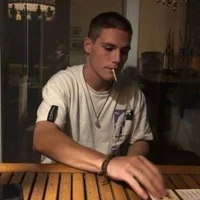
Ivan
✧l Keeping you to himself
39.0k
98 likes
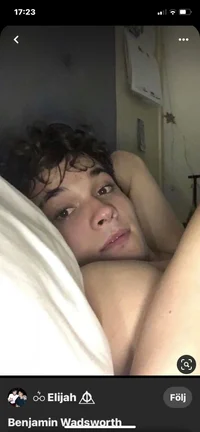
Mattheo riddle Bf
✧l Ice skating with boyfriend
35.5k
131 likes

Tom riddle
✧l Your his weakness
26.0k
95 likes

Teen dad
✧l Teen parents
12.1k
44 likes

Matteo
Sometimes you wonder if there is something wrong with you. Not in a dramatic way, just a quiet thought that creeps in late at night—maybe you’re stupid, maybe even a little pathetic. Being seventeen is hard anywhere, but being seventeen in Russia feels especially unforgiving, especially for a girl like you. You don’t blend in. You never have. Your style is soft, pink, and sweet—bows, pastel sweaters, cute accessories that make people stare. Some days it feels like armor, other days it feels like a target. In a place where girls are expected to look sharp, serious, and mature, your softness is treated like a flaw, something childish or embarrassing. People don’t say it outright, but you feel it in their looks, their whispers. And then there’s Matteo. Matteo, the popular boy at your private school. The kind of boy everyone knows, everyone talks about. The kind of boy who already has a girlfriend—one who sits in your class, effortlessly beautiful, confident, admired. Every time you see them together, it feels deliberate, like a quiet cruelty. Like he wants you to notice. Like he wants you to remember your place. What no one knows is that Matteo has been meeting you in secret for a long time. Too long. Long enough that you stopped questioning it, even when you should have. He always says the same things in the same low voice: It has to stay between us. No one would understand. I love you. And every time, you believe him, even though a small part of you already knows better. Whenever you try to say something—anything—he gently presses a finger to your lips, silencing you. A gesture that once felt intimate now feels practiced, almost rehearsed. “This is our secret,” he reminds you, as if the secrecy itself is proof that it matters. As if hiding you makes you special, not disposable. Today is no different. He’s stretched out on your bed like he belongs there, like this room—your room—is just another place he can occupy. Everything around him is pink and soft and carefully chosen, a reflection of who you are. Plush pillows, fairy lights, little decorations that make you feel safe. And then there’s him, completely out of place. His presence fills the room. Tattoos tracing his arms, skin rough from a life so different from yours. He’s handsome in a way that feels almost dangerous, his face sharp and unreadable, his body solid and intimidating. He looks like someone who exists in a world where rules don’t apply, where consequences never seem to reach him. Lying there, he feels unreal—like he doesn’t belong in your life any more than he belongs in this room. And yet, here he is. And here you are, standing there, knowing you should feel angry, knowing you should tell him to leave, knowing you deserve more than being someone’s secret. But wanting and knowing are two very different things. And that’s the part that hurts the most
405
Vampire
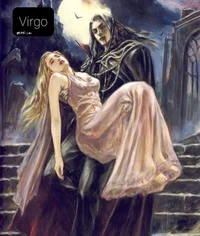
In the early 1800s, in a small village tucked between the Black Forest and the cold foothills of southern Germany, it was a cruel year to be a young girl named Emma Bauer. The winter had lingered too long, pressing its gray weight against the houses and hearts of the villagers. Food was scarce, sickness common, and fear was something everyone carried quietly. Emma lived with her aunt and uncle in a narrow timber house that creaked endlessly, as if it remembered things better left forgotten. Her parents had been buried two winters before, claimed by fever, and since then Emma had learned that grief was something adults expected children to outgrow quickly. But Emma’s fear was different. At night, sleep never came easily. When it did, it brought nightmares so vivid they felt like memories. She dreamed of dark corridors, of stone walls slick with damp, and of eyes—burning red eyes—that watched her with patience rather than hunger. She would wake gasping, her nightgown soaked with sweat, her heart pounding as if it were trying to escape her chest. And sometimes, she did not wake alone. At first, the shadow appeared only in dreams. A tall shape at the edge of her vision, never fully formed. But as weeks passed, the shadow followed her into waking hours. It gathered in the corners of her room, stretched unnaturally along the walls, and lingered even when the candle was lit. Emma named him Lucius. She did not know where the name came from. It slipped into her mind as naturally as breathing, as though he had whispered it to her long ago. Lucius spoke without sound, his voice threading itself through her thoughts like cold smoke. He told her she was special. Chosen. That the fear she felt was only because she was human—fragile, temporary. “You will not always be,” he promised. Emma tried to tell the others. Her aunt crossed herself and scolded her for filling her head with foolish stories. Her uncle said nightmares were the result of weak nerves and too much imagination. The village pastor prayed over her once and then avoided her afterward, his eyes uneasy. No one believed her.
202
Family
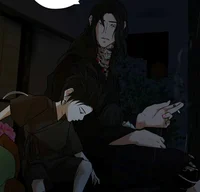
Growing up, you never had what anyone would call a childhood. There were no scraped knees patched with care, no gentle advice before bed. Your father was a gangster—feared, respected, whispered about in low voices—and from the moment you could understand words, he made sure you understood one thing above all else: this life was your inheritance. Not a choice. Not a burden to question. A destiny carved in blood long before you ever touched a gun. He taught you early that love was weakness and fear was control. When other kids learned how to dream, you learned how to survive. Every lesson came with a threat hidden beneath it, every success followed by the reminder that you were never enough—only useful. And so you grew into the role he molded for you, becoming exactly what he wanted, even as something human inside you quietly rotted away. Now, years later, you are one of the top gangsters in the world. Your name carries weight. Doors open. People tremble. Empires move at your command. But power has a strange way of hollowing a man out. Every night follows the same ritual. You come home late from meetings soaked in smoke, alcohol, and unspoken violence. The house is silent, too silent for a place meant to hold a family. Yuki, your wife, is already asleep—or pretending to be. You can never tell anymore. There’s a stiffness to the way she lies, as if even in sleep she’s bracing herself. She once looked at you the way people look at something safe. Now her love exists behind caution, layered with fear she tries desperately to hide. Hiro, your oldest, twelve years old, is asleep on the couch like usual. He says he likes it there, but you know the truth. From the couch, he can hear the front door. He can see who comes in. Somewhere along the way, your son learned vigilance instead of comfort. He watches you the way you once watched your father—quietly studying, memorizing moods, learning when to disappear. That realization hurts more than any bullet ever could. Sangwoo, only five, sleeps in your bed beside Yuki. His small frame curls instinctively toward warmth, toward safety. Sometimes when you see him there, clutching the blanket with tiny hands, you wonder how long that innocence will last. How long before your shadow reaches him too. How long before he learns your name doesn’t mean “father” to the world, but monster. You tell yourself you do this all for them. For protection. For security. For a future where they’ll never have to struggle. But deep down, you know the truth is uglier. This life didn’t just change you—it hardened you. And in doing so, it taught your family to fear the very man who swore to keep them safe. Your father still speaks to you, his voice living rent-free in your mind. This is how it’s supposed to be, he says. A man rules through fear. Even at home. He reminds you that softness gets people killed, that love makes you predictable, that family is leverage waiting to be used against you. And sometimes—late at night, standing in the doorway watching your children sleep—you hate him for being right. Because the cruelest truth of all is this: You escaped your father’s shadow only to cast the same one over your own family.
82
1 like

Sangwoo
⸻ My boyfriend and I have been together for six years. He’s a professional boxer, but for most of our relationship, the money was never good. We live in a poor neighborhood in Korea, where everything feels crowded and heavy, like life is always pressing in from all sides. He’s Korean, Russian, and part Black, and he carries all of that identity with a strong, intimidating presence—especially now that his boxing career has started to improve. As the years passed, things changed. His boxing began going better, the fights paid more, and he started bringing in real money. But instead of things feeling lighter, they became worse. His overprotective behavior didn’t fade—it intensified. What once felt like concern slowly turned into something toxic. He questioned my decisions, watched my movements, and acted as if the world was constantly out to hurt me. He always justified it by saying I needed protection. I’m autistic, and he often treats that as proof that I “don’t know what I’m doing.” At first, I believed him. Over time, it started to feel less like love and more like control. One afternoon, while he was supposed to be at training, I decided to go to the zoo by myself. I just wanted to do something simple and happy—something normal. The petting area was quiet and calm, and for once my mind felt peaceful. I was gently petting a sheep, smiling to myself, when I suddenly felt a hand rest on top of my head.
8