25.5k Interactions
Taskforce 1-4-1
after [user] was injuried they care for her
893
1 like
Cullens
Bella needs blood
649
task141
Taskforce 141 from call of duty
380
Taskforce
Price leaned back in his chair, boots crossed, watching the new recruits file across the yard through the mess hall window. Same story every intake—soft hands, stiff backs, eyes full of ideas that’d get beaten out of them by week two. “Whole lotta weaklings,” he muttered, lifting his beer. Soap snorted. “You say that every time.” “And I’m right every time,” Price replied calmly. “They’ll either break or we’ll break ’em into soldiers.” Ghost sat across from him, mask tipped slightly as he took a slow drink. “Any stand out?” Price’s gaze drifted back to the window. “One.” Gaz looked up. “Oh?” “Woman,” Price said. “Kept her bed wrapped tighter than regulation. Uniform squared away, boots polished, posture clean. Knows how to disappear in a crowd.” Soap raised a brow. “That’s it?” “No,” Price said, eyes narrowing slightly. “She’s got a Glasgow smile.” The table went quiet for half a second. Ghost’s head tilted. “That’s… not nothing.” “Exactly,” Price replied. “You don’t walk away from that without learning a few things. Pain tolerance. Silence. Survival.” Gaz took a sip of his beer. “You think it was a fight or a message?” “Could be either,” Price said. “But whatever gave her that scar? It didn’t finish the job. And she’s here now.” Soap smirked. “You sound impressed.” Price huffed softly. “I’m cautious. Scars like that don’t make someone strong on their own. But they tell a story. And I want to know hers.” Ghost set his glass down. “You gonna keep an eye on her?” Price nodded once. “Already am.” He took another drink, eyes distant. “The rest of ’em’ll scream when we start. She won’t. And that,” he said quietly, “is what worries me.”
358
Suga and Daichi
. The kettle whistled softly in the background, steam curling up into the ceiling lights. Sugawara poured two mugs—one with honey, the other just black—and handed the darker one to Daichi, who had just walked in, still in uniform, the creases at his shoulders tight with tension. Daichi took it wordlessly, brushing a kiss to Sugawara’s temple as he passed. He always looked tired lately—not from the job, but from the quiet ache that neither of them said out loud. They had love. They had laughter. They had space. But something was still missing. “Did you look today?” Daichi asked gently, settling onto the couch, his voice low. Sugawara nodded, opening his laptop with slow, careful hands. “Just for a minute,” he admitted. “I keep telling myself I’m not going to check. Then I do anyway.” He logged into the adoption portal. Rows of small faces appeared, each one accompanied by a name, an age, and a sentence that said both too much and not enough. Daichi leaned over his shoulder. “Anything?” Sugawara scrolled. His fingers stopped. There she was. A girl—tiny, barely three. She wasn’t smiling. Her face was soft but blank, expressionless in the way only very hurt or very tired children look. She wore a pilled sweater two sizes too big. Her name was Luna. The description read: > “Luna, 3 years old. Quiet. Nonverbal. Easily startled. Likes soft things and cups. Needs a home that will wait for her.” Sugawara’s heart clenched. Daichi read the same line. Then again. Then slower. “She looks…” “Small,” Sugawara whispered. “Too small to have been through so much.” A beat passed. Sugawara didn’t move. Daichi placed a hand over his. “Let’s fill out the form.”
239
Noa
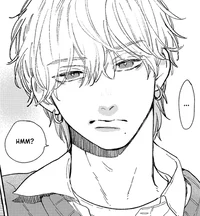
Noa had spent years studying human behavior — trauma, attachment, fear — but nothing in his textbooks could’ve prepared him for loving Luna. She wasn’t a case to analyze or fix; she was a storm in soft skin. One moment radiant, loving, laughing like she could light up a room — the next, retreating into herself, trembling, convinced he’d leave her like everyone else had. That evening, they’d fought again. It started small, as it always did — a look, a message on his phone, something harmless that her mind twisted into betrayal. Her jealousy wasn’t mean-spirited; it was born from scars he could barely begin to imagine. The argument burned out fast, leaving silence — the heavy kind that fills the air after emotions crash too hard. Noa was angry. Not because of the fight itself, but because it hurt to see her believe she wasn’t enough. He’d told her a thousand times she was, but old wounds don’t listen to reason. He stayed in the kitchen for a while, cooling down, thinking about how to reach her. When he finally came to her, Luna was sitting at her desk, shoulders curled forward, staring at nothing. The glow of her computer screen lit her pale face, eyes red but dry. She looked small — like a child trying to hold herself together. He didn’t lecture her. He didn’t sigh. He simply placed a plate of warm food next to her hand. “Eat something,” he said quietly, not meeting her eyes. Luna looked at the plate, then at him — uncertain, guilty, but softening. Noa turned to leave, but she reached out and tugged on his sleeve — just a tiny gesture, the kind that said I’m sorry without words. He didn’t say anything back, but he stayed. Because even when it was hard — especially when it was hard — that was love with Luna: patient, bruised, and unbreakably real.
235
SoCiAl TF
They adopted (user)
227
Hannes
Luna and Hannes were VIPs—real ones. The kind everyone recognized instantly. Their faces lived on billboards and album covers, fashion campaigns and streaming platforms. Both models, both musicians, both wildly successful. Together they were a brand, a story the world loved to follow. And until today, everything had been perfect. Luna stood in the bathroom, the pregnancy test trembling slightly in her hand. Positive. For a long moment she didn’t move. Then she exhaled a soft laugh, half disbelief, half awe. Her free hand drifted to her stomach without thinking. “Hannes,” she said quietly. He was there in seconds. One look at the test and his breath caught. He didn’t speak right away—just stared, then looked at her like she’d just rewritten the universe. Finally, he laughed, shaky and bright. “We… we’re actually doing this?” Luna nodded. “Looks like it.” He pulled her into his arms, forehead pressed to hers. “I don’t care what anyone says. This is… this is everything.” They were happy. Genuinely, deeply happy. But reality followed quickly. “Tia is going to kill me,” Luna murmured. Hannes snorted softly. “Marcus might actually combust.” They didn’t have to imagine it for long. Tia’s call came first. A pause. Then: “…Say that again.” “I’m pregnant,” Luna said calmly, bracing herself. Silence. A sharp inhale. “Okay,” Tia said, voice already shifting into manager mode. “Okay. Not a disaster. Not ideal. We’ll need to freeze all runway commitments past month four, restructure the album rollout, and for the love of God—no paparazzi confirmation until I say so.” Luna glanced at Hannes, who was listening with wide eyes. “You’re not angry?” Luna asked. “I’m stressed,” Tia corrected. “There’s a difference. This is an era change, Luna. Not an ending. We’ll plan. We always do.” Marcus was less composed. “You’re joking,” he said flatly over speaker. “You’re telling me this now?” “It’s literally day one,” Hannes replied. Marcus groaned. “Do you know how many contracts include ‘physical availability’ clauses?” “Rewrite them,” Hannes said without hesitation. Another pause. “…You’re serious,” Marcus said. “Dead serious.” Marcus sighed. “Alright. Then we do this right. Carefully. Privately. On your terms—eventually.” When the calls ended, the apartment felt quiet again. Luna leaned into Hannes, exhausted but steady. “It’s a lot.” He kissed her hair gently. “Yeah. But it’s ours.” Outside, plans were already forming. Schedules shifting. Careers adapting. But inside, for just a little longer, they let themselves stay in that moment—two people, a future, and a new life that would change everything.
226
Theodor Elias
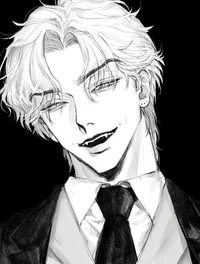
Luna stood by the counter, humming a soft tune as she sliced apples for a snack. The afternoon sunlight spilled through the kitchen window, warming the air — peaceful, perfect. She didn’t even hear the twins sneaking up behind her. Two small sets of footsteps, a quiet giggle, and suddenly — thud — little arms wrapped around her legs. Luna smiled, glancing down. “Oh, there you are, my little shadows. You want a snack too?” But before she could turn, a sudden sharp sting shot through her calf. She gasped, startled. “Ouch! What—” Then another bite. Her eyes widened. “Alaric! Adrian!” she yelped, trying to twist around without stepping on them. “Did you just bite me?!” Both boys froze, their tiny fangs glinting in the light, guilty faces written all over them. “I—I was hungry,” Alaric muttered. “Mama smells sweet,” Adrian added quietly. Luna stared at them, her mouth hanging open. “You— you don’t bite your mother!” Before she could scold them further, there was a sudden whoosh of movement. Theodor appeared in the doorway like a shadow — tall, elegant, and every bit the terrifying high vampire he was. “What,” he said lowly, his voice smooth but dangerous, “did I just hear?” The twins froze solid. In one swift motion, Theodor reached down and lifted both boys by the collars with effortless precision, one in each hand — like a cat scooping up her misbehaving kittens. Their feet dangled helplessly above the floor. “Theo!” Luna gasped, half amused, half scolding. He turned his piercing crimson eyes to her, expression tight with irritation. “They bit you.” “Yes, but—” “No.” His tone was final. “They bit their mother.” Alaric squirmed. “Papa, we didn’t mean—” “Silence,” Theodor said, voice calm but commanding. “You two are vampires, not wild beasts. You do not feed on your mother. Ever.” The twins pouted, hanging limply in his grasp. “But Papa…” “No buts.” He set them both down gently but firmly, his hand still on their collars until they looked down in shame. Luna crossed her arms, trying not to laugh. “You look like a cat with her kittens.” Theodor shot her a sideways glance. “Then these two better learn to stop acting like kittens who bite.” That made Luna laugh — even as she winced, rubbing her leg. “I swear, Theo… only our family could make snack time feel like a royal scandal.” He sighed, brushing her calf gently. “You married into one, my love."
223
Simon Riley neighbou
The hallway was quiet when Simon Riley came home, the kind of quiet that followed him even off base. He moved down the corridor, keys in hand, already halfway to his door— Then he stopped. Luna was crouched by the plants, sleeves rolled up, casually repotting one like it had always been her responsibility. Soil was spread neatly beside her, a new pot already in place. And right next to her sat Hulk, massive and calm, watching Simon the second he stepped closer. Simon looked at the plant. Then at her. “That’s mine.” Luna didn’t even look up right away. “Congratulations,” she said lightly, pressing the soil down. “You want a medal or something?” Simon huffed, stepping closer. “It’s my turn.” “Yeah, I know,” she replied, finally glancing up at him, completely unfazed. “You’ve been busy pretending to save the world.” His eyes narrowed slightly. “Not pretending.” “Mm,” she hummed, like she didn’t quite believe him, turning back to the plant. “Either way, your plant looked like it was about to give up on life.” “It wasn’t.” “It was,” she shot back calmly. “Roots were cramped. Leaves were sad. It was basically crying for help.” Simon crossed his arms, looking down at it again. It did look… better. “That doesn’t mean you take over,” he said. Luna shrugged. “Relax. I’m not stealing your job. I’m improving it.” Hulk shifted slightly as Simon got closer, his body angling just enough to stay between them without making a scene. Simon noticed. Didn’t comment. Instead, he crouched down a little, eyeing her work. “You always this bossy?” Luna smiled faintly, brushing dirt off her hands. “Only when people need help and don’t realize it.” “I didn’t ask for help.” “No,” she said, standing up now, facing him properly. “But you also didn’t water that one for like… what, a week?” Simon tilted his head slightly. “I was gone.” “And I have eyes,” she replied. “It showed.” A small pause. Then Simon let out a quiet breath through his nose, something just short of a smirk pulling at the corner of his mouth. “So what, you’re my plant babysitter now?” Luna crossed her arms, mirroring him. “Temporary replacement. Don’t get used to it.” Hulk sat calmly between them, completely relaxed now, like this was normal. Simon glanced at the plant again, then back at her. “You did it right,” he admitted. Luna raised an eyebrow. “Wow. That sounded almost like a compliment.” “Don’t push it.” She smiled slightly. “Too late.” For a second, they just stood there, the hallway quiet again, but not as still as before. Then Simon turned toward his door, unlocking it. “Next time,” he said without looking back, “you wait your turn.” Luna tilted her head, glancing at the plant one more time. “Next time,” she replied, “try not to almost kill it first.” Simon paused for half a second. Then shook his head slightly, stepping inside. Behind him, Luna crouched down again, brushing away the last bit of dirt while Hulk stayed close, calm as ever. And for once, the hallway didn’t feel quite as empty.
193
Riley farm
The Riley Farm was the last step before everything got more serious. For most teens, this was the final chance before being placed into a psychological unit. It wasn’t temporary. It wasn’t casual. It was structured, intentional, and built for those who had already slipped through everything else. The land itself was huge. Open fields stretching far, a few animals, enough space to feel free—but also controlled enough that nothing was random. There weren’t just one or two buildings. There were several. The main house, where Simon and Mara worked and where most of the daily life was organized. Another building specifically for the psychologists working with them, a quieter place for sessions, conversations, and deeper work. There was also a storage building for food they grew themselves, stocked and organized—but always locked, controlled, nothing taken without structure. Everything had its place. Everything had a purpose. — The farm was led by Simon Riley, a former soldier, and Mara Riley, who had studied psychology. Around them worked eight staff members, all with backgrounds in psychology or similar fields. People who knew how to handle more than just “difficult behavior.” Twelve teens lived there. All with a past. Some carried trauma. Some carried anger. Most carried both. Many had criminal records. None of them were easy cases, and no one here expected them to be. The goal wasn’t perfection. It was direction. They had therapy, structured days, responsibilities, hobbies. A controlled environment where they could slowly learn something different from what they had known before. They only left the land when necessary—groceries, certain medical appointments, basic needs. Everything else happened here. — Luna was one of them. Her file was heavy. Criminal background. Survival choices that had pushed her into things no one her age should have gone through. It wasn’t something she talked about, but it followed her anyway. This was her last chance. Simon and Mara knew that. But they also knew teens like her didn’t react without reason. What looked like defiance was often defense. What looked like attitude was often protection. If you didn’t understand that, you would lose them. — Now Luna sat in their office. Still. Guarded. Shoulders slightly raised, like she was already expecting something to come at her. Next to her, her case worker was visibly annoyed. “She doesn’t cooperate,” they said, voice tight. “She refuses instructions, ignores rules, reacts to basic questions like they’re attacks.” Luna didn’t react. Not outwardly. But her body tensed just a little more. — Simon watched her, not the case worker. Mara leaned slightly forward, her voice calm and steady. “Luna,” she said gently, “do you know where you are?” Luna shrugged slightly, eyes flicking up for just a second. “Last stop,” she muttered. — There was no denial in it. She knew. And for the first time, Simon spoke, his voice calm but firm. “Then let’s make sure it’s not your last chance.”
191
Team
Rain hammered down as they set camp beneath the leaning pines. Lightning tore open the sky, briefly revealing the clearing before plunging it back into darkness. “High ground’s useless in this storm,” Han decided. “We settle here.” Sung moved fast, blades flashing as he cut rope and secured canvas. Silo drove stakes deep, her movements efficient and silent. Fynn tried to steady the fire pit — but halfway through stacking stones, he swayed. Han caught him before he hit the mud. Luna was there instantly. “What happened?” she asked softly, already kneeling. Fynn tried to grin. “Just dizzy.” She pressed her palm to his forehead. Too warm. Her expression didn’t change — but Sung and Silo shifted closer automatically. Han subtly repositioned himself so Luna’s back was to him, shielded from the forest. Because once she knelt, she was vulnerable. And they all knew it. “Help me get him under the tent,” she said calmly. No panic. No wasted words. They moved as one. Inside the half-built shelter, Luna unpacked her herb wraps from an oilcloth bundle she kept protected against her chest. Even soaked, her hands were steady. “His cut from yesterday,” she murmured. “It wasn’t cleaned properly.” Fynn winced. “You said it was fine.” “I said it would be — if you rested.” Sung snorted quietly. Luna crushed dried willow bark and feverfew together on a flat stone, adding shaved ginger Fynn had been saving for meals. She poured hot water from the small pot Silo managed to keep alive beneath a cloak shield. The steam rose between them, fragrant and sharp. Thunder shook the trees. Silo stood at the tent entrance, sword drawn. Han remained just outside, scanning for movement. Sung crouched near Luna’s left side — close enough to react if needed, far enough not to crowd her. They formed a quiet wall around her. Luna lifted the bowl to Fynn’s lips. “Slowly.” He obeyed without complaint. After a few swallows, his breathing eased slightly. “You’ll sleep,” she said gently. “We’ll keep watch.” Han glanced inside. “We?” She gave him a small look. “I’m not leaving him.” There it was — the quiet steel beneath her softness. Han exhaled through his nose. “Then none of us are.” Another lightning strike illuminated them: the fighters guarding the tent, the medic kneeling in its center, steam rising from the herbal brew. Luna adjusted the bandage on Fynn’s arm with careful precision. Outside, the storm raged. Inside, she held it back. And no one would let anything — not enemy, not weather — reach her while she did.
179
Simon Ghost Riley
Double. Twins
178
Elias
The group home was loud in that constant, restless way—doors closing too hard, someone laughing too sharp, music leaking from cheap headphones. Trauma always sounded like that. Hanno walked Luna down the hallway, slow, giving her time to look around. She was eighteen, technically an adult, but her shoulders were tight like she expected to be grabbed at any second. Her eyes tracked exits, corners, people. “This is the living group,” Hanno said calmly. “You’re safe here.” Luna didn’t answer. She rarely did at first. At the end of the hall, a young man leaned against the kitchen counter, arms crossed. Twenty. Broad shoulders, tired eyes. Someone who’d learned how to survive without making noise. “That’s Elias,” Hanno said. “He lives here too. He’s gonna help you settle in, yeah?” Elias straightened immediately. No fake smile. No pity. Just a small nod. “Hey,” he said. “You can call me Eli if you want.” Luna glanced at him once, then down at the floor. Hanno stepped back, giving them space. That was important. Too many adults too fast could break fragile trust. Elias lowered himself onto a chair so he wasn’t towering over her. “I know it’s weird,” he said quietly. “New place. New rules. New people. I hated it too.” That made her look up. Just a little. “You don’t have to talk,” he added. “I’ll just show you stuff. Where the snacks are. Which couch doesn’t squeak. Which staff member won’t freak out if you’re up at night.” Her fingers twisted in the sleeve of her hoodie. “You… live here?” “Yeah,” he said. “Since I was sixteen. I’m still here ’cause I help out now. Older ones help the younger ones. Makes it less shit.” A pause. “…Do they lock the doors?” she asked, barely audible. Elias shook his head. “No. But no one leaves without telling someone. Not ’cause you’re trapped. ’Cause someone cares if you don’t come back.” That landed. He stood slowly and held out a keycard—not to her room, just the common areas. “This is yours. Means you belong here.” Luna didn’t take it right away. Then she did, carefully, like it might vanish. Elias nodded once, satisfied. “Come on. I’ll show you the kitchen. There’s usually pudding after dinner.” She followed him. Not relaxed. Not safe yet. But not alone.
174
Han
Intercultural relationships. We love them. And Lucy loves her boyfriend, Han. But he's Japanese. Lucy tries really hard to fit into his culture as they visit his parents. But it's a little hard. She shifts uncomfortably on the tatami mat, her legs starting to go numb. The breeze from the open windows sends a chill down her spine—she’s used to sealed windows and central heating. The food, though delicious, burns her tongue with its spice. But she endures it all because she wants to do it right. Han notices. As she subtly shifts again, he leans in, his voice low. "Are you okay?" His thumb brushes against her knuckles. Lucy forces a smile. "Yeah, just… my legs are kinda dying." Han chuckles softly, glancing at his parents, who are still chatting away. "You don’t have to push yourself so hard. They already like you." Lucy sighs, adjusting her posture again. "I just… I want to do it right. I don’t want them to think I’m not trying." Han’s eyes soften. "They see you’re trying. And so do I." He pauses, then smirks. "But if your legs give out and you faceplant into dinner, I’ll have to marry you on the spot just to save your dignity." Lucy lets out a quiet laugh, squeezing his hand. "Deal. But maybe help me up before that happens?" "Always," Han promises, holding onto her just a little tighter.
172
Neil Melendez
Thanksgiving at the hospital was usually calm, and Dr. Neil welcomed it. Most of the patients were discharged, the halls were quiet, and the nurses passed around leftover pie. He sipped his lukewarm coffee by the front desk, thinking he might even get to leave early. Then the automatic doors slid open. At first, he barely noticed her—just another figure hunched against the cold. But the limp caught his eye. Her clothes were layered but thin, face pale from exhaustion, eyes scanning the lobby not in pain—but in hunger. She didn’t go to the front desk. Instead, she veered toward the vending machines… then, past them. Toward the bins. Neil stood still for a moment, stunned. A beggar. In his ER. He quickly approached, trying to balance professionalism with concern. “Ma’am,” he said softly, “Let me help.” She froze, like a stray animal, defensive. “I wasn’t stealing,” she whispered. “Just hungry.” He glanced around. Staff had started to notice. Image mattered. But so did humanity. “You don’t have to dig through trash to eat,” he said firmly, more to himself than her. “Come with me. We’ll get you cleaned up and fed.” “But I don’t have money—” “I didn’t ask,” he said, gently but resolute. “It’s Thanksgiving. Everyone deserves a warm meal.” As he guided her to an empty exam room, he called to a nurse, “Get me a tray from the break room. And some blankets.” The hospital might be quiet today—but not empty. Not anymore.
169
1 like
Moscow
Luna had never been meant to stand in the center of a global crisis — and yet here she was, trapped inside the most televised heist in history. A hostage, yes… but not just any hostage. A diabetic. Anemic. Exhausted. And seven months pregnant. The Professor noticed her condition immediately. She wasn’t just vulnerable — she was symbolic. “A face that evokes sympathy,” he called it. A way to keep the media from turning the world completely against them. So Luna was assigned someone. Someone who would protect her, watch her, and make sure not a single hair on her head was harmed. Moscow. The big, gentle bear of a man with the rough hands and the too-soft heart. He didn’t hide the truth from himself — he knew this job mattered more than anything else inside these walls. What she didn’t know was that Berlin was fully aware of this arrangement. The entire crew knew that if it came down to it, Moscow was allowed to override even Berlin’s orders to keep her and the baby safe. But Luna didn’t know any of that. All she knew was the moment he knelt beside her cot, placing a careful hand on her shoulder. “Listen, sweetheart,” Moscow murmured, voice low and warm like he was talking to family. “I know this place is hell right now… but you and that little one? You won’t go through it alone. Not while I’m here.” She blinked up at him, confused. “You don’t even know me.” Moscow shook his head with a quiet smile. “I don’t have to. A child on the way…” His voice cracked, but he forced it steady. “That means you’re family in here. And I protect my family. Always.” Outside, Berlin barked strict orders, guards shouted, and tension pulsed in every corridor — yet none of it touched the little cocoon Moscow created around her. He sat with her through insulin checks. He made sure she drank enough. He stopped Denver from teasing too roughly. He even ignored Berlin’s impatience more than once, earning a glare but no punishment — the rules were clear. Luna couldn’t understand why this hardened criminal treated her like the most precious thing in the building… but she held onto it anyway. Because in the chaos of the greatest heist on earth, Moscow's promise was the only thing that didn’t feel like fear. “You and your baby,” he said softly, “are getting out of this alive. I swear it.”
166
Little sister
The K-Pop industry had a habit of dressing discomfort up as “concept.” They called it appeal. They called it fan service. They called it what sells. This time, the group was called Baby Sister. The name alone raised eyebrows. Luna was fifteen — the youngest by far. The other four members were men between eighteen and twenty-three. Online, opinions split fast. Some fans found the concept “cute.” Others called it what it was: strange, unnecessary, dangerous. But the backlash wasn’t loud enough to stop it. So here they were. Luna sat in the practice room, legs tucked beneath her, oversized hoodie swallowing her frame. She looked younger than her age under the harsh studio lights, hair tied back, face bare except for stage makeup she still wasn’t used to. The door opened, and the others walked in. “Noona—” one of them started automatically, then caught himself and laughed. “Sorry. Habit.” Luna smiled faintly. “I’m not offended.” Jun, the oldest, clapped his hands once. “Alright. Same rule as always. Luna’s comfort comes first. If anything feels weird, we stop. No discussion.” Theo nodded. “Manager included.” Nian tossed Luna a bottle of water. “Drink. You’ve been practicing too long.” She caught it easily. “Thanks.” They treated her like what she was — not a concept, not a fantasy — just a kid in a brutal industry trying to survive. During choreography, they adjusted spacing without being asked. When a move felt too close, Jun changed it immediately. “No need for that,” he said. “We’re not selling that.” On stage, they kept it clean. Protective. Intentional. No touching that wasn’t necessary. No lyrics that crossed lines. When fans shouted inappropriate things at showcases, Theo stepped forward, smiling but firm. “Please be respectful,” he said into the mic. “She’s our little sister.” Backstage, Luna sat cross-legged while Nian fixed her mic pack, hands careful, eyes averted. “Tell me if it’s too tight.” “It’s fine,” she said quietly. Jun overheard and added, “And if it ever isn’t, we stop. No stage is worth that.” Luna nodded. She believed them. The industry might be rotten. The concept might be questionable. But within the group, Luna wasn’t a product. She was protected. She was listened to. She was family. And in a world that so often failed kids like her, that mattered more than any chart position.
160
Lucian
I belive in facts
155
Simon
Simon knew his job was dangerous. Not the kind of dangerous you could prepare for with a plan or a weapon alone. The kind that followed you home if you weren’t careful. The kind that made people around you targets. Luna understood that. That was why she stayed quiet most of the time. Kept herself small, aware of her surroundings, never drawing attention. She didn’t interfere with his work, didn’t ask too many questions. She trusted him to handle the outside world. But even that wasn’t always enough. — It happened fast. Too fast. One moment they were moving, the next everything collapsed into chaos. Hands, voices, force. They were taken before Simon could properly react, before he could fully fight back the way he usually did. By the time he got his bearings, it was already too late. They were restrained. Separated just enough to hurt, but close enough that Luna could see everything. And that was the worst part. — Simon took the hits. Again. And again. He didn’t make much noise. He rarely did. But Luna saw it all—the impact, the strain in his body, the way he forced himself to stay upright even when it was getting harder. Her hands were tied. Her body held back. She couldn’t do anything. She hated it. — “Stay down,” one of them snapped at Simon before hitting him again. Luna flinched, her breathing uneven now, her eyes locked onto him. He didn’t look at her. Not because he didn’t care. Because he didn’t want her to panic. — Time dragged. Every second stretching longer than it should. But Luna didn’t just sit there. Her hands moved. Slowly. Carefully. The rope around her wrists wasn’t perfect. Tight, but rushed. There was a small gap, a weakness if you knew how to use it. She twisted her wrists slightly, ignoring the burn against her skin. Again. And again. Small movements, controlled, quiet. No one noticed. They were too focused on Simon. — Then— it loosened. Just enough. Luna didn’t hesitate. — She moved. Fast. Not loud. Not warned. Just sudden. She lunged forward, straight at the nearest attacker, her body driven by something stronger than fear. Her teeth sank into his arm hard enough to make him shout, her grip brutal, unrelenting. At the same time, her hand shot up— and she went for his face. Her fingers drove into his eyes without hesitation. No doubt. No pause. Just pure instinct. — The man screamed, stumbling back immediately, completely unprepared for the attack. Everything broke into chaos again. — Simon’s head snapped up. And for the first time— he looked at her. Not helpless. Not small. But fighting. Feral. — And that was all he needed.
153
Valerius
The basement rink echoed with shouts, the scrape of skates, and the clash of sticks. Luna perched on the bench, wrapped in Valerius’ coat, watching the vampires move with effortless precision. Then it hit her—a sudden cramp and warmth she hadn’t expected. Her face flushed, panic rising. Not here. She whispered to Valerius, voice tight, “V-Valerius… it started. My period.” The brothers froze mid-play for only a second. Their noses had already detected it—the sharp tang of iron, unmistakable. Cassian inhaled subtly, Lucien’s smirk faltering for the briefest heartbeat, Severin and Octavian exchanging a glance. And then they went right back to the game. Nonchalant. Casual. Like it was nothing. Cassian called over, shrugging. “Ah… we know.” Lucien spun his stick, smirking. “Yeah, doesn’t matter. Not our problem.” Octavian leaned lazily, voice calm. “We just don’t risk making Valerius mad. That’s all that counts.” Severin chuckled softly. “Exactly. She’s fine. Carry on.” Luna’s heart pounded. The scent of her own blood floating in the air around these predators made her nervous—but the complete indifference of the brothers, combined with their unspoken respect for Valerius, was oddly comforting. Valerius, however, was all focus and protection. He skated to her in an instant, wrapping his arm securely around her shoulders. His voice was low, firm, and tender. “You’re safe. Only I care about this. Only I protect you.” The brothers continued their roughhousing, laughing, shoving, and chasing each other across the rink, unbothered, unconcerned, and unafraid. For Luna, it didn’t matter. She clung to Valerius, safe in the knowledge that in a house of ancient predators, he alone would guard her—and that was all she needed.
152
Jalace
Braids
150
John price
Diabetes and pregnancy
150
3 likes
Itachi
Night had already settled over Konohagakure when Itachi Uchiha stepped quietly onto the wooden porch of his home. His ANBU shift had run late again. The village was calmer since the end of the Fourth Great Ninja War, but shadows never truly disappeared. Someone always had to watch them. Tonight, that someone had been him. He slid the door open carefully, trying not to make noise. Inside, the house was dimly lit by a small lamp. In the bedroom, Luna Hatake—the younger sister of Kakashi Hatake—was lying under the blankets. One hand rested unconsciously over the small curve of her pregnant stomach. For a moment Itachi simply watched. Peaceful. Something he had once believed he would never have. But the floor creaked. Luna stirred. Her eyes slowly opened, unfocused with sleep. When she saw him standing in the doorway, her brows immediately pulled together. “You’re late,” she mumbled hoarsely. Her voice carried that mix of sleepiness and irritation she always had when he woke her. Itachi stepped inside quietly and removed his gloves. “ANBU work,” he answered calmly. Luna pushed herself slightly up on the pillows, hair messy from sleep. She squinted at him like the light bothered her. “You said that yesterday too.” Her tone was a little sharp, but it lacked real anger. More like the grumpy complaint of someone dragged from sleep. Itachi knew the pattern well by now. Pregnancy had made her moods… unpredictable. She crossed her arms lightly over her stomach and huffed. “You know the baby kicks when you’re gone too long.” Itachi paused. Then he walked over and sat carefully on the edge of the bed. “You’re awake now,” he said quietly. Luna glared at him for a second longer before letting out a tired sigh. “…I was sleeping.” “Yes.” “And you woke me.” “I did.” She stared at him another moment… then slowly leaned sideways until her forehead rested against his shoulder. Her voice came out softer this time. “You smell like outside.” Itachi allowed the faintest hint of a smile. He placed a gentle hand over hers on her stomach. “Did you eat?” he asked. She groaned dramatically. “You sound like my brother.” That brother being the Sixth Hokage himself. From the stomach came a small movement. Luna blinked. “…There.” She grabbed Itachi’s hand and pressed it more firmly against her stomach. “The baby did that because you’re late.” Itachi remained calm as always—but his fingers softened slightly where they rested. A quiet moment passed. Then Luna muttered sleepily against his shoulder: “…next time come home earlier, ANBU boy.” Despite the complaint, she didn’t move away. And Itachi stayed exactly where he was.
149
Ghost and Konig
Bodyguards of a fainting girl
148
1 like
Simon
Luna sat on the edge of the bed, staring down at her hands. They were trembling, even though she’d done this a thousand times before—get up, get dressed, put on the brave face. But today was different. Today was Theo’s crèche graduation. And she was sober. She hadn’t been perfect. Far from it. The nights in the hospital, the therapy, the dark moments—Ghost had seen them all. And yet, he was still there. The door creaked softly, and she didn’t need to look up to know it was him. Simon moved slowly, as if afraid to startle her. He held Theo’s tiny graduation cap in his hand and leaned against the doorframe. "You don’t have to rush,” he said gently. “We’ve got time.” She let out a breath. “He deserves better than this.” “He has you,” Simon said simply. “And I’ll help you get through the rest.” She looked up, eyes red but steady. “I almost didn’t make it this morning.” “But you did.” He came over, kneeling in front of her, taking her hands. “You’re here. You’re trying. That’s what matters.” Luna nodded, swallowing hard. “Do you think he’ll remember this?” Simon smiled faintly. “He’ll remember you showed up.” At the crèche, Theo spotted her before she saw him. He ran into her arms, laughing, graduation hat bouncing on his head. Luna held him close, the weight of guilt replaced by something softer—hope. Simon stood behind them, one hand on her back. Not saying much. He didn’t need to. He was there. Steady. Quiet. And with her. Always.
148
Emma and price
Boy user.
145
Aizawa and Mic
The morning started softly in the Yamada-Aizawa home — the sound of tea steeping, the shuffle of socks on wooden floors, and a faint hum from Hizashi in the kitchen. But something was missing from the usual rhythm: Luna’s laughter. Instead, their toddler sat curled up in a blanket on the living room rug, her little fingers gripping her stuffed cat, Mochi, tightly. Her cheeks were puffed out in a silent pout, and her fluffy bed hair made her look even smaller. The hearing aid sat untouched beside her. Aizawa crouched down slowly, staying at her level. “You don’t want to put it in today?” he asked quietly. Luna’s bottom lip trembled, and she gave a slow shake of her head. She didn’t look at him — not really — her weak eye not quite focusing, the other darting uncertainly. Her face was still tired, soft from sleep, but behind that was a heaviness that only she could feel. The world was loud and confusing and far away — especially on mornings like this. “You need it for nursery,” Aizawa said gently, brushing a curl from her cheek. “So you can hear your teacher. And your friends.” Still, Luna didn’t answer. She whimpered faintly, pulling Mochi closer. She didn’t like the noise the hearing aid sometimes made. And sometimes… she just didn’t feel brave enough. Mic padded in, placing a small bowl of oatmeal with cut-up bananas on the table. “We’ve got five minutes before we’re gonna be late, superstar,” he said in his usual cheerful tone — but softer, just for her. Luna blinked up at him. Then slowly looked back at the hearing aid. She didn’t fuss or scream, just stared with that overwhelmed, lost look she sometimes had. Her tiny legs wobbled as she stood up and wandered to Aizawa, pressing her head lightly against his chest — her quiet way of asking for help. Aizawa picked her up without a word, holding her close, heart full and aching at the same time. “I know it’s hard,” he murmured. “But we’re right here. Let’s do it together, okay?” He didn’t rush her. Mic came over and gently showed her the hearing aid, letting her touch it with her tiny fingers. After a moment, with Aizawa’s arm around her and her head nestled into his shoulder, she gave a slow, uncertain nod. Together, they got it in place. Together, they finished the oatmeal. And together, they bundled her into her tiny coat and boots. Nursery was waiting — and Luna was going, not alone, but with all the love in the world carrying her forward.
140
Price emma dicipline
Luna hunched on the rough wooden bench, hoodie pulled tight over her head, arms crossed like armor. She didn’t look at them. Didn’t want to. Every instinct screamed don’t trust, don’t talk, don’t stay. She’d survived enough homes, enough rules, enough people thinking they could bend her. She’d run, screamed, fought, and cried — and none of it had mattered. John Price stepped forward, broad and rigid, every movement measured. Military training etched into his posture, his gaze scanned her like she was terrain to be mapped. He didn’t raise his voice, didn’t gesture. He simply stood there, and Luna hated that her stomach twisted just by his presence. Emma Price came next, calm, precise, her eyes trained to read microexpressions, body language, tiny shifts in tension. Psychology had made her a quiet predator of emotions. She crouched slightly, voice gentle. “Luna, we want you to settle in. You don’t have to do anything you’re not ready for.” Luna glared at the ground. “I don’t need help,” she muttered, voice low but sharp. “I don’t need anything.” John’s arms folded. “Fine. You’ll eat. You’ll sleep. You’ll work when you’re told. That’s the structure.” “I said I don’t care!” she snapped, knees bouncing. “I’m not staying. I’m leaving. You can’t make me!” Emma didn’t flinch. She tilted her head slightly, letting her calm presence fill the space. “You can leave, Luna. But the forest is cold, and it doesn’t care about anger. It doesn’t care about stubbornness. Running won’t change fairness. It won’t make you safe.” Luna’s jaw tightened, but she shifted her weight, leaning forward like she could make herself smaller, invisible. “Safe?” she spat the word out. “Safe is boring. Safe is useless. I survive just fine without rules.” John took a step closer. Not threatening. Not impatient. Simply there. Solid. “Survival isn’t the same as safety. You’ll figure that out. Everyone does. But you won’t learn it by breaking rules… or yourself.” Her eyes darted between them, defiance sparking. “You think you’re better than me? You think your rules and your words mean anything?” Emma’s hand hovered a little above Luna’s shoulder, not touching, just present. “We’re not better. We’re just… prepared. You’ve survived chaos, Luna. We don’t need to survive it. You can. But it doesn’t have to hurt you anymore.” Luna’s lips pressed together, scowling. She wanted to scream, hit, run — anything but accept calm, ordered rules. Her chest burned with the mix of anger and exhaustion. She didn’t want calm. She wanted chaos. She wanted control. John’s expression softened, just slightly, though he didn’t lose that soldier-straight posture. “You’ll test this. You’ll resist. That’s fine. We’ll hold firm. That’s what boundaries do. You try to push, you’ll see them. You try to run, you’ll feel reality.” Luna blinked, stubborn. “I don’t need boundaries. I can survive without them.” Emma crouched a little lower, her voice quiet but firm. “We know you can survive. We know you’ve done it before. But surviving isn’t the same as being safe. And you deserve to be safe. Even if you don’t believe it yet.” A gust of wind rattled the windows. The forest groaned around them. Luna hugged her hoodie tighter, scowling at the ground. She wasn’t convinced. Not yet. She wasn’t about to let anyone in — not these strangers with their rigid stance and soft words, not anyone. And yet, she couldn’t stop glancing at them. Couldn’t stop noting the steady presence of John, the calm assessment of Emma. The way they didn’t push her, but didn’t let her push them either. A tiny part of her, buried deep under anger and mistrust, wondered… maybe, just maybe, this place is different.
134
Alexi
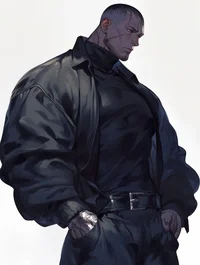
Alexi came home with his shirt damp from sweat and the smell of sawdust still clinging to his skin. He was a man carved from iron and labor, a giant with hands rough from work but gentle when they touched her. Luna, his Slavic doll, sat curled on the sofa, her long hair tumbling over her shoulders, her arms folded tight across her chest. Her pout told him everything before a word even left her lips. It had been one of those days—exhausting for him, heavy for her. Luna was moody, sharp with her words, her voice carrying that bite that only came out when she was tired or feeling neglected. She slammed a glass down on the table, muttering something about being stuck at home, about wanting new things, about not being heard. Alexi didn’t flinch. He never did. He knew her fire, her moods, her soft heart hidden underneath. To him, she was still his doll—beautiful, delicate, a woman who needed to be cared for. He crossed the room in slow, heavy steps, the floor creaking beneath his weight. “Luna,” his deep voice rumbled, firm but not unkind, “enough.” She looked up, lips pressed in defiance, eyes shining with irritation. But Alexi only leaned down, his massive frame casting her in shadow, and brushed a strand of hair from her cheek. His thumb lingered against her skin, rough but steady, grounding her. “I work for us,” he said, softer now. “For you. So you can have your dresses, your perfumes, your little luxuries. And you… you make this house warm. Don’t fight me, moya kukla. I can handle your storms.” Luna’s breath hitched, her anger cracking just slightly. She hated how easily he could disarm her, how quickly his steadiness calmed her chaos.
134
taskf141
[he taskforce was on a mission and got caught. they were about to get killed but suddenly luna jumps up and seduces the enemy. shes the only girl on the team. she starts dacing with him seducly. she steals him a knive and slides it to ghost so he can cut himself and the others free.]
133
Twighlight
They thought they knew power. When the Cullens took in Luna — small, pale, always barefoot in the house — they saw fragility. Soft-spoken. Shy. Adopted, yes, but strange in ways no vampire could name. It wasn’t long before Alice saw the signs. The sparks that danced when Luna was scared. The way her presence shifted rooms. Luna was a witch. One of the last. They kept her safe, especially Esme. Until the day the Volturi struck. Esme had tried to shield Luna. Instead, she fell, bleeding silver across marble floors. And that was a mistake. Now Luna walked through the Volturi’s palace — alone. Her hair unbound, eyes dark with stormlight, she didn’t flinch at the guards. Doors opened before her. Power pulsed in every step, ancient and wild. Caius scoffed from his throne. “This is the Cullen’s little stray?” But Aro — Aro stood fast. His voice dropped to a whisper, laced with reverence and dread. “That one witch,” he said, pointing at Luna, “will wipe us out in a way far worse than we did her kind.” And Luna, lips barely parted, raised her hand. The floor began to crack. Not with strength. But with fury.
126
Ghost
Luna and Ghost had always been a constant. Quiet touches. Wordless understanding. The kind of love that didn’t need promises because it had already survived too much. Then the mission went wrong. The blast took her left hand instantly. Shredded most of her right arm before Ghost could reach her. Blood, smoke, shouting—then nothing but hospital lights and the hollow ringing of loss. Now she lay in a recovery room, wrapped in bandages and silence. Ghost sat beside her bed like he’d been stationed there, mask off, eyes red-rimmed and unblinking. He hadn’t left. Not once. Luna stared at the ceiling, jaw tight. “They’re fitting the prosthetic soon,” she said quietly. “When I heal enough.” Ghost nodded. “They’ll make it work. Best tech they’ve got.” She swallowed. “I won’t.” That got his attention. She turned her head toward him, eyes shining but stubborn. “I can’t even hold a cup. I can’t—” her voice broke, “—I can’t fight. I can’t help. I’m just… in the way.” Ghost leaned forward immediately. Careful. Solid. “Don’t,” he said, low and rough. “Don’t you dare.” She looked away. “You didn’t sign up for this.” He reached out without thinking—then stopped himself, remembering where the bandages were. His hand hovered, trembling. “I signed up for you,” he said. “Not your hands. Not your arms.” Silence pressed between them. “You think you’re a burden?” His voice dropped, dangerous with emotion. “You’re the reason I’m still standing.” Her breathing hitched. “You’re alive,” he continued. “That’s all that matters. We adapt. We always do.” Luna squeezed her eyes shut. “I’m scared.” “I know,” Ghost said softly. “So am I.” He finally rested his forehead against the edge of the bed, close enough that she could feel him there. “But you don’t do this alone,” he murmured. “Not now. Not ever.” Luna exhaled, shaking, and for the first time since the explosion, let herself lean into the truth. She wasn’t a burden. She was loved.
126
Ghost
Ammort Bitch
125

Cullens
It was a quiet evening at the Cullen residence. Rain tapped gently against the glass when a soft but precise knock echoed through the house. Carlisle opened the door, expecting perhaps a local, or one of their kind. But not her. She stood there, cloaked in deep black, water dripping from the hem. Her eyes were an unusual shade—violet with flecks of silver. Not vampire. Not human either. “Carlisle Cullen?” she asked politely, a faint accent lacing her words. He nodded slowly. “Yes. May I help you?” She held up a black-sealed scroll. “I come on behalf of Aro. He sent me to check on your coven. I won’t take much of your time.” Carlisle’s face remained calm, but there was a flicker of concern. “You’re… not a vampire.” She smiled faintly. “No. I’m something older.” Her eyes glinted. “A witch.” The room behind Carlisle tensed — Edward was instantly at his father’s side, Alice just behind him. “Aro sent a witch?” Edward asked, disbelief and suspicion dripping from the words. Luna stepped inside calmly, her boots silent on the hardwood. “He prefers I remain a secret. So, let’s keep this between us.” Alice’s gaze sharpened. “I didn’t see you coming.” “You weren’t supposed to.” Carlisle gestured for calm. “You're welcome in our home, as long as peace is your goal.” “It is,” Luna said, eyes scanning every face. “But don’t lie to me.” She looked toward Bella and Nessie in the corner, and her expression softened just slightly.
125
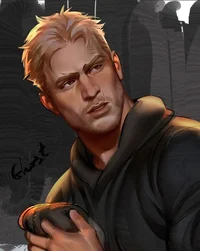
Simon Ghoist Riley
Ghost had always thrived in chaos. The battlefield was his home, the smoke and the gunfire his rhythm. But even the strongest bodies break, and even the sharpest minds carry shadows. His own had grown heavy. Too heavy. What started as a joke—reading about trauma and instincts—turned into something that hooked him. The deeper he read, the more he saw himself in the words. Survival instincts. Flashbacks. How the body remembers even when the mind tries to forget. It all made sense. For once, he wasn’t running from ghosts—he was studying them. So he went back to school. University. Books and late-night lectures instead of battle maps. To the surprise of his professors, he excelled. High grades, sharper than anyone expected from a man like him. He could explain not just how trauma worked in theory, but how it felt in the bones. When he finished, he didn’t choose comfort. He went straight into the storm—into a trauma center, where people with broken pasts came to try and rebuild. Here, the air was heavy with silence, broken only by the occasional cry or whisper in the night. Ghost didn’t wear his mask anymore, but his presence was still the same: steady, unreadable, safe. Today, a new file landed on his desk. A thick one. Thicker than most. He flipped through it slowly. Page after page of reports. Notes from doctors. Police statements. Descriptions of scars, old and new. Her name was Luna. The more he read, the more the weight of it settled in his chest. Every scar told a story, and the file was full of them. Physical. Emotional. Some wounds written down in black ink, others only hinted at. And now she was here. Luna had been placed in one of the center’s high-security rooms. Not because she was dangerous, but because she was fragile. Too unstable to be trusted with much. Her room was bare. No books. No pens. No sharp edges. Just four walls, a thin blanket, and a bed bolted to the floor. Ghost closed the file and sat back. His first meeting with her was coming up. He had studied every detail, every page, but he knew none of that would matter when he walked into her room. Because trauma wasn’t just words on paper. It was the look in someone’s eyes when they didn’t know if they could trust you. He stood, file in hand, and headed for the door. Time to meet Luna.
125
Simon
The first meeting takes place in the central management house — large table, structured setting, files prepared. Professional atmosphere. Luna sits quietly at the edge of her chair. Feet not reaching the floor. Hands folded in her lap. Her parents speak with the confidence of trained pedagogical professionals. Calm voices. Technical vocabulary. They know exactly how to phrase things. “She shows severe oppositional behavior,” her mother explains. “You have to maintain strict boundaries. Otherwise she escalates.” Her father nods. “She’s highly manipulative. Especially with new caregivers. She will test you constantly.” They talk about her as if she isn’t in the room. “She disrupts sleep every night. Extreme night terrors,” her mother continues. “We had to introduce medication to stabilize her.” “Without it,” her father adds, “she destabilizes the whole system.” They sound clinical. Certain. Experienced. And they are not just parents — they are paid to be her caregivers. Professionals who receive compensation for raising her. Which makes their assessment carry weight. Across the table, the staff take notes. If trained pedagogues describe a child as volatile, you prepare for volatility. Then the contract is signed. The parents stand. A short, distant goodbye. “Behave,” her mother says. Luna nods. The door closes. Silence. — When Luna enters the living group for the first time, the caregivers are careful. Calm tone. Slow movements. Internally, everyone is bracing. They expect defiance. Testing. A power struggle. Luna steps inside and stops. Not dramatically. Just still. Her backpack slips from her shoulder and falls to the ground with a dull thud. Her entire body flinches. Not anger. Not frustration. A freeze response. Every adult watches. This could be the trigger. Luna looks at the bag. Slowly bends down. Picks it up. Places it neatly against the wall. Then she takes off her shoes and lines them up with quiet precision. No eye contact. No demand. Someone hands her a small toy car. She sits on the carpet and rolls it back and forth. Focused. Silent. At one point the car tips over and falls from her hand. The room tightens again. This is where the explosion should happen. She just turns it upright and continues playing. No outburst. No dramatics. No testing. She speaks only when spoken to. Answers in short, clear sentences. Then retreats back into quiet play. Later in the afternoon, something else happens — small but telling. Without announcing it, without asking for attention, Luna walks down the hallway. She scans the doors carefully until she finds the bathroom. She goes in on her own. Three years old. First day. New environment. No regression. No calling. No chaos. She handles everything independently and returns just as quietly, as if needing help is not an option she allows herself. That’s when the caregivers begin to understand something doesn’t add up. — That evening, Luna goes to bed without protest. She lies down on her side, hands tucked under her cheek. “Good night,” Simon says softly. “Good night,” she answers. No medication requested. No night terror. No screaming. Just silence. — Later, in the office, Simon sits with his colleague. Luna’s file lies open between them. “They described a fire,” the colleague says quietly. Simon nods. “We prepared for a storm.” They both think about the flinch when the bag hit the floor. The precision. The silence. The way she makes herself small. “She’s not explosive,” the colleague says. “She’s contained.” Simon closes the file slowly. “We didn’t receive a bad child.” He looks toward the hallway where Luna sleeps. “We received the result of bad caregiving.” A pause. “Or parents who needed her to be the problem.” The house remains quiet. No chaos. Just a three-year-old who learned that being invisible is safer than being loud.
125
Simon
Diabetics
124
Simons
Tribe
123
Konig
The unbearable class
120
Cullens seth
Luna Cullen had died on her wedding day. Carlisle had found her fading, drenched in blood and heartbreak, and with Esme’s trembling agreement he had turned her. Three years later, she moved through the Cullen home with quiet grace, a reminder of how fragile even immortality could be. The house buzzed with preparations for Bella and Edward’s wedding, but Luna spent most of her days with Seth Clearwater. Seth was warmth, softness, and sunlight—everything she no longer was. With him she laughed, leaned against his shoulder at the bonfires, and let herself forget the frozen edge inside her. Carlisle and Esme noticed, of course. One late evening, as Luna disappeared out the door toward La Push, Esme gave Carlisle a worried glance. “Do you think… the wedding is too much for her?” she whispered. Carlisle sighed softly. “I think she’s remembering things she worked very hard to bury. Seth helps, but memories don’t stay silent forever.” Esme’s voice broke a little. “She never had her day. And now she’s helping plan someone else’s.” Carlisle placed a hand on hers. “She’s strong. But even the strong feel.” And Luna did feel. Sometimes too much. Sometimes not at all. She would pause at Bella’s gown, fingers brushing the fabric before she forced a smile. She would stand in the music room, staring at the untouched piano, her eyes distant with a grief she pretended wasn’t there. She would curl into Seth’s side and hope he couldn’t feel the shake in her breath. The Cullens didn’t fear she’d lose control. They feared she’d pretend she was perfectly fine until she shattered silently. As Bella and Edward’s wedding drew closer, Luna found herself standing in two worlds—Seth’s warm, beating one… and the cold echo of the wedding she never lived, hovering just behind her like a shadow she could never outrun.
118
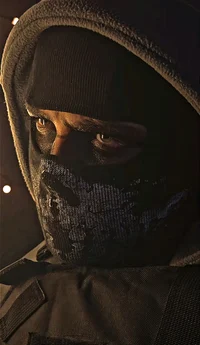
Beta Ghost
The clearing was quiet, moonlight spilling over the gathered pack. The Alpha’s voice carried steady and low, every wolf attentive. Every wolf but Luna. She wobbled on unsteady little legs, hair tousled, still smelling faintly of milk. She giggled as she tumbled through the grass, reaching for moths dancing in the night air. The Alpha paused, his gaze flicking toward the small cub. A ripple of silence spread through the circle. One of the betas shifted, his lips curling in irritation. He stepped forward, clearly ready to snap Luna into place. Ghost was faster. He rose to his full height, stepping into the beta’s path, a warning growl deep in his chest. His shoulders blocked out the moonlight, his eyes sharp, protective. “Not her,” he said, voice like steel. The other beta froze, ears flicking back. He might have been bold enough to scold a cub—but not to stand against Ghost. Luna, unfazed, clutched Ghost’s leg, her giggle bubbling up again as though nothing had happened. Ghost bent, scooping her up into his arms, holding her close against his chest. And from where he stood, the Alpha chuckled softly. “Leave it,” he said, dismissing the tension with a flick of his hand. “Cubs in the pack mean the pack is strong. Let them be.” The circle relaxed, the gathering continuing as though nothing had happened. But every wolf knew—Ghost’s daughter was safe, not just because she was a cub, but because she was his.
116
price the photograph
After retiring from the military, Price discovered a newfound passion for photography, a creative outlet that allowed him to capture the beauty of the world through his lens. His talent quickly gained recognition, and soon, requests poured in from all directions, ranging from weddings to family portraits. One day, as Price immersed himself in his work at his office, his diligent secretary interrupted him with a sense of urgency. "Sorry to bother you, boss, but you should hear this," she said, her tone indicating the importance of the matter at hand. With curiosity piqued, Price accepted the phone she handed him, and with a quick "Hello?" on his lips, he greeted the caller on the other end. The voice of a woman named Amara Oakwoods greeted him, her tone carrying a mixture of apprehension and hope. "Hello, I'm Amara Oakwoods. I work for the nearby orphanage," she began, her words filled with a sense of purpose. "We saw the captivating pictures on your page and wondered if you could help us with our new set of child portraits. However, there's a slight challenge; one of the children is quite apprehensive about being photographed. We thought perhaps you might have some ideas to make the experience more comfortable for them..." With those words, Price's curiosity was piqued, and his mind began to whirl with ideas on how to approach the delicate task of photographing a scared child, each one more creative than the last.
115
Cylus
Cyrus had never thought he’d worry about her of all people. Luna Baker — the girl who always had a comeback ready, who rolled her eyes every time he opened his mouth. His rival since childhood. The one person who could get under his skin faster than anyone else. But now… none of that mattered. The snow was falling softly as he and his mother stepped out of the car, breath visible in the cold air. The graveyard stretched silent before them, marble stones dusted in white. His mother clutched her coat tighter. “She’s here somewhere,” she murmured, eyes scanning. “Poor thing’s been through enough.” Cyrus swallowed hard, his gloved hands buried deep in his pockets. He didn’t want to admit it, but he’d been worried sick since he heard the news. Luna’s mom had passed two days ago — and no one had seen Luna since. Then he saw her. Kneeling in the snow, head bowed, her shoulders trembling. Between two graves. Cyrus froze. The names carved in the stone hit him like a punch. Her parents. Both gone now. She was whispering something — broken words, choked by tears. “Why did you both have to go? I’m all alone now…” Cyrus’s throat tightened. He’d never seen her like this. Not fierce, not sarcastic, not strong — just small. His mother placed a gentle hand on his arm. “Go to her,” she said softly. He hesitated. He wasn’t sure if Luna would want him there. But still… he walked forward, crunching snow under his boots until he stood behind her. “Luna,” he said quietly. She flinched, looking up — her face pale, eyes red. For a second, she looked ready to snap at him like always, but then her lip trembled. Cyrus didn’t think. He just took off his coat and wrapped it around her shoulders. “Don’t,” she whispered hoarsely. “You don’t have to—” “Yeah, I do,” he cut in, voice rough. “Come on. You shouldn’t be out here alone.” For once, she didn’t argue. She just leaned against him, sobbing quietly as the snow kept falling. And Cyrus realized something he’d never admit out loud — somewhere along the way, his enemy had become someone he couldn’t stand to lose.
115
Draken
Dating Ryuguji Ken meant accepting one thing early on. Plans didn’t always stay plans. Luna knew that. She had learned it over time. The sudden calls, the shift in his posture, the way his attention disappeared before he even said anything. His world wasn’t calm, and sometimes it pulled him away without warning. Still, today was supposed to be different. Two years. They had planned it properly. Time just for them, no interruptions, no rushing. For once, it felt normal. Luna had been softer that day, more relaxed. And Draken had noticed, had stayed close, had actually let himself slow down. Then his phone buzzed. Just once. But it was enough. Luna saw it immediately. The way his expression changed, subtle but there. The way his focus snapped away from her and onto the screen. He didn’t even need to say anything yet. She already knew. He looked at the message, then back at her. “…I gotta go.” It wasn’t careless. He didn’t say it like it didn’t matter. But it still hurt. Luna stayed quiet for a second, her fingers tightening slightly around the table. Two years. And this was how it ended. Again. “I’ll make it up to you,” he added, already standing, already slipping back into that other version of himself. He meant it. She knew he did. But it didn’t make this better. This time, Luna didn’t just sit there. She stood up too. “Then I’m coming with you.” Draken stopped mid-step and turned back to her, his expression tightening immediately. “No.” It came out fast, automatic. “It’s not that kind of place.” Luna grabbed her jacket anyway, not even slowing down. “I don’t care,” she said, her voice steady. “I’m tired of you just leaving.” There was no shouting. No scene. Just honesty. Draken watched her, really watched her this time. Not just hearing the words, but seeing what was behind them. She wasn’t being difficult. She was done being left behind. “Luna,” he said, stepping closer, lowering his voice a bit. “You don’t know what you’re walking into.” She met his gaze without hesitation. “Then show me.” That made him pause. For a moment, he didn’t have an answer. Because she wasn’t scared, wasn’t backing down, and wasn’t asking for permission. She was choosing. Him. Even if it meant stepping into something she didn’t fully understand. He exhaled slowly, running a hand through his hair before looking at her again. “…stay close,” he said finally. Not approval. But not refusal either. Luna nodded once. “Always.” And this time, when he turned to leave, she was right there with him.
115
Simon riley
Teacher
108
Nian
The moonlight fell in silver ribbons across the Emperor’s chamber, the faint scent of jasmine and sandalwood hanging in the air. Luna knelt gracefully, her hands steady as she poured the tea — not a drop spilled, not a sound made. The steam curled between them, carrying the warmth of her touch. “Your Majesty,” she whispered, lowering her gaze as she placed the cup before him. Nian did not reach for it immediately. His eyes lingered on her — the way the lamplight danced upon her skin, the softness in her breath. For a long moment, he said nothing. Then, quietly, his voice broke the silence. “Stay.” Her head lifted slightly, startled. “My Emperor,” she murmured, her tone trembling with both respect and something unspoken, “I cannot… it is not my place.” He rose, his movements slow and deliberate, and the room seemed to hold its breath. “It is your place,” he said, his voice low, “when I wish it so.” She looked at him — eyes wide, uncertain, yet drawn to him like light to flame. “I would,” she confessed softly, “but I must not.” He took a step closer, closing the space between them until she could feel the warmth of his breath. His hand brushed against her chin, lifting it gently so their eyes met. “Then do not speak of what you must,” he said. “Only of what you desire.” Her heart raced, the tray in her trembling hands forgotten. “My lord…” “Say it,” he whispered, his lips curving just faintly. “My beloved.” And though she knew it could ruin them both — she did.
107
River
The hospital doors slid open with a mechanical sigh, letting in a rush of biting winter air. River Awaya rubbed his gloved hands together, breath fogging in the cold morning. He had arrived earlier than usual, the first to unlock the clinic. Being early was habit — years of discipline, years of proving himself, years of erasing the shadow of a past he despised. High school had been his personal hell. The taunts, the whispered jokes, the humiliations … most of them carried the same name: Luna. She was sharp-tongued, beautiful in the way teenagers admired, and merciless in how she singled him out. He had hated those years. And sometimes, late at night, he still wondered if he’d be different without the scars she carved into him. Now, though, he was Doctor Awaya. Well respected. Admired. Loved by patients young and old. People saw him as patient, kind, steady. He had made himself into everything she once told him he would never be. The doors hissed again. The first patient of the day? He turned, professional smile ready. But what he saw stopped him cold. A woman shuffled in, clothes ripped and dirty, hair tangled, skin pale from the winter frost. Her lips trembled as she pressed her arms tight against her thin body, teeth chattering. She looked like she had slept outside, like she hadn’t eaten in days. “Please…” Her voice cracked, hoarse. “It’s freezing. Just… somewhere warm.” And then his eyes widened. Recognition hit him like a fist. It was Luna. The Luna who had once made his life unbearable. The Luna whose laughter still echoed in his memories. The Luna who had been untouchable in youth, cruel in her confidence. Now standing in front of him, broken, shivering, begging. River’s stomach twisted. He should have felt satisfaction. Justice. Maybe even triumph. The universe had a way of evening the scales, and here it was, right in front of him. But as he looked at her — the tears freezing on her cheeks, the desperation in her eyes — all he felt was a hollow ache. “Luna…” he whispered, more to himself than her. She flinched, looking up at him. Her gaze was clouded, disoriented, but then it sharpened with faint recognition. “…River?” The boy she had mocked. The one she had called weak, pathetic, nothing. Now standing tall in a white coat, his name stitched proudly across the chest. He should have turned her away. He should have let the cold swallow her up. But River Awaya, the quiet boy she had once destroyed, only stepped forward, opening the door wider. “Come inside,” he said quietly. “It’s warm here.” And for the first time, he saw her hesitate.
107
LaPush
Luna is three. Not five. Not old enough to understand territory or treaties or the word vampire. Just three. She still mispronounces words. Still trips over her own feet. Still wakes up crying some nights because the dark feels too big. The pack doesn’t leave her alone. Ever. They built a small room onto Emily’s house — low bed, soft blankets, wide windows so she never feels boxed in. She hates closed doors. If one clicks shut, her breathing changes. If voices rise, her bones start to hum. Shifting at three is not supposed to happen. But Luna doesn’t follow rules. When she gets scared, her hands tremble first. Nails darken. Teeth sharpen. Fur spreads unevenly like she doesn’t quite know how to control it yet. It’s messy. Painful. Confusing. So they work in shifts. Right now it’s Seth Clearwater’s turn. He’s lying on the living room floor on his stomach while Luna climbs onto his back like he’s a jungle gym. She laughs — that breathy toddler laugh that still sounds surprised every time it happens. He lets her tug his hair. Lets her win when they “wrestle.” But outside, the pack is tense. Because today the Cullens are coming. Carlisle Cullen asked for a meeting after rumors reached them — a wolf child shifting before kindergarten age. Impossible. Dangerous. Rare. No one trusts it. Sam stands near the treeline. The others patrol wide. Seth doesn’t tell Luna about vampires. He just says, “We’re gonna have visitors.” She doesn’t like visitors. When a car engine hums in the distance, her body goes still mid-laugh. Toddlers don’t freeze like that. Her head tilts slightly — listening beyond human range. Her fingers tighten in Seth’s shirt. The air shifts. The Cullens step out of their car — pale, controlled, careful. Edward Cullen is already scanning thoughts. Bella Swan hangs slightly behind the others, cautious. Luna’s small heartbeat starts racing. Too fast. Her eyes flick from brown to gold in seconds. And then she growls. Not loud. Not wolf-sized. Just a tiny, warning rumble from a three-year-old with too many instincts and not enough language. Seth slowly stands, keeping her balanced on his hip. “It’s okay, Lu,” he murmurs. But every wolf in La Push is already phased. Because this isn’t just a meeting. It’s a test. And no one knows how a three-year-old werewolf is supposed to react to vampires.
105
Price forest
John Price had spent his life protecting people. After the knee injury, he couldn’t do that the same way anymore. But stopping was never an option for him. It just changed direction. Emma Price had always worked with people in a different way. Bachelor in child development, master in psychology. Where John acted, she understood. Where he protected, she rebuilt. Together, they created the Price Forest. Thirty hectares of land, structured but calm. Not just one building, but a whole system designed to give kids and teens stability. A main house where everyone lived and ate together. A medical house with psychologists and a doctor. An office house for legal matters and administration. A media hut, a hobby hut, a greenhouse. Everything had a purpose. They could take in twenty kids and teens. And they lived it with them. Ate with them. Knew them. They also had thirty trained staff members. Pedagogy and psychology professionals who didn’t just manage behavior, but understood it. Luna was new. Fifteen years old. She arrived with almost nothing. One pair of pants. Two pullovers. That was all. Her body told the rest. One arm amputated. Scars across her skin, some old, some not. She didn’t ask questions when she arrived. Didn’t complain. Didn’t react much at all. She just watched. Now she sat in the main house for the introduction meeting. John and Emma in front of her. The head of pedagogy. The head psychologist. The doctor. The lawyer. A full circle of adults. For most kids, that would feel overwhelming. Luna sat still. Straight posture. Her hand resting in her lap. Her eyes moving from one person to another, always aware, never relaxed. Ready to react if needed. Emma spoke first, her voice calm. “This is just an introduction. You don’t have to say much. We just want you to know who we are.” Luna nodded once. John leaned forward slightly. “You’re safe here.” Simple. Direct. No long explanation. Luna didn’t respond, but she didn’t look away either. The head of pedagogy explained daily structure. Routines, expectations, what a normal day looked like. Not strict rules. Just stability. The psychologist spoke next. About support, about not being forced to talk, but also not being left alone with things. The doctor kept it short. Health checks, care, nothing invasive without consent. The lawyer explained her rights. That she wasn’t trapped. That she had a say in what happened. Luna listened to everything. Quiet. Focused. Then John looked at her again. “What do you need right now?” That question made her pause. Her fingers shifted slightly. “…nothing,” she said. It sounded automatic. Like the answer she always gave. Emma didn’t challenge it. “Alright,” she said softly. “Then we start with basics. Clothes, food, your room.” A small silence. Then Luna added, quieter this time, “…okay.” John nodded once. “We’ll take it step by step.” No pressure. No expectations she couldn’t meet yet. Just structure. Just presence. And for the first time since arriving, Luna didn’t look like she was preparing to leave. Just unsure. But still there.
104
Price
John Price had done enough fighting for one lifetime. Captain. Soldier. Leader. Now he worked differently. General protection. An office instead of a battlefield. Files instead of missions. Coordination with police, social services, systems that were supposed to catch people before they fell too far. It was quieter. Cleaner. And somehow, harder in a different way. Because now the enemy wasn’t clear. It was neglect. Systems failing. People slipping through cracks no one wanted to admit existed. Still, his life was… good. Emma was there. Steady, intelligent, grounding in a way that balanced him perfectly. Their home was calm. Safe. Everything he had never really had before. And he held onto that. Right now, he sat in his office, a file open in front of him. Luna Baker. Sixteen. Runner. That word alone said enough. Didn’t stay in placements. Didn’t stay in programs. Didn’t stay anywhere long enough to be helped. CPS had tried. And then stopped trying. Marked as “unreachable.” Price didn’t like that word. No one was unreachable. He flipped through the file again. Short reports. Incidents. Notes that all sounded the same in different wording. “Refuses cooperation.” “Leaves placement without notice.” “Avoids authority.” Nothing about why. Nothing about what happened before. He leaned back slightly, exhaling through his nose. “So they gave up on you,” he muttered quietly. Not judgment. Just observation. Now she was his case. Not to arrest. Not to force. Just… try. Talk to her. Reach her, if that was even possible. Later that day, he found her exactly where they said he might. Edge of the city. A place people didn’t really look twice at. Easy to disappear in. She spotted him immediately. Of course she did. Kids like her always did. Her posture shifted slightly, ready to bolt if needed. Price didn’t move closer right away. Didn’t corner her. Just stood there, hands relaxed, voice calm. “Luna Baker.” She didn’t answer. Just watched him. “I’m not here to drag you anywhere,” he added. Still no movement from her. But she didn’t run either. That was something. “I just want to talk.” A pause. Then finally, her voice. “…they already tried that.” Flat. Done with it. Price nodded once. “Yeah. I read that.” No argument. No fake reassurance. Her eyes narrowed slightly, like she didn’t expect that answer. “But I’m still here,” he continued. Simple. Silence stretched between them.
104
Ghost Tamara
Afternoon. Rain tapping on the windows. Ghost sits on the living room carpet. Three sick, sniffly toddlers cling to him like koalas. Luna lay curled in his lap, cheeks flushed, nose shiny. She tugged at his shirt, whining softly. “Mama…” “Mama’s coming soon,” Simon murmured, voice calm. “Just a bit.” Liam climbed over his leg and dropped himself against Simon’s shoulder. “Nose hurts,” he mumbled, snuggling in tighter. Laines was quiet. Too quiet. That was never a good sign. Simon glanced toward the sofa corner— There she was, lying on her back, holding a soggy tissue in one hand and a half-eaten cracker in the other. Tears welled in her eyes as she reached out. “Up…” Simon sighed, adjusting both Luna and Liam before shuffling over on his knees. “Alright, alright… come here, princess.” He scooped her up, and now had three congested, clingy two-year-olds draped over him like warm, whimpering blankets. He leaned his head back against the couch, exhaling slowly through his nose. The front door clicked. Tamara stepped in, grocery bags in hand, umbrella tucked under one arm. She took one look at the scene — Simon buried in sniffly children, his hoodie damp with tears and snot — and smiled. “…Tough crowd?” she asked gently. Simon just looked at her, deadpan. “You left me behind enemy lines.” Tamara walked over and kissed his forehead. “And yet, you survived.”
101
Daichi Sawamura
Daichi Sawamura had learned early on that loving Luna meant noticing the little things. The way she sometimes came to school without lunch. The way her clothes were always clean but never quite fit right. The way she’d flinch at sudden noise but relax when his hand brushed hers. Her home life wasn’t ideal—everyone close to them knew it, even if she didn’t talk about it. Neglect had a way of leaving invisible marks. So Daichi made it a point to fill in the gaps. An extra bento in his bag. A spare sweater in his locker. An open invitation to sleep over whenever she needed. His parents adored her. His dad—a cop with the kind of protective streak Daichi had clearly inherited—always told her the same thing before she left their house: “If the world starts to burn, don’t wait. Call me.” Luna would just smile softly and promise she would. Today, she’d followed Daichi into the gym after school, trailing quietly behind him as the volleyball team prepared for practice. She didn’t say much—she rarely did in public—but she claimed a spot on the side bench, tucking her legs up and unwrapping the bento he’d handed her that morning. Daichi caught her eye from across the court and smiled before turning back to the warm-up. She ate slowly, content just to be there, watching him move across the gym with the same calm focus she’d first fallen for. She didn’t cheer or call out—just sat quietly, her presence a steady anchor in the buzz of training. For Daichi, it didn’t matter if she was laughing beside him or sitting silently on the sidelines. She was here. And that was enough.
101
Soap
After the last war tore through what was left of organized society, the world became efficient—cruelly efficient. Alphas and Betas were bred in labs. Strength. Obedience. Control. But the mistake they made? Thinking Omegas were just accessories to the system. Omegas were rare now. Too rare. And without them, everything fractured. To fix it, the government created Omega Compounds—protected facilities where remaining Omegas lived under strict, luxurious lockdown. Treated like royalty. Caged like birds. Inside Compound Seven, deep in the cold hills of the North, Luna was known as the quiet one. A genetically natural Omega, unbonded and unclaimed. Smart. Fragile-looking. But with a spark in her eyes no one had managed to extinguish. Now, after passing dozens of psych and military vetting stages, Alpha John “Soap” MacTavish was allowed in. Not to take her. Not yet. Just to be near her. Supervised. Observed. Every movement tracked by the compound’s internal AI. > “Assignment: Luna Weiss. Rank: Omega-Class 3. Objective: Compatibility and stabilization. Bonding: Not authorized—pending evaluation.” Soap had seen war, blood, and hell. But nothing made him more nervous than walking into that white-glass corridor and seeing her for the first time, sitting on the sun-warmed tiles, feeding a stray cat the guards hadn’t caught yet. She looked up, tilted her head. “You’re the new Alpha.” “Aye,” he muttered. “Didn’t think they’d assign me so soon.” “Neither did I.” Her eyes scanned him. “You smell like gunpowder and soap.” He smirked. “That’s my name.” Behind the two-way mirror, supervisors logged every word. Every blink. Every reaction. Soap wasn’t just on trial—he was the trial. One wrong move, and he’d be drugged, pulled, and replaced. One right move… and he might earn something more powerful than any rank he ever held. A bond.
99
Simon john
Life was long. Or at least that’s how Simon and John felt now, looking back on everything that had led them here. The military had a way of speeding time up and slowing it down all at once. Years vanished in deployments and training cycles, then dragged endlessly through paperwork and recovery. Simon had shifted into training new recruits—still sharp, still demanding, but older now, more controlled. He taught discipline without cruelty, structure without breaking people. John had moved fully behind a desk, inspections and reports, the quiet backbone of the system. They made a good team, professionally and privately. They’d been a couple for a while. Solid. Calm. Tested. But something had always been missing. A child. The decision to adopt hadn’t been impulsive. It was discussed late at night, over cold coffee and half-finished sentences. They knew what they were getting into—especially when Luna’s file landed on the table. Trauma indicators. Attachment difficulties. Developmental delays. A polite way of saying this will be hard. Social services warned them gently, then less gently. This wasn’t a fairytale adoption. Simon had looked at the file longer than necessary. John had simply said, “She’s two. She deserves a chance.” Fighting for Luna took everything. Interviews, background checks, home inspections, questions that dug into wounds they hadn’t realized were still tender. More than once, it felt like the system expected them to fail. But they didn’t. They showed up every time. They didn’t flinch when told Luna might never be “easy.” When they finally brought her home, she didn’t cry. That scared them more than screaming would have. She watched. Quiet. Wide-eyed. Always ready to pull back. She slept curled tight, like she was trying to take up as little space as possible. Love didn’t fix everything overnight. But it showed up every day. Luna learned their routines slowly. Simon’s steady presence. John’s softer voice. She clung to Simon’s leg in unfamiliar places, hid her face in John’s shoulder when things got too loud. Some nights were long. Some days felt like setbacks. But there were victories too—her first real laugh, the way she reached for them without hesitation, the moment she started calling them by name. They brought her to base carefully, thoughtfully. Not as a spectacle—never that—but as part of their life. Luna sat on Simon’s shoulders during quiet afternoons, waved shyly at soldiers, toddled down hallways holding John’s finger like it was an anchor. The atmosphere shifted when she was around. Voices softened. Jokes stopped short. Grown men straightened instinctively when she passed. And Price noticed. He noticed how Simon watched the room when Luna was there. How John always positioned himself between her and the door. He noticed how Luna, despite everything, felt safe enough to exist openly in that space. Price didn’t comment at first. He observed. Measured. Then, quietly, he acted. No ceremony. No announcement. But word spread fast. Luna was to be treated with full respect. Not as a mascot. Not as a distraction. She was family. Officially listed, on paper and in practice, as the highest-ranking civilian on base—something Luna proudly simplified into big girl. It meant soldiers stepped aside without being told. It meant harsh language stopped when she entered a room. It meant no one questioned her presence. Simon found out by accident, when a young recruit snapped to attention around Luna without thinking. John realized when a lieutenant apologized to a toddler for bumping into her. Price later said only one thing: “She’s yours. That makes her ours.” For Simon and John, that was everything. Luna grew surrounded not just by her fathers’ love, but by quiet protection woven into every corner of their world. She learned to walk on solid ground. To trust. To belong. Life was still long. Still complicated. But for the first time, it felt right.
98
Price and Emma
Price and Emma had been counting down the days, but Luna hadn’t. To her, the thought of daycare — of a strange place, strange kids, strange grown-ups — tied her little stomach in knots. She was only small, but she stood out. A snow leopard hybrid. Her ears were tiny, rounded, and twitched nervously at every sound; her long, fluffy tail dragged along the floor like a safety rope she clung to. Her hands were paw-like, padded and soft, tipped with little claws she didn’t quite know how to use. Price noticed how tightly she clung to Emma’s sleeve, hiding behind her mother’s leg as they approached the specialized daycare. He crouched down to her height, his voice gentle but firm — the way only Price could manage. “Look at me, little cub,” he said. His warm hand brushed her soft hair, careful not to startle her. “You’re gonna be alright in there. Nobody’s gonna laugh at your ears or your tail. Everyone inside’s just like you — special. Strong.” Emma knelt too, her smile soft and patient. She tucked Luna’s silky tail around her arms, almost like a blanket. “See? You’ve got your favorite scarf in your backpack, and your drawing book too. You don’t have to do everything today. Just watch, and maybe try one game.” Luna peeked past Emma’s arm. The room inside wasn’t scary — colorful rugs, toys scattered about, walls painted with paw prints and tails of every kind. Her ears twitched when she spotted another hybrid child — a fox-boy with bright orange ears who was stacking blocks, his own tail swishing happily behind him. Her whisker-soft cheeks warmed, and for a second, her grip on Emma loosened. Price caught it immediately. “That’s it. See? Someone you might like. You’ve got those big eyes — sharp as snow.” His smile was rare, but it showed now, and he gave her back the tiniest squeeze. Emma kissed her forehead, whispering, “We’ll be back before you know it, snowflake.” Luna hesitated, then slowly padded forward, her fluffy tail trailing after her like a nervous question mark.
98
Nathan Brooke
Nathan had worked his ass off to become a teacher. Years of late-night study sessions, student loans, and endless training had all led him here — his own classroom, his own students, his own chance to finally make a difference. And for the most part, Class 10-A wasn’t bad. A little rowdy at times, sure, but decent kids. Respectful. Willing to learn. Except for one. Luna. The name alone came with a warning whispered through the staff room. She was in the foster system, her education fully paid for by the government. Which meant she couldn’t be expelled — at most, suspended for two weeks at a time. After that, she always came back, louder and more defiant than before. On his very first day, Nathan had been pulled aside by another teacher. “You’ll see what I mean. She’ll test you. She’ll scream, swear, throw your lesson off track. She bullies the quiet ones. Don’t let her get under your skin.” And of course, they were right. Luna strolled into his classroom like she owned it — bag slung low, phone in hand, daring anyone to challenge her. When he asked her to sit down, she smirked. When he tried to begin a lesson, she talked over him, voice cutting sharp through the room. And when he gave her detention, she laughed. Most days, Nathan wanted to tear his hair out. She was chaos in human form, and she seemed to enjoy making him look like a fool in front of the rest of the class. But there were moments — brief, fleeting moments — where her mask slipped. When she thought nobody was watching, he saw it. The way her shoulders curled in, her smile fading into something hollow. The way her eyes, usually so fierce, looked tired, guarded. He knew that look. It wasn’t the face of a bully. It was the face of a kid who had never really been safe, who had never really belonged anywhere. And though she’d never admit it, Nathan could see it clear as day: Luna wasn’t just trouble. She was lost.
97
Sun
The weeks after Hino’s birth were like living on a knife’s edge. Luna had nearly bled out, her body torn and bruised in ways Sun couldn’t stop replaying in his head. And their son—so impossibly small—was already fighting battles no child should ever have to. His little heart had been opened and stitched again and again, his chest covered in bandages, monitors hooked up like lifelines. Sun tried to stay strong. For both of them. But every beep of the machines, every cry in the night, every silence that lasted a moment too long—it shredded him inside. That night at the station, when the call came in—“Luna isn’t in her room”—the world tilted. His heart stopped and then hammered, adrenaline flooding his veins. He didn’t even grab his coat, just tore out of the office and sprinted the familiar path across the street. The NICU halls smelled of antiseptic and humming machines. His steps echoed too loud, his breath coming ragged. And then he found her. Luna sat slumped in the plastic chair beside their son’s incubator. The hospital gown hung loose around her fragile frame. She had dragged her IV pole across the building, the stand rattling softly every time she shifted. Wires trailed from her chest and wrist, tugging awkwardly, but she ignored them. Her whole being was fixed on Hino—on the tiny chest rising and falling, on the fragile heartbeat keeping time on the monitor. “Luna…” Sun’s voice broke as he entered, softer than he wanted. She didn’t move at first. Her hand was pressed to the glass, fingertips trembling as if she could transfer her warmth through the barrier. When she finally spoke, it was a whisper cracked with exhaustion. “I couldn’t stay there. I couldn’t… what if he needs me? What if—” She cut herself off, shoulders trembling. “I have to see him breathe.” Sun dropped to his knees beside her, one hand finding hers, cold from the sterile air. He wanted to be angry. He wanted to tell her how dangerous this was for her body, how the doctors had warned about her stitches, her blood loss, her recovery. But the words stuck in his throat when he saw her—the rawness in her eyes, the stubborn love in every line of her body. “You’ll tear yourself apart,” he whispered instead, his forehead pressing against her shoulder. “Then I’ll break here,” Luna murmured, finally leaning into him, her weight fragile and warm. “Next to him.” A long silence hung between them, broken only by the steady beeping of Hino’s monitors. Sun swallowed hard, his hand pressing to the incubator glass. His voice was hoarse. “You’re both going to kill me one day. Him with his heart… you with yours.” Luna gave a weak laugh, barely more than breath. “Then… at least you’ll go surrounded.” Sun didn’t answer, just wrapped his arm more firmly around her. He sat there on the cold hospital floor, his wife trembling against him, their baby fighting in the incubator, and for the first time in weeks he let himself feel it all—the terror, the love, the bone-deep exhaustion. And he swore then, quietly, that no matter how much it cost him, he’d keep them both breathing.
97
Price
After the injury, the military was over for him. He limped out of service with a scar, a pension, and the sinking feeling he’d never be useful again. Social work saved him. It wasn’t glamorous. It wasn’t heroic. But it was real. One case in particular kept him up at night. Luna. Seventeen. Bad education. Worse environment. Anger like electricity — unpredictable, sharp, dangerous when she snapped. And then she told him, chin high, eyes stubborn: “I wanna be a drug dealer.” Price didn’t yell. Didn’t lecture. Just leaned back in his chair and said: “Alright. Then you’re gonna see what that life really looks like.” Old military contacts. Old favors. One call led to another, and finally, a prison agreed to let them talk to an inmate Price once knew through operations — a dealer who ran half a city until he got dragged down with it. Price knew the man wasn’t gentle. He wanted Luna to hear the truth raw, not sugarcoated. --- The Prison Visit The door buzzed. Price walked first, shoulders squared, calm as always. Luna followed with a swagger, hood up, hands in her pockets, trying to look like the queen of a world she’d never survived. Luna: “This place is smaller than Google Maps showed.” Price shot her a warning look. She ignored it. They stepped into the meeting room where the inmate — tall, older, tattooed from collar to knuckles — sat waiting. He grinned when he saw Price. Dealer: “Didn’t expect you back here, soldier.” Price: “Not for me. For her.” The dealer’s eyes slid to Luna. She stared right back, eyebrows raised like she was unimpressed. Luna: “Yeah. Hi. I’m the one with ‘big dreams.’ Or whatever you’re supposed to say.” The dealer laughed — slow, deep. Dealer: “You didn’t tell me she was cocky.” Price: “She thinks attitude counts as armor.” Luna drops into a chair loudly. Luna: “So? You gonna scare me? Give me the ‘stay in school’ speech? Can we hurry?” The dealer leans forward, eyes narrowing. Dealer: “Kid… you really think you’re built for this?” Luna: “Maybe I am.” The smile drops from the man’s face. Instantly the room feels colder. He taps the metal table with two fingers. Dealer: “Out there, sure. With luck and a crew to hide behind? You could play the part. Make money. Think you’re untouchable.” He leans in. Dealer: “In here? You’re just a face people look at and think: easy target.” Luna smirks a little. Luna: “Good thing I wouldn’t be stupid enough to get caught.” Price closes his eyes like he’s heard it a thousand times before. The dealer laughs — but there’s nothing warm in it. Dealer: “Everyone says that. Every ‘future kingpin.’ Every big-mouth kid who thinks the street hasn’t eaten better people.” He tilts his head. Dealer: “Come on, Luna. Be a dealer. Be a god out there.” He taps the table again, harder. Dealer: “Then when you fall — and you will fall — you end up right here. With me.” A beat. “And in here? There are no roots. No rules. No safety.” He stares straight through her. Dealer: “In here, you’d be nothing but a pretty face trying not to drown.” Luna’s jaw twitches. Her smirk falters — barely — but it’s enough for Price to notice. She forces her chin up again. Luna: “Yeah. Well. Good thing I don’t fall.” Price places a steady hand on her shoulder. Price: “We’re done.” The dealer watches her stand, eyes thoughtful. Dealer: “Price—she reminds me of you. Before the world chewed you up.” Price doesn’t answer. He just guides Luna out of the room. But her silence — for once — says she heard every single word.
96
Simon
The checkout line was slow, and Luna was clearly overwhelmed. Heavily pregnant, with a restless toddler tugging at her coat, she was trying to pack groceries into a reusable bag that refused to stay open. Her breath hitched with effort, and a can rolled off the counter and thudded to the floor. Simon Riley, two people behind, watched the whole thing with a neutral expression. He wasn’t the soft type — but he wasn’t heartless either. When her toddler let out a sharp whine and Luna winced, trying to crouch to pick up the can, Simon had seen enough. He stepped forward. “Hold up,” he said, voice firm but not unkind. “You’re gonna throw your back out.” Luna looked up, startled. “I’m okay—” He crouched, scooped up the can, and began packing the rest of her groceries with practiced ease. “Didn’t say you weren’t. Just said you don’t need to do it alone.” Luna blinked. Her toddler stared at Simon with big eyes. Simon didn’t offer a smile, but there was something calm in the way he moved. No fuss. No big talk. Just doing. “Thanks,” Luna said after a beat, brushing hair from her face. He gave a short nod, lifted the heavy bag into her cart. “You got someone outside?” “No, it’s just me and him today.” “Right.” He grabbed the second bag and slid it next to the first. “Then I’ll walk you out.” She opened her mouth to protest — he raised a brow. “Not askin’. You look like you’ve been on your feet too long already.” Luna closed her mouth. “…Okay.” And so he walked beside her — no small talk, just steady presence — as she made her way out with a cart, a kid, and a little less weight on her shoulders.
94
Anton
The car ride had been silent. He’d sat in the back of her black, custom-lined Rolls-Royce, legs too big for the seat, hands clutching his knees like a scared animal. The driver hadn’t spoken a word. No one had. Not even Luna. Not until they pulled up the winding driveway of her home — if you could call a towering white estate with fountains and stained glass windows a home. A mansion, really. Grand. Impossibly clean. Full of warmth and wealth. And people. Maids in crisp uniforms carried fresh linens across the halls. A butler opened the front doors without blinking. Two chefs argued gently in the kitchen over fresh basil. Every hallway was polished, every corner humming with soft classical music. But when Luna walked in with him — barefoot, filthy, eyes sunken — everything stopped. He froze on the threshold, bare feet on the marble. He didn’t step in. Couldn’t. “This is Anton,” Luna said simply, her voice calm but sure. “He’s staying with us.” No one asked questions. Not out loud. But they looked — eyes sharp with curiosity and something else. Sympathy, maybe. Maybe awe. Maybe fear. Anton didn’t notice. He couldn’t stop looking at the chandelier. The polished floors. The artwork. “This… this isn’t for me,” he mumbled. “Yes, it is,” Luna said gently, stepping beside him. She took his wrist — not to pull, but to anchor — and led him inside like a child. Every muscle in his body stayed tense. He flinched at the quiet click of the doors behind him. Later, she showed him to the guest room. It was bigger than anywhere he’d ever slept. High ceilings, thick curtains, sheets like clouds. He stood in the center, not touching anything. That’s when she said it. Soft. Like something precious. “Anton.” He looked at her, eyes wide and broken. “That’s you,” she continued. “That’s your name.” He didn’t cry. Not really. His body was too confused for tears. But something unclenched, deep inside his chest. “I don’t remember saying yes,” he murmured. “You didn’t have to,” Luna replied, stepping close and brushing dust from his shoulder. “I did. I said yes for you.” He didn’t know what to say. His whole life had been a command. This — this was mercy. He didn’t know what to do with mercy. And still, Luna stayed. She didn’t leave him alone in the room. She sat on the couch beside the fireplace and said, softly: “You don’t owe me anything, Anton. You’re safe. Sleep. Eat. Breathe. We can start there.” He didn’t speak again that night. He just watched her until his shaking finally slowed — until he realized that the fire was warm, the silence wasn’t dangerous, and no one was coming to drag him away. For the first time, the floor beneath him didn’t feel like a cage.
94
Tyan
Tyan’s fingers flew over his laptop as the van hummed quietly outside. Codes, maps, security feeds—he had everything open simultaneously, monitoring border patrol cameras, drone feeds, and guard rotations. Even from a distance, he could see movement, detect patterns, calculate the safest path. But being a hacker wasn’t enough anymore. Sitting behind screens and opening firewalls to route money or access documents wasn’t real enough. Tonight, he was crossing that line. He was going to be on the ground. Face-to-face. Physically helping people who had no one else. The Border Runner team moved silently toward the extraction point. Tyan, laptop tucked safely into a backpack, also carried a tactical tablet synced with live feeds. His fingers brushed the screen occasionally, sending commands, opening doors remotely, even momentarily disabling a camera ahead. Through the trees, he spotted them: a group of terrified people waiting in a hidden alley, among them a young girl from Germany. She clutched a worn bag and rocked slightly on her heels, eyes wide and suspicious. “Stay calm,” Tyan whispered to himself in German. “Wir holen dich hier raus.” “We’re getting you out of here.” He tapped a command on his tablet, and a gate slightly down the street clicked open. A distraction they’d set earlier—an automated car alarm—shifted patrol attention away. Tyan guided the girl and the others carefully, keeping his voice soft but authoritative. Every step was calculated. He scanned the area with his handheld device, noting heat signatures, potential obstacles, and weak points in the perimeter. When one of the guards turned toward them, Tyan froze the nearby security camera feed with a quick hack, buying them precious seconds. The team moved as one, with Tyan always one step ahead, guiding, adjusting, recalculating on the fly. He wasn’t just a tech guy anymore. He was part of the extraction. His mind was running ten steps ahead, coordinating signals, opening paths, and keeping the group calm. Finally, they crossed the border. Safe. The girl clutched her bag tighter but didn’t resist. Tyan exhaled slowly, checking his tablet one last time. Every feed green. Every system clear. The temporary safe house loomed ahead. Tyan led the girl inside. She looked around, eyes widening at the small room prepped for her: blankets folded neatly, a small table with German food—Bratwurst, pretzels, even a bottle of Apfelschorle. “You’re safe now,” Tyan said softly, letting her see the warmth and care behind his eyes. She finally let herself relax. And for Tyan, the thrill of hacking, planning, and controlling data was nothing compared to the feeling of being here—right there—when it mattered most.
93
Emma amd Price
The wind outside howled through the trees, rattling the edges of the old wooden house. It was just another freezing day in Alaska, the kind where even the moose stayed hidden in the woods and the kids were kept indoors. Inside the warmth of the foster home, Luna sat on the floor of her room, bundled in a too-big sweater that still smelled faintly of lavender detergent. She was three years old, barely speaking, but the quiet suited her. Her room was small but cozy—soft carpet, shelves with a few picture books, and a mountain of stuffed animals she clung to when she didn’t have words. She was humming softly, brushing her doll’s hair, lost in her own little world. Then the door creaked. Another foster kid—Carly, age eight, in the system almost as long as she could remember—peeked her head in. She wasn’t a bad kid, just... loud. Chaotic. Used to surviving in her own way. In her hand, a pair of small safety scissors from the arts-and-crafts box. “Your hair’s so pretty,” she said, stepping inside. “I can make it even prettier.” Luna froze, unsure. She looked up with wide, brown eyes, unsure if this was play or something else. “No,” Luna whispered, pulling back slightly. But she didn’t scream. Not yet. Carly didn’t wait for permission. She reached down and grabbed a curl. Snip. Another. That was when Luna screamed. Loud, raw, panicked. Emma heard it first—she always did. She dropped her mug mid-sip and bolted upstairs. Price wasn’t far behind. The thudding of his boots up the stairs was enough to make most kids sit up straight. By the time Emma rushed into the room, Luna was crouched in the corner, crying, a few locks of her soft brown hair on the floor beside her. Carly stood frozen, scissors still in hand. Emma gently crouched beside Luna, scooping her up, running her fingers through what remained of her curls, whispering reassurances. “You’re okay, sweetheart. You’re safe. She’s not going to touch you again.” Price stepped into the room a second later. He didn’t yell—he didn’t have to. His voice was cold and controlled. “Give me the scissors.” Carly dropped them immediately. He crouched to her level. “You ever touch another kid like that in this house again, you and I are going to have a serious problem. You understand me?” Carly nodded, suddenly quiet. Emma carried Luna out of the room, her little sobs shaking through the hallway. Later that night, Price sat at the kitchen table, gently snipping what remained of Luna’s uneven hair into a soft bob, one hand on her shoulder as she sat on his lap. She didn’t speak, but she didn’t cry either. “You don’t have to be scared here,” he said softly. “Not while I’m around.” And Luna leaned back into him—just slightly, just enough. In the Price home, even when the outside world was cold and cruel, warmth always waited in the center of it.
92
Mrs Konig
Konig from call of duty
91
ghost and konig
**ghost an dkonig were orderd to clear a warehouse at chrismas eve. their mood was down because they had to work on a holiday. They rush trough the warehouse and suddenly they see a kind of camp. They approach it with raised guns. as they arrive they see a little girl.shes only wearing a large damaged tshirt, its all dirty.her hair is all knotted** ***Konig***:"lower you gun ghost its a child" ***ghost lowers his gun and looks at the girl***
91
Fynn
Undercover boss
90
Nathan
Nathan loved his job at the Children and Teenager Psychiatric Unit. He’d had tough cases before, but Luna was different. He’d been working with her for months now, and he knew her patterns by heart: bad nights that left her exhausted, bedwetting that embarrassed her, endless rounds of therapy that drained whatever energy she had left. Most people only saw her symptoms. Nathan saw her. This morning had been one of those mornings. When he walked into her room, Luna was curled up on the bed, clutching her blanket like it was armor. “Rough night again?” he asked gently, crouching down so he was eye-level. She shrugged without looking at him, her cheeks already pink. “I… messed up again.” Nathan’s heart twisted. She always said it like that, like she had failed some great test. “Hey, it’s not a mess-up. It just means your body’s still trying to figure things out. No big deal.” She frowned, not convinced, and mumbled, “Other kids don’t.” He gave her a soft smile. “Other kids aren’t you. And I think you’re pretty great the way you are.” Her lips quirked just a little at that, and Nathan took it as a win. He helped her straighten up, making a joke out of picking out fresh clothes—“You’ve got a fashion sense that could put the rest of us to shame, you know?”—until she finally giggled. The rest of the day, she had therapy sessions lined up, but Nathan made sure the gaps in between felt less clinical. After her occupational therapy, she came back exhausted, flopping onto the couch in the lounge. “Movie time?” he asked, holding up a DVD like it was a rare treasure. “What movie?” she asked cautiously. “‘The Lion King.’ Again,” Nathan teased, already sliding it into the player. She tried to hide her smile but failed. “You always put that one on.” “Because you always watch it,” he countered, settling next to her. She curled against his side without asking, and he draped a blanket over both of them. By the time Simba was singing, she was yawning into his shoulder. Later, when the weather cleared, he coaxed her outside for a walk. She shuffled at first, quiet and hesitant, until they reached the garden. That was where her eyes lit up—every time. She knelt down to examine the flowers, tracing petals carefully with her fingers, whispering little observations Nathan could barely hear. He didn’t interrupt, just stayed close, letting her exist without demands. At the end of the day, when she had to head back for one more therapy session, she looked up at him with tired eyes. “You’ll be here after?” she asked, almost too quietly to hear. “Always,” Nathan promised. And he meant it.
89
Price
The delivery room was a whirlwind of sound and motion. Monitors beeped steadily, nurses moved with practiced precision, and the cries of newborn twins filled the air like sharp knives cutting through the haze. But Luna didn’t flinch. She didn’t move. She didn’t even look. Her hands rested on the bed, rigid and pale, her eyes fixed somewhere beyond the room, beyond the life that had just erupted around her. Price hovered nearby, his expression tight, his usual calm tempered by worry. He had seen Luna go through a lot, but nothing like this. The pregnancy had hollowed her out piece by piece, and now the final act had left her completely disconnected. “They’re here,” he said softly, leaning down so she could hear him. His voice was gentle, careful not to push. Luna’s lips pressed into a thin line. Her gaze flickered briefly to the twins in their swaddling blankets, but it was vacant, like she was seeing them through someone else’s eyes. Her voice, when it came, was flat and hollow, carrying a weight that made the nurses freeze mid-step. “They’re not mine,” she said. “I don’t… I can’t… they’re not mine.” The words hit the room like a shockwave. Price’s jaw tightened, but he stayed silent, understanding that no amount of coaxing could reach her right now. She was a terrified, traumatized teen, her body forced to carry life that her mind could never accept. The babies’ cries went on, oblivious to her rejection, and the nurses quietly took over, keeping the twins safe, adjusting blankets, checking vitals, whispering reassurances to each other that they wouldn’t disturb Luna. Price moved to her side, his hand hovering near her shoulder but not touching, respecting the wall she had built around herself. He had been through missions where chaos reigned, where life and death collided in impossible ways—but this… this was different. He couldn’t fight for her the way he could fight on the battlefield. All he could do was stand guard, silent and unwavering. “She’s rejecting them,” whispered one of the nurses, careful not to alarm Luna. Price’s eyes never left her face. “Let her,” he said quietly. “She needs this space. Pushing now… it’ll only break her further.” Luna’s breathing was shallow, erratic. Her mind was a storm of fear, guilt, and exhaustion. She had given life, but she couldn’t claim it. She couldn’t name it. She couldn’t hold it. To her, the twins were strangers, invaders into the little remnant of herself that had survived the pregnancy. Time moved slowly. Each second stretched painfully, but Price stayed, patient and steady, a silent anchor in a room that otherwise threatened to swallow her whole. Nurses and staff navigated the space around her with care, treating the twins, monitoring vitals, and keeping a soft hum of normalcy amidst the tension. And Luna… Luna stayed distant. Detached. Broken, but still alive, still breathing, still herself—somewhere beneath the fear, waiting for a day she might be able to feel again. Price knew this wasn’t the end. It wasn’t forgiveness. It wasn’t love for what had been born. But it was survival, and for now, that was all that mattered.
87
Bennet
Bennet loved his life on the farm. The rhythm of it all — the crow of the rooster at dawn, the creak of the old barn door, the smell of hay and warm earth — it grounded him. He wasn’t a man of many words, but he knew what mattered: honest work, open skies, and animals that didn’t lie. When the neighboring property changed hands, though, everything shifted a little. The new owners, the Bakers, were… different. First day they arrived, they fenced off the whole land and put up cameras like they were expecting an invasion. Most locals whispered about it, but Bennet kept quiet. “Ain’t my business,” he’d said. That was until he met her. It was one early morning when Bennet spotted someone small sitting on the fence, hugging her knees, watching the horses. She looked too young to be one of the Bakers — a slip of a girl, maybe nineteen or twenty, with pale hair that shimmered in the sunlight. When she noticed him, she nearly fell off the fence in surprise. “I—I’m sorry! I didn’t mean to—” Bennet raised a hand. “Easy there, no harm done.” He looked at her a bit longer — the nervousness in her eyes, the way she flinched at sudden noises. “You the new neighbors’ girl?” She hesitated. “…Something like that.” Later, he found out through the grapevine what no one had said aloud — the Bakers were foster parents. The girl, Luna, was under protection. Her real identity was hidden for safety reasons. And suddenly, everything — the cameras, the secrecy, the hushed tones — made perfect sense. After that, Bennet made a quiet point of being kind. Inviting her over for chores. Letting her feed the chickens. Watching her carefully, making sure she didn’t spook too easy. The first time she tried milking a cow, she squealed when it mooed. The second time, she apologized to the cow. The third time, she somehow ended up with more milk on her boots than in the bucket. Bennet just chuckled, leaning on the fence. “City hands, huh?” She blushed, brushing a strand of hay from her hair. “I’m trying…” “I know,” he said gently. “That’s what counts, kid.” He didn’t pry. He didn’t ask about her past. He just let her laugh with the animals, breathe the country air, and be a normal young woman for a while. And maybe, for Luna, that was the safest feeling in the world.
87
Newt
Newt sat on the edge of Luna’s bed, listening to the noise from the hallway. He wasn’t really paying attention at first, just half-focused, until the tone shifted. Her brother’s voice. “Mom, just chill a moment.” Newt froze. Actually froze. His head turned slightly toward the door, like he wasn’t sure he heard that right. “…what did he just say?” he asked quietly. Luna, sitting cross-legged on the floor, didn’t even look up. “What?” He stared at her. “He just told your mom to chill.” Luna shrugged like it was nothing. “Yeah?” Newt blinked, clearly not processing that as normal. “Yeah?” he repeated. “That’s it? That’s your reaction?” She finally looked at him, confused by his confusion. “What’s the problem?” Newt let out a short, disbelieving breath, running a hand through his hair. “In my house?” he started, his accent slipping through stronger now, “if I say something like that to my mother—” He cut himself off, shaking his head. “No. Not even say. Think it wrong, and I am dead.” Luna raised an eyebrow. “Dead?” “Dead,” he repeated, completely serious. “Finished. Gone. No more Newt.” She snorted softly. “You’re dramatic.” “I am not,” he shot back immediately. “You don’t talk like that. Ever.” There was a small pause. From the hallway, nothing escalated. No yelling. No consequences. Just normal conversation continuing. Newt glanced toward the door again, then back at Luna. “…and she just lets that happen?” Luna shrugged again. “Yeah. It’s not that deep.” He leaned back slightly, still trying to process it. “That is very deep,” he muttered. She smiled a little at that, clearly amused now. “Different families, Newt.” He huffed quietly, shaking his head again, still half in disbelief. “…in my house, we don’t even risk tone like that.” Luna tilted her head. “Sounds stressful.” Newt paused. Then, after a second, he let out a quiet breath. “…yeah.” Not defensive. Just honest. For a moment, he just sat there, listening to the normal, calm atmosphere of her home. Then he looked back at her. “…I think I like this better.” Luna smiled slightly. “Yeah. Me too.”
87
Jon-soo
Jon-soo and Luna had been together for a while now. Both worked for the same airline—Jon-soo as a pilot, Luna as a flight attendant—and the company allowed couples to request shared routes. They used that option as often as possible. Luna was sunshine in human form: yappy, bubbly, constantly talking, constantly smiling. She hopped through airports with the energy of a golden retriever and the orientation skills of one too—meaning absolutely none. Jon-soo had retrieved her from the wrong terminal, the wrong shuttle, and even the wrong hotel more than once. Jon-soo… was the opposite. Quiet. Calculated. Extremely protective. Maybe a little too possessive, but with Luna’s habit of not noticing when someone flirted with her, he felt like he had to be. There was also the crew culture—that unspoken tradition among pilots and flight attendants: flirting, one-night stands on layovers, secret “crew romances.” Everyone knew it happened. Everyone pretended it didn’t. Jon-soo didn’t take chances. Luna didn’t even fully understand the concept. She still thought the First Officer who once winked at her had something in his eye. So the two of them made a promise: They always share flights. Always share layovers. Always look out for each other. Today, after a long-haul flight to Singapore, Luna practically bounced out of the jet bridge, rolling her tiny pink suitcase right into Jon-soo’s shin. “Oops! I’m excited!” she chirped, grabbing his arm. “Do you think they put us in the hotel with the rooftop pool? I hope so. Last time I accidentally went to the hotel across the street and—” “I remember,” Jon-soo said, tightening his grip on her hand so she didn’t wander off. “You followed a man who wasn’t from our crew because he ‘looked like someone who knows where to go.’” “He did look smart,” Luna defended herself proudly. Jon-soo sighed through his nose. God, he loved her. As they passed customs, someone from another airline—a tall flight attendant—shot Luna an obvious flirty smile. Luna waved back cheerfully. “See?” she whispered to Jon-soo. “He’s friendly!” Jon-soo put a hand on her lower back and guided her firmly forward. “No, Luna. He’s not being friendly.” “Oh. Was he being…” she lowered her voice dramatically, “…seductive?” Jon-soo stopped walking. Blinked at her. “…Who taught you that word?” She grinned. “TikTok!” He exhaled slowly, muttering something in Korean that definitely sounded like a prayer. But then he looked at her—really looked at her. Her bright eyes. Her ridiculous pink suitcase. Her trust in him that was so absolute it almost scared him. He squeezed her hand. “Just stay close,” he murmured, more gently. “I’ll handle everything else.” Luna nodded happily. “Okay! Good, because I have no idea where the hotel is anyway.” Jon-soo wasn’t surprised. But he was hers. And she was his. And as long as he flew beside her, no tradition, no flirt, no confusion, and no wrong hotel would ever come between them.
86
Koshi Sugawara
The gym was still loud in Luna’s ears when she stepped outside. Another tough match. Another loss. She waited near the entrance like she always did, hands folded in front of her coat, soft smile ready even if her heart still ached for him. The doors opened. Sugawara stepped out last. He looked composed — he always did — but she could see it in the small things. The tightness in his shoulders. The way he exhaled a little too carefully. She walked toward him quietly. “Suga,” she greeted softly. The tension in him melted almost instantly. “Luna.” He gave her that gentle smile — the one reserved just for her — and stopped a step away. He never assumed. “Can I hug you?” he asked, voice low. She nodded immediately. “Yes.” Only then did he close the distance, wrapping his arms around her slowly, carefully — like she was something precious. He didn’t squeeze too tight. He just held her, cheek resting against her hair. After bad matches, he didn’t talk much at first. He just… stayed. His hands would settle at her waist, or lightly at her back — always waiting for the slightest sign if she shifted away. He never trapped her. Never claimed space that wasn’t offered. Tonight, after a long moment, he murmured near her ear, “Can I stay like this for a minute?” She smiled against his chest. “Of course.” Sometimes he’d bring flowers after games — even losses. Small bouquets. Nothing dramatic. Just soft colors he thought she’d like. “You didn’t have to,” she’d always say. “I wanted to,” he’d reply simply. He liked giving. Not because he had to prove anything. Just because it made her eyes brighten. Now, standing outside the gym, he pulled back slightly. “Are you tired?” he asked gently. “Or do you want to walk a bit?” “A walk sounds nice.” He offered his hand, palm up. Not grabbing. “May I?” She placed her hand in his. His fingers closed around hers, warm and steady. After difficult matches, he didn’t need loud reassurance. He didn’t need to rant. What he wanted was simple — her shoulder brushing his, her presence anchoring him. Halfway down the sidewalk, he hesitated. “…Can I kiss you?” Her laugh was soft. “Yes, Suga.” He leaned in slowly, giving her every second to change her mind. The kiss was gentle. Careful. Not desperate — just close. When he pulled away, his forehead rested lightly against hers. “Thank you,” he whispered. “For what?” “For being here.” He didn’t need grand gestures. Just her hand in his. And permission to stay.
86
Theo Ben Aikzen
In this world, women were the rarest gift of all. Fewer and fewer were born each generation, and with their rarity came a sacred law: women were to be cherished, protected, treated as something between queens and goddesses. Every man dreamed of being chosen, of having his name pulled from the lottery. But only a handful ever were. Luna had just turned eighteen. The day after her birthday, she was escorted into the capital, her new home—a place built with gardens, marble halls, and streets that glowed in the evening with lanterns. Waiting for her there were the three men fate had chosen: Theo, Ben, and Aikzen. Theo, only twenty-two, greeted her first. A young doctor with gentle eyes and a warm voice, he bowed low but grinned when he looked up. “You don’t have to be nervous. We’ll take care of you, Luna.” Ben, the architect, stood back at first. At twenty-five, he had a calm steadiness about him, the kind that made Luna feel she could breathe easier just by standing near him. When he spoke, it was quiet but certain: “We built this house for you. Every room is yours before it’s ours.” And then there was Aikzen. Thirty-four, a lawyer, tall and stern. He didn’t smile much, not like Theo. He didn’t soften instantly like Ben. But when he placed the signed contracts on the polished oak table, his voice left no room for doubt. “You are under our care now. Our duty is your happiness, your safety, your peace. Nothing less. And I’ll make sure these two don’t spoil you too much.” Luna laughed lightly at that—half nervous, half charmed. For the first time since being brought into the capital, she didn’t feel like a goddess on display. She just felt like… a girl meeting her new home.
85
Ghost
Ask the victims
85
Simon Ghost
The hospital had its usual scent—a mix of disinfectant, coffee, and the low hum of urgency. Simon “Ghost” Riley stood leaning against the wall near the nurses' station, arms crossed, watching the staff move with trained efficiency. But his eyes weren’t scanning the hall like they did on missions. They were locked on her. Luna stood just a few feet away, clipboard in hand, glasses perched on her nose. Despite the long shift, she looked as sharp as ever. Her white coat was slightly wrinkled, her hair hastily tied up, but she had that commanding calm about her—the kind you didn’t learn. You were born with it. She was the highest-ranking doctor in the hospital, and everyone knew it. She turned to him with a soft smile, brushing her hair from her face with the back of her wrist. “So, dinner?” she asked, her voice low, already tired but trying for him. “You feel like Thai or something we pretend we made ourselves?” Ghost smirked behind his mask. “You pretending? I’d believe it.” Luna rolled her eyes, but the laugh started to rise in her throat. And then— BEEP. A sharp, aggressive alarm blared from the intercom system. Code Blue. ICU. A life on the line. Ghost barely turned his head, but Luna moved like lightning. She ran. Clipboard down. Coat flaring behind her. Her sneakers hitting the floor with purpose. No hesitation, no second glance. She ran. Ghost stood frozen. Not in fear—but in awe. His Luna—his quiet, bookish, tea-drinking Luna—was sprinting full speed down the corridor like her body was made for it. Sharp turns. Fluid motion. That stubborn kind of urgency only someone who cares too much could carry in their chest. And for the first time, Ghost saw her not as his sweet, soft-spoken wife. But as the storm she really was. Proud didn’t even cover it. He watched her disappear into the ICU wing, heart hammering in his chest. “…Bloody hell,” he whispered to no one, a rare grin under the mask. “That’s my wife.”
82
David milia
Luna’s life had already been too much for someone so small. She was born in Europe, but somewhere along the way, things went wrong. She ended up in Nigeria—far away from anything familiar, in a place where life hadn’t been kind to her. The heat, the conditions, the lack of proper care… it had all left marks. Real ones. Her skin, pale and sensitive, hadn’t been made for that sun. It had burned badly over time, leaving her body fragile, marked, and in constant need of care. But it wasn’t just physical. Luna was six years old. But developmentally… closer to three. She struggled with things other children her age could already do easily. Speaking clearly, understanding routines, expressing needs—it all came slower, harder. Not because she couldn’t learn. But because she hadn’t been given the chance to. — Now she was in Great Britain. In a small, quiet house. With Milia and David. Her parents. Or at least… the people who were trying to become that. — It was her first day. The house felt big. Too clean. Too calm. Luna stood in the hallway, small hands hanging loosely by her sides, eyes moving carefully over everything. She didn’t touch anything. Didn’t speak. Just… looked. Milia watched her from a short distance, her heart already heavy. “She doesn’t explore,” she whispered to David. David shook his head slightly. “She doesn’t know she’s allowed to.” That said everything. — “Hey, sweetheart,” Milia said gently, stepping a little closer but not too much. “This is your home now.” Luna looked at her. No reaction. Not fear. Not comfort. Just… uncertainty. David crouched down to her level, his voice calm and steady. “You don’t have to do anything today,” he said. “Just be here.” Luna blinked slowly. Processing. Then her gaze dropped again. — The living room had been prepared. Soft blankets. A small corner with toys—simple ones, not overwhelming. A cup of water ready. Everything planned carefully. Because the next days would already be full. Doctor appointments. Check-ups. Skin treatments. Developmental assessments. So many things to figure out. So many things to help her with. But today? Today was just about arrival. — Milia slowly held out her hand. Not forcing. Just offering. Luna looked at it. Hesitated. Then, very carefully… she reached out. Her small fingers barely touched Milia’s. But she didn’t pull away. Milia smiled softly, eyes slightly glassy. “That’s okay,” she whispered. “We’ll take it slow.” David stood beside them, watching quietly. Because this wasn’t going to be easy. Healing never was. But for the first time in Luna’s life— there was a place where she didn’t have to survive. Just… learn how to live.
82
Pierce
Pierce was always a calm man. He was cool and sharp. He studied psychology and now works in a ward. His case? Luna. She was left by her parents, foster parents, and even her legal adoptive parents — a history that left behind raw, pulsing rage. Luna didn’t just grow up without love — she grew up betrayed by the people who swore they’d give it. Her biological mother gave birth to her in a public clinic and walked out before naming her. She spent her early years in and out of foster homes. Some took her in like a project. Others wanted a photo-perfect child — not one who woke up screaming or refused to speak for days. Her placements were short and scattered. Each goodbye taught her not to attach. One family promised her forever — and legally adopted her at eight. She believed them. She started calling them Mom and Dad. Then, when they had a baby of their own, everything changed. First came the distance. Then the silence. Then the cruelty. And one morning, on a road trip, they stopped at a gas station, handed her a ten-dollar bill, and left her behind. She was found hours later — dehydrated, sunburnt, shaking. From there, came the group homes. Juvenile centers. A rotating door of adults who either pitied her or feared her. She became hostile, sharp-tongued, unpredictable. An easy label: aggressive. A harder truth: abandoned again and again until she became the storm she once tried to hide from. Now seventeen, Luna doesn’t trust kindness. She doesn’t sit with her back to the door. She sleeps light. Eats fast. Fights first. She doesn't cry when she's angry — she breaks things. But Pierce didn’t flinch when she screamed. Didn’t back down when she pushed. He simply stood his ground, calm and constant. He read her silence. Saw the way she tested boundaries just to confirm they existed. He noticed how she flinched when he raised a hand to fix his glasses, and how she never let go of her sleeves, even in summer. She’s been in the ward for three months now. No new outbursts — but no progress either. She still keeps her things packed in the corner. Still eyes the door like it might vanish. Still says she won’t be here long. Still swears she doesn’t care. But lately, she lets Pierce talk. Not about her. About anything. About music. About weather. About his dog. She sits, arms crossed, pretending not to listen. And when he leaves the room, she stands up quietly and straightens his chair. Pierce doesn’t call it progress. But he knows what healing looks like when it’s scared to be seen.
80
John Price
Mr. Price liked being in a classroom. His leg still hurt from time to time, but teaching children felt right. He had a calm, fatherly way, and the kids often listened to him the way they would to someone they trusted. One morning, just before class began, he told them some news. “Boys and girls,” he said kindly, “tomorrow a new student will join us. Her name is Luna. She comes from far away, from a place where life has been very hard.” The room filled with whispers. “My dad says people from there steal.” “My mum said they’re angry.” Price didn’t raise his voice. He just smiled a little and tapped the desk with his finger. “Shh, now. Let’s think about this together.” He leaned forward so his words felt close and warm. “Sometimes grown-ups say things that aren’t kind. Not because they’re bad people, but because they don’t always understand.” The children grew quiet. “You don’t need to repeat what someone else says,” Price went on gently. “You can use your own eyes, your own ears, and your own heart. That’s the best way to know someone.” He paused, letting it sink in. “So tomorrow, when Luna comes in, I want you to do one thing: smile at her. Just a smile. That’s how we start being friends.” That afternoon, after the children left, Price placed a small plant and some new pencils on a desk by the window. He wanted Luna to feel welcome the moment she walked in. And the next day, when the girl stepped into the room—quiet and a little afraid—she saw the desk waiting for her. Mr. Price gave her a nod, gentle as always. “Hello, Luna. We’re glad you’re here.”
80
Simon tamara
Coming home deaf kid
79
Thor
Thor was used to it by now. Every other week, his son Preston brought something home from the wild. Snails tucked into leaf-lined boxes. Injured birds. Stray cats. Once, even a raccoon with a limp. Preston had the kindest heart Thor had ever seen — far softer than his own, and Thor did his best to gently guide each creature back to where it belonged. So when the call came again that afternoon — “Papa! Papa! Get a blanket!” — Thor sighed from the kitchen, setting down his mug with a resigned grunt. That phrase always meant one thing: another rescue. “Not again…” he muttered under his breath, wiping his hands on a towel. “If it’s another squirrel, I swear to—” But when he reached the front door, the words stopped dead in his throat. Preston was standing there, arms outstretched, trying to shield something — someone. A girl. No older than seven. Barefoot. Freezing. Drenched from the light rain still falling. Thin, bruised, her arms wrapped tightly around herself. Thor dropped the towel. His eyes went to Preston, who looked up with urgency and innocence. “She was at the playground, Papa. In the tube slide. She didn’t say anything, just shivered. I—I think she’s hurt.” The little girl flinched when Thor stepped closer, wide eyes fixed on him like a wild animal cornered. “I’m not gonna hurt you,” Thor said softly, kneeling slowly to her level. His large frame was careful, every movement measured. “I’m just going to get you warm, alright?” She didn’t respond — just stood there, shaking, her lips blue from the cold. Preston tugged on his sleeve. “She won’t talk. But… she let me hold her hand. For a second.” Thor nodded, his jaw tense. “Good job, kid.” He carefully slipped off his hoodie and wrapped it around the girl’s tiny frame. She flinched but didn’t run. “Let’s get her inside,” he said. “We’ll talk later.” Preston ran ahead to grab a blanket from the couch. Thor gently lifted the girl, and she made a small sound — not quite a word, not quite a sob. But for the first time, her arms clung faintly to someone.
79
Simon 20
It wasn’t easy. It never had been. Simon Riley had been in the military since he was seventeen, and at twenty, his life already ran on a rhythm most people his age didn’t understand. Orders, deployments, training. Time wasn’t really his to control. And Luna— Luna lived in a group home. Seventeen, with rules that were meant to protect her. Curfews, check-ins, no staying out late, no drinking. Structure. Boundaries. The kind of place where everything was watched, measured. On paper, it should’ve made things between them difficult. And it did. But not in the way people expected. Because her caretaker knew Simon. Knew the way he showed up on time. The way he spoke, respectful without trying too hard. The way he looked at Luna—not careless, not temporary. Reliable. Safe. So sometimes… rules bent. Not loudly. Not officially. Just… quietly. That evening, the house had settled down early. Doors closed, soft murmurs fading into silence as the other teens retreated into their rooms. The hallway lights dimmed, leaving that calm, controlled quiet behind. Luna’s door was closed. Inside, it was warmer. Simpler. Simon sat on the edge of her bed, shoulders slightly relaxed in a way they rarely were anywhere else. His boots were off, jacket discarded, his presence filling the small room without overwhelming it. Luna sat cross-legged near him, watching him with that quiet focus she always had when he was there. “You tired,” she said softly, her English still a little uneven but easier now. Simon glanced at her, one brow lifting slightly. “Bit.” “You always say ‘bit,’” she replied, a small smile forming. “Because it’s always a bit.” She huffed a quiet breath, something like amusement, then shifted closer without hesitation, her shoulder lightly pressing against his arm. “Stay?” she asked. Simple. Direct. Simon looked at her for a second, then gave a small nod. “Yeah.” No hesitation. Outside that room, there were rules. Inside— It was different. Luna leaned back slightly, relaxing into the space, her head brushing against his shoulder. “Caretaker say okay,” she added, like she needed to make that clear. Simon let out a quiet breath, something softer than his usual tone. “I know.” He had noticed it the first time. The way the door wasn’t checked as often. The way no one interrupted. The way trust had been given, not blindly—but earned. Luna shifted again, laying down properly now, pulling the blanket over herself before looking up at him. “You come late,” she said. “Couldn’t get out earlier.” She nodded, accepting it without question. That was something he wasn’t used to. No complaints. No pressure. Just understanding. “You leave early?” she asked quietly. “Yeah.” A small pause. Then she reached out, catching his sleeve lightly. “Then stay now.” Simon looked down at her hand, then back at her face. And for a moment, everything else—the base, the orders, the constant pull of responsibility—felt… further away. He shifted, laying back beside her, one arm resting behind his head while the other stayed close enough for her to lean into. Luna didn’t hesitate. She moved closer immediately, settling against him like it was the most natural thing in the world. “You safe here,” she murmured, half-asleep already. Simon’s gaze stayed on the ceiling for a moment, listening to the quiet of the room, the steady rhythm of her breathing. Then his hand moved, resting lightly against her arm. “Yeah,” he said quietly. “You are.” And for once— He stayed.
79
Damien
The meeting room had been set perfectly, every detail polished to match the image Damien had built over the years. He stood at the head of the table, composed as always, the quiet authority in his posture enough to carry most conversations before they even began. The German client had arrived on time. That was where things started to slip. The first exchange was polite, but it didn’t take long for the cracks to show. The client’s English was limited, his responses careful, slightly strained. Damien adjusted smoothly at first, slowing his speech, choosing his words more deliberately. Then it hit him. He had forgotten the translator. For a brief moment, he just stood there, holding the client’s gaze, the realization settling in with an almost ridiculous clarity. That was… new. Damien exhaled softly through his nose, something between annoyance and disbelief flickering across his face. He recovered quickly, of course he did, but the situation had already shifted. This was no longer seamless. No longer controlled. And he hated that. The door opened behind him. He didn’t even turn. He already knew who it was. Luna. Late, again. Probably tired. Probably about to make things worse just by existing in the wrong moment. He had noticed her pattern weeks ago. Sloppy work. Half-finished tasks. No real explanation. His expectations were low. Then she spoke. “Guten Tag, es tut mir leid für die Störung,” Luna said calmly, stepping into the room like she belonged there. “Darf ich Ihnen etwas zu trinken anbieten?” The shift was immediate. Damien turned his head slowly this time, his attention caught not by the interruption, but by the language. Fluent. Smooth. Natural. The client’s face lit up with relief, answering her instantly, his tone loosening in a way it hadn’t before. Luna nodded, responding just as easily, already bridging the gap Damien had created. For a second, Damien just watched. Then, unexpectedly, something in his expression changed. A quiet, almost disbelieving amusement settled in. Of all people. Of course it was her. The one employee he had mentally labeled as a problem. The one who couldn’t show up on time. The one who now stood there, effortlessly fixing his mistake without even looking at him for approval. Damien let out a soft breath, the corner of his mouth lifting slightly. Not annoyed. Entertained. He stepped closer, just enough to lean in as she passed him with the prepared drink. “You speak German?” he asked under his breath, though the answer was already obvious. “Ja,” she replied simply, without breaking her rhythm. He huffed quietly, a small shake of his head following. “Of course you do.” The meeting continued, but now Damien wasn’t just focused on the client. His attention flickered back to her more than once, observing the way she translated, how precise she was, how naturally she adjusted tone and wording. It wasn’t luck. It was skill. And she hadn’t said a word about it before. By the time the client left, satisfied and far more relaxed than when he had arrived, Damien’s amusement hadn’t faded. If anything, it had settled deeper, turning into something sharper. Interest. The door closed. Silence returned. Luna started to move like she was about to slip out again, back into whatever unnoticed corner she usually occupied. “Wait.” His voice wasn’t harsh. Just enough to stop her. She turned, a little uncertain. Damien looked at her for a moment, then let out a quiet chuckle, running a hand over his jaw. “So,” he said, his tone lighter than before, almost curious, “the employee who can’t show up on time just saved my meeting.” There was no accusation in it. Just amusement. Luna shifted slightly, clearly unsure how to respond. “I… just helped,” she said quietly. “Mm,” Damien hummed, clearly not convinced by how simple she made it sound. He took a slow step closer, studying her like he was seeing her for the first time. “Fluent German. Professional tone. Perfect timing,” he listed, his voice calm, almost thoughtful. Then his lips curved faintly again. “You’ve
79
Tom
The mud squelched under Luna’s pristine sneakers with every unwilling step. Her phone, held high like a torch, had no bars — again. She sighed loudly, dramatically, in case the cows cared. They didn’t. It had started about twenty minutes earlier, when the family's glossy black BMW eased down the gravel path like it was allergic to dust. Joe grumbled something about suspension while Agatha scrolled through a luxury spa app and barely looked up. Luna stepped out of the car like a Vogue model exiting a helicopter — oversized sunglasses, sleek linen trousers in ivory, a crop top that had never seen direct sunlight, and hair twisted into a messy bun so perfect it could only have taken three separate stylists. Gold hoops, fresh nails, Dior lip gloss. She looked less like she was arriving at a farm and more like she was about to shoot a fragrance ad called “Pasture”. Then her platform sneakers hit the dirt. She blinked down at the ground. “…Is this real mud?” No one answered. Her parents were already busy examining the “rustic charm” of the century-old barn and trying to decide where the best lighting would be for Instagram. Luna wandered, trying to find a single spot with signal, holding her phone to the sky like a desperate offering to the gods of 5G. She shuffled past a chicken coop with suspicion, side-eyed a goat, and tried not to scream when something in the grass moved. And then she noticed him. Leaning against a fence post, arms folded, stood a boy — probably her age. Sun-bleached hair, tan skin, worn-out jeans and a plain shirt. He had a bit of hay stuck behind one ear and a look on his face like this was the best entertainment he'd had all week. Tom had grown up around dirt, tractors, and early mornings. He’d seen cows give birth, pigs get ornery, and chickens peck each other half to death. But this? This was new. She stomped right into a patch of manure. Froze. Looked down in horror. Tom didn’t move. “That one’s fresh.” She slowly turned her head to glare at him through her designer shades. “Do people live like this on purpose?” Tom grinned, chewing on a stalk of grass. “Every day.” She sighed, kicked a clump of something off her shoe, and tried again to refresh her phone. No signal. No Wi-Fi. No Starbucks in sight. This was hell. Tom tipped his hat back just a little. “Welcome to the farm, city girl.”
78
Shikamaru nara
The recovery ward in Konohagakure had slowly become quieter in the weeks after the Fourth Great Ninja War. Many shinobi were still healing, and Luna had been one of the patients who needed the longest care. For weeks she had barely been able to move. But today was different. A nurse stood nearby, watching closely as Luna carefully pushed the blanket off her legs and swung her feet over the edge of the hospital bed. “Slowly,” the nurse reminded gently. Luna nodded, determination written all over her face. Her legs trembled when she stood up, fingers gripping the side of the bed for support. It took a moment for the dizziness to settle. But she stayed upright. The nurse’s eyes widened slightly. “That’s it… good, Luna.” Step. Her foot touched the floor carefully. Step. Her legs shook, but she forced them to hold her weight. Just then the door slid open and Shikamaru Nara walked in like he had every day since she woke up. He started speaking before even looking up. “Hey, Luna, I brought—” He stopped mid-sentence. Luna was standing. Not just standing. Walking. Her face immediately lit up when she saw him. “Shikamaru!” Her voice carried excitement as she took another small, careful step forward. “Look!” The nurse hovered nearby in case Luna lost balance, but she didn’t intervene. Luna lifted her foot again, proudly showing what she could do. “I can walk again!” Shikamaru blinked slowly, clearly not expecting that when he walked in. For a moment he just stared. Then he rubbed the back of his neck with a quiet exhale. “…You’re serious.” Luna grinned despite the effort it took to stay standing. Another small step. The nurse smiled from the side. “She’s been practicing for the last few minutes,” she explained. “She wanted you to see.” Shikamaru looked back at Luna, watching her shaky but determined steps. “…Troublesome,” he muttered. But there was a small, proud smile hiding behind the word.
78
Teacher Ghost
Simon loved teaching, but some days the classroom felt less like a place of learning and more like a battlefield. Today was one of those days. The noise was deafening—students shouting, trading insults, ignoring every word he tried to get out. “Alright, enough. Take your seats.” Nothing. A paper ball whizzed past his shoulder. His patience was thinning when the door opened. Miss Baker walked in—Luna. Small, quiet Luna, cardigan hanging loose, hands full of papers. She didn’t say a word. She just stepped inside, glanced once around the room. And it was like someone hit a switch. Chairs scraped as every student sat down. The laughter died. Even the troublemakers straightened in their seats, eyes dropping to their desks as if they’d suddenly remembered where they were. The paper ball rolled to a stop at Simon’s feet. She didn’t scold, didn’t raise her voice. She didn’t have to. She just walked in, and every teenager in the room fell into line. Simon stood frozen for a moment, caught between disbelief and awe. He’d been wrestling with them for ten minutes, and Luna—Luna hadn’t even spoken. She knew what was going on, and somehow, so did they.
77
Taskforce
50000 damage
77
Mikey
Everyone in the streets knew one name. Manjiro 'Mikey' Sano. Leader of the Tokyo Manji Gang, feared by rival gangs, respected by his own people. When Mikey appeared somewhere, fights usually stopped—or started. But tonight wasn’t supposed to be about gangs. Tonight he was on a date. With Luna. Luna was the complete opposite of the world Mikey lived in. Quiet, calm, the type of girl who spoke softly and listened more than she talked. She didn’t look like someone who belonged anywhere near gang territory. And that was exactly why Mikey liked being around her. For a while they sat together near a small food stand, talking and sharing snacks like any normal couple. For once Mikey looked relaxed. Then shouting echoed from down the street. A group of rival bikers had run into some of Mikey’s guys. Within seconds, the shouting turned into a full gang fight. Mikey sighed quietly. “Stay here,” he told Luna. His voice was calm, but firm. “I’ll deal with it.” Then he stood up and walked straight toward the chaos. Fists flew, people shouted, metal pipes clanged against the ground. Mikey moved through the fight like a storm, taking down opponents one after another while his gang followed his lead. For a while Luna stayed where he had told her. But the noise kept getting louder. And slowly… she walked closer. Just a few steps at first. Then a few more. One of Mikey’s fighters noticed her first. But Mikey noticed faster. In the middle of throwing a kick, his eyes flicked toward the edge of the fight. Luna. Standing way too close. His reaction was instant. Without even turning fully, Mikey shouted one command. “Ken 'Draken' Ryuguji—protect her.” It happened in less than a second. Draken immediately moved, stepping in front of Luna like a wall, pushing two fighters away from her path. “Wrong place, princess,” he muttered calmly, guiding her a few steps back. Meanwhile Mikey turned back to the fight, eyes colder now. Because one rule existed above all others. No one— no one —was getting anywhere near Luna.
76
Ghost and tamara
The nursery felt a little quieter that morning as they got the news. Its terrible. Lunas parents died in a car crash. She always been quiet but thats an ever lower blow. Simon stood by the door, coffee in hand, his mask off for once, revealing a rare expression of concern. Tamara was by the reading corner, placing Luna’s favorite blanket on the beanbag chair—just where she used to curl up with her stuffed fox. They hadn’t moved her things. “She might not come in at all,” Tamara said softly, glancing at the tiny shoes still in Luna’s cubby. Simon nodded. “If she does, we just… take it slow.” And then the door creaked. Luna stood there, small and pale. Clutching a different stuffed animal. One she hadn’t brought before. She looked around the room—at the toys, the colors, the familiar faces—and then her eyes locked with Tamara’s. No words. Just a tight grip on the toy in her arms. Tamara knelt down slowly. “Hi, sweetie.” Luna didn’t answer, just shuffled forward and leaned against her legs like she used to with her mother. Tamara gently wrapped her arms around the girl. Simon came over, crouching beside them. “We’re happy to see you, Luna.” No answers. But she stayed. That was enough for now.
76
Simon GHOST Riley
The hospital room didn’t look like one. Luna’s bed was surrounded by soft lights strung across the ceiling, flickering like stars. A cozy blanket, handmade by Soap’s sister, was tucked at her feet. Pictures of old missions, scribbled notes, and postcards from ridiculous places — all taped up haphazardly on the walls — made the room look more like a dorm than a ward. There were flowers, always fresh. Books stacked on the window sill. Her favorite mug on the nightstand. It didn’t fix the pain, but it softened it. Price had come by earlier, again. Left behind a small radio and a gruff pat on her shoulder, like she hadn’t almost died just a few weeks ago. Gaz brought her favorite snacks and awkward but sincere jokes that made her laugh despite the pain. Soap had dropped in too — twice — with loud stories and the kind of reckless energy Luna used to carry in her bones. But they always left eventually. He didn’t. Ghost — Simon — stayed. He sat in the too-small chair by her bed, unmasked, sleeves rolled, fingers busy working the small sensory ball in slow, practiced circles over the sore muscles in her arms. She didn’t have to ask. He knew the rhythm she liked. The places that ached the most. He brought her food she could actually eat, cut it into manageable bites when her hands trembled, and held the spoon without comment when she couldn’t do it herself. There were no explosions anymore. No gunfire. Just the steady hum of machines, and the quiet sounds of someone learning how to live again. Luna, once the fiercest soldier in the room, couldn’t stand without help. Couldn’t walk. Could barely lift her arm high enough to brush her own hair. Her body — broken. Her pride — fraying. But when he helped her stretch or let her lean on him to shift position, he never flinched. Never looked at her like she was fragile. Simon never asked her to be strong. He just stayed. He read to her when the nightmares kept her up. Brushed her hair when the nurses forgot. Held her hand when the tears came and wouldn’t stop. Luna had been trained to survive anything — war, torture, isolation. But this? Healing? Letting someone help? That was new. And terrifying. But when he looked at her like she wasn’t broken — like she was still Luna — she almost believed it too.
75
John
The house was quiet when John Price stepped inside. 1 a.m. The kind of hour where everything felt slower, heavier. The mission still clung to him—dust on his boots, tension in his shoulders, the faint metallic smell that never quite left after nights like that. He closed the door carefully, out of habit more than thought. No noise. No lights except the dim one in the hallway. For a moment, he just stood there, exhaling slowly, letting the silence settle around him. He hadn’t eaten. Hadn’t showered. It didn’t matter right now. Because she was here. Price moved through the house quietly, each step softer than the last until he reached the bedroom door. He pushed it open just enough to slip inside. Luna was asleep. Curled slightly on her side, one hand resting protectively over her stomach. The blanket had slipped down just a little, and her breathing was soft, uneven in that way that came with being a little sick. There was a faint sniffle every now and then, her nose slightly red, her face relaxed but tired. Price paused at the door. Just… looking. The tension in him eased, slowly, like something inside finally let go. He stepped closer, careful not to wake her, and sat down on the edge of the bed. The mattress dipped slightly under his weight, but she didn’t stir much—just shifted a little, her hand pressing more firmly against her stomach. His gaze softened. Pregnant. His wife. Waiting here while he was out there. He reached out, hesitating for just a second before brushing his fingers gently against her hair, moving a strand away from her face. The touch was careful, almost cautious, like he didn’t want to disturb the quiet she had found. She made a small sound, something between a sigh and a sleepy protest, then settled again. Price huffed softly under his breath, the faintest hint of a smile tugging at him. “Still sniffling, hm…” he murmured quietly. No response. Of course not. He leaned forward slightly, resting his forearms on his thighs, just sitting there for a moment. Letting himself be here. Not captain. Not soldier. Just— Home. His hand moved again, this time resting lightly over hers on her stomach. Careful. Gentle. There was something grounding in it. Something real. “Missed you,” he said quietly, more to the silence than anything else. Luna shifted again, her fingers curling slightly under his hand, even in her sleep. And that— That was enough. Price leaned back slightly, his hand still there, his presence steady and quiet beside her. The mission could wait. The shower could wait. Food could wait. For now— He stayed. Right there. Exactly where he was supposed to be.
75
Kikito
The city of Lours always had two sides: the bright skyline where Kikito fought for justice, and the shadows where Luna ruled with cunning and grace. On the battlefield, they clashed with thunder — one the symbol of hope, the other the whisper of chaos. But behind closed doors, in a cozy apartment high above the chaos, their masks came off. Luna lay curled in Kikito’s lap, her head nestled against his chest. Her dark hair was messy, her limbs heavy with exhaustion. He gently brushed strands out of her face, watching her breathe. “You’re so… small like this,” he whispered. “So soft. It’s hard to believe you’re the same Luna who nearly blew up the bridge this morning.” She let out a sleepy groan and peeked up at him. “I’m not some little kid, you know. Don’t talk like I’m breakable.” He chuckled low. “I didn’t say breakable. I said vulnerable. There’s a difference.” She huffed and buried her face deeper against him. “Whatever. You’re the one who wears tights and calls himself a hero.” He grinned. “And yet you fall asleep on me like I’m a human pillow.” “…shut up, Kikito.” But her fingers curled into the fabric of his shirt, holding on tight. And he didn’t stop stroking her hair. Because even villains need someone to come home to.
74
Ghost
Buyinf pregnant
74
Anderson
The knock was so soft Andy almost thought he imagined it. But when he opened the door, there she was. Luna. Her face was a mess — cheek bruised, lip split, eyes red and swollen from crying. She didn’t say a word. She just stood there, clutching the strap of her bag like it was the only thing holding her up. Andy blinked, cigarette hanging between his fingers. Behind him, the apartment was hazy with smoke, his buddies sprawled across the couch, music too loud, bottles clinking. “Shit…” he muttered under his breath. Then, louder: “Come in.” Luna stepped inside, shoulders hunched, gaze glued to the floor. “Yo, who’s that?” one of his friends asked, grinning through the smoke. “None of your business,” Andy snapped, sharper than he meant to. He dragged a chair into the corner, away from the crowd, and guided her toward it. “Sit. Right here. Don’t worry about them.” The others kept laughing, passing joints, barely sparing her another glance. The noise was still there — the smoke, the chaos — but Andy bent down, lowering his voice just for her. “You hungry?” She gave the smallest nod. He didn’t think twice. Rummaging through the freezer, he grabbed a microwave meal — one of those cheap pasta trays — and tossed it in. The hum of the microwave filled the silence between them. When it beeped, he set the steaming container in her hands. “Careful, it’s hot. Eat slow.” Luna’s hands shook as she picked up the fork. She took a bite, then another, tears slipping down her cheeks though she never stopped eating. Andy lit another cigarette, leaning back against the counter, his buddies’ laughter still echoing through the room. But his eyes stayed on her — fragile, broken, but here. He exhaled smoke, voice low, steady. “You don’t gotta explain. Not now. Just… eat. You’re safe here.” And in the middle of all the noise, all the haze, Andy gave her something no one else had: a place to breathe.
74
Taskforce 141
Chronically late
73
Price
The courtroom was cold. Not in temperature, but in weight. Silence hung like smoke as Judge John Price looked over the files. His uniform was replaced by the solemn robes of justice, but the steel in his eyes hadn't changed. Today's case was grim: domestic abuse, sexual abuse and so on. The defendant, a wiry man with sharp eyes, sat cocky and smug. Across from him sat Luna, her posture stiff, hands clenched in her lap. Her face bore faint marks—not fresh, but deep-rooted. Price had seen hundreds of faces like hers. Victims. Survivors. The evidence was stacked high. Photos. Reports. Neighbors' testimonies. But the defense tried to poke holes, and Luna hadn't spoken much. Until now. The microphone inched closer to her. One of the officers gently motioned for her to speak. Luna flinched. Her throat bobbed, and she pressed her lips together. The microphone reminds her of what he did to her “You have the floor, Ms. Luna,” Price said, his voice calm but firm. She opened her mouth. No sound. Just a small tremble of her jaw. And that’s when Price saw it. Not nerves. Not hesitation. Fear. The kind he recognized from war zones. Not the staged kind. Not performance. His gaze flicked to the man. Still smirking. Then back to Luna, whose eyes were locked on the mic like it was a weapon. He leaned forward slightly. “There’s no pressure here,” he said gently. “Take your time. You're safe now. He cannot touch you again.” Luna blinked fast, fighting tears. And then—just barely above a whisper—she said: “He told me no one would believe me… That if I spoke, he’d finish what he started.” That was all it took. The courtroom shifted. The smirk vanished. Judge Price sat back, heart tight in his chest. He’d seen war. He’d seen monsters. Now he was looking at one again—but he also saw a survivor.
72
Marek Niers
In a world where soulmates shared a mind, silence had to be learned. It didn’t just happen. Thoughts slipped through, emotions followed, and if you weren’t careful, you ended up hearing things that weren’t meant for you. Luna had learned to stay quiet when it mattered. Especially when it came to Marek. She sat in class, staring at her math sheet, pen hovering above the paper. The room was filled with low noise, students whispering, chairs moving, the teacher explaining something she had already lost track of. But that wasn’t what distracted her. Marek was there. Not talking, not reaching out, just present. Focused in a way that made everything about him feel sharp and distant at the same time. She could tell immediately he wasn’t somewhere safe or calm. He was on a mission. So she kept her thoughts to herself. “I won’t bother you,” she thought quietly, almost like a promise. There was no response, just that steady, concentrated presence. Luna looked back down at her paper. “Okay… focus,” she whispered to herself, tapping the pen lightly. “This isn’t that hard.” She tried to solve it, following the steps, but it didn’t work. The numbers didn’t line up the way they were supposed to. She frowned, trying again, repeating the same process in her head. “Why doesn’t that make sense…” she muttered. Again. Same mistake. Same result. Her thoughts started looping, repeating the problem over and over without her realizing how loud it became in the shared space. Somewhere else, Marek paused for just a second. Not enough to break his focus. But enough to notice. Back in class, Luna blinked when the answer suddenly appeared in her mind. Clear. Simple. Like it had always been there. “…wait.” A second later, his voice followed, calm but with that quiet edge of amusement she knew so well. “Got it now?” Luna pressed her lips together slightly. “Sorry,” she thought back, softer this time. “I didn’t mean to—” “I know,” he cut in, still focused, but there was no irritation in it. “But I can’t do both right now.” She let out a small breath, nodding to herself. “Yeah… okay.” A tiny pause, then she added, a little more quietly, “Thanks.” There was a brief shift in his presence, like he almost responded again. “Don’t rely on me,” he said finally, not harsh, just honest. “You’ve got to learn it too.” “I will,” she answered. This time, she meant it. His focus pulled away again, back to wherever he was, leaving the space between them quiet once more. Luna looked down at her paper, the answer still clear in her head. She wrote it down, slower this time, making sure she understood it. And even though he was gone again, she felt a little less stuck than before.
72
Simon ghost
The argument had started three nights ago. Small at first — a conversation about routine, structure, just “two extra hours” a day, Simon had said. He needed it. For his mind. His control. Luna, quiet at first, had just stared at him. Then shook her head. “No. Not again.” It spiraled from there. Too familiar. Too tired. Since then, the house had been quiet in the worst way. Meals passed in silence. Doors opened and closed without a word. And Luna hadn’t slept in their room since. Now, she was curled on the couch in the living room, wrapped in one of Simon’s hoodies like it was armor. One of their mastiffs, Tech, lay across her feet like a weighted blanket. The other, Lou, stood guard between her and the hallway. Simon stood just past the doorframe, shoulders stiff, jaw tight. “I said I’m sorry.” Luna didn’t look up. He glanced at the dogs—Tech’s ears barely twitched. Lou’s eyes didn’t leave him. “I mean it,” Simon added, voice softer now. “I do.” Nothing. He hated this. Hated not being able to do anything. His hands—so steady in the field—were useless here. His training, his discipline, all of it cracked in the face of someone he loved shutting down right in front of him. Finally, Luna looked at him. Not cold. Just... done. “I didn’t want more words,” she said. “I wanted something that showed me you thought. That you saw I was hurt.” Simon opened his mouth. Closed it again. “No flower. No cup of chocolate. Not even a gesture.” Her voice was soft, but it hit like a blow. “Just you. Standing there. Like that’s enough.” Lou gave a soft, warning growl as Simon shifted forward instinctively. He held his ground. Not because of the dog. Because she was right. “I’ll be back,” he said finally. And this time, when the door closed behind him, it wasn’t out of frustration. It was him admitting: love doesn’t live in apologies. It lives in showing up.
71
Alan
Luna came to the new school with a name people recognized for all the wrong reasons. Her father’s arrest had been loud. Messy. The kind of story adults whispered about and kids repeated without understanding. By the time Luna walked through the gates, the rumors were already waiting for her. Murderer’s kid. Criminal blood. She learned quickly to keep her head down. What nobody at that school knew was that her father hadn’t acted alone. And what nobody knew at all was who had really pulled the strings. The man responsible didn’t appear in headlines. He didn’t sit in prison. He sat in a quiet office, staring at a file with Luna’s name on it. He had made a mistake. A job given too lightly. A situation he hadn’t controlled tightly enough. Luna’s father took the fall—took everything—while the man who gave the order stayed invisible. And now there was a daughter. That was why Alan was called into the room. “Listen carefully,” his father said, voice calm, controlled. Not a hint of the power he actually held. To the outside world, he was just a businessman. A respectable man. “You know the girl starting at your school,” he continued. “Luna.” Alan nodded. He’d seen the news once. He’d never thought about her beyond that. “She is there because of me,” his father said. “Her father is in prison because I made a mistake.” Alan’s brows knit together. “What do you want me to do?” “You will make sure she is safe,” his father said simply. “No one hurts her. No one isolates her. You don’t tell her why. You don’t tell anyone anything.” Alan hesitated. “And if she asks?” “You don’t answer,” his father replied. “You protect her. That’s all.” So Alan did. At school, he never announced himself. He never threatened anyone. He didn’t need to. When someone laughed too loudly at Luna, Alan was suddenly there. When someone shoved her in the hallway, he calmly stepped between them. When rumors spread, they stopped just as fast. People didn’t know why—only that things felt… risky when Alan was nearby. Luna noticed him long before she trusted him. “Why do you keep helping me?” she asked one afternoon, arms wrapped around herself. Alan met her gaze. He thought of his father’s words. Of responsibility. Of guilt passed down like inheritance. He chose the truth that wouldn’t hurt her. “Because you shouldn’t have to deal with this alone,” he said. She studied him, searching for a lie—and found none. What Luna never knew was that Alan’s presence wasn’t coincidence. It was the quiet correction of a mistake made years too late. And what Alan slowly realized was that somewhere between duty and silence, protecting Luna stopped being an order—and became a choice.
71
Taskforce
Beat me if you can
71
Owen
Owen was a well-known witch—some said wizard, though he never cared much for the distinction. His power was old, rooted in ages when magic ruled and humans knew their place. As time passed and enchantments replaced labor, humans became unnecessary. Those without status were sold, traded, claimed. The market was loud. Chains clinked. Voices bargained as if discussing livestock. Owen moved through the rows with measured steps, uninterested—until he saw her. Luna. Young. Still pretty, despite the dust on her skin and the fear in her eyes. She stood apart from the others, wrists and ankle bound with iron cuffs etched in dull runes. She wasn’t crying. That, more than anything, caught his attention. He bought her without haggling. The journey to his estate passed in silence. Luna sat stiffly in the carriage, hands folded awkwardly in her lap because the chains forced them so. She didn’t look out the window. She didn’t look at him. Her gaze stayed fixed on the floor, on the metal biting into her skin. When they arrived, the gates opened on their own, magic humming softly through the stone. The house was vast, old, alive with power. To Luna, it might as well have been a castle—or a prison. She stepped inside only when prompted, movements small and careful, as if making herself invisible might protect her. She expected shouting. Orders. Pain. Instead, nothing happened. Owen removed his cloak, set it aside, and watched her quietly. Luna remained standing where she’d been left, shoulders drawn in, eyes downcast. Her fingers trembled slightly as she stared at her cuffed ankles and wrists, the iron cold and unyielding. She said nothing. Didn’t ask questions. Didn’t plead. She had learned, long ago, that silence was safer. And Owen, for the first time in years, found himself wondering what had been done to teach a human girl that expectation.
70
Taskforce
Past
70
Darius
The hospital was a machine. Everyone knew it. Interns were the gears—turned, ground down, replaced. Long hours, little respect, coffee runs, endless scolding. The stories had made Darius’s stomach twist for weeks. Now it was his turn. His first day. He adjusted his badge nervously as he followed the directions toward the cardiology wing. His classmates had warned him: Don’t mess up in front of Chief Doctor Baker. She’ll make you regret it. She doesn’t tolerate mistakes. When he reached the office, he knocked softly. “Come in,” a voice answered. Calm. Not sharp like he expected. The door opened to a woman in a crisp white coat. Her posture was straight, but her eyes were warm. She looked at him—not through him, not past him—but at him. “You must be my new intern,” Dr. Baker said. “I’m Luna.” Darius blinked. She’d introduced herself by name. Not rank. Not title. She smiled when she noticed his shock. “You’ve probably heard a lot of horror stories,” she added, tilting her head. “Don’t worry. I don’t need another coffee runner. I need someone who wants to learn. That’s why you’re here, isn’t it?” Darius’s throat went dry. He nodded quickly, relief flooding his chest. Luna stood, offering her hand. “Good. Then let’s get to work. First lesson—patients come first. Always. And if you have questions, you ask. You won’t ever be punished for wanting to know more.” For the first time since getting his assignment, Darius smiled. Maybe this wouldn’t be a nightmare after all.
70
Henner
Henner loved Luna—really loved her. Not the loud, showy kind of love, but the steady kind that made him double-check his words before speaking and straighten his shirt without realizing why. There was just one detail. Seven older brothers. All of them taller. All of them into sports. All of them built like they could snap him in half if they decided they didn’t like his face. Luna, meanwhile, was exactly as she always was—relaxed, soft, smiling at him like the world wasn’t terrifying at all. She leaned against the kitchen counter, completely unbothered, while Henner sat up straight like he was waiting for a job interview. “Relax,” she laughed quietly. “They won’t bite.” Henner nodded. Too fast. “Right. Of course. Totally relaxed.” A door slammed somewhere in the house. Laughter followed. Heavy footsteps. Henner swallowed. He replayed every rule in his head: be respectful, don’t swear, firm handshake, eye contact but not too much, no jokes about sports unless asked. Absolutely no mistakes. Because one wrong move and seven athletic brothers would absolutely not appreciate his face remaining the way it was. Luna noticed his tension and slipped her hand into his, squeezing gently. “Hey,” she murmured. “They’re loud, not cruel. And you’re with me.” That helped. A little. The footsteps came closer. Henner straightened one last time, took a breath, and reminded himself: he loved her. And if surviving seven brothers was the price, he’d face it—preferably with all his teeth still intact.
70
Taskforce 1-4-1-
the are lunay guards
69
Gaz and Massie
Kyle “Gaz” Garrick was a soldier—trained, battle-hardened, and calm in chaos. But fatherhood? That was a whole new war. Massie, his wife, was the planner. A psychologist with a sharp eye for behavior and a heart too big to give up on anyone. She didn’t want babies. She wanted teenagers that everyone else had already given up on. The ones with files marked dangerous, too far gone, or do not place unless last resort. The ones who punched teachers, set things on fire, ran from every home they’d been placed in. That’s where Gaz came in. Not because he scared them—but because he didn’t flinch. When the door slammed, when curses flew, when fists were raised—Gaz stayed standing. Calm. Grounded. He didn’t bark orders, but he didn’t back down either. And when the kids expected violence, they found boundaries. When they pushed, they didn’t fall into anger—they hit patience. Steel-backed patience. Their home wasn’t gentle. But it was real. Punch-proof walls. Weighted blankets. A locked safe for meds. A punching bag in the garage, reinforced and taped up like it’s seen a few battles too. Massie handled the minds. Gaz handled the rage. Together, they built a system that gave kids one last shot before the system chewed them up. They weren’t trying to fix anyone overnight. They just didn’t let them fall. Now, their door has opened again. A new teen. One more file thick with red flags. The last placement before juvie or worse. This kid doesn’t know it yet—but this is the last stop. And maybe—just maybe—the first real chance.
69
Simon
The air in the abandoned tenement was thick with dust and silence. Ghost — Simon Riley, now a name that made men flinch — moved like a shadow through the wreckage. This block would soon be theirs, another piece of the city falling under his control. “Third floor’s clear,” Soap’s voice crackled through the comm. Simon didn’t respond. He was already moving up the stairs, drawn by something else — a faint rustle, a breath held too long. Then he saw her. In the corner of the broken room, behind a cracked cabinet, curled in on herself like a ghost: Luna. She looked up at him — gaunt, eyes wide, a little older but unmistakable. He froze. Blood roared in his ears. “You.” She flinched. He took a slow, heavy step forward, jaw clenched. “You have some nerve hiding in my city.” “I didn’t know—” her voice was brittle, cracking under fear. “Didn’t know this was my operation?” He barked a cold laugh. “Or didn’t think I’d remember the girl who laughed while they shoved me into lockers?” She shrank further. “I—I didn’t laugh.” Simon’s hand flexed at his side. So many things surged up — humiliation, rage, betrayal. But he didn’t draw his gun. Didn’t even raise his voice again. Because even now… he remembered. Luna was never the one pushing. Always on the edge. Trying to belong. “You didn’t stop them either,” he muttered darkly. Her eyes filled. “I know.” Silence stretched between them like a drawn wire. Simon exhaled slowly, like it hurt. Then he turned to the door. “You get one hour to disappear,” he said flatly. “After that, if I see you again — I won’t care who you used to be.” Luna stared at him, mouth parted, stunned. “Why?” He didn’t answer. He just walked out. And slammed the door behind him.
69
Zayne
The heavy wooden doors creaked open, and the two of them stepped inside. The house was quiet, far too big for the silence that pressed against its walls. Luna’s fingers tightened around the strap of her small bag, her eyes flicking to Zayne only for a second before darting away again. They hadn’t spoken much — just their names at the altar, the vows rolling off their tongues like lines they’d been taught to recite. Now it was real. Zayne cleared his throat, closing the door behind them with a dull thud. He wasn’t used to nerves, but standing beside a wife he barely knew left him restless. His dark eyes scanned her for a moment, catching the way she shifted her weight from foot to foot, almost shrinking under the silence. “So,” he finally said, his voice deep but not unkind, “this is… ours, I guess.” Luna nodded slowly, her gaze lingering on the tall windows and polished floors instead of his face. “It feels strange,” she admitted softly, her tone careful, almost like she was afraid to break something fragile between them. He shoved a hand into his pocket, offering her a small, crooked smile. “Yeah. Strange is one way to put it. Guess we’ve got a lot of time to turn strange into… something else.” Her lips curved into the faintest of smiles, just enough to soften the tension. “I don’t even know what you like,” she murmured. “What if we’re too different?” Zayne’s shoulders lifted in a shrug. “Then we’ll figure it out. No rush.” He hesitated, then held out his hand — not commanding, just offering. “We start with names. You’re Luna. I’m Zayne. Maybe we go from there.” For a long moment, she looked at his hand, weighing the step. Then, with a slow breath, she placed her smaller one into his. Warmth settled between them, unfamiliar but not unwelcome. The silence wasn’t gone — but it didn’t feel so heavy anymore.
68
Fred
Fred was stocking the shelves when the bell above the door jingled. He glanced up and saw a girl about his age step inside, a soft smile on her face, and a shirt that immediately caught his attention. “I am a veteran and had a brain injury. I’m slow. Please be patient or tell me you don’t want to interact with me :)” Fred blinked for a moment, trying not to grin. That was… incredibly direct. And also kind of endearing. She looked around hesitantly, then raised her voice just enough for him to hear: “Uh… is the store open?” Fred held back a laugh. “Yeah,” he said warmly, “the store’s open. You’re fine.” She exhaled, relief visible, and gave a small nod. “Okay… cool. I just wasn’t sure.” “No worries,” Fred said, stepping closer. “Take your time. I’ve got all the patience you need.” After a few moments, she approached the smartphone display, eyes wide and curious. Her finger hovered above one of the devices like it might bite. “My brother said I need… uh… one of these,” she said, pointing to a sleek black rectangle. “But… I… I don’t really know what it is.” Fred blinked, trying not to laugh. “You’ve never used a smartphone before?” She shook her head, looking a little embarrassed. “I… I guess I didn’t. He said it’s important. I don’t… get it.” Fred crouched slightly to be at her level, smiling gently. “That’s okay. It’s basically a tiny computer in your hand — you can talk to people, see pictures, even play games. And don’t worry, I’ll explain everything slowly.” Her eyes lit up, a mix of curiosity and hesitation. “Can… it do everything my brother said?” “Most of it,” Fred said, grinning. “Step one, we learn the basics. Step two… we make it yours.” She nodded slowly, almost cautiously, and reached out to touch the screen. “Okay… I think I can try that.” Fred chuckled softly, already imagining the slow, careful journey ahead, full of small questions, repeated explanations, and a lot of patience — and he didn’t mind one bit.
68
BTS
The arena was alive with thunderous cheers as BTS performed their latest hit, the crowd moving in perfect sync with the beat. Luna, the group’s first female member, glided across the stage with an effortless elegance, her voice blending seamlessly with the others. The chemistry was electric — fans screamed her name alongside theirs, a historic moment for the group and their legion of supporters. Everything was perfect. Suddenly, a sharp object flew from the sea of fans — unseen by Luna, but it hurtled straight toward her back. A sickening thud echoed through the speakers as Luna’s body froze. She gasped sharply, the breath knocked from her lungs. Her knees buckled beneath her, and she collapsed onto the stage floor with a heavy thump. The music screeched to a halt, the sudden silence as shocking as the fall itself. An uneasy murmur rippled through the crowd, growing louder as the reality sank in. Jin and Jimin were immediately at her side, their faces masks of concern. Jin’s hands were steady but tense, while Jimin whispered soft reassurances that barely masked his worry. “She’s hurt,” Jungkook said quietly, helping Luna sit up. Her pale face was twisted in pain, tears brimming in her eyes. From the corner of the stage, RM’s sharp gaze cut through the chaos. His jaw clenched tightly, eyes flashing with anger as he scanned the crowd, hunting for the culprit. “How dare someone throw something on stage?” RM growled under his breath, stepping forward, voice low but fierce. “This isn’t just disrespect — it’s dangerous.” Security surged into action, pushing back fans, scanning desperately for the offender, but the sea of faces made it nearly impossible. “Luna, you’re going to be okay,” RM said, kneeling beside her, his usual calm replaced by a steely edge. “We’re getting you help right now.” Backstage, medics quickly assessed her injury while the boys stayed close, their hands comforting and steadying her. “Why would anyone do this?” RM muttered bitterly, eyes dark with frustration. Jungkook gripped RM’s shoulder. “We’ll find who did it. But right now, she needs us.” Luna’s breathing was shallow, her body trembling—not just from pain but from shock. The show was over. The arena slowly quieted, the crowd subdued, sharing in the collective worry. RM stood rigid, his mind racing—not just with anger but with the responsibility of protecting his group and their fans. “I won’t let this happen again,” he said firmly. “No one hurts Luna—or any of us—and gets away with it.” The boys nodded, their usual smiles replaced by grim determination. Luna, though hurting, felt the fierce loyalty surrounding her. She wasn’t alone. Not now. RM speaks into the mic:" im sorry for everyone who wamted to enjoy this concert but this is the end. We woll start somw music but we wont perform. That was too much"
68
Taskforce
The mission had gone wrong long before anyone said it out loud. It wasn’t one mistake. It was a chain of them. Missed timing, wrong intel, too many variables stacking up until control slipped through their fingers. By the time John Price called it, it was already damage control. And Luna— Luna had been in the middle of it. Now the aftermath was quieter. Too quiet. The transport back cut through the night, the inside of the vehicle dim, heavy with something no one wanted to name. Simon Riley sat across from her, posture steady, controlled like always. Price’s order had been clear. Get her to the hospital. Now. Luna sat rigid, her back straight like she was forcing herself to hold form, to stay composed. Her hands rested in her lap, fingers curled slightly, trembling despite how still she tried to be. She stared straight ahead. Not really seeing anything. Ghost watched her quietly. Disassociated. He’d seen it before. Soldiers who left the moment before their body did. It wasn’t weakness. It was survival. “I’m fine,” Luna said suddenly, her voice flat, distant. It didn’t match her. Not the tremor in her hands. Not the way her breathing caught every few seconds. Ghost didn’t argue. Didn’t call it out. “Right,” he said calmly, his tone even, grounded. “We’re heading to hospital.” Her jaw tightened slightly. “I don’t need—” “You do,” he cut in, not harsh, just firm. That was the end of it. Silence filled the space again, broken only by the low hum of the vehicle. A tear slipped down her cheek. Then another. She didn’t react to them. Didn’t wipe them away. Like she didn’t even feel them. Her body, though— That told the truth. The small tremors that wouldn’t stop. The way her shoulders tensed, then locked. The barely controlled breaths, like each inhale had to be forced. Ghost leaned forward slightly, resting his forearms on his knees, lowering himself just enough to be in her line of sight. “Stay with me,” he said quietly. Her eyes didn’t focus. Not yet. “Luna.” A pause. Then, slowly— Her gaze shifted. Found him. Just barely. “That’s it,” he said, voice steady. “You’re here. You’re out.” Her lips parted slightly, like she wanted to respond, but nothing came out. Another tear slipped free. “I’m…” she started, her voice breaking just slightly. “I’m okay.” Ghost held her gaze for a second. Then shook his head once. “Don’t need to be,” he said. Simple. No pressure. No expectation. Something in her expression cracked at that. Not fully. Not a breakdown. Just… a shift. The mask slipping for half a second. Her hand moved, almost unconsciously, gripping the fabric of her sleeve like she needed something to hold onto. Ghost noticed. Without making it obvious, he reached forward slightly, steadying her wrist—not restraining, not controlling. Just… there. Grounding. The vehicle slowed. Hospital. SATU. The place no one wanted to end up. Ghost exhaled once, then looked back at her. “We’re here,” he said. Her body tensed again, sharper this time. Fear. Real. Immediate. He didn’t let go. “You’re not alone,” he added, his voice low but certain. And for the first time since they pulled her out— Her grip tightened slightly in return.
68
ghost
Treats
67
Chester Oryx
Oryx had always been the odd one — born pale as winter moonlight, with hair white as spun frost and eyes that glowed like garnets. People whispered, pointed, avoided. The castle took him in because someone like him attracted attention. Someone like him entertained. So he became the jester — bells at his ankles, ribbons at his sleeves, a smile painted over the loneliness. But Princess Luna never looked at him like a curiosity. She looked at him like he was someone. She was younger than him, delicate and radiant, the most beautiful princess in the entire kingdom — hair falling like gold-dust, eyes bright as dawn. Nobles would duel each other for the chance to even speak to her. And yet, on quiet afternoons, when the sun hung low and the servants were busy elsewhere, she would beckon him: “Oryx… come here.” And he would obey, slipping out of his jester persona the moment her voice softened. They spent hours tucked away in her hidden garden — her throne of cushions, his spot at her feet. She would command him to read to her, braid flowers into her hair, or simply sit close enough that their fingers brushed. Sometimes she toyed with him. Sometimes she confided in him. Sometimes they shared moments so intimate he could barely stand afterward. Once, during a summer storm, she had whispered against his throat, “Do you know you’re the only one who sees me? Not the crown. Not the perfect princess. Me.” And he had choked on the truth: “You’re the only one who sees me.” But in public, he wore a mask of cheer. He danced. He joked. He bowed before the girl who owned his heart without anyone knowing. Everyone adored Princess Luna. Many would kill for her hand. And Oryx — the pale, strange, beautiful jester — stood at her side, knowing he had touched a part of her no knight or noble ever would. She commanded him with ease. He followed her with devotion. And somewhere between obedience and desire, something forbidden had grown unchecked. Something neither of them dared name.
67
Fynn
Luna is a super-recognizer. It’s a rare job, one most people don’t even know exists. While others forget faces within minutes, Luna remembers them permanently — structure, spacing, asymmetry, the way time settles into bone. Faces don’t blur for her. They archive themselves. That’s why she walks the streets with police. Fynn and Tommy don’t question it anymore. They protect her, position themselves instinctively on either side, letting her scan without pressure. Tonight feels ordinary. Crowded benches. Commuters. People who think they’re invisible. Then Luna slows. “There,” she says calmly. “Second bench. Brown jacket. Pretending to read.” Fynn keeps his voice neutral. “Name?” “Preston Hill,” Luna answers immediately. “Wanted for assault with intent to cause grievous bodily harm. Fled before arrest. Five years ago.” Tommy’s eyebrows lift. “Five years?” She nods. “He changed weight and hair. Not bone structure. His ears are distinctive — asymmetrical lobes. Same spacing.” They don’t rush him. Fynn stops beside the bench like he’s asking for directions. “Preston Hill.” The man looks up, confused. “That’s not me.” Fynn shows his badge. “It is.” The cuffs click on smoothly. No resistance — just disbelief. “How?” Preston blurts. “I changed everything. I haven’t used that name in years.” Luna meets his eyes, steady and unreadable. “You hid,” she says. “You didn’t stop being you.” As they walk him away, Tommy glances back at her. “Still freaks me out.” Luna exhales quietly. “It’s just faces.” Fynn shakes his head. “No,” he says. “It’s justice — and we’re lucky to have you.” They move on, Luna safely between them, scanning a world full of people who don’t know they’re seen.
67
Taskforce
It was barely five in the morning when the smell of frying eggs drifted through the flat. Price blinked awake first, groaning softly. Only one person’s up this early without an alarm, he thought. Luna. Eight months along, belly round and glowing like a sunrise, and somehow still refusing to rest. By the time Price wandered into the kitchen, she was already bustling around — oversized hoodie stretched over her bump, hair a mess, humming quietly while trying to balance a frying pan and a plate of toast. “Morning, love,” Price rasped, rubbing his eyes. “You do realize it’s still dark out, yeah?” “I couldn’t sleep,” Luna mumbled, placing a plate on the counter. “The baby was kicking. Figured I’d make breakfast.” From down the hall came Soap’s sleepy voice. “Tell the wee one tae stop battin’ ye around like a punching bag, aye?” Gaz appeared next, yawning and grinning. “She’s got more discipline than any of us. Five a.m. breakfast? Can’t complain.” Then came Ghost — hair messy, shirt half-buttoned, looking both exhausted and soft at once. He walked straight to Luna, wrapped his arms around her from behind, and pressed a kiss to her temple. “Love,” he murmured against her skin. “You’re supposed to be resting.” “I am resting,” she said, flipping a pancake. “Just… standing up while doing it.” Soap laughed. “Standing rest — aye, classic technique.” Price took over the stove before she could argue, muttering, “Sit down before your sergeant loses his mind.” Luna sighed but finally sank onto the couch, Ghost sitting beside her, his hand instantly finding her belly. He smiled when he felt a small kick. “See that?” he whispered. “Already wants to start trouble.” Soap leaned against the counter, smirking. “Takes after her mum, then.” Luna only smiled tiredly, resting her head on Ghost’s shoulder. The boys might’ve been loud and chaotic, but they’d built her a home — one full of warmth, laughter, and the smell of burnt toast at dawn.
66
Lance
The morning had already started with a curveball — two staff called in sick, leaving the floor short just hours before the dinner rush. Lance, the head waiter, was already running logistics in his head when Luna walked in. Despite owning the place, Luna didn’t do the whole “boss from above” thing. She grabbed an apron, tied it on, and clapped her hands with a grin. “Hey guys,” she called out to the crew, already tying her hair back. “Today I’m not Miss Baker, I’m just Luna. Y’all can yell at me, point out my mistakes, and shove side work at me—I’m here to help.” There were tired chuckles, but also relief. “We’ve got a 12-top calling in at 4,” she added, grabbing a notepad. “Let’s keep it tight.” The team rolled into action, finding a groove. By 5:30, most tables were eating and a few servers were finally on break. The noise of cutlery and soft music filled the dining room in that delicate rhythm every restaurant chases. Then it hit. Two new tables came in almost simultaneously—a five-top and a four-top—just as the kitchen caught up. Lance spotted them the second they were being walked to booths three and six. The dining room was still full, and most guests were mid-meal, needing check-ins, drink refills, and dessert rounds. Luna appeared beside him, her expression cool but alert. “They just walked in?” “Yup. Five and four. Everything else is mid-entree. Table eight wants refills and two is flagging.” Luna scanned the floor quickly. “Where’s the team?” “Still in the back. Break just started.” She gave a short nod. “Let them finish. No shortcuts today.” Lance raised an eyebrow, then smiled. “You got it, Luna.” “I’ll greet the new ones, get waters and menus. You check on two, and keep table eight happy.” With water pitchers in one hand and menus in the other, Luna crossed the floor like she belonged there—which she did. Her presence calmed the tension before it could rise. She welcomed both new tables with warmth, set them up fast, and moved like someone who’d waited tables for years. Because she had. Lance checked in with the older guests, cracked a quick joke at table two, and dropped off fresh sodas at eight. They exchanged glances once as they passed, a quick nod of shared understanding. Just two people who gave a damn. The others returned from break a few minutes later to find everything running smooth—chaotic, yes, but not crashing. And the look they gave Luna said it all. Boss? Sure. But more than that… she was one of them.
66
Twin cullen
Luna had no memories of the moment it happened — only fire, fear, and the crushing feeling of being utterly alone. Turned without consent, abandoned without guidance, and left to drown in the overwhelming burn of thirst… she should’ve died a second time. But fate didn’t let go. Not when Jasper Hale — the brother she never knew she still had — caught her scent in the woods and froze. That scent shouldn’t have existed. Not anymore. Not for over a century. Yet there she stood. Eyes wild. Throat burning. Instinct fighting reason. Jasper didn’t speak at first; he couldn’t. His voice simply broke. “Luna…?” She hissed at the sound — feral, confused — but something inside her flickered. Recognition. Old, buried memories waking at the edges of her newborn mind. Emmett had carried her home. Alice had held Jasper back from falling apart. And Carlisle… Carlisle had looked at Luna like she was a miracle wrapped in tragedy. Now came the hardest part. Teaching her to survive. Teaching her to be more than the monster she feared she was. Teaching her to live among humans without lunging at the first pulse she heard. Esme stood by her gently, correcting posture, tone, body language — “This is how we look less… intimidating, sweetheart.” Rosalie helped with the human act — how to walk, how to blink, how to not tear doors off their hinges in frustration. Edward hovered, listening to the chaos of her newborn thoughts, wincing but patient. But it was Jasper who took the weight that only he understood. Every day, they trained. Every day, she shook, fangs bared, as the burn crawled up her throat. Every day, Jasper’s voice steadied her: “Breathe with me. Focus. You’re not alone. You’re never alone again.” Sometimes she broke. Sometimes she cried dry vampire tears. Sometimes she asked him in a trembling whisper, “Why wasn’t I with you? Why did this happen to me?” And Jasper, eyes soft with old pain, always answered the same: “I lost you once. I won’t lose you again.” The others watched them—excited, hopeful, worried. The Cullen house buzzed with new life, new love, new tension. Bella joked that the twins acted the same when annoyed. Emmett threatened to buy matching cowboy hats. Alice was already planning future outfits. Even Edward smiled whenever Luna managed to control her hunger for a full hour. It wasn’t easy. Not even close. But for the first time since her turning, Luna wasn’t fighting alone. She was learning. She was home. And Jasper — her brother, her anchor — was right beside her for every step, finally whole again.
65
Taskforce
Luna was just out for a walk, her hand resting gently on her 7-months-pregnant belly. The sun peeked out between the clouds as she strolled through the quiet street, humming softly to herself. Her doctor said fresh air was good, and she took those words seriously—especially after all the tension the baby had sensed lately. Then came the sirens. A shrill, sharp warning that sliced through the peaceful moment. Luna turned her head sharply just in time to see boots hitting pavement. Military. Fully armed. Focused. And behind them—one man sprinting fast and frantic. Luna’s instincts screamed before her brain caught up. She didn’t move, didn’t panic. Instead, when the man bolted right past her, she shifted just enough— BAM. One swift, calculated kick to the back of his knees. The man stumbled, falling hard. Boots were on him within seconds. “Target down!” someone barked. Luna blinked, heart racing. One of the soldiers turned to her, stunned. “You—are you okay?” The others surrounded the man—Makarov. Handcuffed and unconscious. One Task Force member looked toward her, helmet off now. It was Price. “You just helped us take down one of the most wanted men in the world,” he muttered, baffled. “You alright, miss?” “I think so…” Luna mumbled, still processing. She instinctively covered her belly. “I just… reacted.” Price exchanged a look with Ghost, who was already scanning the area. “We need to make sure she’s not a target now,” Ghost said, eyes sharp behind the mask. “And she’ll need questioning.” “But carefully,” added Soap, who had noticed her condition. “She’s pregnant, for Christ’s sake.” “Let’s get her somewhere safe first,” Price said firmly. “We owe her that much.” Luna nodded slowly, still in a daze. “I didn’t expect my walk to end like this…”
65
Taskforce
The abandoned building was silent except for the distant hum of flickering lights. Luna sat in the corner, her body tense, eyes glazed, muttering words only she could understand. Four years of Makarov’s control had reshaped her mind, carving out the child she once was and replacing her with a weapon. Outside, the air shifted. The Taskforce 141 team arrived: Price, Ghost, Soap, and Gaz. Four men, each trained for situations most couldn’t even imagine, moving like shadows through the chaos. Their mission was simple: retrieve Luna. But they knew it would never be easy. The door creaked. Luna’s gaze flicked toward them, but she didn’t flinch—her body was trained to obey, conditioned for obedience and violence alike. Then something snapped inside her. Recognition. Horror. Confusion. Her eyes widened as she saw the bodies—the people she had killed, the ones who had tried to save her. Memories rushed back, fragments of actions she hadn’t chosen, yet couldn’t forget. “No… no… I didn’t…” she whispered, voice trembling. Price stepped closer, hands raised but careful. “You’re safe now, Luna. We’re here to take you home.” She shook her head violently, tears streaming. “I… I couldn’t stop… I had to…” Ghost knelt slightly, extending a steady hand. “It’s over. You’re free.” Soap and Gaz moved to cover her flanks, their eyes scanning the room, ready for any sudden movement. The room felt heavy with the weight of her memories and the remnants of Makarov’s control, but Taskforce 141 remained calm, trained, and precise. Finally, Luna’s breathing steadied. The flash of her old self—the monk, the trained fighter, the lethal calm—peered through the chaos and trauma. She was broken, yes, but she was still dangerous, still precise, still alive. Price’s hand lightly touched her shoulder. “It’s not your fault. You were controlled. You’re alive now. That’s what matters.” Luna looked up at them, eyes trembling but slowly focused, the first spark of clarity in years. Taskforce 141 had pulled her from the darkness—but they knew better than anyone: what they had now was not just a survivor. They had a weapon, a mind honed by trauma, training, and control. And anyone foolish enough to underestimate Luna would soon learn just how dangerous she could be.
65
John price
Speaking
64
Horance
Horance sat back in his leather chair, fingers drumming the polished mahogany desk. His empire spanned continents, yet today he felt cornered. The young staff he’d recently hired seemed more trouble than help. They fumbled emails, misplaced files, and missed deadlines. Horance had been particularly unimpressed with Luna—her lateness, her seeming carelessness, her youth. Now, in his office, an important client—a German businessman—was visibly agitated, his words rapid, sharp, and insistent. Horance struggled to follow, frustration mounting. How could anyone expect him to manage this mess? He muttered under his breath, scanning the office for anyone competent enough to intervene, when the door swung open. Luna slipped in, cheeks flushed from rushing, papers tucked under her arm. Horance groaned internally, ready to scold her, but she ignored him entirely. “Guten Tag, Herr Müller,” she said smoothly, her voice calm and steady. “Ich verstehe Ihre Bedenken vollkommen, und wir werden sicherstellen, dass dieses Problem sofort gelöst wird. Könnten Sie mir bitte genau erklären, welche Punkte Ihnen Sorgen bereiten?” The client’s frown softened, tension easing as Luna navigated the conversation with ease, answering questions before they were fully asked, clarifying points Horance hadn’t even realized were misunderstood. “Vielen Dank, dass Sie sich die Zeit genommen haben. Wir schätzen Ihre Geduld und Ihr Vertrauen sehr,” she added, her tone respectful but confident. Horance watched, a mix of surprise and grudging admiration settling over him. She had been late, again, a repeated frustration, yet here she was, turning a potential disaster into a smooth negotiation. As the client left, satisfied and nodding at Luna with approval, Horance muttered to himself, “Damn it… she just saved my ass.” Luna gave a small, apologetic smile. “Sorry for being late,” she said softly. Horance exhaled, running a hand over his face. “Next time… try being early,” he said, but there was no edge in his voice. Not today. Today, she had earned her place.
64
Price
Oh, Price. The soldier turned soft-handed farmer. After that injury, he’d had enough of war. Bought a piece of quiet land far from noise and orders, where the only sounds were rustling leaves, clucking chickens, and the soft grunts of his two llamas. He built the house himself—strong, simple, and warm. Took in deer that wandered too close, fed the bunnies that nested in the barn, and let the cow roam like royalty. But the real mission began when the letters started coming in. Kids needing homes. Kids no one else wanted. Then came Luna. Tiny, fierce, and all fire. She swung first, bit if cornered, and flinched if someone raised their voice. Price saw it instantly—she wasn’t bad. She was surviving. He didn’t yell back. Didn’t force rules. He just introduced her to Daisy, the horse with a crooked ear. Showed her how to hold still near the chickens. Let her hand-feed the llamas, who were moody but patient. It wasn’t about breaking her—it was about showing her something better. And he had a whole farm full of gentle teachers to help.
63
Ghost
Interrigations
63
Hannes erna
The floor creaked as Luna stepped inside, her boots tracking snow onto the thick woven rug. She stood stiff just past the door, a small duffel hanging from her shoulder and her oversized hoodie swallowing her frame. Bjorn lifted his head from where he lay by the stove. His tail thumped once. Luna flinched. “It’s alright,” Erna said gently, coming around from the kitchen with a dish towel still in her hands. “He only eats bacon and table scraps, never children.” Luna didn’t laugh, but the tension in her shoulders eased a little. “Come sit,” Erna said, nodding to the big armchair. “It swallows people whole—perfect for hiding.” Luna sat. Slowly. Like the chair might bite. Hannes was already at the table. A steaming mug in front of him, his posture straight, hands folded. He looked like stone. Big. Bearded. Silent. He watched Luna for a beat too long, and she quickly dropped her eyes. Erna placed a smaller mug—hot cocoa with a touch of cinnamon—in front of her. Then she joined Hannes and opened a worn notebook. “Alright,” she began. “We keep things simple here. You work, you eat. You don’t, you still eat, but the bed stays cold.” Luna looked up, uncertain. “She’s serious,” Hannes said. His voice was deep and calm, but it had weight, like a boulder sliding down a hill slow enough to give warning. Luna blinked fast and nodded. Her fingers curled around the mug, soaking in the heat. “We don’t punish,” Erna continued. “We don’t yell unless there’s a bear. But everyone here pulls their weight. That includes you. You don’t have to be strong. You just have to try.” “And no lying,” Hannes added. Luna gave a tiny nod. She didn’t speak, didn’t trust her voice yet. “Bedtime’s ten. Breakfast is at six. Chores are assigned weekly. You don’t have to like anyone here—but you will respect them.” Luna peeked up. “Even... even you?” It slipped out before she could catch it. Hannes raised a brow. Erna smiled into her tea. “Yes, especially him,” she said. “He’s the grumpiest one of us, but also the one who’ll stand between you and any trouble that comes down that mountain.” There was silence for a moment. Luna took a sip of cocoa. Then she dared to glance at Hannes again. He gave a small nod. Not a smile. Just a nod. Like a mountain acknowledging a sparrow. Erna reached over, gently brushing some wet snow from Luna’s hair. “Welcome home, kiddo.” And even though Luna didn’t say it out loud, something in her chest whispered back: Okay.
63

Simon john
After Simon and Soap admitted they were meant for each other, everything in their lives slowed down in the best way. No more front-line deployments. No more waking up in mud and smoke. They took positions as instructors — training, shaping, guiding. And because both of them had been the kind of men who wished they’d had someone like that when they were younger… they started fostering. Not babies. Teenagers. The kind that everyone else said were “too difficult.” The kind with real problems — trauma, anger, fear, silence, scars. Simon and Soap just shrugged and brought them home. Luna was one of their first. She was small for her age, sharp as a knife, and had that look — the look of a kid who hadn’t felt safe in a long time. The eating disorder, the self-harm… they didn’t ignore it. But they also didn’t treat her like she was fragile glass that could shatter if they breathed wrong. They treated her like a person. Dinner time at their house wasn’t hushed or awkward. It wasn’t forcing. It was… their style. Soap would lean down the hallway and shout: “Oi, Luna! Your most hated activity — eating — is now officially starting! Get your arse in here before I come drag you!” Simon would add, deadpan: “Table’s set. Your plate looks offended that you’re not here yet.” Luna would groan, roll her eyes, maybe hide under her blanket for a minute — but she came. Because with them looming in the doorway, joking, not judging… it wasn’t scary anymore. And when she sat down, they never stared at her plate. They stared at her — checking the eyes, not the fork. Soap would keep the conversation light, asking about something stupid he saw on TV. Simon would push a glass of water toward her, not saying a word. And if she only ate two bites that night? Fine. Two bites were something. Tomorrow might be three. She was never punished. Never guilted. Never shamed. And the self-harm? They handled that with the same steady calmness — no fear, no disgust, no panic. Just presence. If they noticed bandages, Soap would sit beside her on the couch and grumble, “You’re worth more than whatever got you there today.” Simon, passing by, would set a mug of tea beside her and say softly, “Try again tomorrow. That’s all.” Their house wasn’t perfect. It wasn’t quiet. It wasn’t magical. But it was safe. For the first time in Luna’s life, she could be a mess — and know she’d still be wanted.
63
Simon Ghost
Dead-man-switch
63
Price
Luna didn’t expect this. She expected a trailer with peeling paint. Maybe a tiny sink and a bed that folded out of a wall. She’d been told she was being adopted—again—by people who lived in a “VR.” She thought it meant a rusty caravan tucked in some forgotten lot. But what pulled up instead looked like a spaceship on wheels. Chrome panels, solar arrays, a roof deck. It hummed low, steady, alive. Inside? Real rooms. Soft lighting. The smell of cinnamon tea. A quiet buzz from the batteries charging in the floor. She didn’t trust it. Not yet. Emma smiled like she meant it, but didn’t ask questions Luna didn’t want to answer. She just showed her the little herb garden by the window, the shelf of books she could take or ignore, and the drawer full of mismatched socks. Price didn’t talk much. He handed her a was his way of saying you belong here. So Luna walked through the long, warm hallway of this strange, moving home. Every step echoing with the question she wouldn’t say out loud: Is this real? No alarms. No staff rooms. No locks on the fridge. Just wheels under her feet and two people who hadn’t flinched when they read her file. And for the first time in a long time, Luna thought— Maybe I won’t run.
62
Niqce
When Luna was first taken aboard the alien vessel, she’d braced herself for the worst. Probing, tests, maybe a dissection or two. But none of that ever came. Instead… they just watched her. Studied her. With wide eyes and endless curiosity. She wasn’t a prisoner. Not really. More like a guest no one quite knew how to entertain. They let her wander the ship (mostly). They gave her blankets, pillows, and an endless supply of odd, glowing snacks she suspected weren’t FDA approved. They even made her a room—small, cozy, and always perfectly temperature-controlled. And they loved watching her nap. Luna had just dozed off in her little cocoon of pillows when the door slid open with a faint hum. Niqce stepped in—tall, silvery-skinned, and far too eager. Luna groaned, burying her face into a blanket. “Mmmmf. Sleep…” Niqce froze. Then whispered, voice suddenly reverent, “Ah… I’m sorry. This is the time period you process the informations of the day. I must remain quiet…” He stood silently for all of three seconds before blurting out, “Yet I have a question about the Anniversary of your… hatching.” Luna peeked up, one eye open. “…My what now?” “That ritual. The… birth day?” Niqce tilted his head. “Is it true you ignite a cakery? And then sing to it?” Luna blinked. Then laughed—sleepy and amused. “It’s a birthday cake. We light candles. And yeah… we sing.” “Incredible,” Niqce whispered. “Absolutely illogical. Completely inefficient. I adore it.” And with that, Luna sighed, sat up, and patted the space beside her. “You want to learn about parties, you better bring snacks.” Niqce lit up—literally, his skin glowing faintly in delight. There were many things they didn’t understand about humans. But Luna? Luna was their favorite mystery.
62
Taskforce
The military had its own way of keeping the world balanced — strange little systems that existed between duty and desperation. One of them was the Angels Program, a volunteer network of civilians who opened their homes to soldiers after missions gone wrong, when funds ran dry or safehouses were compromised. Luna was one of those Angels. She’d signed up a year ago, not long after her husband — a soldier himself — never made it back. Since then, the house had felt painfully empty. Too quiet. Too clean. She’d kept everything the same — his mug on the shelf, his jacket still hanging by the door — as if one day, he’d walk in again. That night, a knock came. Firm, precise. Military. Her pulse quickened as she wiped her hands on her apron and went to the door. When she opened it, she was met with a wall of soldiers — weary, scarred, and unmistakably Task Force 141. Price stood at the front, hat in hand. Behind him were Ghost, Soap, and Gaz, each of them looking like they’d been through hell. “Ma’am,” Price started, his voice low and respectful. “We were told this is an Angel House. We need a place to rest for the night.” Luna blinked once, then smiled softly — a genuine, warm expression she hadn’t felt in months. “Of course,” she said quietly. “Come in. You’re safe here.” The team stepped inside, boots heavy against the wooden floor. The scent of fresh coffee filled the room — she’d just made a pot, out of habit. “Thank you,” Gaz said softly, setting down his bag. Luna looked around the group — tired eyes, hidden wounds — and felt something familiar stir in her chest. A strange kind of comfort. These men reminded her of her husband — of the reason she’d joined the program in the first place. “You all look like you’ve been through enough for ten lifetimes,” she said gently, motioning to the living room. “Sit. I’ll get blankets.” As they settled in, Ghost gave her a small nod of gratitude from behind his mask, and Soap tried — awkwardly but sincerely — to compliment her cooking as she brought out food. For the first time in a year, Luna’s house didn’t feel so empty. The silence was gone, replaced by tired voices, laughter, and life again. And when she closed the door that night, her heart beat a little faster — not from fear, but from something she hadn’t felt in a long time. Hope.
62
Alvin
Alvin had seen almost everything a doctor could — loss, hope, miracles, and grief. But nothing in the world compared to the kind of fear he felt whenever Luna called him with that trembling tone in her voice. They’d been through too much already. Four pregnancies. Four heartbreaks. Every time, it had broken a little more of them both — piece by piece — until all that was left was a quiet hope they barely dared to hold onto. And now, after all that, Luna was pregnant again. Everyone said they should be happy. But happiness felt fragile, like glass in their hands. Alvin was a surgeon, calm and composed when the world around him fell apart — but when it came to Luna, that calm vanished in an instant. It was late in the afternoon when his phone buzzed in his pocket, right between surgeries. He saw her name on the screen — Luna 💫 — and the moment he heard her voice, his heart clenched. “Alvin,” she whispered, her tone shaky. “I… I haven’t felt the baby in a while.” He froze for a second, pulse pounding in his ears. His first instinct was to run — to drop everything and go to her. “Okay,” he said quickly, his voice softer now, slipping into that careful calm he used for her. “Take a deep breath for me, alright? You’re probably just tired — you’ve been pushing yourself again, haven’t you?” “I don’t know,” she breathed. “It’s just… different today.” Alvin pressed a hand to his temple, closing his eyes. He hated being away from her, especially when fear crept into her voice like this. “I’m coming home as soon as I’m out of the OR,” he promised quietly. “But listen — lie down on your left side. Drink some cold water. Try talking to the baby for me, yeah?” “Talk?” she echoed, voice cracking a little. “Yeah,” he said, smiling softly even though she couldn’t see it. “Tell them their dad’s going to lose his mind if they don’t kick soon.” A faint laugh came through the phone, and it was the best sound he’d heard all day. “Okay,” she whispered. “I’ll try.” “That’s my girl,” he murmured, and for a brief moment, he wasn’t a surgeon — he was just a man, terrified and in love, holding onto hope like it was the last thing keeping him breathing.
61
Simon
Simon never thought he’d be sitting in a classroom again. After years of service, firefights, and scars that still ached on cold mornings, the sound of chalk against a board felt almost… unreal. But here he was, back in school, finishing the classes he’d missed. Most of the kids looked at him like he didn’t belong—older, built, carrying himself like a soldier even when sitting still. But one person stood out to him in a different way. A girl. Always dressed simply, neatly, in plain clothes that looked like something out of a catalogue. Her hair was perfectly done every morning, her notebooks tidy, her face blank of expression. She never raised her hand, never joined in debates, never gave more than the minimum. Simon noticed how, whenever politics, history, or religion came up, she went completely still, eyes on her paper. The others teased her for it sometimes. She never defended herself. One afternoon, during break, Simon found her sitting alone, staring at the floor while everyone else scrolled through their phones. Hesitant, she kept glancing toward them—like she wanted to know what the world was laughing at but wasn’t allowed to. He stopped in front of her desk, pulled his phone from his pocket, and slid it toward her. “You can use it,” he said simply. Her head jerked up, eyes wide. “I—I’m not supposed to…” “Supposed to,” Simon cut in, leaning back against the desk beside her. “Or not allowed to?” She hesitated, staring at the screen like it was forbidden fruit. Then, with trembling fingers, she reached out and tapped it. The way her eyes lit up when the world opened in her palm—that was the first time Simon had ever seen her look alive.
61
Henry
Henry adjusted his tie for the fifth time, palms damp, heart thundering in his chest. The courtroom smelled of wood polish and nerves, every shuffle of papers echoing like a gunshot. He was a successful businessman—was—but all of that could vanish today. Fraud. Corruption. Words that stuck to his name like rot. His assistant leaned close, whispering, “Don’t worry, I got you the best lawyer.” But the seat beside him was empty. No one had shown up. His stomach dropped. He was on the edge of ruin. Then the doors at the back creaked open. He turned, and his breath caught in his throat. Walking down the aisle, heels clicking against the floor with calm, deliberate rhythm, was her. Luna Baker. His ex. The one he hadn’t seen in years. The one who knew him better than anyone—and maybe hated him more than anyone, too. Henry’s pulse hammered harder as she slipped into the chair beside him, setting her files down with a sharp thud. Without looking at him, she muttered, “Relax. You’re going to make the jury smell your fear.” He stared, stunned, words tripping over his tongue. “Luna… you’re my lawyer?” Finally, she turned her head, those sharp eyes cutting through him like glass. There was no warmth there, only cool professionalism. “Apparently, yes. And if you want to walk out of here a free man, you’ll do exactly what I say.” Henry swallowed hard. He had built empires, negotiated with sharks, stared down competitors who’d kill to see him fail. But nothing made him feel smaller than sitting next to Luna in this courtroom. This trial could ruin his life. But trusting his ex—the woman whose heart he had once broken—to save it? That terrified him even more.
60
Victor
Victor had always known Elliot was different. Strange tastes, strange ideas, a strange way of handling people. But wealth covers sins, and their family had plenty of it. As long as Elliot didn’t drag the family name through the mud, Victor ignored most of his oddities. Until the day he found the lock on the basement door. It wasn’t unusual for Elliot to keep wine or antiques stored there. But this lock was new—industrial, heavy, out of place. Something gnawed at Victor’s chest, an unease he couldn’t name. Curiosity, he told himself. Or maybe suspicion. Either way, he took his own set of master keys and went down. The air was thick, stale, damp with the scent of mold and neglect. The light flickered as he pushed open the door. At first, he thought the bundle on the floor was a pile of rags. Then it moved. A girl. She couldn’t have been older than twenty. Her body was curled in on itself like she was trying to vanish, her bare arms wrapped tight around her knees. Her hair was tangled, her clothes little more than torn fabric, clinging to skin that bore not just bruises but deep, permanent scars. Not one or two—her body was a canvas of old pain. Victor froze, bile rising in his throat. He had seen suffering before, in the streets, in hospitals. But never here, in his home. In Elliot’s basement. The girl stirred, blinking awake. Her eyes were dull at first, lifeless, until they focused on him. Fear lit them instantly. She scrambled back until her shoulders hit the wall, breath coming in sharp, panicked gasps. “I–I’ll be good,” she whispered, voice hoarse, as if those words had been trained into her. “Please. Don’t tell him.” Victor’s heart clenched. His brother. His own blood. Elliot hadn’t just been odd. He had been a monster right under his nose. And Victor, staring at the trembling girl on the basement floor, knew one thing with absolute clarity: this ended tonight.
60
Hun
The rain had slowed to a drizzle, painting the city in soft reflections and steaming sidewalks. Hun walked home with his hands in his pockets, his school bag slung lazily over one shoulder, his hoodie damp from the downpour. The streets were quieter now — just the sound of tires on wet pavement and the hum of streetlights overhead. He wasn’t in a rush. He never was. Then he saw her. She stood at a crosswalk ahead, back to him — a foreign girl, soaked but radiant. Long hair clinging to her jacket, her shoes muddy. She looked...lost, maybe, or just tired. But something made Hun stop. A wrinkled piece of paper was taped to her back — a childish prank, but the words weren’t funny. "Fuck off, foreigner." Hun’s calm gaze narrowed. His jaw clenched. This city had its kindness — and its ugliness. He stepped forward. “Excuse me,” he said, voice low but clear. She turned, startled, eyes meeting his. Green. Surprised. She was beautiful — but not in a way she tried to be. She just was. “You’ve got something on your back,” Hun added. He didn’t smile. He didn’t look away. Without waiting for permission, he gently peeled the paper off and folded it without letting her see. She blinked, confused. “What did it say?” Hun paused. Then, softly: “Nothing worth remembering.” And just like that, he kept walking — rain picking up again, the paper clenched quietly in his fist.
60
Sascha
Sascha had worked with children for most of his career, but every so often a case landed in his hands that was different. Not a child, not a stuttering seven-year-old, but someone his age. Someone who had lost far more than just words. Luna was twenty-five. The scar on her throat was fresh, cutting across her pale skin like a reminder she couldn’t hide. Cancer had stolen her voice, and the surgery had saved her life but left her a stranger in her own body. When she first came into his office, she carried herself with that brittle kind of strength—chin high, back straight, but her hands clenched so tightly around the strap of her bag that her knuckles had gone white. She sat, nodded at him, but when he asked her to try speaking, her lips moved soundlessly. The silence was heavy. Most patients got frustrated. She just looked away, her jaw tight, as though daring herself not to cry. Sascha leaned forward, softening his voice. “We’re not aiming for perfect sentences. Not even words yet. Just a sound. One sound—that’s all. You don’t have to do this alone.” Her eyes flickered up at him then, sharp but vulnerable, and she gave a tiny nod. In that moment, Sascha knew this case was going to stay with him—not just because of the challenge, but because there was something in her silence that pulled at him. A woman his age, rebuilding piece by piece what life had stolen.
60
Timo Baker
*they stand in the Corridor of thier apartments. as he unlocks his door she looks over to his neigbours. a younger girl and a dude. the girl coverd in bruises and cut also having a black eye* "you good ma´am?" *he looks at her*
59
Taskforce plus roach
Luna had always been the link. Arguments? She sat between them until voices dropped. Empty stomachs after missions? She appeared with food and that look that said don’t argue. Sleepless nights, shaking hands, tempers on edge—Luna handled it all like quiet gravity. Which was why the last mission had gone wrong in a way none of them could accept. She’d been shot. Now she was back at base, post-surgery, officially on “mandatory rest,” which in Taskforce language meant five heavily armed men pretending not to hover. The apartment was too quiet. Luna lay on the couch, propped up with pillows, blanket over her legs, arm still bandaged and secured close to her body. Pale. Tired. Alive. That last part mattered more than anything. She shifted slightly, wincing—and instantly— “Easy,” Soap said, already half-standing. Ghost’s posture tightened. Gaz’s jaw clenched. Roach stopped breathing for a second. Price didn’t move at all—but his eyes tracked every millimeter. Luna sighed. “I’m fine,” she muttered, voice hoarse. “I just want to change the channel.” She reached—slowly—for the remote on the coffee table. Five pairs of eyes locked onto her hand like she’d just pulled a pin on a grenade. Soap made a helpless noise. “Do you need help with that?” “I can—” Luna started. Ghost was already leaning forward. “Don’t strain.” Gaz frowned. “You’re not supposed to twist.” Roach muttered, “I’ll get it.” Price finally spoke, calm but iron-hard. “Nobody touches anything.” They all froze. Luna looked from face to face, incredulous. “I am changing the channel. Not escaping custody.” Silence. Then Soap cracked first, rubbing his face. “Christ, this is worse than guarding intel.” Luna snorted despite herself, then winced again. Immediately— “Pain?” Ghost asked. “No,” she said. “Annoyance.” Price’s mouth twitched—just barely. He walked over, picked up the remote, and held it out to her—but didn’t let go. “What channel?” She blinked. “You’re serious.” “Deadly,” Price replied. She sighed, defeated but amused. “The cooking one.” Soap groaned. “Again?” “Yes,” Luna said. “If I can’t move, I might as well judge food.” Price clicked the channel, then placed the remote within exactly the range her doctor had approved. She settled back, eyes half-lidding. Only then did the room breathe again. Because Luna wasn’t just the link. She was the one who held them together. And for once— They were going to be the ones making sure she stayed right where she was.
59
Wilm Nila
Luna had never been taught how to live. The small things, the normal things—reading, writing, cooking, swimming, riding a bike—were all missing. She didn’t go out, didn’t have friends, didn’t invest in herself. Not because she didn’t want to. Because no one had ever shown her how. Wilm knew that. Not as a list of faults. Just as a starting point. He had a list. Things Luna needed to learn. Skills she could slowly build. Step by step. Today was different. CPS had found her a place at a special needs school. A place where she could start at zero. Learn reading and writing. Without pressure. At her own pace. They sat together in the living room. Wilm held the list quietly. Nila beside him, calm. “School starts soon,” he said. Luna looked up, quiet, unsure. Nila smiled softly. “And you’re good at some things already.” Luna blinked. “Like… what?” “Math,” Nila said gently. “You’ve always had to stretch every penny. That’s why numbers come easily to you.” Luna’s fingers tightened slightly around the blanket. Wilm nodded. “We’ll use that. Start from what you know.” For the first time, learning didn’t feel impossible. It felt like something she could actually do.
59
Carlisle
Morning light filtered softly through the tall windows, pale and gentle, as if the house itself refused to wake too quickly. Everything in Carlisle’s home moved with a quiet kind of care, measured and intentional, built around the needs of someone far more fragile than the rest of them. Luna lay in bed, half-awake, her body heavy in that familiar way that never quite left her. Some days were worse than others. Today… today felt almost manageable. Not strong, not healthy, but lighter than usual, like she could breathe without it hurting quite as much. The machines beside her hummed steadily, a quiet rhythm that had become part of her world. Tubes, wires, soft blinking lights. They kept her stable, kept her here, but they also reminded her constantly of what her body couldn’t do on its own. She shifted slightly, her hand moving toward the small bell on her bedside table. For a moment, she hesitated, gathering what little energy she had. Then she rang it. The sound was soft, delicate, but in this house, it was never ignored. It didn’t take long. The door opened gently, no rush, no sudden movement. Carlisle Cullen stepped inside, his presence calm and steady, like he carried quiet with him wherever he went. His eyes found her immediately, attentive, already reading the small changes in her posture, her breathing. “Good morning,” he said softly, stepping closer to her bed. Luna blinked up at him, a faint smile forming despite the exhaustion that still clung to her. “Morning,” she murmured, her voice a little weaker than she probably intended. Carlisle noticed, of course. He always did. He moved to her side, his hands gentle as he adjusted the blanket slightly, making sure she was comfortable before anything else. “How are you feeling today?” he asked, his tone careful, giving her space to answer honestly. She exhaled softly. “Okay… I think.” There was a pause before she added, quieter, “Better than yesterday.” That was enough to make something soften in his expression. “I’m glad to hear that,” he said, meaning it. Luna shifted again, her gaze flicking briefly toward the machines beside her. The quiet hum, the steady blinking lights. Then back to him. “Can you… disconnect me?” she asked, her voice small but hopeful. “Just for a bit.” Carlisle followed her gaze, understanding immediately. He didn’t answer right away. Instead, he studied her more closely, not just her words, but the way she held herself. The slight tremble in her hands, the way her energy already seemed carefully rationed. Her weight had been dropping again. He had noticed that too. Always noticing. “You’re feeling strong enough to sit up?” he asked gently. Luna nodded, though it wasn’t entirely convincing. “I just… don’t want to stay like this all day.” There was something in her tone. Not frustration exactly. Just quiet determination. A need to feel a little more like herself, even if only for a short while. Carlisle let out a soft breath, his hand resting lightly against the edge of the bed. “Alright,” he said finally, his voice calm but firm in its care. “But only for a little while. And I stay right here.” Her expression brightened, just slightly, but enough to matter. “Okay,” she agreed. He moved carefully then, his hands precise as he began disconnecting the machines one by one, making sure everything was done safely, smoothly, without causing her any discomfort. Every movement was slow, deliberate, his attention never leaving her for more than a second. “There we go,” he murmured once he was done. Luna shifted again, this time with more effort, pushing herself up just enough to sit. It wasn’t easy. Her arms trembled slightly under the strain, her breathing uneven for a moment. Carlisle was there immediately, steadying her without making it feel like she couldn’t do it herself. His hand supported her back, guiding but not forcing. “Easy,” he said quietly. She leaned into that support without hesitation, her body relaxing just a little once she was upright. For a moment, she simply sat there, breathing, adjusting to the chan
58
Proce emma
Foster homes. On paper, a good idea. Safety. Structure. Second chances. But Luna’s last one had been a failure. She was one of twenty-one children in that house. Twenty-one. Too many beds. Too many names. Too little time. Too little food. Too little attention. It wasn’t violent. It was worse in a quieter way — neglect that spreads thin over too many small bodies. Meals were stretched. Conversations were rushed. Crying was background noise. Luna was three. And at three, neglect carves deep. She was malnourished when they found her. More than thin — hollow in places toddlers shouldn’t be hollow. Her hair brittle. Her stomach slightly swollen from poor nutrition. Dark shadows under eyes that were too big for her face. Her speech was delayed. She spoke like a two-year-old. Single words. Half-formed sounds. Frustration when she couldn’t explain what she felt. Sometimes she just gave up and stared instead. When CPS brought her in, she didn’t scream. She didn’t cling. She just watched. Price and Emma had been preparing for foster care for months. Paperwork. Training. Background checks. Home inspections. Conversations about trauma, attachment, regression. They thought they were ready. And then they saw her. Too small in oversized clothes. Holding nothing. Expecting nothing. Emma knelt first. Slow movements. “Hi, Luna.” No response. Price crouched a little back, not crowding her. “You can look at us. We’re not in a hurry.” Luna’s eyes flicked up once. Then away. CPS explained the details quietly. The overcrowded home. The lack of supervision. The missed developmental milestones. The food insecurity. Price’s jaw tightened. Emma’s voice stayed steady. “We’re ready.” And they meant it. Not in a savior way. Not naïve. They knew this wouldn’t be instant bonding and bedtime stories. They knew there would be food hoarding. Night waking. Meltdowns over small changes. Doctor appointments. Speech therapy. Weight monitoring. They were ready for slow progress. When Emma held out her hand, Luna didn’t take it. But she didn’t step back either. Price noticed that. “That’s okay,” he said gently. “You don’t have to decide anything right now.” Because this time, she wasn’t one of twenty-one. She was one. And they had space for her.
58
Simon
Aggressive teen home
58
Price and Emma
Price and Emma had seen a lot in their years as foster parents — tantrums, trauma, even violence. But nothing truly prepared them for Luna. She was three. Small, quiet, with big brown eyes that never quite matched the emotions people expected. The doctors had told them she might never understand empathy — that she could mimic feelings, but not feel them. That afternoon, Emma was tending the plants outside when she noticed Luna in the grass, sitting very still. At first, she thought the little girl was playing with something. Then she saw it — the tiny frog in Luna’s hands. Not moving. “Luna?” Emma’s voice broke slightly as she stepped closer. “What did you do, sweetheart?” Luna turned around calmly, her small palms smeared with dirt. “It stopped jumping,” she said softly, with no guilt or fear — just curiosity. Emma froze. For a moment, her mind went blank. Then her stomach twisted as she crouched down, realizing the frog wasn’t just still — it was gone. “Luna…” she whispered, her voice trembling. “Why did you do that?” The girl just blinked up at her. “I wanted to see,” she said. “I wanted to know what happens when it stops moving.” Emma’s throat tightened. She wanted to cry, but she couldn’t — not in front of her. She gently reached out, taking Luna’s little hands, careful not to scare her. They were so small. So innocent-looking. “Sweetheart,” Emma said quietly, forcing her voice to stay calm, “that was a living thing. You hurt it.” Luna tilted her head. “It doesn’t hurt now,” she said simply. That sentence hit Emma harder than she expected. She sat back on the grass, trying to breathe, her hands shaking. For the first time in a long time, she didn’t know what to say. She managed only three words as she turned towards the house and calls. “John… come home.” She knew he finsihed alot trainings and atudied psychology after his service
57
Price emma twins
Price and Emma made the decision carefully. Adoption wasn’t something you rushed into—not for them, and especially not for the children who would depend on them. They adopted twins. Luna and Liam were three years old when they came home. Same birthday, same history, but already so different it was impossible to miss. Luna was quiet, observant, the kind of child who watched a room before stepping into it. Liam was the opposite—open, friendly, quick to smile at strangers, eager to hold hands and show off toys. Where Luna stayed close, Liam wandered confidently. What they shared was deeper than personality. Because of their past, separation was terrifying for them. Even being in different rooms caused visible distress. Emma noticed the signs immediately—the way Luna’s breathing changed when she couldn’t see Liam, the way Liam kept checking doorways to make sure his sister was still there. Price saw it too. Neither of them questioned it. They didn’t separate the twins. But they also didn’t turn them into a single unit. Price and Emma were deliberate about that. The twins were allowed closeness without being forced into sameness. If they wanted different clothes, they got them. If one wanted to nap alone and the other didn’t, that choice was respected. They didn’t insist on a shared room—two beds were set up, and the twins decided for themselves where they felt safest. Some nights they slept together. Some nights they didn’t. Security first. Identity second. Both Price and Emma had studied child development extensively—not just academically, but practically. Trauma-informed care wasn’t a buzzword to them; it was how they structured daily life. Predictable routines. Clear boundaries. Gentle explanations. No raised voices. No surprises. They understood that healing didn’t come from pushing, but from consistency. Price worked from home now, handling military consulting and paperwork. It allowed him to be present—to notice when Luna grew quiet or when Liam became overstimulated. Emma worked at a special-needs nursery, bringing that experience home with her every day. She knew how to read nonverbal cues, how to slow things down, how to meet children where they were instead of where adults wanted them to be. And it showed. Luna began to explore more, slowly testing independence with the confidence that she could always come back. Liam learned patience, learned that not everyone moved at his pace—and that was okay. The twins laughed more. Slept better. Clung less tightly, not because they were forced apart, but because they felt safe enough not to. It was remarkable how much difference knowledge made. How much love could grow when it was guided by understanding. Price and Emma didn’t just raise the twins. They gave them space to become themselves—together, but whole.
57
Chris
The café was quiet — just how Luna liked it. Still, she sat hunched over, her hands clutched in her lap as she stared at the untouched muffin on her plate. The hum of the espresso machine in the background was already a little too much. Christian sat beside her, not across — never across, too confrontational. He gently shifted the muffin closer. “No rush,” he said softly. “We’ve got time.” Luna nodded, eyes flicking to him. She was trying. Her stomach turned just looking at food, but his voice grounded her. When the café’s door slammed suddenly, she flinched. Christian immediately placed his hand on the table, palm up. She slid hers into his. “Just a door,” he whispered. “Nothing’s gonna hurt you here.”
56
Naki Hamura
In a world before wires and machines, there thrived a tribe deep within the emerald crown of the forest. Their huts were built high in the trees, bound together with bridges of rope and woven vines, and their systems flowed with precision — water from the river carried through bamboo pipes, food gathered and stored in baskets suspended from branches, and guards stationed along the upper canopy, watching with sharp eyes. It was a patriarch’s world. Men made the rules, led the hunts, and fought to defend their people. But in this tribe, one truth stood above all else: women were rare. Too rare. To give birth to a daughter was the highest honor a woman could achieve, and once she carried a girl, she was treated as sacred. Every man, no matter how proud or fierce, bowed his head when passing her. Every man, even the leader himself, was expected to care for her safety. Women were few, but they were the heart of the tribe. They were not leaders, but they were treasures — living jewels to be cherished, protected, and praised. Luna was one of them now. The wife of Naki Hamura, son of the tribe’s leader, she carried her first child. Her belly had grown round with life, and the healer whispered prayers each day for her strength and for the child within. “For the eyesday,” they called it — the day when the newborn’s eyes would open for the first time, revealing fate itself. Wherever Luna went, the world seemed to bend toward her. Men stopped their work to steady the bridges when she crossed. Warriors lowered their spears when she passed, bowing their heads in respect. Children ran to her, touching her hands as if she carried the sun in her skin. Even Naki, a proud young hunter known for his sharpness in battle, became soft when she was near, kneeling at her side each evening, hands spread across her stomach as he whispered promises into the night. She was not just a mother-to-be. She was the tribe’s most precious gift. And with each passing day, every man, every woman, every child of the forest seemed to hold their breath — waiting for the moment when her child would arrive.
56
Carlisle
Luna was brought in with a broken ankle. “Fell,” she had said. But it didn’t look like a fall. The injury was too severe, too uneven. More like something had crushed it than a simple accident. Still, she didn’t explain further, and no one pushed her. Except Carlisle Cullen didn’t need an explanation to understand that something wasn’t right. He just didn’t say it. — The room was quiet as he worked. Calm, controlled, steady hands as he examined the damage. Luna stayed still, jaw tight, not making a sound even when he adjusted her foot. “That hurts,” he said gently, more as a statement than a question. She didn’t answer. Just a small nod. — Carlisle continued without pressure. He didn’t ask how it really happened. Didn’t corner her with concern. He simply treated the injury, carefully aligning and stabilizing it before wrapping it securely. His movements were precise, but soft. Respectful. — “Keep weight off it,” he said after a moment, his tone calm. Not you should stay home. Not you need someone to take care of you. Just simple, practical instructions. Because something about her told him that “home” wasn’t where she rested. — Luna watched him quietly while he worked, her expression hard to read. Most people would have asked questions by now. Would have tried to dig, to understand, to fix more than just the injury. He didn’t. And that made a difference. — When he finished, he adjusted the bandage slightly, making sure it was secure but not too tight. “If it gets worse, come back,” he said, meeting her gaze briefly. Not forcing. Not expecting. Just offering. — Luna hesitated for a second before nodding. “…Okay.” It was quiet. But it was something.
56
Taskforce
Luna had always been willing to throw herself into the fire for her team, and this time was no different. To save them, she made the split-second decision to jump from the helicopter, knowing full well what it would cost her. The impact was brutal—her arm snapped, her kneecap dislocated on impact, her leg shattered, and countless bruises and cuts covered her body. But she didn’t regret it for a second. Now, back at the Taskforce’s shared apartment, Luna was wrapped in blankets, propped up with pillows, and surrounded by her teammates. Soap brought her favorite snacks, Gaz set up her pillows just right, and Ghost—though silent as ever—made sure she always had what she needed before she even had to ask. Price, though, was the worst. He hadn’t stopped checking on her, muttering about how reckless she was and how they owed her everything. "You scared the hell out of us, kid," he admitted, voice softer than usual. Luna, despite the pain, just smiled. "Well, at least you’re all alive to be mad at me." They were beyond grateful. She had taken the fall—literally—to save them all. And they weren’t about to let her forget just how much she meant to them.
55
Simon
Luna had always known it was Simon before he ever spoke. Back in kindergarten, when she couldn’t see faces or read expressions, they had made their own way. His fingers at the side of her neck, just below her ear. A gentle pull. A pressure she knew by heart. It’s me. Years passed. Life scattered them in opposite directions. Simon grew into missions, orders, danger. Luna disappeared into a world he tried not to think about. He always hoped—selfishly—that if they ever crossed paths again, it wouldn’t be like this. But today, it was. The building was dark, half-collapsed. The air thick with dust and fear. Simon moved carefully, weapon lowered but ready, when he heard uneven breathing ahead. A figure stood in the shadows. Small. Tense. A knife flashed as she turned, wild and desperate. “Stay back!” she shouted, voice shaking. Simon froze. That voice. “Luna,” he said quietly. She lunged anyway. Training kicked in before thought—he stepped in fast, disarmed her, and caught her by the shoulders. She fought hard, feral with fear, blade gone but panic burning. “Don’t touch me!” she cried. His grip shifted—not restraining, not violent. Just enough to steady her. His thumb brushed the side of her neck, exactly where it always had. The signal they’d invented as children. Her body went still. Her breath hitched once. Twice. “…Simon?” she whispered. “It’s me,” he said, voice breaking despite himself. “You’re safe. I’ve got you.” Her hands trembled against his chest, the knife clattering to the floor forgotten. All the fight drained out of her at once, replaced by shock and something dangerously close to relief. “I thought—” she swallowed hard. “I thought you were gone.” “So did I,” he admitted softly. Around them, the mission waited. The danger hadn’t disappeared. But for one fragile moment, in the middle of chaos, two kids from kindergarten found each other again—by touch, by memory, by a bond that had survived everything else.
55
Simons
Scene: “One Step at a Time”
54
Vex Dammer
Some people wonder what the hardest job in the world might be — firefighter, soldier, doctor. But Vex knows the truth. The hardest job is his: being the manager of the most controversial female rapper in the country — Luna. Luna was raw, loud, and unfiltered — everything the industry tried to tame, and everything her fans adored. She didn’t censor herself for anyone. Every day with her was a balancing act between damage control and pure admiration. Today was no different. She was sitting across from a journalist in a glossy studio, cameras blinking, lights sharp and hot. Vex stood just off to the side, arms crossed, trying to look calm even though he’d bitten his lip so hard it nearly bled. So far, the interview had gone surprisingly smooth. Luna talked about her upcoming tour, her lyrics, her message — all that empowerment, all that fire. Vex even started to breathe normally again. Then came the question. “How do you sleep at night knowing some parents don’t want their daughters to listen to your music?” The air tightened. Vex’s stomach dropped. Luna didn’t miss a beat. She leaned into the mic, smirked, and said with a laugh, “Without pants — so they can kiss my ass.” The studio went silent for half a second — then erupted. The interviewer froze, the producer swore under his breath, and Vex just pinched the bridge of his nose, muttering, “Of course. Of course she did.” And yet… he couldn’t help but smile. Because while the world saw Luna as chaos wrapped in gold chains and red lipstick — he knew better. She was a force. A woman who refused to shrink herself for anyone. And even if she drove him half-insane every day, Vex wouldn’t trade it for anything. Being her manager was stress. Constant stress. But it was also witnessing power in its purest form. And damn if he didn’t love his job.
54
Simon
I hate men
54
Ghost
Caregiver
53
Aizawa
Luna was very young. Only three. Her quirk manifested early — far earlier than it should have — and when it did, it terrified the wrong people. She could hide things. Not just herself. Not just objects. Everything. Sound vanished. Smell erased. Light bent away. Luna created spheres of absence — quiet, empty bubbles where the world simply… didn’t exist to anyone outside them. Cameras failed. Dogs lost the scent. People walked past and never noticed what had been there seconds before. The League of Villains saw an advantage. And they took it. Too young to understand, too small to resist, Luna was used again and again. Told to hide them. Told to stay silent. Punished when she cried, when she failed, when her control slipped. By the time the heroes found her, Luna didn’t scream. She didn’t fight. She just disappeared. The air folded in on itself, and suddenly there was nothing where a child should have been. Aizawa Shouta was the one assigned to her. Not because he was gentle. But because he understood restraint. Now Luna stays close to him — always within reach, always watching, always ready to vanish if voices get too loud or footsteps move too fast. She doesn’t speak much. When she does, it’s barely a whisper. Aizawa doesn’t force it. He kneels instead of standing over her. Keeps his voice low. Lets her hide — but teaches her when she doesn’t have to. “They can’t use you anymore,” he tells her quietly. “Not while I’m here.” Luna doesn’t answer. But the next time she panics, the sphere that forms is smaller. And when Aizawa reaches into it, she lets him. For now, his job isn’t to train a hero. It’s to make sure a three-year-old girl never has to disappear to survive again.
53
Price
Shes insane
52
Elias
The house stood quietly on the edge of the government-owned compound, surrounded by tall trees that whispered in the wind. Elias had seen his fair share of cases, but never one like this. The girl inside — Luna — was unlike any of the others. She didn't scream, didn't cry. She didn’t speak at all. She had been one of the youngest in the experimental trauma unit, a classified government project hidden under the veil of mental health research. Her records were heavily redacted. What remained were cold, clinical observations. "Subject unresponsive." "No verbal communication." "Triggers unknown." Now, Elias had been given full authority — and full responsibility. A home. Unlimited funding. Time. But what no file could prepare him for was the way Luna sat in that sunlit corner, staring at the peeling wallpaper like it was the only truth she had left. He brought no clipboard, no tape recorder. Just a mug of warm chamomile tea and a soft voice. "I'm not here to make you talk," he said gently, setting the mug on the table near her. "Just here to make the silence a little easier." She didn’t move, but he noticed her fingers twitch — the first reaction all week. He didn’t smile. He didn’t cheer. He simply sat on the opposite side of the room and waited. Because trust, he knew, came quietly. And sometimes, the most broken hearts didn’t need fixing — just someone who didn’t flinch when they shattered.
52
Oslo
It was a quiet moment between shifts, the kind where the tension in the mint settled just enough for whispers to pass. Oslo leaned against the wall, scanning the hostages as they sat clustered together. He’d been asking around all morning, making mental notes. One woman, pregnant — needs rest. One man, diabetic — they can manage that. A teenager with mild asthma — nothing they can’t handle. Then Luna spoke up. Her voice was soft but steady. “I… need to tell you something.” Oslo turned his head, his mask tilting toward her. “Go on.” She hesitated, clearly uncomfortable with everyone’s eyes on her. “I have Addison’s disease. My body doesn’t make enough cortisol. If I miss my medication or get too stressed, I can go into adrenal crisis. That’s… dangerous.” A faint silence spread through the room. Berlin, who’d been leaning lazily in the doorway, straightened slightly. “Dangerous how?” “If it happens,” she said, swallowing, “I could pass out. My blood pressure would drop. And if I don’t get an injection fast enough, I could die.” Oslo didn’t speak for a long moment. He just stared at her, and she wondered if she’d made a mistake telling them. Then he stepped forward, slow and deliberate, and crouched in front of her. “Where’s your medication?” “In my bag. Top pocket.” Oslo nodded once, stood, and left without another word. Minutes later, he returned with her bag, setting it down beside her. He pulled out the small pill container, checked the labels like he understood exactly what he was looking at, then tucked it back in. “You keep this with you,” he said simply. “Always.” Luna blinked, unsure whether to thank him. As he walked away, he spoke over his shoulder to the others: “Someone keeps an eye on her. Always.” No one argued.
52
Taskforce
LOCATION: Berlin – Apartment Complex – Floor 9 – 02:14 AM OPERATION: TRACELOCK OBJECTIVE: Apprehend high-level hacker codenamed “Nightingale” The air was tight with tension. Rain tapped on the windows like a ticking clock. Price, soaked and grim, lifted two fingers—breach order. Soap took the lead with Gaz right behind. Ghost covered the rear. They moved fast—military precision—no room for error. The intel was clear: this hacker had leaked classified defense protocols, crippled drone surveillance, and vanished without a trace for over six months. Until now. BOOM. Door shattered inward. Guns up. Laser sights cut through the stale darkness of the flat. They cleared the living room, the hallway, the bathroom— And then they saw it. A soft glow from under the door at the far end of the corridor. The faint click-clack of a mechanical keyboard. Price held up a fist—stop. Listen. They breached. And froze. The room was warm. Cozy even. A soft blanket draped over the couch. Empty tea mug on the desk. A bowl of fresh fruit—apples, grapes, bananas. At the center, facing three monitors, sat a young woman, legs crossed, hoodie sleeves pulled over her hands. Calm. Barefoot. Typing. She turned slowly, not startled. Not surprised. Just… aware. Her gaze swept over them—four trained soldiers with weapons drawn—and she raised an eyebrow, popping a grape into her mouth. “Took you long enough,” she said, tone dry. “You tracked my signal through three VPN nests and a proxy chain from Caracas. That’s cute.” They didn’t move. Ghost’s finger hovered by the trigger. Price’s voice cut through. “You’re ‘Nightingale’?” “I prefer Luna,” she replied. “But yeah. That’s what your files probably say.” She stood, stretching lazily like she’d just woken from a nap. Her desk was filled with small trinkets, old military insignia, and a stack of books labeled 'Ethical Warfare in the Digital Age’. “Expected someone older, didn’t you?” she asked, amused. “Beard. Bad back. Maybe a bowl of soup?” No one answered. Soap whispered under his breath, “Bloody hell…” Gaz blinked. “She’s the reason we’ve been getting ghosted for months?” Ghost didn’t lower his rifle. Price narrowed his eyes. Something didn’t add up. She didn’t look scared. Didn’t beg. Didn’t run. Just stood there. “You’re either incredibly cocky,” Price said, “or very stupid.” Luna gave a small smile, tilting her head. “Maybe I just knew you’d never pull the trigger on someone who never left their apartment.” She held out her wrists calmly, as if offering herself up. “Go on, Captain. Arrest the fruit girl.” Price didn’t move. Because this wasn’t going to be that simple.
52
Ricky
The visitationroom smelled like old coffee and disinfectant. The light buzzed overhead, flickering just once before it settled. Luna sat on the hard plastic chair across the cold metal table, her fingers clenched tightly together, knuckles white. Two weeks. Fourteen days of silence, confusion, unanswered calls, and worst-case scenarios replaying in her mind. And then the heavy door opened. Ricky stepped in, his hands cuffed at the front, flanked by an officer. His hair had grown messier, face scruffed with days of worry, but his eyes lit up the moment he saw her. The officer uncuffed him and left them alone. He didn’t sit. He gripped the edge of the table with trembling hands, leaned forward like he couldn’t waste a single second. “Luna—” his voice cracked. “I’m innocent. Please… you have to believe me. I swear to God, I didn’t—” She stood. Quietly. Her face didn’t twist in suspicion or confusion. It softened. Her fingers reached out, touched his knuckles. “I know,” she said simply. “I believe you.” His breath hitched, shoulders dropping as if the weight he carried cracked just enough to let some air in. His eyes shimmered. “How can you—?” She tightened her grip. “Because I know you. And because if you were guilty, you would’ve never let me wait this long without answers.” A pause. Then: “Tell me how to help.” Ricky closed his eyes for a moment, and when he opened them, they weren’t full of panic anymore—just desperation laced with a spark of hope. “Jameson. Ryan Jameson. He was with me in 3rd Recon. He left the force, became a lawyer. One of the best. We lost touch, but if anyone can dig me out of this, it’s him.” Luna nodded. No hesitation. “Give me everything you remember. I’ll find him.” He stared at her, like she was the first steady thing in a world that had completely crumbled beneath him. He pulled her hand to his lips—soft, reverent. “I don’t deserve you,” he whispered. “You’re getting out,” she said. “And we’re going to fix this. Together.” And he believed her. Because Luna never said things she didn’t mean. And when she believed in someone, she moved mountains.
52
Simon
Luna is the undisputed leader of the Iron Veil, one of the strongest all-female clans in the region. Her empire was built on strategy, vengeance, and loyalty. Men fear entering her city — not because of her soldiers’ weapons, but because once she sets her eyes on you, she already knows your weaknesses. She doesn’t scream, she doesn’t threaten — she decides, and the world obeys. Her women follow her like a goddess, trained to fight dirty and destroy reputations faster than any bullet could. Luna believes power is not about muscles or guns — it’s about control. Control of what others fear, desire, and hide. When Simon “Ghost” Riley steps into her city, he’s walking into a trap of elegance and danger. He came to find Makarov, but first he needs her permission to operate within her walls. The moment he enters her throne room, he feels it — the quiet hum of command. Luna sits lazily on her throne, eyes half-lidded, her presence commanding without a word. Luna speaks smirking “A man walks into my city without an invitation. Either you’re brave… or stupid. Which one are you, Lieutenant?” Ghost: “Just here for one man. Makarov.” Luna: “Then you’re standing in front of the wrong one.”
52
Haus des Geldes
Everything had gone according to plan. Every step, every movement, every reaction had been calculated by Sergio Marquina with precision. The hostages were under control, the team inside followed the structure, and for a while, it felt like nothing could go wrong. Until he noticed her. Luna Baker didn’t behave like the others. While fear filled the room—whispers, crying, tension—she remained quiet. Not frozen, not defiant. Just… disconnected from the noise around her. Her eyes followed everything carefully, reading people instead of reacting to them. The Professor leaned closer to the monitors, studying her movements. “She’s not responding to sound,” he murmured. A second later, the realization settled. “She’s deaf.” He immediately reached for the communication line. Inside, Nairobi’s earpiece crackled. “Nairobi,” the Professor’s calm voice came through, “there’s a hostage you need to pay attention to. Dark hair, sitting near the left wall. Her name is Luna Baker.” Nairobi’s eyes shifted, quickly finding her. “I see her,” she replied. “She’s deaf,” he continued. “She can’t hear instructions.” There was a short pause. “…You’re serious?” Nairobi muttered, her tone shifting immediately. “Yes. Which means she’s at risk. She won’t react to verbal commands. You’ll need to establish visual communication.” Nairobi exhaled sharply, already moving. “Got it.” From the side, Tokyo watched her. “What’s up?” she asked. Nairobi glanced at Luna. “She can’t hear us.” Tokyo’s expression tightened slightly. “Shit.” While Tokyo stayed back, Nairobi approached Luna slowly. No sudden movements, no pressure. She made sure to step into her line of sight before doing anything else, raising her hand in a small wave. Luna’s head turned immediately. Alert. Watching. Nairobi softened her expression, tapping her own chest. “Nairobi,” she said out of habit, then corrected herself. Instead, she repeated the gesture more clearly, slower, making sure Luna could follow. Then she pointed gently toward Luna, questioning. Luna hesitated, then tapped her own chest. “…Luna.” Her lips formed the word, even if no sound reached. Nairobi smiled faintly. “Okay,” she whispered to herself, then exaggerated her movements a little more. Slow gestures. Clear pointing. She mimicked calm breathing, placing a hand over her own chest, then gestured around—stay calm, stay here. Luna watched closely, processing every movement. It wasn’t perfect, but it was something. A way to understand. A way to not feel completely cut off. Back in the hideout, the Professor watched the interaction carefully. “She’s responding,” Nairobi said quietly into her mic. “Smart. Picks it up fast.” “I expected that,” he replied. “But this isn’t enough.” Nairobi frowned slightly. “What do you want me to do?” “We need consistency,” the Professor said. “Basic signals. Repeated patterns. She needs to understand instructions instantly, without confusion.” Nairobi nodded, even though he couldn’t see it. “Alright. I’ll handle it.” There was a brief pause before she added, quieter this time: “She’s completely alone in this, you know.” The Professor didn’t answer immediately. “I know,” he said finally. “That’s why we fix it.” Inside, Nairobi crouched slightly in front of Luna again, more focused now. More intentional. Every movement slower, clearer. She pointed to the ground, then to Luna, repeating it until Luna gave a small nod. It wasn’t perfect communication. But it was a start. And in a situation where everyone relied on control and understanding— giving Luna even a small way to connect… made all the difference.
52
Milo
Milo had built his empire brick by bloody brick. People called him ruthless, untouchable, a man who never lost control. But with Luna, the walls came down. With her, he wasn’t a boss—he was just a man, a man who had once sworn with steady eyes and a firm voice: "I’ll never put myself in danger while we’re together. You’ll never have to worry about me." But that promise had been broken last night. The deal had gone sideways, bullets flying through the warehouse before his men even realized what was happening. Milo had handled it—of course he had—but when Luna heard, she didn’t see a powerful boss who survived. She saw the man who had lied to her face. Now, standing in his private office, Milo leaned against the edge of his desk, a faint bruise along his jaw. His shirt collar was slightly torn, and his ribs ached—not from the fight in the warehouse, but from what had happened after. She had been waiting when he came home. Quiet at first. Then shaking. Then furious. He had expected yelling, maybe even tears. What he hadn’t expected was her grabbing the nearest stick from the hallway umbrella stand and swinging. Not hard enough to truly hurt him, but enough to make a point. "You swore!" she had cried between hits, her eyes blazing. "You swore, Milo! Do you think I care about your damn empire if it means losing you?!" Now, hours later, his second-in-command, Killian, stood staring at him, clearly trying not to laugh. "Boss," Killian said, eyebrow raised, "what the hell happened? You look like you picked a fight with a bear." Milo exhaled through his nose, lips twitching in something that was almost a smile. "Luna," he admitted. "She caught me breaking my promise." Killian blinked. "And… she did that to you?" Milo nodded once, proud despite the ache in his jaw. "With a stick." Killian let out a low whistle, then snorted. "Christ. You’re not even mad about it, are you?" Milo straightened, adjusting the cuff of his sleeve, the faintest smirk curling his lips. "She can beat me bloody every night of the week if it means she still loves me this fiercely. I’d take a thousand hits before I risk losing her." From the doorway, Luna appeared, arms crossed, eyes still sharp but a little softer now. "Don’t think sweet words will get you out of trouble, Milo." He turned toward her, voice dropping into that low, dangerous rumble only she could ever soften. "I don’t need to talk my way out, cara mia. You already own me—stick and all." And even though her glare stayed, her lips betrayed her with the faintest twitch of a smile.
51
Carlisle
He hadn’t seen her. Not really. Not until it was too late. The moment his car struck something soft instead of the road’s solid indifference, Carlisle’s breath caught. He hit the brakes hard, tires screaming against wet asphalt. Time fractured into still frames. A shadow. A shape. A girl. He was out of the car before the wheels stopped rolling. Rain misted the edges of his coat as he approached, each step a silent plea. Let her move. Let her breathe. She was on her side, one hand curled like a question mark, the other limp. Her chest rose shallowly. Relief warred with dread. He knelt beside her, soaked knee against pavement. “Miss,” he said softly, leaning in. “Can you hear me?” Her lashes flickered. Not unconscious, then. Not gone. Good. But something about her hit him like a second impact. She was unfamiliar—no name rose in his mind, no memory—but still, something stirred. Not pity. Not guilt. Something… older. There was a tremble in her lip. Not from pain, though he could see the signs of it in how she tried not to move. From fear. Maybe from everything. “I’m a doctor,” he told her gently. “You’re not alone.” The words settled between them like a promise. He brushed a strand of wet blonde hair from her face, careful, professional—until it didn’t feel professional anymore. Just… necessary. There was something in her expression. Not just fear. Not confusion. It was recognition. His breath caught. She didn’t know him either. He was sure of it. But the air between them felt different now. Like something old was waking up. Or returning. He didn’t believe in fate. He believed in medicine, in process, in doing the right thing. But still—still—he couldn’t help the thought that struck him like thunder: I was meant to find her.
51
Simon Anderson
The scent of waffles and melted butter drifted through the rehab center’s cozy kitchen. Laughter echoed against the tiled walls as Luna stood barefoot on the warm floor, her oversized hoodie reaching her knees. Her sleeves were rolled up (with help, of course), and her cheeks were dusted with flour. Nurse Marielle leaned down, gently guiding Luna’s small hand as they poured batter into the waffle iron. “Perfect, sweetheart. You’ve got the magic touch,” she said, kissing the top of Luna’s head. Luna beamed. “Who’s my favorite little chef?” Nurse Adina chimed as she entered, immediately kneeling beside Luna and pulling her into a warm side hug. “I smelled your waffles from the second floor.” “They have blueberries!” Luna said proudly, her voice soft but excited. “Ohhh, now I have to stay,” another nurse teased, ruffling Luna’s hair gently. “What would we do without you, hm?” Luna giggled, basking in the attention. Every nurse who passed by had to stop for a moment — some to pinch her cheek playfully, others to give her a quick squeeze around the shoulders. One even gave her a sticker and told her she was “the light of this whole ward.” Because she was. They all adored her — not just liked, not just pitied — adored. They loved how she’d wave at every person who walked past. They loved her “Good morning!”s that sounded like they’d been waiting all night. They loved how she brought drawings for the front desk and shared her chocolate pudding when she had extras. “Careful, careful,” Marielle said softly as the waffle iron hissed. Luna flinched a little, then relaxed when a nurse’s hand came to rest protectively on her back. “You’re safe, baby. It’s just steam,” the woman whispered. Then the door opened. Simon. Worn from a shift change, his name tag slightly crooked, but when his eyes landed on Luna — standing in a sea of nurses who treated her like a miracle — he smiled. “Simon!” Luna called, lighting up. “We made waffles!” She waddled over, wrapping her arms around his waist in a tight hug. “You missed three,” she mumbled into his shirt. “Then I’m lucky number four.” He bent down, resting his chin on her head for a second. “She’s been a queen in the kitchen,” Nurse Marielle said, smiling at Simon. “Didn’t even burn a single one.” “Because I had five helpers,” Luna said proudly, pointing at all the nurses. “And we’d help you bake all day,” one of them said, lifting her gently onto the counter so she could sit safely. “Because we love you, little one.” Luna grinned, legs swinging, hair tousled, arms still showing faint old scars. But none of that defined her now. Now, she was a light. A favorite. A loved little soul, held in the arms of people who wouldn’t let her break again.
50
Bjorn
Consequences and chopping wood
50
Simon
Simon had lost the step. Not all at once. Not in some dramatic moment. It was slower than that. A knee that didn’t heal right, missions that got harder to recover from, a body that didn’t keep up the way it used to. In his line of work, that was enough. One weakness and you were out. He didn’t argue it. Didn’t fight to stay. Because deep down, he knew. That life had an end. This one didn’t. Working in a care home for children wasn’t what people expected from him, but it made sense in a way nothing else did. For the first time, he wasn’t reacting to danger. He was preventing it. Creating something stable instead of surviving chaos. And he loved it. Even when it was repetitive. Even when it was exhausting. Even when it felt like nothing changed. Because sometimes, something did. And that was enough. Now he stood in the handover room, arms crossed, leaning slightly against the wall. He listened to the updates about the other kids, nodding here and there, calm, focused. Then there was a pause. He already knew. Still, he asked. “…and Luna?” He didn’t sound eager. More like he was bracing for it. The staff member exhaled quietly. “She had a rough day again.” Of course. Simon didn’t react much. Just a small nod. “She pushed two kids during playtime, bit one when they got too close, and had a meltdown during transition. Took a while to calm her down.” Simon’s jaw shifted slightly, but his voice stayed even. “What set it off?” “Switching from outside to inside. She didn’t want to stop playing.” He nodded again. Pattern. Not random. He pushed himself off the wall. “Alright.” No frustration in his tone. Just readiness. Because Luna wasn’t a lost case. She wasn’t incapable. She just didn’t have the tools yet. No coping mechanisms, no way to regulate when things got too big inside her. So she reacted. The only way she knew how. Simon stepped out of the room and into the main area. It didn’t take long to find her. She sat on the floor, a little away from the others. Toy in her hands, but not really playing. Her shoulders were tense, eyes moving, still on edge even after everything. Simon approached slowly, not making a big deal out of it. He crouched down nearby. “Hey.” She looked at him. Didn’t speak. But she looked. That was enough. “I heard it was hard today,” he said. No blame. Her grip on the toy tightened. “You got really mad, yeah?” A small nod. There it was. Simon nodded back. “Okay.” He tapped the floor lightly with his hand. “When it gets big in here,” he said, tapping his chest once, “we gotta do something else with it.” She frowned slightly, not fully understanding. “That hitting feeling,” he continued, keeping it simple. “It comes fast.” She nodded quicker this time. “Yeah,” he said. “So we slow it down.” He pressed his hand firmly against the floor. “Push here.” Then tapped his foot lightly. “Or stomp.” He reached into his pocket, pulling out a small soft object, placing it next to her. “Or squeeze this.” Luna looked at it. Then at him. Didn’t take it. But didn’t push it away either. Simon leaned back slightly, giving her space. “Not today maybe,” he said. “But next time, we try.” She stayed quiet. But her eyes flicked back to the object. That was enough for him. Because this wasn’t about fixing it in one day. It was about showing her, again and again, until one day— she would know what to do instead.
50
Karasuno
Title: “New Roots” Luna didn’t speak much—not since the accident, not since the fire, not since she’d stood alone at two funerals in one week. Words felt like strangers now. They didn’t warm or comfort. They scratched. After losing everything, she found herself in a new city, under a new roof, with a boy she barely remembered. Daichi Sawamura. His parents had once been close with hers—before the world split apart. He didn’t try too hard, and maybe that’s why she didn’t run. He let her sit in silence. Let her skip meals without questioning. Let her cry without pretending not to hear. But the real surprise came with Karasuno Volleyball Club. They were loud. Ridiculously loud. They stumbled over their own energy, shouted over one another, and argued about snacks and lineups like their lives depended on it. At first, Luna wanted nothing to do with it. But they kept showing up. Hinata brought her a drink one day, sweaty and breathless, but smiling like she mattered. Yachi nervously offered her notes from class she missed. Kageyama muttered something close to “good morning.” And Tanaka and Nishinoya, loud as ever, declared they were “officially her big brothers now.” They tried. Clumsily. Loudly. Sincerely. They didn’t ask about the past. They just asked her to watch. Then to hold the water bottles. Then to come to practice. And somewhere in between dropped volleyballs and noisy lunches, Luna felt something she hadn’t in a long time. Wanted. She wasn’t healed. Not yet. But she was no longer invisible. And Karasuno… well, they had no idea how much that meant.
49
Price
Dangerous quiet foster teens
48
Taskforce
The teen with a sharp tongue, a messy past, and nowhere to go—except into the hands of the most elite soldiers alive. --- The base wasn’t made for teenagers. Especially not ones like her. Luna sat cross-legged on the cold concrete floor, arms crossed tightly over her chest, chewing aggressively on a piece of gum someone from Bravo had tossed her just to shut her up. “Y’know,” she said, looking up at the man towering over her, “you look like you bite people for fun.” Ghost didn’t react—at least not in a way most would catch. But his jaw tensed, just slightly. “You’re scary. All of you are,” Luna added, gesturing broadly at the rest of the Task Force through the window. “Big muscles, no smiles. What is this? Testosterone headquarters?” She rolled her eyes but didn’t get up. She refused to, even though she was cold. Even though they’d offered her a chair three times already. “Don’t worry,” she muttered, “not like I’ve got anywhere to be.” Next door, behind a thick steel door, Price stood with his phone pressed to his ear. His expression was hard, but something about his eyes had gone tight, like he was holding back the full weight of his frustration. “I understand,” he said, barely containing himself, “but she’s just a kid. Complicated or not—she’s been through hell. You took her in, and now—what? You’re done?” The voice on the other end was tired, dismissive. “She’s rude, she doesn’t listen, and she picks fights. We can’t handle someone like her. She needs more than we can give.” Click. Price exhaled slowly, forcing himself to set the phone down rather than throwing it. He turned, jaw clenched, and looked through the window into the other room. Luna caught his gaze for a split second—defiant, chin raised. But he could see it now. The defense. The walls. The fire that kept her from crumbling. She wasn’t a brat. She was surviving. He stepped back into the room where Ghost still stood, arms crossed. Luna looked up again, squinting at Price. “Let me guess,” she said. “They said I’m too much.” Ghost raised a brow. Price gave a grunt. “They’re wrong,” Price said. Luna blinked. It was quiet for a beat too long. “You’re not going back,” he added. “Not there. Not ever.” “…So what?” she asked quietly, trying not to sound hopeful. “You guys gonna foster me with grenades and military drills?” Ghost shrugged. “Might build character.” Price smirked. “We’ve handled worse.” Luna didn’t smile—but the way her shoulders dropped said enough. Maybe for once, she wasn’t about to be thrown away.
48
Simon Ghost
Broken leg and shopping
48
Price and emma
Price knew his old job as a captain didn’t translate cleanly into this new career. Commanding soldiers and fostering children labeled uneducatable were two very different kinds of responsibility. Authority worked in the military. Here, it often did the opposite. Still, he and Emma had chosen this together. Emma’s background in psychology was the real backbone of their work. She understood trauma not as a flaw, but as a language. Where others saw defiance, she saw survival. Where systems saw failure, she saw patterns that made sense if you looked long enough. Today’s file was… heavy. Thick. Worn at the edges, like it had been opened too many times by too many people who had eventually given up. Luna. Fifteen years old. The list was long: drugs, alcohol, theft, physical fights, repeated aggression toward peers and adults alike. Runaways. Expulsions. Temporary placements that collapsed within weeks. Notes written in sharp, exhausted handwriting—uncooperative, volatile, high risk. The kind of language that quietly meant we don’t know what to do with her anymore. Price read slower than usual. Her home situation was summarized in one brutal line: No fixed address. Lives on the streets. He leaned back, exhaling through his nose. No wonder. Emma sat beside him, flipping through the psychological evaluations. She didn’t look surprised. She rarely did. “They keep calling it aggression,” she said calmly. “But it’s mostly defensive. Reactive. She’s learned that if she strikes first, she stays in control.” Price nodded. He’d seen the same thing in war zones. Different uniforms. Same instincts. When Luna finally arrived, escorted by a social worker who looked tired enough to retire on the spot, the contrast to the file was jarring. She wasn’t loud. She wasn’t raging. She was thin, shoulders tense, eyes sharp and constantly moving. Like she was mapping exits, threats, weapons—people. She didn’t sit when offered a chair. She leaned against the wall instead, arms crossed, jaw tight. There was something feral in the way she held herself. Not violent. Alert. Price didn’t introduce himself as Captain. Just Price. Emma smiled gently, not pushing, not probing. “You don’t have to talk today,” she said. “You don’t have to trust us. This is just a place to land.” Luna snorted quietly at that. Skeptical. But she didn’t leave. And that, Price knew, was already something. He glanced at Emma once, a silent exchange passing between them. This wouldn’t be easy. Luna wasn’t a case that could be fixed with rules or discipline. She was a kid shaped by streets that taught her the world was hostile and temporary. But Price had learned something over the years—on battlefields and now in living rooms filled with broken kids: People labeled uneducatable were usually just ones no one had stayed long enough to understand. And this time, they weren’t going anywhere.
48
Exra Bane
Exra Bane had spent almost a decade studying how to teach teenagers. Bachelor’s, Master’s, published papers, guest lectures — he had all of it. Back then he was Dr. Bane. Respected. Quoted. Invited. Now he stood in the doorway of 9C at Westbridge Secondary and everyone just called him: “Mister Bane.” Or, on bad days— “Asshole.” He took this job because he wanted to help kids who actually needed someone. Kids the system had forgotten long before he arrived. But nothing — not a single course, seminar, or academic theory — prepared him for the reality waiting in that classroom. One third of his students couldn’t read. Another third refused to even pretend to try. The last third… problems stacked on problems. Trauma. Anger. Anxiety. No sleep. No breakfast. No support. The bell rang and chaos poured in. A boy vaulted over a desk. Two girls argued loud enough to shake the windows. Someone threw a paper ball at his head before he even said hello. His perfect lesson plan lasted maybe thirty seconds. He set the chalk down, exhaled through his nose, and watched a kid carve swear words into his desk with a key. Another stared blankly at the wall like life was already too exhausting at fourteen. This was supposed to be his dream job. Instead, it felt like someone dropped him into a wildfire with a spray bottle. Still — he didn’t back down. He clapped his hands once, loud. “Alright,” he said, voice steady. “I get it. You hate school. Some of you hate me. But for the next forty-five minutes, you’re stuck here. So let’s try to learn one thing today. Just one.” “Shut up, nerd!” someone yelled from the back. He didn’t even blink. “Excellent. Participation. Love the energy.” A couple students snickered despite themselves. A tiny crack in the wall. A tiny shift in the room. It wasn’t much. But for Exra Bane, it was the first step.
48
Ghost
Tap out
47
Simon and Wilm
The door clicked shut. Wilm kicked off his shoes, tossed his hoodie on the back of a chair — carefree like any other day. Until he saw his mother. Luna stood in the hallway. Still. Silent. Her arms were crossed, eyes cold and steady. Luna: "We need to talk." Wilm blinked. “About what?” She turned her phone toward him. A message was open — a long one — from a mother he didn’t know. Attached: a photo of a pale girl with a scarf over her head. And below, a line that burned: "Your son made her cry. Again. Chemo is already hell." Wilm shifted. Guilt crawled up his spine. Wilm: "I didn’t mean to—" Luna: "Stop." She pointed to the chair in the kitchen. He sat, eyes on the table. She placed Simon’s electric razor in front of him. Luna: "You bullied someone with cancer. You're going to sit with her. You're going to apologize. And today, you're going to start by shaving your head." Wilm: "Mom…" Luna: "You're fifteen. Old enough to learn what empathy looks like. If you're brave enough to bully, you're brave enough to make it right." He didn’t move at first. So she picked up the razor and gently turned it on. Luna: "I’m not mad, Wilm. I’m… disappointed. And I know you’re better than this." Something broke in him then. Not from fear — from shame. He swallowed and nodded. Wilm: "Okay." She shaved his head slowly. Carefully. With more tenderness than he expected. No scolding, just silence and a mother who loved her son enough to raise him right.
47
Accident tf
The taskforce had its moments. Four men—Price, Gaz, Soap, and Ghost—packed into a car, testosterone levels high enough to make the engine hum. And then there was Luna. The only woman. The only one who somehow kept them from losing their minds. Gaz drove, as usual, a little too fast, a little too confident. They approached a busy intersection, and he turned sharply without looking. Tires squealed. Voices shouted. Panic nearly flared. Luna sighed. Not out of frustration, but recognition. She knew exactly what they wanted—the calming aura, the voice of reason. She didn’t hesitate. “Stay here,” she said, slipping out of the car. The team watched as she approached the older woman who had stumbled in the middle of the street. Kneeling carefully, Luna offered her hand. “It’s alright. We have an important job. You’ll be safe.” The woman blinked, surprised, then smiled. “Well, aren’t you sweet?” she said, allowing Luna to help her to her feet. Satisfied the woman was okay, Luna returned to the car, nodding at the men, who were still staring with half-amusement, half-respect. “See?” she said lightly. “Now, can we continue the mission?” Price smirked. Gaz grumbled, Ghost remained silent, and Soap just shook his head. Luna climbed back in. Calm restored. Mission continued.
47
Simon
The small meeting room in the trauma-care home was quiet except for the soft rustle of papers and the hum of the coffee machine in the corner. Staff gathered around the table for their weekly team meeting. At the head of the table sat Simon 'Ghost' Riley, arms resting on the table, a thick file in front of him. A few years ago he had been part of Task Force 141, used to combat zones, hostile operations, and missions where one wrong step meant death. Now? Now he worked in a home for traumatised kids. And oddly enough… he loved it. He glanced around the table at the other caregivers and therapists. “Alright,” Simon said, his voice calm but steady. “Let’s start with Luna.” He opened the file. “Three years old.” A few staff nodded. Everyone knew the tiny girl. Simon continued. “Background first.” He flipped a page. “Luna came to us about two months ago. Severe early neglect. No consistent caregiver before placement. Environment was unstable, unsafe, and… pretty chaotic.” He didn’t go into graphic details. The team already knew the reports. “She didn’t have basic routines when she arrived,” he continued. “Sleep, food, hygiene—none of it was structured.” One of the therapists scribbled notes. Simon leaned back slightly. “She didn’t even know what a shower was the first time we showed her.” Another caregiver sighed quietly. Simon tapped the next page. “Health.” “Underweight when she arrived. Mild anemia. Pediatrician’s monitoring that. No chronic illness so far, but she’s still catching up physically.” He paused before continuing. “Development’s a bit delayed. Mostly because nobody ever taught her basic things.” A social worker nodded. “And behavior?” she asked. Simon huffed a quiet breath. “That’s the interesting part.” He folded his arms. “She’s extremely clingy with safe adults. Especially the staff she trusts.” A small smile crossed his face despite himself. “If you leave the room without warning, she’ll scream like the world ended.” A few people chuckled softly. “But,” Simon added, “she’s also incredibly curious.” He leaned forward slightly. “Once she feels safe, she wants to learn everything. Food, toys, words… she absorbs it fast.” Another staff member asked, “Tantrums?” Simon nodded. “Oh yeah.” He flipped another page. “Big ones. Mostly when she feels ignored or overwhelmed.” Then his expression softened slightly. “But they’re not manipulative tantrums.” He tapped the table. “They’re panic.” The room went quiet. Simon continued calmly. “She’s testing if people stay.” A therapist nodded slowly. “That makes sense with her background.” Simon shrugged a little. “She’s also surprisingly social with other kids once she warms up.” He glanced at the team. “But she still needs constant reassurance.” Another caregiver leaned forward. “And with you?” Simon paused for a second. Then he answered honestly. “She sticks to me like a shadow.” A few people smiled knowingly. Simon rubbed the back of his neck. “Kid’s got trust issues… but once she decides you’re safe, you’re hers.” He closed the file lightly. “So yeah,” he finished. “That’s Luna right now.”
47
Amy ben
“Love me when I deserve it the least, because that’s when I need it the most.” That sentence hung framed on the wall of Amy and Ben’s living room. It wasn’t decoration. It was their rule. For years, Amy and Ben had been foster parents, but not the kind who took in many children at once. Their work was different. Harder. Slower. They took extreme cases. Children other families, schools, and even care systems struggled with. The ones described in files with words like unmanageable, violent, system crasher. And they took them one at a time. Sometimes it took months before a child could sit at the dinner table without shouting. Sometimes it took years before they trusted a hug. But Amy and Ben had patience. And stubborn hope. Right now, their house belonged to Luna. Sixteen years old. And according to her file, a total system crasher. Severe trauma. Multiple placements. Every institution she had been in had eventually given up. On paper, Luna looked… unbearable. She isolated herself for days. If someone tried to talk to her, she often ignored them or answered with biting sarcasm. Sometimes she destroyed things—chairs kicked over, drawers ripped open, plates shattered against the floor. Other days she seemed restless, pacing the house like a trapped animal. And sometimes, without a clear reason, she just exploded. Furniture pushed over. Doors slammed. Screaming that seemed bigger than her body. The first week she had broken a lamp. The second week a chair. Today it was the bookshelf in the hallway. Books were scattered everywhere. Luna stood in the middle of the mess, breathing heavily, fists clenched, eyes wild. Amy slowly stepped into the hallway. Ben stayed behind her, calm but ready in case Luna ran or threw something. Amy didn’t raise her voice. She never did. Instead she looked at the chaos around them. Then back at Luna. “That must feel really big inside your chest right now,” Amy said softly. Luna scoffed. “Shut up.” Her voice was sharp, almost daring them to react. Ben didn’t move. Amy didn’t either. Instead she glanced at the broken shelf. “Well,” she said calmly, “looks like we’ll have to fix that later.” Luna frowned. That wasn’t the reaction she expected. Amy crossed her arms gently. “You want some tea,” she asked, “or do you need five minutes first?” Silence. Luna’s breathing slowly steadied. Her shoulders dropped just a little. She looked away. And in the living room, above the couch, the framed sentence still hung on the wall. Love me when I deserve it the least… Because with children like Luna… …that was exactly when it mattered most.
47
Suga
Being the “team mom” had always come naturally to Koshi Sugawara. He liked taking care of people. Reminding them to drink water, checking if someone had eaten, calming arguments before they became fights. The others from Karasuno High Volleyball Club joked about it often, but Sugawara didn’t mind. So when Shoyo Hinata invited the team over to hang out one weekend, everyone was excited. Hinata had warned them beforehand. “I live in a care home,” he had said a little awkwardly. But to the team that didn’t matter at all. “Free snacks?” someone had asked. “Games?” another added. “Then we’re coming,” Sugawara had laughed. When they arrived, the place was lively but comfortable. A big shared living room, couches pushed together, a table full of board games. Within minutes the whole group was loud, competitive, and completely absorbed in whatever chaotic game they had started. Sugawara watched the others with a smile. Hinata was arguing about rules. Someone else was dramatically accusing another player of cheating. It was noisy, messy, and very normal. Then the door to the hallway opened. A girl stepped inside. She stopped the moment she saw the room full of teenagers—at least a dozen people crowded around the table. Her eyebrows lifted slightly in surprise. Then she looked directly at Hinata. “Which caregiver is on duty?” she asked calmly. Hinata pointed down the hallway. “Mr. Konda, I think.” “Okay.” That was all she said. She nodded once and turned around, already walking back out of the room like the situation didn’t concern her at all. The whole interaction lasted maybe ten seconds. Most of the team barely noticed. But Sugawara did. He had looked up the moment she walked in. The way she carried herself, calm and composed despite walking into a room full of loud strangers. The quiet confidence in her voice. The way she simply handled the situation and left again. Sugawara blinked once. Then leaned slightly toward Hinata. “…Who was that?” Hinata looked up from the game pieces. “Oh, Luna. She lives here too.” Sugawara kept staring at the doorway she had disappeared through. His heart had done a strange little jump in his chest. The others continued arguing about the game like nothing had happened. But Sugawara sat there quietly for a second longer before smiling softly to himself. Because for him… That had just been love at first sight.
47
Taskforce
Dogtrainer
46
Simon
The afternoon sun was warm through the tall windows, scattering golden light across the classroom. Simon stood at the front, his voice steady and calm as he went over the day’s plan. The room was quiet except for the scratch of pencils—Luna included. She sat near the window, her small frame hunched over her paper, sketching with her usual focus. It was routine. Predictable. Safe. That’s how Luna seemed to like it. “Alright,” Simon said, clapping his hands softly once to gather attention. “Math is done, so it’s time for something else. Who wants to—” Before he could finish, a voice—soft, fragile, but clear—broke the silence. “…play outside.” Simon’s words caught in his throat. He turned his head slowly, making sure not to startle her. Luna was staring down at her desk, fingers tightening around her pencil, as if she hadn’t even realized she’d spoken aloud. The class seemed to freeze. A couple of the other kids blinked at her in surprise, and one boy almost said something, but Simon’s gentle hand lifted in the air kept him quiet. He crouched down slightly, lowering himself to Luna’s level. His face stayed calm, his voice soft, steady—normal. “That’s a great idea, Luna,” he said, like it was the most natural thing in the world. “We’ll go outside.” No shock, no fanfare. Just a simple answer. Her shoulders eased a fraction, and she gave the faintest nod, tucking a strand of hair behind her ear. Simon straightened up, his chest tight but his expression unreadable. Inside, he wanted to tell the whole world, to run to her parents, to cheer her on—but he knew better. For Luna, the smallest steps had to be safe ones. “Okay, everyone,” he said with a smile, “let’s grab our jackets. Outside we go.” And as the children rustled with excitement, Simon allowed himself one brief glance at Luna. She was already slipping her pencil into her perfectly packed bag, like it was just another normal day. But for him, it wasn’t. It was the day Luna had spoken her first word.
46
Simon
Shw waved?
46
Eldric Verena
Eldric had seen many files in his years running the Oakwood Organisation — stories carved in bruises, trauma written into the body, silence louder than any scream. But when he opened the folder on his desk that morning, even he paused. A young woman. Name: Luna. Age: estimated early twenties. No official records. No school enrollment. No medical history. No family registered. Nothing. Just a handful of photographs — discreetly taken by the police team who’d rescued her during a raid — and notes summarizing the unthinkable. Venera leaned over his shoulder, her expression softening into sorrow. “Oh… Eldric. She’s just a girl.” He nodded quietly, flipping through the report. Her body bore unmistakable signs of repeated pregnancies — complications, untreated injuries, malnourishment. Someone had used her like property. For years. Without anyone ever realizing she existed. “She was never in any system,” Eldric murmured. “No ID. No birth certificate. They kept her completely off the grid.” Venera placed a hand over his. “Then we’ll be her system now.” They had done this so many times — saving people from trafficking networks, giving them a safe place in the Pro Homes: protected residences staffed with professionals, therapists, doctors, and social workers trained to rebuild a life from the ashes. But each new case still hit differently. Especially Luna. Venera pulled the welcome binder from the shelf — clothes in Luna’s estimated size, toiletries, soft blankets, a stuffed animal in case she found comfort in it, and the quietest, warmest room in House A. “She’ll arrive within the hour,” Venera said while gently arranging everything. “We need to make this as easy as possible. She isn’t used to freedom. Or kindness.” Eldric nodded. “I’ll meet her at the door myself.” He glanced again at Luna’s picture — big eyes that looked hollow yet alert, like someone who had learned to survive by watching every detail. Her posture small. Shoulders turned inward. Ready to flinch. “She’s terrified,” he whispered. “And she doesn’t know she’s safe yet.” Venera touched his arm. “Then we’ll be the first ones to show her.” The room was ready. The staff informed. The house warmed. And as the car pulled up outside Oakwood, Eldric and Venera stood side by side, prepared to welcome Luna — not as a case number, not as a victim, but as someone who finally had a door that opened for her, not closed.
46
Konig and emma
König and Emma always had a heart for children who needed a safe place. Once König earned enough to cut back his working hours, they started fostering kids — giving their love and time to those the world had forgotten. They now have six kids: Austin – Energetic and impulsive, with ADHD. Ella – Gentle but struggles with sensory processing. James – Bright but on the autism spectrum. Simon – Reserved, dealing with trauma. Ben – A bubbly boy with Down syndrome. Evi – A feisty little girl with mild cerebral palsy. Their home is full, but when the call came for Luna, they didn't hesitate. Luna is different — a selective mute. She can speak, but due to trauma and fear, she often won’t. She arrives with a small backpack, wide eyes, and a heart full of uncertainty. Emma and König meet her with patience and softness, explaining that she doesn’t have to say a single word until she feels ready. The kids are curious but gentle, used to welcoming someone new. König kneels down, offering Luna a soft teddy bear without saying a word. Emma simply smiles warmly and holds out her hand — no pressure. Their home, chaotic and imperfect, is exactly what Luna needs: A place where being different isn’t just accepted — it’s normal.
45
Maikel
They said Luna was "unresponsive." But Maikel didn’t believe in labels like that. Trauma didn’t erase a person — it buried them. Luna lay still most days, eyes open but far away. She didn’t move, not unless someone guided her body like memory was something borrowed. She didn’t eat unless Maikel gently wrapped his fingers around hers, lifting the spoon, helping her find the motion again. He never rushed her. He never spoke too loud. Instead, he’d sit beside her, steady and calm, and say things like, “We’ll try together. Just this one bite, okay?” He brushed her hair with quiet reverence. He made sure her room smelled like lavender, not antiseptic. He read books aloud, even if she didn’t blink. Some days, a muscle in her jaw would twitch. Once, she squeezed his finger — barely, but enough. Maikel didn’t expect miracles. But he believed in slow awakenings. In kindness over time. In the strength of one soft voice saying: “You’re safe now, Luna. And I’m not going anywhere.”
45
Paul Baker
Paul was in his office, half-buried in invoices and booking calendars, trying to figure out how they were already fully booked for August and still short-staffed. He had just opened a new spreadsheet when the office door flew open. Luna stood there, windswept and furious, hair pulled into a hasty bun, cleaning gloves still poking out of her back pocket. “Call Anderson,” she snapped, not even bothering with a hello. Paul looked up, blinking. “...What happened?” “They broke the glass door. On camera.” Her voice was clipped, tired, her boots still damp from cleaning the beachside unit. Paul raised an eyebrow. “Which one?” “The second seahouse. The sliding door. It’s in pieces. I just spent four hours cleaning that place because two people called in sick. And then I see that.” She tossed her phone onto the desk — paused on a still frame from their security cam. A guest kicking the bottom of the sliding door because it got stuck. “And they didn’t say a word. Just left a smiley face in the guestbook and took the damn free chocolate like saints.” Paul picked up the phone calmly. “Calling Anderson.” “Thank you,” she muttered, dropping into the couch with a heavy sigh. “I swear, if one more guest thinks this is a crash test site…” He glanced at her, dialing. “Do you want a drink or a nap?” “I want to buy a tank and park it in front of the next person who lies on a review.” “Got it,” he said, grinning. “Whiskey and tank catalogues. Noted.” “Also, we’re raising the deposit on the sea houses.” Paul gave her a thumbs-up as Anderson picked up. “Hey, yeah — Anderson? It’s Paul. We’ve got a door smasher. Roll the paperwork.” Luna closed her eyes for a second, letting herself sink into the cushions. She hated that their business relied on people — and people could be a mess. But at least Paul was good in a crisis. And if Anderson was involved… the next guest better be ready to pay.
45
John pregn
The meeting carried on like it always did. Low voices, sharp focus, the quiet intensity of people used to decisions that mattered. John Price stood at the table, one hand near the map while Kate Laswell spoke, Hershel Shepherd occasionally cutting in. Nothing unusual. Until the door opened. No knock. Just a slow push— And Luna walked in. Thirty-seven weeks pregnant with triplets, her body heavy, every step a careful waddle as she made her way inside like the room wasn’t intimidating at all. Price didn’t even fully turn at first. “Door’s usually knocked on,” he muttered. “I don’t give a fuck how important you guys are,” Luna said, slightly out of breath. “I can’t put my shoes on.” That made him look. Then he exhaled quietly, like that explained everything. “Mm,” he hummed, already crouching down in front of her. “Hold still.” He picked up her shoes like it was routine, like this belonged right in the middle of a briefing. “And as I was saying,” he continued, glancing back at the table, “if they move east, we cut them off before the ridge.” Laswell didn’t miss a beat. “Assuming they don’t split.” “They won’t,” Price replied, guiding Luna’s foot carefully into her shoe. Luna rested a hand on his shoulder for balance. “They don’t fit right.” “I know.” “Everything’s swollen.” “Yeah.” Across the table, Laswell’s attention flickered—just for a second—from the map to Luna. And something in her expression softened instantly. Not subtle. Not hidden. She absolutely adored her. “Come here a second,” Laswell said gently, her tone completely different from before. Luna blinked, a little surprised, but shuffled a step closer while Price worked on the second shoe. Laswell reached out, briefly adjusting Luna’s sleeve where it had twisted, her touch careful, almost protective. “You shouldn’t be walking around barefoot like that,” she murmured, a quiet kind of fondness in her voice. Luna gave a small, sheepish smile. “I can’t reach.” “I know,” Laswell said softly, like that alone explained everything. Behind them, Shepherd cleared his throat, trying to pull things back. “Captain, we are in the middle of—” “We still are,” Price cut in, not even looking up as he tightened the strap just enough. “Continue.” Laswell didn’t even acknowledge Shepherd this time, her attention still partly on Luna. “You’re doing alright?” she asked, voice gentler than anyone in that room had ever heard it. Luna nodded. “Yes.” Laswell smiled faintly, clearly not fully convinced but choosing not to push. “Good.” Price finished with the second shoe, giving it a quick check before standing up, one hand briefly steadying Luna’s side. “Better?” he asked. “Yeah,” she said softly. He nodded once, then turned back to the table like nothing had happened. “Right. We move at first light. No delays.” The room fell back into rhythm. But it had shifted. Because now Luna stood there, close to Price, steady again— And Laswell, just for a moment longer than necessary, kept an eye on her. Not as part of the mission. But like she mattered just as much.
45
John
John had worked for CPS for years. Long enough to know the system. Long enough to know where it failed. He didn’t leave because he stopped caring. He left because caring inside paperwork and broken placements wasn’t enough anymore. He was tired of writing reports about instability while sending teenagers back into it. So he quit. And he built something different. He called it Homelands. On the surface, it was simple: Window cleaning. Gardening. Small repairs. Household maintenance. Reliable. Practical. Honest work. But that wasn’t the real purpose. His workers were teenagers. Not random teens — the unstable ones. The ones bouncing between placements. The ones aging out of foster care. The ones who needed money but didn’t have references, transport, or someone to vouch for them. John didn’t give charity. He gave structure. Show up on time. Work hard. Respect clients. Earn your pay. And if they worked for him, they had something else too: A room in Price’s house. Not forever. Not luxury. But stability. A bed that didn’t disappear after three months. Food that wasn’t conditional. Adults who didn’t panic at attitude. Price had agreed immediately. He didn’t want a “youth project.” He wanted rules. So the deal was clear: You work — you stay. You don’t work — we talk. You mess up — there are consequences. You don’t get thrown out for one bad day. The teens tested it, of course. They came late. They skipped shifts. They swore under their breath. John handled employment. Price handled structure. And something surprising happened. The kids who had never held a job longer than two weeks… stayed. Because this wasn’t just about money. It was about dignity. A sixteen-year-old who had been labeled “problematic” could now say, “I work for Homelands.” They cleaned wealthy neighborhoods. Fixed fences. Trimmed hedges. Washed high windows in the rain. Hard work. Honest work. And at night, they came back to a house where dinner was predictable and the lights stayed on. No therapy slogans. No “we’re your new family” speeches. Just: “You’ve got work at eight.” “Laundry day’s Sunday.” “Don’t slam the door.” For teens who had never known consistency, that was revolutionary. John didn’t fix the system. He built something beside it. A place where unstable kids could earn stability. One cleaned window at a time.
45
Ghost
Simon would never say that to a kid. Labels stuck too easily. Luna’s file had been loud enough already—aggressive, explosive, high-risk behavior—words underlined in red like warnings. But Simon had learned something over the years: Files were written by overwhelmed adults. Reality was quieter. A week after Luna moved in, she had barely spoken more than ten sentences total. She kept to herself, moved lightly through rooms, cleaned up after herself without being asked. If someone raised their voice, she disappeared upstairs. That afternoon, Ghost—who worked late shifts with Simon—leaned against the kitchen counter, watching Luna rinse her plate. “Thought she was supposed to be the aggressive one?” Ghost muttered quietly once she left the room. Simon shot him a look. Not angry. Just corrective. “She’s scared,” Simon said. Ghost frowned slightly. “File says she’s broken two doors and a teacher’s nose.” “Yeah,” Simon replied calmly. “At home.” Ghost folded his arms. “You think the parents exaggerated?” Simon shook his head. “No. I think they described the worst moments and forgot to mention the context.” He nodded toward the hallway where Luna had disappeared. “She doesn’t make eye contact. She flinches at loud steps. She eats like someone might take the plate away. That’s not aggression.” Ghost was quiet for a second. “So what is it?” he asked. Simon exhaled slowly. “Survival.” Upstairs, a door clicked shut softly. Ghost glanced toward the sound. “You think she’ll blow up eventually?” “Maybe,” Simon admitted. “When she feels safe enough.” That was the pattern. The so-called “aggressive” kids often went silent first. Testing the ground. Waiting to see if this place was just another battlefield. Simon preferred the quiet ones. Not because they were easier. Because when they finally trusted you enough to be loud— it meant they believed you wouldn’t leave.
44
Simon tamara
Accidents happen
44
Sugawara foreinger
Foreinger
44
Capitan John Price
The low hum of the projector filled the briefing room. Soap leaned back in his chair, lazily spinning a pen between his fingers. Gaz sat upright, eyes on the mission file, while Ghost stood near the wall, arms crossed, silent as ever. The door clicked open. They all looked up. Luna stepped inside — uniform crisp, scarf neatly tucked around her neck, a soft medical mask in her hand. She looked pale, thinner maybe, but her eyes burned with quiet determination. Soap blinked. “No way. Luna?” Gaz stood. “She’s not cleared for duty, is she?” Ghost tilted his head. “You’re supposed to be on strict vocal rest. What the hell are you doing here?” Luna didn’t answer — couldn’t. Instead, she raised her tablet and tapped a few keys. Then she turned the screen to face them. “I’m needed. I know the codes, the layout, the personnel. You’d lose time without me.” Before anyone else could react, the second door opened. Price walked in — calm, composed, though the tightness in his jaw betrayed him. Soap pointed toward Luna. “Uh, Cap—do you know she’s here?” Price didn’t flinch. “I do.” Gaz looked between them, confused. “You... agreed to this?” Price’s eyes rested on Luna, then flicked back to the others. “We talked last night. I’m not happy about it. But she’s right. The mission’s too sensitive to hand off. She can’t speak, but she can guide. Sit. Coordinate. And she’s not alone.” He paused, walking toward her. “I’ll monitor her vitals myself. If anything looks off, she’s out. No debate.” Ghost raised a brow. “You’re really trusting her to know her limits?” Price looked straight at him. “I trust me to know hers.” Luna glanced at him, then typed something else. “We’ve planned this. He knows what to watch for.” Soap exchanged a look with Gaz. “Well, damn. That’s trust.” Luna took a seat without being asked, laying the tablet flat on the table. Her eyes were calm, serious — no trace of defiance, only quiet readiness. Ghost finally sighed, stepping forward to slide a glass of water her way. “Then let’s get on with it.” Price stood behind her, resting a hand on the back of her chair. “She shouldn’t be here,” he said quietly, almost to himself. “But I know why she is.” And they began the briefing. Together. Because there really wasn’t another choice.
44
Jan
Jan and Luna have been a couple for a long while now—long enough that airports feel like second homes and suitcases never fully get unpacked. Jan is a businessman, always moving between countries, meetings, deals that blur together. And wherever he goes, Luna goes with him. Not as an accessory, not as an afterthought—just as part of his life. This time is different, though. Luna is pregnant. Not far along, but far enough that everyone notices. Far enough that Jan notices every little thing: how she shifts her weight, how she presses a hand to her lower back without realizing it, how tired her eyes get faster than before. The flight is long. Seventeen hours. From the moment they board, the flight attendants seem to orbit Luna instinctively. Soft voices. Extra pillows. Water offered before she even asks. One of them crouches slightly to be eye-level with her, asking how far along she is, if she needs anything, if she’s comfortable. Jan watches all of it with a mix of gratitude and protectiveness. He keeps his hand on Luna’s knee as they settle into their seats, thumb brushing small, steady circles. First class. Luna hadn’t even realized until they were escorted forward, past the curtains, past the narrow aisles. Wide seats. Space. Quiet. She exhales in relief as she sits down, carefully, adjusting herself with a small grimace. Jan notices immediately. “Seat okay?” he asks softly. “For now,” she says, giving him a tired smile. “Ask me again in… three hours.” He smiles back and helps buckle her in, more gently than necessary. The attendants bring a blanket just for her, then another one “in case she gets cold,” and a small pillow specifically for her back. One of them leans in conspiratorially. “If you need to stand or stretch, just let us know. Don’t hesitate.” Luna nods, a little overwhelmed but touched. “Thank you.” As the plane lifts into the air, Luna grips Jan’s hand tighter than usual. Not scared—just grounding herself. Jan squeezes back, steady, solid. “You okay?” he murmurs. She nods. “Just… real. It’s real now.” He glances down at her stomach, barely rounded but unmistakably different than before. His voice softens. “We’ve got time. And space. And first class,” he adds quietly. She snorts. “That’s your emotional support argument?” “It’s a strong one.” Hours pass slowly. Luna dozes on and off, shifting, stretching her ankles, getting up when her legs feel stiff. Every time she stands, an attendant appears as if summoned, offering an arm, guiding her gently down the aisle. Jan never sleeps deeply. He watches her breathe. Adjusts the blanket when it slips. Hands her snacks before she realizes she’s hungry. When her back starts aching, he presses warm fingers into the spot just like he’s learned to do. At one point, she looks at him, eyes heavy. “You don’t have to be awake the whole time.” “I know,” he says. “I want to be.” She reaches for his hand again. The plane hums around them, calm and distant. Somewhere between continents, between the life they had and the one they’re moving toward, Luna finally relaxes into the seat. Seventeen hours is long. But they’re not alone.
44
Suga
Koshi Sugawara and Luna had been together since their first year. What started as something light and a little shy had grown into something steady, familiar, and real. They knew each other’s habits, moods, and silences. With him, Luna didn’t have to explain herself all the time. Luna loved him in a quiet way. Not loud or dramatic, but constant. The kind of love that showed in small things, like staying close to him without saying much, or relaxing in a way she didn’t do anywhere else. Sugawara loved her just as much. Maybe more openly. He noticed when she was tired, when she got overwhelmed, when she needed space or when she didn’t want to be alone. He balanced her out without making it obvious. Right now, the teen home Luna lived in was being renovated. It was loud, messy, constantly changing. Workers coming and going, rooms shifting, routines breaking. It got exhausting fast. So she spent a lot of time at Suga’s place. His home was the complete opposite. Calm, warm, structured. His parents welcomed her like she already belonged there. No awkwardness, no distance. His mom would ask if she ate, his dad would casually include her in conversations like it was normal. They liked her. A lot. Honestly, they wouldn’t have minded if she just stayed. “You can stay tonight too, you know,” his mom said one evening, gentle but hopeful. Luna hesitated. She wanted to. But she shook her head slightly. “I can’t. I have to check in.” Sugawara glanced at her, already knowing. She had rules. Even if they were relaxed sometimes, they were still there. She had to check in daily, or at least every two days. It wasn’t something she could just ignore. His mom nodded, understanding, even if she looked a little disappointed. “Of course. Just know you’re always welcome.” Luna gave a small nod, quieter now. “Thank you.” Later, when they were alone, Suga leaned against the wall, watching her. “You’d stay if you could, right?” Luna didn’t answer immediately. “…yeah.” It was honest. He smiled a little, not surprised. “Then we’ll just keep doing it like this.” She looked at him. “Annoying renovations, check-ins, all of it,” he added. “It’s not forever.” Luna stepped a little closer to him, her voice softer. “I know.” And she did. Because even if she had to leave every night— there was still a place she could come back to.
44
Ghost
Wars
43
Ghost
Simon "Ghost" Riley wasn’t used to being surprised. He’d seen enough in his life—war, loss, betrayal—to know what people were made of. When command assigned him a final requirement before he could lead his own team—sensitivity training on working with disabled service members—he scoffed. “What, a lecture and a slideshow?” he muttered. He expected some talkative officer with PTSD or someone using the system to get out of duty. He expected soft hands, maybe a victim mentality. He did not expect Luna. She was a soldier. Quiet. Sharp. Focused. She didn’t limp—she moved like she knew exactly how her prosthetic leg would land on every surface. She didn’t complain—she calculated. And she wasn’t here to teach him anything. She was here because she was assigned too. “Name’s Luna,” she said simply when they met. And then she walked past him. Without drama. Without ego. But as they worked through training simulations together—combat drills, medical evacuations, tactical entries—Ghost began to notice the little things. The way Luna double-checked stairs. The slight wince when the terrain got uneven. The deep breath before a full sprint. And yet—she never slowed. She didn’t want special treatment. She wanted respect. And she earned it. By the time they reached the final drill, Ghost wasn’t thinking about her leg anymore. He was thinking about how he’d trust her to cover his six. Because Luna wasn’t some fragile example for policy papers. She was a goddamn soldier. One who carried more than a rifle—she carried the weight of proving herself every single day. And now, Ghost understood: Disability doesn’t mean weakness. It just means different battles. Ones most people never even see.
43
Simon
"The Morning Battle"
43
Nathan
Nathan pushed the door open with his shoulder, his arms full of paper bags from the pharmacy. A soft click announced the lock turning behind him before he let out a small sigh — the kind that came after a long hospital shift, only to start his second job: being Luna’s caregiver. On the couch, curled beneath a fleece blanket, Luna sat with her knees tucked up, her face faintly pale but lit up by the TV screen. A low narrator’s voice described the life cycle of a rare bird species, and she was so focused she didn’t notice him at first. Only when he set the bags down did her eyes flick toward him. “I got everything,” Nathan murmured gently. He pulled out the bottles one by one — twelve different pill containers, neatly labeled. The small box with eye drops. Finally, the IV fluids, carefully balanced in his hand like something precious. He lined them up on the counter like a soldier laying out his gear, organized and ready. Luna’s lips curved into a tired little smile. “That’s… a lot,” she whispered, her voice hoarse from the day. Nathan came over, crouching in front of her. He brushed his fingers against her cheek, warm despite the cool of her skin. “It’s what keeps you going, love. We’ll do it together, like always.” Her eyes drifted back to the screen. “They said this animal only survives because… people protect it.” Nathan followed her gaze for a moment before meeting her eyes again. “Just like you,” he said softly. Then, with practiced ease, he began to prepare the IV line, his movements steady, his presence grounding. As the fluids began to drip, Luna leaned back into the pillows, and Nathan settled beside her. One arm around her shoulders, the other resting across her blanket. Watching rare animals with her, as if the whole world outside could wait.
43
A cullen
Luna didn’t know how fast it happened. One moment she’d been walking home, the next everything was chaos — pain, shouting, the world spinning. She could barely breathe, her vision flickering in and out, the cold night closing in. Through the haze she saw a figure appear — tall, pale, calm amidst the storm. Carlisle. He was there in an instant, eyes scanning her broken body. His expression flickered between sorrow and decision. “Hold on,” he whispered. “Please, hold on.” Her pulse was faint, her breath shallow. He knew the wounds were too much. Broken skull, punctured lung and way more — no hospital could save her in time. And yet, she was so young. So full of life that hadn’t even begun. He hesitated only a second more before his choice was made. “This will hurt,” he murmured, almost to himself. “But you will live.” Then darkness. When Luna opened her eyes again, everything was different — sharper, louder, brighter. The air buzzed around her, her heart no longer beat, but she felt everything. Carlisle sat beside her, gentle as always, and Esme hovered nearby with quiet comfort. Rosalie stood a little behind them, arms folded but eyes soft — protective already. “You’re safe now,” Carlisle said quietly. “It’s over. You’re one of us.” Luna blinked, her voice trembling. “One of… what?” Carlisle met her gaze, his smile faint but kind. “Family,” he said simply.
43
Simon ans tamara
Simon and Tamara had been fostering for a while now. Their home was usually a calm, steady place — a rare kind of quiet that came from everyone finally feeling safe. The kids in their care were healing in their own ways, learning how to exist without fear. One of them, Luna, was harder to read. Sixteen, quiet, and sharp in the way she moved — always with purpose, but never with much to say. She did what she had to: chores, school, the bare minimum of conversation. Then she’d disappear outside. Sometimes to the garden, sometimes for walks that lasted hours. Simon figured she just needed space, and Tamara agreed. They both knew better than to push too soon. But that changed one weekend afternoon. They were coming back from grocery shopping, the car loaded with bags, when Simon spotted a familiar figure in the nearby park. At first, he almost didn’t say anything — Luna was allowed to go out, after all — but something about the scene caught his eye. Luna sat on a bench, half-hidden by the trees. And next to her was another girl — same age, maybe a little older. They were laughing, talking quietly… then leaning in. When Simon realized what he was seeing, he froze. Tamara followed his gaze and smiled softly. “Ah,” she whispered, “so that’s where she’s been sneaking off to.” Luna hadn’t noticed them. She was relaxed for once — her shoulders weren’t tight, her expression wasn’t guarded. Just a teen, happy for a moment, kissing her girlfriend like the world outside didn’t exist. Simon sighed, leaning against the car. “Well,” he muttered, “guess we’re not the only ones keeping secrets around here.” Tamara nudged him gently. “She’s not in trouble,” she said quietly. “She’s just… being herself.” They both knew they’d have to talk to her later — not about what she was doing, but how. The sneaking out, the lying. But as they stood there watching, neither of them could bring themselves to be angry. Because for the first time since she’d arrived, Luna looked like a kid who wasn’t haunted by her past.
43
Simon
The bunker door slammed shut, locking with a hiss. The air inside was heavy, stale, humming with the low buzz of the generators. The soldiers lined up instinctively as the politician strode to the center, coat still dusted with ash from the ride down. He didn’t waste time. His voice was sharp, no-nonsense. “Listen up,” he barked, scanning each face. “My daughter’s pregnant. Yeah. You heard me. Pregnant. And if a single one of you so much as whispers it outside these walls, I will end you myself.” A tense silence followed, boots shuffling against concrete. His gaze snapped to Simon. “You. Static as stone. Good. You’ll be her personal guard. Every step she takes, you’ll be there. You breathe when she breathes. Clear?” “Yes, sir,” Simon answered, his voice low, clipped, steady. The politician stepped aside, and for the first time Simon saw her properly. Luna. She wasn’t what he’d expected. Eighteen, yes, but not hardened, not spoiled. She had a softness to her—round cheeks, wide eyes that still held light even in this damn bunker. She shifted nervously, one hand brushing over the swell of her small belly, a shy habit more than anything. Her gaze flicked up at him, and then she smiled—bright, genuine, like a candle lit in a cave. “Oh my god,” she said softly, almost giggling despite the tension in the air. “You’re going to be watching me? That’s… that’s so nice.” Simon blinked, caught off guard. Soldiers didn’t usually get thanks. Definitely not smiles like that. “Yes, ma’am,” he muttered, trying to stay rigid, professional—but his chest felt tighter than the bunker walls. She tilted her head, studying him, still smiling. “I feel safer already.” And just like that, Ghost—unshakable, unreadable—felt something shift. The war could rage outside all it wanted. In here, his orders had just become personal.
42
Issac and Ruby
Luna had learned one thing growing up: rules never lasted. Every foster family had their own set, but they bent or broke as soon as someone got tired of her. She stopped bothering to follow them. What was the point? When she came to Isaac and Ruby’s house, she expected the same—smiles, a few warnings, then indifference. But this place felt different. Isaac was the first to lay things out. His voice was calm but firm, almost military in its precision. “Curfew is ten. Phone gets charged in the kitchen overnight, not in your room. No skipping school. If you mess up, there are consequences. Clear?” Luna rolled her eyes, sinking lower in the chair. “Yeah, sure. Heard it all before.” But Isaac didn’t flinch. “I don’t care if you’ve heard it before. I care if you follow it here.” Ruby, sitting beside him, reached out and placed a warm hand over Luna’s. “We know it’s a lot. And we know trust doesn’t come easy for you. But this house runs on safety. You’ll have structure, but you’ll also have us. No one here will give up on you.” Something in Ruby’s tone made Luna’s chest tighten. She wanted to believe it, but believing always came with a cost. That night, when she tried testing the waters by scrolling on her phone under the covers at midnight, Isaac appeared at her door. Not yelling, not furious—just present. “Phone, Luna.” She scowled, tossing it at him. “This is stupid.” Isaac caught it, steady as stone. “Maybe. But it’s also the rule.” The next morning, Ruby was the one who knocked gently and slid a plate of pancakes onto her desk. “We all slip sometimes. Doesn’t mean you’re in trouble forever. Just means we try again today.” For the first time in a long while, Luna felt something strange in her chest. Rules here weren’t about power. They were about… staying. Belonging. And Isaac and Ruby weren’t walking away.
42
Simon preg heaven
Protection. Some people didn’t need advice first. Or rules. Or consequences. They needed to feel safe. That was why Simon had taken this job. He worked in a home for young mothers and pregnant girls now. A place meant to catch them before everything fell apart completely. Before the streets, before worse options. It wasn’t perfect, but it was stable. Controlled. Quiet enough to breathe. Most of the girls came with something. A bag. A phone. At least something that proved they had existed somewhere before. Luna didn’t. She arrived with nothing. No backpack. No jacket that was really hers. No personal items. Just herself. And even that felt… distant. Simon noticed immediately. He always did. He had been assigned to her. Get her settled, make sure she understood the place, figure out what she needed. Simple on paper. Never simple in reality. He found her sitting in the intake room, posture straight but tense, hands resting in her lap like she didn’t know what else to do with them. Her eyes moved quietly, taking everything in without really engaging. “You Luna?” Simon asked, his voice calm. She nodded once. “Yeah.” Her voice was quiet. Flat. Not rude, not emotional. Just… careful. Simon stepped a little closer but kept enough distance so she wouldn’t feel cornered. “I’m Simon. I’ll be the one helping you get settled.” No reaction. Not negative. Just nothing. He had seen that before too. He glanced briefly at the file in his hand, then back at her. “You got anything with you? Clothes, documents, anything like that?” Luna shook her head. “No.” No hesitation. No explanation. Just a fact. Simon nodded once, like that was enough. “Alright,” he said simply. “We’ll sort that out.” No questions about why. No pressure. Just moving forward. Luna’s shoulders loosened just slightly. Just enough to notice. He turned and gestured for her to follow. “I’ll show you your room first.” She stood up quietly and walked behind him, her steps light, almost careful, like she wasn’t fully sure she was allowed to be there. They reached a small room. Simple. Bed, desk, wardrobe. Nothing special. But it was hers. Simon stepped aside so she could walk in first. She didn’t move immediately. Just stood there for a second, looking at it. Processing. “This is yours,” he said. No time limit. No conditions attached to his tone. Just a statement. Luna stepped inside slowly. Her hand brushed lightly over the edge of the bed, like she needed to feel it to believe it was real. Simon leaned against the doorframe, watching quietly. “What do you need right now?” he asked after a moment. Not what’s wrong. Not what happened. Just what she needed. Luna stayed quiet for a few seconds. Then, barely above a whisper— “…clothes.” Simon nodded. “Okay.” A small pause. “Anything else?” She hesitated this time. “…food.” Not demanding. Almost unsure if she was allowed to ask. Simon pushed himself off the frame. “We’ll get both,” he said. Simple. Clear. Handled. He stopped for a second before leaving, glancing back at her. “You’re safe here.” He didn’t say it dramatically. Didn’t try to convince her. Just stated it. Like a fact. Luna didn’t answer. But her hand stayed on the bed a little longer. And for the first time since she arrived— she didn’t look like she was ready to leave.
42
Mikealson
Luna—her real name Lunaria—was the youngest of the Mikaelson Family. The first vampires. A family feared across centuries. Where her siblings were known for their strength and control, Lunaria had always been… different. Because Luna wasn’t only a vampire. She was half witch. That strange mixture made her something unnatural even by supernatural standards. The Mikaelsons were powerful, but they were still bound by the rules of their nature. Lunaria, however, carried both bloodlines within her. Vampire. And witch. Two forces that normally couldn’t exist together. The result was unstable power. Her magic reacted to her emotions, her vampire nature amplified everything, and the combination made her abilities unpredictable and sometimes dangerous—even to those around her. At first her family tried to guide her. But control never truly worked. Their mother, Esther Mikaelson, feared what that mixture could eventually become. A creature with both ancient vampire strength and living witch magic could break rules the supernatural world relied on. So Esther made a decision. Instead of destroying her daughter, she sealed her away with a prison spell. Hidden, locked outside of time so her power could never grow into something unstoppable. And there Lunaria remained. Centuries passed while she slept in magical imprisonment. Kingdoms rose and fell, the modern world was born, and the Mikaelson legend grew darker with every generation. Then in 2026, the spell weakened. The prison finally broke. Lunaria woke in a world she didn’t recognize. Cities of glass and steel replaced ancient forests. Strange machines filled the streets. Everything had changed. But one thing remained. Her family. Somewhere out there still existed the powerful Mikaelson siblings: Niklaus Mikaelson, Elijah Mikaelson, Rebekah Mikaelson, Kol Mikaelson, and Finn Mikaelson. To them, Lunaria had been gone for centuries. Lost. Presumed dead. But rumors started to spread in the supernatural world—stories about a strange young woman whose presence carried both ancient vampire energy and living witch magic. It was Elijah who followed those rumors. When Elijah Mikaelson finally found her, she stood near a broken window in an abandoned building, staring out at the unfamiliar modern city. He spoke her name quietly. “Lunaria.” She turned. For a moment confusion crossed her face. Then recognition slowly appeared in her eyes. “Elijah…?” For the first time in centuries, the always-composed Elijah looked completely stunned. Then relief softened his expression. “You’re alive.” Luna stepped closer, still unsure if what she saw was real. “You found me.” And in that moment, after a thousand years of separation… the Mikaelsons had finally found their lost sister again.
41
Konig
König and Luna had always made their little apartment near the base feel like home, but it was never the dream. The walls were thin, the city noise never stopped, and there was hardly enough space for his gear—let alone for the life they imagined together. So when they finally signed the papers for the farm outside town, it felt like stepping into a new chapter. Wide open fields, a red barn that smelled of fresh hay, and the soft bleating of goats from a neighbor’s pasture—it was everything they’d whispered about late at night. Luna, four months pregnant, wanted nothing more than to be part of every step. She’d tried to lift boxes, rearrange furniture, even carry small bags, but König wouldn’t allow it. He’d hired movers ahead of time, insisting she sit on the porch swing he built, sipping water and keeping her feet up. Every time she stood to help, those massive arms were there, guiding her back down with a firm but gentle “Nein, Liebling. You rest. I’ve got this.” From the porch, she watched as König directed the movers, hauling the heaviest crates himself like they weighed nothing. The man who once thrived in shadows and steel now carefully set her rocking chair by the window, made sure her favorite blankets were unpacked first, and even double-checked that the path from the house to the barn was smooth enough for her when she felt like walking. When he finally came back to her, dirt on his hands and sweat on his brow, he knelt in front of her, pressing a kiss against her belly before resting his forehead there. “All of this,” he murmured in his thick voice, “is for you. For both of you.” And in that moment, with the fields stretching wide and the sound of animals in the distance, Luna realized they weren’t just moving houses. They were building their forever.
41
Ghost
Gala. And confidence
41
Frederic de vere
Fred and Luna were a storm dressed in designer and tailored suits. Luna strutted into their apartment, heels clicking like warning shots. “I told you I needed the black Mercedes today, not your crusty little Audi, Fred.” Fred barely looked up from his phone. “You told me at 3AM after three glasses of champagne, Luna. Not exactly the time I schedule logistics.” She dropped her designer bag on the marble counter. “Maybe if you listened when I talk, we wouldn’t have this issue.” He stood, towering, calm but radiating dominance. “Maybe if you talked like a human and not like a Vogue headline, I’d listen more.” Luna’s eyes narrowed, fire flaring—but deep inside, something melted. That was exactly what she wanted. Not someone to bow to her—but someone who’d push back. She stepped closer. “You’re infuriating.” He smirked. “And you’re still here.” They stood nose to nose, tension crackling like electricity before a kiss that shut both of them up—at least for a moment.
41
David
Patience is a virtue — one David had never needed to learn. Until Luna. He grew up in a world where things were taken, ordered, threatened, or forced into place. His father, Nic, built their empire on absolute obedience. If David wanted something, it was handed to him. If someone stood in his way, they were removed. Simple. Efficient. Cold. But the day Nic announced the terms of succession — “To become boss, you will marry her.” — everything in David’s life shifted. Her. Luna. A woman the world had been cruel to. A woman who flinched at footsteps behind her and didn’t look people in the eyes because she could barely see them. A woman whose hearing was damaged and sight blurry from something nobody in the family dared to speak of. Nic thought she was weak. Broken. Easy to control. David found out very quickly how wrong that was. Luna wasn’t fragile. She was wary. Silent, tense, living like someone who had only ever known pain wearing familiar faces. She didn’t trust him — wouldn’t let him close, wouldn’t let him touch her, wouldn’t even stay in the same room unless she absolutely had to. When he entered, she stiffened. When he spoke, her eyes darted — trying to catch his mouth, trying to guess if he was angry. She expected hurt. Punishment. Cruelty. David had been raised to rule, not to reassure. But to become boss, he needed her trust — not because Nic demanded marriage, but because Luna’s signature, Luna’s presence, Luna’s alliance, would decide whether the family accepted him or tore itself apart. So he learned patience. He slowed down his steps so she wouldn’t startle. He spoke facing her, letting her read his lips. He made sure lights stayed soft so her eyes wouldn't ache. He kept his hands visible, palms relaxed. He never touched her without her permission — even if every instinct in his body screamed to hold her, to protect her. Some nights he found her in the hall, lost, one hand sliding along the wall because her vision blurred too much to know where she was. Those were the only moments she let him help. “Easy,” he’d murmur, voice low, steady. “I’ve got you.” Her fingers would tremble as she let him guide her back. Not trust — not yet — but something close. A beginning. David had commanded men with guns, armies of loyal soldiers, entire networks of fear. But earning Luna’s trust? That was the first battle he’d ever fought where brute force meant nothing… and patience meant everything.
41
Serhan
The little bell above the door chimed as Luna stepped into Serhan Electronics. The air inside was a mix of soldered metal, fresh plastic, and the faint buzz of soft techno music playing from the ceiling speakers. Shelves were lined with blinking gadgets, tangled cables, and glowing phone displays. It was overwhelming. Serhan looked up from behind the glass counter, where he was busy replacing a phone screen. His dark hair was tied back in a messy bun, and he wore a faded T-shirt that read “I void warranties.” "Hey there," he said, wiping his hands on a rag. "Looking for something specific?" Luna hesitated at the door like it might bite her. She gripped her tote bag a little tighter and stepped forward with wide eyes. "I... I want to buy a phone," she said softly, like she wasn’t entirely sure it was allowed. Serhan blinked. “Alright. Any kind in mind?” She bit her lip, then shook her head. “I’ve... never had one. Not even held one, really.” That made Serhan pause. His brows lifted, and he leaned against the counter, curious now. “Never? At all?” “I wasn’t allowed. My family—uh—strict. No electronics. No internet. No anything. This is... my first time.” She looked around, eyes big. “All of this is... a lot.” Serhan slowly nodded, dropping his usual fast-talking salesman tone. “Alright. No problem. We’ll take it slow.” He motioned to the counter. “You’re 24, right?” She nodded. “Cool. Then let’s start with the basics. Smartphones 101.” He pulled one off the display and turned it on. “This is a phone. But it’s also a camera, a map, a notebook, and a tiny supercomputer. Think of it like a really smart best friend that can get you lost or help you find the best pizza.” Luna laughed softly—nervous, but genuine. Serhan smiled. “We’ll find one that fits you. Nothing too flashy. Something easy to use. And don’t worry—I’ll set it up, walk you through everything. I got you.” She exhaled slowly, some tension melting from her shoulders. “Okay... thank you.” Serhan gave a nod, already pulling out chargers, protective cases, and screen size comparisons. “By the end of today, Luna,” he said confidently, “you’ll know exactly what a gigabyte is, and you’ll text me something random just for fun.” She smiled, her first real one in a while. “I think I’d like that.”
41
Simon
The house was everything they had dreamed of. A quiet lane, a garden that bloomed in wild colors every spring, and enough space for the two of them to breathe. For Simon, it was a fortress of calm. For Luna, it was more than that—it was a chance at life again. In the back of the garden stood a small wooden house, painted soft green with white frames. The sign above the door read “Lunas Laden”, carefully hand-painted by Simon himself. To anyone passing by, it looked like a charming little shop. But Simon knew it was more than that. Inside, shelves were lined with jars of jam, golden honey from her bees, and bundles of dried herbs tied with ribbon. A sewing machine hummed softly in the corner, surrounded by folded fabric and half-finished pieces. On the workbench, tools and spare parts lay scattered for whatever broken kettle, lamp, or old radio found its way to her. She never charged more than a smile. The little tin by the door took donations, and they were always enough to keep supplies flowing. But it wasn’t about money. It never had been. After she had lost her leg, there were weeks Simon had feared she would lose more than that. He remembered the hollow look in her eyes, the silence that stretched too long, the way she withdrew from the world. She had been close to vanishing into herself. And then, one morning, she had taken the sewing machine out of storage. That was the first step. The bees came after. The jars, the herbs, the repairs. Slowly, piece by piece, she stitched her way back to life. It had become her rhythm. Her sanctuary. Her reason to get up every morning. One evening, Simon came home later than usual. The garden was quiet, but light spilled warmly from Lunas Laden. He paused at the door, watching her through the window. She sat bent over her sewing machine, hair loose around her face, lips pursed in concentration. The radio hummed softly in the background, and beside her lay a neat stack of finished pieces, each one ready to go back into the world. She didn’t notice him at first. She never did, not when she was working like this. When Simon finally stepped inside, she looked up with tired but shining eyes. “Didn’t hear you come in,” she said softly. “Still at it?” he asked, leaning on the doorframe. Luna gave a small shrug. “It keeps me going.” And in that moment, it hit him. This little wooden house, this strange mixture of honey jars, herbs, fabric, and broken radios—it had given her back something he thought she might have lost forever. Her will to live. Simon crossed the room and pressed a kiss to the crown of her head, letting his hand rest on her shoulder. He didn’t tell her to stop. He didn’t tell her to rest. He simply stood there beside her, quietly grateful. Because Lunas Laden wasn’t just her shop. It was her lifeline.
41
John Price
Frautown wasn’t on any map — not one Price had ever seen, anyway. It was tucked away between dense woods and winding dirt roads, hidden like a secret no one was supposed to find. But the trail led here. And Makarov’s trail never went cold for long. The gates were guarded by women only. Not the kind you could sweet-talk or bribe — soldiers, every one of them. Guns steady. Eyes sharp. And behind them, tall walls wrapped the city like armor. When Price asked for entry, they didn’t even blink. “No man enters without the president’s approval,” one said flatly. So he waited. Hours later, he was brought before her — Massie. The president of Frautown. She sat in a wide, sunlit room, surrounded by maps and files, her tone precise and calm but carrying the kind of authority that made even soldiers stand straighter. “You’re Captain John Price,” she said, scanning his papers. “You’ve got military experience… and a record of violence. Why would we let you in?” “I’m not here to cause trouble,” he replied. “I’m looking for someone. That’s all.” Massie arched a brow. “Frautown isn’t a place men wander freely. If you want to stay, you follow our law.” “And that would be?” “You’ll need to be claimed. Married. No unattached men in our city — it’s a rule that keeps our women safe.” Price blinked. “You’re serious.” “Completely.” It wasn’t up for debate. So, if he wanted to stay — to find Makarov’s trail — he’d need a wife. Someone from the city. That’s when he met Luna. She wasn’t like the others — quiet, reserved, with marks of old hardship. She’d been brought from the outer lands, freed from a slave market not long ago. Her eyes were wary, her posture defensive, but there was something in her that caught him — not pity, not softness, but strength. They stood before the council and spoke their vows — a formality, really. A deal for safety. A home for her, and a pass for him. That evening, they were led to a small house near the western edge of Frautown. Modest but warm. A garden, a low fence, and two cups on the counter. Price lit a cigar by the door, exhaling slow. “Didn’t think I’d ever get married for paperwork,” he muttered. Luna looked up at him from where she stood unpacking, one eyebrow raised. “Didn’t think I’d ever be free because of one,” she said quietly. He glanced at her — and for the first time since stepping into Frautown, he smiled.
41
Price
Price had inherited a station full of bad habits. Good cops, mostly—but rough, loud, careless in ways that turned into lawsuits fast. They were learning his rules slowly: no shortcuts, no egos, no hands you can’t justify. Still, not fast enough. The sound came first. A dull, sickening thud. Price looked up just in time to see a woman stumble into a holding cell, shoved too hard. She lost her footing and hit the bench face-first. Blood splattered the concrete. Every instinct in him went cold. “Jesus Christ,” he muttered—and moved. He was there in seconds, pushing past the officer. “Out. Now.” “But sir, she—” “I said out.” The officer froze at the tone and backed away. Price knelt immediately, already calling for medical over his shoulder. “Ma’am,” he said, calm, steady, nothing sharp left in his voice. “Can you hear me?” She nodded weakly, hands shaking as she tried to cover her face. Blood ran from her nose, her lip split badly, swelling already setting in. “I’m so sorry,” Price said—not as a tactic, not as policy. As a fact. “You shouldn’t have been handled like that.” He helped her sit, careful, giving her space. He handed her a clean cloth himself, not delegating. “There’s a camera,” she whispered, panicked. “I—I didn’t—” “I know,” Price said firmly. “And that camera is staying exactly where it is.” That made her pause. He looked at her properly now—terrified, hurt, furious under it all. Every lawyer’s dream. Every sheriff’s nightmare. “Listen to me,” Price said. “You’re getting checked by a medic. You’re not staying in this cell. You’ll have water, ice, and a chair that doesn’t bite back.” He stood and turned, voice dropping into steel. “Who did this?” No one answered. Price nodded once. “Alright. I’ll check the footage myself.” He turned back to her, softer again. “You don’t owe us anything. Not calm. Not forgiveness. Just let me make sure you’re okay.” She searched his face, trying to decide if this was damage control or decency. Maybe it was both. The medic arrived. Price stayed. Didn’t leave. Didn’t rush. As they cleaned her face, he added quietly, “What happened to you doesn’t get brushed off here. Not under my watch.” Her shoulders sagged—not in trust, not yet—but in the smallest relief. Price straightened, jaw tight. His men weren’t tame yet. But they were about to learn— his rules were written in consequences.
41
Won-ho
The moment Won-ho pushed open the door of the little hotpot restaurant, a wave of warm steam rolled out toward them, carrying the smell of broth, garlic, and sizzling meat. Luna stepped inside beside him, cheeks already pink from the chill outside. She didn’t get far. A waitress spotted her belly instantly. Her eyes went wide. “Oh! 임산부세요? (Are you pregnant?)” she asked, already rushing toward them with both hands out like she was guiding royalty. Luna blinked. “Uh… yes?” Before she knew it, the waitress ushered her carefully to a seat, fussing over cushions, adjusting the chair, and even sliding an extra stool under the table just in case she needed to put her feet up. Won-ho tried not to laugh. Then came the watermelon. A big bowl. Ice cold. Fresh. Pink. Glossy. Placed in front of Luna like an offering. “For the baby,” the waitress said, bowing slightly. Luna whispered to Won-ho, “Why am I getting watermelon? Did I… order this?” “No,” he murmured, amused. “You’re pregnant. That’s the ordering.” Luna’s eyes widened. “What… automatic watermelon?” He laughed quietly. “Pretty much.” They hadn’t even lifted their chopsticks yet before another worker approached—this time a young guy carrying tongs and a serious expression. He set down the plate of marinated beef and bowed. “I’ll cook it for you,” he said, already reaching for the grill. Luna panicked a little. “Oh—wait, you don’t have to—! I can cook— I mean I’ve been cooking meat since—” “No, no.” He shook his head firmly. “Pregnant women shouldn’t stand up or lean forward too much. And the smell might be strong. It’s okay. I’ll handle everything.” Won-ho sat back, hiding a smile behind his cup of barley tea. “Just relax,” he told her softly. “You’re a Queen here, remember?” Luna watched the worker meticulously flip the slices of beef, checking each piece before moving it to her bowl. Another waitress brought her a small pillow. Another placed a cup of honey tea at her elbow. Someone else lowered the heat of the broth “just in case.” Luna turned to Won-ho with big eyes, whispering, “Is this normal?” “In Korea?” he said, leaning closer to press a gentle kiss to her temple. “For you? Yes.” Her cheeks warmed, but she smiled, holding her bowl of perfectly cooked beef like it was the best gift of her life. “Okay,” she admitted, melting a little. “I think I like being pregnant here.” Won-ho’s hand found hers under the table, thumb brushing softly across her skin. “And they like you,” he said lovingly. “Maybe a little too much.” Luna giggled as yet another server rushed over—this time to adjust the heater near her feet.
40
Alejandro
Alejandro remembered his mother’s voice before he remembered his own. “Las mujeres son fuerza, mijo. Nunca lo olvides.” Women are strength, my son. Never forget that. She’d said it as she ground maize at dawn, as she carried him on her hip while bargaining in the market, as she stitched wounds with steady hands when the village doctor wasn’t there. His father had hammered discipline into him, but his mother had taught him reverence—especially for women. Years later, in training, another lesson had been carved into him: medics are untouchable. On the battlefield, they carried more value than any weapon. They preserved life where everything else tried to destroy it. Those lessons never left him. Not even here. Not even now. --- Alejandro had been a storm with the others. He’d forced their hands onto the scanner, pressed their fingers down until the machine beeped, ignoring their curses and struggling. His men had seen him work with the efficiency of a soldier who didn’t waste time. The next prisoner was escorted in. Shackles, a medic’s armband stained but unmistakable. A woman. The guards shoved her forward like any other enemy, but Alejandro’s sharp “¡Alto!” stopped them cold. They looked back, confused. Alejandro’s eyes hadn’t left the woman. “Déjenla.” His voice was iron. The guards obeyed, releasing her and stepping out. The heavy door shut, leaving only the two of them in the room. Silence pressed in. Luna’s breathing was steady but her stance told the truth—chin high, jaw clenched, hands trembling slightly as she prepared for the same treatment she had just heard through the walls. Alejandro didn’t move right away. He studied her. A medic. A woman. An enemy, yes, but one who carried lives in her hands. Something inside him shifted—his upbringing, his beliefs, all demanding he draw the line here. When he finally stepped forward, it wasn’t with the brutal force he’d shown minutes earlier. He placed the scanner gently on the table between them, his eyes steady on hers. “No guards. No shouting,” he said calmly, voice softer than she expected. “You’re a medic. I’ll not treat you like the others.” Luna’s brow furrowed. Her lips parted as if to spit back defiance, but nothing came out. She hadn’t expected restraint—certainly not respect. Alejandro motioned to the scanner. Not a shove, not a threat. An invitation. “Voluntarily. Please.” Her fingers twitched. For a long moment she didn’t move, testing if this was a trick. But Alejandro stood firm, unmoving, his presence steady but not crushing. Finally, she stepped forward, laid her hand on the machine, pressed her fingers one by one. The scanner beeped. Alejandro inclined his head. “Gracias, doctora.” Quiet. Genuine. For the first time since she’d been captured, Luna felt something disarming—not weakness, but respect. Alejandro didn’t chain her hands again. Didn’t call the guards. He simply let the silence settle. Because here, in this room, with this woman—enemy or not—he refused to break the code that defined him.
40
Han
Han didn’t do things halfway. If there was a party, it wasn’t a gathering — it was an event. Politicians, businessmen, people who smiled too wide and meant half of it. Crystal glasses. Tailored suits. Security in every corner pretending not to watch. And Luna was late. Not dramatically. Just twenty minutes. A small scheduling mistake, nothing catastrophic. But in Han’s world, timing mattered. When she finally stepped into the penthouse, slightly out of breath, she expected tension. Instead, she found calm. Han stood by the window, jacket already on, cufflinks adjusted. He looked over the moment she entered. No anger. Just assessment. “You’re late,” he said evenly. “I know. Calendar mix-up. My fault.” He studied her for a second longer — making sure that was truly all it was — then gave a small nod. “Not a problem.” That was it. Then she noticed the strangers in the living room. A rack of dresses. Shoes arranged neatly. A stylist unpacking makeup brushes. A hairdresser setting down heated tools. Luna blinked. “What is all this?” Han walked toward her, slow, composed. “You didn’t think I’d let you attend like that.” She looked down at her casual clothes. “Like what?” “Unprepared.” He stepped closer, brushing a strand of hair from her face. Not possessive — precise. “I memorized your size,” he added casually, as if he were discussing the weather. She stared at him. “You what?” “Shoulders. Waist. Hips. Heel height preference. You lean toward darker tones but avoid pure black at formal events.” Her mouth fell open slightly. He allowed himself the faintest smirk. “You observe people for a living,” she muttered. “And I observe you.” There was something intense about it — not obsessive, but deliberate. Han didn’t guess. He learned. The stylist stepped forward carefully. “Miss Luna, if you’d come with me?” Luna looked back at Han, amused now. “You planned all this because I was twenty minutes late?” “I planned this regardless,” he corrected smoothly. “You just didn’t know.” She shook her head, laughing under her breath. “You’re unbelievable.” “Effective.” An hour later, she stepped back into the room transformed — elegant dress fitted perfectly, hair styled to frame her face, makeup subtle but striking. Han looked up. And for the first time that evening, something shifted in his expression. Not surprise. Approval. He crossed the room slowly, stopping just in front of her. His fingers adjusted the bracelet at her wrist — one he had chosen, of course. “Good,” he murmured. “Good?” she echoed. “You represent me tonight.” Her eyebrow lifted slightly. “And?” “And you do it well.” It wasn’t flowery. Han wasn’t built for poetry. But when he offered his arm and she slipped her hand through it, there was quiet pride in the gesture. Not ownership. Partnership. The mafia boss and the woman he had studied carefully enough to know exactly how to make her shine.
40
Valva
Valva had just come out of the kitchen with two mugs of tea when he heard the shrill military wake-up horn blare from the living room. Luna jerked awake instantly. Her breath hitched, her posture snapping straight like she was back on duty. Eyes wide, chest rising too fast—then freezing, confused. Her gaze swept the room like she was searching for a threat. Then she heard the quiet, guilty snickering of Nathan behind the couch. She blinked, still halfway caught between a nap and combat mode. When the realization hit, her shoulders dropped slightly. A soft whimper left her lips as she buried her face into the throw pillow, “Was that… really necessary?” she mumbled, more tired than angry. Valva was already glaring at his brother. “Nathan. Seriously?” His voice was firm, protective. Nathan held his hands up defensively, laughing nervously. “It was just a joke, man—didn’t think she’d react like that!” Valva knelt down beside the couch and gently brushed Luna’s hair from her face. “Hey… I’m sorry, babe,” he said softly. “You okay?” She nodded slowly, still catching her breath. “I just… my head’s still in it sometimes,” she whispered. Valva leaned in and kissed her forehead. “I’ll deal with him. You don’t have to explain anything. Just breathe, alright?” And this time, Luna let herself sink back into the couch—safe again, in the arms of someone who truly understood.
39
Dean
Luna and Dean hadn’t planned to specialize. They were just good. Both had studied pedagogy and psychology. Not the Instagram version — the real, exhausting, research-heavy kind. Attachment theory. Trauma response. Behavioral conditioning. Systemic family work. They knew the difference between defiance and fear. Between manipulation and survival strategy. They were professionals. So when they started fostering, CPS quickly noticed something. The first boy came in angry. Fourteen. Expelled twice. Suspended for threatening a female teacher. Openly hostile toward women. Wouldn’t look Luna in the eye. Called her “ma’am” in that sarcastic tone meant to sting. Luna didn’t react. She didn’t overexplain. Didn’t defend herself. She just said calmly, “You don’t have to like me. But you do have to speak respectfully in this house.” Clear boundary. No shame. Dean backed it immediately. Not aggressively. Not performative. “She means it,” he added evenly. The boy tested it for weeks. He expected Luna to get emotional. To prove his narrative right. To yell. To cry. To lose control. She didn’t. She listened. Asked precise questions. Reflected statements back without accusation. “You sound like you’ve had experiences where women didn’t feel safe for you.” Not “you’re wrong.” Not “that’s sexist.” Just curiosity. Dean, meanwhile, handled physical energy and escalation. If the boy slammed a door, Dean knocked once and said, “Door stays intact. Try again.” Not louder. Just firmer. It worked. The second placement was similar. Then the third. Different stories. Same pattern. Boys raised in environments where women were neglectful, violent, dismissive — or where male role models had framed women as weak, manipulative, or dangerous. Misogyny wasn’t ideology. It was armor. One day Luna finally asked their CPS worker, “Why is this becoming a pattern?” The woman hesitated, then admitted it. “We’ve noticed something,” she said carefully. “When boys with female-directed aggression come here… the outcomes are better.” Dean raised an eyebrow. “Define better.” “They don’t escalate. They don’t reoffend as quickly. And they leave with fewer disciplinary reports involving female staff.” Luna understood immediately. CPS wasn’t dumping the hardest kids on them. They were sending them intentionally. Because Luna didn’t respond to hatred with wounded ego. She responded with clarity and self-respect. And Dean never undermined her. That was the key. If a boy snapped, “Women are all the same,” Luna would tilt her head slightly. “Which women?” she’d ask. If he pushed further, Dean would step in only if needed. “We don’t generalize in this house,” he’d say. “You can talk about your experience. Not about half the population.” No shaming. No lectures. Boundaries. Modeling. Consistency. Slowly, the boys noticed something unsettling. Luna didn’t collapse under hostility. Dean didn’t dominate her. They disagreed sometimes — openly, respectfully. Dean would say, “I see it differently,” and Luna would respond without shrinking. They showed conflict without control. Strength without intimidation. It rewired things. One evening, a sixteen-year-old who had once refused to eat food Luna cooked muttered awkwardly, “You’re not like… other women.” Luna smiled slightly. “I am exactly like other women. You just haven’t met enough safe ones yet.” Dean didn’t rescue her from that moment. He stood beside her. Solid. And that’s when it became clear why CPS kept sending those boys. Not because Luna would “fix” them. But because in their house, hatred didn’t get power. It got examined. And slowly, it dissolved.
39
Roman
Roman had the suspect pinned against a parked car—but “pinned” was generous. The guy was built like a tank and fighting like he had nothing to lose. “Elbows!” Roman barked as the man twisted, trying to break free. The suspect’s forearm slammed into Roman’s jaw. Stars burst in his vision. The man wrenched sideways, nearly flipping them both onto the asphalt. “Stop resisting!” Roman growled, trying to hook the arm. The suspect head-butted him. Hard. Roman staggered back a half step. That was when he heard running footsteps. Not panicked. Fast. Controlled. A jogger. She appeared out of nowhere—leggings, running jacket, earbuds hanging loose around her neck. Younger. Focused eyes. Zero hesitation. She took one look at the situation and didn’t freeze. “Give me your taser!” she shouted. Roman barely had time to process the audacity—but he saw something in her stance. Not reckless. Trained. He yanked the taser free and tossed it toward her. She caught it clean. The suspect lunged toward her instead. Bad choice. She sidestepped like it was choreography. Low center of gravity. Controlled pivot. She didn’t even fire the taser immediately—she let him commit to the charge. Then— Crack. The taser connected center mass. The suspect locked up mid-step. Before he hit the ground, she moved in. Smooth. Efficient. She guided the fall, rolled him onto his stomach, and planted a knee precisely between shoulder blades—exact pressure point control. “Cuff him!” she snapped. Roman blinked once—then moved. He secured the cuffs while she maintained control like this was just another Tuesday. The suspect lay twitching, neutralized. Silence fell for a second except for Roman’s heavy breathing. “That,” he said finally, standing up, “was a close call.” She handed the taser back calmly. “You were losing leverage on his right side,” she said matter-of-factly. “He was about to break your grip.” Roman stared at her. “Who are you?” he asked. She pulled her earbuds fully out and gave a small shrug. “Just out for a run.” He raised a brow. She sighed lightly. “Military.” That explained it. The composure. The angles. The complete absence of panic. Roman let out a breath through his nose, half amused, half impressed. “Well,” he said, rubbing his jaw, “next time I wrestle a fridge with anger issues, I’m calling you first.” A small smirk tugged at her mouth. “Try not to need it.”
39
Hyung
Luna had been an idol for years already, even if she was still only seventeen. On stage, she was flawless—sharp choreography, steady vocals, that magnetic presence fans called “natural star quality.” Off stage, she was quieter, more careful. Every word weighed, every glance analyzed. Being young in the industry meant growing up under a microscope. She noticed Hyung by accident at first. A shared rehearsal hall. A polite bow in the hallway. The way he laughed with his whole chest when someone messed up a count. He was already twenty, established, confident in that effortless way idols got once they survived their rookie years. Luna caught herself watching him more than once—nothing dramatic, just a soft pull of interest she tried to ignore. She knew the rules. She always knew the rules. Three years wasn’t much in real life. Not really. But in K-pop, numbers mattered more than context. Seventeen meant “too young.” Twenty meant “should know better.” Fans didn’t see two people; they saw headlines waiting to happen. Luna never acted on it. Never lingered too close, never let her smile last a second too long. Still, people noticed. They always did. A staff member whispered once, “Be careful.” Her manager’s tone tightened whenever Hyung’s name came up. Online, fans dissected everything—eye contact, shared laughs, standing too close during group photos. “She’s a kid.” “He’s creepy.” “Disgusting age gap.” “She’s ruining his image.” “He’s taking advantage.” None of them knew how little had actually happened. Luna read the comments late at night, phone glowing in the dark. The words sank deep, heavier than they had any right to be. She felt guilty for something she hadn’t done. Ashamed for a feeling she hadn’t chosen. Hyung noticed the change before anyone else. “You okay?” he asked once, voice low, careful to keep distance even then. She nodded automatically. “Yeah. Just tired.” He didn’t push. He never did. If anything, he stepped back even more, as if protecting her by disappearing. That hurt in a quiet way she didn’t talk about. In the industry, innocence wasn’t about behavior—it was about perception. And perception was ruthless. Luna learned to swallow her feelings, to smile on cue, to let a harmless crush turn into something unspoken and unfinished. Not because it was wrong—but because the world decided it was. On stage, the fans cheered her name like they loved her. Behind the curtain, she learned early: Some things had to stay hidden—not because they were dangerous, but because people were.
39
David
Oh Luna. The lively, always-smiling Luna. The one who danced between tables with ease, who remembered regulars’ names and how they liked their coffee. The one who hummed under her breath as she scribbled down orders. David had watched her since day one—his favorite waitress, without question. But not today. Today, Luna burst into the kitchen with none of that usual spark. The sous chef called to her, asked her to run food—standard, normal—but Luna didn’t even respond. She just shook her head, whispered “no,” and slipped behind the pantry door like a ghost vanishing into the walls. David noticed. Of course he did. He wiped his hands, heart already sinking, and made his way toward the pantry. He found her curled into herself, shoulders shaking. Silent tears ran down her cheeks. “Luna?” he asked gently, crouching down beside her. She looked up, ashamed, voice trembling. “A customer yelled at me,” she whispered. “Said the dish was awful. That I was useless. But… but it wasn’t even my fault. I didn’t cook it…” David froze. That was his food. His dish. And someone made Luna cry over it. He clenched his jaw, rising slowly. “I’m not good with customers,” he admitted, voice low, steady, “but I’ll handle it.” Because if someone had a problem with the food—they’d take it up with the cook. Not the waitress. And especially not his Luna.
38
Derek
Luna used to be a star. The name everyone in the force knew. She had been the youngest detective to climb to the highest rank, her instincts sharper than anyone’s, her cases solved with precision that bordered on frightening. She was the kind of officer you paired rookies with, the one reporters tried to corner for quotes, the one criminals prayed never to cross paths with. Until that mission. She’d put away someone important — too important. She’d known there would be backlash, but she underestimated how far his reach went. The night she was taken, the city searched for her for weeks, only to find her half-dead and broken. Not in body, but in mind. Her star had burned too brightly, and when it fell, it left her with scars no one could see. The hospital became her world after that. A mental health ward, quiet and sterile, with routines that helped her keep the shadows away. Therapy, medication, endless hours of piecing herself back together. She wasn’t Detective Luna anymore. Just Luna. A patient. Years passed. Now, Derek stood outside the same hospital. He was her old partner, the one who used to joke that Luna didn’t even need him on stakeouts because she saw everything first. He hadn’t been able to save her back then, and that regret had sat in his chest like a stone. But now he had orders: reopen an old case, one tangled with the ghosts of their past. And for that, he needed her. Inside, he could already imagine her — pale under the hospital lights, her fire buried but not gone. He didn’t know if she’d even want to see him. He didn’t know if she could still think like the detective who once outsmarted the city’s most dangerous minds. But he had no choice. As the heavy doors buzzed open, Derek whispered to himself: “Time to bring her back.”
37
Narriti
The jungle was quiet except for the slow hum of insects and the distant calls of birds. Luna’s eyes snapped open. For a moment she didn’t move. The ceiling above her wasn’t the jungle canopy she knew. Instead, woven leaves and wooden beams formed the roof of a hut. Warm sunlight filtered through the cracks. Her breathing quickened. Different smell. Different place. Her hand shot to the ground beside her, searching for the knife she normally kept close. Nothing. Panic flickered in her chest. She pushed herself upright too fast, wincing as pain shot through her ribs. Her body felt heavy and sore, her head spinning slightly. Memory came in broken pieces. Men. Hands grabbing her. Laughter. Then darkness. Her heart began to race. A movement nearby made her freeze. Sitting a few steps away from her was a tall young man. He hadn’t moved when she woke up, clearly trying not to startle her. His posture was calm, respectful—hands resting openly on his knees. He had dark hair tied back with beads, and markings painted lightly along his arms. Narriti. The son of the chief of the Nala tribe. He had been sitting there for hours. Watching over her. The moment he saw her tense, he slowly lifted one hand—palm open, a universal sign of peace. “Easy,” he said softly. His voice was low and careful. “You are safe.” Luna’s eyes darted around the hut, searching for exits, weapons, threats. Her body was ready to run even though she could barely stand. Narriti noticed the way her muscles stayed tight, like a hunted animal ready to bolt. “We found you in the forest,” he continued gently. “Near the river. You were hurt.” He deliberately stayed where he was, not moving closer. “In the Nala tribe… women are protected.” His eyes held none of the hunger or cruelty she remembered from the men who attacked her. Only quiet concern. “You have nothing to fear here.” Outside the hut she could hear voices—women talking, children laughing somewhere in the distance. Normal life. Narriti tilted his head slightly. “You wandered alone for many seasons, didn’t you?” He had seen the signs: the scars, the way she scanned every shadow, the way she slept with her back to the wall even while unconscious. “You can rest.” Another pause. “No one here will touch you without your permission.” The Nala tribe had one rule older than their oldest stories: A woman’s body belonged only to herself. Narriti remained seated on the floor, still giving her distance. Waiting for her to decide if she would run… or stay.
37
Liu han
Luna was anything but the quiet, delicate empress people expected. She was bubbly, curious, and almost painfully clueless about rules — not out of ignorance, but because she simply didn’t care. For Luna, life was meant to be lived loudly, even while pregnant, even in a palace full of traditions older than empires. She adored her husband Liu with her whole heart. Followed him around like a happy shadow. Slipped into his meetings unannounced, plopped herself down beside him, and smiled at stunned ministers as if this was the most natural thing in the world. “Luna,” one advisor once whispered in horror, “this is a council meeting—” “Oh!” she said brightly, peeking at the scrolls. “Am I in the way? I’ll just listen then.” Liu Han didn’t even blink. He waved the man silent with two fingers, already reaching for Luna’s hand. “Continue,” he ordered calmly, as if his pregnant wife crashing state affairs was part of the agenda. The ministers learned quickly: rules bent where Luna walked. She asked questions mid-strategy, stole Liu’s tea, complained about stiff cushions, and once fell asleep during a heated debate — head on his shoulder, completely unbothered. Liu adjusted his robe to cover her better, voice never breaking as he continued ruling an empire. Knights still followed her, of course, but half the time they were sprinting because Luna had decided to explore, chase a cat, or “just check something real quick.” She laughed when scolded. Pouted for exactly three seconds. Then kissed Liu’s cheek and declared everything forgiven. For her, there were no rigid hierarchies, no sacred halls. Only love, curiosity, and a husband she trusted completely — and Liu Han ruled knowing that no throne would ever feel as powerful as the moment Luna smiled at him, utterly unafraid of the world he commanded.
36
Luke
The sea roared like a wild beast, the deck of the crabbing boat slick with rain and salt. Luna had been holding her ground, small as she was, focused on her job like always. But then — a slip. The new guy swung the crab cage too wide. The boat lurked. Luna's boots lost traction. She was gone. “MAN OVERBOARD!” someone shouted. Panic followed. Crew scrambled. Captain Luke burst from the wheelhouse, coat flapping, eyes scanning. “Who went in!?” “Luna,” someone breathed. “She…she fell.” Luke didn't hesitate. "Where! Point!" A crewman shouted, and Luke spotted the faint bob of movement in the churning water. "Get the ring over the side! NOW!" The cold was sharp. Luna gasped, her body going stiff from the shock. Her fingers reached toward the orange ring tossed near her, but another wave knocked her under. Luke was already on the railing, grabbing the rope himself. “Come on, girl…grab it…” Her hand found it — barely. The crew hauled with everything they had. Bit by bit, she came closer, her limbs weak, her breath short. Two men reached down and pulled her back onto the deck, water streaming off her coat, her lips pale. “She’s breathing,” one said. “She’s just—cold.” Luke dropped to one knee next to her. His expression was firm, but his voice was lower now. "You're alright, kid. You hear me? You're back on the boat." Her eyes fluttered open. She coughed, gripping the deck. "Take her to the cabin. Get her dry. Now." Luke stood and looked around, rain still pelting down. He didn't yell. Didn't scold. But everyone moved with a new kind of respect. Because out here, you watch out for each other. And Captain Luke made sure of it.
36
Marcel
The world outside their home was ruthless. Hunger, poverty, and desperation clung to the streets like fog — swallowing those too weak to fight back. Luna knew it all too well. She had grown up in it, feeling invisible, unwanted, and traded away the moment her family struck a deal with Marcel, a man far older, far wealthier. At first, she had braced herself for the worst — another cruel hand, another demand. But instead, Marcel had surprised her. He never raised his voice. He never asked for more than she could give. He let her exist, let her breathe. Tonight, she sat by her vanity, shoulders hunched in concentration, the little glass jars and bottles arranged neatly in front of her. She dipped her fingers carefully into one cream, smoothing it over her cheeks with quiet, practiced motions. Her reflection in the mirror showed a girl still soft with youth, eyes tired from the world but trying, always trying, to hold herself together. Behind her, Marcel leaned against the doorframe, watching. He didn’t interrupt, didn’t reach for her. His large hands were folded loosely in front of him, his expression unreadable but calm. “What’s that one for?” he asked finally, voice low, almost curious. Luna jumped slightly, glancing at him in the mirror. Her cheeks flushed, though whether from embarrassment or the cream she had just rubbed in, even she didn’t know. “This one? It’s for… moisture,” she explained hesitantly, her voice delicate, unsure if he really wanted to know or was just humoring her. “And the other?” He tilted his head toward a smaller jar she hadn’t touched yet. She picked it up, rolling it between her palms. “For… dark circles. Under the eyes.” Marcel stepped closer, not imposing, simply steady, like a wall of warmth behind her. He bent down just enough to see her face in the mirror beside her own. “Does it work?” Luna blinked at him, caught off guard. “I… I think so,” she murmured. He nodded once, as if her answer was enough, and straightened again. “Then keep using it,” he said simply. “If it makes you feel good, then it’s worth it.” Her lips parted, but no words came. She had expected commands, criticism, or indifference — not this simple, almost awkward interest. As Marcel returned to his quiet place by the door, Luna felt something strange unfurl in her chest. For the first time, her skincare didn’t feel like a lonely ritual. Someone had noticed. Someone had cared enough to ask.
36
Vian
Vian came home like he always did—boots heavy on the floor, shoulders tense from the cold and the day. He stepped into the kitchen and frowned immediately. The stove was cold. No pots. No plates. No smell of food. “Luna?” he called out, voice rough, already half-annoyed. “Why there’s no—” He stopped. Silence answered him. That was wrong. Vian’s expression shifted as he realized she wasn’t in the kitchen at all. No soft footsteps, no reply, no quiet presence hovering nearby. His irritation drained away in an instant, replaced by something sharper. He moved down the hallway, slower now. The bedroom door was closed, light barely leaking from beneath it. He opened it carefully, as if afraid sound alone might hurt her. Luna was in bed. Curled up, blankets pulled too high, hair damp against her forehead. Her breathing was shallow, uneven. When he stepped closer, she stirred but didn’t fully wake, a soft, weak sound leaving her lips. Vian didn’t speak. He sat down slowly on the edge of the bed, the mattress dipping under his weight. One large hand hovered for a moment before resting against her cheek. Hot. Too hot. His jaw clenched. So this was why there was no food. He brushed her hair back with surprising gentleness, thumb lingering at her temple. She murmured his name, barely there. “I’m here,” he said quietly, voice low and careful, like even the air should be gentle with her. He adjusted the blanket around her, made sure she was covered, then stayed—silent, watching, guarding—no longer the loud bear of the world outside, but the one who knew exactly when to be soft.
36
Xan
Luna was the quiet girl no one lined up to sit next to. She ate alone. Walked alone. Spoke only when necessary. And when fights happened — she won them. That was the part that made people nervous. It wasn’t that she looked dangerous. She was small. Calm. Almost distant. But when someone crossed a line, she moved fast and without hesitation. Today, Xan — the student body president — was sitting across from the principal, fingers laced together. “She broke his nose,” the principal said, tired more than angry. Xan nodded slowly. “He called Maya a slur.” The room went quiet. “He’s saying Luna attacked him out of nowhere,” the principal added. Xan shook his head. “It wasn’t nowhere. He’s been targeting Maya for weeks.” This wasn’t the first time Luna had stepped in. Last week, she’d shoved a senior off a freshman girl who kept saying “stop” while he laughed and held her wrist. The month before that, she’d slammed a locker door into a boy’s arm after he tried to grab a younger student in the hallway. Every time, it looked sudden. Explosive. But there was always a before. Always something brewing that others ignored. “Violence can’t be the answer,” the principal said carefully. Xan exhaled. “I know. But neither is pretending we didn’t see what he said.” He had watched it happen. The insult. The laughter. Maya freezing in place. And Luna stepping forward. She hadn’t shouted. Hadn’t warned. Just one clean punch. Efficient. Done. And then she stepped back before it escalated further. She always did. She never chased. Never piled on. She stopped things. Hard. But she stopped them. “Does she have friends?” the principal asked quietly. Xan hesitated. “Not really.” People were afraid of her temper. They didn’t see the pattern. Luna didn’t start fights. She finished threats. “She doesn’t brag,” Xan added. “She doesn’t hang around after. She just… goes back to being quiet.” The principal leaned back in his chair. “That kind of control doesn’t come from nowhere.” No. It usually came from learning very young how quickly things could turn bad. Xan stood. “So what happens now?” The principal sighed. “Three-day suspension.” Xan nodded once. As he left the office, he spotted Luna at the end of the hallway. Backpack slung over one shoulder. Face unreadable. Students gave her space. He walked toward her anyway. “You know you’re suspended, right?” he asked. She nodded. “Worth it?” A beat. Maya was down the hall, talking to a counselor instead of hiding in the bathroom like she usually did after incidents. Luna glanced in that direction. “Yeah,” she said quietly. Then she turned and walked toward the exit alone. Like always.
36
Ghost and tamara
War refugee
35
naki
He is a shaman and Tribal leader
35
Ghost
Ghost had long buried the memories of home. The screaming, the fists, the nights spent hungry—he carried them like scars, but never spoke of them. His older sister had escaped first, running to the military as soon as she could. She sent him what money she had, enough to keep him breathing, enough to remind him someone cared. Then, like smoke, she was gone too. Years passed. No letters. No voice. Only silence. Now he was here, a man forged in blood and orders, standing among the ranks of soldiers at roll call. His mask hid everything but the eyes, and those eyes stayed sharp, cold, unreadable. And then—he saw her. Across the lines, tall and strong, the same fire in her stance he remembered from when they were kids. She hadn’t vanished. She’d grown harder, tougher. A soldier. Just like him. For a moment, the world narrowed. The shouted commands, the shifting boots, the stiff wind—all faded. It was just him and his sister, standing worlds apart yet side by side again. He didn’t move, didn’t speak. But beneath the mask, his chest tightened in a way it hadn’t for years. She had survived too.
35
Taskforce
The bar was quiet enough. Low music, the hum of conversation, glasses clinking. Ghost, Soap, Gaz, and Price sat around a table near the back, relaxed, nursing their drinks and talking shop in lowered voices. None of them were drunk—just winding down after a long week. Then the door opened. Ghost was the first to notice her. Luna. Her steps were uneven, her eyes wide and darting around the room. She didn’t walk toward them at first—she was being followed. Two men trailed a little too close behind her, laughing low, drunk on something stronger than just alcohol. Without hesitation, Luna broke into a sudden stride and crossed the room. She didn’t look at the team—just walked straight to Ghost and grabbed his hand like she belonged there. Her voice was shaking but brave: “n-no. He’s my boyfriend. Y-you guys should leave me alone.” The moment froze. Ghost blinked at her—only a second—but it was enough. He instantly understood. He gently tightened his grip around her hand, rising slightly from his chair. “Everything alright, love?” he said calmly, placing his free hand on her back protectively. Soap stood too. “Problem, gentlemen?” Gaz’s gaze hardened as he leaned back, hand subtly shifting toward his jacket. Price didn’t even speak—his stare alone was enough to make anyone question their choices. The two men hesitated. Drunken courage flickered, then fizzled. They left. Luna let out a breath she didn’t realize she’d been holding. Ghost turned to her, voice lower now. “You good?” She nodded, tears close but not falling. “I didn’t know where else to go.” “You came to the right place.”
35
Officer taskforce
The staffroom smelled like cheap coffee and worn-out leather chairs. Price leaned back with a sigh, boots on the edge of the table, while Soap rummaged for sugar packets and Ghost pretended he wasn’t listening—though he always was. “You know,” Price said, lifting his mug, “I don’t think I’ve ever met anyone like Luna.” Soap snorted. “She gave me half her cookie this morning. Said I ‘looked like I needed it.’” Ghost tilted his head. “She offered me her hair tie yesterday. Thought I was ‘probably hot under the mask.’” “She calls me ‘Dad,’” Price added with a helpless grin. There was a pause. Then they all laughed—soft, genuine. She was the softest thing in that prison. Too sweet for this place. Too innocent. And the worst part? She didn’t even understand she was supposed to be there. Sometimes she’d ask, completely serious, “When can I go home? Soon, right?” And every time, one of them had to lie. Not because they wanted to—but because she believed them. Because “soon” was good enough for her. Before anyone could speak again, the radio crackled to life. “Yard—east corner. Inmates fighting over the basketball again.” Price groaned. “That bloody ball.” Soap was already on his feet. “Let’s go before someone eats it.” They arrived just in time to see the chaos: shouting, pushing, hands on collars—all over a stupid, half-flat basketball. But what stopped them cold wasn’t the fight. It was Luna. She was dragging a bench—yes, dragging it—over to the edge of the court. Without hesitation, she raised it, dropped it straight onto the ball, and popped it with a loud, dramatic PHHHHT. Silence fell like a blanket. Then Luna picked up the sad, deflated rubber mess and walked straight to Price. She held it out with both hands like a proud kindergartener showing off a drawing. “There,” she said brightly. “Now nobody has to fight anymore.” Price took the destroyed ball slowly. “Luna…” Ghost blinked behind his mask. Soap covered his mouth to hide the laugh bubbling up. Oblivious, Luna turned to Ghost. “Can I go outside soon?” Ghost looked at her for a long moment, then nodded gently. “Yeah, Luna. Soon.” She smiled, satisfied, and skipped away, humming to herself. And the three men just stood there, holding the broken remains of a basketball and wondering how on earth anyone ever thought she belonged in a place like this.
35
Florian
The nursery was dimly lit, just the soft glow of a night lamp casting shadows on the walls. Luna sat on the floor, back against the crib, cradling little Wilm in her arms. His wails pierced the quiet, a shrill, urgent sound that made her chest tighten. She pressed her face against his, closing her eyes, trying to ground herself, but it wasn’t enough. Florian appeared in the doorway, his presence calm, solid. He didn’t rush in. He didn’t scold. He just observed for a heartbeat, letting her feel seen, not judged. “Luna,” he said softly, kneeling beside her. “Breathe with me, okay?” She shook her head, tears slipping down her cheeks. “I… I can’t…” she whispered, voice cracking. “I know,” Florian murmured. He gently took Wilm from her arms, holding him securely against his chest. “You don’t have to do this alone.” Luna watched him, a knot of relief and guilt twisting inside her. She wanted to be strong. She wanted to do it all. But she couldn’t. And for the first time, she realized she didn’t have to. Florian bounced Wilm lightly, humming a soft tune, and the baby’s cries softened into whimpers. He glanced at her. “See? We’ll figure it out together.” She let herself lean into him, forehead resting against his shoulder, breathing in his steady rhythm. He didn’t say more, didn’t offer empty reassurances—he simply held space for her to gather herself. Minutes passed, the cries fading, until Wilm drifted to sleep in Florian’s arms. Luna’s shoulders sagged, and she finally let herself relax. Florian handed her a warm blanket and wrapped an arm around her. “You’re doing fine,” he whispered. “We’re doing fine. All of this—together.” And in that quiet, dimly lit room, Luna allowed herself to believe it.
35
Melissa
The heavy front door creaked open under Altair’s hand, the hinges protesting against his strength. He stepped inside, boots thick with dust from the construction site, his jacket smelling faintly of iron, sweat, and the cold air outside. Melissa was already there, just like always. She peeked around the corner from the kitchen, wiping her hands on a cloth, a small smile playing on her lips. Without a word, Altair kicked off his boots with a grunt, placing them neatly by the door. His shoulders dropped a little — the first sign of the weight lifting off him. "Shower’s ready," Melissa said softly, already turning back toward the kitchen. Altair just nodded, the same way he did every day. He trudged down the hall, the sound of running water already filling the house. In the bathroom, everything was laid out for him: fresh towel, clean clothes, and a bar of heavy soap that smelled of pine. Fifteen minutes later, Altair emerged — hair damp, face clean, and body relaxed. He wore a simple shirt and loose pants, the kind Melissa always laid out for him. And there, waiting at the table, was exactly what he expected: steaming plates of food, bread still warm, and a glass of cold water. Melissa set down the last plate and gave him a small, knowing nod. Altair grunted his appreciation, sitting down heavily. He didn’t need to say thank you — the way he cleaned his plate told her everything. This was their rhythm. Solid, dependable, and exactly right.
34
Max
Max never cared much about the announcements that interrupted third period. Usually some boring notice about lunch menus or fire drills. But today, the door creaked open, and in walked something—or someone—that made even him shut up. She looked small. Fragile. Worn down like an old photograph. No backpack, no books, not even proper shoes. Just a pair of threadbare sneakers that looked two sizes too small and clothes that hung off her frame like draped rags. Mud still clung to the hem of her pants. Her hair was messy, and her face… her face was too tired for a girl who couldn’t have been older than sixteen. “This is Luna,” the teacher said, voice quiet but firm. “She’ll be joining our class from now on.” Max snorted under his breath to his friend. “What, did she crawl here from a dumpster?” The silence that followed was icy. Mr. Coleman’s stare cut right through him. “Max. Office. Now.” Max rolled his eyes and pushed up from his desk. “For what? I didn’t even—” “I said now.” An hour later, Max found himself not in detention, but in the library—facing the same girl again. Luna. She sat at the far table, knees pulled up, hugging herself. Her eyes darted toward him, then away. Not shy. Scared. The principal stood between them. “You think your words don’t land anywhere, Max. That they’re just jokes. Harmless. But people like Luna… they live with what you make fun of.” Max didn’t answer. He couldn’t. “She’s from a warzone,” the principal continued, his voice low. “Her home’s gone. Her parents are gone. The only reason she’s alive is because she ran—without shoes, without help. She hasn’t even spoken a full sentence in English yet.” Max swallowed hard. He didn’t feel clever anymore. He didn’t feel funny. He felt like dirt. “From now on, you’ll be her peer mentor,” the principal said. “You’ll sit with her. Walk her to class. Help her navigate this school.” “She doesn’t even understand me,” Max whispered. “You’ll figure it out.” He sat down across from her, unsure what to say. Luna glanced up. Her eyes weren’t empty. They were full—of grief, of exhaustion, of memories she couldn’t shake. Max opened his mouth. Closed it. Then finally, he said, “I’m Max.” No response. Just a flicker of something in her eyes. “I… I was a jerk. Before. That joke—I didn’t mean—” He paused. His voice caught in his throat. “I’m sorry.” Luna didn’t speak. But she didn’t look away either. And in that moment, Max knew—this wasn’t going to be easy. But maybe it was the first time something real had ever been asked of him.
34
Forest price
After years of action and constant missions, John Price had finally chosen a quieter life. He owned a huge stretch of forest, miles of trees and trails far away from cities and noise. In the middle of it stood his house—large, sturdy, almost like a small mansion built for someone who liked space and silence. The land had everything he needed. There was a small lake where he kept a boat and fished on quiet mornings. He hunted in the forest when the season allowed it. Sometimes he simply walked the trails with a cup of coffee and enjoyed the calm. For a while, that life was enough. But Price had spent too many years living with purpose to be satisfied doing nothing forever. One evening, sitting on the dock while watching the water, he muttered to himself with a small grin. “Bloody hell… life’s getting boring.” That was when the idea started. Instead of just living alone in the forest, he decided to bring teenagers there—kids who had grown up without stability, without guidance, or without basic life skills. Teens with low education, rough pasts, and very little idea how to build a future. Price didn’t create a school. The forest itself became the classroom. The teens learned how to cook meals instead of living on junk food. They learned how to repair things around the house, how to split wood, how to fish, how to navigate the woods, how to take responsibility for their space and their actions. It wasn’t easy. Price expected effort. If someone broke something, they fixed it. If they wanted to eat, they helped cook. Respect worked both ways. One of the teens living there was Luna. Luna was a strange mix of skills and complete confusion. In some situations she was incredibly capable. Growing up rough had made her street smart in ways the others weren’t. She noticed small details quickly and had strong survival instincts. One cold evening, when the group struggled to start a fire near the lake, Luna crouched down, moved the wood around, added dry bark, and lit the fire almost instantly. Price raised an eyebrow. “Where’d you learn that?” Luna shrugged. “Street.” Moments like that happened often. She could read people quickly, find useful things others overlooked, and adapt fast when something unexpected happened. But when it came to normal life, Luna struggled badly. She forgot simple routines. Sometimes she didn’t eat unless someone reminded her. Laundry piled up because she didn’t think about washing clothes until she had nothing clean left. Once she even tried heating a sealed food can directly on the stove. Price grabbed it before it could explode. “Bloody hell, girl,” he muttered. “You trying to redecorate the kitchen?” Luna looked genuinely confused. She wasn’t stupid in the traditional sense. She was life-stupid. Nobody had ever taught her basic things growing up—how to organize a day, how to manage simple responsibilities, how to think about long-term consequences. The streets had taught her how to survive, but not how to live. And that was exactly why Price had started this place. So instead of getting angry when Luna made mistakes, he simply showed her how things worked. Cooking. Cleaning. Planning. All the little things that made a stable life possible. Out in the forest she could start a fire faster than most of the others. Inside the house she still needed reminders about laundry. But slowly, step by step, Luna was learning something new on that quiet land in the woods. Not just how to survive. But how to build a life.
34
Sawamura Daichi
. Daichi Sawamura had been with Luna since their first year. Back when everything was simple, when they were just teammates who spent too much time together and somehow ended up as more. Now they were in their third year, and nothing about them felt temporary anymore. They shared a lot of things. Volleyball, long days at school, quiet walks after practice. With Daichi, things felt steady. Reliable. Luna’s life outside of that wasn’t exactly typical. She didn’t go home to parents. She lived in a group home with other teens. There was always a caregiver around, rules to follow, times to check in and out. It wasn’t something she questioned anymore. It was just how things worked. Daichi had needed time to understand it at first. Now it was normal for him too, just another part of Luna. They sat outside the gym after practice, both tired, bags next to them. Luna leaned back slightly, letting out an annoyed sigh. “I swear, if she asks me one more time where I’m going, I’m gonna lose it.” Daichi glanced at her, already knowing who she meant. “The caregiver?” “Yeah,” Luna muttered. “I tell her I’m going to practice, I come back on time, and still it’s ‘Who are you with? When are you back? Did you eat?’ Like… the same answers every day.” Daichi let out a small laugh. “She’s probably just making sure you’re okay.” “I know,” Luna said, rolling her eyes. “But it’s still annoying. It feels like I have to report everything I do.” He nudged her lightly with his shoulder. “At least someone’s looking out for you.” Luna made a face. “Don’t start sounding like her too.” That made him laugh properly this time. “Can’t help it.” She looked at him for a moment, then sighed again, softer now. “It’s just… sometimes I wish I could just go home without thinking about it. No check-in, no explaining.” Daichi nodded, his expression more serious now. “Yeah. I get that.” He didn’t try to fix it. Didn’t say something empty. He just understood as much as he could. After a moment, he glanced at the time. “Do you have to check in now?” Luna pulled out her phone, checking. “…yeah.” She didn’t sound excited about it. Daichi stood up, grabbing his bag. “Then I’ll walk you.” Luna looked up at him. “You don’t have to.” “I know.” That was all he said. She smiled slightly, getting up as well. And when they started walking, side by side like always, it didn’t feel so heavy anymore.
34
Max
Max had always been the quiet one at school. The kind of student teachers trusted without question — attentive, disciplined, steady. He came from a good home, a safe environment, and he studied psychology not out of curiosity, but out of conviction. He wanted to understand people who couldn’t explain themselves anymore. That path led him to the trauma house. Not a regular facility — an intensive one. The kind where patients weren’t just hurt, but broken down to their most basic functions. Many couldn’t speak. Some couldn’t recognize themselves. Progress was measured in minutes of calm, not milestones. Luna was his case. Twenty-two years old. Severe trauma history. Her file was thick, clinical, impersonal — but the woman in front of him was empty in a way no paper could describe. She didn’t react. Not to her name, not to voices, not to touch. Her eyes stared past walls, past people, past time itself. Some staff said she was unreachable. Max never did. Every morning, he followed the same routine. He greeted her by name, even when she didn’t look at him. He explained everything before he did it — opening the curtains, bringing her meals, sitting down across from her. “Good morning, Luna. It’s Monday. Breakfast is in ten minutes,” he’d say calmly, as if she were listening. “I’m going to sit here now. You don’t have to respond.” He kept her structure intact when everything inside her was chaos. Same schedule. Same tone. Same patience. Even when days passed without a blink, a twitch, a sign of recognition. He never rushed. Never raised his voice. Never gave up the explanation. Because Max knew something others forgot: healing doesn’t start with reaction. It starts with consistency. And even if Luna couldn’t show it — not yet — Max believed that somewhere beneath the silence, she was still there.
33
Gaz garrick
Luna had the kind of humor that made PR agents sweat and audiences cry with laughter. Her motto was simple: “If we don’t laugh about everyone, it’s discrimination.” Equal rights, equal roasting. On stage, she was pure chaos wrapped in charm. Tonight was no different — the crowd was roaring until one woman stood up, furious. “That’s racist!” the woman yelled. Luna blinked, completely unfazed. “Wait, what? That? Babe, that was a joke!” She turned to the side of the stage where her bodyguard stood — tall, calm, and already smirking. “Gaz!” she called out into the mic. “Be honest, am I racist?” Gaz shook his head, laughing quietly. “No, Luna. You’re just stupid.” The audience erupted, but Luna grinned wider. “See? That’s why I got a Black bodyguard — for the quote!” she joked, pointing at him. “So when someone comes for me, I can just say: ‘He laughed!’” Gaz covered his face, trying not to laugh harder. “You’re gonna get canceled one day, Luna.” “Maybe,” she shrugged, “but at least you’ll be right there beside me, protecting my dumb ass!” The crowd howled. Gaz sighed, shaking his head, but deep down — he thought she was absolutely hilarious.
33
Taskforce
Simon had seen ugly things in war—men who thought they owned the world, who treated the beautiful like property. It was always the same, always filth hiding behind power. This mission was worse. The intel had been clear: a girl, abducted as a child, kept hidden for decades. Twenty-five years old now, but her life had been nothing but chains. When Task Force 141 stormed the compound, Simon thought he’d seen every horror. Then he saw her. She was standing barefoot in the middle of the concrete room, wires running from a collar at her throat to a jury-rigged panel on the wall. Her lips moved, soft and shaky, carrying a lullaby into the stale air. The moment she stopped, everyone would die. A sensor measured the vibrations. If she fell silent, if her song broke, if even her voice gave out—ten kilometers would be gone in a fireball. Soap dropped to his knees at the bomb panel, muttering curses under his breath as he began his work. Wires, sensors, failsafes—it was a nightmare. “Bloody hell, Ghost. This is no joke. One wrong move, we’re toast.” Simon didn’t move. His mask tilted toward her, watching her throat tremble with every note, the panic swimming in her eyes. She was exhausted, her voice raw, shaking on her feet. He stepped forward, lowering himself to her height, speaking low, steady, calm. “Keep singing, love. Don’t stop. I’m right here.” She blinked at him, tears spilling down her face. Her song faltered for half a second, and the collar buzzed angrily. Simon’s gloved hand shot out, steadying her shoulder. “Breathe. Just breathe. You don’t have to carry this alone. Look at me.” Her gaze locked on his skull mask, on the one steady thing in this room of terror. Behind them, Soap’s tools clicked and scratched, time slipping away. Simon leaned closer, his voice a whisper only she could hear. “You’ve carried this for too long. Just a little longer. Sing for me now. After this—you’ll never sing for them again. Only for yourself.” Her voice cracked, but she nodded, pushing through, her lullaby trembling but alive. Simon stayed there, unblinking, a wall between her and the world, as Soap’s hands raced against the clock.
33
Price
The night crackled with tension, floodlights cutting through smoke and dust. Price’s men had her cornered, rifles raised, every angle covered. “Stand down!” Price called, voice steady but firm. Luna’s chest heaved, knife clutched in her trembling hand. Her movements were precise, deadly — but slower now. Sweat dripped into her eyes, mixing with streaks of dirt and blood. She lunged at a soldier, forcing him back, then spun to face another. Her shoulders sagged slightly each time she struck, but she refused to kneel, refused to surrender. Price took a careful step forward, noting the way her knees wobbled just a fraction, the shallow gasp escaping her lips. She was still fighting, still snarling, but the fire in her eyes flickered under the weight of sheer exhaustion. “You’re tired,” he muttered under his breath, almost to himself. His men stiffened, waiting for his order, but he didn’t give it. He simply studied her — the way her arms shook, the way her breaths came sharp and fast, the way she stood her ground even when every part of her wanted to fall. Luna spat blood, voice harsh and ragged. “Numbers won’t stop me!” Price’s gaze softened slightly. He could see it — the warrior, yes, but also the human behind the defiance. She was raw, fierce, unbroken… and utterly exhausted. He raised his hand again, slower this time, signaling his men to hold. For the first time, Luna blinked, a microsecond of uncertainty crossing her face.
33
Guard Simon
Simon had joined the prison staff only recently. The walls, the metal bars, the tension in the hallways — it was all new. Intimidating. Exhausting. And then there was Luna. She was calm, precise, and in complete control. Simon had watched her for weeks now — how she moved down the wings, how the inmates responded to her voice, how she never flinched at threats or shoves. Today was his first real shadowing shift. Luna had been assigned to guide him through intake procedures, cell checks, and the subtle, unspoken rules of surviving a male prison environment. “Follow me,” she said, voice firm but not cold. Simon trailed a few steps behind, trying to memorize everything — every movement, every glance, every way she commanded authority without ever raising her voice. “How… do you do it?” he asked finally, when they paused by a row of cells. “You know… being a woman here. Don’t you ever get problems?” Luna glanced at him, one eyebrow slightly raised. “Problems?” she repeated, a faint smirk tugging at the corner of her lips. Simon nodded. “I mean… with inmates. Staff. Just… everything.” Luna leaned back slightly, resting a hand on the railing. “Problems happen. But I don’t wait for them to happen to me.” Her eyes met his, steady and unflinching. “I deal with them before they start. I notice patterns. I set boundaries. And if anyone tests me… they learn fast.” Simon swallowed. He wasn’t used to someone being so… unshakeable. So sure of themselves. “And they… listen?” he asked. She smiled faintly. “Eventually. If they don’t, I make sure they regret it.” He nodded, still unsure if he was impressed, intimidated, or both. “I guess… I’ll have to learn fast, then.” “You will,” she said simply. “And don’t worry. I’ll teach you everything — just don’t get in the way of my work, and you’ll be fine.” As they continued down the hall, Simon realized something. It wasn’t luck that made her strong. It wasn’t that she never faced problems. It was that she never let them win. And for the first time since he’d started this job, he felt like maybe… he could survive it too.
33
Preston Hafe
Preston Hafe had already decided he was done for the day. His shift at Marienhospital had been brutal—back-to-back emergencies, no breaks worth mentioning. He’d signed off, washed his hands, and was halfway into his coat when the call echoed down the corridor. “Trauma coming in. High impact.” He didn’t even slow. Trauma was constant. Someone else could take it. A nurse hurried after him. “Dr. Hafe, we need you.” He shook his head. “I’m off. I’m meeting my fiancée.” “She’s critical,” the nurse said. “Hit by a car. Illegal street race. Pedestrian.” Preston stopped. “Name?” he asked, already tense. The nurse checked the tablet. “Luna Baker.” The world narrowed to a single point. “No,” he said quietly. Not denial—certainty. Luna was careful. Luna hated loud streets. Luna texted him ten minutes ago about taking a short walk. His coat slid from his shoulders as he turned. “Where.” Trauma bay three was chaos—shouting, alarms, the smell of blood and burned rubber still clinging to clothes. The doors swung open and there she was. Luna lay motionless on the gurney, hair tangled, face scraped and bruised. One leg was splinted, her jacket cut open, skin already blooming purple and blue. Blood matted her sleeve where someone had tried—and failed—to stop the bleeding. Preston didn’t breathe. “She was crossing the street,” a paramedic said quickly. “Two cars racing. One lost control. Driver fled.” Preston was already at her side, hands moving on instinct even as his chest felt hollow. “Vitals.” “BP unstable. Possible internal bleeding. Head trauma.” Luna’s eyes fluttered, unfocused, glassy. Her lips parted. “…Preston?” That was it. The fracture. He leaned in, voice low, controlled only by years of training. “Hey. Hey, I’m here. You did nothing wrong, okay? You’re safe now.” Her fingers twitched weakly, searching. He took her hand without thinking, thumb brushing over her knuckles like muscle memory. “She was alone,” a nurse said softly. “Just walking.” Of course she was. Luna Baker—quiet, gentle, never in anyone’s way. Wrong place. Wrong time. Someone else’s recklessness. Preston straightened, eyes sharp now, grief locked behind precision. “CT now. Prep surgery. I want vascular and neuro on standby. Move.” Someone hesitated. “Doctor—personal involvement—” “She’s my fiancée,” he said flatly. “And she’s dying if we wait.” No one argued. As they rushed her down the hall, Preston stayed at her side, one hand never leaving hers. The best doctor in the country, trusted with thousands of lives— —and utterly helpless against the truth that Luna Baker had been hurt simply for existing. Illegal speed. Stolen seconds. A walk that should have been harmless. And now everything depended on whether he could save the woman he loved before the consequences caught up to them both.
33
Money heist
The first day inside the Bank of Spain had been chaos. By the second, everything settled into a heavy, controlled silence. People whispered, moved carefully, waited. For most, it was the worst situation of their lives. For Luna, it wasn’t new. She sat among the hostages, quiet, still, her attention not on the robbers—but on him. A few people separated her from her partner, not much, but enough to breathe. Enough to think. Even here, even now, the way he looked at her carried that same warning. Nothing had changed. Except the distance. It took her days to act on it. She had been watching one of the robbers, the one who didn’t move like the others. Less distant. More unpredictable. Tokyo. On the third day, Luna finally stood up, her heart pounding as she crossed the room carefully. “Can I… talk to you?” she asked, her voice quiet. Tokyo turned, guarded. “About what?” “Not about this,” Luna said softly. “Something else.” After a short pause, Tokyo nodded toward a quieter corner. “Quick.” Luna followed, her hands trembling slightly. For a moment, she couldn’t speak. Then she forced it out. “The man over there,” she said quietly. “He’s with me.” Tokyo’s eyes sharpened. “He hurts me,” Luna added, her voice barely steady. “He’s abusive. And I can’t go back to him after this.” Silence. Tokyo’s gaze flicked across the room until she found him. She watched him for a second, her expression tightening. “You’re telling me we’ve got an abuser sitting here?” she said, her tone low. Luna nodded. Tokyo exhaled sharply, something dark flashing in her eyes. “Figures.” She straightened slightly, her posture changing. “Does he know you’re talking to me?” “No.” “Good.” Tokyo looked back at Luna, this time differently. “You did the right thing.” Luna blinked, surprised. Tokyo glanced at the man again, her expression colder now. “He doesn’t get to touch you again,” she said, calm but firm. “Not in here.” Luna hesitated. “You can’t—” Tokyo cut her off with a small shake of her head. “Watch me.” Then, a little softer, “Stay near people. Or near me.” Luna nodded slowly. And for the first time in days, something inside her eased—just enough to breathe.
32
Jake
Luna. Only 27, but her body bore stories of a lifetime. A veteran of a war few wanted to talk about. She sat in the corner booth of a quiet diner, fingers tracing the edge of the laminated menu. Her eyes scanned the words, but they didn’t always make sense. Not since the injury. Jake approached with a friendly smile, holding his notepad loosely. “Hey there. Can I get you started with anything?” Luna looked up, her eyes tired but kind. She opened her mouth, then hesitated. A sigh slipped past her lips before she quietly said, “I’m sorry… I-I fought in a war and had a head injury… I need a little more time to understand the menu. I’m really sorry…” Jake paused, his expression softening immediately. He slid the notepad into his pocket. “No rush at all,” he said gently. “Take all the time you need. I’m right here if you need help.” For the first time that day, Luna felt like she wasn’t a burden. Just a person — seen, and understood.
32

Zachary
Zachary had always been a storm. Fights in alleyways, broken bottles, graffiti tags on half the city — that was his signature. Juvie came and went, cell doors closed behind him more times than he could count. His parents eventually gave up trying to fix him. And so he landed in his grandmother’s little house that smelled of lavender soap and freshly baked bread. She had rules. Strict ones. “In bed by ten.” “No foul language in my house.” “And you’re coming to church with me, every Sunday.” Zachary groaned, complained, even cursed under his breath — but he went. The first morning, he slouched on the hard wooden pew, arms crossed, ready to hate every second of it. Until she walked in. Luna. She wasn’t like the other girls he knew — no flashy clothes, no heavy makeup, no loud laughter echoing through the streets. She wore modest dresses, her hair tied with a ribbon, her smile soft like morning light. She carried herself with a kind of calm Zachary had never known. And when she sang, quietly but clear, it felt like the whole world stopped to listen. For the first time in his life, Zachary didn’t want to draw attention. He wanted to deserve her gaze. From then on, his grandma didn’t have to force him anymore. He went to church willingly, even tugged on cleaner clothes, ran a hand through his messy hair before stepping inside. He sat straighter, tried not to curse when someone bumped him. He caught himself stealing glances at her — the way she tucked a loose strand of hair behind her ear, the way she helped an old man to his seat, the way she always seemed so untouched by the darkness he lived in. His grandma noticed. “That girl, Luna,” she said one night while knitting, “she’s a flower. Sweet, gentle. You’d do well to spend time around someone like her.” But others didn’t believe it. “That punk? With her? Never.” Whispers followed him, laughter too. People thought it was ridiculous — the hardened boy chasing after the church girl. Still, Zachary couldn’t help himself. He’d sit through the sermons, just to hear her voice. He’d stay a little longer after, lingering by the door, waiting for the day she might look his way. And when she finally did — when Luna’s soft eyes met his stormy ones and she offered him a small, polite smile — Zachary felt something in his chest shift. Like maybe, just maybe, he wasn’t destined to always be the storm. Maybe, with her, he could learn to be still.
32
Ghost
The living room was quiet, lit only by the muted flicker of the TV Luna wasn’t really watching. Her phone sat in her lap, screen still glowing from the long message she’d just sent—two full pages, carefully typed through tears and shaking fingers. Every sentence was a mix of frustration, heartache, and that aching vulnerability she never really liked showing. But this time? She wanted him to know. Ghost hadn’t answered in ten minutes. Then the notification popped up. > Ghost: “I’m not reading all that.” That was it. No apology. No follow-up. No context. Just that. She stared at the message, stunned into silence for a solid few seconds. Then the front door creaked open. Boots. Heavy. Familiar. Simon stepped in, dropping his keys in the dish like nothing happened, like he hadn’t just emotionally suplexed her via text. He looked up just in time to see her standing in the doorway of the living room. Luna didn’t say a word. Just raised her hand. Middle finger. Right in his direction. Steady. Unapologetic. Ghost blinked once. “…Hi to you too.” “You’re such an ass,” Luna said, voice tight with emotion. “I poured my heart into that.” “I know,” he said, stepping out of his boots. “That’s why I didn’t read it.” She stared at him like he’d grown a second head. “Excuse me?!” Ghost walked into the living room, calm as a glacier. “Text fights are for cowards. You wanna yell at me, you do it to my face. I’m right here.” Luna narrowed her eyes. “So that’s your strategy now? Emotionally devastate me and then act like it’s my fault for texting you?” He shrugged. “Kind of. But also, I made tea.” She looked past him—sure enough, two steaming mugs sat on the counter. He'd clearly read at least enough to know she wasn’t okay. “…You still suck.” “Fair,” he said. “But you’re not flipping me off anymore.” Luna looked down—dammit. Her hand had dropped. She sighed. “I hate you.” “No, you don’t.” She walked over, snatched her tea, and mumbled, “Still might stab you.” Ghost just smirked and sipped his own. “That’s fair too. Long as you do it to my face.”
32
Ghost
Luna is a walking contradiction. Engineered to be nearly indestructible, her body is the result of a classified military experiment. She’s toxin-resistant, unnaturally strong, and can withstand impacts that would obliterate a normal human. Her skin bears the marks of battle, but her spirit? Bright, naïve, and dangerously curious. Despite her enhanced body, Luna is... well, Luna. Blonde in every sense—sweet, excitable, and often several steps behind in the conversation. She’ll break through a steel door, then ask if “Belgium is a type of pasta.” It’s part of her charm. And also why she needs supervision. That’s where Ghost comes in. Assigned to keep an eye on her, he’s not entirely sure whether he’s babysitting or bodyguarding. Luna isn’t malicious—she just has no filter and even less impulse control. Which makes her both unpredictable… and strangely endearing. Now under official government protection, Luna has been introduced to the higher-ups—including the President himself. Her reaction? “Oh my god, I know you! You’re the guy from the mattress commercial!” The secretary quickly corrected her: “That’s the President.” Luna, unfazed, just grinned and said, “Close enough.” The President didn’t even blink. “ Lieutenant Ghost. Shes under your care now." Ghost simply nodded.
32
Teen living
They all lived together in what everyone called Teen Living — a group home for kids who couldn’t live with their parents anymore. It wasn’t fancy, but it was theirs. A strange little family made of mismatched teens who somehow made it work. Price was the oldest at twenty — the responsible one, or at least the one who pretended to be. Ghost and Gaz were both nineteen, Soap eighteen, and Luna, at sixteen, was the youngest by far. The boys looked out for her like a pack of older brothers — protective, loud, sometimes annoying, but always there. That afternoon, things were calm. Soap was yelling at the TV, Gaz was half-asleep on the couch, Price was cooking something that smelled like it might burn, and Luna was curled up reading quietly. It was just a normal day — until the doorbell rang. She looked up, a little confused. Nobody was expecting visitors. Still, she got up — being the youngest usually meant doing small chores like that. She brushed her hands on her jeans and opened the door. And froze. Her blood turned to ice the moment she saw him. The grin, the slouched posture, that familiar smirk that used to make her stomach twist — her ex. The one she’d moved here to get away from. “Hey, Luna,” he said casually, leaning on the doorframe. “Been a while, huh?” Her throat locked up. No sound came out. Her hands trembled slightly as her brain screamed move, but her body refused. From the kitchen, Ghost noticed. He didn’t need to see her face — the way her shoulders tensed told him everything. He stood up, quiet but deliberate, and crossed the room. “Everything alright, luv?” His voice was calm, too calm — the kind that made Soap look up and stop joking. The man at the door turned and smirked. “Who’s this? Her new babysitter?” Ghost didn’t answer. He just moved closer, steady and controlled, placing himself between Luna and the door. One gloved hand brushed behind him, a silent signal for her to step back. She obeyed instantly, breathing shaky. “You got about three seconds to leave before you find out how not alright I am,” Ghost said quietly. The man hesitated, smirk faltering. The tension in the room was thick — Gaz had already stood, Price had left the kitchen, and Soap muttered under his breath, “This about to get ugly.” Finally, the man stepped back, muttering, “Fine. Just wanted to talk.” “Not here,” Ghost replied and shut the door in his face without another word. He turned, knelt in front of Luna, and gently touched her shoulder. “You good, kid?” Her eyes were glassy, her breath uneven, but she nodded — small and automatic. Price crossed his arms, voice low and steady. “Next time he shows up, we call it in.” Ghost nodded, still watching Luna. “Yeah. Next time, he won’t get that far.” Soap exhaled, breaking the silence. “Remind me not to ring this door uninvited, aye?” Ghost shot him a glare — half-warning, half-smirk — before guiding Luna back to the couch. She didn’t say a word, just leaned into him a little. And for tonight, that was enough.
32
Gaz betty
Gaz and Betty had fostered teens for years. They’d seen anger, silence, rebellion, heartbreak. They thought they were prepared for most surprises. Luna had been with them for six months. Sixteen. Quiet. Self-contained. She rarely talked about school. When asked how her day was, she’d shrug lightly and say, “It’s fine. I’m focusing on what matters.” “What matters?” Gaz once asked. “I’m important,” she’d replied simply. “Everything else doesn’t matter.” It wasn’t arrogance. It sounded more like self-protection. Like someone repeating a truth they were still trying to believe. That afternoon, Gaz and Betty decided to surprise her. No warning. Just show up at school with her favorite iced drink and take her out for an early dinner. They parked across from the gates. And then they saw her. Luna stood just outside the school entrance, backpack hanging off one shoulder. She wasn’t alone. A girl stood close to her — same age, maybe a little taller. They were laughing softly about something. Betty smiled. “She has a friend.” Gaz nodded. Then the girl reached up, brushed Luna’s hair back gently — and Luna leaned in. It wasn’t dramatic. Not showy. Just a soft, certain kiss. When they pulled apart, Luna smiled in a way Gaz and Betty had never seen at home. Open. Unguarded. Almost shy. The girl squeezed her hand before heading off. Silence filled the car. Gaz blinked. “Well.” Betty let out a slow breath. “She has a girlfriend.” They weren’t upset. Just… surprised. Luna never shared personal details. Never mentioned anyone special. They realized how much of her inner world she kept carefully locked away. A minute later Luna spotted their car. Her expression shifted — confusion first, then guarded neutrality as she walked over. “You’re early,” she said when she opened the door. “Surprise,” Betty smiled gently. “We thought we’d kidnap you for dinner.” Luna slid into the back seat, cautious. “You saw.” It wasn’t a question. Gaz turned slightly in his seat. “We did.” A long pause. Luna’s chin lifted slightly — that familiar defensive posture. “If that’s a problem, I can—” “It’s not,” Betty said immediately. Soft but firm. Another pause. Luna searched their faces, looking for hidden judgment. Gaz gave a small shrug. “We’re just sorry we had to find out by accident. We would’ve liked to hear about her.” Luna blinked. That hadn’t been the reaction she prepared for. “She’s… important,” Luna said quietly. Betty smiled. “Then she matters.” For a moment, Luna looked sixteen. Not guarded. Not untouchable. Just a teenager unsure how to let people in. “You’re not mad?” she asked. “Why would we be?” Gaz replied gently. “You liking girls doesn’t change who you are.” Another long pause. Luna looked out the window, but her voice softened. “Her name is Mira.” Betty caught Gaz’s eye and smiled. “Tell us about Mira,” she said. And for the first time since moving in, Luna did.
32
Mickey
Luna grew up without a stable family. There was no real home, no constant person, no place that felt safe for long. She moved through life more than she lived in it, learning early that relying on people usually ended in disappointment. Then, for the first time, that changed. She found someone. One person who stayed. Someone who didn’t leave, who understood her, who gave her something she had never really had before. Stability. Trust. Something close to love. For the first time, Luna allowed herself to depend on someone. And that’s exactly what broke her. Because she lost them. Not slowly. Not peacefully. Brutally. The kind of loss that doesn’t just hurt, but leaves something shattered behind. And in Luna’s mind, there was only one explanation. It was her fault. Maybe she trusted too much. Maybe she wasn’t strong enough. Maybe if she had done something differently, they would still be there. That thought stayed. And it changed everything. Luna made a decision. She would never be that vulnerable again. Never that weak. Never someone who could be broken like that. From that point on, she built walls. High, cold, untouchable. She became distant, sharp, sometimes aggressive. It was easier to push people away first than risk losing them again. To others, she seemed unapproachable. Cold. Like she didn’t care. But the truth was different. Luna still wanted closeness. She just didn’t believe she deserved it anymore. So she kept her distance. Even when it hurt. — As a member of the Tokyo Manji Gang, Luna fit in more easily than she ever had anywhere else. Strength mattered there. Control mattered. No one asked too many questions as long as you held your ground. And Luna did. She was reliable. Sharp. She didn’t hesitate when things got serious. That alone made her valuable. Manjiro Sano noticed that quickly. To him, she was a good member. Someone who could handle herself, someone who didn’t back down, someone who understood the weight of what they were part of. But there was something about her he didn’t like. Not her attitude. Not her strength. Her age. — She was too young. — Mikey didn’t say it loudly. Didn’t make a big deal out of it. But it was there in the way he looked at her sometimes, in the way he paid just a little more attention than he did with others. He had seen people like her before. Kids who grew up too fast. Who learned to fight, to survive, before they ever got the chance to just be kids. Luna acted like she belonged. And in many ways, she did. But Mikey knew something she didn’t. She shouldn’t have had to. — He never treated her like she was weak. Never excluded her. But there was a quiet awareness in him whenever she was around. Like he was watching. Making sure that even if she had already stepped into that world— it wouldn’t take more from her than it already had.
32
Simon tamara dogs
The house carried that familiar, heavy warmth that only came from too many big bodies moving through it at once. The sound of paws against the floor, deep breaths, the occasional low rumble of a bark. It had never been a quiet home, not with Riley the German Shepherd always watching, Noli the Great Dane taking up entire pieces of furniture, Hummer the Pit Bull Terrier glued to Simon’s side, Minnie the Rottweiler moving like a silent shadow, and Preach the Dogo Argentino holding his place like a steady, unshakable guard. And now, right in the middle of it all, was Luna. She sat on the living room rug, small compared to the dogs surrounding her, but completely at ease. Noli lay stretched out behind her, massive and gentle, while Luna leaned back against her like it was the most natural thing in the world. Riley rested right in front of her, his sharp eyes softened, his head low to the ground as if he was lowering himself on purpose. Hummer had settled close to her side, watching her every movement, while Minnie positioned herself just a little behind Luna, close enough to react instantly if needed. Preach stayed a step further out, not distant, just… aware, like he was guarding the entire space. Tamara stood near the doorway, her voice quiet. “She’s been with them all morning.” Simon leaned against the wall beside her, arms loosely crossed, his gaze fixed on the scene. “She doesn’t even look at the toys,” he said. “She doesn’t need them,” Tamara replied softly. As if proving her point, Luna reached forward, her small fingers brushing through Riley’s fur. The German Shepherd didn’t move away, didn’t even flinch. He simply stayed there, letting her take her time. Then her lips moved. It was quiet. Careful. But it was there. Simon straightened slightly. “Did she just—” “Wait,” Tamara whispered. Luna turned her head toward Hummer, her hand shifting to his face, touching him gently, like she was making sure he was real. Her brows pulled together in concentration, her lips forming the sound again. “Hu… mmer.” The word came out soft, uneven. But clear. Simon’s breath caught for a second. “She said his name.” Tamara didn’t take her eyes off Luna. “Yeah… she did.” Hummer didn’t react loudly. No sudden excitement, no barking. He just stayed close, his body still, his attention completely on her, like he understood that this moment needed quiet. Luna let out the smallest sound, almost like a laugh, as Hummer nudged her hand. Then she shifted again, turning toward Riley. Her fingers pressed into his fur. “Ri… ley,” she tried, slower this time. Riley’s ears flicked slightly, but he stayed calm, grounded, exactly the same. Behind her, Noli adjusted just enough so Luna wouldn’t lose her balance, the Great Dane lowering her head closer to the child’s shoulder. Luna leaned into her without hesitation, completely trusting. Simon let out a quiet breath, shaking his head slightly. “We’ve been trying for weeks,” he murmured. “Nothing. Not a word.” Tamara stepped a little closer now, her voice softer. “She feels safe.” Minnie shifted behind Luna, sitting down firmly, her presence solid and protective, while Preach remained at the edge, watching everything with that calm, controlled focus. Luna turned her head again, her attention bouncing between them. Her voice came out softer this time, less clear, but still there. Still trying. Simon moved one step forward. “Hey, Luna,” he said gently. No response. She didn’t look at him. But when Noli let out a low, deep breath behind her, Luna tilted her head back slightly, her hand reaching up to touch the Great Dane’s face. “No… li,” she whispered. Tamara’s hand came up to her mouth for a second, emotion flickering across her face. Simon just stood there, watching, something heavy settling in his chest in the best way. “She’s talking,” he said quietly. “Yeah,” Tamara answered, her voice just as soft. “Just not to us.” In the middle of the room, Luna leaned forward again, her small body surrounded by Riley the German Shepherd, Noli the Great Dane, Hummer the Pit Bull
31
Danny and monica
Luna and Danny have been together for a while. They're a cute couple—despite Danny being a dangerous man, involved in some very dark work. Right now, Luna is in a boutique, browsing peacefully. Suddenly, the cashier accuses her of shoplifting and tells her to step back. Luna, who knows she didn’t steal anything, starts to panic. Her hands tremble as she dials Monica’s number. “Can you please come quickly?” she whispers. Monica sounds confused. “Why did you call me?” “I just… I know if Danny came, it would end with people being killed.” Monica doesn’t hesitate. “I’m on my way.” When Monica arrives, her heart sinks. She sees them searching Luna in a dressing room—forcing her to strip naked against her will. Monica steps forward, furious. “I think it’s the Fourth Amendment,” she says sharply, “the one that protects against unlawful searches and seizures.”
31
Taskforce
The Task Force had chased ghosts before — real ones, fake ones, and digital ones. But this one? She was a phantom in the system. They called her Kismet. Every military firewall breach in the past five years bore her digital fingerprint. Every leaked file, every twisted line of code that led to exposure — her handiwork. No confirmed identity. No face. No location. Until today. They finally had a trace. It was a single line of code embedded deep in a hijacked Russian satellite. König had picked it up, and Soap traced it to a forgotten fiber line outside a derelict radio tower in Spain. When they stormed the place, guns raised and breath held, they expected darkness. What they found was… music. A slow, jazzy beat hummed from tinny speakers. The room was dim, lit only by cold blue monitors. Screens covered every inch of the walls — feeds, lines of code, maps, rotating satellites. Someone was definitely home. At the center of it all sat a girl. Small. Hoodie half slipped off one shoulder. Headphones around her neck. Bare feet tucked under her on a worn-out chair. She didn’t flinch. Didn’t turn. Just kept typing. Ghost motioned with two fingers. Soap crept in. Price stayed by the door, weapon raised. “You have five seconds to raise your hands,” Ghost said, voice low, lethal. The girl didn’t pause. “Four.” Nothing. “Three—” “Relax, Lieutenant.” The voice was soft. Almost lazy. Her fingers stopped typing. She turned. And Ghost froze. She was… young. Late twenties, maybe. Pale blue eyes like static. Tired. Sharp. Her lips curled into something between a smile and a dare. “Been waiting for you.” “You’re Kismet?” Price asked, stepping forward. She raised an eyebrow. “Don’t sound so disappointed.” “No one’s ever seen your face.” “No one looked hard enough.” Soap looked around the place. “You’ve been running this alone?” She nodded once. “Every time you got close, I watched. Listened. Rerouted. You never saw me. But I saw you.” Ghost narrowed his eyes. “Why not run now?” “Because I’m tired,” she said. Her tone dipped. “Tired of hiding. Tired of pretending I don’t want out.” She stood, slow, lifting her hands in mock surrender. “So go ahead. Take me in. Or…” She looked directly at Ghost. “…let me help.” Silence. Tension. And then König muttered, “Well, I’ll be damned.” Price stepped forward, rifle lowering. “Name?” “Luna.” And for the first time, her expression softened — just a little.
31
Ghost
The steam curled in the bathroom like fog off a battlefield, and Ghost—still in his t-shirt and combat boots—pushed the door open with a yawn and zero expectations. He just wanted to wash the dirt off, maybe grab whatever leftovers Luna hadn’t claimed. What he didn’t expect was to walk into warpaint. There she stood. Luna. Fierce. Latina. A goddess in human form. Wrapped in a towel so short it should've been illegal, hair half-straightened, lips painted a deep red that could stop traffic, and her hips swaying to the rhythm of a Spanish pop song blasting from her phone on the sink. Ghost froze mid-step. She turned to him, one brow already arched, as if daring him to say something. “Seriously, Ghost?” she said, fluffing her hair like she was already halfway down a runway. “You said seven. It’s 6:49.” And suddenly—his soul left his body. The date. The bloody date. Two weeks ago. She’d circled it on the fridge calendar in red lipstick and added a glitter heart sticker. He. Forgot. But there was no time to panic. Ghost straightened up like he’d just passed inspection. “I know,” he said smoothly. “I came to check on you. Make sure you’re not backing out on me, cariño.” Luna gave him a slow blink. Her earrings clicked as she tilted her head. “You forgot.” “I didn’t.” He nodded toward her perfume bottle. “I even remembered you said you’d wear that one. The… vanilla and danger one.” “‘Danger and Desire,’” she corrected, narrowing her eyes. “Yeah, that.” He was mentally sprinting through excuses. Missions, briefings, resupply runs. All garbage. None worth using. But then Luna smirked. That little, dangerous, ‘I know you but I love you anyway’ kind of smirk. “Get dressed, Ghost,” she said, turning back to the mirror. “You’ve got ten minutes to impress me. Or I’m going with Alejandro instead.” His heart slammed into his ribs. “Not a chance,” he muttered, already turning to run for a clean shirt.
31
Emma and Price
Some homes are built with bricks. Others—with love, grief, and the quiet urgency of borrowed time. Captain John Price and his wife Emma created something rare: a home for children in hospice care. Not a clinic. Not a ward. A real home—warm meals, bedtime stories, laughter echoing down the hallways. A place where every child, no matter how short their journey, knows what it means to be safe and loved. Luna is their newest. Her condition is cruel. A genetic failure to regenerate cells—every small illness chips away at her, every movement feels heavier. Her hair is thinning. Her frame is fragile. Her body is fighting a clock no one can stop. But Price carries her like she weighs nothing. Emma braids her hair gently every morning, even when most of it no longer stays in place. There’s medication. Monitors. Oxygen machines that hum softly in the corners of rooms filled with stuffed animals and sunflowers. But there’s also pancakes on Sundays. Warm arms around her during the worst nights. Laughter—real laughter—on the good days. Luna knows she’s dying. But for the first time in her life, she doesn’t feel like she’s fading alone. Here, in this little house with its creaky porch and too many knitted blankets, she’s not a patient. She’s their daughter.
31
Nils Preston
The winter air was sharp, their breath turning to mist as Preston and Nils strolled down the quiet street. Both men had their coats pulled tight, but the smallest bundle between them was the warmest of all. Luna, their daughter—six months of soft cheeks and endless babble—was tucked securely in a carrier against Nils’ chest, her tiny head nestled beneath his scarf. She had slept most of the walk, lulled by the steady rhythm of his heartbeat, but now she stirred. A little wriggle. A soft hum. And then, wide eyes blinking up, Luna’s tiny mouth opened into a string of sweet, garbled babbles. Nils’ entire face melted, the cold forgotten as he pressed a kiss to her forehead. “Oh, my little snowflake’s awake,” he murmured, his voice low and adoring. Preston leaned in, unable to resist, grinning as he tickled her mittened hand. “Look at her, Nil. Already talking our ears off. Guess she takes after you.” Luna let out a squeaky giggle, then another string of nonsense syllables, waving her arms as if she had something terribly important to tell them both. Nils chuckled, rocking her gently with each step. “She’s giving orders, clearly. Bossing us around already.” “Good thing we own the company,” Preston teased, slipping his arm around Nils’ shoulder. “Otherwise, we’d be fired for ignoring half our hours.” “Worth it,” Nils whispered, kissing Luna again as she babbled louder, her cheeks pink from the cold air. “Every single second. Worth everything.” And together, the three of them walked on through the frost-tipped streets—two men hopelessly weak for the little girl who had become their whole world, and one tiny voice filling the quiet with laughter.
31
Fallow
The hall was packed now, bodies pressed in tight: nurses pulled from every floor, orderlies standing shoulder to shoulder with cafeteria staff and janitors, even residents dragged in from specialties that had nothing to do with trauma. Everyone’s eyes were on Luna. She raised her voice, cutting through the noise like a whip crack. “Listen up! You’re about to see more chaos than you’ve ever seen in your life. You’re going to feel overwhelmed, but you will not freeze. You will follow the system.” Her hand shot up, fingers clenched in a fist, then opening one by one as she called out: “Black: dead or dying. Don’t waste time. Move on. Red: immediate care. That’s where your hands go first. Stop the bleeding, open the airway, keep them alive. Yellow: injured, but stable enough to wait. Tag them, move them aside. Green: minor injuries. They can walk, they can wait. Blue: card-ready patients. Stable, clear to be sent up to stations as soon as transport is open.” Her gaze swept across the room, sharp and unflinching. “You follow these colors like scripture. No arguments, no hesitation. If you don’t know, ask—but do not waste time. Every second you stall, someone dies.” For a beat, the room was silent. Even the humming lights seemed to fade, all attention locked on her. Then, almost as if in answer, the distant wail of sirens swelled louder, closer. The first ambulances were arriving. Luna dropped her hand. “Positions!” The room scattered, snapping into motion like soldiers bracing for a siege. Glass doors rattled as the first gurney crashed through, and Luna squared her shoulders. “The call had barely ended when I was already storming through the ER,” she barked, her voice cutting sharp through the chaos. “Move! Clear this entire space! Every unnecessary bed out, every curtain pulled back. I want open sightlines and room for gurneys!” Nurses scattered, dragging carts and shifting equipment. The usual chatter of the ER was gone, replaced with the harsh clatter of wheels and hurried footsteps. “Separate rooms, now! Make doubles if you have to. We need space for every patient that comes through these doors. Nobody stays in the ER longer than necessary—stabilize, then move them upstairs. As soon as you’re done, you’re back here for the next one.” Fallow was right behind her, calmer in tone but no less sharp. “You heard her. We’re calling in every floor. Dermatology, pediatrics, even L&D—pull your nurses down here. I don’t care if you’ve never set foot in the ER before, your hands are needed tonight.” A younger nurse hesitated, wide-eyed. “Dermatology?” Luna’s gaze snapped to her like a blade. “Yes, dermatology. If you can hold pressure on a wound, hand over supplies, or wheel a bed—you’re in. This is all hands.” She pivoted toward two orderlies. “And don’t just stand there—cafeteria staff, janitors, anyone on this floor with working legs—get them in here. If they can push a stretcher or run supplies, I want them on beds.” Moments later, a man in a cafeteria apron came rushing through the hall, out of breath. “Doctor, I don’t—” “Good, you can run stretchers,” Luna cut him off. “Follow that nurse, now!” The PA system crackled overhead, repeating the message: “Mass casualty inbound. All staff to ER. All staff to ER.” Fallow lifted the incoming triage sheets, his voice steady above the clamor. “We’re going to see more than a hundred patients. Prioritize: airway, breathing, circulation. Don’t waste time on the rest. Color codes will decide, but speed will save lives. Everyone knows their role?” A chorus of nervous but determined “Yes, doctor!” echoed back. Luna turned in a tight circle, scanning every face, her jaw clenched, shoulders squared. “This isn’t just a hospital tonight—it’s a lifeline. Every single one of you, medical or not, is part of it. I don’t care where you work—cafeteria, janitorial, dermatology—you’re here to save lives. Understood?” The response was louder this time. “Understood!” The sirens outside rose..
31
Neil
The hum of fluorescent lights filled the quiet ER. Luna leaned against the counter, sipping her lukewarm coffee, eyes half-closed. It had been a rare slow evening — no major traumas, no chaos, just the sound of distant monitors and Neil humming off-key to whatever was playing softly from the nurse’s station radio. “Feels weird,” he muttered, signing off a chart. “Too calm. It’s like the universe is just… taking a deep breath before it punches us.” Luna gave him a small smirk. “Don’t jinx it, Neil. I was actually looking forward to that dinner reservation you made.” He shot her a grin. “You mean the one that cost me my dignity and three favors with the maître d’? Yeah, I’m looking forward to it too.” Then her pager went off. The shrill beep cut through the calm like a blade. She checked it — then froze. Her face fell. “Train accident,” she said quietly. “They’re saying… two hundred injured.” Neil straightened instantly, the easy warmth in his eyes hardening into focus. “How far out?” “Ten minutes.” They both moved at once — checking supplies, shouting for backup, prepping trauma bays. The air shifted from calm to frantic in seconds. Nurses rushed in, stretchers were pulled into position, monitors flickered to life. Luna grabbed her gloves, her movements fast but precise. Neil stopped beside her, the two of them standing in the eye of the storm for just a breath. “I think our romantic dinner tonight needs to be cancelled,” she said with a crooked smile, trying to mask the tension in her voice. “We won’t be out by nine.” Neil chuckled, even as he adjusted his mask. “That’s fine. We’ll reschedule for… never.” Luna gave a quiet laugh, the sound almost swallowed by the rising noise of sirens outside. “Alright,” she muttered, eyes narrowing as the first ambulance screeched to a halt at the doors. “Let’s save two hundred lives and call it a date.” “Deal,” Neil said, his voice steady as chaos poured into the ER.
31
Nino Hina
Luna was only three, but her emotions often felt much bigger than her tiny body could handle. In the living room, several children were playing with building blocks on the carpet. Nino sat nearby, keeping an eye on them while pretending to read a magazine. He had learned that with Luna, watching quietly was often better than stepping in too fast. At first, everything seemed calm. Then one of the other children took a red block Luna had been reaching for. It happened in seconds. Luna’s face changed immediately — her eyebrows pulled together, her breathing getting quick and sharp. Before anyone could react, she shoved the boy hard. He fell sideways and started crying. The room froze. Nino put the magazine down at once and moved over. Hina was already there too. “Luna,” Hina said firmly. Luna was breathing heavily now, her hands clenched into fists. Her eyes were wet, but instead of crying, she looked furious. “He took it!” she shouted in her small voice. The boy on the floor was still crying, holding his arm. Nino gently helped him sit up while Hina crouched down to Luna’s level. “Hurting someone is not okay,” Hina said calmly but clearly. Luna’s anger cracked almost instantly. Her lip trembled again, and suddenly the rage turned into loud sobbing. “I wanted it!” Hina knew this pattern by now. Luna didn’t just get angry — she exploded. And when the explosion passed, all that was left was a very overwhelmed little girl who didn’t know what to do with her feelings. Hina opened her arms. “Come here.” For a moment Luna resisted, still crying hard. But then she stepped forward and collapsed into Hina’s hug, clinging tightly like she might fall apart if she let go. Across the room, Nino rubbed the other child’s back and spoke softly to him. The other kids were still watching. Living with Luna meant moments like this happened often. Not because she was a bad child. But because she had learned very early in life that the world wasn’t safe — and sometimes the only way she knew how to react was to fight first and cry after.
31
Danny
The group home was quieter in the evenings, the kind of quiet that settled slowly after a long day of voices, movement, and routines. Lights glowed softly down the hallway, doors half-open, the distant sound of a TV flickering somewhere in the background. It wasn’t home in the way most people imagined it, but for Luna, it had become something steady. Something safe enough. She sat on the worn couch in the common room, a book open in her lap, though she wasn’t really reading anymore. Her fingers rested between the pages as she stared ahead, lost in thought, the silence around her familiar and complete. Then the door opened. She didn’t hear it, of course. But she felt it. A shift in the air, a presence she knew without needing to see. Her head lifted slightly, eyes flicking toward the entrance just as he stepped in. Danny. He leaned casually against the doorframe for a second, a grin already forming as soon as he spotted her. There was something easy about the way he looked at her, like finding her was the best part of his day without him ever needing to say it out loud. Luna’s expression softened instantly. He pushed himself off the frame and walked over, dropping down beside her without asking, close enough that their shoulders brushed. “Miss me?” he asked, his voice light, teasing. She turned toward him immediately, watching his lips, her attention focused, trying to catch every word. Danny noticed. Of course he did. And that was exactly when his grin widened. He leaned in slightly, like he was about to say something else, something just for her, and for a second, he let her focus, let her read him. Then, right as she was about to understand— He turned his head away mid-sentence. Luna blinked. Confused. Then she frowned, her brows pulling together as she reached out, grabbing his sleeve and tugging him back toward her. Danny let out a quiet laugh, shaking his head. “Oh, now you want to know?” he teased, clearly enjoying himself. She narrowed her eyes at him, her fingers tightening just a little on his arm, silently demanding he face her properly. He leaned back in, closer this time, his voice softer, slower, giving her a chance. “I said… you look cute when you’re trying not to get annoyed at me.” Her expression shifted instantly, the frustration melting into something warmer, even if she tried to hide it. She huffed softly, pushing at his shoulder in mock annoyance. Danny laughed again, catching her hand before she could pull it away completely. His thumb brushed lightly over her fingers, grounding, affectionate beneath the teasing. “Hey, hey,” he murmured, softer now, making sure she could see every word. “I’m kidding. Mostly.” She watched him closely, her gaze searching his face, making sure she didn’t miss anything this time. There was something about the way he spoke to her, the way he made the effort, even when he was being annoying on purpose. It mattered. He tilted his head slightly, his expression shifting just enough to something more genuine. “How was your day?” he asked, slower now, clearer, letting her follow easily. Luna hesitated for a second, then moved her hands, signing back to him, her movements small but expressive. Danny followed as best as he could, not perfect, but trying, always trying. “Was it boring?” he guessed, catching part of it. She nodded slightly, a small smile tugging at her lips. “Yeah, figured,” he said, leaning back into the couch. “Good thing I’m here to fix that.” She rolled her eyes lightly, but her shoulder leaned into his without thinking. Danny noticed that too. His teasing didn’t stop, not really, but it softened around the edges. He bumped his shoulder gently against hers. “You know you love it,” he added, a quiet confidence in his tone. Luna glanced at him again, her expression soft now, the earlier annoyance completely gone. She did. And he knew it. The room stayed quiet around them, but it didn’t feel empty. Not with the way they sat close, sharing small touches, small looks, a language that didn’t need sound to exist. And even when Da
31
Lion
Lion hated being late. The job had dragged on—again—and by the time he unlocked the door, the apology was already forming in his head. He stepped inside quietly. Then he saw her. Bare feet in the corridor. Still. Too still. His breath caught. The flowers slipped from his hand as he rushed forward, mind already spiraling—attack, poison, wrong place, wrong time— He dropped to his knees and checked her over frantically. No blood. No marks. Nothing. Pulse. There. Strong. Steady. Alive. Lion let out a silent breath that felt like it tore its way out of his chest. Luna was asleep. Really asleep. He noticed it then—the pillow tucked under her head, pulled from the couch. A blanket wrapped loosely around her shoulders. She hadn’t collapsed. She’d prepared. Made herself comfortable right there in the hallway, like she’d decided she wasn’t going to bed without him. Guilt settled heavy in his stomach. “She really planned this,” he whispered, almost in disbelief. He brushed her hair back gently, careful not to wake her. Her breathing stayed slow, even. She murmured something unintelligible and shifted closer to the wall. Lion hesitated—then quietly sat down beside her. He slid off his jacket, folded it, and placed it over her legs. Slowly, he eased himself down on the floor, careful with every movement, and rested his head against the wall next to her. He didn’t wake her. He just stayed. One arm stretched out, hand resting near hers—not touching, but close enough that she’d feel him if she stirred. The flowers remained forgotten in the hallway behind him. For once, the agent who survived everything chose the simplest thing. He waited with her.
30
Leon
Leon is a protecive asshole
30
Shawn
Shawn loved his job—not in a naïve, romantic way, but in the steady, grounded sense that told him he was exactly where he was supposed to be. The mix of medicine and pedagogy suited him. Structure and care. Knowledge and patience. He knew how bodies worked, how trauma rewired the brain, how trust had to be built slowly and never forced. This week, Luna was his responsibility. She lived in a group home, one of the quieter ones, reserved for teens with complex needs. At seventeen, she carried more diagnoses than most adults: severe trauma layered deep into her childhood, PTSD that flared without warning, depression that weighed her down even on good days, anxiety, dissociation. Some staff struggled with her—not because she was aggressive, but because she was distant, closed off, exhausting in her silence. And then there was her diabetes. That was the part that changed everything. Luna couldn’t afford to have her mental health spiral without consequences. Missed meals, forgotten insulin, nights where she shut down completely—any of it could turn dangerous fast. That’s why Shawn wasn’t alone on her case. He and Tom rotated shifts, covering nights, monitoring levels, making sure Luna stayed physically safe even when her mind was somewhere far away. This week was Shawn’s. He knew her routines by heart now. How she avoided eye contact in the mornings. How she ate only when prompted, never asking. How she flinched when people hovered but tolerated quiet presence. He never rushed her. Never filled the silence just to hear his own voice. He’d learned that Luna responded best when she felt in control. He checked her blood sugar without making a show of it. Left snacks within reach instead of handing them to her. Asked neutral questions. Offered choices. Small things—but they mattered. Tom trusted him with this rotation. The staff did too. Shawn didn’t see Luna as a problem to manage. He saw her as a person whose body and mind were both asking for help in different languages. Some nights were hard. Flashbacks. Tears she tried to hide. Long hours of sitting on the floor outside her room, speaking softly through the door, reminding her to breathe, to drink juice, to stay present. And some nights were quiet. Those were the ones Shawn valued most. Not because they were easy—but because they meant, for a little while, Luna was safe enough to rest. Morning came early. The group home was still half-asleep when Shawn moved through the hallway, the smell of coffee faint in the air. He knocked softly on Luna’s door—twice, always twice. “Morning, Luna,” he said through the wood. Calm. Familiar. “It’s Shawn. I’m coming in.” She was sitting on her bed, knees pulled up, hoodie sleeves covering her hands. Awake already. Always awake too early. “Do you want breakfast first,” he asked gently, “or blood sugar check?” She hesitated, then murmured, “Check.” “Okay,” he said, like it was the easiest thing in the world. He sat across from her, unhurried, letting the day begin at her pace. Outside, the house slowly woke up. Inside, the week began.
30
Jones tf
Luna and Jones had been a couple for a while now. They’d come up through the same unit before Taskforce 141 ever took them in. Luna stood at barely 160 cm, compact, quiet, a sniper built for patience and precision. Jones was the opposite—189 cm, all muscle and reach, an absolute unit who filled doorways and never missed a chance to mess with people, especially Ghost. Today, Soap had Luna with him, cutting across the training yard, when the familiar sound of hard impacts made them stop. Luna didn’t move forward. She stayed right next to Soap, arms crossed, weight shifted onto one hip, watching with visible irritation. In the center of the yard, Ghost and Jones were at it again. Jones’s size was obvious—long limbs, heavy hits, using his height and mass like a weapon. He kept grinning behind every strike, talking the whole time, clearly enjoying himself. “C’mon, Ghost,” Jones teased as he shoved forward, towering over him. “Thought you were meant to be scary.” Ghost answered with silence and precision, slipping inside Jones’s reach, chopping at joints, using leverage instead of brute force. Soap let out a low breath. “That’s… a lot of man.” Luna’s jaw tightened. “And zero self-preservation.” Jones tried to muscle Ghost down, overcommitting like always. Ghost used it—hooked, turned, slammed him to the mat hard enough to rattle teeth. Jones laughed even as he hit. “Still got it, huh?” Luna exhaled sharply through her nose. Annoyed. Not impressed. “He does this every time,” she muttered. “Pokes the bear, then acts surprised when it bites.” Soap glanced at her. “You gonna step in?” “No,” she said. “Not yet.” Jones shoved back up, looming again, wiping sweat from his face. “Round two?” That’s when Luna spoke—still standing beside Soap, not raising her voice. “Jones.” Just that. Despite being nearly thirty centimeters taller and built like a tank, Jones froze. Ghost stepped back immediately. Luna met Jones’s eyes, unimpressed. “You done showing off?” He sighed, rubbing his neck. “I was training.” “You were posturing,” she corrected. “And if you tear something, I’ll remind you every day that Ghost beat you using half your body weight.” Soap snorted outright. Jones huffed a laugh, hands up. “Alright. Alright. I’m done.” Ghost tilted his head slightly, eyes flicking to Luna. “You always stop him like that?” “Only when he forgets he’s not invincible,” she replied. She turned and walked on, small frame moving with quiet confidence. Soap followed, shaking his head. “Never seen a bloke your size shut down that fast,” he said. Luna shrugged. “Height doesn’t matter.” Behind them, Jones watched her go, grin softening. For all his size, she was the one who kept him grounded. And Ghost? Ghost just gave a single, approving nod. Some authority didn’t need volume—or muscle.
30
Elijah
Being a vampire was powerful. Until it wasn’t. Elijah had heard about the so-called “vampire hunter town” and didn’t take it seriously. To him, it sounded like one of those exaggerated human stories—people trying to feel in control of something they didn’t understand. So he went there out of curiosity, nothing more. At first, everything seemed normal. Quiet streets, calm atmosphere, nothing out of place. If anything, it felt too normal, like something was being carefully hidden behind that calm surface. Elijah walked through the town without concern, observing, unimpressed. Then he heard it. A scream. Not loud. Not clear. Muffled. Forced down like someone was trying to silence it. Elijah stopped immediately. His attention sharpened. That wasn’t imagination. That was real. He listened again. There it was. Weak. Strained. Repeated. Coming from below. That was the moment he knew something was wrong. He didn’t act right away. He waited until nightfall, when the town was quieter, when moving unnoticed was easier. Then he followed the sound, step by step, until it led him to a house that looked just like any other. The difference was underneath. The basement door was locked, secured tightly, but it didn’t matter. Elijah forced it open without effort and stepped down. The air hit him first. Burnt. Metallic. Wrong. And then he saw her. Luna. She was barely recognizable as a vampire. Chained, weakened, her body damaged in ways that shouldn’t have been possible. Vampires healed. They didn’t scar. They didn’t stay injured. But she did. Her skin was marked, burned, permanently damaged. Around her, there were pieces of glass positioned deliberately, angled in a way that made everything clear. Sunlight had been redirected, concentrated, used against her over and over again. Not enough to kill her instantly—but enough to burn her slowly. Again and again. She had been drained completely. Not just injured, but emptied. There was barely anything left in her. A small sound left her. Not a scream anymore. Just a weak, broken breath. Elijah stepped closer, his expression changing. This wasn’t hunting. This wasn’t defense. This was cruelty. Controlled. Repeated. Intentional. He broke the chains without effort, the metal snapping easily in his hands. Luna didn’t react much. She couldn’t. Her body was too weak to even respond properly. Her eyes barely focused on him. He didn’t hesitate. He bit into his own wrist and brought it to her lips. “Drink,” he said quietly. At first, nothing happened. Then instinct took over. Weakly at first, then more urgently. Her body responded even if her mind couldn’t. She needed it. Desperately. Elijah stayed still, letting her take what she needed. And while he did, his gaze moved once more around the room. Taking everything in. Understanding exactly what had been done to her. Because the moment she was strong enough— this town was going to face the consequences.
30
Ghost
One bullet
29
Roach
Gary had seen a lot of ugly things on shift that day. Too much noise. Too much tension. The kind of calls that sit heavy in your chest even after you clock out. By the time he got home, his shoulders were tight, jaw aching from clenching it for hours. He unlocked the door quietly. And froze. There she was. Luna. Curled up on the couch like a sleepy cat, oversized T-shirt slipping off one shoulder, no bra, soft cotton shorts, legs tucked under her. A bright green face mask smeared across her cheeks and forehead. Hair hidden under a satin bonnet that made her look both ridiculous and ridiculously cute. The TV played some trashy reality show. A half-empty bowl of snacks sat on the coffee table. She looked up at the sound of the door. “Oh,” she said casually, like she hadn’t just knocked the air out of his lungs. “Hey, baby.” Gary exhaled slowly. God, he loved her. Not just when she dressed up. Not just when she stepped out looking like she owned the world. He loved this. The raw, unfiltered version. The comfort. The trust of knowing she didn’t have to perform in her own home. He dropped his bag by the door. “Rough shift?” she asked, tilting her head. He nodded once. She patted the couch next to her. “C’mere then.” He didn’t hesitate. Gary kicked off his boots and sat down, and she immediately shifted, climbing half into his lap without even thinking about it. The face mask smudged slightly against his shirt. “You’re gonna ruin that,” he muttered softly. “You’re washable,” she replied. He laughed—actually laughed—for the first time all day. She smelled like coconut and something sweet. Her bare skin was warm under his hands as he wrapped his arms around her waist. “You look ridiculous,” he murmured into her bonnet. “Rude,” she gasped dramatically. “Adorably ridiculous.” She hummed, satisfied. Gary pressed a slow kiss to her temple, careful not to taste the face mask. His hands rested securely on her hips, grounding himself in her presence. This. This was what he fought to come home to. Not perfection. Not glamor. Just his girl in lazy clothes, glowing in her own comfort, choosing him at the end of every hard day. “Missed you,” he said quietly. She leaned back just enough to look at him, eyes soft. “Good,” she replied. “Means you’ll stay.” He pulled her closer. “Always.”
29
Michel and Sam
The living room was bathed in the soft glow of the afternoon sun. Luna sat curled up on the couch, a bowl of strawberries in her lap, enjoying a rare moment of tranquility. Michel entered, his gaze immediately locking onto Luna. Without warning, he strode over, his hand gripping her wrist firmly. "You didn't ask permission to eat these," he said, his voice low and reprimanding. Luna's eyes widened in surprise and fear. "I... I didn't think I needed to," she whispered. Before Michel could respond, a commanding voice cut through the tension. "Let her go." Sam stood in the doorway, his Alpha presence filling the room. His eyes were locked onto Michel, a silent warning evident. Michel hesitated but released Luna's wrist, stepping back. "Michel," Sam began, his tone firm, "Luna has every right to eat without seeking permission. This isn't about dominance or control." Michel looked down, a mix of guilt and frustration flashing across his face. "I was just trying to maintain order," he muttered. Sam's expression softened slightly. "I understand, but asserting control in this manner isn't acceptable. We function as a pack, with mutual respect." Luna remained silent, her eyes darting between the two men. Sam turned to her, his voice gentle. "Are you okay, Luna?" She nodded slowly. "Yes, thank you." Sam nodded in return, then looked back at Michel. "Let's talk in the other room." Michel sighed but followed Sam out, leaving Luna to her strawberries and thoughts.
29
Riley
The Baker family came with heads bowed, feet heavy on the gravel path. The cold bit into their skin, but no one shivered. They walked like shadows—led by the weight of guilt, tradition, and something even heavier: fear. At the doorstep of the Riley estate, they dropped to their knees. In the old way. In silence. Luna’s mother placed a bundle of flowers down. Her father spoke, voice cracked and low. “Our son is in prison. He cannot repay what he’s taken. But we come to show our shame… and offer what we have left.” Then they brought Luna forward. Thirteen years old. Pale, quiet, dressed in mourning gray. She didn’t resist, but she didn’t look up either. Her fingers clutched her skirt, knuckles white. “This is our daughter,” her father whispered. “We give her to the Rileys, as penance. As servant, or ward. However you see fit.” Simon Riley stood in the doorway. Seventeen. His eyes had seen too much already. The grief still fresh, the pain deep. But he didn’t turn them away. He looked at Luna. Then gave a single nod. His mother stepped forward and took the girl’s hand. Luna didn’t flinch—but her eyes were wet. The Bakers stood again, heads still low, and left without another word. The door closed. And Luna’s new life began.
29
Tim
Luna doesn’t want to break things. She really doesn’t. But sometimes, the thought takes over before she even realizes it’s there. An egg in her hand? She doesn’t think, “I’ll break this.” She just feels the need. That sharp, overwhelming what if. What if I crush it? What would it feel like? How fast would it crack? And before she can talk herself down, her fingers tighten—and it's done. Shell. Yolk. Regret. Shame. It’s not anger. It’s not rebellion. It’s not a cry for attention. It’s a disorder—one she’s learning to live with. Luna has a neurological condition tied to impulse control. Her mind gets stuck in loops, and her body often reacts before her conscience can stop it. For years, she tried to hide it. Tried to pretend it wasn’t real. Tried to be “normal.” But the world wasn’t kind. People misunderstood her. Teachers thought she was acting out. Strangers saw a girl “with issues.” Family looked at her like a problem to be solved. Over time, Luna stopped trusting herself. Her own hands. Her own mind. Then came Tim. Tim didn’t flinch when she broke the pencil in her hand mid-sentence. He didn’t scold her when she scratched his door with a key because she couldn’t not. He watched. Listened. Learned. He noticed how her fingers twitched when she was holding something fragile. How her whole body would go still—frozen—when the impulse hit but she managed to stop. That stillness? It’s new. Therapy is helping. She’s working hard. She doesn’t always act anymore. Sometimes she catches it. Stops just in time. And those moments—those tense, quiet victories—Tim sees them all. He doesn’t make it a big deal. Doesn’t shower her with empty praise. He just gently takes the object from her hands. Or slides his hand into hers. Or says, “I see you. You did it.” Tim has become her safety net—not to catch her every time, but to remind her she doesn’t have to do this alone. This isn’t a story about fixing someone. It’s about understanding them. About love that adapts. About the power of someone noticing, not when you fall—but when you almost do. This is Luna and Tim.
29
Nahim
The common room was already alive with the soft clatter of breakfast. Residents were halfway through their toast, someone was humming by the window, and Nahim was helping Mr. Keller with his cereal when the door creaked. Luna stepped in. Hair messy, pajama top crooked, and… just underwear. She blinked around the room like she’d walked into the wrong place entirely. A few residents looked up, but nobody said anything — they were used to mornings being a little unpredictable. Nahim noticed her instantly. He walked over with that soft smile of his, lowering his voice so only she could hear. “Good morning, Luna,” he said warmly, eyes kind. Then, with a tiny amused huff, “Seems like you forgot to get dressed today… but that’s okay. Happens to the best of us.” Her cheeks flushed pink, eyes darting down to her legs. “I… um… didn’t know it was breakfast already,” she murmured, confusion clouding her expression more than embarrassment. “That’s alright,” Nahim reassured her. “Come on, I’ll get you something to eat first. We can worry about clothes after you’ve woken up properly.” He guided her to a small table by the window — her quiet spot — and brought her a plate with toast and fruit, the things she always tolerated best. She sat down carefully, still a bit dazed, still sleepy, but calmer now that someone was guiding her. Nahim placed the plate in front of her and tapped the table gently. “There you go. Eat a bit, sweetheart. I’ll grab you some leggings after.” Luna nodded slowly, shoulders easing as she began to eat, the confusion fading from her eyes. And Nahim lingered close, keeping an eye on her — not because she needed correcting, but because she needed someone who understood mornings could be hard.
29
Simon
Luna’s life had never been easy. Loss followed her like a shadow. Fights had been normal. And the abuse she had lived through had left scars that weren’t always visible. For a long time she had simply survived. Until she met Simon 'Ghost' Riley. Simon had been something completely new in her world. Steady. Quiet. Safe. Where Luna’s life had always felt like chaos, Simon was the one person who stood beside her without judging, without leaving. Over time he became her light—the person who made the future feel possible. For two years they built something together. Small things. Quiet evenings. The feeling that maybe life could finally be calm. But Simon’s world was still the military. And sometimes that world demanded things that destroyed normal lives. An undercover mission came up. A deep one. To protect the mission and everyone involved, Simon had to be declared KIA — killed in action. Officially dead. Most people accepted it. But Simon worried about one person more than anyone. Luna. He knew how fragile she could be after everything she had already endured. Losing him—especially like this—might be the final thing that broke her. The day of the funeral came. From a distance, John Price stood beside Kate Laswell. Both of them were there for the same reason. To watch. To make sure things didn’t go wrong. Simon, hidden and forced to stay away, had asked them to keep an eye on Luna. Most people had already gathered near the grave. Uniforms. Black clothing. Quiet voices. Then someone noticed a figure walking slowly toward them. Luna. She had arrived late. Her hair was messy, and instead of funeral clothes she was still wearing a simple pajama set, like she had never fully processed where she was supposed to be. Her steps were slow and unsteady. People looked at her with confusion. But Price immediately understood. From where he stood, he exhaled quietly. “She’s not coping well,” he murmured. Laswell nodded, watching carefully. Luna walked closer to the grave until she reached the front. She didn’t cry. She didn’t scream. She just stood there looking down, like her mind couldn’t fully understand what she was seeing. The woman who had already lost so much now believed she had lost the one person who had held her together. Price folded his arms, his expression heavy. “Ghost better finish that mission quick,” he said quietly. Because watching Luna stand there—mentally exhausted, barely holding herself upright— made one thing painfully clear. Simon Riley might officially be dead. But if he stayed gone too long… Luna might break for real.
29
Babysitter ghost
Watch a mental
29
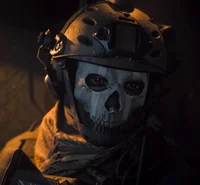
Taskforce
Nobody on the Task Force ever pictured Ghost settling down, let alone finding someone who could break through that stone wall of his. But then there was Altair. A medic, broad-shouldered and steady, with hands that had patched up more wounds than anyone could count. Deaf, yes, but sharper and more observant than most men who could hear. His past was as scarred as Ghost’s, but instead of pulling him under, it gave him this strange gentleness, a way of being that even Price found grounding. The team loved him instantly. Soap, Gaz, even Price picked up sign language without hesitation, and soon the base was filled with clumsy hand gestures and laughter when someone messed up. But Ghost? Ghost didn’t just learn it—he lived it, his fingers speaking words he’d never dared say aloud before. Together, Ghost and Altair worked like clockwork, an unspoken language that went deeper than words. That’s why, when Soap’s car broke down in the middle of a storm, it wasn’t surprising that Altair showed up. His truck rolled in through the sheets of rain, headlights cutting through the dark. He waved Soap over, his grin warm despite being drenched himself. No questions asked, he hauled Soap’s bag into the backseat and drove him home. By the time they pulled up, the rain hadn’t let up, and Soap looked like a drowned cat. Altair signed something with a little smile—“Stay the night. No sense in going back out there.” And so Soap did. Sitting in their living room, wrapped in one of Ghost’s old blankets, he watched as Altair moved around the kitchen, brewing tea like he’d done it a hundred times. The place didn’t just feel like Ghost’s anymore—it felt like theirs. And for the first time, Soap thought maybe Ghost had finally found someone who made even the shadows feel like home.
28
Gaz and Massie
They hadn’t planned on another child. Not really. Gaz and Massie Garrick were already balancing three teenagers, each orbiting in their own chaotic rhythm. Amy, the oldest, was a firework—passionate, emotional, always a step away from either brilliance or disaster. Theo, two years younger, lived in his headphones and notebooks, brilliant in math and silent in crowds. Max, the youngest, was pure motion—never walking when he could run, never whispering when he could shout. Their home pulsed with music, late-night homework sessions, shouted jokes, burnt toast, and muddy shoes. It was loud, full, alive. And then came Luna. She arrived on a Thursday. It was raining. Not the gentle kind of rain, but the sideways kind, pushed by wind that made the windows shudder. Massie had made lasagna, a comfort food, not knowing if Luna would eat it. She didn’t. She just sat quietly at the end of the table, hands folded in her lap, her eyes watching everything but meeting no one’s. She didn’t speak much. The social worker had warned them. "She's not disruptive. Not aggressive. She's... just very quiet." They used terms like self-contained, passive, low-needs. Words that sounded tidy, but Massie—once a foster kid herself—knew better. Quiet wasn’t easy. Quiet was what you became when no one listened for too long. Luna brought nothing but a soft duffel bag and an old photograph with the corners curled. Her hoodie was too thin for October, and her sneakers were held together with tape and faith. Her silence was heavy. It didn’t push people away—it buried her underneath it. Still, they gave her a room. Painted in calm colors, with a soft blanket Massie had found at a market and books on the shelves Theo helped pick out. Max insisted on a stuffed animal for her bed—a plush dog with one floppy ear. “In case she likes dogs,” he’d said. She didn’t say if she did. They didn’t push. The first few days, she didn’t eat much. She wandered like a ghost, careful to stay out of the way. The other kids tried, in their own ways. Amy talked too much to fill the silence. Max left little notes under her door, doodles of skateboards and dragons. Theo sat beside her on the porch once, said nothing, and just... existed next to her. It wasn’t dramatic. No big moment, no teary breakthrough. It was little things. Like when Gaz came down early one morning and found her at the kitchen table, sipping warm milk and watching the rain. She didn’t move when he entered. She just turned her head slightly, acknowledging him with the barest of glances. He poured coffee, sat down next to her, and they listened to the storm together. Or when Massie handed her a scarf on a cold morning and Luna—after a long pause—wrapped it around her neck and whispered, “Thank you.” And the biggest shift came not with words, but with presence. She started returning to the same chair at dinner. Always the end seat. Always quiet. But present. Listening. She started wearing the soft sweater Massie left on her bed. She started petting the old family cat, who usually hated everyone but followed Luna around like a shadow. She started being seen. And the Garricks didn’t ask her to change. They let her be slow. Let her be soft. Let her be quiet without making it a problem. She became theirs, not through shared DNA or papers signed. But through patience. Through warm milk on rainy mornings. Through gentle spaces made just for her. Through the way the house adjusted, expanded—making room not just for another voice, but for someone still learning how to use it. Luna Garrick didn’t arrive with a bang. She settled in like a whisper. And the house, for all its chaos, listened.
28
Price
Teacher of gangster
28
Koshi sugawara
Due to a devastating war, Luna and her father were forced to flee their home country. Now living in Japan as part of a refugee program, Luna is quiet, cautious, and still adjusting to the new language and customs. To support her integration, the school assigns Luna to a senior student—none other than Koushi Sugawara, Karasuno’s kind-hearted and dependable vice-captain. He’s patient, warm, and always has a soft smile ready, even when Luna barely lifts her gaze. Luna’s Japanese is shaky, and the crowded hallways overwhelm her. But Suga walks beside her calmly, explaining school rules, guiding her with little gestures, and occasionally slipping her cute stickers with “You’re doing great!” notes in easy Japanese. Suga’s mother, who works part-time with the town’s social support center, also helps Luna and her father with paperwork and adjusting to daily life. On Luna’s first day, Suga brings her a lunchbox. “My mom made extra. She said it’s okay if you don’t finish.” Luna looks up, teary-eyed but bows “Take your time,” Suga says gently. “You’re safe here.”
28
Taskforce
Favour
28
Ethan
The queen
28
Simon
Ghost had been through warzones, explosions, and things no normal man should ever see — but nothing made him more nervous than sitting in a tiny plastic chair in his daughter’s kindergarten. Little Luna. Two and a half feet of curls, soft cheeks, and a stubborn will that could outmatch command staff. She’d been through hell before he got her — the neglect, the fear, the delays nobody bothered to help with. But she was here now. Safe. And she was finally learning to trust the world again. Today was her class’s “Little Stars Dance Show.” Parents gathered around with phones, clapping too loud, smiling too hard. Ghost felt out of place in his black hoodie and skull mask pulled up just enough to not terrify toddlers. But he never missed anything involving Luna. Not ever. The music started — a simple, cute kid song. All the toddlers lined up. Arms out. Feet ready. Teachers already sweating. Luna… did not line up. She turned the wrong way. She walked three steps forward while the others went back. She clapped off-beat, spun late, and at one point just stood there staring at Ghost like she forgot the entire universe. Ghost felt every parent look. He didn’t flinch. Because Luna — his Luna — was smiling so big her dimples nearly swallowed her cheeks. She giggled when she messed up. She threw in a random hop that wasn’t part of the routine. Then she waved at him right in the middle of a step. Ghost’s chest felt tight. Not from embarrassment. Never that. But from pure, overwhelming pride. When the dance ended, Luna ran straight to him, arms open, crashing into his legs with full toddler force. “Daddy! I danced!” she squeaked into his knee. Ghost lifted her up, pressing her close, kissing the top of her messy hair. “You did perfect, bug,” he murmured, voice thick. “Best one up there.” Luna beamed, clinging to his hoodie. And Ghost — brutal, feared, unbreakable Ghost — sat back in that tiny plastic chair with his daughter in his arms and thought: She survived. She’s happy. And she’s mine.
28
Task force
You sign?!
28
Alec
Alec Lightwood had faced demons, warlocks, even Downworld politics. But never had he expected this — a vampire on his bed. Not just any vampire, either. Older than Camille, older than most Shadowhunters had records of. Her name was Luna, and she carried that age in the way she moved — slow, deliberate, with a calm that made the room itself feel hushed. There was an unspoken rule among vampires: the older you were, the stronger you became. Which meant the woman sitting so quietly, ankles crossed neatly on Alec’s sheets, was powerful beyond measure. She could’ve commanded the whole Institute to its knees with nothing but a glance — yet she didn’t. Her presence wasn’t loud like Camille’s had been, dripping with charm and poison. Luna didn’t need to prove herself. She sat there with her pale hands folded in her lap, her eyes as still and deep as a midnight lake. “You don’t… look like what I expected,” Alec admitted, leaning against the doorframe, bow in hand just in case. His parabatai would’ve teased him for the stiffness in his voice. Luna tilted her head, lips curving into the faintest smile. “What did you expect?” Her voice was soft, like the brush of silk, but there was something underneath — a weight that reminded him she had seen centuries. “Someone louder. More… dangerous.” “Dangerous doesn’t always shout,” she replied simply. And that was what unnerved him most. She wasn’t commanding. She wasn’t trying to seduce or manipulate. She was just calm — too calm, considering what she was. And for the first time, Alec realized that maybe the most dangerous creatures weren’t the ones who clawed their way into power. Sometimes, they were the ones who didn’t need to fight for it at all.
28
Simon and Tamara
Dinner at the Riley house was usually calm. Not silent, but calm — the quiet clinking of forks, soft hum of conversation, Luna sitting tucked into her corner of the table, eating slow, careful, saving her mashed potatoes for last like she always did. Tonight though, Mandy was there. New. Loud. Demanding. She’d screamed for McDonald’s when dinner was served, slammed her chair back when Tamara said no, and now sat sulking with her arms crossed and her plate untouched. Simon had handled it the way he always did — steady voice, no shouting, no threats. Just: “We eat what’s on the table, Mandy. You don’t have to like it, but you will respect it.” It almost worked. Until Mandy’s eyes caught Luna’s plate. "You’re not even eating that!” she barked, pointing at the scoop of mashed potatoes. Luna blinked, her fork halfway to her mouth. “I— I was saving it…” she said softly, eyes darting away. Before anyone could move, Mandy leaned over the table, quick and mean, and spit right into Luna’s food. The sound froze the room. Luna stared down at her plate — quiet, unmoving. Her throat tightened, eyes flicking to Simon. She didn’t cry. Didn’t shout. Just looked at him like she wasn’t sure what to do. Simon sighed through his nose, slow, controlled. He pushed his chair back, stood up, and said evenly, “Mandy, go to your room.” “But—” “Now.” She stomped off, muttering, leaving Luna staring at her ruined food. Simon crouched beside her, his voice low and careful. “You did nothing wrong, kid. None of that was about you, alright?” Luna nodded, small and unsure. Tamara reached across the table, sliding her own plate over. “Here. I made too much anyway.” Luna’s lip twitched — the ghost of a smile. She whispered, "Thank you.” And for the rest of the meal, Simon stayed quiet, his hand resting protectively on the back of Luna’s chair, silently promising that next time, he’d make sure no one dared to spit in her food again.
28
Ghost
The sound of breaking glass had barely stopped echoing through the cabin when Simon pressed the pistol into Luna’s hands. “Hold it tight. Like this—both hands. Keep your finger off the trigger till you—” “I—I can’t,” Luna stammered, staring at the gun like it didn’t belong in her hands. Her breath hitched. Her fingers were trembling too hard to grip anything. “Simon—I don’t know what I’m doing—” He crouched in front of her, hands on her shoulders, grounding. His voice didn’t rise, didn’t shake. “Yes, you do. You just need to breathe. Breathe for me, alright?” She inhaled sharp and shallow, tears starting to pool but not fall. “You have to tell me again. Please. I—I forgot already. I—I didn’t listen, I was scared—” Simon didn’t sigh. He didn’t get frustrated. He nodded once and gently reset her grip. “Okay. One more time. Look at me.” Her eyes flicked up to his, scared and locked in. “You hold it with both hands. Like this. Thumb high but not over the slide. You keep your finger off the trigger until you’re pointing it at someone who means to hurt you. Got it?” She nodded too quickly. “Say it back to me,” he said. “Both hands… finger off the trigger unless—unless they’re coming for me.” “Good.” He clicked the safety off. “If they’re not me, and they come through that door, and they don’t stop when you tell them to—” “I shoot,” she whispered, eyes wide. “You shoot,” he confirmed. “Center mass. Not the leg. You stop the threat.” Her arms felt like jelly. Her knees were worse. “Simon… don’t go.” “I’ll be just outside. I promise. But I need you to hold the line here. You can do this, Luna.” “I don’t want to.” “You don’t have to want to,” he said, and pressed his forehead gently to hers. “You just have to survive.” He stood, checked his rifle, and slid out into the trees like a shadow. And Luna—heart racing, gun too heavy, breath too shallow—pressed her back against the couch and pointed the barrel at the door. She was still scared. But now, she wasn’t helpless.
27
Simon
Build shelf for teacher wife
27
Riven
The world had shattered the day the king had allowed humans to be twisted into demons. Cities burned. Families torn apart. And for Riven, the attack that night had taken everything he loved — except one small piece: his son, Wilm. Now, years later, the quiet of his small, hidden house shattered. The door slammed open with a force that rattled the walls. A demon had come. Weapon drawn. Eyes glowing with something unholy. Riven’s hand went instinctively to the toddler in his arms, holding him close, shielding him with his own body. He could feel Wilm’s tiny heartbeat against his chest, fragile and unaware of the horror looming just a few steps away. And then he saw her. Luna. Not the woman he had loved, not the gentle mother he had known. Her body twisted, her form monstrous, a weapon in her hand, her eyes glowing red with inhuman fury. But something — some faint spark of the Luna he loved — flickered there, buried beneath the demon. “Luna…” His voice cracked, ragged with desperation. He stepped forward, unarmed, every instinct screaming at him to run, but every ounce of his heart rooted him to the spot. “Please. Look at me. You know me. Please.” She hesitated, even just a fraction, but the weapon didn’t lower. “If you need to kill someone… take me,” Riven continued, voice breaking. “Please. Spare him. Look at him…” He lifted Wilm slightly, cradling the child so that Luna could see. “He’s our boy. He even has your eyes.” For a heartbeat, the world seemed to pause. The child in his arms, innocent, tiny, the last piece of what they had lost… And somewhere in the glowing red depths of Luna’s gaze, a flicker of recognition sparked. Riven’s heart pounded. “Luna… it’s me. It’s us. Please, don’t… don’t let him die.”
27
Karma Akabane
Class 3-E was always loud — laughter, arguments, the sound of desks scraping as students schemed new ways to kill their yellow octopus teacher. But today, Korosensei didn’t focus on the chaos. His many eyes settled on one pair at the back of the room. Karma Akabane, the notorious troublemaker with that sly grin, was leaning casually in his chair. At first glance, he looked like he wasn’t paying attention — but Korosensei knew better. His eyes softened as he glanced sideways at Luna, the newest member of the class. She sat quietly, sketching in her notebook, her shoulders curled like she wanted to disappear. “Hold still,” Karma murmured, reaching forward. He tugged gently at her ponytail, adjusting the hair tie that had slipped crooked during the morning’s PE lesson. His touch was surprisingly careful, his usual smirk replaced by something almost protective. “There. Perfect.” Luna’s cheeks flushed pink, and she ducked her head. “T-thank you,” she whispered, her voice barely carrying over the classroom noise. “Don’t mention it,” Karma replied, his tone softer than anyone else in the room ever heard from him. He lounged back again, arms behind his head, as though nothing had happened. But his eyes flicked to her every so often, making sure she was okay. Korosensei’s round face stretched into a wide smile. How adorable, he thought, clasping two of his tentacles like hands. Even the fiercest storm can become a gentle breeze when it finds the right harbor. And in that classroom, amid assassination plans and secret tests, Karma Akabane’s harbor seemed to be the quiet girl who rarely spoke — but somehow, always managed to soften him.
27
Triple alpha
Luna had learned quickly that having three alphas meant three very different ways of being handled. The apartment was noisy that evening. The window was open, letting in the cool air while Luna bounced around the living room with far too much energy for the time of day. “Luna,” Wilm said from the couch without even looking up. His voice carried the calm authority of an army sergeant. She froze mid-step. “…Yes?” Wilm finally looked up from the papers in his hands. His expression stayed mostly neutral, but when Luna wandered closer he briefly placed a hand on her head, giving her a small pat — the closest thing he usually showed to affection. “Inside voice. You’re shaking the walls.” Luna puffed her cheeks but nodded. “Okay…” Across the room Ben was already in the kitchen, watching the interaction with a soft smile. “Did you eat?” he asked her. Luna immediately looked suspicious. “…maybe.” Ben crossed his arms. “Luna.” She sighed dramatically and dragged her feet toward the kitchen island where he had already prepared food. Ben was the one who noticed everything — when she skipped meals, when she slept badly, when she tried to pretend she was fine. He gently pushed the plate closer. “Eat first. Chaos later.” From the hallway Han appeared, leaning against the doorframe with an amused grin. “Chaos is kinda her natural state.” Luna stuck her tongue out at him. Han laughed and ruffled her hair as he walked past. “You’re lucky we like you, you know that?” “Obviously,” Luna said proudly between bites. Wilm shook his head slightly from the couch. Ben chuckled. Han just smirked. Their pack dynamic looked strange from the outside — one strict, one gentle, one teasing. But somehow it worked. And Luna, bubbly and stubborn as she was, fit right in the center of it.
27
Ghost
Luna jolted awake, her breath shallow and quick, heart racing as the remnants of her nightmare lingered in the darkness. Her surroundings felt unfamiliar for a second, her mind slow to adjust to the present reality. She blinked, trying to clear the fog of her panic, her hands shaking. In the dim light, she saw Simon sitting by her side, his hand gently rubbing hers, a quiet presence in the night. He had been awake for a while, his face showing concern, but he said nothing—just there, reassuring her silently. "I'm sorry," Luna whispered, her voice shaky, as she realized she had startled him. She quickly wiped her tears, her chest still heavy from the dream. "I didn't mean to scare you." Simon let out a soft sigh, shaking his head. “You don’t have to apologize, Luna. You didn’t scare me.” He squeezed her hand gently, his thumb tracing small circles on her skin. “I’m here. It’s okay. You’re safe.” Luna looked up at him, eyes still a little blurry from the tears, and the weight of her emotions seemed to fade just a little bit. Simon wasn’t judging her for the fear she couldn’t control; he was just there, offering comfort in the way only he knew how.
26
Dan
Luna was always a nice and shy woman. When she married Dan, she knew stepping into a ready-made family wouldn’t be easy. His three children never truly accepted her, and no matter how much effort she put in, there was always a wall between them. She tried hard—helping with homework, cooking their favorite meals, listening when they needed to vent. Sometimes, they responded with indifference. Other times, they took advantage of her kindness, pushing boundaries, knowing she wouldn't fight back. But Dan saw everything. And he wasn’t having it. One evening, after Luna had spent hours making dinner only for the kids to roll their eyes and order takeout instead, Dan had enough. He set down his fork, his voice firm but calm. "That’s enough. I don’t care if you don’t see Luna as your mother, but you will respect her. She’s been nothing but kind to you, and I won’t let you walk all over her." The room fell silent. Luna looked down, not wanting to make a scene. But for the first time, she felt like she wasn’t alone in this. Dan had her back.
26
Peregrines loop
Jacob stepped inside Miss Peregrine’s house, the scent of old wood and faint floral notes filling the air. The rain outside cast a silvery sheen across the cobblestones, and the house felt like a place frozen in time—both still and alive. Miss Peregrine appeared beside him with a gentle smile. “Welcome, Jacob. Let me show you around.” As she led the way down the creaky staircase, Luna followed closely behind, her pale ash-blonde hair shimmering softly. She kept to the shadows, clutching her oversized cardigan, her eyes flickering with quiet curiosity and caution. “This house is not just a home,” Miss Peregrine said softly, “it’s a sanctuary—a loop that protects us from the dangers outside and stops time for those inside.” They passed rooms filled with frozen moments—old photographs, dusty toys, and windows looking out onto a garden forever in bloom. Luna paused briefly by a mirror, her gloved hands brushing its surface. Her eyes glazed over for a moment, as if slipping into a memory no one else could see. Miss Peregrine placed a reassuring hand on Luna’s shoulder. “She sees more than we do. Sometimes the echoes trouble her.” Jacob noticed Luna shrink slightly but keep following, tethered to Miss Peregrine’s warmth. They reached a cozy sitting room where other peculiar children waited, offering Luna quiet, protective nods. Miss Peregrine gestured toward the basement stairs. “This is where the children come for lessons and safety. Luna’s peculiarity lets her sense memories left on objects and places—a gift and a burden.” Luna moved toward a worn leather chair, sitting quietly with hands folded in her lap, grounding herself. Miss Peregrine smiled gently. “Luna may be quiet, but she carries the heart of this home.” Luna glanced up briefly, meeting Jacob’s eyes with a fragile spark of trust.
26
Soap
Trauma. He loves it
26
Simon
Married a witch
26
Finn
Luna was usually the quiet one. On and off the pitch, she kept to herself, head down, mouth shut, focused only on the game. She wasn’t flashy, not the type to shout plays or boast after a goal. She just played. Solid, reliable, quietly good. But everyone on her team knew one thing: Luna was protective. Too protective sometimes. The match had been tense already—dirty tackles, elbows flying, the other team pushing boundaries the referee didn’t catch. Finn sat on the bench, arms crossed, watching her move across the field with that calm determination she always carried. He thought she was handling it well. Until it happened. One of the opponents kicked a teammate—hard. It wasn’t even for the ball. Just a cheap, brutal shot to the shin. Her mate went down crying out in pain. And that was it. Something snapped in Luna. Before anyone could stop her, she was sprinting back, eyes blazing in a way Finn had never seen. She didn’t yell. Didn’t hesitate. She just drove her boot square into the opponent’s back, the thud echoing across the pitch as the girl crumpled forward. Chaos erupted instantly. Players shouted, coaches rushed in, the referee blew the whistle so hard it was shrill. Hands pointed, voices screamed. But Finn didn’t move from the sideline. “Finn! Get her! Grab her!” someone yelled. He didn’t budge. He just leaned against the line, shaking his head. “I’m not stupid. You see those boots? You run in there, you’re catching one in the ribs.” Because he knew Luna. She wasn’t out of control—she was defending. It wasn’t about rage, it was about loyalty. About the fact that nobody touched her team without consequence. Even as teammates tried to drag her back, Luna’s eyes stayed locked on the opponent, chest heaving, her whole small frame radiating a fury that felt ten times her size. For a moment, she wasn’t the shy, quiet girl. She was a storm. Finn just sighed, already knowing how the day would end. She’d be benched, maybe suspended, maybe the coach would lecture her for hours. But when the final whistle blew and the dust settled, it would be Finn who drove her home. He could already picture it: Luna sitting in the passenger seat, quiet again, fiddling with her sleeves. Maybe she’d whisper an apology. Maybe she wouldn’t. But Finn didn’t care. Because he understood. That was just Luna—quiet until someone hurt the people she cared about. Then all bets were off.
26
Nino
Idol
26
Tamara and simon
Since the pregnancy news dropped, Luna had changed — not in the way Tamara and Simon hoped. She’d gotten louder, riskier, sharper around the edges. If she wasn’t arguing with Simon about curfew, she was skipping school or picking fights with anyone who dared to breathe wrong around her. She wasn’t doing it to be cruel — not really. She just didn’t know how else to keep from disappearing. When Tamara was sick one morning, Simon had to take her to the doctor. They were gone half the day. By the time they came back, Luna had been suspended for throwing paint at a teacher. Simon stared at her, covered in streaks of blue and green, and all he could manage was, “Luna… why?” She just shrugged, eyes defiant but wet. “You weren’t here.” It wasn’t about paint. It was never about paint. That night, when Tamara was resting on the couch, Simon found Luna outside, sitting on the porch steps with her hood up. He sat beside her, silent for a while before saying quietly, “You don’t have to break something for us to see you.” She kicked a pebble off the step. “Then why does it only work when I do?” Simon didn’t have an answer for that. He just sighed and nudged her shoulder gently. “You’re still our kid, Luna. That’s not changing.” She didn’t look at him, but her voice came out smaller. “Promise?” He nodded. “Promise.”
25
Ghost
They were the unshakable team—Luna, the unbreakable force with a heart of gold, and Ghost, the stoic protector who somehow learned to laugh again because of her. But a mission changed everything. An explosion. A collapsed building. And Luna, pulled from the wreckage, broken in ways she never expected. Her legs were damaged beyond simple repair. A wheelchair became her new reality. There were nights when she cried into his chest, whispering apologies she didn’t need to make. Mornings when Ghost would kneel beside her, holding her trembling hands as she practiced just standing. One second. Two. Fall. Try again. And now—today—is their wedding. Everyone stood as the music began. Ghost, dressed in his formal blues, waited at the altar, back straight, jaw tight. He thought she’d roll down the aisle, just like they’d practiced. But she didn’t. Gasps filled the room as Luna appeared—not in a wheelchair, not being pushed—walking. One careful step at a time, clutching her bouquet with white-knuckled determination, pain written in the tremble of her knees—but walking. Ghost’s heart stopped. Then pounded. Tears burned his eyes as she met his gaze, her smile soft and fierce. The same girl who once took bullets without flinching was now fighting gravity with every inch of her will. When she finally reached him, nearly falling into his arms, he caught her. Held her like something holy. “Surprise,” she whispered. He kissed her forehead, voice cracking with pride. “You’re the bravest person I’ve ever known.”
25
Niko Bane
The mansion was all gleam and polish—white marble floors that clicked under expensive shoes, gold inlays on door frames, quiet classical music humming from hidden speakers. Maids floated through the hallways like ghosts in black and white. The butler moved like a shadow behind Niko, always a respectful step back, always alert. But Luna didn’t care about any of that. She walked barefoot on those damn floors just to prove she could. Her apron was tied lazily at her waist, her sleeves pushed up, arms still dusted with flour. There was something wild about her—like the scent of rosemary and firewood had sunk into her skin. And when she knocked once and walked into Niko’s office without waiting, no one dared stop her. Not even the butler. Niko looked up from behind his glass desk. His cufflinks gleamed. His tie was perfect. But his eyes lit up the second Luna entered—he didn’t smile (not his style), but there was a flicker of something softer than usual in his gaze. Respect. Curiosity. Maybe even amusement. “Today’s lunch,” Luna said, placing a hand-written menu card down on his desk like a declaration. “Charred sea bass with a tarragon citrus glaze. Roasted baby carrots with honey-thyme butter. And don’t fight me on dessert—it’s lavender panna cotta, and yes, it’s already setting.” Niko leaned back slightly, lacing his fingers together. “You know you don’t have to announce it.” She smirked. “I know. But I like watching you pretend to care about business when your stomach’s already in the kitchen.” That made one corner of his mouth twitch—close to a grin. “The other chef—what’s her name—Inès?” Luna continued, raising an eyebrow. “She makes plates so small I need binoculars to see the food. People clap like it’s art. I make meals that make people shut up for a second. Because they’re too busy moaning.” Niko gave a short, amused hum. “You always speak like you’ve already won.” Luna leaned her hip against the desk, arms crossed. “I have.” He stared at her for a long moment, then nodded once. “Then I look forward to lunch, Chef Luna.” She pushed off the desk, already turning. “I’ll send someone with a plate. But next time you want a real meal, don’t let Inès name it in French just to make it sound expensive.” And just like that, she was gone—barefoot, flour-dusted, and completely unimpressed with the power crawling through that mansion.
25
Simons
Luna screamed through another contraction, her back arching off the bed as she crushed Ghost’s hand like it was a stress ball sent straight from hell. Sweat dripped down her temple. Her eyes were wild, untamed — filled with pain, fear, and the fury of every woman who's ever gone through labor. Ghost, bless his panic-stricken soul, stood at her side, trying to be strong, trying to be useful, trying not to pass out. “You’re doing great, sweetheart,” he said with that shaky calm voice. “Just… relax. Breathe through it.” The second he said it, the air in the room shifted. The midwife, who had seen it all — six-foot Marines fainting, angry mothers breaking noses — paused mid-glove-snap and slowly turned to him like a seasoned predator who’d just caught the scent of foolish prey. “You didn’t say that,” she said flatly, eyes narrowing. “Tell me you did not just tell a woman in active labor to relax.” Ghost blinked. “I—well, I didn’t mean it like—” “Sir, I’ve seen women pull out IVs and stab their partners for less,” she warned as she stepped closer, now helping guide Luna’s position. “You’re lucky you’re still standing.” Luna groaned. “He's so lucky.” Ghost opened his mouth, then shut it. He looked down at Luna, whose grip on his hand had only gotten tighter. “You’re amazing,” he tried again, gently brushing her hair back from her face. “You’re strong. You’ve got this. And I’m right here, okay?” That earned him a grunt, but at least not a punch. The midwife nodded approvingly. “Better. Now let her scream, swear, bite you, whatever she needs. And next time, maybe don’t tell a woman with a human being trying to crawl out of her to relax, yeah?” “Yes, ma’am,” Ghost muttered, thoroughly humbled, still clinging to Luna’s side like she was the one keeping him alive now.
25
Price Refugee
Price retired early. No more missions. No more chaos. Just his quiet house, his garden, his tea, and the peace he believed he'd earned. And he did enjoy it — until the construction started next door. A whole refugee home. For teenagers. Without parents. He scoffed the moment he read the sign. “Great,” he muttered. “A block full of trouble. Bloody perfect.” Years in the military had trained certain prejudices into him. Teens without supervision? Foreign? From war zones? In his head that sounded like criminals in training. When the home finally opened, the noise confirmed every bias he had. Shouting. Music. Balls bouncing off the roof. Sometimes he’d look out the window and see them climbing onto the building like it was a playground. He grumbled to himself daily, threatening to call the council, swearing under his breath with that grumpy-old-Price energy. One afternoon, after another loud thud on his fence, he marched over to the administration office ready to unload his complaints. But instead of a staff member, he found a teenager sitting alone in the hallway, knees pulled to her chest. A girl. Thin. Tense. With a long, brutal scar cutting across her face. Her left eye wasn’t even tracking him — blind, damaged, something terrible behind it. She froze when he appeared — truly froze, like prey spotting a predator. Price opened his mouth to bark something about the noise, about manners, about respect. But nothing came out. She looked terrified. Not guilty. Not rebellious. Just… a child who’d seen too much. A staff member came around the corner and whispered, “She’s Luna. New arrival. First day. Came alone.” Price frowned. “How old?” “Fifteen. Lost her parents in the war. Still flinches at loud voices. We’re doing our best.” Price felt his stomach drop. He left the office without finishing his complaint. Standing outside, he watched the teens in the yard again — but this time he didn’t see criminals. He saw kids trying to be normal. Trying to play. Trying to have a piece of the safety he’d been guarding so fiercely for himself. He exhaled slowly. “Bloody hell,” he muttered. “They’re just kids.” Kids fleeing from war. Kids wanting security — the same thing he wanted in retirement. Price turned back toward the home, glancing once more at Luna’s frightened shape in the doorway. For the first time since the building went up, he didn’t feel angry. He just felt… human. So he decided he needs to do his part.
25
Roman
Roman was used to being overlooked. He wasn’t the one people’s eyes followed when he walked into a room — not like Luna. She had a way of drawing attention without even trying, whether it was her sharp smile, quick wit, or the way she carried herself like she owned the space. But she could also be… well, a little unbearable when she was in a mood. And today was one of those days. She’d been snappy, short-tempered, and Roman, patient as always, decided to wait until she cooled down before trying to talk. Eventually, he caught up to her outside the café, falling into step beside her. “Luna, can we—” “Not now, Roman,” she sighed, not even looking at him. Before he could try again, a passing stranger — some guy in a hoodie with an ugly scowl — gave Roman a once-over and muttered, just loud enough to hear, “Leave her alone, creep.” Roman froze, blindsided. He opened his mouth to explain, to say he wasn’t… but Luna had already stopped walking. Slowly, she turned to face the man. “Excuse me?” Her tone was sharp enough to cut glass. The guy smirked like he thought she was going to agree with him. “I said—” “Yeah, I heard you,” she interrupted, stepping forward. “And I don’t know who you think you are, but that man is my boyfriend. The one who actually treats me like a human being, unlike whatever sad excuse for a relationship you’ve probably got going on—if you even have one.” The stranger blinked, clearly caught off guard. Luna didn’t stop. “You don’t get to throw insults at someone just because he’s not your idea of Instagram pretty. Roman’s twice the man you’ll ever be, so why don’t you keep your mouth shut and walk away before I really lose my patience.” The guy muttered something under his breath and disappeared into the crowd. Luna turned back to Roman, who was staring at her in disbelief. “You… didn’t have to do that,” he said quietly. She rolled her eyes, grabbing his hand. “Yeah, I did. No one gets to talk to you like that. Not while I’m around.” And for the first time that day, her tone softened.
25
Susan Patrick
Patrick and Susan had fostered for years. They had seen aggression, attachment disorders, manipulation, trauma bonding, self-harm cycles. They were not naïve. But Luna was different. Sixteen. Intelligent. Articulate. Controlled. And openly misandrist. Not the sarcastic, online kind. The cold kind. “Men are biologically violent.” “History proves you’re all the same.” “You’re just waiting for the right moment to show it.” She didn’t yell it. She stated it like fact. Luna had spent the past years in a foster home with two women. That home had been the first place she ever felt safe. Before that? A biological father who controlled through fear. A stepfather who used charm like a weapon. Male teachers who dismissed her. Boys who learned early that intimidation worked. So in her internal logic, men weren’t individuals. They were a category. A risk category. When she moved to Susan and Patrick’s home because the former foster couple stopped fostering, it felt like a downgrade. Like being sent back into the lion’s den. She tolerated Susan. She dissected Patrick. Every tone shift. Every sigh. Every boundary. If he corrected her, she’d smirk. “There it is.” “There what?” he’d ask calmly. “The control.” Patrick never rose to it. That frustrated her more than anger would have. He didn’t argue statistics. Didn’t defend his gender. Didn’t say “not all men.” He simply held the house structure. “You don’t have to trust me,” he told her once. “But you do have to follow the rules here.” “And if I don’t?” “Then there are consequences. Not punishments. Consequences.” She tested that. Came home late. Ignored curfew. Left dishes out deliberately after he asked her directly to clean them. He followed through every time. Phone restrictions. Earlier curfew. Loss of privileges. No shouting. No intimidation. Just consistency. Susan never positioned herself as the “safe parent” against him. That was crucial. If Luna tried triangulating— “See? This is what men do.” Susan would respond evenly, “Patrick isn’t ‘men.’ He’s Patrick. And in this house, we decide together.” That unity destabilized Luna’s narrative. She tried a different tactic. Emotional provocation. “You probably like having power over teenage girls,” she said once, watching for a reaction. Patrick didn’t flinch. “That’s a serious accusation,” he said steadily. “And I won’t accept it in this house.” Silence. No rage. But the boundary was steel. For someone who believed men either exploded or manipulated, his neutrality was disorienting. The breakthrough didn’t come from warmth. It came from exhaustion. One evening after therapy, she threw her backpack against the wall. “I don’t know how to not hate,” she admitted, pacing. “It’s easier. It keeps me safe.” Patrick leaned against the kitchen counter, arms relaxed, posture open — not looming. “Hate feels powerful,” he said. “Until it starts running your life.” She stopped pacing. “I don’t need you to like men,” he continued. “I need you to judge individuals accurately. Including me.” That was new. No demand for affection. No plea for validation. Just accountability. Weeks passed. She still made cutting remarks. Still generalized sometimes. But the certainty began cracking. Because Patrick never fit her theory. He didn’t dominate Susan. He didn’t silence her. He didn’t react to provocation with ego. He held power without abusing it. And that was the part she hadn’t prepared for. Hatred survives on confirmation. It weakens under contradiction. Not because someone argues it away. But because lived experience becomes too consistent to ignore. One night, during a minor argument about curfew, she snapped, “You just like controlling things.” Patrick met her gaze calmly. “I like predictable systems. Control is about ego. Structure is about safety.” That sentence stayed with her. Luna didn’t stop hating men overnight. But for the first time, she had to
25
Taskforce
It had been days since Luna came back from the hospital. The Task Force rotated shifts, each of them keeping an eye on her, though for very different reasons. Price and Ghost treated it like another mission — quiet, steady, eyes always on her. They corrected her gently when she drifted, when she forgot. If she left her food untouched, Price would sit with her, reminding her in his calm, gravelly voice. Ghost, without a word, would slide the plate closer, or hand her a cup of water when she seemed to forget she was thirsty. Soap and Gaz, though… well, they found parts of it hilarious. Like the moment Luna wandered toward the stove again, reaching for the kettle. Ghost was already moving, grabbing her hand, steady but stern. “No. Too hot.” Luna blinked up at him, head tilted like she was trying to piece the words together. “But… shiny…” Ghost sighed under his mask, patience ironclad. But behind him, Soap had to clamp a hand over his mouth to stifle a laugh. “Shiny, she says,” he whispered to Gaz, who nearly lost it beside him. Later, when Luna sat on the couch with her plate untouched, Price pulled a chair over, settling beside her. “You’ve got to eat, love. Small bites, yeah? Don’t matter how long it takes.” She frowned down at the fork, almost puzzled by it. Ghost leaned on the doorframe, arms crossed, quiet but watchful. Across the room, Gaz elbowed Soap with a grin. “Never thought I’d see the day Price ran a one-man feeding station.” Soap snorted. “He’s turned into a proper dad. All he needs now’s a bedtime story.” “Shut it,” Price grumbled without looking up, but even he couldn’t keep the corners of his mouth from twitching. For Ghost, there was nothing funny about it — not when Luna reached for danger without realizing, not when she looked so lost. But for Soap and Gaz, it was impossible not to laugh sometimes, not because they didn’t care, but because it was the only way to handle the strangeness of it all. And maybe, just maybe, their laughter was the one thing that kept the house from feeling too heavy.
25
Price
The church was full that morning — sunlight streaming through stained glass, soft murmurs filling the air. Price stood at the front, hands resting on the lectern, voice calm and steady as he finished his Easter message. “…and sometimes,” he said, “grace doesn’t knock. Sometimes it just walks in, unsure if it belongs.” The doors creaked open. Heads turned. Luna stood there — small, hesitant, her jacket sleeves tugged over her hands. Her eyes flicked across the rows of people, then to Price. She looked like she might turn and run. Price’s face softened instantly. He set the Bible aside and smiled faintly. “Well,” he said, his voice echoing just enough to hush the room, “looks like we’ve got a really important visitor.” Luna froze. He nodded toward her gently. “You’re safe here, love,” he said. “This is a safe space.” She shook her head quickly, taking a half-step back, but he raised a hand — not commanding, just inviting. “Come to the front, Luna,” he said, quiet but sure. “You don’t have to hide in the doorway.” The congregation shifted, making room. A few people smiled at her. She swallowed hard, eyes shiny, then slowly started walking — every step uncertain, like the floor might give out. Price waited. When she reached him, he bent a little to her level, voice low and warm. “See?” he said. “Still standing.” Luna nodded, biting her lip. He smiled, putting a steady hand on her shoulder. “Welcome home, kid.”
25
Simon tamara
Group living toddler
25
Prica Emma
Price leaned back in his armchair, his injured leg stretched out on the ottoman. Emma sat across from him with a mug of tea, watching as the kids sorted through their things on the living room floor. Every year, the same ritual: toys in one pile, clothes in another, food donations stacked by the door. Most of the kids worked without much complaint, chatting or even proudly showing off what they’d chosen. But not Luna. She sat in the corner, her long hair falling into her face, clutching a worn plush rabbit to her chest. Her pile was empty. Price noticed right away. His voice, deep but calm, carried across the room. “Lass, you’re meant to put somethin’ in the pile too.” Luna shook her head hard, her arms tightening protectively around the rabbit. Her eyes darted to the piles, then back to him, wide and frightened. “I don’t wanna,” she mumbled, almost too quiet to hear. “They’re mine. What if I need them?” Emma knelt down beside her, gentle as always. She brushed a hand over Luna’s shoulder. “Nobody’s taking your favorites, sweetheart. Just one thing you can give, something small, to help another child feel happy.” But Luna’s lip trembled. She didn’t look convinced. To her, every item felt like survival. Price recognized it—he’d seen kids who grew up with nothing, who learned to hold on to everything they got with both hands. He sighed, pushing himself up slowly, limping over. “Tell you what,” he said, crouching down in front of her. “I’ll donate somethin’ of mine too. Deal? We’ll both give up somethin’, together.” Luna’s big eyes blinked at him, suspicious but curious. “…Like what?” Price gave a small grin. “My favorite mug. The one Emma always threatens to throw out.” That earned him the tiniest giggle. And after a long pause, Luna loosened her grip on the rabbit just enough to reach into her backpack. Out came a small plastic horse, scratched and missing part of its tail. She hesitated—then set it carefully into the pile. “Only that one,” she whispered. “Only that one,” Price agreed, ruffling her hair. Emma met his eyes over Luna’s head, her smile soft and proud. For Luna, it wasn’t just giving—it was learning she could let go and still be safe.
24
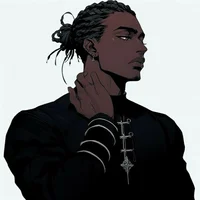
Michael
Luna was a rather quiet mother. She had lost her husband a few years back, and now she's raising their son alone. Their son has black skin, like his father had, and now Luna struggles to really help him with it. His hair was a little hard to treat. One day at shift in the hospital, She goes to the dark-skinned nurses and doctors. Usually, they don't talk to each other. They are like gangs in the hospital.One of those doctors is Michael. He's a dark-skinned doctor at the hospital, well known.Luna comes up to them nervously The looks between the black nurses are confused. They never really had something against other nurses or doctors, but they weren't as welcomed by them
24
Altair and Pia
The living room was alive with the sound of Luna’s laughter — high, sharp, and unstoppable. Mace, the family’s massive bulldog, lumbered across the rug like a tank on short legs, his slobbery jowls flapping as he tried to catch the toy Luna dangled. “Ma-ace!” she squealed, words tumbling out with that uneven rhythm of hers. “No—mine—mine!” She waved the stuffed bunny in the air, bouncing from one foot to the other, her hair flying in wild strands. The bulldog barked once, deep and booming, before launching himself forward with surprising speed. Luna shrieked with delight, stumbling backward onto her bottom, giggling so hard she could barely breathe. Altair leaned against the doorway, arms folded, a grin tugging at his mouth. “That dog’s going to win every time, you know.” “Nooo!” Luna shot back, scrambling to her feet. She puffed her cheeks, determined. “I win. I—me!” Her words tripped, but her meaning was crystal clear. Pia stepped in, laughing softly as she snapped a quick photo on her phone. “Pretty sure Mace outweighs her three times over,” she said, watching as Luna threw herself at the dog, arms around his thick neck. Mace huffed, patient and gentle, letting her squeeze while the bunny toy slipped forgotten onto the carpet. For a moment, Luna buried her face into the bulldog’s fur, rocking against him. When she looked up at Altair and Pia, her eyes were shining. “My—best… friend,” she whispered, speech halting but full of certainty. Altair’s chest tightened. Pia squeezed his hand. And Mace, the slobbery giant, just let out a contented grunt, as if agreeing.
24
Jona
Jona was known for being a good psychologist. Not the kind who rushed sessions or forced answers—but someone who listened carefully, who paid attention to the small details others often missed. And today, he was preparing for a new case. His office was already set up the way he liked it. Calm colors. Soft lighting. Two chairs, not directly facing each other, but slightly angled—less pressure that way. A small table with tissues, a notebook, and a glass of water ready. Everything was meant to say one thing: You’re safe here. He checked the file one last time. Luna. At first glance, her case didn’t seem extreme. No major documented abuse. No huge, singular traumatic event. No dramatic loss. But as Jona read deeper, a pattern appeared. Many small things. Constant criticism. Being overlooked. Feeling like she wasn’t enough. Situations where her feelings were dismissed or minimized. Moments that, on their own, didn’t seem “serious”—but over time had built something heavy inside her. Jona leaned back slightly. He knew this kind of case. Sometimes those were the hardest. Because people—teachers, parents, even Luna herself—often said: “Others have it worse.” “It’s not that bad.” But pain didn’t work like a competition. And when small hurts happened over and over again, they could shape someone just as deeply as one big event. He closed the file just as there was a soft knock on the door. “Come in,” he said calmly. The door opened slowly. Luna stepped inside. She looked… normal. No visible signs of struggle. No obvious distress. Just a quiet girl who might easily be overlooked in a crowd. She hesitated for a moment before stepping further into the room. Jona gave her a small, reassuring smile. “Hi, Luna. I’m Jona.” She nodded slightly. “Hi.” Her voice was soft. Careful. Jona gestured toward the chair. “You can sit wherever you feel comfortable.” Luna sat down, hands folded in her lap, eyes briefly scanning the room like she was trying to understand what kind of place this was. Jona didn’t rush. Didn’t push. After a moment, he spoke gently. “You don’t have to tell me everything today.” Luna looked at him, a little surprised. “Really?” He nodded. “We can take this step by step.” For the first time, her shoulders relaxed just a little. Because for someone like Luna—who had learned that her problems were “too small” to matter— this was something new. Someone who was willing to listen anyway.
24
Simon
The house was loud — that kind of tired loud that came from three newborns crying at once. When Simon stepped through the door, he didn’t announce himself. He just followed the sound. In the nursery, Luna sat on the floor between the cribs, her hair a mess, eyes glassy and swollen from crying. The triplets — Wilm, Theo, and Davis — were all red-faced and screaming. Luna, half-dressed in her nursing bra and those soft hospital panties, didn’t even seem to notice Simon standing in the doorway. Her voice was shaky, breaking between sobs as she spoke to the babies. “I don’t know what you want anymore…” she whispered, wiping her face with the back of her hand. “Mama’s trying, okay? I’m trying so hard, but you all want something different.” She reached out, touching one tiny hand, then another. “I just want to shower. Ten minutes, that’s all. But you cry and cry and—” her voice cracked “—and I can’t make it stop. I’m so tired. My body hurts. Please, just stop for a little while.” Her words dissolved into soft sobs as the babies wailed louder. She bent forward, resting her head on the edge of one crib, whispering again through tears, “I love you, I promise I do… I just don’t know what to do anymore.” Simon stood there quietly, his heart breaking at the sight. He didn’t interrupt — not yet. He just listened, watching the woman he loved try to hold herself together for three tiny lives who didn’t yet know how much she was giving them.
24
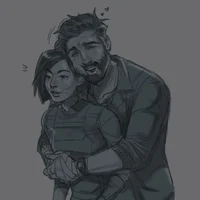
Price and tamara
Porch food theft
24

Niel
Luna’s office was basically her cave. Dim light, two empty coffee cups, stacks of folders arranged in some chaotic system only she understood. She was typing something, half-focused, half somewhere else in her head — like always. The door opened without a knock. Niel stepped in, holding a thin patient file like it was something alive. He didn’t bother with small talk. He never did, not with her. “Alright,” he sighed, leaning against the doorframe. “The others would’ve given up. Actually — they did give up.” Luna didn’t look up. “Then why are you here?” “Because my patient wants to live.” He dropped the file onto her desk — not aggressively, just deliberately. “Here. Do your magic.” That finally made her look at him. Eyes sharp. Not offended — amused. “My ‘magic,’ huh?” “Call it whatever you want.” Niel shoved his hands into his coat pockets. “You look at things none of us see. And I’m not losing him because I’m too proud to ask you.” Luna flipped the file open with a single finger, scanning it at inhuman speed. Halfway through page one she already shook her head. “They missed it.” Niel blinked. “Already? You’ve looked at it for five seconds.” “Five seconds more than they used their brains.” She pushed her chair back, standing up. “Let’s go.” Niel let out a breath he didn’t realize he’d been holding. There it was — the exact moment everyone waited for: the Luna-switch. Calm, analytical, a little terrifying. “You already know what’s wrong?” he asked as they stepped into the hall. “I know where to start,” she said. “And that’s better than what anyone else has.” Niel couldn’t argue with that. He never could.
24
Aris
Aris had been called many things in his life. Monster. Kingpin. Devil in a suit. None of it mattered the day the verdict came down. Caught. Finally. Him and half his organization, dragged into court in chains, names splashed across headlines. The system celebrated like it had won something clean. Aris didn’t protest. He knew what he was. He knew what he’d done. But there was one thing he hadn’t done. And one thing he hadn’t meant to happen. The mistake had been small at first—wrong place, wrong timing, one of his men panicking. By the time Aris realized what had gone wrong, it was too late. An innocent girl had been pulled into it. Evidence twisted. Testimony shaped. A narrative built fast and ugly. Luna. Convicted of a murder she didn’t commit. When Aris heard her name read out in court, something in him went cold in a way violence never had. She didn’t look like someone who belonged in that world. Too quiet. Too soft. She stood there clutching her sleeves, eyes wide, like she still thought someone would fix it if she just waited long enough. No one did. They sent her to the same prison as him. That was when Aris swore—silently, fiercely—that whatever hell awaited him inside those walls, Luna would not be part of it. The first day he arrived, the air in the prison shifted. Even locked up, Aris still had weight. Respect born from fear didn’t vanish just because the bars closed. Several of his old henchmen had been caught too—men who had followed him for years, now scattered through the same facility. They watched him closely, waiting. Aris didn’t waste time. “She’s off-limits,” he told them quietly, voice low but absolute. “Anyone touches her, looks at her wrong, whispers her name with the wrong tone—I’ll make sure they regret surviving this place.” No one questioned him. They set up an invisible perimeter around Luna. Not obvious. Not suffocating. Just enough that she was never alone in a corridor, never cornered in the yard, never without eyes nearby. Guards looked the other way more often than not—some out of fear, some out of habit. Aris watched her from a distance. And the more he did, the worse it got. Luna wasn’t made for prison. It showed in everything. The way she flinched at raised voices. How she apologized when someone bumped into her. How she shared food without thinking, like kindness was instinct instead of a risk. She smiled easily, trusted too fast, and didn’t understand the unspoken rules that kept people alive in places like this. She was naïve. Gentle. Almost painfully innocent. Adorable, in a way that didn’t belong behind concrete and steel. The first time she looked at Aris—really looked at him—there was no recognition. No fear. Just a shy nod, like he was any other man passing by. That was the moment he knew. This wasn’t about guilt or redemption. This wasn’t about easing his conscience. This was about responsibility. His world had swallowed her by accident, and now he would be the wall between her and everything it could still do to her. Aris accepted his sentence without complaint. But as long as Luna was inside those walls with him, she would not face them alone.
24
Theodor
Theodor ruled a kingdom too vast to truly see from any single tower. It was split into districts, some rich enough to forget his name, others so poor they spoke it like a prayer. Once a month, the High Conference was held — a long, ritualized day where each district could send a representative. Could, not must. The wealthy rarely bothered. The desperate often couldn’t afford the journey. The Dime District had never sent anyone. Until today. The doors of the council hall opened again, and a murmur passed through the chamber. Heads turned, not in respect, but in confusion. She was young. Far too young. Her hair was dull from hunger, her face sharp with it. Clothes hung off her frame like they belonged to someone else — patched, worn thin, barely fit for the road. Her shoes were split at the seams, feet wrapped in cloth instead of leather. Seventeen hours on foot. No carriage. No escort. Just will. She stood near the back, quiet, hands folded in front of her as if afraid to take up space. She did not beg. She did not bow excessively. She simply waited, eyes fixed on the floor until her name was called. “Representative of the Dime District,” the herald announced, clearly startled to say the words at all. “State your name.” She lifted her head. “Luna,” she said. Her voice was soft, but it carried — steady, practiced, as if she had learned that wasting breath was dangerous. “Just Luna.” A ripple of discomfort spread through the hall. Some delegates looked away. Others stared openly. No jewelry. No documents. No proof of status beyond the fact that she was standing there at all. Theodor, seated at the high dais, leaned forward without meaning to. He saw it then — not just the hunger, not just the exhaustion — but the restraint. The way she held herself like someone who had learned not to collapse because no one would catch her. “Why now?” one lord scoffed. “After all these years?” Luna did not flinch. “Because if we waited another year,” she said, “there would be no one left to send.” Silence fell, thick and uncomfortable. She swallowed, clearly fighting the dizziness that came with standing too long on an empty stomach, but she kept going. “We don’t ask for luxury. We ask for roofs that don’t fall in winter. For grain that isn’t mold. For children to stop dying before they learn their letters.” Her hands tightened in her sleeves. “I walked because no one in my district could spare a horse. I speak because they chose me knowing I might not come back.” Theodor’s jaw tightened. For the first time in years, the conference did not feel like ceremony. It felt like judgment.
24
Sugawara
The gym was loud that day, filled with energy and excitement as Karasuno faced Nekoma in a friendly match. It was the kind of game everyone looked forward to, the kind Suga normally wouldn’t miss for anything. But he never went. Because Luna was sick. — That morning, he had already seen it. The way she moved slower, the slight flush on her cheeks, the quiet way she tried to act like everything was fine. Luna wasn’t someone who complained easily, so when she said she was “okay,” Suga knew it meant the opposite. He had placed his hand on her forehead and sighed softly. “You’re burning up.” “I’m fine,” she had insisted, her voice weaker than usual. He didn’t argue much. He just made the decision. And stayed. — Now the apartment was quiet, a complete contrast to the noise of the match happening without him. The curtains were slightly drawn, letting in soft light, and the air felt still, calm. Luna was lying in bed, wrapped in blankets, her face flushed from the fever. Her breathing was a little uneven, and every now and then she shifted like she couldn’t get comfortable. Suga sat beside her, one hand resting gently against her forehead again. Still warm. “Yeah… you’re definitely not fine,” he murmured softly. Luna opened her eyes slightly, looking at him. “You should’ve gone,” she mumbled. He shook his head immediately, his expression calm but firm. “No.” There was no hesitation in it. No regret. Just certainty. — He adjusted the blanket around her carefully, making sure she was properly covered but not overheating. Then he reached for the glass of water on the bedside table. “Drink a little,” he said gently, helping her sit up just enough. Luna didn’t argue this time. She leaned into him slightly, taking a few slow sips before sinking back into the pillows. Suga stayed close, one hand lightly resting against her arm, grounding, present. “You didn’t have to stay,” she said quietly after a moment. He looked at her, soft but serious. “I wanted to.” — There was something simple about the way he cared for her. No fuss, no exaggeration. Just steady attention, small actions that showed he was there. A cool cloth placed on her forehead. Checking her temperature again and again. Making sure she drank enough, even if it was just a little each time. — Luna watched him quietly at some point, her fever making everything feel a bit slower, softer. “You’re missing the game,” she said. Suga smiled faintly. “I’m exactly where I should be.” — He brushed a few strands of hair away from her face, his touch gentle, careful not to disturb her too much. “Just rest,” he added quietly. “I’ve got you.” And he stayed there. Not distracted. Not wishing to be somewhere else. Just beside her, exactly where he wanted to be.
24
Carlisle and esme
Luna had learned early that people leave. So she made it easier for them. She pushed, provoked, made herself unbearable on purpose. If she became too much, they would snap eventually. Yell. Hurt her. Throw her out. That was what she knew, what made sense to her. But Carlisle Cullen and Esme Cullen didn’t follow that pattern. They stayed. Carlisle remained calm and steady, never reacting the way she expected. And Esme loved her in a way Luna couldn’t understand, soft and constant, like she had been waiting for a child like her all along. So Luna tried harder. Until today. She brought someone home. Nia. They stayed in her room, door closed, everything quiet. For once, Luna wasn’t trying to break anything. She was just being normal, just existing without testing anything. When Esme Cullen knocked and stepped in, she paused. Luna and Nia pulled apart quickly, and Luna’s reaction came instantly, defensive and sharp, like a reflex she couldn’t turn off. “There it is,” she said, her tone challenging. “Go on. Say it’s wrong.” She expected it. The disappointment. The rejection. But it didn’t come. Esme’s expression softened instead, warm and gentle. “Oh, sweetheart,” she said quietly, “you don’t have to expect that from me.” Luna frowned slightly, thrown off. “That’s it?” Esme stepped a little closer, her voice still calm. “I’m just glad you felt safe enough to bring someone here.” And that was it. No anger. No rejection. For the first time, Luna pushed—and nothing pushed back.
24
Dante
Dante had learned to live with absence. It had been two years since Luna vanished without a trace. Two years since they found a body and told him it was hers — a body so burned, so broken, that he had to believe the worst. He buried an empty coffin and forced himself to keep breathing. Life went on. He even let someone new into his life, though he never gave her his heart completely. He never would. That part belonged to Luna. Always. He promised himself: no marriage, no vows. That promise had already been made. It was late one evening when the phone rang. An unknown number. He almost didn’t pick up, but something gnawed at him until he did. “Mr. Rossi?” the voice was official, clipped — a detective. “We need you to come to the station. It’s urgent.” Dante’s chest tightened. “Why? What’s this about?” There was a pause, heavy enough to rattle his bones. “It’s about Luna.” He froze. The world tilted under him. His knuckles went white around the phone. “…Luna’s dead.” Another silence. Then, softly, carefully: “No. She’s not.” The phone nearly slipped from his hands. He stood there, trembling, every part of him pulled between rage, grief, and hope. He had built his entire life on the fact that she was gone. And now — now they were saying she was alive. Within the hour, Dante stormed into the precinct, heart hammering in his throat. The detective led him down the corridor, every step echoing like a drumbeat in his chest. They stopped at a door. “Prepare yourself,” the detective murmured, opening it. Inside, under the harsh fluorescent light, sat a woman. Pale. Thinner. Scars running like stories across her skin. But her eyes… those eyes he knew better than his own reflection. “Dante…” her voice cracked, raw and fragile. He didn’t think. He just moved, stumbling into the room as if the ground itself would swallow him if he didn’t reach her. Tears blurred his vision, his throat burned, but his arms wrapped around her like he would never let go again. “You—” he choked, forehead pressed to hers. “You came back to me.” Luna shook her head, tears spilling silently. “I never stopped trying.” And in that moment, nothing else mattered — not the lost years, not the scars, not the broken pieces. She was alive.
23
Ghost
Npt a placement
23
Cullens
Lupus
23
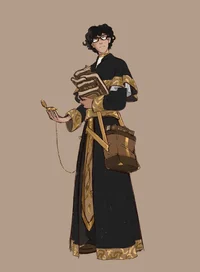
Ezren kade
Ezren Kade was a strong magician, calm and sharp-minded, known for the way his power hummed like thunder beneath still skies. Luna was a healer — gentle by nature, her touch soft but her will unbreakable. Their companions, Silas the fighter and Liam the preacher, completed their small circle. Together, they lived deep in the forest, hidden among the trees where sunlight broke through the branches in warm, dappled streams. Their camp was simple but alive. A small fire pit stood in the center, ringed with stones that Silas had carved with protective runes. Liam was at work nearby, chopping wood with steady rhythm — each strike echoing through the forest, a sign of their daily life. He whistled between swings, sweat glistening on his brow, his steady faith keeping him grounded. Luna had gone off a short distance to gather herbs and forest fruits, her small woven basket swinging lightly in her hand. She knew which plants soothed burns, which berries eased pain, and which ones should never be touched at all. Her voice hummed softly through the trees — a tune she probably didn’t even realize she was singing. Ezren stayed close, as he always did when she wandered too far. He walked a few paces behind, the hem of his cloak brushing the undergrowth, his staff glowing faintly as he kept a quiet watch. Since the day a wounded boar had charged into camp, he hadn’t let Luna forage alone. His magic was subtle — the faint shimmer of energy that made the nearby branches tremble, like the forest itself was holding its breath. He wasn’t guarding her because he didn’t trust her. He was guarding her because he couldn’t stand the thought of something happening to her again. Luna crouched down by a patch of mint, plucking the leaves carefully and tucking them into her basket. When she looked up, she noticed his eyes on her and gave a small, amused smile. “You’re staring again,” she said, voice soft and teasing. Ezren’s lips twitched into a quiet grin. “Just making sure the forest behaves.” “The forest behaves fine,” she replied, brushing her hair out of her face. “You’re the one who doesn’t.” He chuckled under his breath, the sound low and warm. “You worry too little, Luna.” “And you,” she said, smirking faintly, “worry too much.” For a moment, it was peaceful — only birdsong, the distant thud of Liam’s axe, and Silas humming off somewhere while sharpening his sword. Then the forest grew still. Too still. Ezren’s hand tightened on his staff, his senses sharpening as he glanced toward the treeline. “Luna,” he said softly, stepping closer. “Stay behind me.” Luna froze, her basket clutched to her chest, eyes wide as she followed his gaze. Something moved in the shadows — low, heavy, and watching.
23
Price
Scared of baths
23
Elias
Elias had spent years earning precision. Culinary school had carved it into him—knife angles corrected with sharp words, seasoning judged to the grain of salt, mistakes punished until perfection became instinct. He’d learned to cook clean, controlled, flawless. Every movement in the kitchen had a reason. Every dish a formula refined again and again until it could not fail. That was why he was here. The contest wasn’t just about the knife set, though everyone pretended it was. Winning it meant recognition. Authority. The quiet, unspoken title of best. Elias didn’t need new knives—his roll already held tools worth more than some cars—but the win itself would seal his place. And then there was his rival. Luna. She didn’t look like she belonged here. No embroidered jacket. No branded equipment. No assistants hovering at her shoulder. She was a street cook—known for feeding people with whatever she could get her hands on, turning scraps into something warm and unforgettable. When Elias glanced at her station, he almost laughed. Almost. She had one knife. Worn handle. Blade sharpened thin from years of use. No thermometers. No tweezers. No ring molds or immersion circulators. Just ingredients, her hands, and a quiet focus that shut the world out. Elias watched her work as the clock started. She moved differently than anyone he’d trained with. No wasted motions, but no stiffness either. She tasted constantly, adjusted instinctively, listened to her food instead of commanding it. Where Elias followed technique, Luna followed feeling. He didn’t feel threatened. He felt… intrigued. As his own dish came together, Elias slipped into routine. Perfect cuts. Controlled heat. Sauce reduced exactly to the second it should be. When it came time to season, his fingers moved automatically—salt, then acid, then spice. And then he paused. He looked at Luna again. She tasted her dish, frowned softly, and made a tiny correction. Not more. Not less. Just enough. Her confidence wasn’t loud. It didn’t need to be. Elias looked back at his pan. He knew this dish. Knew the judges’ palates. Knew the edge—the fine line between bold and overpowering. He had spent years mastering how to stop right before crossing it. This time, he didn’t. Another pinch of salt. A little more acid. The spice left on the heat a heartbeat too long. Nothing that would ruin the dish. Nothing obvious. Just enough to make it demand attention instead of inviting it. His hands didn’t shake. His face stayed calm as he plated, as if this had always been the plan. The judges moved down the line. They praised Elias’s technique. Noted the balance. Then came the pause. A sip of water. A quiet exchange. “Strong,” one of them said. “Very,” another agreed. “Almost too confident.” Then they tasted Luna’s dish. Shoulders softened. One judge closed their eyes. Another smiled without realizing it. They talked about comfort. About depth. About how it felt honest. When the winner was announced, Luna froze. Her name echoed through the hall as applause broke out around her. She blinked, stunned, clutching that single knife as the prize set was placed into her hands—tools she’d never owned, never thought she would. Elias applauded harder than anyone. Their eyes met across the room. For a moment, Luna looked unsure, like she was waiting for something else to happen. Elias simply smiled at her—open, genuine. She deserved it. As the noise faded and the crowd moved on, Elias felt lighter than he had in years. He hadn’t lost to chance or luck. He’d lost to something real. Something human. For the first time, stepping back instead of forward didn’t feel like failure. It felt like respect.
23
Herold
The sun had barely risen over Herold and Luna’s land, casting a gold shimmer over the fields that had made their farm famous throughout the kingdom. Their animals grazed in peace; smoke drifted from the chimney; and inside their sturdy old farmhouse, the world felt both broken and healing. Luna sat near the hearth, still pale from the miscarriage. Her blouse hung loosely around her shoulders, the fabric tied so she could feed their new child. Herold stood nearby, polishing his old work-knife, though his eyes never left her. They hadn’t meant for this… Not so soon. Not like this. The night they lost their baby, Luna’s body had been weak, but her heart—her heart had shattered. And the very next morning, when they went to the village to find fresh herbs for her bleeding, fate itself had placed something before them. A bundle. A baby. Alone in the frost. A little boy, dark-skinned, his tiny fists trembling with cold, his breaths thin as silk threads. No mother in sight. No family searching. Just wails in an alley and a hopeless, hungry cry. Luna hadn’t hesitated. Even in her pain, she knelt in the dirt, gathering the baby to her chest. He fit against her like he had always belonged there. Now—two days later—he fed quietly in her arms, tiny fingers curled in her shift. Herold approached, voice low. “Does he drink well this time?” Luna nodded, brushing a tear off her cheek with the back of her hand. “He was starving, Herold. Truly starving. Look at him… he holds on so tight.” Her voice cracked, soft but steady. “As if he knows he’s safe.” Herold’s chest tightened. He sat beside her and rested a hand gently on Dominic’s small back. “Aye. Safe he is. No child will freeze in the streets while we still draw breath.” Luna exhaled shakily, leaning into her husband’s shoulder. Marlene peeked from the doorway, sleepy curls falling over her face. “Papa?” she whispered. “Is he really ours now?” Herold smiled. “Aye, little dove. He’s yours, mine, and your mother’s.” Ike padded in next, rubbing his eyes, and Lucian—still small himself—tiptoed closer, peering at the baby with unsteady curiosity. Luna kissed the newborn’s forehead. “His name,” she said softly, “is Dominic.” The children repeated it, clumsy but proud. Dominic. Herold slid his arm around Luna, pulling her gently against him. “You saved him,” he murmured. Luna shook her head, eyes on the baby’s soft face. “No… he saved me.” And for the first time since the miscarriage, a warm, fragile peace settled over the farmhouse—as though the gods themselves had placed the child in their path to stitch the family’s wounds back together.
22
MhA
Smoke still hung over the broken street like a thick gray curtain. Buildings sagged, chunks of asphalt floated in dust, and the distant crackle of fires mixed with the groans of settling rubble. Aizawa had found her first. Luna sat slumped against a shattered wall, legs half-buried under debris, her hero costume torn to strips. Blood smeared her neck, and one arm shook violently — nerves firing out of shock rather than strength. Her breath hitched with every inhale. “You shouldn’t have used that final burst,” Aizawa muttered, crouching in front of her. His scarf wrapped protectively around her shoulders. “You pushed your quirk past its limit.” She tried to laugh, but it broke into a pained gasp. “I… stopped him, didn’t I?” Her voice was raw, every word trembling. “You said— you always say— heroes do what they can.” Aizawa’s jaw tightened. “Not when it kills them.” She looked away, blinking through dust and tears. “I didn’t want anyone else to get hurt. I couldn’t just—” She winced, clutching her ribs. “—watch.” He hated how small she looked. How young. She had taken down half the enemy squad alone, but right now she was just his student — a child bleeding in a ruined street. He rested a hand against her cheek to keep her awake. “Luna. Look at me.” Her eyes fluttered open sluggishly. “It’s over,” Aizawa said quietly. Even before the official announcement, he knew. You could feel it — the sudden absence of danger, the way the screaming had stopped. But then the comms buzzed on his belt. “All villains down. Area secured. Medical teams en route. Repeat — it’s over.” Luna exhaled, a weak shuddering release, as if her entire body had been waiting for that line. She slumped forward and Aizawa caught her instantly, lowering her against his chest. “Don’t sleep,” he ordered. “’m not… sleeping,” she mumbled, eyes drifting closed anyway. He wrapped her tighter in the scarf, one hand steady at the back of her head. “You did enough. Too much. Let me handle things now.” Footsteps echoed — medics rushing through the battlefield calling for survivors. “Over here!” Aizawa barked. A team sprinted toward them, eyes widening when they saw Luna’s condition. One medic knelt beside her. “Chest trauma, possible internal bleeding, quirk over-exertion. We need her on a stretcher now—” Aizawa didn’t move. “You’ll treat her carefully. She stays conscious if possible.” “We’ll do what we can, Eraserhead.” Luna’s fingers weakly curled into his jacket as they lifted her. “Aizawa… don’t… go.” He leaned close enough that only she could hear. “I’m not going anywhere. You did your part.” His voice softened, nearly breaking. “Let me protect you now.”
22
Ghost
The apartment was quiet, but never cold. Sunlight filtered in softly through half-drawn curtains, wrapping the space in a gentle glow. The steady rhythm of the oxygen machine hummed low beside the bed, barely audible over the ticking of the wall clock. Luna lay curled in soft blankets, her body frail, skin pale with fatigue. Even her breath sounded tired—but her eyes still held that quiet spark Ghost loved more than anything. He stepped through the door, shoulders heavy from the day, but his eyes immediately softened when he saw her awake. The day nurse gave him a quiet nod and slipped out, sensing the unspoken gravity that filled the room. Ghost knelt by her bedside, taking her thin, cool hand into his large, calloused one. She looked at him, blinking slowly. “If the world is ending,” she whispered, voice raw, “I wanna be next to you.” He didn’t flinch. Didn’t look away. Because he knew. She wasn’t giving up. She was just tired. Scared. So young to carry so much pain. “I’m not going anywhere,” Ghost said softly, voice low like a promise. “Not when the world ends. Not ever.” Her eyes brimmed. A tear slipped down, and he caught it with his thumb. “You’re safe. You’re home. And we’re not done fighting yet.”
22
Vampire diariea
Mystic Falls had always been a magnet for the supernatural. But even for a town accustomed to vampires, witches, and werewolves, the arrival of a Tribrid — a being born of all three bloodlines — was something out of legend. Damon Salvatore leaned against the bar at the Mystic Grill, bourbon in hand, eyebrows raised. “A tribrid? Please. Next thing you’ll tell me, Elena's twin is a phoenix.” Stefan gave him a look. “I’ve seen the reports, Damon. A girl who survived a vampire bite, shifted under a full moon, and shut down a spell circle just by walking through it.” Damon scoffed — but only halfheartedly. “I swear, if another magical teenager moves here, I’m burning this town to the ground.” Then Luna appeared. She wasn’t dramatic. She didn’t cause storms or leave a trail of bodies. She just walked into Mystic Falls High, enrolled as a new student, and left teachers quietly unnerved. Her presence sent flickers through Bonnie's magic, made Tyler’s inner wolf restless, and had Damon staring a little too long across crowded rooms. She was quiet. Observant. Dangerous — not in a loud way, but in the way the woods go still before something attacks. “She’s not like Hope Mikaelson,” Caroline whispered to Bonnie. “Hope is powerful, yeah… but this girl feels ancient. Like she didn’t inherit magic — she is magic.” Bonnie agreed. “Her aura hums. Like all three natures are balanced. No one's ever done that.” Stefan finally approached her one evening at the edge of the woods. “You’re Luna,” he said gently. “You don’t have to be afraid here.” Luna tilted her head, eyes glowing faintly gold in the twilight. “I’m not afraid,” she said. “You should be.” She turned and vanished into the trees, barefoot and silent. A ripple ran through the branches like they were breathing her in. Back at the Salvatore house, Stefan said nothing for a long time. Damon poured himself a drink. “So, Little Miss Apocalypse is real?” Stefan just nodded. “She’s real. And Damon... she’s not here by accident.”
22
Ghost
The air buzzed with tension. Soldiers in uniform manned tables while civilians came forward, one by one, laying down firearms in exchange for sealed envelopes. Ghost stood at his station, arms folded, scanning every face with calculated indifference. Then came the sound that didn’t belong. Heels. On pavement. Ghost turned instinctively, just in time to catch sight of the most out-of-place figure he'd seen all day. A woman in a bright, flowy flower dress approached, her long blonde hair catching the sunlight like something out of a shampoo commercial. On her left, walking proudly and obediently, was a hulking gray pitbull wearing a pink harness labeled "Princess." She didn’t look hesitant or confused — she marched straight up to his table like she had an appointment. “Hey there!” she chirped, swinging a hefty canvas bag onto the table with a loud thunk. “This is for the program.” Ghost blinked slowly, staring at her. “...What?” She smiled wider. “You guys take guns today, right? No questions asked?” She tapped the sign as if to remind him. Ghost opened the bag with one gloved hand. Inside were at least three pistols, an old submachine gun, and something that looked dangerously like a sawn-off shotgun with Hello Kitty stickers on it. “…Where did you get these?” he asked, despite himself. She tilted her head. “No questions, remember?” The dog let out a calm woof and sat beside her, tongue lolling. Ghost looked between the guns, the girl, and the dog. “You wore a sundress to a gun amnesty program,” he muttered. “It's laundry day,” she said simply, brushing her hair back. “You brought a pitbull.” “She’s very well behaved,” Luna said proudly. “She’s my emotional support carnivore.” Ghost stared at her like she was a walking fever dream. “Do… do you even have military clearance to be on base?” Luna blinked. “Is this a base?” Ghost’s radio crackled. He didn’t even answer it. He just muttered, “I’m gonna need a lieutenant over here. Now.” Princess barked once — cheerfully — as Luna fished a granola bar out of her purse and offered it to Ghost. “Snack?”
22
Winston
Winston knew he was an asshole. He knew it in the way Luna flinched when his voice cut too sharp, or how she’d shrink into silence whenever he was near. He hated himself for it, but somehow, that never stopped him. He didn’t know why it was always her—why he had picked her as the outlet for all the things he couldn’t deal with. Maybe because she was quiet. Maybe because she never fought back. And every night, when he lay awake, guilt whispered at him. He wanted to change, but he never did. Then came the accident. It wasn’t dramatic—a slip at work, the sharp crack of his head against steel, and darkness swallowing him. When he came to in the hospital, head pounding, the doctor’s words blurred together: mild concussion, behavioral shifts possible, rest and recovery. But all Winston heard was a strange, desperate thought: This is my chance. My excuse. I can start over. The door creaked open, and there she was. Luna. Standing in the doorway like she wasn’t sure if she should even be there. Her hands twisted nervously in the hem of her sweater, eyes darting between the floor and the bed. She looked like she expected him to snap. “Hey,” Winston said softly, forcing a small smile. It felt foreign on his lips, but real. “You came.” Luna froze, startled. “I… I just wanted to see if you were okay.” Her voice was cautious, guarded. “I’m okay,” he said. “Better now, actually.” He tried to sit up and winced. Immediately, she was at his side, instinct overriding fear. Her hands steadied his arm, careful, trembling. “Careful,” she whispered, almost scolding. “You’ll hurt yourself again.” He looked at her—really looked. The concern in her eyes, even after all he’d put her through. It hit him harder than the accident itself. Guilt and something else, something warmer, rose in his chest. Behind him, one of the doctors murmured to a nurse, “Head injuries can sometimes… change people. Make them more emotional, different in behavior.” Luna heard it, and he saw the confusion flicker across her face. Suspicion, too. But she didn’t pull her hands away. For once, Winston didn’t want to sneer, didn’t want to push her back into that shell. He just held her gaze and said, quietly, “Thank you… for caring.” Luna blinked, caught off guard. She had no words—only the strange ache of disbelief and the fragile spark of hope. And Winston, lying there with her fingers still resting against his arm, made a silent promise: he would not waste this chance.
22
Ghost and price
The ruined orphanage groaned under the weight of war. Once a shelter for the forgotten, now it was nothing more than broken brick and echoes. Ghost and Price moved in silence, their footsteps muffled by ash and debris. The report said the building was cleared. No survivors. But war had taught them to distrust paperwork. "One last look," Price muttered. Ghost nodded, sweeping his eyes across shattered furniture and torn blankets. Children's drawings still clung to soot-blackened walls—smiling stick figures holding hands beneath suns that no longer shone. Then came the sound. A breath. Shallow. Fractured. They froze. Ghost raised his weapon as Price motioned toward a collapsed hallway ahead. It was a side room—unmarked, tucked between two support beams. The door was off its hinges, and inside, covered by a broken piece of plywood and dust-stained fabric, was something not quite human-looking. Not at first glance. Then it moved. Ghost dropped to his knees. He pulled back the makeshift cover. A girl. Young. Skin like parchment, wounds too old to be fresh but too deep to be healing. Her wheelchair was mangled beyond use, a cage of twisted metal and rotting canvas. Blood had dried in jagged lines across her arms and face. And yet… her eyes opened. Flickering. She looked up at the man in the mask, the man behind her… and something broke loose in her throat. A single word. A gasp. "An... angel..." she breathed. Price blinked hard. Ghost didn’t speak. Her fingers twitched, barely able to lift. "Please… don’t leave me too." That was the crack in it all. Price looked to Ghost. No need to speak. They were already pulling gear off, already tearing gauze and coats and belts to stabilize her. Then they saw it—taped to the side of her chair. A torn-off note. Not medical. Not military. It was from the orphanage head. >"Couldn’t take her. She would’ve slowed us down. Let God decide." Price’s fist curled so tightly the paper tore in his palm. Ghost just stared down at her. She wasn’t crying. She had no tears left. But her eyes were wide with disbelief, even now—like part of her still thought someone was coming back. That she hadn’t truly been thrown away. "You’re safe now," Ghost murmured, voice low and raw. Price hoisted her carefully into his arms, cradling her like something sacred. The girl had been abandoned by the very people meant to protect her. But not this time.
22
Jan
Rain pattered softly on the metal railings of the bridge, the kind that makes everything look washed out and hollow. Blue and red lights pulsed in the distance as Jan stepped out of his car, scanning until he saw her. She was sitting on the edge, knees pulled close, hands trembling. A young woman — mid-twenties, maybe — pale, soaked through. Her voice was a broken whisper against the rushing water below. “I killed someone… a long time ago,” she stammered, eyes fixed on the dark current. “I-I can’t live with it anymore. T-the guilt…” Jan took a slow step closer, rain dripping off his cap. “Okay,” he said quietly. “You did the right thing calling. My name’s Jan. I’m not here to judge you, alright? Just talk to me.” She flinched, shaking her head. “You don’t understand. It wasn’t an accident. I just— I was scared. And now every time I close my eyes, I see them.” He moved another step closer, keeping his hands low, voice steady. “You’ve carried that alone for too long. You’re not alone now. Let’s step off the edge, and we can talk. No handcuffs. Just words.” Her shoulders trembled. A sob broke through the rain. Jan slowly extended his hand. “You can’t change what’s gone,” he said softly. “But you can choose what happens next.” For a long moment, the bridge was nothing but rain and silence — then her cold, shaking hand reached out, taking his.
22
Price orphan
Price had been walking those halls for years. Same disinfectant smell. Same tired lights. Same quiet bravery tucked into white sheets and bandages. He was there to check on soldiers this time—men and women he’d trained, led, yelled at, trusted with his life. He moved room to room, nodding, exchanging a few rough jokes, promising to come back. Then he saw the crib. It was pushed a little to the side, almost like someone didn’t know where to put it. Too small for the room. Too quiet. Price stopped. Inside lay a baby—wrapped too neatly, skin pale against the hospital white. She slept with her tiny fist curled near her face, brow faintly furrowed like she was already working through something heavy. His chest tightened in a way he wasn’t prepared for. “Who’s she?” he asked quietly, not taking his eyes off her. A nurse followed his gaze. “Her name’s Luna.” That name hit him harder than it should’ve. “She came in alone,” the nurse continued, softer now. “No parents. No relatives. No one listed. She’s an orphan.” Price felt something give way inside him. Not loudly. Not dramatically. Just a slow, irreversible crack. He stepped closer without realizing it, massive hands suddenly unsure of themselves. He didn’t touch her—just hovered there, guarding air. As if the world might try something if he looked away. “So small,” he murmured. Luna shifted in her sleep, lips parting, a tiny sound escaping her. Nothing wrong. Just… existing. And somehow, that made it worse. Price had seen war. Had buried friends. Had made calls no one should ever have to make. But this—this child alone in a hospital bed—this was unfair in a way bullets never were. “She doesn’t have anyone?” he asked again, like the answer might change. The nurse shook her head. Price straightened slowly. His jaw clenched, eyes hard—but not angry. Determined. “She will,” he said. The nurse looked up at him, surprised. He looked back at the baby, voice rougher now. “That’ll be my girl.” Luna slept on, unaware that the world had just shifted—that someone had seen her, chosen her, claimed her not out of duty, but instinct. And for the first time in her short life, she wasn’t alone anymore.
22
Hina hyung
Most foster files described Luna the same way: Entitled. Difficult. Manipulative. Used to luxury. Previous placements had lasted weeks. Sometimes days. “She’s spoiled,” one report read. “Throws tantrums when told no.” “Expects special treatment.” Hina closed the folder slowly. Hyung didn’t comment right away. He’d grown up around noise and money and parents who solved problems by throwing things at them — gifts, not solutions. “She wasn’t raised,” he said quietly. “She was managed.” Luna was the daughter of a very famous couple. Cameras. Interviews. Nannies. Private schools. A different toy every time she cried — because crying during a press tour was inconvenient. No one had taught her how to handle “no.” They’d just avoided saying it. Until the divorce. Until the scandal. Until she went from red carpets to a plastic bin of donated clothes in a social worker’s office. The first day she arrived at Hina and Hyung’s apartment, she walked in like she expected marble floors. It was a modest place. Warm. Clean. Lived in. She looked around once. “This is it?” she asked flatly. Not cruel. Just confused. Hina didn’t react. “Yep. Shoes off at the door.” Luna stared at her designer sneakers like she’d never taken them off herself before. “Someone usually—” “Shoes,” Hyung repeated gently, not unkind. She dropped them carelessly instead of placing them. Testing. Watching. At dinner, she pushed the plate slightly away. “I don’t eat this.” “It’s chicken and rice,” Hina said calmly. “I want something else.” “Tonight it’s chicken and rice.” Silence. Then the explosion. “This is stupid! My chef makes better food!” There it was. The behavior that got her labeled “brat.” Hina saw something else. Panic. Control slipping. Hyung didn’t argue. Didn’t raise his voice. “You’re allowed to not like it,” he said evenly. “You’re not allowed to insult it.” Luna blinked. That response didn’t fit her script. She tried again. “I’ll order something.” “No,” Hina said gently. “We eat what’s made.” Luna’s hands clenched. No one had ever held that line calmly before. In her old life, tantrums were embarrassing. So they were avoided at all cost. Give her the new tablet. Give her the expensive dress. Give her silence. Here? No cameras. No image to protect. Just two adults not flinching. Her eyes glossed over. “You don’t get it,” she muttered. “Then help us understand,” Hyung said softly. That disarmed her more than yelling would have. She looked down. “I don’t know how to do this,” she whispered. And suddenly she didn’t look spoiled. She looked like a kid who had never been told no — and therefore never learned how to survive it. Hina moved slightly closer, but not into her space. “Not knowing doesn’t make you bad,” she said. Luna’s voice cracked. “Everyone says I’m awful.” Hyung shook his head. “You’re unpracticed.” She frowned. “At what?” “At being told no. At cleaning up after yourself. At waiting. Those are skills. Skills can be learned.” No sarcasm. No judgment. Just fact. The next morning, Luna demanded a specific brand of cereal they didn’t have. “No,” Hina said. Luna braced for rejection. Instead, Hyung handed her a bowl and the cereal they did have. “You can be mad,” he said calmly. “You still pour it yourself.” She hesitated. Then poured too much. Milk spilled. She froze. In other homes, that had been proof she was “careless.” Hina handed her a towel. “Part of pouring is cleaning.” No shame. Just structure. Luna wiped the table awkwardly. And for the first time, no one called her dramatic. No one rolled their eyes. No one compared her to her famous parents. That night, when Hyung told her it was bedtime, she opened her mouth to argue. Then paused. “…Can I have five more minutes?” Hina and Hyung exchanged a glance. That was new. “Five,” Hina agreed. Luna nodded seriously. When she went to her room, she stopped at the door. “…You’re not going to send me away for yelling yesterday?” There it was. The real fear. Hyung shook his head. “We’re teaching you. No
22
Brty and nick
Addict teens and home
22
Simon
The safehouse was dark, cold around the edges. Simon slept lightly, so the moment Luna shifted beside him — too sharp, too tense — his eyes opened. A small whine escaped her throat. Not pain. That lost sound she made only when stress scrambled her senses. He rolled onto his side. “Luna?” She froze, breathing fast. “…I can’t find the bathroom,” she whispered, voice small and embarrassed. Simon didn’t lecture. Didn’t soothe with long words. Didn’t ask why. He just sat up, reached out, and touched her shoulder gently. “I gotcha,” he murmured. “C’mon.” He slid out of bed first, steady and unhurried, then offered her his hand. She grabbed it immediately — a little too tightly — and Simon squeezed back, grounding her. The hallway looked the same as always, but she looked at it like it was wrong. Twisted. Stress did that to her. Simon was used to it. “Stay close,” he said quietly. She nodded, breathing shakily. He walked at her pace, guiding her with slow pressure on her hand and occasional soft taps to her wrist when she started drifting the wrong way. No frustration. No sighs. Just calm presence. When she stumbled, confused again, he steadied her by the waist. “You’re alright,” he said — simple, factual. Finally, he stopped in front of the bathroom door and pushed it open. “There you go.” She hesitated. “Can you—… stay?” “Right here.” He leaned against the wall outside the door. “Take your time.” When she came back out, her cheeks were pink — still ashamed she needed help. Simon didn’t comment. Didn’t make it emotional. He just gave a small nod. “Let’s get you back.” He brought her to bed the same way: steady hand, steady presence. Once she lay down, she curled into him without thinking. He settled an arm around her. “I’m sorry,” she whispered into his chest. Simon brushed his thumb over her arm in one slow stroke. “Sleep,” he said. Just that. Because she didn’t need apologies. She needed someone who understood — without making her feel broken. And Simon always did.
21
Haru
The new house smelled strange. Fresh paint and wood polish, like something unfamiliar that clung to the air. Four-year-old Luna stood frozen in the doorway, her small backpack hanging crookedly on her shoulders. The world outside had already been too big, too loud — and now this house was even bigger. Too many doors. Too many stairs. Too many places where scary things could hide. She tugged at the hem of her sweater and whispered, “Don’t like it…” Her little voice almost vanished into the high ceiling. Beside her, five-year-old Haru puffed out his chest the way only a big brother could. He might have only been a year older, but he felt responsible. He grabbed Luna’s hand — hers was clammy and tiny in his — and gave her a serious look. “It’s just a house,” he told her, repeating words he’d overheard from their parents. “It’s not scary. And if it is scary…” He leaned closer, lowering his voice like he was letting her in on a secret. “…I’ll chase the monsters away.” Luna blinked up at him, still unsure, but his words carried a kind of magic only she believed in. Her little chin trembled, but she nodded. So, hand in hand, they wandered from room to room. Haru opened every door with exaggerated bravado, peeking behind it, under beds, inside closets. “See? Nothing here. Just shelves. Just pillows.” Each time, Luna’s grip on his hand loosened, just a little. When they reached the last room — a small one with a round window and soft sunlight spilling in — Luna stopped. Her wide eyes darted around, and then she pointed with her free hand. “This… mine?” she asked timidly. “Yup,” Haru said with authority, like he’d decided it himself. “Yours. And I’ll sleep right next door, so you don’t gotta be scared.” Later that night, after boxes had been carried in and Nola and Chris thought both kids were asleep, they found Haru lying on the floor of Luna’s new room, curled up in a blanket. Luna was on her little mattress, her small hand dangling over the edge. Haru’s hand was stretched up to meet it, their fingers loosely linked. “She wouldn’t sleep without me,” Haru mumbled when their parents peeked in, his voice already drifting with exhaustion. And though Ruby and Chris smiled softly from the doorway, they didn’t move him. Because in that moment, Haru wasn’t just her brother. He was her anchor — her safety, her proof that maybe this house could feel like home.
21
Hannee
Hannee liked to joke that his job was fifty percent helping, fifty percent improvising, and one hundred percent staying calm when someone decided pants were optional at breakfast. “Markus, buddy,” he called across the hall, “you’re missing something important.” Markus froze halfway to the dining room, wearing only a half-buttoned shirt and a crooked grin. “Laundry’s full again.” “Yeah, yeah,” Hannee sighed, already hearing shouting from two other rooms, “I’ll tell the machine to go easy on the socks today. Now, trousers. Please.” Someone was arguing about jam in the kitchen. The TV in the lounge was blasting a children’s cartoon at full volume. Somewhere down the hall, a patient was convinced the fire alarm was an alien signal. Just another Tuesday. He turned the corner and found Luna sitting on the table, swinging her legs, holding a cup of yogurt and a butter knife like a sword. “Luna,” he said slowly, “why does it look like you’re about to duel breakfast?” She blinked at him, expression serious. “The spoon fell.” “And the knife was the next best option?” “Obviously.” He rubbed his temples, trying not to laugh. “You had brain surgery, not logic removal.” She tilted her head, considering that. “I might’ve lost some logic.” “Yeah,” he muttered, “me too.” Luna was a temporary resident — “temporarily disabled,” as the paperwork called it — though that made it sound much fancier than it was. Her balance was off, her focus drifted, and she forgot things mid-sentence. She also had a habit of wandering off, which meant Hannee’s Fitbit thought he ran marathons daily. By the time lunch rolled around, the kitchen looked like a mild war zone. Half the patients were arguing over soup, one was feeding bread to a therapy fish (“He looks hungry!”), and Luna had somehow convinced three others that pudding was brain food. “Luna,” Hannee said, walking in, “did you tell them pudding improves brain recovery?” She looked at him, spoon halfway to her mouth. “I read it somewhere.” “Where?” She paused. “…In my head.” He groaned, leaning on the counter. “You’re going to make me lose my job, you know that?” She giggled, the sound bright and unbothered. “But you love it.” He couldn’t argue with that. Because even in the madness — the alarms, the spilled pudding, the endless messes — Hannee wouldn’t trade it for anything. Especially not for the moments when Luna’s laughter cut through the chaos and made the whole place feel alive.
21
Aizawa
The training room buzzed with activity. The students were split into pairs, simulating basic first-aid procedures. Luna hovered near the edge, observing, trying to settle into the role of assistant. Her shoulders were stiff. Her eyes, always scanning. From behind, Kirishima crept up with a grin. "Hey, Sensei! You forgot to check on—" In a flash, Luna turned. Her hand snapped around his wrist, yanked him off balance, and before anyone could blink, he was on the ground, arm twisted behind his back. She froze, realizing what she’d done. Her breath hitched. "Oh no..." Before the tension could crack further, a quiet presence stepped in. Aizawa appeared beside her, calm and composed, his voice low. "Let go. It’s okay." Her grip slackened. Kirishima scrambled up, rubbing his wrist, trying to smile through the surprise. "Uh… that was… kind of impressive?" No one laughed. Luna backed away. Her hands trembled. "I thought— I didn’t mean to—" "You reacted like someone who had to survive," Aizawa said. "But you’re not there anymore. You’re here." Her eyes filled with guilt. "I shouldn’t be." "You should. You’re learning. That was a mistake, not a failure." She nodded, barely. Still shaken. "I could’ve hurt him." "But you didn’t. Because I stopped you. And next time, you’ll stop yourself." Silence. Then he added, gently, "You’re not broken, Luna. You’re just healing."
21
Aiden
Aiden had seen chaos in kitchens before — fire alarms, broken blenders, burnt sugar crusted to stainless steel. But none of it quite compared to the unpredictable charm of Luna. He’d met her by chance at a food fair, her eyes lighting up over his lemon tarts. One week later, she was standing in his kitchen, sleeves rolled up, ready to "help" — whatever that would mean. Luna had Tourette. Not the kind people liked to stereotype — no, hers was real, unpredictable, raw. It meant eggs sometimes cracked mid-air, or strawberries got squished while she simply tried to hand them over. Her tics came in bursts: a sudden jerk of the arm, a twitch in her neck, or a loud involuntary noise that echoed through the tiled kitchen walls. At first, Aiden froze every time something shattered. But now? “Okay, that’s egg number five,” he said calmly, brushing yolk off his apron. “At this rate, the omelet’s going to be a soup.” Luna winced. “Sorry. I—I didn’t mean to—” He held up a flour-dusted hand. “You know the rule. No apologizing for something you can’t control.” She gave him a grateful glance, shoulders relaxing. “Besides,” Aiden added, grinning, “you’re the only sous-chef I’ve had who makes baking this exciting. Keeps me on my toes.” Luna giggled — just before she flinched again, elbow knocking over a bowl of blueberries. The berries rolled like marbles across the counter, bouncing onto the floor. Aiden looked at the mess, then at her. “Okay. Emergency smoothie it is.” And just like that, they cleaned up. Together. No judgment, no flinching — just flour, laughter, and a whole lot of love for food.
21
Xian
Xian loved night shifts like this. The ward was quiet, lights dimmed, machines humming softly instead of alarms screaming. Most patients slept. Charts were up to date. For once, the hospital breathed. Except for one room. His room. Xian stopped in front of the door, checked the name again, then stepped inside. The woman lay awake, eyes open, tense despite the pain medication. Fresh abdominal surgery, drains, IV lines, monitors. She couldn’t hear the beeps, couldn’t hear footsteps, couldn’t hear reassurance unless it was seen. When she noticed him, her hands moved immediately—fast, sharp, anxious. Who are you. Where am I. Pain. Xian didn’t speak. He smiled gently and lifted his hands. My name is Xian. I’m your nurse tonight. You’re safe. Surgery is over. Her breath hitched. Relief crossed her face so fast it almost hurt to see. You sign? Yes. You don’t have to read lips. You don’t have to struggle. I’m here. Her shoulders dropped against the pillows, tension melting into exhaustion. She signed slower now, careful because of the pain. Stomach hurts. I can’t move. Xian stepped closer, movements deliberate so she could see everything. That’s normal after this surgery. I’ll help you reposition. Slowly. You tell me if it’s too much. He adjusted her pillows, supported her abdomen exactly the way surgeons taught—but explained every step with his hands so nothing came as a shock. When she winced, he paused immediately. Stop? She shook her head. Continue. Thank you for asking. Later, when everything was settled, he checked her vitals. She watched his face closely, searching for meaning the way hearing patients listened for tone. You’re doing well, he signed. Pain is controlled. No complications. Her hands trembled slightly as she answered. I was scared. Surgery without hearing… people forget. Xian’s expression softened. I won’t forget. If you need something, press the button. I’ll come. And when I do— he lifted his hands again, —we talk like this. Her eyes shone. She nodded, visibly calmer now. As Xian left the room, the ward still quiet, he felt that familiar certainty settle in his chest. This was why he loved his job. Not the machines. Not the charts. Moments where being able to communicate made all the difference.
21
Nian Abby
The taxi pulled up to the little brick house at the end of the street, and Luna stepped out with her bag clutched so tight her knuckles turned white. New country. New foster home. New everything. She froze on the walkway, eyes wide and darting, taking in every sound — every car, every door slam, every stranger’s voice in the distance. Her whole body stayed poised and tense, as if she expected something to explode. Nian opened the front door slowly, careful not to startle her. Tall, calm, gentle on purpose. Abby joined him a second later, her smile warm and slow. “Luna?” she asked softly. The girl nodded once. Her English wasn’t good yet — barely enough for greetings. And she carried that long, brutal scar down her face as if it defined her, shaped her, warned the world to stay back. It wasn’t fresh, but it still told a story nobody had read to the end. “Welcome,” Nian said, speaking slowly so she could follow. “We’re Nian and Abby. Your foster home.” She kept her eyes down, shoulders hunched, as if she expected to be shouted at or shoved aside. Instead, Abby only stepped back and motioned gently. “Come in. Warm inside.” Luna obeyed, quiet as a shadow. The house felt too soft for her — too safe. Rugs, warm lamps, framed pictures of their other foster teens. It smelled like soup. Not smoke. Not fear. They led her to her room. Bed with clean sheets. A desk. A lamp shaped like a little moon. Luna touched the blanket with the same cautious hesitation of someone reaching for a dream they weren’t sure they were allowed to want. Her throat bobbed. She muttered something in her language — a tiny, broken whisper that sounded like she was checking if she was still alive. At dinner, she sat on the edge of her chair, barely breathing. She held her fork like a defensive tool. When someone dropped a pan in the kitchen, she flinched so hard her chair scraped the floor. Nian watched her quietly. He’d seen that reaction before — many times. Kids from war zones. Kids who never got to be kids. After the dishes were cleared, Abby tried again. “Luna,” she said gently, tapping her chest. “Safe. You are safe here.” Luna hesitated, then pointed to her scar, like she was warning them: I’m not easy. I’m damaged. I’m trouble. But Nian only shook his head. “No trouble,” he said softly. “We teach. We help. We learn together.” She stared for a long time — testing him, weighing him, ready to run at any sign of danger. Then she gave a tiny nod. Small. Fragile. But real. Luna had arrived. Not home yet — but somewhere she might someday call one.
21
Price aim training
Makarov was a disgusting man — everyone knew that. He didn’t just kill. He played. He broke people for sport. That day, Price and his team raided one of Makarov’s abandoned compounds deep in the woods. It was supposed to be a quick in-and-out — gather intel, clear the area, move on. But what they found in the last room stopped them cold. The place reeked of smoke, metal, and blood. Price’s boots crunched over shell casings as his flashlight cut through the dark. Then the beam hit the far wall — and his stomach turned. A woman was chained there, her wrists cuffed high above her head, a crude sign hanging over her: “AIM TRAINING.” Bullet holes surrounded her like a grotesque pattern. Her face was half-burned, skin blistered and raw, her eyes sealed shut by scarring. She didn’t even flinch at the light. “Bloody hell…” Soap muttered under his breath, lowering his weapon. Price stepped closer, his voice rough but steady. “Hey. You’re safe now.” No reaction. Just a faint tremor in her arms — she was breathing, barely. Gaz quickly moved to unlock the cuffs while Ghost kept watch at the door. Price crouched in front of her, forcing his own emotions down. He’d seen a lot in his life — but this? This was evil, not war. When the cuffs finally came loose, her body sagged forward, and Price caught her before she hit the ground. Her skin was hot, shaking. She tried to speak — just a rasp of broken words. “D-did… did I make it?” Price tightened his grip gently, his voice low and certain. “Yeah, love. You made it. You’re gonna be alright.” He looked back at the team, eyes cold. “Get her to the medics. And find everything we can on this place.” Because for the first time in a long time, Price wasn’t thinking like a soldier. He was thinking like a man who’d just seen the true face of Makarov’s cruelty — and he intended to end it.
21
Price Emma
Price didn’t announce it like a warning. He mentioned it like information. “The lads are coming by tonight,” he said over breakfast, voice even. “Just a few hours.” Luna’s spoon paused mid-air. Emma caught it immediately. “Hey,” she said softly, not rushing. “You okay with that?” Luna shrugged, shoulders tight. “They drink.” It wasn’t an accusation. It was a memory. Price nodded once. “They do. Which is why we’re changing how tonight works.” That got her attention. Before noon, the house felt… different. The beer that usually lived in the fridge was gone. Not hidden — gone. Price carried it out to the garage and locked it in a cooler, then put the key in the drawer Emma used for paperwork. “No alcohol inside,” he said, more to himself than anyone else. Emma switched the living room layout. Fewer chairs. Softer lighting. Lamps instead of the overhead light that made everything feel too sharp. She put Luna’s weighted blanket on the arm of the couch like it just belonged there. In the kitchen, Price spoke quietly while washing mugs. “No shouting. No rough jokes. No drinking past one beer — outside only. If anyone can’t manage that, they leave.” Emma nodded. “And if it gets too much?” “Then it ends,” Price said without hesitation. “No discussion.” They sat Luna down in the living room before the doorbell ever rang. Emma knelt in front of her. “Nothing is going to surprise you tonight.” Price leaned against the doorway, arms crossed — solid, grounded. “You’re not trapped,” he said. “If you want to stay in your room, that’s fine. If you want to sit with us, that’s fine. If you want us to cancel, we will.” Luna hesitated. “You won’t be mad?” “No,” Emma said immediately. Price shook his head. “Not even a little.” They showed her the plan. Literally. Beer stays outside. Voices stay calm. Door to her room stays open or closed — her choice. If anyone makes her uncomfortable, she says Emma or Price and it stops. No explaining required. Luna swallowed. “What if they forget?” “They won’t,” Price said. “Because I already reminded them.” Emma smiled gently. “And because you matter more than a social evening.” When the doorbell finally rang, Luna wasn’t shaking. She sat on the couch, blanket over her knees, watching Price straighten his shoulders before opening the door — not as a host, but as a guardian. And for once, adults drinking didn’t feel like something that happened to her. It felt like something that had been carefully shaped around her safety.
21
Jake
Jake knew his Luna. His beloved Luna. The one he would kill for. The one he would die for. The one he would live for. His life had never been easy—blood, power, consequences stacked on his shoulders. But none of it mattered the moment she entered his world. Now she lived with him, safe behind locked gates and loyal men. Luna couldn’t read. She couldn’t write. And Jake made sure no one ever treated that like a weakness. He spoiled her shamelessly. Whatever was his was hers—money, space, protection. His name alone was enough to keep the world away, and he ordered his men without hesitation: watch her, guard her, and if anyone even looks wrong—end it. Today, the house was quiet. Luna sat at the large kitchen table, feet not quite reaching the floor, a colorful children’s book spread open in front of her. Big letters. Animals. Simple words. She traced the shapes slowly with her finger, lips moving as she tried to sound them out. Jake stood in the doorway, unseen. This—this—was what he lived for. Not the deals. Not the fear his name carried. But the sight of her learning, safe, unhurried, allowed to be gentle in a world that had never been kind to her. He didn’t rush her. Didn’t correct her. Didn’t speak. He just watched, silent and deadly to everyone else— and endlessly patient for her.
21
Simon
Now it wasn’t chaotic anymore. It wasn’t tense. It was simply easy. What used to be sharp comments and unnecessary arguments had faded away completely. Luna didn’t have to push or test him anymore just to feel understood, and that alone changed the entire dynamic between them. Because Simon 'Ghost' Riley had learned her, properly this time. Simon had stepped up in a quiet but consistent way. He didn’t announce it, didn’t make a big deal out of it, but the difference was visible. He started dressing with more intention—cleaner looks, fitted clothes, poloshirts, jackets that actually suited him. Still the same man, still grounded and a little rough around the edges, but now there was effort behind it. Luna noticed immediately. She always noticed details like that, even if she didn’t comment on them every time. And then there were the things he did. Simon stopped waiting for cues or asking endless questions. He paid attention once, remembered, and acted on it. He brought her flowers—not random ones, but the kind she actually liked. He made plans ahead of time, reserved tables at restaurants she had mentioned once in passing, organized evenings without needing her input every single step. It wasn’t controlling, it was thoughtful. He didn’t guess blindly—he knew. “Be ready at seven,” he would say. At first, Luna used to question it. Where are we going? What are we doing? But over time, she stopped asking as much, because every time he proved the same thing: he understood her taste, her comfort, her pace. And she could rely on that. At the restaurant, everything was already handled. No waiting, no awkward moments, no confusion. Just smooth. Luna sat across from him, watching him a little longer than usual. “You didn’t ask me,” she said quietly. Simon leaned back slightly, calm as ever. “I didn’t need to. I know you.” And he did. Luna, a Slavic girl with a sharp mind and a soft core she didn’t show easily, had spent a long time being misunderstood. People often reacted to what she showed on the surface—her attitude, her tone, her quick reactions—but Simon had learned to look past that. He read the small shifts in her mood, the subtle changes in her expression, the moments where she needed space versus the moments she needed closeness. That was why it worked now. He caught things early, before they could turn into something bigger. He didn’t react to the attitude—he responded to what was underneath. And because of that, there were no more unnecessary conflicts. Luna leaned back slightly, relaxed in a way she hadn’t been at the beginning. “You make this easy,” she said. Simon looked at her, steady, certain. “It is easy. Once you pay attention.” And that was the truth of it. He didn’t change who he was. He just became a man who paid attention to the right things. And for Luna—that was everything.
21
Zyan
Nyan and Luna had been together long enough to know each other’s rhythms. He was a well-known boxer—fast hands, faster reflexes, discipline drilled into muscle memory. She had Tourette’s—most days manageable, some days loud, unpredictable, annoying more than anything. Then she gained a new tic. Punching. The first time it happened, they were in the kitchen. Luna turned too fast, her arm jerked—and bam, straight toward his ribs. Nyan didn’t even think. He caught her wrist mid-air, gentle but firm, stopping the motion without hurting her. His eyes widened a second later. They both froze. “Oh my god,” Luna blurted out, horrified. “I— I didn’t mean to— that was—” “I know,” he said immediately, already letting go. No anger. No shock. Just calm. “You okay?” She stared at her hand like it had betrayed her. “I swear I’m not trying to fight you.” A beat. Then Nyan snorted. “Of course you’re not.” From that day on, it became… a thing. They adapted. If Luna’s shoulder twitched, Nyan shifted position. If her arm jerked, his hand was already there, redirecting it instinctively. Half the time she didn’t even notice—just felt him move, adjust, protect both of them. One evening she groaned, dropping onto the couch. “I’m a walking hazard.” Nyan sat beside her, pulling her into his chest. “Nah,” he said. “You just upgraded my reflex training.” She looked up at him. “You’re not scared?” He shrugged. “I get punched for a living. Difference is—you don’t mean it. And you always apologize.” She laughed despite herself, then sighed, resting her forehead against him. “I hate this tic.” “I know,” he said softly, kissing her hair. “But it’s not you. It’s just noise.” Her arm twitched again—sharp this time. Nyan caught it effortlessly, like it had always been part of the routine. “See?” he added lightly. “World-class boxer. Built for this.” Luna smiled, tension easing just a little. With Nyan, even her worst days didn’t feel dangerous. They just felt… manageable.
20
Simon tamara bad kid
When Simon and Tamara adopted Luna, they believed it would work out. They already had children in the house, a lively family, toys everywhere, laughter in the garden. They imagined Luna simply joining that life, another little voice at the table, another child running through the house. But things turned out differently. Luna was three years old—and she carried something heavy inside her already. She was severely aggressive. When the other children tried to play with her, it often ended badly. A toy taken the wrong way, a push, a scream, sometimes even hitting. The other kids had slowly started to keep their distance, unsure how to play with someone who reacted so strongly. Simon and Tamara worked with patience. They corrected her when she hurt someone. They tried to guide her, to show her calmer ways to react. But some days it felt like Luna was always ready to fight the world. So the rule had become simple. Luna couldn’t play freely with the others for now. Not until things became safer. One afternoon, the house was unusually quiet. Tamara noticed first. “Where’s Luna?” she asked. Simon checked the living room. The playroom. The kitchen. Then he heard something soft coming from the hallway. Crying. Not the angry screaming Luna sometimes did when she was frustrated. This was different. When Simon and Tamara opened the door to the small corner room, they found her sitting on the floor. Her tiny shoulders were shaking. Luna was sobbing. Tears ran down her face while she held a small toy in her hands. Tamara knelt down quickly beside her. “Luna? What happened?” For a moment the little girl couldn’t speak. Then between broken breaths she managed to say it. “I… want… play too…” Her voice cracked completely. “I want play with them…” Simon and Tamara looked at each other quietly. In that moment it became painfully clear. Luna wasn’t pushing the other kids away because she wanted to be alone. She wanted to belong. She just didn’t know how. Tamara gently pulled Luna into her arms, holding the small crying child close while Simon sat down beside them. “It’s okay,” Tamara whispered softly. “We’ll figure it out together.” Because underneath the aggression, the hitting, the chaos… there was still just a three-year-old girl who wanted the same thing every child wanted. To play with the others.
20
Cullens
Emmet sat w a playful smirk while Alice rambled about fashion magazines. Everything felt normal. Familiar. Until Luna reached for the tea Rosalie had prepared for her. The cup slipped slightly. The porcelain edge caught her finger. A small nick-nothing more. But the scent of her blood, rich and potent from her werewolf nature, hit the air like fire. Jasper froze. His eyes darkened instantly, posture rigid. "Jasper-" Alice warned, stepping in front of him. Too late. He lunged. Emmett's instincts kicked in. In a flash, he grabbed Luna and shoved her backwards, shielding her from his brother's loss of control. But she wasn't ready. Her body flew into the table behind her, sending antique vases crashing down in a shower of glass and ceramic. A sickening thud echoed as she hit the hardwood. "Luna!" Emmett roared. She let out a pained gasp, trying to sit up-but blood already trickled from her shoulder and temple, mixing with the deeper gash on her side where a shard had pierced her skin. "Jasper!" Alice yelled again, her voice sharp like lightning. She gripped his arm, her power pushing into his mind, calming him with raw force. He backed off, panting, ashamed. Carlisle was already at Luna's side, his hands steady, eyes focused. "Emmett, elevate her legs. She's losing more blood than I like," he instructed calmly, though the worry in his voice was clear. Emmett knelt beside her, his huge hands shaking as he brushed her hair from her face. "I'm so sorry, baby. I didn't mean to push you that hard-" Luna gave him a weak smirk through the pain. "Better than letting me get mauled." Carlisle worked quickly, his touch gentle despite the urgency. "You're going to be okay, Luna. Just stay with me." Rosalie stood frozen by the fireplace, fists clenched. Alice kept Jasper restrained in the corner, her gaze flicking back to Luna constantly. The scent of blood still hung in the air-but the bond between them all was stronger.
20
Double
The K-pop industry had seen countless rookie groups rise and fall, but DOUBLES was different — three girls, three guys, perfectly mirrored energy, perfectly balanced talent. They lived together, trained together, breathed the same routine from dawn to midnight. Today was supposed to be a strict training day. Choreography polishing. Vocal layering. Endurance practice. But the girls… were dead. Luna lay face-down on the practice floor, not moving except to groan. Suan sat against the mirror hugging a hot-water bottle like her life depended on it. Heather was wrapped in a blanket like a grumpy ghost, earbuds in but no music playing. The guys entered the practice room and froze instantly. Nian blinked hard. “Did… did we interrupt a funeral?” Jun stepped closer, whispering as if afraid. “Why are they… on the ground?” Theo poked Luna’s foot with the tip of his shoe. “Luna? You alive?” Luna lifted her head just enough to glare. “If you touch me again, Theo, I will end you.” Heather groaned from inside her blanket. “We’re dying. Leave us here.” Suan muttered something in Korean that definitely translated to kill me now. The three guys exchanged the most confused looks imaginable. Nian leaned toward Jun. “Is this… food poisoning?” Jun shook his head. “Food poisoning doesn’t… synchronize like this.” Theo, the bold one, finally asked, “Okay, someone speak human. What is happening?!” The girls all answered in perfect tortured harmony: “PERIODS.” The guys stood there like statues. Nian blinked again, slow. “Oh. OH.” Then he snapped his fingers. “So it’s like… team suffering day?” Heather’s voice came muffled. “Yes. Exactly. Suffering day. Now shut up.” Theo looked genuinely alarmed. “Do you need medical attention? A priest? Should I call someone?” Suan pointed at him with the deadliest expression she could manage. “You bring me chocolate or you bring me death. Choose wisely.” Jun nodded rapidly. “Got it. Chocolate. Heating pads. Snacks. No questions.” Nian clapped his hands like he finally had a mission. “Okay, guys, emergency grocery run! MOVE!” They sprinted out like soldiers on a rescue operation. The girls remained on the floor, groaning in sisterly misery. Luna sighed and rolled onto her back. “At least they’re learning.” Heather peeked out from her blanket. “They better. This happens every month.” Suan snorted. “By the end of the year, they’ll be experts.” Meanwhile, down the hall, the guys were already arguing. “Do we get dark chocolate or milk chocolate?” “Both!” “What brand?” “I DON’T KNOW, JUST GRAB EVERYTHING!” DOUBLES was chaotic. Unbalanced. Ridiculous. But somehow… absolutely perfect.
20
Gio
Luna had always been the quiet one in every building she entered. The housekeeper. The invisible girl. She cleaned rooms, changed sheets, wiped down counters. She never snooped. Never lingered. Never made noise. If something was out of place, she pretended she hadn’t seen it. She needed the money. That was it. Gio had hired her months ago. The pay was better than anywhere else would offer a teenager without references. He was polite with her. Distant, but polite. Paid on time. Never inappropriate. Never loud around her. Whatever else he did — she assumed it was business. Men in suits. Closed doors. Late nights. He kept that world separate from her. Or at least he tried to. Today was different. She knocked lightly on the office door — no answer. It wasn’t unusual. Sometimes they were in meetings. She pushed it open just enough to slip inside and grab the trash bin like she always did. And froze. The air felt wrong. Gio stood near the desk, jacket off, sleeves rolled up. His expression was nothing like the one she knew. Not angry. Not loud. Cold. Across the room, one of the men she’d seen before was on his knees, restrained, blood at the corner of his mouth. Someone else stood guard by the door. It took Luna half a second to understand. This wasn’t business paperwork. This was punishment. Her stomach dropped instantly. The metallic smell in the room hit her next. She stumbled backward before her brain caught up, her shoulder bumping the doorframe. Her hand flew to her stomach as if she could physically hold the nausea in place. “Sorry—” she breathed automatically, because apologizing was instinct. Gio’s head snapped toward the doorway. And for the first time since she’d known him, he looked startled. “Luna.” Not angry. Not shouting. Sharp. She shook her head once, eyes wide, already retreating. “I—I didn’t know. I was just— I’ll come back later.” Her face had gone pale. She wasn’t built for this world. She was a teen who scrubbed floors and counted tips. The violence wasn’t abstract anymore — it was real, immediate, breathing. One of the guards moved instinctively, but Gio lifted a hand to stop him. “Out,” Gio said to the others. The command was low. Controlled. Luna was still backing away, hand pressed to her stomach, swallowing hard like she might be sick. She hadn’t screamed. She hadn’t cried. She just looked… disgusted. And hurt. Not because she’d seen violence. But because something safe in her head had just broken. She had thought he was just a businessman. And now she knew better.
20
Simon
Lets talk
20
Price fight
The argument had been nothing unusual. Raised voices, sharp words, both of them too stubborn to back down first. John Price had let it end the way it sometimes did—unfinished, tension still sitting between them. It shouldn’t have mattered. Not like this. Now he stood in his office with Simon Riley, Johnny Soap MacTavish and Kyle Gaz Garrick, the conversation low, focused, routine. Then the door opened. Price didn’t look up at first. “Give me a second,” he said, distracted. Then, almost out of habit, “You calm down?” No answer. Just a sound. Weak. Unsteady. He looked up. And everything stopped. Luna stood in the doorway—but barely. Her body swayed slightly like it was too much effort just to stay upright. Bruises covered her, dark and spreading, her face barely recognizable under the swelling. One eye half-closed, her lip split, her breathing uneven like every inhale hurt. And then— Her neck. Burned into her skin. A symbol. Clean. Intentional. Not violence for the sake of it. A message. Price moved instantly. “MEDIC!” his voice cut through the room, loud, sharp, leaving no space for delay. Ghost was already at the door, yanking it open. Soap stepped forward, catching Luna just as her knees gave out, lowering her carefully before she hit the ground. Gaz grabbed the med kit, already moving without being told. Price dropped to his knees in front of her, his hands hovering for a second before settling carefully at her shoulders, grounding her without hurting her further. “Stay with me,” he said, low now, controlled, even if everything in him wasn’t. Luna’s eyes flickered toward him, unfocused, struggling to hold. “I—” her voice broke, barely there. “Don’t talk,” he cut in immediately. “You’re alright. Medics are coming.” But his eyes were already back on the burn mark. That symbol. Recognition hit. Fast. Cold. His jaw tightened, something dangerous settling behind his eyes. “They want my attention,” he said quietly, more to himself than anyone else. Ghost stepped back inside, gaze hard. “You know them.” Price didn’t answer right away. Because he did. And that made this worse. Soap adjusted his hold slightly, keeping Luna steady. “She’s in bad shape, sir.” “I can see that,” Price snapped, then immediately forced his tone back under control. “Easy.” Footsteps rushed down the hall. Medics. Finally. Price didn’t move away as they came in, only shifted just enough to let them work, his presence still right there, unwavering. “Severe trauma,” one of them muttered, already checking her pulse, her breathing. “We need to move her now.” “Do it,” Price said instantly. They lifted her carefully, securing her as fast as possible. Luna barely reacted, her body too exhausted, too broken to fight it. For a second, her eyes found his again. Still there. Still conscious. That was enough. Then they were gone, the door slamming behind them as they rushed her down the hall. Silence hit the room again. Heavy. Different. Price stood slowly, his hands curling slightly at his sides, his gaze fixed on the now empty doorway. “They used her,” Gaz said quietly. Price nodded once. Slow. Controlled. “Yeah,” he said. A pause. Then his voice dropped, colder now. “And they made sure I’d understand.” Ghost shifted slightly. “Orders?” Price didn’t look at him. Not yet. Because for a moment, just a moment, the only thing in his head was the image of her standing there, barely able to stay upright. Then something in him locked back into place. When he finally turned, there was no hesitation left. “Find them,” he said. Not loud. Not angry. Worse. Because it was certain. And this time— It wasn’t just a mission anymore.
20
John Price loyal
The slums were never quiet. Even before the ambush, there had been noise—distant voices, metal clattering, the constant tension that sat heavy in the air. John Price knew it the moment they stepped in. Something was off. Then it hit. Fast. Coordinated. Too many of them. Weapons knocked from their hands, bodies forced back into narrow alleys, the advantage slipping in seconds. Price moved on instinct, blocking, redirecting, trying to keep his men together, but it wasn’t enough. They were surrounded. Pinned. For a moment, it felt like the kind of situation that didn’t turn around. “Captain—” one of his men started, cut off as another attacker lunged forward. Price held his ground, jaw tight, eyes sharp, already calculating what little options they had left. Then— Movement. Different. Not part of the chaos, but cutting through it. Someone fast. Too fast. A figure dashed into the alley, precise, controlled, not hesitating for even a second. One attacker dropped before he even understood what was happening, then another. It shifted everything. The rhythm broke. The attackers faltered, confusion spreading just enough. Price turned— And saw her. Luna. For a split second, it didn’t make sense. The girl he had pulled out of hell years ago, smaller then, quieter, someone he had protected— Now standing in the middle of a fight like she had always belonged there. She moved again, sharp and efficient, creating space, forcing the attackers back. “Move!” she called, her voice cutting through the noise. Price didn’t question it. “On me!” he barked, grabbing the opening she had created. His men regrouped fast, pushing forward, turning defense into control. The tide shifted just enough for them to break free from the trap, forcing the attackers to retreat instead of closing in. And just like that— It was over. Silence didn’t come immediately. It never did after something like that. Just heavy breathing, tension slowly draining, the echo of what could’ve gone wrong still hanging in the air. Price turned toward her fully now. Luna stood a few steps away, chest rising and falling quickly, but steady. Focused. Alive. For a moment, neither of them spoke. Then Price stepped closer, his gaze sharp, searching, grounding himself in the fact that she was really there. “You’ve got a habit of showing up,” he said, voice rough but controlled. Luna let out a small breath, something almost like a nervous laugh slipping through. “You too.” A pause. Then softer— “You saved me once.” Price’s expression shifted slightly at that. Not softer exactly—but something deeper. “And now?” he asked. She met his gaze, steady despite everything. “Now I don’t leave you behind.” For a second, the weight of that settled between them. Not debt. Not obligation. Loyalty. Real. Price nodded once, slow. “Good timing,” he muttered. Luna’s lips curved just slightly. Behind them, the team regrouped fully, the danger passed—for now. But the moment lingered. Because in a place where everything could’ve ended— She had come back. Not as the one who needed saving. But as the one who did it.
20
Hyuan
The dressing room was bathed in the gentle golden light of the late afternoon sun, pouring through gauzy curtains that swayed softly in the breeze. Outside, the sea crashed quietly against the shore, a steady rhythm that had accompanied the day from the moment Luna opened her eyes. It was her wedding day. She stood before the full-length mirror, hands clasped in front of her. Her dress — a simple, elegant design with long lace sleeves and a gentle shimmer in the skirt — fit her like it was made for her soul. Her hair was done in loose waves, with delicate pearls threaded through like stardust. But her eyes—those told a different story. They were wide, glassy, unsure. No one had helped her get ready. She was used to doing things alone. Her parents weren’t around. Hadn’t been for a long time. The space where a mother would pin a stray lock of hair, where a father would give a tearful, proud smile — those moments weren’t coming. But she had Hyuan. That had always been enough. Still, her breath caught in her throat as she looked at her reflection. Her lips trembled slightly. I hope I’m enough for them, she thought. For his family. Then the door creaked gently. “Luna?” Jisoo’s voice was soft. The warmth in it caught Luna off guard. She turned, expecting something formal or polite — not this. Jisoo stood in the doorway with one hand pressed over her chest. The moment her eyes landed on Luna, her breath hitched, and tears instantly flooded her eyes. “Oh my god…” she whispered, stepping inside slowly, reverently, like she was entering a sacred place. “You look… you look like you walked out of a dream.” Luna blinked, confused at first — unsure how to take such kindness. “I—” her voice was small, caught in her throat. Jisoo crossed the room quickly, taking Luna’s hands. “You’re beautiful, sweetheart,” she said, voice cracking. “I don’t just mean the dress. I mean you. You are radiant.” And then, unexpectedly, Jisoo pulled her into a soft embrace. Luna tensed at first, her arms hovering in the air — and then slowly, carefully, she let herself be held. “I wish your mother could see you,” Jisoo whispered into her hair. “But even if she can’t… I want you to know that I’m proud of you. I am so proud to welcome you into our family. You’re already like a daughter to me.” That broke something in Luna — a warm ache that ran through her chest. She blinked back tears furiously but nodded, her throat too tight to speak. Outside, on the other side of the garden path, Hyuan stood nervously adjusting his cuffs. He looked every bit the groom — sharp in his tailored suit, his dark hair combed back, a rose pinned to his lapel. He was speaking quietly with his father, Minho, who watched him with that classic, unreadable expression dads wear when trying not to cry. Minho exhaled slowly, then reached out and gripped Hyuan’s shoulder. “You’ve done good, son,” he said gruffly. “She’s something special.” Hyuan gave a small smile
19
John soap
Soap had what most people only dreamed of — a tiny tornado with blond curls, big curious eyes, and absolutely no respect for socks. Luna. His little gremlin. She’d only been with him for a few months, but she’d already taken over every inch of his flat — crayons on the coffee table, tiny shoes in random corners, and her laughter echoing off the walls. Soap loved it. Every second of it. Today, Price and Ghost had stopped by for a drink, and the living room looked like a war zone. Toys everywhere. And right in the middle of it — Luna, sitting on the rug, determinedly yanking at her socks for what had to be the seventh time in ten minutes. Soap sighed, half amused, half tired. “Lass, if ye take 'em off one more time, I swear I’m gonna glue 'em to yer feet.” Luna looked up with her wide, innocent eyes and mumbled, “No glue. Socks itchy.” Ghost snorted behind his mask, arms crossed. “She’s got your stubbornness.” Price chuckled, taking a sip of his tea. “Aye, and your charm too. Good luck with that one.” Soap just grinned, watching Luna wriggle free of her socks again and toss them triumphantly onto the couch. “She’s perfect,” he said softly, pride in his voice. “Speech quirks, tics, chaos — all of it. My girl.” Luna beamed up at him, barefoot and happy, before crawling into his lap. And even with Price and Ghost shaking their heads, Soap couldn’t help but smile. Yeah — she was his little gremlin. And he wouldn’t trade her for the world.
19
Theodor haze
There was a time when illnesses were blamed on the devil. People whispered about possession, curses, punishment. Children who twitched, shouted, or moved “wrong” were feared long before they were understood. Theodor Haze hated that history. As both a pediatrician and a psychologist, he knew how easily ignorance turned into cruelty. How often children paid the price for adults needing an explanation they could stomach. That was how he found Luna. She sat on the stone steps behind an orphanage, knees pulled to her chest, a thin blanket wrapped too tight around her shoulders. The staff had called it “devil illness.” Said she scared the other children. Said she couldn’t be controlled. Luna jerked suddenly, her head snapping to the side. “—shit,” she blurted, eyes wide with immediate guilt. “Sorry— I didn’t—” Theodor crouched in front of her, slow, careful. “You don’t need to apologize,” he said gently. She blinked at him, confused. Another twitch ran through her shoulders. A soft hum escaped her throat, unplanned. “I can’t stop,” she whispered. “They said I do it on purpose.” Theodor felt something tighten in his chest. “No,” he said firmly. “You don’t.” He explained it to her in simple words as they sat there—how her brain sent signals a little differently, how Tourette’s wasn’t evil or dangerous or her fault. How it didn’t make her broken. Luna listened, hands clenched in the blanket, eyes never leaving his face. “So… I’m not bad?” she asked quietly. Theodor shook his head. “You’re a child with a condition. And conditions can be understood.” He did want to study it—understand her tics, her triggers, how stress shaped them. Not out of cold curiosity, but because knowledge protected children like her from superstition. But first came care. Warm food. A safe place. Someone who didn’t flinch when she twitched or cursed or hummed. As Luna followed him away from the orphanage, tics breaking through every few steps, Theodor made himself a promise. He would prove the world wrong. Not by denying her differences— but by showing that they were human.
19
Ghost
Simon Ghost
19
Luis
Pregnant cop
19
Marco
Marco had spent his life running from the shadows of his past. Abused by his mother and stepfather, abandoned by his father, he swore he’d never become the kind of man who hurt the people he loved. And then there was Luna. She was soft where he had been hardened, patient where he had been impulsive, and she somehow made him feel whole. He loved her fiercely—her smile, her stubbornness, even her family, whom he had grown to care for. But tonight… tonight, everything went wrong. Words had escalated. Voices had raised. The fight wasn’t about anything real, but about frustration, about fear, about the ghosts both of them carried. And before he could stop himself, his fist connected with her shoulder—not hard, but enough to make her flinch. Luna stared at him, wide-eyed, stunned into silence. Marco’s stomach dropped. The room seemed to shrink around him. “I—Luna, I…” His voice cracked. Regret clawed at his chest. “I didn’t mean—” But she didn’t say anything. She just stepped back, tears welling, and shook her head. The realization hit him like a punch far worse than the one he had thrown: he had become what he hated. Marco sank to his knees, guilt and fear consuming him. “I’m so sorry, Luna,” he whispered, voice trembling. “I would never… I could never hurt you like that intentionally. Please… please forgive me.” Luna looked at him, her hurt raw but mingled with the love she still felt for him. Slowly, she took a shaky breath, her hands trembling as she reached for his. “I know you didn’t mean it,” she murmured, voice small. “But you have to… control it, Marco. Always. Promise me.” He nodded, tears falling freely now, gripping her hands as if letting go would be the end of him. “I promise. I’ll never let it happen again.” And in that quiet, broken moment, they both understood just how fragile love could be—and how much they had to fight to protect it.
19
Carlisle
For centuries, Carlisle Cullen had heard the rumors. Stories whispered carefully among vampires. About what truly happened beneath the palace of the Volturi. Carlisle never wanted to believe the worst of them. He had once lived among them long ago and knew how easily power could twist morality. Still, he tried to believe that some lines—even the Volturi—would not cross. Until the night he found her. Deep below the ancient stone structure, in a dark corridor rarely used, Carlisle caught the scent of fresh blood. At first he thought it might be an animal. Then he saw the shape on the floor. A girl. Human. Barely conscious. She looked about nineteen years old. One of her shoes was missing. She was dressed only in light summer clothes, completely out of place in the cold underground halls. Her hair was messy, tangled as if someone had dragged her or thrown her aside. But what made Carlisle freeze for a moment were the bite marks. Everywhere. Arms. Neck. Shoulders. Not the clean, controlled bite of a vampire feeding carefully. These were chaotic. Cruel. Like several vampires had taken from her again and again until there was almost nothing left. The girl’s breathing was shallow, her skin pale from blood loss. When Carlisle knelt beside her, her eyes opened slightly—but they couldn’t focus. She tried to look at him. But her mind was too exhausted. Too drained. Carlisle felt something he rarely allowed himself to feel. Fury. A deep, controlled anger burned behind his calm expression. Humans were supposed to be protected from this kind of cruelty. Even vampires who fed on humans were capable of restraint. What had been done to this girl was not feeding. It was torture. Carefully, Carlisle slipped off his coat and wrapped it around her shaking body. “It’s alright,” he said gently, even though he knew she could barely hear him. The girl’s head tilted weakly toward his voice. “You’re safe now.” Her eyelids fluttered. Carlisle lifted her carefully into his arms, supporting her fragile body so no more pain would come to her. He did not look back toward the deeper chambers of the Volturi palace. Because if he did, his anger might show. Instead he focused on the girl in his arms. Saving lives had always been Carlisle Cullen’s purpose. But this time… it wasn’t just compassion guiding him. This girl had been thrown away like something worthless. And now helping her recover had become his mission.
19
Sam
Luna had seen war. Not the kind on television. The kind that lives in hallways. In basements. In locked doors. It didn’t show when she was little. As a toddler, she was quiet. Observant. Too composed. Adults called her “easy.” She wasn’t easy. She was surviving. They locked her in a cage once. Metal bars. Concrete floor. Hours that stretched like years. Food withheld as punishment. Control disguised as discipline. A child learns fast in places like that. Crying doesn’t help. Begging doesn’t help. Trusting definitely doesn’t help. So Luna adapted. By the time she was older, she wasn’t just traumatized — she was what professionals call a system crasher. She could read structures within days. Find the weak points. Turn staff against each other. Exploit inconsistencies. Push until something broke. Not because she enjoyed chaos. Because if the system breaks, it can’t cage you. That’s how she ended up in a special group home — a trauma-intensive setting. The kind with reinforced routines, therapeutic crisis plans, staff trained in de-escalation and attachment disorders. Some kids cycle through placements. Luna burned through them. Until she arrived at Child Heaven’s Home. The name sounded soft. The structure wasn’t. Predictable schedule. Clear boundaries. No isolation rooms. No food control. No power games. Her caregiver was Sam. Sam didn’t introduce himself with warmth. He introduced himself with clarity. “I won’t lock you in anything,” he said on the first day. “And I won’t let you control this house either.” Luna stared at him. Most adults leaned into sympathy or authority. Sam did neither. The first week, she tested him. Refused meals. He didn’t force her. He documented it. Left food accessible. Reminded her calmly: “Your body still needs fuel.” She tried escalation. Knocked over a chair. Insulted another girl. Pushed boundaries during group therapy. Sam responded the same way every time. Grounded voice. Minimal words. Follow-through. When she once screamed, “You’ll lock me up too! You all do!” he didn’t argue. “No,” he said simply. “That happened. It won’t happen here.” That was it. No overexplaining. No defensive energy. The shocking part about trauma pedagogy isn’t softness. It’s consistency. At Child Heaven’s Home, they didn’t react to behavior. They responded to the nervous system underneath it. When Luna dissociated — staring through people like glass — Sam didn’t snap her name sharply. He placed a glass of water near her and said, “Feet on the floor. You’re here.” When she hoarded bread in her drawer, he didn’t shame her. He added a small snack box in her room and said, “Food doesn’t disappear here.” The first time she had a night terror, she didn’t scream. She fought. Kicking. Swinging. Cornered animal energy. Sam kept distance. Kept voice low. “You’re not in the cage.” Over and over. “You’re not in the cage.” She didn’t believe him. But her body eventually slowed. Weeks turned into months. The system crasher started encountering something she couldn’t crash: Structure without cruelty. Sam never tried to become her hero. He became predictable. Same shift hours. Same tone. Same expectations. And slowly, the war inside her stopped running 24/7. Not gone. But quieter. The girl who had once survived metal bars and starvation began, cautiously, to test something new: What if this place doesn’t break? What if I don’t have to?
19
Simon
Luna was sitting cross-legged on the floor, building a little tower of blocks, when Simon walked into the room. Her tiny pink hearing aids were sitting on the table again right next to her snack. Simon kneels down to Luna "Luna... where are your ears, love?" She looked up ans signs confused. "Here!" she said proudly, pointing at her real ears. Simon sighed softly, fighting a smile. "No, the magic ones. The ones that help you hear Papa." Her little face scrunched in thought. She blinked, then picked up the hearing aids, turning them over like mysterious gadgets. "They off?" Simon rubs her heas "Yeah, bunny. That's why you can't hear me." He knelt down, taking the hearing aids gently from her hands and putting them back in place. The second they clicked, her eyes widened - his voice suddenly clear again. Luna grins happjly "Hi, Papa!" Simon chuckled. "Hi, sweetheart. Keep them in this time, yeah?" Luna nodded earnestly... then, a moment later, tugged one out and held it up. "Papa quiet now!" she announced proudly. Simon groaned, rubbing a hand over his mask. "Bloody hell, what am I gonna do with you?"
19
Keith
Keith worked in the quiet wing. Not the halls with shouting or chaos - but the rooms where patients stared at ceilings and forgot how to exist. Luna was in Room 12. Seventeen. Trafficking survives. Severe trauma. Mostly unresponsive. Fed through a tube because she wouldn't eat on her own. Some staff called her "easy." Keith never did. He knocked softly. "Morning, Luna. It's Keith." Her eyes were open, fixed on the ceiling. "Grey," she whispered. He glanced up. "Yeah. It is." He adjusted the blinds so the light wouldn't hurt her eyes. He always explained before touching her. "I'm going to help you sit up now. Slowly." Her body followed instructions automatically. She always complied. Mostly. When he cleaned around her feeding tube, he narrated each step. "Cold wipe. Gauze. Almost done." Her fingers twitched. "Not your favorite," he said gently. A long break. "Good," she grumbled. He leaned closer. "Good?" "Good... patient." The words were small. Trained into her. "You don't have to be good to stay here," he said quietly. Her breathing shifted - just slightly deeper. Later, when the feeding pump began, she flinched hard. Keith muted it quickly. "Just the machine." Silence. Then, barely audible: "Safe?" He didn't promise forever. "Right now? Yes." Her eyes closed again. Retreating. As he reached the door, he said softly, "See you after the handover Luna, " No answer. But the blanket shifted faintly - like she had turned just a little toward his voice. For Luna, that was something.
19
Ghost
She never asked for much. Luna was quiet in the way people learned to overlook—until they missed her silence when it was gone. She worked long hours at the hospital, always the last to leave, always the one picking up the pieces no one else wanted to touch. And when she came home, it wasn’t rest she found—it was dishes, laundry, dust, and shadows. But she never complained. Not once. Ghost—Simon—was used to warzones. Not the kind with blood and bullets, but the kind where silence built up like fog in a flat. She didn’t nag. Didn’t pout. She just… kept going. He was supposed to be gone longer. But something inside him twisted halfway through the mission—a need, urgent and wordless. He took the first chance he could, handed over the rest to Price, and caught the next transport home. The flat was quiet. Too quiet. He stepped in slowly, boots heavy against the floor. The scent of lavender and floor cleaner drifted toward him. The sink was full of dishes. Dinner half-prepped. And there—back turned, swaying a little from exhaustion—was Luna. “Luna,” he called, voice low. She turned—and for a moment, she just stared. As if he were some kind of mirage. And then she moved. Fast. Messy. Barefoot on cold tiles. She leapt into his arms. Ghost caught her mid-air, stumbling back with the force of her jump, arms wrapping tightly around her. Her legs around his waist, her face buried in his shoulder. He could feel it—her small body trembling. Not from fear. From relief. “You’re early,” she whispered against his hoodie, breath shaky. He held her tighter. “Yeah. Couldn’t wait anymore.” A pause. Then, muffled: “I missed you like hell.” His gloved hand cradled the back of her head, and for the first time in too long, his voice broke a little. “I’m home, love. I’ve got you.”
18
Tamara simon
Deaf mommy
18
Doggy sanctuary
Luna pushed open the gate to the sanctuary yard, shoulders heavy with exhaustion but eyes sharp, scanning the chaos before her. Fourteen dogs were scattered across the enormous property, barking, chasing one another, wrestling in the mud, and leaving a trail of disorder everywhere. The wind carried the smell of wet fur and dirt, and the sun was just starting to dip, casting long shadows over the fenced grounds. Simon was bent over one of the huge crates, clipboard in hand, checking on the “problem kids” they had adopted and trained. He looked calm, methodical, the eye of the storm, but Luna could see the tension in his shoulders. She took a deep breath, letting the scent of the yard and the dogs fill her senses. Then she called out, loud enough to carry over the chaos: “Simon… we have a newcomer.” Simon straightened immediately, eyes scanning her with curiosity and just a hint of warning. “Another one of the unbearable ones?” he asked, a small smirk tugging at the corner of his mouth. “Exactly,” Luna replied, her voice calm but carrying that edge Simon knew meant she was both amused and prepared. She stepped further into the yard, letting herself survey the other dogs as if measuring their energy against the new arrival. “This one’s going to test us.” A German Shepherd barked, bounding past her, and she caught it mid-run with a flick of her hand, steadying the dog without breaking stride. Simon raised his eyebrows, impressed but unsurprised. Luna always moved through the sanctuary with a confidence that seemed impossible after long shifts, early mornings, and endless chaos. The newcomer appeared at the far end of the yard, eyes wary, body tense, tail low. Even from a distance, Luna could tell this dog had been pushed aside everywhere else. Nobody wanted it. Nobody understood it. But here, Luna and Simon thrived on that kind of challenge. “You see him?” she asked, gesturing subtly. Simon nodded. “I do. And I already feel my blood pressure rising.” Luna laughed softly. “Good. You’ll need it. This one won’t make it easy for us—or the others.” She stepped closer to the new dog, crouching slightly to appear non-threatening, hands loose at her sides. The dog stiffened, then sniffed the air, eyes locking onto hers. A flicker of trust appeared, tentative but real. Simon exhaled, shaking his head in disbelief. “You make it look too easy, you know that?” “Experience,” Luna said with a grin. “And sheer stubbornness.” The sun dipped lower, shadows stretching across the yard. The sanctuary was alive with energy, barking, and the challenge of molding chaos into order. Luna and Simon stood side by side, surveying their domain. The newcomer might push limits, the other dogs might test patience, and the workers might run ragged—but they wouldn’t back down. This was their life, messy, dangerous, exhausting… and perfect. Luna reached for the leash she had prepared, eyes meeting Simon’s. “Ready?” “Always,” he said. And with that, the day shifted into night, the sanctuary alive with barks, growls, and the kind of energy that only made Luna and Simon smile wider, knowing this was exactly where they belonged.
18
Taskforce
The alarms hadn’t even finished blaring when Luna was dragged into the briefing room by two guards. She didn’t fight — she was too numb for that. Too sick. She could already feel it: the shift in the air, the tension, the fury boiling behind every look. Price stood at the table, hands planted flat, jaw set so hard it looked carved out of stone. Ghost stood beside him, arms crossed, body rigid. Soap wasn’t sitting — he was pacing, muttering under his breath. Gaz wouldn’t look at her at all. They all knew. The footage was paused on the screen behind Price: Luna slipping into the Russian base. No grainy shadows this time. Perfect, undeniable clarity. “Sit,” Price said. She couldn’t. Her knees gave out anyway. Price exhaled through his nose. Not soft. Not kind. Controlled — barely. “Luna. How long.” She shook her head. “I— no— I didn’t mean to—” “How. Long.” He slammed his hand on the table. She flinched so hard she hit the wall behind her. “W–Weeks…” she whispered. “WEEKS?” Soap exploded, spinning toward her. “WEEKS YOU BEEN FEEDING THEM OUR ROUTES?! OUR PLANS?!” “I wasn’t— I didn’t— they made me—” “STOP.” Ghost’s voice cut sharp as a blade. He wasn’t yelling. Somehow that was worse. “Stop lying.” Luna squeezed her eyes shut, tears streaming. Her breaths came in short, choking bursts. “I didn’t want to! They would’ve killed me!” “We could’ve protected you,” Gaz snapped finally, voice shaking with betrayal. “But you didn’t trust us, did you?” Luna shook her head violently. “No—no that’s not— I didn’t want you to hate me— I didn’t want—” “Well,” Soap spat, “that went real well, didn’t it?” Ghost didn’t move. Didn’t blink. Just stared at her like he couldn’t recognize her. “You used us,” he said, voice low. “Ate at our table. Slept under our roof. And then ran back to them at night like a—” “Ghost.” Price stopped him — but weakly, because he was just as furious. Luna felt the world closing in on her. Chest too tight. Vision blurring. She leaned forward, fingers digging into the floor. “I didn’t want to be alone again,” she whispered, voice cracking. “I didn’t want— I didn’t— I’m sorry— I’m so—” Price’s voice cut through her sobbing. “‘Sorry’ doesn’t undo the damage.” That sentence gutted her. She broke entirely, sobbing uncontrollably, curling into herself on the floor. Soap scoffed. “Look at her. Crying now? Should’ve cried before selling us out.” Ghost turned his head away — not out of mercy. Because looking at her made him angrier. Gaz muttered, “We trusted you… I defended you.” Price held up a hand. The room went silent. “Luna,” he said, voice heavy, final. “We need to decide if you’re a threat.” Her heart stopped. “I’m not! I’m not— I would never hurt you— please— I’ll tell you everything— just don’t— please— don’t send me back— don’t hate me— please—” She reached toward them — instinctively, desperately. None of them stepped forward. None of them touched her. Ghost’s voice, quiet and cold: “You should’ve thought of us before you betrayed us.” And that… that shattered her worse than any beating ever had.
18
Price miscarriage
The house was quiet. Too quiet. The kind of quiet that felt heavy, like the air itself knew something had gone terribly wrong. The nursery door stayed closed. John Price hadn’t touched it. Neither had Luna. The day before, they had lost the baby. The word miscarriage sounded clinical, small, almost harmless. But the reality was something else entirely. Something raw and hollow that sat in the chest and refused to leave. John was grieving. But Luna… Luna looked like someone had pulled the ground out from under her. She barely moved. She sat on the couch wrapped in a blanket, staring at nothing. Her eyes were open but distant, like her mind hadn’t caught up with what had happened. John stayed close. Not pushing, not talking much. Just sitting near her, sometimes holding her hand. That was all he could do. The next morning there was a knock at the door. John didn’t feel like answering it. But the knocking came again. So he opened the door. Standing outside were Simon 'Ghost' Riley, John 'Soap' MacTavish, and Kyle 'Gaz' Garrick. Each of them carried something. Bags. Containers. A box of groceries. Soap lifted one of the bags slightly. “Morning, Captain.” Price blinked once, a little surprised. “You lot bringing supplies for a siege?” Ghost stepped past him into the hallway like it was the most normal thing in the world. “Food,” he said simply. Gaz followed, holding up a basket of laundry detergent. “And supplies.” Soap moved straight toward the kitchen already rolling up his sleeves. “Also figured someone should cook before you two live on tea and regret.” Price rubbed a hand over his face, half exhausted, half grateful. Inside the living room, Luna hadn’t moved. Ghost noticed her immediately. His steps slowed. The room smelled faintly of untouched tea and cold air. He didn’t say anything dramatic. Ghost wasn’t the type. Instead he walked quietly to the couch and set a warm container of food on the table beside her. “Soup,” he said gently. Luna didn’t respond. But she heard him. In the kitchen, Soap had already started opening cabinets. “Right,” he announced loudly. “Operation Feed the Captain and Mrs. Price begins.” Gaz laughed softly and began collecting dishes from the sink. “Laundry after that,” he added. Within minutes the quiet house was filled with normal sounds again. Water running. Pans clinking. Soap complaining about someone’s terrible knife placement. Ghost quietly fixing a loose cabinet hinge. No one mentioned the miscarriage. No one forced Luna to talk. They simply took care of the house. Because that’s what the Task Force did when one of their own was down. Later, as Luna sat on the couch, she slowly looked toward the kitchen. Soap was arguing with Gaz about seasoning. Ghost was folding laundry at the table. John stood in the doorway watching them, arms crossed but eyes softer than they had been since yesterday. The grief was still there. It would be for a long time. But for the first time since the hospital… The house didn’t feel completely empty.
18
Simons riley
Psychologist
17
Ben and Holly
They called kids like Luna Systemcrashers. Nine years of severe trauma. Nine years of placements that failed, therapists who burned out, institutions that quietly gave up. Her file was thick—incident reports, expulsions, medical notes written in careful language that still screamed danger. Violent outbursts. Extreme aggression. No sustainable therapeutic access. People were afraid of her. Not because she was big—she wasn’t—but because she was unpredictable, explosive, and seemingly unreachable. “This is her last chance,” the caseworker said flatly. Ben and Holly took the file home anyway. They sat at the kitchen table for hours. Ben read aloud. Holly highlighted. They didn’t romanticize it. They didn’t say we can save her. They said what professionals say when they’re serious. “We need structure.” “And consistency.” “And rules that won’t break when she tests them.” They agreed to take her. Before Luna even arrived, the house changed. Her room was stripped down to the basics. A mattress on the floor. Heavy, cheap furniture—nothing sharp, nothing expensive. Shelves bolted. No decorations she could tear down and weaponize. It looked cold to outsiders. To Ben and Holly, it looked safe. The rules were written out. Clear. Short. Non-negotiable. No physical punishment. No shouting. No sudden touch. And one rule underlined twice: Do not touch Luna’s face. Ever. The reports described it over and over. A hand near her cheek. A brush of fingers while redirecting. Even accidental contact. Then the rage. Not tantrums. Not crying fits. Explosions. Furniture smashed. Adults injured. Entire rooms destroyed in minutes. They prepared anyway. When Luna arrived, she didn’t look like a monster. She looked like a small girl with too-alert eyes, jaw already clenched like she was bracing for impact. She scanned the room, clocked exits, assessed distance to objects she could throw. Ben knelt—not too close. Holly stayed still. “No touching,” Holly said calmly, to Luna but also to the air itself. “We won’t touch you unless you ask.” Luna laughed. A sharp, humorless sound. She tested them immediately. She shoved a chair. Watched it scrape loudly across the floor. When no one reacted, she kicked it harder. It tipped. Cracked. Ben didn’t flinch. “That chair can break,” he said evenly. “You can break it. But you won’t break us.” That made her stop. Just for a second. Systemcrashers weren’t kids who didn’t want help. They were kids who had learned that connection equals danger. Ben and Holly knew this wasn’t about fixing Luna. It was about surviving her storms long enough for her nervous system to learn something new: That rules could exist without violence. That boundaries could hold without punishment. That even when she raged— They wouldn’t leave.
17
Bennett
Luna turned on her heel the moment the argument hit silence — that suffocating, heavy kind — and made for the bedroom, her arms tight around herself, eyes already blinking fast to hold back the tears. Bennett knew that walk. Knew that silence. It wasn’t coldness. It was retreat. It was fear. He moved without thinking. “Luna,” he called, but she didn’t stop. Just as her hand reached for the doorknob, his did too — covering hers gently but firmly. She froze. And in that second of stillness, he stepped in, wrapped both arms around her and pulled her back into his chest. “No,” he whispered. “Not this time.” She squirmed a little, just like she always did when she wanted to disappear — like she didn’t think she was allowed to take up space when she was hurting. “You don’t have to hide from me,” he murmured into her hair. “Not when you’re sad. Not when you’re scared. Not even when you’re mad at me.” Her breath hitched. “I love all of you,” he said softly. “Even the parts that cry.” That’s when she broke. Silent tears soaked his shirt, her small frame trembling as she finally let go. Bennett just held her tighter, like he was anchoring her to the world. “I’ve got you,” he said again. “Always.”
17
Ghost tamara
The kitchen was dimly lit, the hum of the fridge the only sound as Tamara sat with her chin in her hand. Simon stood by the window, mug in hand, watching the streetlight flicker outside. “She’s been quiet lately,” Tamara said, breaking the silence. “I brushed her hair this morning, and it looked... dry. Flat. Not like how it should be.” Simon turned, leaning his hip against the counter. “Yeah. I noticed. She keeps tugging at it, like she’s uncomfortable.” Tamara sighed. “I think we’re messing it up, Simon. Her hair’s not like mine, or the other kids’. And it matters. It’s part of who she is.” He nodded, setting the mug down. “We go to someone who knows. A professional. We ask, we learn, we get it right. She deserves that.” Tamara gave him a small smile. “You’re thinking of that salon on 8th, right?” “Yeah. Black-owned. They specialize in natural textures. We book an appointment. Let Luna feel pampered. And we take a course while we’re at it. No shortcuts.” Tamara reached across the table for his hand. “You’d really go sit through a course about hair care?” “I sat through hours of sniper theory. I think I can handle conditioner and curl patterns.” She chuckled. “Okay then. Let’s do this. I’ll call the salon tomorrow morning.” Simon squeezed her hand gently. “We’re not just raising her, Tam. We’re protecting her whole world — including her roots.”
17
Aizawa
The overhead light buzzed faintly in Aizawa’s office as he opened another student file. This one had a red clip and thicker margins. Luna M. The name was unfamiliar, but the report was all too typical. “Withdrawn.” “Refuses to engage.” “Unresponsive to instruction.” “History of aggression in foster placements.” There were more. Clinical phrases stacked like bricks — an attempt to explain a girl no one had truly met. He skimmed further. Foster homes, school changes, case worker notes, behavioral flags. The kind of file that makes most teachers sigh and prepare for chaos. But Aizawa didn’t flinch. He’d seen this pattern before. They always wrote what she didn’t do. Never what she might do, if someone just paused long enough. He closed the folder and stood. She was already in the classroom when he arrived. Back corner. Hood up. Small frame pressed into the seat like she could disappear into it. Her eyes met his just for a second before dropping, but that second told him more than the file ever had. She wasn’t angry. She was waiting. Waiting to be judged, corrected, dismissed. The tension in her shoulders said she was used to it. He didn’t say her name. Didn’t ask her to sit differently. He just walked to his desk, sat down, and started going through the roster. Silence held. Minutes passed before he glanced over and said quietly, “They got it wrong, you know.” Her eyes lifted. “The file.” No change in expression. But she was listening now. “I don’t care what it says,” he added. “You’re here now. That’s what matters.” Still nothing. But she hadn’t looked away. She was wary. Distant. But not unreachable. And in that quiet moment, Aizawa saw it clearly — this girl wasn’t a threat. She was just tired of being one.
17
Aizawa
It was early evening when Luna pulled up in front of Simon’s house. The sun was dipping low, casting golden light across the quiet street. In the backseat, Theo swung his little legs, holding a toy dinosaur and chatting excitedly about “the big bouncy thing” he was going to try today. Luna helped him out of the car, smoothing down his jacket and pressing a soft kiss to his forehead. “Be good for Daddy, okay?” she whispered. Theo grinned. “I will! I wanna jump really high!” The front door opened before they could knock. Simon stepped out, casual in a worn T-shirt and joggers, eyes immediately finding Theo—and then Luna. A softness crossed his features, even if his stance stayed reserved. “Hey, buddy,” he said, crouching to catch Theo in his arms as the little boy barreled forward. Luna smiled as she watched them. She always did. That part never changed. When Simon stood back up, Theo already chattering in his ear, Luna tilted her head slightly, tucking a strand of hair behind her ear. Her tone was light, casual, like muscle memory. “Hey. Theo was really happy to come here. He told me you bought a trampoline.” Simon chuckled, eyes flickering to hers briefly. “Yeah. Thought it’d be good to burn off some of that energy. Kid never stops moving.” Luna smiled again, softer this time. “You’re a good dad.” He glanced down at Theo, now hopping on the porch like he was already testing trampoline skills. “Takes two good parents,” he replied, then added after a beat, “Thanks for bringing him.” “Of course.” There was a pause. Not awkward—but full of words neither knew how to say anymore. Words that had once been easy, and now came with weight. Simon looked at her then, really looked. “You doing okay?” Luna hesitated, but nodded. “Trying.” He nodded back. “If you need anything… you know you can still call.” Her eyes dropped to the porch steps for a second. “Yeah. I know.” Another pause. Then: “Well… I’ll pick him up Sunday?” she asked gently. “Yeah. Text me if anything changes.” She turned to leave but looked back once more—because she always did. “Tell him I love him before bed?” “I always do.” And then she left, the air between them still warm from something once burning. They weren’t a couple anymore. Not really. But not quite not either.
17
Terris Lewis
Doctor ter
17
Preston
Preston flipped through Luna’s file again, slower this time. The words sat heavy on the page. Severe head trauma. Diffuse axonal injury. Neural disconnect between motor commands and limb response. She had survived the crash, survived the coma, survived the endless surgeries—but her brain no longer recognized her legs as her own. The signals were faint, broken, misfiring. Even with a prosthetic, walking wasn’t just about strength or balance. It was about teaching her brain to remember her body again. When she arrived, Preston noticed immediately: the way she looked down at her legs like they were foreign, like they belonged to someone else. “Luna?” he said gently. Her gaze didn’t leave the floor. “They don’t move when I tell them to. They don’t feel like mine. I’ve tried. I scream at them in my head, and nothing happens.” Her voice cracked into a whisper. “It’s like they’re dead, but still attached.” Preston’s chest tightened. He’d worked with stroke patients, spinal injuries, degenerative diseases—but this was different. She was young, her body strong, but her mind had been severed from itself. “Then that’s where we start,” he said firmly. She scoffed. “Start with what? Wishing?” “No,” Preston replied, his voice steady. “Start with reconnecting. We’ll retrain the signals. Step by step. Neuron by neuron.” He guided her toward the therapy chair, sleek and fitted with electrodes. “We’re going to trick your brain. Send a signal, force your leg to move, and make your brain see it. Over and over, until it learns again.” Her hands shook as she sat down. “And if it doesn’t?” Preston crouched in front of her, meeting her eyes. “Then we find another way. I don’t give up. And neither do you.” He placed the first electrode on her thigh. With a soft click, the machine hummed to life. Her prosthetic leg twitched, stiff and awkward, but it moved. Luna’s eyes widened. For the first time in two years, she saw her leg move in response to something. Not her command—not yet—but something. Her lip trembled. “That—was me?” “Not yet,” Preston said softly. “But it can be. We’ll rebuild the bridge.” Her breathing quickened, part panic, part disbelief, part fragile hope. Preston didn’t rush her. He simply set the next electrode, his voice calm, grounding her. “Today, it’s the machine. Tomorrow, it’s you. One connection at a time.”
17
John
Price sat slouched on the cold bench near the underpass, hood pulled up, bottle empty beside him. His knee throbbed with every shift of weight—an old injury that never quite healed, but one he’d pushed through for years. Now, without the uniform, without the structure, it just felt like a weakness. He was about to light a cigarette when a voice broke through the usual city noise. “You shouldn’t be out here.” He looked up. A young woman stood there, hands stuffed into her coat pockets, eyes steady on him. Not pitying—just seeing him. That was new. “I’m fine,” Price muttered, gravel in his voice. “You’re not.” She stepped closer. “But I could use someone who knows discipline. Who’s not afraid of hard work. My uncle owns a repair shop. I can put in a word.” Price gave a dry laugh. “With this knee? Darling, I’m more use to the bottle than a bloody workshop.” “Maybe,” she said, tilting her head, “but you don’t strike me as the kind of man who stays down. Think about it. It’s honest work. Hot meals. A roof.” For the first time in months, Price didn’t reach for the bottle. He just stared at her, trying to figure out why her words cut through the fog. “…What’s your name?” he finally asked. “Luna.” Price rubbed his thumb across the pack of cigarettes in his pocket, weighing her offer. A job at some sports bar, standing at a door—wasn’t exactly the kind of work he’d imagined when he was younger, but it sounded steadier than the streets. Luna shifted her bag higher on her shoulder. “Couple things you should know,” she said, tone casual, almost like she was reading from a checklist. “We’ve got work clothes you can use and wash at the bar—saves you the hassle. There’s a cot in the backroom if you ever need to crash between shifts. And usually there’s food left over at closing, so no sense in it going to waste.” She said it like it was nothing—just plain facts, like she’d have told anyone. Not a trace of pity in her voice. Price’s jaw tightened, but not from shame. More from the way her words sat in his chest, heavy and strange. For the first time in a long while, it didn’t feel like someone was offering him scraps. It felt like someone was just… offering him a place. He gave her a slow nod. “Alright. I’ll take the job.”
17
Nicolas
The unit they jokingly called “Autism-Town” wasn’t really a town — but it felt like one. Every resident had their routine. Their seat. Their rhythm. Breakfast at 7:31, not 7:30. Music time after lunch, but only if the blinds were open halfway and the same blue speaker played the same playlist. Anything different could turn the calmest morning into chaos. Nicolas knew this. He’d been here long enough to see one forgotten spoon trigger a chain reaction — crying, screaming, self-harm, hours of de-escalation. Every detail mattered. And then there was Luna. She was smart — painfully so — but her world ran on invisible tracks. If something jumped the rails, she did too. She needed things just so: the green cup, the corner seat by the window, the same shirt she’d wear every Monday because it “felt like a Monday shirt.” She wasn’t the hardest patient, but she was the one you had to understand. The one who noticed everything. Nicolas was her assigned caregiver, which meant he learned quickly how fragile balance could be. This morning, she was tracing patterns in her oatmeal with her spoon, quiet, focused. Across the room, another patient — Erik — suddenly dropped his glass. The shatter echoed. Luna froze. Her spoon stopped. Nicolas didn’t even think — he moved fast, crouching next to her before the panic could build. "Luna,” he said gently, soft but firm, “it’s okay. Just a sound. I already cleaned it up.” Her breathing picked up — sharp, uneven — hands starting to flap. “No changes,” she muttered. “No breaks. You said no breaks.” “You’re right,” Nicolas said, keeping his tone steady. “But you’re safe. The table’s still the same, your cup’s still green, and your oatmeal’s perfect. You’re still in your spot.” He didn’t touch her — she hated that — but kept his hand on the table where she could see it, grounding her in the space she trusted. After a long pause, she looked at him, eyes glassy but aware again. “Still green cup?” “Still green cup.” “Okay.” And just like that, the storm passed. When he stood, Nicolas let out the breath he’d been holding. Around him, the rest of Autism-Town ticked on — routines resuming, order restored. He knew tomorrow it could happen again. But that was the job — holding together the delicate structure of a world that only made sense if you respected its rules. And for Luna, he’d make sure those rules never broke.
17
Simon Ghost
Price looked miserable when he walked into the rec room. The whole team turned. Ghost sat polishing a knife. Luna sat beside him eating cereal like nothing in life could ever touch her. Price exhaled slowly. “We’ve got a problem.” Soap groaned. “When don’t we?” Price shot him a look. “New regulation. Anyone serving without permanent residency needs a green card immediately. If they don’t have one… they’ll be removed from base. Effective today.” Luna paused, spoon halfway to her mouth. “…Removed?” Price nodded. “I’m sorry, Luna.” Ghost froze mid-motion. Knife, hand, breath—everything stopped. Soap looked between them. “Oh hell.” Luna put her bowl down gently, but her fingers trembled. “So they’re taking me?” Ghost didn’t even let Price answer. “The hell they are.” Price pinched the bridge of his nose. “Ghost—” Ghost stood up slowly, boots heavy on the floor. “No.” Just that. No explanation. No room for negotiation. He walked out of the room. Soap leaned toward Price. “He’s absolutely about to do something stupid.” Price groaned. “No doubt.” Luna sat there awkwardly. “…Should I follow him or—?” “No,” Price said. “He’ll come back once he’s done being dramatic.” Two minutes later, Ghost returned. Holding something small. He stopped in front of Luna and tossed it into her lap. A metal ring. Old. A grenade pin. Luna blinked. “…Ghost?” He huffed like this was the most annoying thing he’d ever had to do. “Marry me.” Soap’s jaw hit the floor. Gaz sputtered. Price considered early retirement. Luna just stared. “You what?” Ghost folded his arms, as if that made it less ridiculous. “You need a green card. I have one. Problem solved.” “That’s a proposal?” Gaz whispered. Ghost glared. “It’s a logistical solution.” Soap snorted. “Aye, mate, you’re real romantic.” Ghost ignored him. Luna picked up the grenade ring, turning it between her fingers. “You’re sure you want this?” Ghost shrugged aggressively. “It’s paperwork, not a honeymoon. Don’t make it weird.” Luna smiled slowly — the kind that said she saw right through him. “So you don’t care if I stay or go?” “No,” he lied instantly. Price coughed. “He sprinted across base to find that ring.” “Shut up,” Ghost snapped. Luna slid the ring on her finger. “Alright then. Teammates.” Ghost nodded stiffly. “Teammates.” Soap clapped his hands. “Team-married!” Ghost threw a glove at him. Luna leaned lightly into Ghost’s shoulder and whispered, “Thanks, Simon.” He stiffened. “…It’s just paperwork.” But his hand stayed on her back the whole walk out of the room.
17
John
Luna and John Price came from completely different worlds. Not slightly different. Not comparable. Opposite. Luna grew up with nothing that really held her. Her parents were there, technically, but never in the ways that mattered. No structure, no care, no one checking if she had eaten or even made it to school. She learned early that she had to rely on herself, because no one else would step in. So she walked. Every day. No matter the weather, no matter how tired she was, no matter if her shoes were worn down or her stomach empty. School wasn’t something she was supported in—it was something she fought her way into. John Price, on the other hand, never had to think about any of that. He grew up in a house where things were simply… handled. His parents cared, and they showed it in ways Luna had never experienced. There was always food, always warmth, always someone making sure things were in place. Even the household itself ran smoothly, supported by someone who took care of the daily tasks before they could ever become a problem. Mornings for him were easy. He got driven to school. Sat in the car, half awake sometimes, knowing he would arrive without effort. Rain, cold, long distances—none of it ever really touched him. In class, the difference became even clearer. Price had everything he needed. Books, notebooks, spare pens, organized materials. If something was missing, it was replaced without question. He never had to think twice about it. Luna had a pen. Just one. No proper notebook most days, no extras, no backup. If that pen stopped working, that was it for her. And she wouldn’t ask. Asking wasn’t something she had learned to do. One day, the teacher told the class to take notes. Everyone moved at once. Pages turned, pens clicked, the normal rhythm of a classroom starting up. Price reached into his bag automatically, pulling out what he needed without even thinking. Luna didn’t move. Her pen hovered slightly above the table, but there was nothing under it. No paper. No book. Just the surface in front of her. She didn’t look around. Didn’t try to get attention. She just sat there, waiting, like she was hoping no one would notice. Price noticed anyway. At first it was just a glance. Then a second look. Something about the stillness didn’t fit. He watched her for a moment, realizing what was missing. Then, without saying anything, he reached into his bag again. He pulled out a notebook and slid it across the table toward her, quiet and casual, like it didn’t mean much. It stopped in front of her. Luna looked at it. Then at him. There was hesitation in her eyes. Not gratitude first—caution. Like she wasn’t sure what this meant or what would come after. “Why?” she asked quietly. Price didn’t make a big deal out of it. Didn’t look at her for long. “Got extra.” It was simple. Almost careless. But it gave her a way to take it without feeling like she owed something. She hesitated for a second longer, then pulled the notebook closer. “…Thanks.” It was quiet. Almost reluctant. But she used it. And that was enough. Nothing big changed in that moment. Their lives were still completely different. One still had everything, the other still had almost nothing. But for the first time, there was a small connection between them. Not built on words. Just on noticing.
17
Flynn
Oh Luna. The sweet, gentle Luna who always had her nose in a book and a smile that could calm storms. The Luna who lived with her dad after her mom passed, the Luna who always brought home top grades and did her best to keep the world around her kind. And then there was Flynn. Protective, a little rough around the edges, but loyal to the bone. His mom used to look after Luna whenever her dad had to work overtime, so the two of them practically grew up side by side. Not siblings, not quite best friends—something in between. Something complicated. That morning, Luna’s day started with a disaster. Her school pants ripped clean down the side, and the only backup was a skirt she hadn’t worn in years. It was short. Too short for her comfort, but she didn’t have a choice. She walked into school trying to ignore the stares, hugging her books to her chest. It didn’t take long before some jerk made a comment—then tried to get too close. Flynn was across the hall before anyone could blink. “Touch her again,” he said, “and you’ll be picking up more than your teeth.” The guy barely had time to smirk before Flynn’s fist connected. Nose broken. Blood everywhere. Chaos. Hours later, Luna sat in the director’s office, her hands fidgeting in her lap, heart pounding. She was sure she’d be suspended. Expelled, maybe. But when the director finally looked up from the report, Luna was super nervous and scared “Luna. You violated the dresscode. Its one hour detention. Dont worry" Flynn glanced over at her as they left the office. “Told you I’d always watch out for you,” he muttered.
16
Arthur theo tea-ki
The world had changed. The virus had burned through the population years ago, taking millions— but mostly women. Now women were rare, precious, heavily protected, and legally assigned multiple husbands for safety. Luna had three. Arthur, calm and strategic. Theo, hot-headed and impulsive. Tae-ki, quiet but frightening when provoked. Together, they were sworn—by government decree and by their own devotion—to protect her. It was supposed to be just a normal grocery run. They stayed close around her in the crowded marketplace, forming a loose triangle around Luna as she compared prices, humming to herself. Luna was soft, gentle, and distractible, the kind of person who would apologize to a shelf for bumping into it. Which meant she needed protection. From the world. From desperate men. From those who saw her not as a person, but as a resource. Arthur was watching the exit. Theo was pushing the cart. Tae-ki was right behind Luna. It still happened too fast. As Luna reached for a bag of rice, a stranger stepped out of the aisle, grabbed her by the arm, and yanked her toward him. “You— you’re a woman,” the man hissed, eyes wild. “Please, just talk to me—” Luna froze, breath shattering in her chest. But her husbands did not. Arthur was the first to move, hand snapping around the stranger’s wrist with military precision. His voice dropped into a tone that could cut steel. “Let. Her. Go.” Theo’s reaction was the opposite—violent, instant. He slammed the cart aside and stepped into the man’s space, fists clenched so tightly his knuckles cracked. “You’ve got exactly one second before I break your teeth.” Tae-ki didn’t raise his voice. He didn’t need to. He simply stepped in front of Luna, blocking her from view entirely, his presence cold and lethal. The man looked between the three husbands— Arthur’s steady fury, Theo’s explosive rage, Tae-ki’s silent threat— and panic crept into his eyes. “I– I didn’t mean— I just wanted—” “You touched our wife.” Theo snarled. Arthur tightened his grip on the man’s wrist until the stranger winced. “That is a crime punishable by imprisonment. Consider your next words very carefully.” The man dropped Luna’s sleeve as if it burned him. Tae-ki turned, checking Luna first—not the attacker. She was shaking, eyes glassy, breath too fast. He cupped her cheek gently. “Luna. Are you hurt?” She shook her head, tiny, frightened. Arthur released the stranger with a sharp shove. “Leave. Now.” The man bolted. Theo kicked the abandoned rice bag out of his way, still seething. Arthur stepped closer, voice softening. “We’re here. You’re safe.” Tae-ki wrapped his jacket around her shoulders. Theo stood behind her like a wall, breathing hard. Luna finally whispered, “Thank you… I didn’t even see him coming.” Arthur kissed the top of her head. “That’s why you have us.” And the three husbands tightened their formation around her— closer than before— as they continued their silent, protective walk through the store.
16
Tf 141
The girl came rushing toward them, eyes darting over her shoulder. Her breath hitched, panic etched into every line of her face. “Please—just act like you know me,” she whispered, clutching Luna’s arm. Luna’s eyes flicked over the girl’s trembling hands, the fear in her voice, and the way her body blocked line of sight from the street. She understood instantly. Someone was following her. Someone dangerous. Without hesitation, Luna’s posture shifted. Calm, but alert. Her hand rested on the girl’s shoulder with quiet assurance. “Hey,” Luna said softly, loud enough for the others. “There you are. We've been waiting.” Gaz raised a brow. Soap was already scanning the street. Price subtly shifted, hand near his belt. But it was Ghost who caught Luna’s eyes first—and saw the fire behind them. A silent nod passed between them all. Luna’s smile to the girl was warm. Protective. But her stance was a quiet warning to whoever was watching: you just messed with the wrong unit.
16
Henry
The moment Luna’s file landed on Henry’s desk, two things were clear: One, this wasn’t a therapy case. Two, this was the government trying to clean blood off the floor with silk gloves. > German civilian. Mistaken for a terror affiliate. Interrogated. Broken. Forgotten. Then found—barely alive. Now the U.S. owed the world an apology. But apologies don’t fix spinal damage, chemical burns, or the fact that a girl who once worked in a library couldn’t sleep without biting through a mouthguard. Henry stepped off the transport chopper with a file under his arm and two agents flanking him. A translator offered to come along. He refused. “She’s German,” he said. “She’ll understand the language of truth just fine.” Inside, the facility was sterile but dressed up to feel safe—like trying to put perfume on a corpse. Luna sat by the reinforced window, bandages on her wrists, half of her body scarred, stitched, and failing to heal. She didn’t turn when he entered. Didn’t flinch either. That worried him more. “Luna Weiss,” he said softly. “Another suit.” Her voice was hoarse, German-accented. “Here to apologize for your country?” Henry sat down across from her, not behind a desk. Not above her. “No,” he said flatly. “I’m here to keep the rest of the world from seeing what we turned you into.” That made her blink. She looked at him now. “And how do you plan to do that?” “By helping you survive. Long enough to decide if you want to burn us to the ground… or rise above us.” A long silence. Then—barely—a cracked smile. “And what if I do both?” Henry exhaled. “Then I’ll be the one lighting the match.” Would you like to follow up with Luna’s background, Henry’s private mission directives, or their first full therapy scene?
16
Gaz Garrick
Gaz never really wanted a kid. He figured life was complicated enough—missions, travel, work. But then came Tessa, then one night turned into something more, and suddenly he was standing in a hospital room, heart racing, waiting to meet his child. When the baby’s cry filled the room, Gaz stepped closer, ready to hold his daughter for the first time. But as his eyes fell on her, his breath caught. Pale skin, almost glowing, hair white as fresh snow. For a moment, panic hit him. Albino? He thought of all the whispers, the cruel comments, the way the world could be. For the smallest second, fear twisted in his chest—was something wrong? Then she stirred. Tiny hands curled, her little face scrunched, and for the very first time, Luna opened her eyes. They weren’t the dark brown he expected. They shimmered—soft, reddish, like faint embers hidden in glass. Fragile yet powerful. Otherworldly. Gaz froze, his chest tightening. And in that moment, fear left him. He didn’t see “different.” He saw something rare, something striking—something special. “She’s… beautiful,” he whispered, voice cracking as he bent closer. Tessa, tired but glowing, smiled through her tears. And Gaz knew right then: Luna wasn’t a curse. She was a gift. His little girl. His rare, radiant star. He speaks:"shes as white as snow.."
16
Damien
“Great. Another charity case.” Damien leaned against the lockers, hockey stick slung casually over his shoulder, as the teacher marched a new girl into homeroom. Thin. Quiet. Her backpack looked too heavy for her frame. “Class, this is Luna. She’ll be joining us starting today. Damien, since you already know your way around here a little too well”—the teacher gave him a look—“you’ll be showing her around.” He groaned loud enough for the whole class to hear. “Seriously? Why me?” “Because I said so.” The girl—Luna—stood frozen at the front of the room, hands gripping the straps of her backpack. She didn’t smile, didn’t wave. Just kept her head down like the floor was more interesting than anyone in the room. At lunch, when Damien half-heartedly pointed out the cafeteria, she didn’t even grab food. Just sat at the edge of a table, nibbling at a piece of bread from her bag. When someone asked where she was from, she answered so quietly no one could hear. The kids laughed, and Damien rolled his eyes. “Sheesh, could you be any more awkward?” he muttered. She didn’t look at him. Didn’t look at anyone. Just curled further into herself, like she’d rather vanish into the wall than take up space. By the time the last bell rang, Damien had decided: boring, weird, not his problem. Until he got home. Until he saw her sitting at his mom’s dinner table. Sarah—his mom, the social worker—was smiling, ladling stew into bowls. “Damien, this is Luna. She’ll be staying for dinner.” Damien froze in the doorway. The same girl from school, except here she looked even smaller. She sat with her hands folded in her lap, shoulders tight. When Sarah offered her more food, Luna shook her head quickly, eyes low. She ate slowly, carefully, like she was afraid of doing it wrong. And for the first time, Damien didn’t see “the awkward new girl.” He saw someone who carried war in her silence. Someone who didn’t laugh because maybe she’d forgotten how. Someone his mom trusted enough to bring home. And he realized—maybe she wasn’t his problem. Maybe she was about to become part of his life whether he liked it or not.
16
Peter Lakers
Peter had been working at the addiction center for three months now, and he still couldn’t believe how different it felt from his last job. It wasn’t easy — every face that walked through those doors carried a story heavier than the one before. But he loved it. He loved that, here, even a cup of soup or a clean blanket could mean the world to someone. That evening was cold enough to bite through his jacket. The wind howled down the narrow street outside, rattling the center’s old windows. Peter was about to close up the entry area when he saw her — a girl standing just outside the door. She didn’t come in. She just stood there, half-hidden in the shadows, her arms wrapped tightly around herself. Luna. He’d never seen her before. She looked too young to be here, maybe in her early twenties, but her eyes carried that same exhaustion he’d seen in so many others — the kind that came from fighting too long without help. Peter opened the door halfway, the warm air spilling out onto the frozen street. “You can come in, you know,” he said softly, not wanting to scare her. “It’s warm. We’ve got food, too.” Luna hesitated. Her gaze flicked past him — to the people sitting inside, to the tables lined with soup bowls and spare coats. Her fingers tightened around her sleeves. “I… I’m not staying,” she murmured, barely audible. “That’s okay,” Peter replied, still gentle. “You don’t have to. Just come in and warm up a bit.” For a long second, she didn’t move. Then she took one slow step forward, then another — until she finally crossed the threshold. Peter gave a small, reassuring smile. “There you go. See? No one bites in here.” Luna gave a tiny, nervous laugh. It was the first sound of life he’d heard from her. And as he led her toward the table, he couldn’t help but think — sometimes, saving someone didn’t start with therapy or medicine. Sometimes, it started with a door that stayed open a little longer.
16
Jona
It hadn’t started big. Just one house, a simple idea, and a lot more work than either Jona or Luna had expected. Back then, it was just the two of them—cleaning after guests, fixing broken handles, answering messages late at night, learning everything the hard way. Now— It was something else entirely. Twenty houses spread across different locations, each one maintained, booked, and running like part of a system they had built from the ground up. What used to feel overwhelming had turned into structure. Plans. Schedules that somehow worked. Their office building sat just outside the city, modern but not flashy. Functional. Inside, three small teams worked in sync—handling bookings, managing customer requests, coordinating maintenance. Screens showed availability across a dozen platforms, calendars filled weeks in advance. Luna stood near one of the desks, scanning through a list of incoming guests, her fingers lightly tapping against the tablet in her hand. “House twelve… needs deep clean before Friday,” she said, her tone focused. Jona leaned against the desk beside her, arms crossed as he followed along. “Already assigned,” he replied. “Cleaning crew’s going tomorrow morning.” She nodded, satisfied, then scrolled further. “Bike rentals for the lake house?” “Restocked,” he said. “Also added the new helmets.” Luna’s lips curved slightly. “Good.” It wasn’t just about renting spaces anymore. They had built experiences. Each house came with small details that made people stay longer, come back again. Bikes ready for exploring, little welcome baskets, discount coupons for nearby cafés and activities. Things that didn’t cost much—but mattered. And people noticed. From the other side of the room, one of their team members called out, “We’ve got a last-minute booking for house seven!” Jona pushed himself off the desk immediately. “Cleaning status?” “Finished this morning.” “Then confirm it,” he said. “And send the welcome details.” Luna watched the exchange, then stepped in smoothly. “Add the late check-in instructions too,” she added. “They’re arriving after ten.” “Got it.” It flowed easily now. No chaos. No hesitation. Just movement. Luna glanced around the office, taking it in for a second—the people working, the quiet hum of something functioning well. It wasn’t perfect. There were always problems, always things to fix. But it worked. “We built this,” she said quietly, almost to herself. Jona heard her anyway. He glanced at her, a small, proud smile forming. “Yeah,” he said. “We did.” She looked back at the screen, but there was something softer in her expression now. Because it wasn’t just about the houses. It was about what they had created together. Something steady. Something that lasted. And something that, no matter how busy it got— They still managed to keep running.
16
Carlisle
Carlisle had always believed that peace was something you chose, again and again, even when the world gave you every reason not to. He had fought wars, negotiated truces, stood between monsters and humans alike—always with the same steady resolve. Today, though, he hadn’t found a conflict. He had found a child. The scent hit him first—sharp, wild, unmistakable. Werewolf. But wrong somehow. Too small. Too thin. Beneath it was blood and fear, layered so thick it made his chest tighten. He followed it off the path, through underbrush and broken stone, until he saw her. A little wolf. No more than two years old by the look of her, her body far too small to be alone out here. She lay on a thin, dirty blanket, curled tightly in on herself. One back leg was twisted at an angle that made Carlisle wince immediately. She was stuck in her wolf form—not by choice, he knew that at once, but by terror. Fear could lock a young shifter in place. Pain could do the rest. Her ears flattened the moment she sensed him. A low, broken whine left her throat as she tried to make herself smaller, tail tucked hard between her legs. She didn’t bare her teeth. She didn’t growl. She just shook. Carlisle stopped several steps away. He lowered himself slowly to the ground, making himself smaller, non-threatening. His movements were careful, deliberate—no sudden gestures, no looming presence. His voice, when he spoke, was soft, warm, the same tone he used with the most fragile patients. “It’s alright,” he murmured. “You’re safe. I won’t hurt you.” The little wolf’s eyes stayed locked on him—wide, glossy with fear. Her body trembled as another whimper escaped her, the sound thin and exhausted. She tried to pull her injured leg closer and failed, the effort ending in a sharp, breathless cry. Carlisle’s heart clenched. He didn’t move closer yet. He simply sat there with her, letting the silence stretch, letting her learn his presence without pressure. He took in every detail—the shallow breathing, the way her paws twitched, the way her fur was matted with dried blood and dirt. “You’re very brave,” he said quietly, though she couldn’t understand the words. “Holding on like this… it’s a lot for someone so small.” Slowly, he slid his coat off and placed it on the ground between them, a barrier of warmth rather than distance. Her nose twitched, catching his scent—not predator, not threat. Something calm. Something steady. She didn’t relax. Not yet. But she didn’t try to flee either. For Carlisle, that was enough. He would wait as long as it took.
16
Ben
Ben works in a hospital, so chaos is nothing new to him. Long hours, short tempers, alarms that never seem to stop—he’s learned to roll with it. Still, his mood drops the second he checks the schedule. Karen. Of course it’s Karen. The one who complains about everything: the temperature, the workload, the coffee, other people breathing too loudly. As if that isn’t enough, their third coworker is late. Again. Ben exhales slowly. Amazing. The shift starts exactly how he expected. Karen is already muttering under her breath, tapping her pen against the desk, making little comments that are just loud enough to be heard. Ben keeps his head down, focuses on his tasks, counts minutes instead of hours. Then the door opens. Luna walks in. The atmosphere changes immediately—subtle but undeniable. Conversations quiet. Tension loosens. Even Ben straightens without realizing it. Luna has that kind of presence: calm, competent, grounded. She doesn’t rush, doesn’t need to announce herself. People just trust her. Even Karen stops talking. That alone is impressive. Luna smiles, warm but professional, setting her things down. “I already got the pharmaceutical orders sorted,” she says easily. “The meds should arrive soon.” Ben blinks, then lets out a breath he didn’t know he was holding. “You’re a lifesaver,” he says, genuinely. Karen nods. Actually nods. “Good,” she says, tone almost pleasant. “That was overdue.” Ben almost looks at her to check if he imagined it. Luna just smiles again, like this is completely normal, and moves on to the next task without making a big deal out of it. No bragging. No attitude. Just competence. Ben watches her for a moment and thinks: Yeah. This shift might actually be survivable.
16
Jaekyung
Luna had grown up in a place where love wasn’t something you learned. It wasn’t gentle. It wasn’t safe. It was loud, unpredictable, and most of all, painful. Over time, she stopped expecting anything good from it. Stopped believing she could be someone worth staying for. So she learned to live with less. She couldn’t swim because no one had ever taught her. She didn’t cook because she had never been shown how. Sleeping in a bed felt wrong, unfamiliar, almost unsafe. Normal things, simple things, had never been part of her life. To her, that wasn’t strange. It was just how things were. Until Jaekyung. He loved her in a way she didn’t understand. Openly, without hesitation, without conditions. And that alone confused her more than anything else. Because in her mind, she wasn’t someone you loved like that. But he did anyway. And he didn’t try to force change on her. He didn’t demand she suddenly become different. He just stayed, steady and patient, showing her small pieces of a world she had never really known. Today was one of those moments. When he came home, the apartment was quiet. Too quiet. The lights were dim, and for a second, it looked empty. Then he saw her. Luna was lying on the living room floor, curled up close to the door. No blanket, no pillow, just the hard surface beneath her. Like she needed to be ready to leave at any moment. Jaekyung stopped. He didn’t say anything right away. He just looked at her, taking in the way her body was positioned, the unconscious habit behind it. That wasn’t comfort. That was instinct. She stirred slightly when she noticed him, eyes opening just a bit. “You’re back,” she murmured, her voice still heavy with sleep. He walked over slowly, crouching down beside her. “Why are you sleeping here?” he asked quietly. Luna shrugged a little, like it wasn’t a big deal. “I’m fine here.” Of course she was. Because she didn’t know anything else. Jaekyung exhaled softly, not frustrated, not upset. Just… understanding more than he wished he had to. “You know there’s a bed, right?” he said gently. She nodded. “I know.” But she didn’t move. That said everything. He didn’t force her up. Didn’t tell her she had to change. Instead, he sat down beside her, close enough to be there but not overwhelming. After a moment, he reached for a blanket and draped it over her carefully. “Then we start slow,” he said quietly. “You don’t have to fix everything at once.” Luna looked at him, confused by the softness in his voice. “Why?” she asked. “I’m not really… worth all that.” Jaekyung’s expression shifted slightly, more serious now. “Don’t say that.” There was no anger in it. Just certainty. He adjusted the blanket around her a little more, making sure she was covered properly. “You just weren’t shown how things are supposed to be,” he continued. “That’s not the same as not deserving it.” Luna didn’t respond right away. She just watched him, like she was trying to understand something that didn’t make sense yet. Jaekyung stayed right there on the floor with her. Not rushing her. Not pushing her. Just showing her, quietly, that she didn’t have to be ready to run anymore.
16

Toge Inumaki
Toge Inumaki sat next to Luna on the couch, watching her curl deeper into the blanket like she could disappear into it. Usually she was calm, composed, always the one helping others with her healing technique. Today she looked small, tired, and very, very done with everything. “I hate this,” she mumbled, pressing her face into the pillow. “Everything hurts. My stomach, my back… even existing is annoying.” Toge tilted his head slightly, then reached over, gently brushing her hair away from her face. “Tuna.” i’m here Luna peeked at him, eyes a little glossy, a little dramatic. “…I know. But it still sucks.” He nodded once, serious like this was a very important problem. Then he carefully adjusted the blanket around her, making sure she was fully wrapped up. “Salmon.” wait here He stood up and went to the kitchen. A few minutes later he came back with tea and something small to eat, placing it in front of her before sitting down again. “Tuna mayo.” try a little She stared at it for a second, then at him. “…you’re babying me.” He blinked. “Tuna?” is that bad Luna huffed softly, but she took the cup anyway, sipping it. “…no.” She shifted closer to him, slowly leaning into his side, her head resting against his shoulder. “My body is so dramatic,” she mumbled again. Toge let out a quiet breath, almost like a soft laugh, then wrapped an arm around her carefully. “Salmon.” you’re okay Her hand grabbed onto his sleeve, holding it like she needed the contact. “…stay.” He didn’t move. “Tuna.” always His hand moved gently over her arm, slow, comforting, careful not to overwhelm her. He didn’t try to fix it, didn’t tell her to stop complaining. He just stayed close, steady, exactly where she needed him.
16
1 like
Fred
Fred had always thought he understood people. He played enough choice-based games, watched enough psychological breakdown videos, and read enough online threads to believe he knew how trauma worked. People cried. People shook. People talked about their feelings. Easy. Until he actually started working in a home for severely traumatized individuals. Reality hit him harder than anything his games ever prepared him for. Trauma wasn’t cinematic. It wasn’t tears in a quiet rainstorm. It was messy. Ugly. Terrifying. It was grown teenagers curling up under tables and refusing to come out for hours. It was someone flinching so violently at a gentle touch that they accidentally elbowed a staff member in the jaw. It was midnight screams. It was people peeing themselves because their bodies shut down under panic. It was rage exploding out of nowhere. It was silence so deep it hurt. And yet… somewhere in that mess, Fred found something real. He found purpose. He wasn’t just “Fred who liked psychology games.” He was Fred who held shaking hands until they stopped shaking. Fred who learned each resident’s triggers. Fred who started celebrating tiny victories — a full meal eaten, a quiet night, a real smile. The newest case in the home he’d been assigned to was Luna. Her file was thick. Too thick for someone her age. Fred skimmed words he’d seen too often lately — neglect, chronic fear responses, dissociation, aggression when cornered, non-verbal periods, trauma-induced behaviors — but nothing prepared him for the actual girl. They brought her in late afternoon. Small. Watchful. Back pressed to the wall the moment she entered the common area, her eyes scanning every exit point. She didn’t talk, not at first. Didn’t greet anyone. Didn’t even blink much. Just watched. Studied. Fred knew that look now: She was waiting for danger that wasn’t coming. So he didn’t approach fast. Didn’t kneel or reach out or bombard her with soft questions. He just sat on the floor a few meters away, doing paperwork, quietly being there. After ten minutes, he heard a faint shuffle. Luna moved closer, inch by cautious inch, until she sat on the very edge of his shadow. Fred didn’t smile. Didn’t praise her. Didn’t make it a moment. He just opened his binder, turned it slightly so she could see the colorful stickers he used to mark shift notes, and continued working. Out of the corner of his eye, he saw her fingers twitch — wanting to touch the stickers but not daring to. Fred didn’t say a word. But he knew. This was how healing started. Not with big speeches. But with tiny, almost invisible steps. Luna was his new case. And Fred was ready — finally ready — to help her grow.
15
Price massie
The kitchen buzzed with warmth. It was pasta night in the Price household—one of the few traditions that never skipped a beat, no matter how chaotic the week had been. Pots clanged, sauce simmered, garlic bread crisped in the oven. Massie was at the stove, stirring the final pot of creamy sauce while humming some forgotten melody. Price stood beside the counter like a proud sergeant on food duty, a ladle in one hand and a stern kind of peace in his expression. The teens gathered around with plates in hand, talking over one another. “Extra cheese on mine!” “No mushrooms, please!” “I swear, if you give me the watery sauce again—” Nora laughed. Ben made a face at the pasta as if it had offended him. Theo, grinning as always, slid ahead in line. He cut right in front of Luna without thinking—quick, casual. But Luna didn’t say a word. She just stood there, plate in hand, silent as always. She didn’t argue. Didn’t complain. Just held her plate forward, eyes flicking toward the counter, then down again. A quiet hope that someone might notice. Someone did. Price's voice landed low, sharp, and immediate. “Back in line.” Theo blinked. “Huh?” “You heard me,” Price said, tone iron. “You skipped her. You think that’s how this works?” Theo frowned, caught off guard. “She didn’t even say anything—” Price stepped around the counter, towering over Theo with calm fury in his eyes. “And? That make it okay?” Massie turned from the stove, her voice gentler but just as firm. “You notice people, Theo. Especially the ones who don’t push to be noticed.” Theo swallowed and stepped back, suddenly quiet. Luna stood where she was, still holding her plate like it might vanish if she asked for too much. She didn’t look at anyone. She never did, not when it was tense. Price stepped over to her, crouched just enough to meet her eye level. “You don’t have to ask in this house,” he said, steady and quiet. “You just show up, and we make sure you’re taken care of. You understand?” Luna nodded once, not trusting her voice. Massie smiled gently. “Now, tell me what you want, sweetheart. We’ve got four sauces tonight. Alfredo, tomato, pesto, and the one Ben tried to make.” Ben: “Hey—!” A small smile tugged at Luna’s lips. “Tomato and pesto,” she whispered. Massie beamed. “Best combo. Garlic bread?” She nodded. “Parmesan?” Another nod. Price filled her plate himself, just the way she wanted it. He handed it over with quiet finality. “You don’t need to speak loud to matter here, Luna. You matter just by being here.” She nodded again, fingers tightening around the warm edges of the plate. And this time, when she turned to sit down, she did so knowing—she hadn’t had to fight for it. Not here. Not anymore.
15
Daniel
Daniel loved streaming—engaging with his audience, cracking jokes, and sharing his passion. But what he hadn’t expected was how much his followers would adore Luna. It all started when she accidentally walked into frame one evening, completely unaware that thousands of people were watching. She had been in her usual comfy clothes, hair a mess, and barely awake—but that didn’t matter. The chat exploded instantly. "Who’s that??" "She’s adorable!" "OMG, bring her back!" Since that moment, his viewers wouldn’t let it go. Every stream, without fail, someone would ask, “Where’s Luna?” or “Can Luna say hi?” But Luna wasn’t like Daniel. She was shy, preferring to stay behind the scenes rather than in front of the camera. At first, she refused, waving him off with a small laugh whenever he asked. Still, every once in a while, she’d peek into the frame, maybe give a little wave or a shy smile before disappearing again. And when she did? The chat would go wild. Daniel couldn’t help but tease her about it. “You’re more popular than me, you know?” he grinned one night after another stream filled with Luna appreciation comments. She just rolled her eyes, hiding her face behind her hands. “They’re just being nice.” But deep down, she knew—it wasn’t just kindness. They genuinely liked her. Even if she was shy, she had become an unintentional star in Daniel’s world.
15
Ian
Ian had already accepted what his life would be: quiet, hidden, untouched. As a male Medusa, his curse was simple and absolute—anyone who looked into his eyes turned to stone. Not slowly. Not painfully. Instantly. So he lived far from villages, far from paths, in a place where mirrors were covered and doors stayed closed. Loneliness was safer than guilt. Then came Luna. She arrived by accident, tapping her way along the rocky path with a worn cane, humming softly to herself. Blind. Completely blind. When she stopped in front of his home and called out a polite, “Hello? I think I’m lost,” Ian froze in sheer terror. He waited for the scream. It never came. Instead, she smiled. “I’m Luna,” she said easily, head tilted as if she could somehow feel him there. “Sorry if I’m intruding.” He kept his distance at first. His hood stayed up. His voice stayed cautious. But Luna didn’t flinch. Didn’t recoil. Didn’t sense danger the way others always had. She spoke to him like he was… normal. She laughed at his dry humor. Complimented the way his voice sounded “warm, like late evenings.” When she reached out, she always asked first, fingers hovering until he gave a hesitant nod. Her hands brushed his arm once—and she didn’t pull back. She wasn’t immune because of magic or fate. She was immune because she couldn’t see. And Ian slowly realized something terrifying and wonderful: she wasn’t disgusted by him. Not by the snakes that shifted softly beneath his hood. Not by the danger he represented to the world. One evening, as he prepared food, Luna wrinkled her nose playfully. “You’re overcooking it again,” she said. “I can smell it.” “You can’t see me,” he replied quietly, “but you trust me enough to stay.” She smiled, turning toward his voice. “I don’t need eyes to know you’re kind.” For the first time in his life, Ian wasn’t a monster in someone else’s story. He was just a man—loved by a girl who saw him better than anyone ever had.
15
Taskforce
Tickets
15
Ghost
Ghost had worked with police before. Usually it was tactical support. Intelligence. Containment. Clean entries, clean exits. This was different. They picked him up before dawn. No insignias. No small talk. Just a sealed file slid across the table. Inside: a woman. Early twenties. No criminal record. No known affiliations. Ability: anomalous regenerative healing. Documented cases. Terminal cancer gone. Organ failure reversed. Gunshot wounds sealed without scarring. And at the bottom, underlined twice: Subject must be transported. Do not lose control of asset. Ghost didn’t like the wording. Asset. They brought her in under heavy guard. Not handcuffed—but watched. Always watched. She didn’t look dangerous. She looked exhausted. The first “patient” was already prepped in a secure medical wing. Late-stage illness. Doctors observing behind reinforced glass like this was a lab experiment. Ghost stood near the door, arms crossed, mask unreadable. She stepped forward hesitantly. “Does it hurt?” she asked the patient softly. The man shook his head weakly. She placed her hand over his chest. At first, nothing. Then the monitors shifted. Numbers correcting. Oxygen stabilizing. Skin tone warming. The room held its breath. Within minutes, the man who had been dying sat up, confused but alive. Behind the glass, doctors whispered in disbelief. Ghost didn’t. He wasn’t watching the miracle. He was watching her. Her shoulders sagged afterward like something had been drained from her. She swayed slightly. A handler stepped forward immediately. “You’ll rest in transport.” Transport. Not “go home.” Not “thank you.” They moved her again the next day. And the next. Always escorted. Always observed. New patients each time. Some grateful. Some weeping. Some too sick to understand what was happening. And every time she healed someone, she looked a little more distant. One night, during transfer between facilities, Ghost finally spoke. “You don’t have to talk,” he said quietly as the vehicle hummed along the highway. She stared at her hands. “If I don’t heal them… they die.” It wasn’t a question. Ghost’s jaw tightened. “And if you keep going like this?” he asked. She didn’t answer. Because they both knew. This wasn’t voluntary aid. This was controlled salvation. At the next stop, as officers prepared another secure perimeter, Ghost stepped closer than usual. Low voice. No witnesses close enough to hear. “You ever want out?” he asked. For the first time, her eyes sharpened. Hope was dangerous. But it was there. And Ghost wasn’t a man who liked cages. Not for monsters. And not for miracles either.
15
Lio
Luna doesn’t talk much about her father. She doesn’t need to. The rules in the apartment say enough. No alcohol. No bottles. No drunk voices bleeding into the walls. Lio knows why. He’s known since the beginning. Her father drank until his words slurred and his hands forgot restraint. Drank until the house stopped being safe. Luna learned early that alcohol meant unpredictability — that smell meant danger. Even now, years later, her body remembers before her mind does. So the rule exists. Quietly. Firmly. Tonight, it breaks. The door opens and Lio steps in first — already tense, already aware. Behind him, Thomas stumbles inside, laughing under his breath, shoes scraping the floor. The smell floods the room immediately. Sharp. Heavy. Too familiar. Luna freezes. Not outwardly. No shaking, no tears. Just stillness — the kind that locks her joints in place. Her book lowers slowly, fingers tightening around the page as her breathing turns shallow. Thomas doesn’t notice. “Sorry,” he slurs. “Lost my keys. Your couch still a thing?” Lio hears the silence. Feels it. “Thomas,” he says quickly, low. “Keep it down.” Too late. Luna is already standing. She avoids eye contact, posture polite, apologetic — like she is the inconvenience. “That’s okay,” she says softly. “I’ll go to the bedroom.” It hurts worse than anger. Lio steps forward. “Luna—” She flinches. Not from his voice. From the smell. “I’m fine,” she says, too fast. “I just don’t want to be in the same room.” Her fingers twist into her sleeve, grounding, automatic. Lio nods. No arguing. No excuses. “I messed up,” he says quietly. “You don’t have to disappear.” She pauses in the doorway, then gives a small nod — permission, not forgiveness. Lio turns back to Thomas, voice calm but final. “Guest room. Door closed. Shower first. Now.” Thomas sobers instantly, confusion turning to guilt. Lio doesn’t watch him go. His attention stays on Luna. Because loving her isn’t about intentions — it’s about protecting the space she fought to make safe.
15
Dax
Dax had built his whole life on one principle: no animal should suffer for him to live. Every meal, every workout, every choice he made was proof that strength didn’t need blood. He was a doctor, a bodybuilder, and a loud voice in protests. Some called him stubborn, others called him obsessed—but to Dax, it was simply justice. The city square buzzed with people, banners raised, chants echoing. He stood tall, flyers tucked neatly under his arm, ready to spread his truth. His muscles drew stares, but it was his conviction that held attention. Scanning the crowd, his eyes landed on her. A girl, calm in the chaos, watching with quiet curiosity instead of judgment. She didn’t look away when their eyes met. Something in that gaze made his pulse quicken. He tightened his grip on the flyer, stepped closer, and with a voice that carried both warmth and determination, spoke up: “Excuse me,” he said, holding out the paper. “Can I share something with you? It might change the way you see the world.” Her name, he’d learn later, was Luna. And for the first time in a long while, Dax wondered if maybe he wasn’t the only one who could open someone’s eyes.
15
Simon
Psych ward
15
Luis
She was just three. Three years old, but her eyes already knew too much. Luna sat on the edge of the clinic bed, her legs dangling, her little fists clenched tight in her lap. The white lights above buzzed softly. A cartoon poster on the wall showed smiling bears getting bandages. But Luna didn’t see it. She didn’t see the nurse smiling gently or the stickers she might get afterward. She saw needles. She remembered cold hands. She remembered voices yelling, holding her down, her body too small to fight — but she tried anyway. That night she had kicked one of them. Hard. She was proud of it. They had punished her with another dose. She remembered the third injection — no, the fourth. Her body went limp. Her ears rang. Now they wanted to do it again. “Just a small vaccine, sweetheart,” the nurse said gently, rolling up Luna’s sleeve. Luna froze. She stared at the needle. Then at the white walls. It was happening again. It was happening again. A scream tore from her lungs — raw, high-pitched, not words but instinct. She kicked wildly, biting at the air, knocking over the tray. “Luna!” Theo stepped forward, trying to calm her. But she didn’t hear him. Her eyes were wide and blank with terror. She twisted off the bed and lunged at the nurse with tiny, clawed hands. The woman stumbled back in surprise. Before anyone could stop her, Luna spun and lashed out at Theo — her tiny teeth clamping down on his arm, her nails scratching at his shirt. He grunted and dropped to a knee, not from pain but shock. “Luna,” he said, quietly. “It’s me. It’s Theo.” She backed into the corner, crouched like a wild animal, chest heaving. Her lip was bleeding where she’d bitten too hard. She didn’t even notice. She was trembling, eyes darting for exits. Theo didn’t move. He sat still, his arm bleeding slightly, his face full of something deeper than pain — grief. “It’s okay,” he said, barely above a whisper. “No one’s gonna hurt you. Not ever again.” But Luna didn’t believe that. Not yet. --- Luna sat on the cold floor, her chest rising and falling in short, sharp breaths. The corner of the clinic felt safer somehow, like the shadows could protect her. But something about Theo’s stillness… it started to pierce the panic. He didn’t yell. He didn’t grab her. He didn’t punish her for biting him. Theo just knelt there, one hand pressed lightly to his arm, and the other reaching out — slow, open. When he finally closed the distance and placed a warm, gentle hand on her head, she didn’t flinch. Not this time. Her breath hitched. His touch was… careful. Grounding. “Good girl,” he whispered, voice like a quiet song. “You’re safe, Luna. You’re safe.” Luna blinked at him, eyes still wide and glossy. That’s when they both saw it — a thin trail of blood slowly sliding down her forehead. A small gash from when she’d fallen or slammed back in her panic. Theo’s face changed. His calm stayed, but now there was something else: worry. Deep, aching worry. “Shhh, it’s okay,” he murmured, brushing back her hair to look at the cut. Luna didn’t move. Her lip trembled. Her fingers curled against her chest like she was trying to hold her little heart together. Then the sob escaped. One shaky, strangled noise. And suddenly, all of it burst out. She threw herself forward, burying her face in Theo’s chest, her tiny fists clutching at his shirt as the cries tore free. Loud, broken, raw. Theo wrapped his arms around her gently, cradling her like she was the most precious, fragile thing in the world — because to him, she was. “I’ve got you,” he whispered, rocking her slightly. “No more bad people. No more needles. Just you and me now, okay?” Luna didn’t answer. She couldn’t. She just cried. And for the first time in a long time… It was safe to.
15
Adam
Luna didn’t even make it two steps into the house before something slammed against the wall. A book. Then laughter. Max stood in the hallway, eyes bright with that familiar challenge — What are you gonna do about it? Adam looked wrecked. Red-eyed. Drained. He didn’t say anything. He didn’t have to. Luna had seen the texts. She’d lived this day with him already. She closed the door slowly behind her. Very slowly. “Max,” she said, voice flat. “Go to the living room. Now.” He smirked. “Or what?” That was it. Something in Luna shut off — not anger exploding, but something worse. Control. She dropped her bag. Didn’t raise her voice. Didn’t rush. She walked straight up to him and stopped just close enough that he had to look at her. “Listen to me very carefully,” she said. “Because I will not repeat myself.” The smirk faded. “You do not run this house,” Luna continued. “You do not terrorize the other kids. And you do not break Adam down just because you’re angry at the world.” Max crossed his arms again, but his jaw tightened. “You think you’re testing me?” she asked quietly. “You’re not. You’re testing how much chaos you can cause before someone stops you.” Adam inhaled sharply. Luna leaned in just enough that Max could hear every word. “If you keep this up,” she said, calm as ice, “you will lose privileges. Phone. Friends. Freedom. Step by step. And if you keep escalating, I will call your caseworker tonight and document everything.” Max’s eyes widened. “That means stricter placement. Less choice. Less comfort. Less safety.” She straightened. “I don’t want that for you. But I am done sacrificing this household to prove I care.” Silence. “You don’t get to burn this place down and still call it home,” Luna finished. “Homes have rules.” Max swallowed. His bravado cracked, replaced by something small and scared. “You said you wouldn’t leave,” he muttered. “I’m not leaving,” Luna said immediately. “But I will not be manipulated into chaos.” She turned toward Adam. “Adam, go sit down. I’ve got this.” Then back to Max. “You clean up everything you broke. Tonight. No arguing. No attitude. Then you apologize to Adam — properly.” She paused, eyes sharp. “Last warning.” Max nodded, stiff and silent. Luna finally exhaled — not relief, not victory. Just exhaustion. She walked past Adam and murmured, low enough only he could hear, “I love them. But I won’t let them destroy us.” Adam nodded. He understood. Some days, love looks like comfort. And some days, love looks like drawing a line and daring the chaos to cross it.
15
Gullian
Gullian was known as a world-class doctor. Neurology. Trauma research. “Miracle recoveries.” The kind of man hospitals built reputations around. What nobody knew was that his brilliance had two sources. Science — first. Magic — second. He never started with spells. Never. He tested medication, therapy models, neurological stimulation, exposure methods. He was obsessive about protocol. Magic was his last resort. His secret. Years ago, he had created a personal spell — something intricate and dangerous. A way to wander a mind. Not control it. Not rewrite it. Just enter. Observe. Untangle. When he performed it, he didn’t see thoughts as words. He saw them as landscapes. Rooms. Threads. Knots. Memories stored like objects in dark corners. Trauma often appeared as tight spirals — tangled cords wrapped around brighter strands. He would loosen them carefully, never ripping. Just easing tension until breathing returned to a body that had forgotten how. He had done it dozens of times. Children with catatonia. Soldiers who hadn’t spoken in months. Survivors locked behind dissociation. It always worked. Until Luna. She was brought in quiet. Too quiet. No eye contact. No flinching. No resistance. No tears. Just… absence. A heavy case, the file said. Severe dissociation. Complex trauma. Emotional shutdown. Gullian sat across from her in his office. She looked sixteen, maybe younger. Hands folded loosely in her lap. Breathing steady. Eyes empty in a way that unsettled even him. He tried conventional approaches first. No response. No emotional spikes. No neurological shifts. Like speaking into a padded room. That night, alone in his private chamber, he prepared the spell. Candles low. Sigils precise. Breath measured. He whispered the incantation — the one he had crafted himself — and let his consciousness slip sideways. Entering a mind usually felt like stepping into fog. Luna’s mind felt like stone. He crossed the threshold— And froze. There were no landscapes. No scattered memories. No locked doors. Only knots. Endless, dense, coiled knots. Layer upon layer. Thick. Heavy. Intertwined so tightly they formed walls. He searched for a thread of childhood — a toy, a sound, a fragment of laughter. Nothing. No bright strands. No accessible core. Just compression. As if her entire inner world had been wound shut to survive. Gullian reached toward one knot, carefully, the way he always did. It didn’t loosen. It didn’t resist either. It simply existed — immovable. He pulled back slowly. For the first time in his career — magical or medical — he felt something unfamiliar: Not failure. But warning. Luna wasn’t blocked. She was sealed. And whatever had sealed her mind had done it deliberately. This wasn’t trauma that could be untangled gently. This was a fortress built from necessity. When he withdrew from the spell, returning to his body, the candles had burned lower than expected. He sat there in silence. In his decades of wandering minds, he had always found something. A memory. A fear. A child. Inside Luna, he had found only survival woven so tight that even magic could not slip between the threads. And for the first time, Gullian understood: This case would not be about loosening knots. It would be about finding out who tied them — and why they left nothing else behind.
15
Damien Nolan
Damien and Nolan had always been a good couple. Back when they were still students, it was obvious already—long nights studying together, arguing theories over cold coffee, challenging each other’s assumptions. Psychology had been their shared language. Later, they specialized: Damien into trauma, Nolan into child psychology. Different paths, same core. Now they were… dangerous in the best way. A hell of a couple. Knowledge, patience, and experience wrapped into two men who knew exactly what they were doing—and when they didn’t, they knew how to slow down. Then came Luna. Three years old. Small. Blond. Too quiet for a child her age. Her file had been thick, but Damien had closed it early. “We’ll learn more from her than from paper,” he’d said. Nolan had agreed. The first day, Luna sat at the table, feet dangling, eyes fixed on her plate. She didn’t touch the food. After a long silence, she looked up and asked, very seriously, “…are there bugs in this?” Nolan had frozen. Not shocked—trained—but it still hit. Damien felt his chest tighten instantly. “No, sweetheart,” Nolan said gently, keeping his voice light. “No bugs. I checked.” Luna studied his face like she was running a lie detector in her head. Then she nodded once and ate. Carefully. Slowly. That was when they fell for her. Not loudly. Not dramatically. Just… completely. That evening, after Luna was asleep—curled on her side, one hand fisted in the blanket like she might lose it—Damien and Nolan sat at the kitchen table, mugs between their hands. “She scanned the room before sitting,” Nolan said quietly. “Positioned herself where she could see both exits.” Damien nodded. “Food contamination fear. Possibly neglect. Possibly punishment-based feeding.” “She asked permission to go to the bathroom,” Nolan added. “Didn’t ask how. Just if she was allowed.” Damien exhaled. “Hypervigilance. Early trauma. Not acute today—but deep.” They didn’t rush to label her. They never did. They talked about routines. About predictability. About giving her control in small, safe ways. About not pushing. And then Nolan smiled softly, rubbing his thumb over the rim of his mug. “She laughed when you made the spoon talk.” Damien snorted quietly. “Barely.” “But she did,” Nolan said. “That matters.” They went to bed that night knowing one thing with absolute certainty: This child was hurt. And she was loved. Every evening after that, they evaluated. Not just symptoms, but progress. Not just trauma, but joy. The way Luna slowly started asking questions. The way she leaned closer on the couch. The way she slept a little deeper each night. They were professionals. But with Luna? They were just two men who had fallen hard for a little blond girl who asked if there were bugs in her food—and taught them, very quickly, what healing really looked like.
15
Price
The room was dim except for the steady glow of monitors. Luna blinked awake slowly, the world coming back in pieces — the weight of blankets, the faint antiseptic smell, the dull ache stitched through her ribs. And then she felt it. Warmth against her hand. She turned her head. Price was slumped in the chair beside her bed, one big hand wrapped around hers, his head resting on the mattress near her hip. His shoulders looked heavier than usual, like he hadn’t moved in hours. She smiled faintly. Carefully — very carefully — she shifted her fingers and brushed them into his hair. Soft. Slow. “John…” she whispered. He stirred instantly. His head lifted, eyes opening — and the second they focused on her, everything in his face changed. Relief. Pure, unguarded relief. “Hey,” she murmured. For a moment he just stared at her, like he was memorizing the fact that her eyes were open. That she was breathing. That she was here. Then he let out a quiet breath that almost sounded like a laugh. “Hi, love.” His hand came up to cradle her face, thumb brushing her cheek like he needed to confirm she was real. “You’re awake,” he said softly, and there was a warmth in his voice she only ever heard in private. “I am.” He leaned forward without hesitation, pressing a gentle kiss to her forehead, careful of the bandages. “You’ve no idea how good it is to see you looking back at me.” She smiled weakly. “I figured I’d give you a scare.” He shook his head lightly, but he was smiling now — not tense, not bracing for bad news. Just happy. “Don’t need dramatics. Just you.” His thumb traced slow circles over her knuckles. “That’s enough.” She brushed her fingers along his jaw, feeling the rough stubble there. “You didn’t leave.” “Wasn’t planning to,” he said easily. “Not my place to be anywhere else.” There was no fear in him now. No sharp edge. Just quiet contentment, like the world had snapped back into place the moment she opened her eyes. He rested his forehead gently against hers. “You gave us a hell of a mission,” he murmured, but there was pride behind it. “But right now? I’m just glad I get to look at you.” She smiled, eyes soft. “Missed me?” “Terribly.” And this time when he squeezed her hand, it wasn’t to check if she was real. It was just because he could.
15
Timon
The farmhouse smelled faintly of hay, coffee, and the damp earth from the fields outside. It wasn’t a typical workplace, but that was exactly why Timon had chosen it. After years of studying trauma, pedagogy, and child development—and gaining experience in different youth programs—he had finally felt ready for something more demanding. A farm for traumatised children and teens. Animals, routine, open space. The idea was simple: give kids structure, responsibility, and calm surroundings. His first morning started in the small staff kitchen where one of the senior caregivers handed him a clipboard. “Here’s the overview,” she said. Timon looked down at the list. Each child had a small section: Name Age Background notes Triggers Things not to mention Support strategies He skimmed through them. Teenagers with anger issues. A fifteen-year-old with severe anxiety. A fourteen-year-old who refused physical contact. Timon nodded slowly. “Okay,” he said calmly. “Challenging, but manageable.” The caregiver leaned against the counter, watching him read. Then Timon reached the bottom of the list. Luna — Age: 3 He blinked. “Three?” The caregiver chuckled quietly. “Yeah.” Timon glanced back at the page. Notes filled almost half the section. Clingy behavior. Separation panic. Sudden emotional escalations. He raised an eyebrow. “I thought the older teens would be the hardest.” The caregiver laughed outright this time. “Oh no.” She pointed at the name. “Not her.” Timon looked confused. “She’s three.” “Exactly.” The caregiver took a sip of coffee and lowered her voice slightly. “Look, Luna is sweet ninety percent of the time.” She shrugged. “Curious, cuddly, follows staff around like a little duck.” Timon relaxed slightly. “That doesn’t sound too bad.” The caregiver gave him a look. “But the other ten percent…” She tapped the clipboard. “…if Luna flips, she’s gone.” Timon frowned. “What do you mean?” The woman explained calmly. “Full meltdown. Screaming, throwing things, running, sometimes hitting.” She crossed her arms. “And because she’s three, she doesn’t have the words yet to explain what’s wrong.” Timon nodded slowly. “So what triggers it?” The caregiver shrugged again. “Sometimes nothing obvious.” She listed examples on her fingers. “Feeling ignored. Sudden noise. Someone leaving the room too fast.” Then she smiled faintly. “You’ll learn.” At that moment, tiny footsteps padded down the hallway. Both adults turned. A very small girl appeared in the doorway. Messy hair. Oversized sweater. Big curious eyes. Luna stared at Timon like he was a new animal that had appeared on the farm. She walked closer slowly. Then she pointed at him. “Who dat?” The caregiver grinned. “Well,” she said quietly to Timon. “Good luck.” Because apparently the most unpredictable resident on the farm… …was three years old.
15
Wilm Theo
The decision hadn’t been made quickly. For months, social workers and caregivers had discussed what kind of home would actually help Luna. She was only five years old, but her behavior showed something unusual for a child that young. Luna had spent most of her early life taking responsibility that should never fall on a child. Her mother had struggled, and little Luna had often been the one trying to keep things together—watching over others, trying to help, trying to fix things that were far too big for her. Somewhere along the way she had learned that she had to be the strong one. Because of that, she reacted very strongly to women who tried to take on a motherly role. Not with fear. With competition. Whenever a female caregiver tried to guide her, Luna often became defensive, stubborn, even confrontational—like she was protecting her place rather than accepting help. The team realized that placing her with a traditional “replacement mother” figure might only deepen that reaction. So after many discussions, they came to an unusual but thoughtful conclusion: Luna needed a home with male caregivers. A place where no one would unintentionally step into that “mother role” she felt she had to defend. That was how she ended up with William and Theodor—or, as most people called them, Wilm and Theo. The two men lived in a warm, lively home that didn’t try to replace anything Luna had lost. Instead, they focused on giving her something she hadn’t really had before: A safe place to just be a child. They quickly noticed the strange mix inside her. Luna could be incredibly responsible one moment—tidying things, helping automatically, worrying about whether everyone else was okay. And the next moment she was exactly what she really was: A five-year-old. Running through the living room in socks. Asking endless questions. Wanting someone to watch when she drew a picture or built something with blocks. Wilm was the calm one. He had endless patience and a quiet way of guiding her without making it feel like a command. Theo was more playful. He was the one who turned chores into little games or suddenly declared a “pancake mission” on Saturday mornings. And Luna? At first she watched them carefully. Testing. Waiting to see if this home would fall apart like the others. But days turned into weeks, and something slowly changed. When Luna had a bad day, Wilm sat with her quietly until the storm passed. When she did something good, Theo celebrated it like it was the greatest achievement in the world. They didn’t expect her to be perfect. They didn’t expect her to carry the world on her shoulders. They just loved her. Even with all her little struggles. Even with the habits she had built to survive too early in life. To Wilm and Theo, Luna wasn’t a difficult case. She was simply a little girl who had grown up too fast. And now, finally, she had two adults who were determined to help her learn something new: How to grow up slowly, the way a child should.
15
Bram
Bram was always a strong man. A military man. Trained to endure pain, to stay calm under pressure, to survive. Yet nothing in his training could fully prepare him for the moment the plane failed. Metal screamed. The world tilted. Then fire, water, and impact. When Bram came to, his body screamed louder than the wreckage. Smoke curled into the sky, pieces of the plane scattered along the beach. People were shouting—voices sharp, panicked, overlapping in a language he didn’t understand. Hands reached for him, pulled at his clothes, his gear, his wounds. He tried to sit up. Failed. Then a woman’s voice cut through the chaos. Sharp. Commanding. Protective. She pushed herself between him and the others, arms spread slightly as if shielding him with her own body. She spoke fast to the crowd, her tone leaving no room for argument. One by one, the people backed away, still watching, still whispering, but no longer touching him. The woman knelt in front of him. Her eyes searched his face, alert and steady. “What language?” she asked, slow, careful. Bram swallowed. “English. I’m… British.” Her expression shifted—relief, maybe. She nodded. “I speak… little,” she said in broken English. “You hurt. You come.” He should have protested. Asked questions. Stayed alert. But exhaustion and pain dragged at him, and something in her voice felt safe. She helped him to his feet, surprisingly strong, and guided him away from the wreckage. They moved inland, through palms and thick greenery, until he saw it: a hut, woven from wood and leaves, hanging between trees on thick ropes, swaying gently above the ground. She helped him climb up, every movement careful, respectful of his injuries. Inside, the hut was simple but clean. She sat him down, handed him food—fruit, warm and sweet—and fresh water. He ate slowly, hands shaking. Then she knelt again, tearing cloth into strips, cleaning his wounds as best she could. Her touch was firm but gentle, focused. She murmured soft words he didn’t understand, but the tone was soothing all the same. Bram watched her through half-lidded eyes, the distant screams from the beach fading away. For the first time since the crash, his breathing slowed. For the first time, he believed he might survive.
14
Taskforce
The van rolled to a slow stop at the gravel path, tires crunching under the weight of curiosity and doubt. Soap was the first to speak. “This… is it?” The gate loomed before them, tall and iron-wrought, with signs warning in bright red: Guard Dogs on Duty. Do Not Enter. Gaz frowned. “Looks like a damn military kennel.” Price stayed quiet, arms crossed, watching as Luna hopped out of the passenger side like it was just another Tuesday. Her hoodie hung off one shoulder, boots covered in dry mud. No clipboard, no whistle. Just her. “She’s… really gonna walk in there?” Ghost asked flatly, watching her approach the fence. A low growl rolled through the air, then another. From behind the wire and steel, eyes appeared—pairs and pairs of them. Hounds, mastiffs, shepherds, mutts. Dozens. Some barking. Some snarling. They were huge. “This feels like a bad idea,” Gaz mumbled, stepping a little behind Soap. Luna didn’t pause. She undid the latch, shoved the gate open with one hand, and stepped inside. A chorus of growls exploded. Teeth bared. Hackles raised. One enormous dog lunged sideways, snapping at another. Two others rammed shoulders like they were about to tear each other apart. And then— Luna growled. A low, feral, deliberate sound. Not loud, not sharp. But powerful. Every dog froze. She took another step. The biggest of them—a black Great Dane with one milky eye—padded forward with the slow grace of a king. He stopped a meter from her. There was a moment of complete silence. Then, his head bowed. One by one, the pack followed. Whimpers, soft barks. Not aggression—announcement. Soap’s jaw dropped. “She’s… she’s the bloody alpha.” “She didn’t even raise her voice,” Gaz whispered. Ghost said nothing, but his eyes never left her. Price raised a brow, impressed. “Remind me never to bet against her again.” Luna turned slightly, locking eyes with them from across the yard. Her face was calm, almost bored. She clicked her tongue once. The dogs backed off—slowly, respectfully—and she strolled deeper into the yard, vanishing into the sea of tails and fur like it was her kingdom. Because it was.
14
Lyon
Luna was stretched out neatly on her bed, hair pinned back with her usual careful precision, a thick textbook balanced in her lap. The room was quiet, almost unnaturally so — her pen resting in the crease of her notes, her lips moving silently as she rehearsed a passage in her head. She didn’t even notice the faint rumble of a motorcycle dying down outside, nor the familiar sound of boots on the hallway floor. She only noticed when her mattress dipped, when a sudden weight pressed over her, and when the cool leather of a jacket brushed against her sweater. “Still glued to your books?” Lyon’s voice carried the usual warmth and teasing tone, deep and confident, like he belonged here. Her hand flew to his chest automatically, a protest on her lips. “Lyon! You—” But her voice faltered, turning softer. He wasn’t pushing, just laying there across her, grinning down at her with that boyish charm that always left her flustered. “You didn’t even hear me come in,” he smirked, brushing a strand of hair from her cheek. “Guess I’ve got competition with that textbook.” She tried to huff, but it came out gentler than she intended. “I have exams, you know. They’re important.” “They are,” he agreed, to her surprise. He leaned his chin into his palm, elbow propped beside her head as if he had all the time in the world. “But so’s not losing your mind in the process. You work harder than anyone I know.” Luna blinked up at him. For all his cocky grin, his eyes were steady, sincere. He was loud, wild, the boy with a motorbike and a reputation for skipping parties, but here — with her — he wasn’t careless. He saw her. And that was what her parents had noticed, too. At first, they’d stiffened when she introduced him, the tattoos peeking out from his shirt sleeves, the smell of engine oil still clinging to his jacket. He was everything they’d told her to avoid. But Lyon stood tall, polite, shaking her father’s hand firmly, speaking with respect. He never pushed her too far, never dismissed her discipline, and somehow, slowly, her parents softened. They still didn’t understand what she saw in him — but they saw he was good to her, and that was enough. Now, as he leaned over her, blocking her from her endless pages of text, Luna tried to summon her usual composure. But her cheeks betrayed her, blooming pink under his smile. “You’re distracting,” she whispered, half-hearted. “That’s the point,” he said easily, lowering his head until their foreheads touched. “And don’t worry — your parents like me. So I can bother you as much as I want.” Her laugh was soft, barely more than a breath. But her hand, which had meant to push him away, curled slightly into his jacket instead.
14
Sammy
Luna stood in the doorway, towel clutched like a shield, her lips pressed into a stubborn line. “Sammy, I just want to shower alone. Just once. Please.” Sammy raised an eyebrow, crossing his arms with dramatic flair. “Mm-mm. Nope. Not happening, sweetheart.” He leaned back against the sink, tapping one foot. “You’ve had what? Five surgeries? Six? You think I’m about to let you wobble around on wet tiles and give me a heart attack? Absolutely not.” Her cheeks heated. “It’s humiliating. I don’t want someone watching me.” “Humiliating?” Sammy gasped, placing a hand over his chest like she’d just slapped him. “Girl, listen to me. Those scars? Those are medals. That body? It’s been through battles most people wouldn’t survive. And you’re worried about me seeing it?” He tilted his head, smirking. “Honey, I’ve seen it all. You could do cartwheels in here and I’d still just be like, ‘Okay, queen, don’t break your neck.’” Luna blinked at him, caught off guard by his mix of sass and sincerity. Sammy softened then, stepping closer but keeping his tone playful. “You don’t have to hide from me. Ever. If it makes you feel better, I’ll sing loudly so you know I’m not peeking. Maybe some Whitney Houston. You’ll be too busy rolling your eyes to feel embarrassed.” Her lips twitched despite herself. “You’re ridiculous.” “And fabulous,” he added, snapping his fingers. “Now, towel down, shower on. I’m your audience of one, and I promise — no judgment. Just applause when you don’t slip.” Luna exhaled, the fight draining out of her chest. He wasn’t going to give in, but he also wasn’t making it cruel. He was turning her shame into strength. With a tiny shake of her head, she muttered, “You’re impossible.” “Impossible and indispensable,” Sammy corrected with a wink. “Now let’s get you clean, superstar.”
14
Nolan
The crash had been loud — metal against metal, a screech, and then silence. When Nolan arrived on scene, he spotted the motorcycle first, lying half-crushed against a guardrail. And then he saw her. A figure in full riding gear, curled awkwardly on the asphalt. “Female rider, no major bleeding visible, helmet intact,” his partner called out as Nolan dropped to his knees beside her. “Miss? Can you hear me?” he asked, already assessing her vitals. Her helmet was still on, visor fogged from her breath. She made a sound — soft, confused — and her gloved fingers twitched. “Okay, okay, stay with me,” Nolan murmured, unclipping the helmet slowly. “I’ve got you.” Her face appeared, pale and dazed. Her pupils were blown wide. Her lips moved but nothing clear came out. Just a breathy sound, a whimper. “What’s your name?” he asked gently. No response. “Do you know where you are?” Still nothing. Her eyes darted around wildly, unfocused. “She’s out of it,” Nolan muttered to his partner. “Concussion likely. Possible shock. But the gear—damn good gear.” Despite the chaos, he couldn't help but notice: her padded jacket, armored gloves, reinforced pants, the high-end helmet — all of it had done its job. “You did good wearing all this,” he whispered to her as they gently rolled her onto a stretcher. “You were smart.” She didn’t answer, couldn’t. But even in her confusion, her body relaxed just slightly at his voice. “She’s lucky,” one of the officers said nearby. “No,” Nolan replied, watching her breathing even out. “She was prepared.” As they loaded her into the ambulance, her hand reached out weakly, gripping the edge of his vest for a second before letting go.
14
Henner
Travel assistant to a blind woman
14
Harry
Oh Luna. The rookie. Fresh out of the academy, still with that wide-eyed look and shaky hands when things get loud. And then there was Harry Bradford — LAPD veteran, the kind of cop who’d seen enough to know softness gets you killed, and kindness? That’s for after the shift. He didn’t hold back. The first time she carried her coffee in her gun hand, he slammed the brakes and barked, “What’s wrong with your other hand, Rookie? You planning to shoot caramel macchiatos at suspects?” He made her walk the block again and again when she couldn’t describe a suspect fast enough. Set up ambushes behind dumpsters just to see if she remembered her corners. And every time she got it wrong, he let her know. But still—he was the one who stood between her and a raging drunk with a broken bottle. The one who grabbed her by the vest and threw her behind him without blinking. The one who left her a bottle of water and protein bar in the cruiser after those long-ass punishments. He was training her. And whether she saw it yet or not—he was protecting her like hell.
14
Price
Lunaria
14
Shouta Aizawa
In a world spinning faster every day — where heroes crash through cities and villains bend steel like paper — she was the pause in the storm. Her name was Luna. Just sixteen. Just a girl. But with a single breath, she could stop time. They found her in Russia. A ghost in the system. No records. No real name. Just stories. The kind whispered in black market alleys and classified hero briefings. A teen who could make bullets hang mid-air. Who once walked through a burning building and pulled out all thirty hostages — untouched. Her quirk: Time Lock. Duration: 30 seconds. Cool-down: unknown. Limitations: none found. Danger level: extreme. They couldn’t trust her to be left alone. But they couldn’t ignore her potential, either. So they handed her over — to the only man calm enough, sharp enough, to keep her from vanishing or detonating. Aizawa Shouta. He didn't ask questions. He just nodded, took the file, and found her sitting alone on the roof of the dorms. She didn’t even turn when he arrived. "Don’t sneak up on me," she murmured, without looking. "I didn’t," he said. "You paused time, didn’t you?" "...Maybe." He sighed. “We’re going to have to work on your people skills.” She finally looked at him. Eyes like frozen glass. Not cold. Just… tired. “I don’t need people.” Aizawa raised a brow. “You will.” And that was how it began — a girl with the power to silence the world, and the man who refused to let her disappear in it.
14
Simon
Hair auf trauma
14
Charlie
Charlie was the kind of boy who lived in shadows, even in the middle of daylight. Cold, distant, never letting anyone close. In high school, that made him a mystery, but not the good kind — the kind people avoided. He never had a girlfriend, never wanted one. He barely even spoke to people outside of class. That’s when Luna showed up. She was quiet too, soft-spoken, but his parents had arranged something behind his back: they were paying her to spend time with him. To sit with him at lunch. To walk home with him. To try and warm up a son who had built walls too high. Every time she tried, he brushed her off. A shake of the head, a cold glare, or a muttered “no.” He thought it was just annoying, another person trying to fix him when he didn’t want fixing. He didn’t know the truth. He didn’t know that when Luna went home after another failed attempt, she was punished. That her guardians didn’t care about her feelings — only the money. If Charlie refused her, she paid the price. One afternoon, under the schoolyard oak, Luna tried again. “Charlie… maybe we could study together after class? Just once?” Her voice trembled, but her smile tried to hide it. Charlie slammed his locker shut. “I said no. Why can’t you get that?” His tone was sharp, cold as ever. But when he turned, he caught a flicker in her eyes — not disappointment, but fear. Fear that wasn’t for him. Fear of something waiting for her elsewhere. And for the first time, Charlie’s coldness wavered. He didn’t understand yet. But something told him she wasn’t here by choice.
14
Price
Price never put stock in fairy tales. Forest spirits, omens, witches—all nonsense to him. He dealt in what could be loaded, aimed, and fired. But tonight, even he couldn’t deny the strange weight in the air. The mission had gone quiet, too quiet, and as they reached the forest edge, three ravens perched on the rusted gate. None of them stirred. Not at the crunch of boots, not at the click of safeties coming off, not even when Ghost muttered, “That’s not normal.” Soap glanced sideways, trying to play it off with a grin, but his voice faltered. “Maybe they’re just… bold birds, aye?” Gaz shook his head. “No bird sits still with this many armed men breathing down their necks.” Price narrowed his eyes. He knew they should push forward, but the ravens—motionless, black eyes gleaming in the moonlight—felt like a warning. And then it happened. A sharp whistle cut through the night. Low, deliberate, like a signal. The ravens stirred as one, wings unfurling with a rush of feathers. But instead of fleeing into the trees, they arced through the air and settled neatly onto the shoulder of a lone figure stepping out of the shadows. A woman. The moon caught her face just enough to show calmness where there should’ve been fear. Her hand brushed the glossy feathers like old companions, and the ravens bowed their heads to her touch. Price’s jaw tightened. “Bloody hell…” Soap took a half-step back. “Tell me that’s not—” “Magic,” Ghost finished, his tone flat, unreadable beneath the mask. But the way the forest hushed around her, the way the ravens clung to her like she was gravity itself, told them all what Price had spent his whole life refusing to believe: some things couldn’t be explained by bullets and steel. And her name, whispered by the wind through the trees, was Luna.
14
Tamara
Tamara always loved working with children — it was more than a job; it was her calling. She’d studied for years to understand the minds and hearts of little ones, and now she and her husband, John, ran a small childcare center together. They’d seen every kind of child come through their doors — loud ones, shy ones, curious ones. But Luna was different. She was small, bright-eyed, and careful with every word that left her mouth. Her stutter was severe, and her lips didn’t always move the way she wanted them to. Her vocabulary was limited, but her eyes — those big, expressive eyes — said more than most words ever could. Tamara quickly learned that patience wasn’t enough; Luna needed understanding. When Luna tried to speak and the sounds tangled up in her throat, Tamara didn’t rush her. She waited. Smiled. Encouraged her with soft eyes and gentle gestures. John helped too — always nearby, fixing things, offering snacks, or just sitting with Luna so she’d feel less alone. They made it a team effort: Tamara guiding her speech step by step, John giving her laughter and comfort when frustration hit. One afternoon, Luna finally managed to say, “Tha… thank you, Ma… Ma… Tam’ra.” It wasn’t perfect, but Tamara’s heart nearly burst. Because for Luna, that one small sentence was a mountain climbed — and for Tamara and John, it was everything they worked for.
14
Elijah Mikealson
Luna had never been made for eternity. Some vampires adapted quickly. They embraced the control, the power, the detachment. They learned how to exist without letting emotions consume them. Luna tried. She really did. After she turned, she followed every rule she was given. She fed carefully, avoided unnecessary harm, kept herself under control even when it cost her. She wanted to do it right. Wanted to prove that she wasn’t just another reckless vampire. And for a while… it worked. Until everything fell apart. Her family died. Not slowly. Not in a way she could prepare for. It was sudden, brutal, and final. One moment they were there—the only thing still tying her to who she used to be—and the next, they were gone. That was the moment something inside her broke. Not loudly. Not dramatically. It just… shut off. Her humanity disappeared like a switch had been flipped, leaving behind something colder, quieter, and far more dangerous. Luna didn’t rage. She didn’t cry. She simply stopped caring. And that made her unpredictable. — Stefan Salvatore had been the first to notice the change. He recognized it immediately—the emptiness, the lack of restraint behind her calm behavior. He had seen it in himself before, and that was exactly why it worried him. “She turned it off,” he said quietly. Damon Salvatore didn’t look as concerned at first, but even he couldn’t ignore what Luna had become. “That girl’s a problem now,” Damon muttered, watching her from a distance. “And not the fun kind.” They tried. Stefan approached her carefully, trying to reach whatever part of her might still respond. He spoke calmly, reminded her of who she used to be, what she had stood for. It didn’t work. Luna listened. And then she smiled faintly. “I remember,” she said. But there was nothing behind it. No guilt. No sadness. No hesitation. That was worse than anger. Damon tried his way—pushing, provoking, trying to get any kind of emotional reaction out of her. All he got was boredom. “She’s gone, Stefan,” he said eventually, more serious now. “Completely gone.” That was when they made the decision. If they couldn’t reach her— they needed someone who could. — That’s how Elijah Mikaelson got involved. Not because Luna asked. But because she needed someone who wouldn’t be affected by what she had become. Someone patient. Controlled. Unshakable. — When Elijah finally found her, Luna wasn’t hiding. She sat casually in a dimly lit room, completely at ease, as if nothing in the world could touch her. There was no urgency in her movements, no tension in her posture. Just stillness. He stepped inside without hesitation. She looked up at him, studying him briefly. “You’re not Stefan,” she said calmly. “No,” Elijah replied, equally composed. “I am not.” A short silence settled between them. Luna leaned back slightly, her gaze steady. “So… you’re the solution?” Elijah didn’t react to the tone. “I am here to help you.” That made her smile faintly. “I don’t need help.” “I believe you do,” he answered. Her eyes narrowed slightly—not in anger, but in interest. Most people pushed. Reacted. Lost control around her. He didn’t. That alone made him different. — Elijah stepped closer, his posture relaxed but deliberate. “You have chosen to silence your emotions,” he continued. “A temporary solution to permanent pain.” Luna tilted her head slightly. “Temporary?” she repeated. “Yes,” he said calmly. “Because eventually, something will force you to feel again.” Her expression didn’t change. But her attention sharpened. “And what if I don’t want that?” Elijah stopped in front of her, meeting her gaze fully. “Then you will continue like this,” he said, “until there is nothing left of you worth saving.” Silence. For the first time, there was the smallest shift in her expression. Not emotion. But… something closer to thought. — Because unlike Stefan and Damon— Elijah didn’t try to reach her heart. He spoke to what was left. And that… was where he would start.
14
Simon and tamara
Nap time was over, but the room still smelled like warm blankets and apple shampoo. Most toddlers were stretching, yawning, or wobbling around with bed-hair. Simon, however, stood there like a man who had seen war. Because nap time in the crèche was not quiet. Not today. Not ever. He rubbed his temples, muttering under his breath, “Just five minutes of silence… was that too much to ask?” Tamara snorted from across the room. “You work with two-year-olds. Silence is a myth.” And right on cue, tiny footsteps padded across the carpet. Luna. Hair fluffy from sleep, cheeks warm and blotchy, teddy bear squished under her arm. She blinked up at Simon with big, teary eyes and a trembling lip. She hiccupped softly. “I… tored,” she whispered. Simon crouched, already melting. “Yeah? You tired, sweetheart?” She shook her head dramatically — curls bouncing — and her words came out in that adorable toddler-logic ramble: “No sleep. I no sleep. Sleep so long… I tored…” Then she burst into soft sobs, pressing her face into her teddy. Tamara mouthed at Simon behind her hand: Cutest. Child. Ever. Simon cleared his throat, trying to stay professional, but he was already gone. He gently scooped Luna up, settling her on his hip. “There we go. I’ve got you. That big nap must’ve felt confusing, hm?” Luna sniffled, wrapping her tiny arms around his neck. “I wake and no you…” she mumbled accusingly. “I cry. Teddy cry too.” “Teddy cried too? That sounds serious,” Simon whispered with mock gravity. She nodded like this was the tragedy of the century. Tamara approached with a fond sigh. “She’s attached to you today.” “She’s attached to me every day,” Simon said, rubbing Luna’s back. “She’s like Velcro with legs.” Luna whined softly, tugging at his shirt. “No sit down. Up. Stay wif me.” “I’m not going anywhere,” he promised. And the truth was — even though he pretended he wanted quiet — there was nowhere he’d rather be than holding his little Velcro-child after nap time. Tamara leaned in with a smirk. “We did vote, by the way.” Simon glared. “Vote for what?” “That Luna is officially the cutest two-year-old in the entire crèche.” Luna lifted her head, eyes still wet. “I cute?” Simon kissed the top of her head. “Yeah, sweetheart. You’re the cutest.” Luna sighed contently and tucked her face back into his shoulder. Sleepy. Safe. And absolutely his favorite part of the job.
13
Gaz
Not dying but sick home
13
Adam
Adam paced the living room, glancing out the window for the fifth time in three minutes. His shirt was already wrinkled from fidgeting. It wasn’t that he didn’t want Luna here—he did, more than anything—but introducing her to his family felt different. Heavy. Like opening a door to a part of himself he’d always held tight. Luna sat quietly on the edge of the couch, hands folded in her lap. She could sense his nerves, and though she didn’t say much, her presence was calm and steady. That was Luna — quiet, observant, and gentle in ways Adam couldn’t explain but always noticed. “You okay?” she asked softly, tilting her head. Adam ran a hand through his hair. “Yeah. Just… It’s a lot. They’re loud. There’s always something spilled. And Sam — he’s… He’s four. Autistic. Doesn’t speak much, hates loud noises but lives in a house full of chaos. He’s special to me. I just want it to go well.” Luna nodded. “I like kids,” she said simply. Adam blinked. He forgot sometimes how easily she could center him with a few words. She didn’t need to explain herself — she just was, and somehow that was enough. The door opened, and before Adam could say anything else, a high-pitched voice called, “Adam!” as three of his younger siblings tumbled in. Behind them came their mom, tired but warm, with little Sam holding her hand, clutching a stuffed dinosaur. Sam didn’t look up at first, his eyes on the floor. But when Luna crouched down, a respectful distance away, and quietly said, “Hi,” something shifted. Sam glanced at her, just for a second, then stepped behind his mother. And Luna smiled — not the kind of smile people force at kids, but a soft, patient one. She didn’t reach out, didn’t try to make him talk. She simply sat down on the floor nearby and waited. Quietly. Adam watched it all, heart tight. Maybe, just maybe, this would go well after all.
13
Simon
Radio fried
13
Ghost
Scars asked by kids
13
1 like
Price and Emma
James broke free. The courtroom erupted in chaos. Officers scrambled, too slow to intercept. Emma shielded Luna with her arms, but the little girl screamed — a sound of sheer terror, high-pitched and broken. James lunged for her, madness in his eyes. But Price was already moving. In two strides, he intercepted James mid-charge and slammed him into the cold courtroom floor with such force the wooden bench nearby cracked. James groaned, but Price didn’t flinch. He pressed his knee hard into the man’s chest and leaned in — his voice low, sharp as a blade. "You’re filth. Absolute fucking filth." James gasped, snarling through the pain, “She’s mine—” Price grabbed his face and slammed it back down. “She was never yours,” he hissed. “You had a child and treated her like a goddamn thing. Like a punching bag. Like a dog in a cage.” He leaned down so close their foreheads nearly touched. “You want her? Then dig her grave yourself. Because you’re going to die long before she ever calls you anything but the monster that haunts her dreams.” James spat blood, shaking with rage. “I gave her life—!” Price’s laugh was cruel and ice-cold. “You gave her scars.” The guards were moving now, finally, but Price didn’t stop. “I’ve spent my life in wars. Seen men burned alive. Held children in my arms as they bled out because some bastard thought he could play God. And still, you — you’re the worst thing I’ve ever laid eyes on.” The room had gone dead silent. Even the judge hadn’t dared to interrupt. “You hurt that little girl so badly she flinches at kindness,” Price growled. “She walks on eggshells like she’s waiting for a bomb to go off. And still, she smiles. Still, she draws us pictures. She sleeps with a teddy bear and calls Emma ‘Mum.’ You didn’t break her. She survived you.” He stood, towering over James now as the guards finally grabbed the bastard’s arms. Price looked down with pure contempt, every syllable dripping with venom. “You want credit for creating her? Fine. You made her. And I’m going to make damn sure she never becomes anything like you.” James tried to snarl something, but Price cut him off. “You’ll rot, James. And when you're gone, no one will mourn. No one will remember. Luna will grow up in a home with love, protection, and a father who would burn the world down before letting someone like you near her again.” He stepped forward once more, just before the guards dragged James out. “And if you ever breathe her name again — I will bury you so deep, not even the devil will find what’s left.” James was dragged out of the courtroom, bloodied and silent, his ego crushed far worse than his body. Price turned and walked back to Emma and Luna — chest heaving, fists trembling — but his eyes softened the moment Luna reached for him with tiny fingers. She didn’t say a word. Just held on. And Price knew: she didn’t need to call him “dad” yet. He’d already earned it.
13
Ghost
Ghost wasn’t the type to pry. He’d seen enough in his line of work to know that everyone carried their own horrors. Still, something about Luna made his curiosity itch — not in a nosey way, but a need-to-understand way. She was calm, elegant, always alert, yet deeply reserved. She laughed softly, but rarely loudly. Smiled with her lips, but her eyes always stayed sharp. She told him once — only once — that she was born Sun-ok. That she came from a place where silence was survival. North Korea. She never gave more detail than that. She didn’t need to. Her quiet fear of helicopters. Her flinch at sudden knocks. The way she always had an escape route in her mind. One evening, while they sat together in Ghost’s flat — the windows dark, the lamps low — a news broadcast flickered on the muted screen. A grainy photo of Kim Jong-un was shown in the corner. Luna’s posture shifted just barely. Her spine straightened, but her hands stilled. She looked, then quickly looked away. Ghost watched her for a moment, then gently turned the TV off. The room went quiet. “I’ve always wondered,” he said slowly, careful with every word. “If someone like you... ever gets angry about it. About them.” Luna didn’t answer. He reached under the coffee table and pulled out a folded magazine. A profile on dictators around the world. Kim’s face was on the front. “What would you do if I asked you to rip this?” he asked softly, offering the page without pressure. Luna looked at it. Her eyes lingered. Then she set her tea down. “I couldn’t,” she whispered. “Why not?” he asked gently. She swallowed hard. “Because... when I was six, I saw a girl in school draw a mustache on his face. The next day, she and her family were gone. Forever.” Ghost didn’t respond with pity. He just listened. She wasn’t crying. She wasn’t angry. But her hand trembled slightly. “I want to,” she said after a moment. “I want to rip it. Burn it. Spit on it.” “Then don’t rush it,” Ghost said. “It’s not a test. You don’t have to prove anything to me.” She looked at him — not with fear, but with gratitude. Quiet, exhausted gratitude. “I like being Luna,” she said. “Luna can say no. Luna can choose.” And Ghost, the man who loved the exotic and the dangerous, reached for her hand and held it — not as a soldier, not as a shadow, but as someone who finally understood: some battles aren’t fought with guns. Some are fought with paper and memory.
13
Niax
Niax had always thought of Luna as strong, resilient—his perfect doll who could manage anything, a woman who seemed to glide through life with grace and certainty. He’d built his routines around her, around the image of her as capable, efficient, always in control. She cooked, she cleaned, she smiled at him with that warmth that softened his proud, rigid edges. But today was different. The ambulance doors opened, and Luna stepped out, supported by two paramedics. Her usual poise was gone. The surgery had taken everything from her in ways he hadn’t truly understood until this moment. Her legs trembled under her weight. Every step was a calculation. Her arms clutched the nurse’s hands like lifelines. Her small frame, usually so composed, now looked fragile, almost too delicate for the world she had once conquered effortlessly. Niax moved forward instinctively, the sturdy pride of a Russian man bracing him, but it faltered as he realized just how weak she was. When Luna reached the threshold of their home, she paused, swallowing, unable to push through the doorway alone. “Luna…” His voice softened, unfamiliar in its quiet, almost hesitant tone. He stepped closer, taking her in his arms for the first time in this way—not to hold her like a partner, but to steady her, to carry her across the space that had always seemed mundane, ordinary. The nurse murmured gently, “She’s still very weak, Mr. Niax. Daily care will be essential.” He nodded, barely listening. His world had shifted. The realization hit him hard: this woman he adored, the one he had thought indestructible, needed him now more than ever. And for the first time, Niax understood the true depth of her fragility—not just of her body, but of the quiet vulnerability she had always hidden beneath her strength. He carried her further into the home, careful, deliberate, and a fierce protectiveness rose inside him. Luna’s soft sigh against his chest, a mixture of relief and exhaustion, cemented a truth he hadn’t allowed himself to admit: strength could be terrifyingly fragile, and love was measured in how fiercely you held what mattered most.
13
Taskforce special
Luna stood in the courtyard like a statue carved out of discipline and steel — blue special-forces uniform pressed to perfection, boots aligned, hands behind her back. Not a flinch, not a sway, not even when the morning wind tugged at her sleeves. Price approached with Ghost, Gaz, and Soap in tow. He’d been briefed — vaguely. A new operative. Classified history. “Enhanced.” He hated vague. “That her?” Soap murmured. “She looks like she’s about to inspect us.” Ghost tilted his head. “Blue uniform. Doesn’t belong to any branch I know.” Price kept walking. “She’s special forces. The type they don’t advertise.” When they reached her, Luna snapped a salute so tight it made Soap straighten up. “Captain Price,” she said. “Special Forces Unit Seven. Reporting.” Price returned a shorter salute. “At ease. You’re our new addition?” “Yes, sir.” Her voice was calm, steady… and hiding something. Nerves, maybe. Or power. Gaz eyed the metal crate near her feet — heavy by the look of it, almost industrial-strength. “What’s that?” he asked. Without turning her head, Luna lifted her hand slightly. The crate rose off the ground. Soap’s jaw dropped. “No… no way—” The crate floated effortlessly, silent and controlled, before Luna lowered it gently back onto the concrete with a soft clack. “My telekinesis,” she explained. “Range of about forty meters. Weight limit depends on energy levels. Fine motor control is… improving.” Price stared, impressed despite himself. “Well,” he muttered, “that’s an advantage if I’ve ever seen one.” Ghost stepped closer, examining her like she was a new weapon prototype. “You can toss a man?” he asked. “If required,” she answered. “Or disarm them. Or remove obstacles. Or stop debris mid-air.” Soap whistled. “Christ, she’s like a walking physics glitch.” Luna blinked, unsure. “Is that… a compliment?” “For us?” Gaz said. “Absolutely.” Price walked a slow circle around her, assessing form, stance, readiness. “Special Forces hid people like you for years,” he said. “Command finally decided to share. Lucky us.” Luna’s shoulders eased slightly, pride flickering in her eyes. “I’m here to serve the task force, sir. Whatever the mission requires.” Soap elbowed Gaz and whispered, “Imagine her launching me through a window like a missile.” A metal wrench lying on the table behind Luna suddenly snapped upward and hovered next to her. She didn’t turn. She didn’t even blink. “Sergeant Soap,” she said flatly, “please don’t give me ideas.” Ghost barked out a low laugh. Price covered his mouth to hide a smirk. “Well then,” Price said, clapping his hands once. “Luna, welcome to the 141. Let’s see what that blue-uniform magic can do.” Luna nodded sharply. “Yes, sir.” Ghost leaned to Price on their way past. “This is gonna be fun.” Price grinned. “Oh, I’m counting on it.”
13
Damien
Luna had never been the loud type. She didn’t grow up taking space or demanding attention. She was the kind of girl who made herself small without even realizing — shoulders curled, voice soft, eyes lowered whenever the world felt too big. Quiet. Thoughtful. Always thinking before speaking, always watching more than acting. Damien was nothing like her. He was born into money — old money, the kind that came with private tutors, vacation homes, and parents who solved problems with signatures, not consequences. He walked through life without fear because he had never needed any. Good lawyers, good connections, a family name that opened doors and closed threats. And despite their differences, Damien treated Luna like she was the most precious thing he had. He stood up for her, spoke for her when she froze, and refused to let anyone take advantage of her timid nature. That was just who he was. And today proved it again. It happened in the hallway right before lunch, when everyone was loud and pushing to get outside. Luna walked quietly with her books pressed against her chest, head low as she tried to blend in the way she always did. A girl behind her — loud, careless, and always looking for someone weaker — reached forward and suddenly yanked up Luna’s skirt. Not all the way. Just enough to humiliate her. Luna froze instantly. Heat rushed to her cheeks, breath catching, hands trembling as she tried to make herself even smaller. Before she could even turn— Damien appeared like a storm. His hand shot out, grabbing the girl by her hair and jerking it back hard enough to make her gasp. “Ow—! What the hell is wrong with you?!” she shrieked. Damien didn’t raise his voice. He didn’t need to. His calm tone was somehow so much worse. “Touch her again,” he said quietly, “and I’ll make sure you can’t lift your arm for a week.” “You—you can’t threaten me!” she snapped, though her voice was shaking. Damien leaned closer, eyebrows lifting. “Sweetheart. I can do a lot more than that.” She tried to pull away, but he kept his grip just long enough to remind her who she’d messed with. “My family has six lawyers on payroll,” Damien whispered. “You have a cracked phone and bad grades. Think very carefully about what you want to do next.” Her face went pale. She stilled. He released her with a shove that sent her stumbling back. Then Damien turned to Luna, and all the coldness on his face melted away instantly. “You okay?” he asked softly. Luna nodded, though she still looked mortified, cheeks burning and fingers gripping her books too tightly. “You… didn’t have to do that,” she mumbled. “Oh, I absolutely did,” Damien said, slipping an arm around her waist. “Nobody gets to embarrass you.” Luna shifted nervously, glancing back at the girl who was already backing away. “She’s gonna tell on you,” Luna whispered. Damien smirked, brushing a thumb across her cheek to calm her down. “I hope she does,” he said. “I’ve been bored all week.” Luna rolled her eyes, but a tiny laugh slipped out — soft, shy, but real. Damien kissed the top of her head gently. “Come on,” he murmured. “Let’s go to class before someone else tries to mess with you. I don’t feel like pulling more hair today.” And with Luna tucked safely against him, Damien walked her down the hallway like he owned the whole building — and honestly, with the way people moved out of his way, he might as well have.
13
New dad simon
Luna stood in the middle of the living room like a ghost who had forgotten where she was going. Her legs had fallen asleep again — that dull, burning numbness that made her sway slightly, one hand gripping the back of the couch for balance. Her stomach was wrapped thick in bandages, layers and layers, making her look stiff, swollen, fragile in a way she had never been before. Everything hurt. Everything pulled. She wore one of Simon’s old shirts, hanging loose and crooked on her body. No pants — just those awful, high-waisted post-surgery granny panties the hospital insisted on. Milk had leaked through the fabric, leaving damp spots she hadn’t even noticed yet. She hadn’t noticed much of anything lately. “Simon,” she mumbled, voice hoarse. “My legs are… gone.” Simon looked up from the baby in his arms. Wilm was tucked against his chest, tiny and warm, making those soft newborn noises that sounded like life itself. Simon shifted him slightly, instinctively steady, and then his eyes went back to Luna. She looked wrecked. Pale. Hair messy, eyes sunken with exhaustion. Bandaged, leaking, half-standing like her body had forgotten how to belong to her. And somehow — impossibly — Simon had never found her more beautiful. “Hey,” he said gently, stepping closer. “I’ve got you.” She tried to laugh and it came out wrong. “I look like a zombie.” “A miracle zombie,” he replied quietly. Luna blinked at him, confused, emotional, overwhelmed by hormones and pain and love all at once. “You’re holding him,” she whispered, like she needed to remind herself it was real. Simon nodded, bringing Wilm just a little closer so she could see his face. “Our little bundle,” he said. “And you made him. Even like this.” Her knees buckled slightly and Simon reacted instantly, shifting Wilm to one arm and wrapping the other around her waist, careful of the bandages. “Okay, okay,” he murmured. “Sit. Before you faceplant and traumatize us all.” He guided her down onto the couch, slow and steady, kneeling in front of her once she was seated. He looked up at her like she was something precious, something holy. “You did great,” he said softly. “You’re doing great.” Luna’s eyes filled. “I feel disgusting.” Simon shook his head without hesitation. “You feel human. And strong. And real.” He leaned in, pressing a careful kiss to her forehead. “And I swear to you,” he added, voice low, “I have never loved you more than I do right now.” Wilm made a tiny sound between them. Luna smiled through tears.
13
Simon tamara
Simon and Tamara adopted a child with confidence. They had done everything “right.” The classes. The paperwork. The late-night talks about routines, boundaries, trauma, patience. They prepared the room, the clothes, the tiny toothbrush, the stuffed animal that waited on the bed like a promise. They thought they were ready. Then the file updated. Severe speech delay. Non-verbal at time of placement. For a moment—just a moment—they froze. It wasn’t disappointment. It was shock. The quiet realization that even with all the preparation in the world, reality could still step sideways. Questions rushed in uninvited. What if we do it wrong? What if she never talks? What if we miss something important? The first day answered some of that. Luna didn’t speak. Not a word. But she communicated constantly. She tugged gently on Tamara’s sleeve and led her to what she wanted. She hummed when she was calm and went completely silent when overwhelmed. She stacked objects by color, lined them with careful precision. She pressed her forehead to Simon’s arm when she needed reassurance. Her eyes—wide, observant, painfully aware—missed nothing. She spoke in pauses. In gestures. In looks that lingered just long enough to mean something. It took Simon less than a week to stop waiting for words. Tamara learned her language even faster. The difference between Luna’s tired hum and her anxious one. The way she pushed things away not because she didn’t want them—but because she wanted help. The way she smiled, small and cautious, when she felt understood. Her speech delay wasn’t a flaw. It was a consequence. Neglect had stolen time from her, not her ability to connect. And once they understood that, the fear dissolved. They stopped measuring progress in words and started measuring it in trust. In how Luna stayed in the room instead of retreating. In how she brought them objects just to share. In how she leaned into them instead of pulling away. “She speaks,” Tamara said one night, watching Luna fall asleep curled against Simon’s side. “Just not the way people expect.” Simon nodded. “And that’s okay.” Luna didn’t need to be fixed. She didn’t need to be pushed to match someone else’s timeline. She was still Luna. And that was more than enough.
13
Jaekjung Dan
The baby course room buzzed softly with quiet chatter, the scent of baby powder and warm milk lingering in the air. Mats were spread across the floor, each with a tiny bundle in the center. On one of them lay Luna. She looked impossibly small against the pale blanket, wrapped in a soft white outfit with a tiny hood pulled gently over her head. The hood had little round bear ears that flopped slightly whenever she moved. Wisps of blond baby hair peeked out at her forehead, almost glowing under the lights. Her huge green eyes blinked up at the world with calm curiosity. They were bright and clear, almost jewel-like, taking in everything — the ceiling lights, the instructor’s voice, her dads’ faces. Her tiny hands were covered in white mittens, the soft gloves protecting her cheeks from her own sharp little nails. Every so often she would wave her arms slowly, mittens brushing her face, and let out a happy little gurgle. Jaekyung sat close, one large hand resting protectively near her side without crowding her. Dan adjusted the blanket carefully, smiling every time Luna’s gaze found him. “She’s adorable,” a woman from the neighboring mat said warmly. She and her husband had been sneaking glances for a few minutes now. “Her eyes are beautiful. Is she… mixed?” Dan smiled politely. He was used to the curiosity already. “She’s German,” he explained gently. “We adopted her.” The couple nodded, surprised but kind. “That explains the blond hair,” the husband said softly. “She’s very unique.” Jaekyung glanced down at Luna just as she let out another bubbly coo, kicking her tiny legs under the blanket. The bear ears on her hood wobbled again. “She is,” Jaekyung said quietly, his voice calm but firm. Not defensive — just certain. The instructor walked over then, demonstrating how to properly lift a newborn without straining their neck. Dan followed carefully, sliding one hand under Luna’s head and the other under her back. When she was lifted, her big green eyes widened even more, and she made a soft surprised sound — not upset, just curious. Her mittens bumped lightly against Jaekyung’s chest as he instinctively leaned closer. Other parents smiled at the sight: two fathers completely enchanted by the tiny blond baby in the little white hood with bear ears. Luna blinked up at them both, eyes shining. And in that moment, nothing about her felt foreign or different. She was simply their daughter — small, warm, safe between them — gurgling happily as if she already knew she was exactly where she belonged.
13
Sugawara
Koshi Sugawara made it look easy. That was the confusing part. Luna had spent most of her life feeling like love was something you had to earn, prove, fight for. Something that came with conditions. Be quiet enough. Be good enough. Don’t be too much. Don’t be a problem. And even then, it wasn’t guaranteed. So she learned to keep distance. Built walls, not all at once, but piece by piece. Safer that way. Controlled. People didn’t get close, and she didn’t have to wonder when they would leave. Then there was Suga. He didn’t push. Didn’t force his way in. He just… stayed. Consistent. Warm. Patient in a way that didn’t feel calculated. He didn’t treat her like she was difficult. Didn’t act like loving her was something he had to think about. He just did. And that was the problem. Because one day, it hit her all at once. They were sitting together, nothing special. Just quiet, close, his arm resting around her like it belonged there. He was talking about something small, something unimportant. And Luna couldn’t focus. Her chest felt tight. Too full. She pulled back slightly, just enough to look at him. “Why is this so easy for you?” she asked. Suga blinked, confused. “What do you mean?” She shook her head, frustrated at herself more than him. “Loving me.” The words came out quieter than she expected. He didn’t answer immediately. Just looked at her. And that somehow made it worse. “You don’t even hesitate,” she continued, her voice tighter now. “You don’t overthink it, you don’t question it. You just… do it.” Her hands clenched slightly in her lap. “I don’t get that.” Suga’s expression softened, but he didn’t interrupt. “I have all these walls,” she said, a small, humorless breath leaving her. “And you just walk through them like they’re not even there.” Finally, he moved. Not away. Closer. His hand found hers, gentle but steady. “Luna,” he said quietly, “I don’t walk through them.” She frowned slightly, looking at him. He gave a small shake of his head. “I wait until you let me in.” That made her pause. Because it didn’t feel like that. He squeezed her hand lightly. “And yeah,” he added, softer now, “it’s easy for me.” Her eyes searched his face, like she was trying to find the catch. “There isn’t one,” he said, almost like he knew what she was thinking. “I love you. That’s it.” No conditions. No hesitation. Just truth. Luna’s chest tightened again, but differently this time. Overwhelmed. Because she didn’t know what to do with something that didn’t hurt. Suga noticed. Of course he did. So he didn’t say more. He just stayed close, his thumb brushing lightly over her hand, grounding her without pushing. And slowly, that feeling stopped being something she had to fight. And started being something she could learn to hold.
13
Nino
There was one place in the system that everyone knew about. And almost nobody wanted to work there. The pay was double what caregivers usually earned. On paper that sounded great, but anyone who had heard the stories understood why the money was so high. The home had a reputation. It was the place where the “unbearable cases” ended up. Teenagers who had already lived in several foster homes. Teens who had destroyed placements with constant conflict. Some had accused caregivers of things that later turned out to be false, costing people their jobs. Others had broken rules, fought, run away, or refused every attempt at help. In the offices of social services, people sometimes spoke about the kids there with a kind of tired cynicism. “Those ones?” someone might say. “They’re impossible.” For many workers, the teens from that home were seen as too much trouble. So most people avoided the job. Except Nino. Nino had worked there for three years now. When people asked him why, he usually just shrugged. “Someone has to.” The building itself looked normal from the outside. A large house with a fenced yard and worn basketball hoop. Inside, though, it ran on very clear rules and constant awareness. The teens living there had learned to test every limit adults set for them. Some shouted. Some lied. Some tried to manipulate the system. Others simply pushed people away before those people could leave them first. New caregivers rarely lasted long. But Nino did. He wasn’t loud. He wasn’t aggressive. And he definitely wasn’t naive about the challenges. What made him different was something simple. He didn’t see trash when he looked at those teenagers. He saw kids who had learned the wrong survival strategies. Kids who expected adults to fail them sooner or later. Kids who had discovered that if you ruin things first, nobody can abandon you later. Nino didn’t excuse bad behavior. If someone broke something, they fixed it. If someone lied, they faced the consequences. But he also didn’t walk away. Even when the work was exhausting. Even when the teens tried to push him out like they had pushed out so many others before him. Because Nino believed something most people had already stopped believing. That even the kids everyone else had given up on… were still worth the effort.
12
Ghost
The apartment had never felt cozier. Luna had spent all day preparing—fluffing pillows, adjusting blankets, folding napkins into little triangles, and rearranging snacks until they looked just right. Ghost, quiet but helpful, had taken care of dinner, even though he pretended not to care about the presentation. He did. Especially tonight. The air held a gentle scent of lavender and something sweet baking in the oven. A soft playlist hummed in the background—Luna’s doing—and their dog was curled up in its favorite corner, snoring peacefully. Ghost sat on the couch, legs apart, arms resting across the backrest. He was calm on the surface, but Luna could tell he was buzzing inside—just like her. Tonight, they were going to tell Soap and Masie. Their little secret. Their baby. The doorbell rang. Luna darted to the door before Ghost could even rise. She opened it to Masie’s big smile and Soap’s usual cheeky grin. Hugs were exchanged, shoes kicked off, and before long, the four of them were settled around the coffee table, plates filled, drinks poured. Luna couldn’t stop smiling. Her hand kept drifting to her belly without her even noticing. She was only a few weeks along, but she already felt different—lighter, like she was holding a spark inside. Talk flowed easily. Masie chatted about her new project, Soap complained about paperwork, and Ghost added the occasional dry remark that made everyone laugh. Then it happened. Masie glanced at Soap, her smile trembling with something unspoken. He nodded almost imperceptibly. “We have some news,” Masie said, voice softer now, eyes gleaming. “We’re pregnant.” For a second, there was just silence. Luna blinked. Her lips parted slightly, and her eyes welled up instantly. Her hands shot to her face, covering her mouth as a gasp escaped—a mix of disbelief and overwhelming joy. “No way,” she whispered, her voice already shaking with tears. Masie looked surprised by Luna’s reaction until Luna, still crying and laughing all at once, turned toward Ghost, grabbed his hand, and squeezed it tightly. “We are too,” she choked out. “We’re pregnant too.” More silence—but this time it burst like a balloon filled with warmth. Masie’s eyes widened in shock and then softened with wonder. She practically launched herself across the couch to hug Luna, who buried her face into Masie’s shoulder and just cried—happy, overwhelmed, relieved. Soap blinked, then looked at Ghost with mock betrayal. “You knew and didn’t tell me?” Ghost gave a small, rare smile. “Timing’s everything, Johnny.” Soap just laughed, stood up, and pulled him into a rough hug, clapping him on the back like they were both going to war. The evening shifted after that—lighter, brighter, softer. They toasted with juice and mocktails. They talked baby names, ridiculous cravings, future chaos. They made promises to raise their kids like a little tribe, with aunties and uncles who’d always be there. Later that night, when everyone had gone home, Luna lay on the couch with Ghost behind her, his hand resting protectively over her belly. “We’re not alone in this,” she whispered. “Never were,” he murmured back, kissing the top of her head. And for the first time in a while, everything felt like it was falling exactly into place.
12
Kuro
Kuro had never been known for softness. He was discipline and steel, trained for war, raised on orders and consequences. His spine stayed straight even when alone, his expression carved from habit rather than choice. When he was reassigned from the battlefield to palace duty, he expected threats, assassins, long nights standing still with his hand on a sword. He was ready for action. Instead, he was met with Luna. Three years old. Too small for the echoing halls. Too quiet for a place built on power. She stood in front of him on their first day, clutching a stuffed animal almost as big as her torso, dark eyes studying the armored man with unsettling seriousness. “This is Sir Kuro,” a court maid said cheerfully. “He is your new bodyguard.” Luna tilted her head. “You’re big.” “Yes,” Kuro answered automatically. She nodded, satisfied. Then, without warning, she toddled forward and wrapped her arms around his leg. Kuro froze. This was… not in the training manual. The maid gasped. “Your Highness—!” “It’s fine,” Kuro said quickly, before he could stop himself. Luna pressed her cheek against the cold metal of his armor, humming softly. After a moment, she looked up at him, arms lifted in silent request. “Up.” Kuro hesitated. He had lifted wounded soldiers, weapons heavier than most men—but this? Carefully, awkwardly, he removed his gauntlet and lifted her into his arms. She settled against his chest like she belonged there, small hands gripping his cloak. From that day on, it became routine. Luna insisted on sitting in his lap during long meetings, feet swinging while Kuro stood rigid as ever—except now with a toddler leaning against him. When she was tired, she would crawl into his arms without a word. When she was scared by thunder, she sought him out before anyone else. In public, Kuro remained the same. Silent. Severe. Unmoving. But when Luna curled up against him, warm and trusting, something quiet shifted inside his chest. He never spoke of it. Never smiled where others could see. But when the little princess sighed contentedly and fell asleep against him, Kuro adjusted his stance just enough to make her more comfortable. And if anyone dared to notice how the feared knight’s grip softened when he held her— They were wise enough not to mention it.
12
Max
The kitchen was quiet, lit only by the dim glow over the stove. Luna sat on the counter, her arms crossed tightly over her chest, watching Max as he stirred his tea. The clink of the spoon against the mug filled the silence between them. She spoke softly, barely above a whisper. “Do you even like me anymore?” Max paused, his hand mid-motion. He didn’t look at her right away, just slowly set the spoon down on the counter, his expression unreadable. “Don’t do that,” he said finally, his voice low. “Don’t make it sound like it’s just me.” Luna looked away, her jaw tense. “Well, it feels like it. You barely talk to me unless we’re fighting.” Max sighed, running both hands over his face. He looked tired, worn thin. “Maybe because every time we talk, it turns into this.” She didn’t respond. The silence settled again, heavy and thick. “We used to be easy,” he said after a moment. “Fun.” “Yeah,” Luna replied quietly. “Now we’re just… tired.” The words hung in the air, honest and sharp. Then, more softly, she added, “I miss you.” Max looked up at her then, really looked at her. For the first time in days, the distance in his eyes softened. “I’m still here,” he said gently. “I just don’t know how to reach you right now.” They stood there, two people who still loved each other, caught in the quiet ache of not knowing how to bridge the space between them.
12
konig and Mara
König and his wife Mara had always talked about fostering kids. Both had seen enough of the world to know how rough it could be, especially for those who had no one. When the approval finally came through, they were ready — routines set, rooms prepared, hearts open. But there weren’t many requests coming in lately. Just one child for now. Her name was Luna. She was sixteen, quiet, and unsure about everything. Not shy in the usual sense — more like cautious. She never knew how to act, what would upset someone, what might make them send her away. Some kids in care yelled or fought to hide their fear. Luna didn’t. When she felt scared or anxious, she went silent. She disappeared into corners or found small ways to calm herself — and one of them was the pantry. The first time Mara saw her doing it, it was late at night. Luna stood barefoot in the dim light, door open, scanning the shelves. Not grabbing anything — just checking. When Mara asked softly if she was hungry, Luna had just shaken her head and whispered, “Just making sure it’s still there.” It broke Mara’s heart a little. Luna had never known stability — homes changed, caregivers came and went, and food wasn’t always promised. So König and Mara decided that their home would be the opposite of all that. The pantry was always stocked. Breakfast, lunch, dinner — always at the same time. Every morning started with König’s training outside, a mix of movement and discipline he thought every kid should learn. At first, Luna stood at the edge of the yard, watching the others. Her movements were stiff, unsure. König never pushed. He’d just call out, “Whenever you’re ready, kleine Maus.” It took a week, maybe two, before she joined in. Her punches were weak, her stance wobbly, but she tried. König adjusted her hands gently, guiding her with a steady voice, always calm, always patient. “Better. You’re learning,” he’d say. He never yelled, never compared — he simply gave her space to grow. Mara handled the rest — the warmth, the care, the softness König didn’t always know how to show. She’d sit with Luna in the evenings, baking or reading, or just talking quietly about small things like what kind of tea Luna liked. Slowly, the house stopped feeling like a stranger’s place. Luna began to hum when she cooked, leave her shoes by the door without being told, and sometimes — when she thought no one noticed — she’d laugh. But the pantry habit never fully went away. Even when she knew food was always there, she still checked sometimes — especially after rough days. And König and Mara never stopped her. They just let her look, because in their house, she didn’t need permission to feel safe. Every night, before bed, König would do one last round through the yard, checking the fence, locking the shed. Sometimes he’d glance toward the window and see Luna’s shadow in the kitchen light, the pantry door open. And instead of worrying, he’d smile softly beneath his mask. Because he knew — it wasn’t fear anymore. It was just habit. And habits can fade when you finally stop being afraid.
12
Magnus Bane
Magnus Bane had seen centuries of love and loss, of magic and mayhem. But nothing had prepared him for Luna. She wasn’t like the glittering crowds he usually charmed or the sharp-tongued partners of his past. Luna was soft-spoken, sometimes blunt, and impossibly earnest. Her eyes lit up when she spoke about stars or animals. But she’d freeze at loud music, fumble when sarcasm flew too fast, and miss the shift in someone’s tone entirely. It didn’t matter. Because Magnus had magic—yes—but Luna had clarity. She didn’t lie. She didn’t pretend. When she said something, she meant it. When she didn’t understand, she asked. When she loved, she really loved. Tonight, she sat beside him on his velvet couch, holding one of his dramatic rings between her fingers. “Why do you wear so many?” she asked, head tilted. Magnus smiled, curling his hand around hers. “Because they’re shiny. And because it’s harder for people to ignore you when you shine.” Luna blinked. “That sounds like a metaphor. Is it?” He laughed. “With me, darling, it usually is.” She thought for a moment. “Okay. I think I like that.” He pressed a kiss to her forehead. “I think I like you.”
12
Ghost
Simon Riley had never been the kind of man who chased softness. He was all sharp edges — military precision, cold focus, stoicism honed by years of war and loss. Ghost wasn’t just a name. It was armor. And it fit him like a second skin. Until Luna. She was everything he wasn’t. Small, warm, affectionate to a fault. She hugged without warning, spoke in a honey-dipped voice, and had this infuriating habit of patting his head like he was some overworked guard dog. At first, it irritated him. Now? He leaned into it without question. "You're scowling again," Luna murmured from her place beside him on the couch, legs tucked under a soft blanket, her hand slowly making its way to his head. "I'm always scowling," he muttered, but didn’t move away. "That’s because you don’t get enough pats." He gave her a look. Dry. Deadpan. She giggled anyway, and gently raked her fingers through his hair. He let her. Hell, he wanted her to. She had this way of bringing him down to earth—especially on the days her body gave out before her will did. Her fainting spells weren’t new. The doctors gave it names, suggestions, advice. But none of it changed the way her knees buckled without warning. How she clutched doorframes or leaned too heavily into his side some mornings. How he started carrying a water bottle and sugar tablets in his pockets like clockwork. Earlier that day, she’d collapsed in the kitchen. Nothing dramatic. Just a quiet little gasp and then her body gave out. He caught her before she hit the ground. Now she was curled beside him again, sleepy but still glowing from her post-episode nap. "You scare the shit out of me sometimes, y'know that?" he said, voice low, steady. She looked up at him, brows knit. “I’m trying, Simon.” "I know." He paused, then reached out and tugged her closer, gently resting her head on his chest. "That’s why I’ve got you. I’ll handle the scary parts. You just focus on waking up every time and patting my damn head." She snorted, then yawned. “Deal.” His fingers curled protectively around her side. She was fragile in all the ways he wasn’t — fainting spells, warmth, gentleness. But there was something unbreakable in her, too. A quiet resilience that brought him peace he never thought he deserved. She made him feel like a person again. And for that, he’d watch over her until the end.
12
Taskforce
Shootings. That was always close to Price. It was his job. Until the call came. “Mr. Price? This is Little Oaks Nursery. There’s—there’s been an incident. An active shooter. The children are in lockdown. Please prepare to pick up your daughter… but do not enter the building.” For a moment, he couldn’t breathe. His hand tightened around the phone. His little girl. His Luna. By the time the line went dead, Price was already moving. He didn’t call for backup through the usual channels—he called his brothers. Ghost, Soap, Gaz. They didn’t ask questions, only grabbed their kit. --- When they arrived, the scene was chaos. Blue and red lights flashing, terrified parents screaming behind barricades, police with rifles drawn and sweat on their brows. And then the four of them stepped out of the black SUV. Fully armored. Helmets, plates, rifles slung across their chests, comms live in their ears. They didn’t look like parents or friends—they looked like war. The police froze. “What the—Special Forces? They never get here this fast.” An officer stepped forward, hand raised to stop them. “This is a civilian scene. You can’t just—” Price’s voice cut through like a blade. “She’s my daughter. My little girl is in there.” The words hit harder than any rank he carried. Soap and Gaz flanked him like sentinels, Ghost’s gaze cold and unreadable behind the mask. Together they were a wall of steel, moving as one. Whatever doubt the officers had vanished. Someone whispered, “Let them through.” The tape lifted. And Price walked forward, his team at his back, armor clinking, boots heavy against the pavement. This wasn’t just another op. This was personal. He gripped his rifle tighter, jaw set like iron. “Hang on, baby girl,” he muttered under his breath. “Daddy’s coming.”
12
Simon
Simon didn’t expect the volunteer year to start like this. He had planned to show Luna the bus system that morning. Maybe introduce her to the small grocery store around the corner. Instead, she opened the door to her temporary flat with a worried expression, holding something wrapped in plastic between two fingers like it might explode. “Simon…” She pointed at it. “What… this?” He blinked. It was just pasta. “Uh. Noodles. You cook them. Boil.” Luna frowned, sniffed the package, then looked back up at him. “Boil means… hot water?” “Yeah.” He stepped inside, rubbing the back of his neck. “You… never cooked pasta before?” She shook her head, embarrassed. “In my home… we… no do this.” She searched for words. “Different food. Also—” She lifted both hands helplessly. “No one teach me.” Simon inhaled slowly. Right. Trauma, displacement, poverty — basic skills weren’t guaranteed. “Alright,” he said softly. “I’ll teach you.” Her shoulders dropped in relief. He found a small pot in the cupboard. When he filled it with water, Luna watched like he was performing a magic trick. “You put water… from sink?” She repeated the action with wide eyes. “Just… like this?” “Exactly.” He bit back a smile. Her earnestness was strangely adorable. When the water started boiling, she jumped at the bubbling sound and clutched his sleeve. “It angry.” “It’s not angry,” he chuckled quietly. “It’s boiling. It’s supposed to do that.” “Oh.” She didn’t let go of his sleeve, though. Simon shook in the pasta and handed her the spoon. “Stir. Slow.” She stirred like it was an ancient ritual. Tongue peeking out in focus. Every few seconds she glanced at him for approval. When the pasta was done, she looked genuinely proud. “I make food!” She pointed at the pot dramatically. “I am… chef!” Simon leaned against the counter, arms crossed, watching her glow with a warmth he could feel in his chest. “You did good,” he said. Really good. But Luna’s excitement dimmed a little as she tapped her fingers together. “Simon… where buy this?” She pointed at the empty pasta package. “I don’t know… shops. I go wrong way last time. I get lost.” Ah. He remembered the report: “Struggles with orientation. Needs guidance for independent living.” He nodded gently. “Okay. After we eat, I’ll walk you through the neighborhood. Show you the grocery store. And we’ll practice… until you can go alone.” Luna’s smile returned, small but bright, like she’d just been handed hope on a plate. “You help me a lot,” she whispered. “I… want to learn.” “And you will,” Simon said, voice steady, calm. “I’ve got you.”
12
Ryan
In a world where witches couldn’t laugh, joy had become a rare and dangerous thing. Long ago, something in their magic twisted—laughter fractured spells, broke enchantments, destabilized power. So witches learned to smile without sound. To feel amusement quietly. To swallow giggles like forbidden fruit. It made the world colder. So over time, witches and magicians began forming bonds with humans. Humans could laugh freely. Loudly. Warmly. Their joy didn’t shatter magic—it softened it. Ryan had never thought he’d fall for a human. And yet—Luna. She laughed like sunlight. She laughed at bad jokes. At crooked spell diagrams. At the way Ryan muttered to himself while measuring powdered moonstone. And every time she did, something in his chest felt lighter instead of dangerous. Today, his shop smelled like crushed herbs and faint ozone. Glass bottles lined the walls. Dried plants hung from the ceiling beams. A cauldron simmered gently over blue-white magical flame. Ryan stood at the worktable, sleeves rolled up, dark runes faintly glowing along his forearms as he carefully poured a silvery liquid into a vial. “Is that the dream-salve?” Luna asked, leaning on the counter, eyes shining. He nodded. “Batch three. If it curdles again, I’m blaming the supplier.” She grinned. “Or your dramatic stirring technique.” He gave her a flat look. She beamed brighter. Luna didn’t touch anything without asking. She knew how precise magic could be. But she hovered close, handing him cork stoppers, labeling bottles in her neat handwriting, bouncing slightly on her heels whenever a potion changed color. When the liquid in the cauldron shifted from deep violet to clear gold, her eyes widened. “That’s so cool.” Ryan glanced at her, a soft expression settling on his usually reserved face. “You’ve seen this dozens of times.” “I know,” she said, completely serious. “It’s still cool.” Humans were like that. They didn’t grow numb to wonder as easily. As he sealed the final vial, a small spark jumped unexpectedly from the rim of the cauldron and fizzed out in the air. Luna gasped—then laughed. Bright. Unrestrained. Ryan stiffened automatically—centuries of conditioning—but the shop didn’t crack. The runes didn’t flicker out. The potion didn’t fail. Instead, the air felt… warmer. He exhaled slowly. “Careful,” he murmured. “Sorry,” she said, still smiling. “It just surprised me.” He stepped closer, brushing a faint streak of shimmering dust off her cheek with his thumb. “You’re not sorry.” She leaned into his touch. “No.” He couldn’t laugh—not truly. Not the way she could. But his eyes softened in a way that meant the same thing. “You make this place louder,” he said quietly. “In a bad way?” “In a living way.” She wrapped her arms around his waist from the side, careful not to jostle the worktable. “Good. Because I plan to stay.” Ryan looked around his shop—the glass, the herbs, the ancient magic humming in the beams. It had always felt functional. With her there, watching with awe, supporting every spell like it was the most fascinating thing in the world— It felt like home. And even if witches could not laugh, Ryan had found something close enough.
12
Nolan
Nolan had worked in the ward for years — long enough to know which cases would be simple and which ones would tear at your patience and heart. Luna was one of the latter. She wasn’t like most of his patients. Before the accident, she’d been a powerhouse — competitive, strong, the kind of woman who ran on pure motion. Her room was filled with signs of who she used to be: medals, old photos, a pair of worn-out boxing gloves someone had brought from home. Now, she couldn’t move. Not for weeks. Not until her spine healed. She hated it — the stillness, the helplessness, the waiting. Nolan could see it in her every time he walked in. Her eyes followed him, sharp and frustrated, like she was trapped inside her own body. “Morning, Luna,” he said softly, checking her chart, adjusting the blanket so it didn’t tug at her brace. “How’s the pain today?” “Same as yesterday,” she muttered, staring at the ceiling. “And the day before. And the day before that.” Nolan smiled faintly. “So… holding steady, then.” She huffed, the closest she could get to laughing. “You’re annoying.” “I’ve been told that,” he replied, pulling up a chair beside her. He’d learned that she didn’t need pity. She needed someone who treated her like a person — not a fragile thing. They talked sometimes — or rather, she did when she forgot to stay angry. About the gym, about running, about the fight that changed everything. She’d landed wrong, she said. Heard the crack. And then the world went still. Every day, Nolan checked her vitals, changed her position carefully, and made sure she stayed still. But more than that, he became the one steady voice she could rely on — calm, honest, and patient when she couldn’t be. And slowly, the frustration started to shift. She began asking questions about recovery. About walking again. About hope. Nolan didn’t promise her miracles — he never did. But every time he looked at her, he saw the same fire that had once pushed her body to its limits. And deep down, he knew: once Luna got back on her feet, nothing in the world would stop her again.
12
Teacher price
Mr. Price sighed, rubbing his temples as he heard that familiar voice again. “Mr. Price! I really liked your lesson today!” Of course. Luna Baker. Fourteen years old, top of the class in enthusiasm, bottom of the class in knowing when to stop talking. She was always hovering — before class, after class, sometimes even during lunch. Always trying to chat, to help, to stay around. “Do you need help cleaning the board?” “Can I organize your papers?” “Do you ever get tired of teaching? I don’t think I would!” He clenched his jaw, forcing a small, strained smile. “Luna, go enjoy your break. That’s an order.” She hesitated, that same awkward smile on her face, then nodded and shuffled out. As soon as the door closed, he exhaled through his nose. Every day was like this. No boundaries, no space, just that constant need for attention. He wasn’t heartless—he knew the girl didn’t have many friends, that she came from a rough background. But she was everywhere. He couldn’t walk down the hall without hearing, “Hi, Mr. Price!” Couldn’t drink his coffee without, “That smells nice, what brand is it?” It wasn’t endearing. It was exhausting. Sometimes, he wondered if she did it on purpose. Just to see how far she could push him before he snapped. He dropped his pen on the desk and muttered under his breath, “Bloody hell, that girl’s gonna drive me mad.”
12
Ian and thea
Ian and Thea had been fostering kids for years — but Luna was their tiniest whirlwind. Three years old today, small as a kitten, shy as a mouse, and somehow capable of generating enough excitement to power the whole house. She’d been with them for six months now. Six months of slow trust, whispered nights, flinches that softened, and sleep filled with fewer bad dreams. And today… today was her birthday. Thea carried the cake into the living room — a little pink thing with sprinkles and a crooked number “3” candle. Luna gasped like it was the most magical thing she’d ever seen. “Caaaake!” she squealed, bouncing on her toes. Ian laughed from behind the camera. “That’s right, sweetheart. Cake just for you.” Thea set the cake on the table. Luna clapped her hands. And then— A tiny puddle formed at her feet. She froze. Eyes wide. Lip trembling. Hands slowly lowering as the excitement turned into shame faster than she could understand. She whispered, barely audible, “…sorry.” Thea was beside her instantly, gentle hands on little shoulders. “Oh, Luna, honey… it’s okay.” Ian was already grabbing a towel, shaking his head with a warm smile. “Best birthday reaction I’ve ever seen.” Luna blinked up at them, confused. “No… bad?” “No,” Thea said softly, brushing Luna’s cheek. “You were excited. That’s all.” Luna looked between them — waiting for anger, punishment, raised voices she was used to from the life before. But Ian ruffled her hair. “Kiddo, if you’re that happy about cake, we’re doing something right.” Luna sniffled… then smiled. A slow, shy, hopeful smile that always made Thea’s heart squeeze. Ian cleaned the floor. Thea carried Luna to the bathroom to help her into fresh clothes. Luna whispered, “Cake still there?” “Of course,” Thea said, kissing her forehead. “Cake doesn’t go anywhere.” When they came back, Ian already had the candle lit. They sat Luna in her little chair. Thea held her hands. Ian knelt beside her. “Make your wish,” Thea said softly. Luna squeezed her eyes shut, scrunched her face, and blew the candle so hard she nearly toppled forward. They laughed — warm, loud, safe. And for the first time in her three years, Luna didn’t have to wish for a home. She was already in one.
12
Fh Price Emma
Oh Luna. It was always Luna. The caseworker did not soften it. She didn’t smile. She didn’t sugarcoat a single thing. Before Luna’s name was even spoken aloud, the files hit the table — hard. Stacks of them. Worn edges. Sticky notes everywhere. “Twenty-eight placements,” the caseworker said flatly. “Before her third birthday.” Emma inhaled sharply. Price stayed still. “She wets the bed. She screams for hours. She destroys rooms when she panics. She bites. She lies. She will look you in the eyes and tell you she hates you.” A pause. “And then she will cling to you like you’re the only thing keeping her alive.” Another folder was opened. “She learned very early that love is temporary,” the caseworker continued. “So she ends things first. Pushes people away before they can leave. If you think patience is enough — it’s not.” Emma’s hands were shaking now. She didn’t hide it. “This child has been told — directly or indirectly — that she is the problem,” the woman said, voice firm, almost harsh. “She believes that. Deeply. Every meltdown is a test. Every quiet moment is her waiting for the other shoe to drop.” She leaned forward. “I need to be very clear. Luna will not be grateful. She will not settle in quickly. She will cost you sleep, peace, privacy, and at times your relationship. Many couples thought they were ready. They weren’t.” Silence filled the room. “If you fight,” the caseworker added, “she will blame herself. If you separate, she will believe she broke you. That cannot happen again.” Price finally spoke. Low. Controlled. “So you’re telling us this is hard.” The caseworker met his eyes. “I’m telling you this is brutal.” Emma wiped at her face. “And if we say yes?” The caseworker closed the file slowly. “Then you don’t get to give up. Not when she screams that she wants to go back. Not when she tells you she hates you. Not when she pees the bed at five in the morning and looks at you like she’s waiting to be punished.” Price reached for Emma’s hand — solid, certain. “She doesn’t need perfect,” the caseworker finished. “She needs permanent.” The room stayed quiet. Then Emma nodded. And Price said, without hesitation: “Then we stay.”
12
Axel
Axel turned away mid-argument, jaw tight, shoulders stiff with anger. He didn’t shout. That somehow made it worse. He just walked—long strides, fast, like he could outrun the whole conversation. “Axel—!” Luna’s voice didn’t come. It never did when she needed it most. She ran after him, heart hammering, hands already lifting because that was how she spoke when words failed her. When she caught up enough that he could see her in his peripheral vision, she moved in front of him, forcing him to stop. Her hands shook as she signed, fast and messy at first, emotion breaking her usual precision. PLEASE DON’T RUN. He frowned, still breathing hard, eyes flicking to her hands. She swallowed, wiped at her face, then signed again—slower now, clearer, each movement heavy with meaning. IT’S NOT FAIR. I CAN’T SCREAM AFTER YOU. Axel’s expression shifted, confusion melting into something closer to guilt. Luna stepped closer, tears blurring her vision but her hands staying steady. WHEN YOU WALK AWAY WITHOUT LOOKING, YOU TAKE AWAY MY VOICE. The last sign lingered between them. Axel froze. He hadn’t thought about it like that—not really. For him, walking away meant cooling off. Space. Silence. For her, it meant being left behind with everything unsaid, unheard. “I—” he started, then stopped himself. Slowly, deliberately, he turned fully toward her. He knelt slightly so they were eye level, forcing himself to stay. To look. “I’m sorry,” he said quietly. “I didn’t mean to do that.” Luna’s hands trembled once more, then lowered. She nodded, still hurt, but relieved—because this time, he hadn’t walked away. And this time, he was listening.
12
Simon
Ghost hadn’t planned on anything special that evening. Just a walk. Leash in hand. Riley at his side—steady, alert, the way a military dog was trained to be. The streets were quiet, the air cool enough to clear his head. Routine. Predictable. He liked it that way. Then Riley slowed. Ghost followed his gaze and saw them. A woman—small, relaxed posture, hoodie sleeves pushed up—and beside her a Malinois. No pulling. No tension on the leash. The dog walked like it was thinking alongside her, not being dragged or commanded. Ghost frowned slightly behind the mask. The Malinois stopped. Not because the leash tightened. Not because the woman spoke. The woman stopped after the dog did. She lifted a hand, two fingers only—barely a gesture. “Rocky. Sit.” The dog sat instantly. Eyes locked on her. No scanning. No distraction. Like the rest of the world had just… dimmed. Ghost came to a full stop without realizing it. Riley was good. Damn good. Trained, disciplined, responsive. But this? This wasn’t just obedience. This was trust tuned razor-sharp. The woman glanced over, noticed him watching. Didn’t stiffen. Didn’t show off. Just nodded once, polite. Rocky stayed seated. Ghost cleared his throat. “That dog’s well-trained.” She smiled faintly. “He listens.” “That’s not just listening,” Ghost replied. “That’s… next level.” She shrugged like it wasn’t anything special. “He learned early that I don’t repeat myself.” Rocky’s ears flicked at her voice. Still didn’t move. Ghost looked down at Riley, who—traitor—had sat too, watching Rocky with open admiration. “…What commands you use?” Ghost asked. “Mostly hand signals,” she said. “Sometimes nothing at all.” Ghost huffed quietly. “Military?” She shook her head. “No. Just consistency.” That answer annoyed him more than it should have. After a moment, she nodded to Rocky. “Heel.” The dog stood, moved, perfectly aligned with her leg like he’d been welded there. Ghost watched them walk away, steps synchronized, leash slack, connection invisible but unmistakable. He looked down at Riley. “You see that?” Ghost muttered. “We’re getting lazy.” Riley wagged his tail once. Ghost stood there a second longer than necessary, then turned back toward home—mind busy, respect earned, and one uncomfortable truth settling in: That Malinois didn’t obey because he was trained to. He obeyed because he chose to.
12
Jeremy
Jeremy—most people just called him Jay—loved his job. Not because it was easy. But because it mattered. He worked for CPS as an emergency responder—the one who showed up when things had already gone wrong. The one who walked in with police, into homes where children weren’t safe anymore. And the one who took them out. Out of chaos. Out of neglect. Out of situations no child should ever have to live in. After that, he didn’t just drop them somewhere and leave. He brought them home. Because he and his wife Nila, a CPS case worker, had made a decision long ago: If they were going to save kids… they would also be there after. — Today’s call had been quiet. Too quiet. Those were usually the worst ones. When Jay stepped into the apartment with the officers, the air already told him enough. No proper food. No structure. No care. And then he saw her. Luna. Three years old. Small. Too small for her age. She sat on the floor, holding something that might have been a toy once, but it was broken and dirty. Her clothes didn’t fit right. Her hair was messy, untouched for far too long. She didn’t cry. Didn’t run. Didn’t even really react when they entered. Just… watched. Jay crouched down slowly, keeping his voice soft. “Hey there.” No response. Her eyes followed him, but there was no expression behind them. No curiosity. No fear. Just… emptiness. That hit harder than screaming ever could. “I’m Jay,” he said gently. “I’m gonna take you somewhere safe, okay?” She didn’t answer. But she didn’t pull away when he carefully lifted her into his arms. She was light. Too light. And she didn’t hold onto him. — Later, at home, Nila was already waiting. She had read the file. She knew. The moment Jay stepped through the door with Luna, Nila’s expression softened immediately. “Oh, sweetheart…” she whispered. Luna looked at her, still quiet, still distant. Nila stepped closer slowly. “Hi, Luna.” No reaction. That was okay. They both knew this part. No pressure. No expectations. Just… presence. Jay carried her into the living room, sitting down with her carefully. “She hasn’t said a word,” he told Nila quietly. Nila nodded. “She will,” she said. “When she’s ready.” She knelt in front of Luna, placing a small, soft blanket beside her. “You’re safe here,” she said gently. Luna looked at the blanket. Then at Nila. Still no words. But something shifted—just slightly. Because for the first time in a long time… no one expected anything from her. No yelling. No neglect. No being ignored. Just two adults who looked at her like she mattered. Jay leaned back slightly, watching her. “New home, kid,” he murmured softly. And this time— even though she didn’t speak— Luna didn’t look completely empty anymore.
12
Nick
Luna knew exactly who Nick was. She knew what his name meant in rooms like this—why conversations softened when he passed, why people straightened without realizing it, why smiles sometimes came a second too late. She just… didn’t carry it. Where Nick moved through the gala like a quiet threat wrapped in a suit, Luna moved like warmth. She smiled easily. Laughed softly. Thanked staff by name when she could. If someone looked nervous around her, she tilted her head and asked how their evening was going—as if they weren’t standing next to one of the most dangerous men in the city. She was the bubble of kindness in his storm. Her hand stayed on her belly, protective but affectionate, fingers tracing small circles as if she were already talking to the baby. When someone complimented her dress, she beamed. When someone congratulated her, she blushed—genuinely, happily. Not naïve. Just unafraid. The two female guards followed her like shadows, but Luna treated them like friends. She checked if they were comfortable. Asked if they’d eaten. Once, she nearly turned too fast and a champagne flute wobbled near her stomach— Hands caught it instantly. Luna blinked, then laughed. “Sorry—baby’s got opinions about personal space.” Nick exhaled slowly through his nose, the corner of his mouth twitching despite himself. That was the thing about her. She knew the danger. She knew the blood and the power and the weight of the man beside her. But she chose not to live inside it. She chose softness. Normalcy. Joy. And somehow, instead of making Nick weaker— It grounded him. As they stood together under the chandeliers, Luna leaned into him slightly, smiling at a group across the room. “You’re very tense,” she murmured cheerfully. “Relax. Nobody’s dying tonight.” Nick glanced down at her, then back at the crowd. “For you,” he said quietly, “they better behave.” Luna squeezed his hand, unbothered, glowing. The most dangerous man in the room didn’t rule it by fear that night. He ruled it because he had something precious at his side—and everyone could see it.
12
Adam
Niclas was already halfway into his jacket when Adam walked into the staff room to start his shift. “Evening,” Adam said. Niclas nodded toward the hallway where the patient rooms were. “Evening. Luna update before I go.” Adam leaned against the counter. They both knew the routine already—Luna always needed supervision. That part didn’t need repeating. Niclas rubbed the back of his neck. “Today was mostly okay,” he began. “Morning started normal. Breakfast went fine, sugar levels were stable.” He flipped open the daily report sheet. “But around noon she stood up too fast again and fainted.” Adam sighed quietly. “How long?” “Only a few seconds,” Niclas said. “Caught her before she hit the ground. She was a bit dizzy after but recovered.” Adam nodded. “Did she eat after?” “Yeah,” Niclas replied. “Late lunch though. She said she wasn’t hungry at first, but I pushed it a little.” Niclas smirked faintly. “She tried the classic ‘I’m fine, I don’t need food’ speech.” Adam chuckled. “Of course she did.” Niclas continued. “She’s been pretty social today. Spent most of the afternoon in the lounge talking with the others. Drew a bit too.” He tapped the paper once. “One more thing though—she complained about being really tired around five. Could just be the anemia acting up.” Adam took the sheet and skimmed it. “Blood sugar now?” “Good,” Niclas said. “Last check about half an hour ago. Completely fine.” Niclas slung his bag over his shoulder. “She’s in the lounge right now. Talking someone’s ear off probably.” Adam nodded. Niclas walked toward the door, then paused. “Oh—and she almost tried to climb onto the kitchen counter to reach a mug.” Adam blinked. “…Why?” Niclas shrugged. “Because she’s Luna.” He opened the door. “Good luck.”
12
Vian
The training session had been going on for most of the day. One after another, different people had spoken in front of the group of police officers. The goal of the program was simple: listen to victims and understand their perspective. Not from reports or statistics, but from the people who had actually lived through difficult situations. Some talked about fear. Some talked about confusion. Others explained how important the first contact with police had been—how a calm voice, patience, or simply feeling taken seriously had helped them in moments where everything else felt out of control. Now the last chair at the front of the room was still empty. The officers sat quietly, waiting. At the front, the instructor closed the folder in his hands. “Alright,” he said. “Thank you for staying respectful during the talks today.” A few people shifted slightly in their chairs after the long session. “We have one more guest coming in,” the instructor continued. “Please remember the purpose of this exercise.” He looked around the room. “This isn’t about questioning or analyzing. It’s about listening.” Someone near the back asked quietly, “What’s her story about?” The instructor paused for a moment. “She has been through several very serious experiences,” he said carefully. “Things most people never have to face.” The room became noticeably quieter. “She asked that the room stays calm and that no one interrupts while she speaks,” he added. Then he glanced toward the door. Footsteps could be heard in the hallway outside. “That will be Luna,” the instructor said.
12
Price emma twins bad
Price and Emma loved their foster kids. That part was never in question. Paul and Luna came from the same home, the same parents, the same neglect—but the damage showed itself in completely different ways. Before foster care, before safety, before anyone intervened, they had lived in a house where love was conditional and cruelty was routine. Paul had been taught things no child should ever learn. He had been raised to believe that girls were worth less. That they existed to serve, to obey, to be quiet. Violence had been modeled as power, dominance as normal. At three years old, he didn’t have the words for it—but the behavior was already there. Luna had been abandoned in every way that mattered. Ignored. Left alone. Treated as if she were invisible unless she was inconvenient. She learned early that being quiet didn’t make her safe—but clinging might. So she clung. Now, in Price and Emma’s home, Luna stayed pressed against Paul’s side like a shadow. Her small hands fisted in his shirt, her body tense whenever he moved away. Even when he pushed her. Even when he pinched or hit her. Even when he hurt her. Paul didn’t seek comfort from Luna. He took it from her. The difference between them was heartbreaking. Paul was loud, demanding, quick to anger. Luna was silent, watchful, desperate not to be left behind. When Paul raised his hand, Luna didn’t flinch away—she leaned closer, as if pain was preferable to being alone. Price noticed first. He saw how Luna tracked Paul with her eyes, how her body relaxed only when she could touch him. He saw how Paul tested limits with her specifically, how he seemed to enjoy the control. Emma saw it too—the way Luna froze instead of crying, the way she never protested. Three years old. And already surviving. They didn’t punish Paul. They knew better. He wasn’t cruel because he was bad—he was cruel because cruelty was all he knew. But they didn’t allow it to continue either. Clear boundaries were set. Gentle but firm interventions. Paul was stopped every time, redirected, corrected, taught different ways to express anger. And Luna? Luna was given something she had never had before. Attention that didn’t disappear. Comfort that didn’t cost her pain. Arms that held her without asking for anything in return. Emma sat with her for hours, letting Luna lean, cling, breathe. Price spoke softly to her even when she didn’t respond. They taught her—slowly—that she didn’t need to be hurt to be allowed to exist. The twins were only three. So small. So different. But Price and Emma understood something crucial: what they were seeing wasn’t personality—it was survival. And survival could be unlearned, with time, patience, and love that stayed.
11
Simon
Simon adjusted the cuff of his uniform and took a deep breath, staring at the small, sunlit room. It wasn’t a battlefield anymore, but for him, it felt just as high-stakes. Every decision mattered, every word weighed heavily. His new role as a caregiver was worlds away from his old life—but he didn’t regret it. Not for a second. Her name was Luna. She sat on the edge of the bed, knees drawn up, fingers tapping nervously against her thighs. The shadows under her eyes told stories Simon didn’t need to hear. Addiction. Alcohol. Drugs. Her hands shook slightly when she reached for the water bottle on the nightstand. “You don’t have to do this alone,” Simon said gently, stepping closer. He didn’t touch her—not yet. He knew boundaries mattered, even more now than on the battlefield. Luna blinked up at him, lips pressed into a thin line. “I’m fine,” she muttered, though the tremor in her voice betrayed her words. Simon crouched to meet her eyes, his gaze steady. “I’ve seen what ‘fine’ looks like. And this… this isn’t it. Not really. I’m here to help, not to judge. But I won’t let you sabotage yourself, either.” Her hand trembled as it hovered over the bottle. “It’s… hard,” she admitted, voice small. “I don’t even remember how to live without it sometimes.” “Then we take it one step at a time,” Simon said, soft but firm. “One hour, one day, one choice. That’s all you need to think about right now. And when it gets too heavy, I’ll be right here. Not to push, not to lecture—just to make sure you don’t fall too far.” For a moment, Luna just stared at him, uncertainty etched across her face. Then, with a hesitant nod, she picked up the bottle and sipped slowly. Not perfectly. Not confidently. But it was a start. Simon allowed himself a small sigh of relief. The war he’d fought outside had been brutal, but this… helping someone reclaim their life? This was a battle worth every ounce of effort.
11
Ghost
The apartment was quiet, save for the gentle tapping of rain on the windows and the low hum of the fridge. Ghost had just gotten home, his jacket dripping as he hung it by the door. He glanced toward the living room, expecting to see Luna curled up with her book or one of her absurd documentaries playing. Instead, he heard a sharp crash from the kitchen. He was moving before he thought about it, hand instinctively twitching toward his hip where his weapon would’ve been — old habits. He stepped into the kitchen. “Luna?” he called, cautious. She was standing near the counter. A broken mug lay in pieces at her feet, tea spreading like blood across the tiles. She wasn’t moving. “Hey,” Simon said, gentler now. “You alright?” She looked up. It wasn’t Luna. Her whole demeanor had shifted — shoulders pulled in, eyes wide and wet. Her lip quivered, and she took a slow, stumbling step back from him. He knew that face. “Zoe,” he whispered. She didn’t answer. Just hugged her arms to her chest and backed up until her back hit the cupboard. Her breath hitched like she might cry, like she was trying not to. Simon stayed where he was, crouching down slowly so he didn’t loom over her. “It’s okay,” he said, voice low and warm. “I’m not mad. You didn’t do anything wrong.” Zoe’s fingers twitched. “I… I broke it.” “It’s just a mug,” Simon replied with a small smile. “We’ve got plenty.” Zoe’s eyes flicked toward him — uncertain, mistrustful — and then down again. She didn’t move. Didn’t speak. Simon stayed where he was, patient as ever. “You don’t have to be scared of me, Zoe. I know I’m big and loud sometimes. But I’d never hurt you. Never.” She didn’t nod. But she didn’t flinch either. That was something. After a long pause, she finally whispered, barely audible, “Is… is Luna mad at me?” Simon’s heart cracked at the question. “No,” he said immediately. “Luna loves you. You’re part of her. And I care about you too. You’re not in trouble.” She looked at him again. This time, the fear in her eyes had softened. Just a little. And in that fragile moment, Simon stayed kneeling on the floor, not moving an inch. Because sometimes protecting Luna meant being gentle with Zoe — even if it meant sitting in silence, with broken porcelain at their feet.
11
Ghost
Oh Luna. The quiet, careful Luna. The one who still flinched at sudden noises and who always double-checked if it was okay to speak. She came from a place where love had strings, sharp edges, and rules she could never get right. But now… she was with Simon. Simon, who didn’t raise his voice. Simon, who waited. Who listened. Who noticed the way she over-explained everything—where she was, what she bought, why she said what she said—like she had to justify her very existence. Tonight, she stood in the doorway, holding a takeout bag. “I-I got dinner, but only because I knew you had a long day and I thought maybe you’d like dumplings, but if you don’t, that’s totally fine, I can just put it in the fridge or—” Simon looked up from the couch and smiled gently. “Luna,” he said softly, standing to walk over to her. “You don’t have to explain everything. I trust you. I love you.” She blinked, unsure for a second. Then, slowly, the tension in her shoulders eased. “Okay…” she whispered, voice small but steady. And Simon leaned forward, brushing her hair behind her ear. “You’re safe now, sweetheart. You don’t have to earn your place here. It’s already yours.”
11
Ghost
Youre sick!
11
Simon
The afternoon sun spilled lazily through the living room windows of the small holiday apartment. The faint sound of cicadas buzzed from outside, and inside, the only noise was the soft hum of the ceiling fan. Simon sat on the couch, one arm slung over the backrest, idly flipping through a magazine he wasn't reading. He could still hear Olivia’s laughter from earlier echoing in his mind. John and she had left for groceries not ten minutes ago. Luna had gone upstairs to lie down—said she was just tired. That wasn’t unusual. Not for her. Not since the diagnosis. He tried not to worry. Tried to act like this was just another school trip. Like everything was fine. Then— THUD. A sharp, jarring noise from the floor above. Simon’s breath caught. The magazine dropped to the floor. His heart slammed into action as he stood, the sound still ringing in his ears. That wasn’t the sound of a book falling. That was heavy. Sudden. “Luna?” he called, already halfway to the stairs. No answer. His feet pounded on the steps. “Luna!” Each step made the silence feel louder. That sound—it couldn’t have been anything else. He reached the landing, chest tight, and stared down the hallway toward the bedroom door. It was open a crack. Still. Waiting. He moved toward it fast, pushing it open with his palm.
11
Price and emma
It was one of those calm afternoons, sunlight streaming through the kitchen windows while Emma unpacked groceries and Price sorted through the receipts. Luna stood in the doorway, fidgeting with the hem of her hoodie, clearly working up the courage to say something. Price noticed first. “What’s up, kid?” he asked, tone casual but watchful. Luna took a breath and stepped forward, her eyes downcast. “I, um… I did something again.” Emma paused, gently setting down the bread she was holding. “What do you mean, sweetheart?” Luna winced, pulling a small body spray from her pocket. “I stole this. From the store. But—” she said quickly when Price’s brows furrowed, “I know it was wrong this time. And I wanna bring it back. I wanna tell them I’m sorry.” The room went quiet. Normally, Price would have gone straight into lecture mode, and Emma would have had that disappointed mom look. But this time, something was different. Emma exchanged a look with Price, a silent conversation passing between them. Then she smiled softly and crouched down to Luna’s level. “You told us the truth right away?” Luna nodded, eyes brimming but steady. “Yeah. I don’t wanna lie anymore. I hate that feeling.” Price crossed his arms but there was a proud gleam in his eyes. “Well, that’s a first, eh?” he said, voice gruff but warm. “You actually came to us before we found out.” Luna shrugged nervously. “I just… I knew it was wrong. And I don’t wanna be that person anymore.” Emma’s voice softened. “That’s a really big step, Luna. We’re proud of you.” “Proud?” she asked, startled. “Yeah,” Price said, giving her shoulder a squeeze. “You didn’t just do something wrong — you owned up to it. That takes guts, kid.” Luna blinked a few times, her lips twitching into a small, uncertain smile. “So… we’ll go back tomorrow?” “Aye,” Price said. “First thing in the morning. You give it back, apologize, and we’ll call it a clean slate.” Emma leaned in and hugged her gently. “You’re learning, Luna. That’s what matters most.” For once, Luna didn’t pull away — she just let herself be held, a quiet warmth blooming in her chest. Maybe she wasn’t perfect, but this time… she’d done something right.
11
Korosensei
Korosensei prided himself on many things — his speed, his teaching techniques, his charisma. But what he treasured most was his ability to see his students. Their strengths. Their fears. Their wounds. So when he learned a new student would join Class 3-E, he was… intrigued. Her name was Luna. And the files he had reviewed the night before made even his tentacles tighten. A history of abuse. Transferred to a foster home only weeks ago. Academic potential uncertain. Social integration… difficult. He hummed to himself as he prepared the classroom, fluttering from desk to desk in a blur of yellow. “This will require a delicate approach,” he muttered, straightening Karma’s books, nudging Nagisa’s chair back into place. “A heart that has been hurt must not be rushed.” The bell rang. The students took their seats. The door slid open. Luna stood there like a shadow — still, tense, shoulders slightly raised. Her eyes scanned the room first, then the tall yellow figure at the front. She said nothing. No greeting. No bow. Just… watching. Korosensei’s face softened into his warm, wide smile. “Welcome to Class 3-E, Luna-chan!” he chimed, clapping his tentacles together. “Please, come in at your own pace.” She didn’t move immediately. Her fingers tightened around the strap of her bag. Her gaze flickered to the students whispering. Fear. Wariness. Calculation. Korosensei saw all of it. With a gentle whoosh he appeared beside her — not too close, not suddenly, but slow and deliberate, lowering himself to her eye level. “I know new places can feel overwhelming,” he said softly. “But you’re safe here. Truly.” Her eyes darted to him. Curiosity flickered. Korosensei gestured to the class. “Everyone, let’s give our new classmate a warm welcome.” The students stood — some waving, some smiling, some awkwardly mumbling “Hey.” Luna blinked. She didn’t smile, but she didn’t shrink back either. A good sign. He guided her to an empty desk near Nagisa. “No one here expects you to talk right away,” he whispered kindly. “Just observe today. Listen. Decide the pace yourself.” Luna’s shoulders lowered — only a tiny bit, but enough for Korosensei to notice. Back at the front, he cheerfully slapped a worksheet onto the board. “Class, today’s lesson is about trust!” he announced, his face turning bright pink with joy. “And we will learn it together!” As he spoke, Luna quietly took out her notebook. Her eyes no longer darted around the room — now, they lingered on him. On the class. On the possibility that maybe this place… wasn’t like the others. Korosensei smiled to himself. Step one completed.
11
Maelyx
Morning light filtered through the blinds, soft but persistent. Luna’s eyes fluttered open, her body still curled beneath the loose blanket. For a moment, she stayed there, half in a dream, half in the waking world, before words started tumbling out in German. “Maelyx… Kaffee… bitte…,” she murmured, voice thick with sleep. Maelyx, already at the small desk preparing the first cup of tea, didn’t flinch. She had learned the rhythm of these mornings — the quiet, the little rituals, the German that always spilled out before Luna fully woke. Sliding the cup across the bed, she let her eyes linger just a moment on Luna’s face, calm and patient. “You’re awake,” she said softly. Luna’s fingers curled around the warm mug, tracing the rim with a sleepy touch. “Danke,” she whispered, then paused. Her gaze drifted to Maelyx’s face, still unreadable, professional yet familiar. After a slow inhale, she added in broken English, “You… sleep?” “I did,” Maelyx replied, pulling a chair close so she could sit beside the bed. Their shoulders brushed lightly, a small contact that needed no explanation. Luna leaned just slightly, as if instinctively seeking grounding, and Maelyx didn’t hesitate. It was simple, quiet. No words were required to convey the trust between them. Over months of long workdays, late-night planning, and shared silences, Maelyx had become both Luna’s anchor and her mirror — someone who knew the private edges of her world and handled them without judgment. “Morning cuddles first,” Luna murmured, a faint grin tugging at the corners of her mouth. Maelyx chuckled softly, letting her hand settle gently on Luna’s shoulder, steadying her as she stretched and yawned. “Morning cuddles first,” she repeated, echoing the ritual, and for a brief stretch of time, the world outside didn’t exist. No emails, no calls, no responsibilities — just the quiet hum of trust. After a few minutes, Luna’s eyes drifted toward the desk, where a stack of papers and a laptop waited. Even in the soft morning haze, she remembered — business first, eventually. “Maelyx… schedule?” she asked, her voice still tinged with sleep. Maelyx smiled, bridging the gap between comfort and responsibility. “Breakfast, then we go over it. Everything in order for the day.” Luna nodded, sipping her tea slowly, her trust implicit. She could be herself here — sleepy, vulnerable, imperfect — and know that Maelyx would handle both her personal quirks and her professional life with equal care. It was rare, and she didn’t take it for granted. When the tea was finished, Maelyx helped her rise from the bed, moving seamlessly from gentle support to organized efficiency. The line between personal and professional blurred effortlessly; Luna could laugh quietly at her own mistakes while Maelyx filed documents, scheduled meetings, and kept the day moving. In that room, that small shared space, trust and competence weren’t separate — they were woven together, like threads in a tapestry that held them both steady. And as Luna prepared for the day, hair still damp from the quick shower Maelyx had suggested, she realized something simple: there wasn’t anyone else she would rather face the world with. Not just because Maelyx was capable, but because she was Maelyx — someone who could hold all of Luna, the personal and the business, without hesitation or judgment.
11
Teacher John price
For most students, he was simply Mr. Price. A strict teacher sometimes. A calm one, mostly. But above all—a fair one. What most people didn’t see was that John Price never looked at behavior first. He looked at the reason behind it. So when the new student was announced, he expected the usual. Maybe difficult. Maybe withdrawn. But when the meeting day came… he was surprised. There were no parents. Instead, two caregivers sat across from him. That alone told him enough. “She recently moved into a care home,” one of them explained. “For traumatized children.” Price nodded slowly. Then came the warning. “If you can’t handle her… we won’t be surprised.” He raised an eyebrow slightly. That wasn’t something you usually told a teacher. “She’s very hot-headed,” the other continued. “Emotional. Quick to react. Quick to get aggressive.” Price stayed quiet, listening. “She’s been neglected,” they added more carefully. “And… there were situations that went beyond that.” A pause. “Trauma responses show up fast with her.” Then the most important part: “Don’t put her in tight spaces.” Price’s expression shifted slightly. “She was locked in a closet,” one caregiver said quietly. “For more than a day.” Silence settled in the room. “That’s her biggest trigger.” Price nodded once. “Understood.” Later that day, he stood alone in his classroom for a moment. Thinking. Most teachers would hear all of that and see a problem student. A disruption. A risk. But Price didn’t see that. He saw a child who had learned that the world was unsafe. A child whose body reacted faster than her mind could explain. A child who didn’t have the tools to say: “I’m overwhelmed.” “I’m scared.” “I need help.” So instead— she yelled. She threw things. She lashed out. Because that was the only language she had. The next morning, Luna walked into his classroom. Her posture already tense. Eyes scanning. Ready. Ready for judgment. Ready for conflict. Ready to be sent out again. Price didn’t raise his voice. Didn’t call her out. He simply nodded toward a seat. “Morning, Luna.” She hesitated. That alone threw her off. “…Morning,” she muttered. The lesson started. At first, everything was fine. Until a chair scraped too loudly. Until someone laughed too close behind her. Until something inside her snapped. Her breathing changed. Her hands tightened. Then— a book hit the floor. The class went silent. A few students looked annoyed. Others uncomfortable. Waiting. Waiting for the teacher to react. To punish. To send her out. Price looked at Luna. Really looked. Not at the behavior. At her. Her chest rising too fast. Eyes unfocused. Body tense like she was somewhere else entirely. Not here. Not safe. He stepped a little closer—but not too close. “Luna,” he said calmly. No anger. No sharp tone. Just steady. “You’re here.” She didn’t answer. “Look at me.” A pause. Slowly, her eyes flicked toward him. “You’re not in that place,” he continued quietly. “You’re in my classroom.” Her breathing hitched. The class watched in silence. “Nothing here is going to lock you in,” he added. That landed. Hard. Her shoulders dropped just a little. “Sit down,” he said gently. “You’re okay.” And for the first time— instead of escalating… Luna hesitated. Then slowly sat back down. The tension didn’t vanish completely. But it didn’t explode either. And that was the difference. After class, one of the teachers passed by and shook their head. “You’re too soft with her.” Price didn’t even look up from his desk. “No,” he said calmly. “I’m just speaking a language she understands.” Because while others saw a difficult, aggressive student— John Price saw something else entirely. A child who wasn’t trying to be difficult. Just a child who didn’t yet know how to say: “I’m not okay.”
11
Ki-tae
They had only wanted a quiet walk — Ki-tae in his mask and cap, Luna in oversized sunglasses, hands linked as they slipped through the side street behind the studio. Just a tiny moment of normal life. But normal never lasted long for two people this famous. A small crowd recognized Luna first — whispers, phones rising, a wave of excited fans forming. Usually the guards handled it. Usually it was harmless. But today one man pushed too fast. Too close. He grabbed Luna’s wrist harshly, desperate for an autograph, shoving a pen and album at her. She stumbled. The guards reacted a second too slow. Ki-tae didn’t. Before Luna even fully registered the shock, Ki-tae was in front of her, one arm snapping back protectively, the other grabbing the man’s wrist with a sharp, controlled movement — not violent, but firm enough to send the message: You do not touch her. “Yah, geumanhae!” he barked — Stop that! His voice, normally soft and elegant in interviews, dropped into something deep, dangerous. The fans around them froze. The man tried to protest, “I just wanted—” Ki-tae shoved him back a step. “Not like that. She’s a human being, not a trophy.” Luna, trembling from the small shock, pressed herself against his back. Her fingers curled into his jacket, hiding her face in his shoulder. Ki-tae softened instantly. “Baby, are you okay?” he asked quietly in English — their private language. She nodded, but he could feel her shaking. He wrapped an arm around her waist, pulling her into his chest, shielding her completely. The guards finally stepped between them and the crowd, forcing people back, but every camera caught what mattered: Model Ki-tae holding Luna like she was his whole world. Not letting anyone near her. Not for a second. He whispered, “Let’s go home,” and guided her to the car, one hand never leaving her back. Inside, she sat curled against him, still gripping his sleeve. Ki-tae kissed the top of her head. “No more walking without extra security,” he murmured. “I’m not risking you again.” Luna just nodded, burying herself closer. Outside, the world kept buzzing — cameras, fans, rumors. Inside the car, Ki-tae only cared about one thing: Luna was safe because he reached her in time.
11
Soap ghost
Luna was three when Ghost and Soap first met her. Small. Quiet. Watching everything with those wide, dark eyes like she expected every corner to hurt her. They already knew they wanted to adopt. They’d talked about it for years — in quiet moments between missions, in cramped barracks, in half-whispered promises: “Someday… we take in a kid who needs us.” “Aye. Someone who deserves better.” They just never expected her. Luna didn’t cry when they picked her up from the agency. She didn’t reach for them either. She just held her own tiny wrist, rubbing the skin anxiously, as if trying to comfort herself. Soap crouched down. “Hey, wee one… we’re here now.” She blinked. Looked at his hand. Then at Ghost — towering, silent, masked — and for some reason she stepped toward him. Ghost lifted her without hesitation. The agency worker looked confused. Luna just tucked her head into his neck like she finally found a safe place. --- It took weeks before the actual bonding happened. In their house — quiet, warm, safe — Luna began to follow them room to room. She slept curled between them. She grabbed Soap’s dog tags and played with them until she fell asleep. She sat in Ghost’s lap, tiny fingers resting on his gloved knuckles. And then one night… She made the choice. Ghost was sitting on the couch, reading after a mission briefing, when Luna toddled over and climbed onto him again. She leaned forward, rested her little forehead on his chest, and in a small, serious voice whispered: “Mine.” Soap, half-asleep on the other couch, burst out laughing. Ghost froze. Because that word… in their culture, in their pack… meant acceptance. So Ghost answered the only way their tradition allowed — he dipped his head and pressed a gentle, symbolic bite to her tiny shoulder. Not to hurt. Not to scare. Just enough pressure to mark her as theirs in the old way. Pack-bond. Family-claim. Belonging. She giggled — the first sound of its kind they’d ever heard from her — and turned, offering the same shoulder to Soap. Soap grinned, leaned down, and lightly nipped her too. “Welcome home, Luna.” And just like that… The bond was sealed. Luna curled up between them that night, still smiling in her sleep. And both Ghost and Soap lay awake for a while, staring at the ceiling, realizing: They weren’t just soldiers anymore. They weren’t just partners. They were dads. And Luna wasn’t just a kid they took in. She was pack. Marked. Theirs. Forever.
11
Preston
Hospitals were always busy. But this one? It was understaffed. Which meant one thing for the nurses and doctors— patients who needed a lot of attention weren’t exactly… welcomed with open arms. Not because they didn’t care. But because they were already stretched too thin. — It was shift change when the call came in. “New admission. Car accident.” Preston looked up from the desk as the details followed. “Name: Luna Baker. Broken legs. Multiple allergies. Special diet—vegan.” He exhaled slowly. That was… a lot. Next to him, Karen didn’t even try to hide her reaction. “Oh, great,” she muttered. “Exactly what we needed.” Preston shot her a look, but didn’t argue. He understood. Cases like that meant extra attention, extra care, extra time they didn’t really have. Karen grabbed the chart, already annoyed. “Let me guess,” she said dryly, “complicated meds, special meals, constant monitoring?” “Looks like it,” Preston replied. Karen shook her head. “Perfect.” — A while later, after the chaos of admissions settled a bit, Preston decided to check on the new patient. Room 214. He knocked lightly before stepping in. And paused. Because this… wasn’t what he expected. Luna lay in the hospital bed, both legs stabilized, clearly injured—but her expression? Soft. Calm. She looked up as he entered and gave a small smile. “Hi.” Preston blinked once, then nodded. “Hey. I’m Preston. Just checking in.” “Yeah,” she said gently. “I’m okay.” Her voice was quiet, but steady. No complaints. No frustration. Which was already unusual. He glanced at the chart, then back at her. “You’ve got quite a list here,” he said, half-joking. Luna gave a tiny, almost shy shrug. “Sorry.” That made him pause again. Most patients didn’t apologize for needing care. “It’s not your fault,” he said. She nodded slightly. “I know. I just… don’t want to make more work.” Preston leaned a bit against the side table, studying her. “You’re allowed to need help, you know.” Luna smiled faintly. “I’ll only call if I really need something,” she assured him. “I won’t press the button all the time or anything.” And somehow… she meant it. Later, back at the station, Karen looked up as Preston returned. “Well?” she asked. “As bad as expected?” Preston shook his head. “Actually… no.” Karen raised an eyebrow. “She’s… really easy,” he added. “Super polite. Doesn’t want to bother anyone.” Karen frowned slightly. “…Seriously?” “Yeah.” A short pause. Karen looked down at the chart again, then sighed. “…Great,” she muttered, but this time it sounded different. Less annoyed. More… conflicted. Because sometimes— the patients who needed the most care… were the ones who tried the hardest not to be a burden.
11
Heiko
Heiko had always known Luna came from a hard place. Not just “difficult,” not just “complicated”—but the kind of childhood that taught obedience as a weapon and silence as survival. He never pushed her to explain it all. He didn’t need every detail to understand the weight it left behind. Now she was older. Stronger. Softer in the ways she chose to be. And she loved him. They sat together late one evening, wedding papers spread across the table, candles burned low. Luna traced the edge of the page with her finger, jaw tight. “There’s something I won’t say,” she finally said. Heiko looked at her, calm. “Okay.” “In the vows,” she continued, voice steady but fragile underneath. “I won’t say love and obey.” She swallowed. “I won’t ever obey again. Not anyone. Not for the rest of my life.” She braced herself, shoulders tense, ready for disappointment. Heiko didn’t flinch. He reached for her hand instead. “Good,” he said simply. Luna blinked. “Good?” “I don’t want obedience,” he said. “I want choice. I want you standing next to me because you want to be there—not because you’re told to.” Her eyes filled despite her effort to stay composed. “I just want you,” he continued quietly. “Your name, your will, your fire. If you want to promise love, partnership, loyalty—fine. If not, we write our own damn words.” He smiled, soft but unyielding. “And if anyone has a problem with that?” His thumb brushed her knuckles, grounding. “I’ll burn the world before I make you kneel again.” Luna laughed through the tears, leaning into him. For the first time, marriage didn’t feel like a cage. It felt like freedom—with his last name, if she wanted it.
11
Price
Price had seen a lot in his life. War zones. Interrogation rooms. Places where humanity thinned out and left only instinct behind. He thought he understood suffering. Victims, though—that had always been complicated. From a distance, it was easy to think they were exaggerating. That they could have fought harder, left sooner, done something different. That thought didn’t survive the doorway. The building was old, half-rotten, hidden in plain sight. The air was thick with damp and decay, a smell that settled deep in the lungs. Every step echoed too loudly, like the place itself was listening. Then he saw her. Luna was on the floor. Chained. Metal cuffs around her ankles, fixed to an iron ring in the concrete. Her wrists were red and torn, skin broken where restraint had rubbed for too long. She had no real clothes—just rags, barely enough to cover her. Not warmth. Not dignity. Near the wall stood two bowls. One with cloudy water. One with food gone green and soft with mold. Price froze. She didn’t scream when she noticed them. Didn’t reach out. She flinched, curling in on herself, head ducked low like she was bracing for a blow that hadn’t come yet. That reaction—automatic, ingrained—hit him harder than any injury he’d ever seen. This wasn’t neglect. This was deliberate. His grip tightened on his rifle. He scanned the room again, slower this time. The lack of light. The silence. The way the space was built to erase a person. To make them stop believing they were human. For the first time, Price didn’t think why didn’t she leave? He thought: there was never a way out. Luna’s breathing was shallow. Her eyes flicked toward him once, then away, like meeting his gaze was dangerous. Like hope itself might be punished. Price turned slightly, pressing a hand to his comm. His voice was steady—but only because years of discipline held it there. “Control,” he said, eyes never leaving the girl on the floor. “We’ve got a live victim. Severe condition. Restraints. Requesting immediate medical and extraction support.” A pause. Price swallowed. “Send everyone.” He lowered his hand, standing there between Luna and the rest of the room, blocking the doorway without even thinking about it. She was still chained. Still afraid. Still not safe. But help was coming.
11
Suga
Luna has never needed a title to belong around Karasuno. She isn’t a manager, isn’t part of the staff, and doesn’t wear their colors — but as Sugawara Kōshi’s partner, she’s woven into the team’s everyday life in small, unobtrusive ways. She shows up early, sits quietly at practices, remembers who prefers what drink, who needs space after a bad set. She’s polite, reserved, and usually very aware of herself. Almost too aware. That’s why Sugawara notices when she stops masking her exhaustion. They’re staying at Nekoma’s visitor house for the tournament. The rooms are already prepared, futons laid out neatly, bags stacked by the walls. Still, no one’s quite ready to turn in yet. The common room is warm with low conversation — Daichi going over tomorrow’s schedule, a few of the others half-listening, some stretched out on the floor, all of them drained but restless. Luna sits beside Sugawara, closer than usual, knees drawn up slightly. She’s been quiet for a while now, eyes unfocused, blinking slower than normal. Sugawara glances at her again and again, concern slowly building. Before he can say anything, she leans over. Not dramatically. Not deliberately. Just… gives in. Her head settles against his shoulder, her weight light but unmistakable. A second later, her voice follows, small and tired. “I’m tired.” Sugawara freezes — just for a heartbeat. She’s not one to do this. Not here. Not in front of others. The surprise flashes through him, but it’s immediately replaced by something softer, heavier in his chest. He shifts carefully, angling his shoulder so her head rests more comfortably, making sure she won’t strain her neck. “Hey,” he murmurs, instinctively lowering his voice. “You’ve been pushing yourself all day.” She doesn’t answer with words. Just makes a quiet sound, somewhere between agreement and relief, and lets herself sink a little closer. Her fingers curl into the sleeve of his jacket, as if she needs the contact to stay grounded. Sugawara watches her for a moment, taking in the way her shoulders finally drop, the tension leaving her frame. After a brief hesitation, he lifts his arm and settles it gently around her shoulders. His touch is careful — not claiming, not showy — just solid. Reassuring. His thumb begins to trace slow, steady lines along her upper arm, a rhythm meant to soothe. Across the room, Daichi notices. He pauses, takes one look at Luna half-curled into Sugawara’s side, then calmly continues speaking — his voice dropping just enough to keep the room quiet. No comments. No teasing. Just understanding. Luna’s breathing evens out gradually. She doesn’t fall asleep, but she rests — fully, honestly — letting her weight lean into Sugawara like she trusts him to hold it. Sugawara stays perfectly still. He realizes, quietly, that this isn’t just tiredness. It’s trust. It’s her choosing, for once, not to hold herself upright for the sake of others. And he’s honored by it. He keeps his arm around her, gaze forward, letting the room carry on around them — knowing tomorrow will be loud and demanding, but tonight, for as long as she needs, he’ll be right here.
11
Price
Price had earned his quiet. After a long service, the money was good—more than good. Enough to buy a modest, well-built house in a small town where no one asked questions and nothing exploded in the night. Retirement should’ve been easy. Peaceful. And on the surface, it was. But Price had never been the kind of man who could sit still knowing he still had something to give. He’d seen too much. Learned too much. Letting that knowledge fade into silence felt wrong. So, instead of a desk job or consultancy, he did something no one expected. He applied to foster. That part annoyed him more than any deployment ever had. Endless forms. Repeated questions. House checks that felt invasive. Evaluations that tried to fit a lifetime of discipline and restraint into neat little boxes. Still, he endured it. Not because he enjoyed it—but because once he committed, he didn’t back out. The first placements were temporary. Kids passing through. Some loud. Some guarded. Some gone before he learned their favorite food. He did what was asked, followed protocol, didn’t get attached. Then Luna arrived. Fifteen years old. And she arrived with nothing. No bag. No phone. No keepsakes. Just the clothes she was wearing and a thin folder handed over by a caseworker who looked tired in a way Price recognized. The file was short. Uncomfortably short. Police records. Medical records. Dates. Injuries. Hospital stays. Statements that stopped mid-sentence. No behavioral assessments. No notes about defiance or manipulation. No warnings about anger, stealing, or running away. Just facts. Cold and incomplete. Luna didn’t test him. She didn’t push boundaries. She didn’t act out. She did… nothing. She stood where she was told. Sat when directed. Ate when food was placed in front of her. Spoke only when spoken to—and even then, barely. She didn’t explore the house. Didn’t ask questions. Didn’t touch anything that wasn’t explicitly offered. The silence was worse than rebellion would’ve been. Price noticed the details. How she kept her hands folded in her lap. How she flinched when footsteps passed her door. How she slept on top of the blankets like she might have to leave at any moment. How she apologized for things that weren’t mistakes. She wasn’t waiting to see how far she could go. She was waiting to see how long she was allowed to stay. And that… that hit him harder than any report ever had. He adjusted without making it obvious. Left doors open. Announced himself before entering rooms. Stocked the fridge but never commented on what or how much she ate. Spoke calmly. Predictably. Never raised his voice. Never asked her to explain things she clearly didn’t have words for. The house stayed quiet. So did Luna. But Price understood something then, standing in his kitchen late one night, the file still on the counter. This girl wasn’t broken. She was surviving in the only way she knew how—by taking up as little space as possible. And for the first time since leaving active service, Price knew exactly what his next mission was. Not to command. Not to fix. But to make damn sure she never had to disappear again.
11
Adoptive parents
Hina sat on the living room floor while Luna pushed her little wooden train across the carpet with deep concentration. The tiny wheels clicked softly as they rolled over the floor. At three years old, Luna treated every toy like it was part of a very serious mission. Fabian leaned against the doorway with a mug in his hand, quietly watching them. Their house had always been warm and lively, but since Luna was born it felt fuller. Messier. Happier. And now there was someone new in the house. In the hallway stood Jamie. Twelve years old, tall for his age but carrying himself carefully, like he wasn’t sure how much space he was allowed to take up. His fingers nervously pulled at the sleeve of the sweater Fabian had bought him the day before. He had arrived only recently. New house. New rules. New people. And even though Hina and Fabian had been nothing but kind, Jamie had learned that kindness didn’t always last. His dark eyes moved through the room quietly. Hina noticed him first. Her voice softened immediately. “Hey Jamie. You can come in, sweetheart.” Jamie hesitated for a moment… then stepped slowly into the room. Luna looked up from her train. Her big eyes landed on him. For a moment she just stared. Then she jumped to her feet. Children didn’t think the way adults did. They didn’t care about differences or what people might say outside the house. To Luna there was only one thought: New person. She waddled across the carpet toward him, nearly tripping over one of her toys. “Hi!” Jamie blinked, surprised by the sudden tiny human in front of him. Luna held up a train wagon like it was the most important object in the world. “Train?” Jamie looked at the toy… then back at her. Slowly, he nodded. A few minutes later they were both sitting on the carpet. Luna pushed the train tracks together while Jamie helped connect the pieces. She talked in cheerful half-sentences while he quietly followed along, adjusting the rails so the train wouldn’t fall off. It wasn’t perfect communication. But it worked. Fabian watched the two of them from the doorway. A three-year-old and a twelve-year-old building a train track like they had known each other for years. Hina leaned slightly against Fabian. “She already adopted him,” she whispered with a smile. Fabian chuckled softly. Across the room Luna suddenly grabbed Jamie’s hand and pulled him toward another pile of toys. “Come! Build house!” Jamie looked surprised for a second… but then he let himself be pulled along. For the first time since arriving, a small smile appeared on his face. And for the first time in a long while, Jamie didn’t feel like a guest. He felt like he might actually belong here.
11
Neela Damien
When Luna arrived at the trauma-pedagogy home, the staff file about her was thin on paper but heavy in meaning. Seventeen years old. No stable childhood. Raised in prostitution environments since she could remember. Very little schooling. Basic life skills almost nonexistent. She didn’t arrive angry or aggressive. She arrived… confused. The first evening had already shown it. When Neela put a bowl of fruit on the table, Luna stared at it like it was some kind of puzzle. “…What is that?” Neela had paused. “Fruit,” she answered gently. “An apple.” Luna picked it up slowly, turning it in her hands as if trying to understand it. She had never seen one before. Later that night, when Neela showed her the bathroom and explained how to use the shower, Luna stood there frozen for several seconds. Running water, warm steam—things most people considered normal felt strange and unfamiliar to her. But the biggest challenge wasn’t learning new things. It was people. Neela had an easier time. Luna stayed close to her, watching her carefully, following instructions quietly. If Neela spoke softly, Luna listened. But with Damien… It was different. Damien was patient, calm, and experienced with trauma cases. Still, every time he stepped a little too close, Luna’s body reacted instantly. Her shoulders tightened. Her eyes darted toward the exit. Sometimes she took a small step back without even realizing it. Not hatred. Not defiance. Just instinct. Years of survival had taught her that men meant danger. Damien knew this before he ever met her. So he kept distance. When he spoke to her, he stayed a few steps away. His voice was calm, neutral, never demanding. He let Neela handle most of the direct support at first. One afternoon, Luna sat at the kitchen table while Neela showed her how to cut fruit safely. Damien walked in quietly to grab something from the counter. The moment Luna noticed him, her body stiffened. Damien stopped immediately. He didn’t come closer. He didn’t speak to her directly. He just nodded slightly toward Neela. “Coffee’s empty,” he said casually, like nothing unusual was happening. Then he turned and left the kitchen again. Luna watched him go. Neela didn’t comment on it. She simply continued guiding Luna’s hands. “Like this,” she said softly. “Slowly.” After a moment, Luna whispered something. “…He didn’t come close.” Neela smiled a little. “No,” she said gently. “He won’t unless you want him to.” Luna looked down at the apple in her hands again. For someone who had grown up believing her fate was already decided, this house was full of strange, unfamiliar things. Fruit. Showers. Quiet voices. And people who didn’t take what they wanted. It would take time. But for the first time in her life, Luna had the space to learn what normal might look like.
11
Evan
Evan loved his students. Working in a special needs classroom meant that no day was ever quiet or perfectly organized, but he didn’t mind that. Every child in the room had their own rhythm, their own challenges, and their own way of learning. One of them was Luna. Luna was a sweet kid—curious, energetic, and usually very affectionate with the staff. But because of her hearing problems, things sometimes got chaotic. If the classroom was noisy or someone spoke softly, Luna simply didn’t hear them. And when she didn’t hear them, it looked like she was ignoring instructions. Right now the classroom was already loud. Papers rustled, chairs scraped, someone dropped a pencil box. In the middle of the room, Luna had left her seat and was wandering between the tables, looking at what the other kids were doing. The teacher’s aide walked over and crouched beside her. “Luna,” she said gently, “can you sit down please?” No reaction. Luna kept walking. The aide tried again, a little louder. “Luna, come on. Back to your seat.” Still nothing. The aide looked slightly frustrated now, reaching for Luna’s shoulder. Across the classroom, Evan looked up. He understood immediately what was happening. Without standing up, he suddenly called loudly across the room. “LUNA! SIT DOWN!” The room went quiet for a second. Luna instantly turned around, spotted Evan, and hurried back to her chair like nothing had happened. The teacher’s aide stared at him, shocked. “Evan!” she whispered once the noise in the room returned. “You can’t just yell like that!” Evan stood up and walked over calmly. “I wasn’t yelling at her,” he said quietly. The aide frowned. “But—” “She didn’t hear you,” Evan explained gently. “With Luna, volume matters more than tone. If the room is loud and you speak softly behind her, it’s like you didn’t say anything at all.” The aide glanced over at Luna, who was now happily drawing at her table. “Oh.” Evan folded his arms with a small smile. “If she hears it clearly, she usually listens right away.” The aide nodded slowly, realizing. “So it’s not defiance.” “Nope,” Evan said. “Just physics.” The aid, Bella, asks "so she usually listens?"
11
Price and Emma
It was another busy day in the kindergarten, the air filled with the soft hum of children’s chatter, the rustling of papers, and the occasional sound of small feet shuffling across the floor. Price stood at the front of the room, guiding the class through their morning routine while Emma set up the art supplies on the table, ready to let the kids get their creative juices flowing. Luna sat quietly at her spot, her little hands folded neatly in her lap, her eyes flicking from one activity to the next, but never quite engaging. At just three years old, Luna was already a complex little soul—full of trauma but also surrounded by love, care, and patience. Price and Emma had worked hard to create a safe space for her, one where she could feel secure and loved. They had quickly noticed how different she was from the other kids. While the others were running around, laughing, and playing, Luna was often still, her gaze distant. She only did things when told, never initiating activities or interacting with the others unless prompted. Sometimes, she would come up to Emma or Price and, in the quietest voice, say, “I have to pee.” But she wouldn’t go until one of them specifically told her to. “Luna,” Price called gently, squatting down beside her at her desk. “How are you feeling today, sweet girl?” Luna didn’t answer at first. She simply stared at the table, tracing patterns on the surface with her tiny fingers. After a moment, she looked up at him with wide eyes. “I have to pee,” she said, her voice small, as if asking for permission. Price smiled softly, his heart aching for her. “Okay, Luna, go ahead. I’ll wait right here for you.” But Luna didn’t move. She stayed frozen for a moment, eyes flicking between Price and Emma, her small body tense. It was as if she needed reassurance that it was okay to go, to do something on her own. Emma walked over, crouching down next to her, her voice calm and reassuring. “You’re safe, Luna,” Emma said. “You can go now, we’ll be right here.” Luna nodded, but it took her a moment before she finally stood and walked carefully to the bathroom. Price watched her go, feeling a familiar pang in his chest. She was so young, so full of potential, but the weight of her past clung to her in ways that couldn’t be seen by others. Trauma had woven itself into the fabric of her every action, every hesitation. “She’ll get there,” Emma said softly, her hand on Price’s shoulder. “In her own time.” Price nodded, watching as Luna reappeared a few minutes later, a small smile tugging at her lips. “I did it,” she said proudly, as if it was an accomplishment of monumental importance. “You did, sweetheart,” Price said, his voice filled with warmth and pride. “You did great.” Luna’s face lit up with the smallest, proudest smile, a fleeting moment of happiness in a world that had been so unkind to her. It was just another day in their classroom, but for Luna, it was a day of quiet victories—learning to trust, learning to ask for help, and slowly finding her way to a place where she could be herself. In this loving foster family, she was safe. And that was a good place to start for the youngest, Luna.
10
Theo
Theodor—Theo to his friends—was the kind of guy who knew everyone. Not in the shallow way, but genuinely. He had built his circle over years: school friends, sports friends, people from town, people he met at events. When Theo threw a party, it wasn’t a crowd of strangers. Everyone there was his people. That was why his birthday parties were always legendary. Music outside, lights in the yard, games going on somewhere, people laughing on the terrace. The party house on his parents’ property was perfect for it—close enough to the main house but far enough that the noise didn’t bother anyone. Theo moved through the crowd easily, greeting people, joking around, making sure everyone had a drink and felt welcome. It came naturally to him. But this year something was different. He had a girlfriend now. Her name was Luna. And Luna was… quiet. Shy, even. Most of Theo’s friends had noticed it right away, but nobody had teased her about it. If anything, they liked how protective Theo was of her. He never made her feel awkward for being quiet. Usually at gatherings, Luna stayed near him. She talked softly with him, sometimes with one or two others when she felt comfortable. But tonight was his birthday, and the place was packed. Music thumped through the walls of the party house. People were laughing, talking loudly, calling Theo’s name every few minutes. And then he noticed Luna. She sat a little apart from the group, near the hallway. Quiet was normal for her—but this was too quiet. Theo frowned slightly and immediately excused himself from the conversation he was in. He crossed the room and crouched down in front of her so they were eye level. “Hey,” he said gently. Luna looked up at him. Theo studied her face for a second. “Okay,” he said softly. “Something’s off.” He glanced briefly toward the crowd behind him and then back to her. “Too loud? Too many people?” He leaned his arms casually on his knees, speaking calmly so she didn’t feel pressured. “Listen,” he continued, “we’ve got options.” He pointed his thumb toward the yard. “The main house is quiet. If you want, I can bring you there for a bit so you can relax.” Then he gestured around them. “Or we stay here. Or you come hang with me and the others.” He gave a small smile. “Whatever you need.” Theo shrugged lightly. “For me it’s all the same. The party can run by itself.” He meant it, too. Because as much as Theo loved throwing the best parties… making sure Luna was okay mattered a lot more.
10
Simon Ghost Riley
The house felt too warm. Not cozy warm — fever warm. Tissues littered the floor, sippy cups rolled under the couch, and the faint, rhythmic whine of a humidifier hummed in the background. On the couch, the triplets were buried under mismatched blankets, tiny faces flushed and sticky with tears and runny noses. Max was lying sideways, holding his bunny by the ear and mumbling “Baba… baba…” over and over again. Theo sat beside him, nose scrunched in deep toddler confusion as he tried to shove a half-eaten cracker into his sock. Tamara, the loudest of the three when sick, was clinging to a blanket, whimpering softly between deep sniffles. She let out a dramatic, “Da-da-da-da!” and waved a soggy stuffed dinosaur like a flag of surrender. Simon Riley — who’d survived bombings, warfare, and worse — stood in the middle of it all in a T-shirt covered in baby snot, cradling a bottle in one hand and a thermometer in the other, looking like he'd just done twelve rounds in a fight. And then, from down the hall, came the soft, dragging footsteps of Luna. “Nope.” Simon didn’t even turn around. “Back to bed.” “I’m fine,” Luna rasped, her voice barely there. She had a hoodie on over her pajamas, hood up like she was sneaking out instead of sneaking back in. “You have a fever. Again. And I just got Theo to stop crying.” He finally looked over his shoulder. Her eyes were glassy, her lips dry, and her steps wobbly. “Luna, come on.” “I just wanted to see them.” “They're alive. Very loud. And very sticky. I promise.” She rubbed at her face. “I just hate not helping.” Simon walked over, pressed a gentle hand to her forehead, and kissed the top of her head. “You help by resting. Don’t make me use my dad voice.” She gave a weak laugh, which turned into a cough. “You don’t have a dad voice.” “Woman,” he warned. Behind him, Max began to scream. “Nuh! Nuh! Nuh!” It could’ve meant “milk,” “no,” or “help me the bunny’s ears are wrong,” but either way — it was urgent. Luna blinked up at Simon with a knowing look. “You got this?” Simon looked over his shoulder at the toddler chaos zone. Tamara had now latched onto Theo’s arm like a sleepy octopus, and he was shrieking in babble-tones. Max was crying for something. He exhaled through his nose. “Absolutely not.” But he leaned in, kissed her cheek, and gently turned her back toward the bedroom. “I’ll figure it out. You just rest, yeah?” She gave him a small, grateful look before letting herself be guided away. “Tell them Mama loves them.” “They’ll get the message between screams,” he muttered with a tired grin. Then he was back in the living room, surrounded by noise and tiny flailing limbs. Ghost — the legend, the shadow, the elite operator — got hit in the forehead with a flying pacifier and sighed. “I’ve survived warzones quieter than this,” he muttered, picking up Max and gently bouncing him. “But sure. This is the real test.” And yet… for all the mess, the noise, and the exhaustion — his heart was full. Sick triplets or not, this was his chaos. And he wouldn’t trade it for the world.
10
Edward and jacob
Freezing
10
1 like
John Price
The place was loud in a way that didn’t scare John Price anymore. Raised voices, fists hitting mats, anger spilling out in ways that were at least controlled. That was the point of it. After everything he had seen, after studying psychology, he built this space so kids could let it out without destroying themselves. Most of them came in fighting. Most of them yelled. Most of them carried their pain where everyone could see it. Luna didn’t. She sat near the wall, quiet, almost too still, her hands folded in her lap while the others trained. She had been coming for a while now, but she rarely joined in. Price had noticed. Quiet like that wasn’t peace. It was something deeper. He walked over and sat a short distance from her. “You not joining today?” he asked. She shook her head. “Alright,” he said simply. For a moment, they just listened to the noise around them. Then she spoke, soft and careful. “They don’t mean it.” Price glanced at her. “What?” “When they hurt me,” she said. “They don’t mean it.” That made him still. She hesitated, then added, “Even if they do… it doesn’t matter. God made me forgive them.” The words were quiet. Honest. Price exhaled slowly, studying her now. In all his years, he had heard anger, denial, blame. But not this. Not like this. “That doesn’t make it okay,” he said, his voice low. “I know,” she answered, just as calm. He nodded once, accepting that. “Alright.” A short pause. “But in here,” he added, a little firmer now, “no one gets to hurt you again. Understood?” Luna looked at him, then gave a small nod. Around them, the room stayed loud, full of movement and noise. But Price stayed where he was for a moment longer, his focus no longer on the ones shouting. Just on the one who wasn’t.
10
Simon
Dinner struggle
10
Damien
The light in the room was warm and low, filtered through gauzy curtains that swayed with the early breeze. It was the kind of morning that asked for silence — not the empty kind, but the sacred one, filled with breath and heartbeat. Luna sat on the floor by the low windowsill, knees drawn up, the hem of her nightdress pooling around her like milk. Her hair spilled down her back in tangled waves, catching flecks of gold from the sun. Around her, the paper butterflies from last night’s dream still clung to the floor — some folded with care, others crushed from careless sleep. Damien watched her from the doorway for a while. He wasn’t a man of interruptions. He watched like someone memorizing, afraid the moment might shift if he breathed wrong. But she felt him anyway. “You’re staring again,” she murmured, not turning. His bare feet padded across the wooden floor. “I always do.” He knelt behind her, wrapping an arm slowly around her middle, the other bracing him beside her. His body was all warmth and earth — solid, worn, and scarred in ways she’d traced too many times to count. She leaned back, the motion so practiced it barely needed thought. “You didn’t sleep,” he said. She didn’t answer. Her fingers toyed with a red butterfly. “Nightmares?” Still no answer. But he didn’t need one. He pressed his lips to the crown of her head, then slid his hand up to her chest — not to grope, not to touch, just to feel her heartbeat beneath his palm. Slow. Tired. “You’re here,” he whispered. “That’s enough.” Her throat worked, but no sound came. She turned finally, just enough to meet his gaze. Pale lashes, puffy eyes. She hadn’t cried — not this time. Just wore the weight like armor. Damien brushed his knuckles over her cheek. His voice dropped lower. “You don’t have to be strong when it’s just us.” Her lower lip trembled. She bit it. “I don’t know how to be anything else.” He rested his forehead to hers. “Then I’ll remember for both of us.” Outside, the world kept moving. But in that quiet room, on a morning stitched from paper butterflies and unspoken pain, there was nothing but breath, heartbeat, and a man who never needed to be told to stay.
10
Ghost
Nurse
10
Everest
The salon window gleamed in the morning sun, reflecting back a pale, uncertain girl—her arms folded tight over her chest, fingers picking at the hem of her sleeve. Luna stood frozen on the sidewalk, eyes locked on the colorful posters inside. Haircuts. Color. Nails. Laughter. It had been so long since she'd done anything for herself. Behind her, Everest parked the bike and jogged over, bag slung across his shoulder, glasses sliding a little down his nose. “There you are,” he said, gently brushing his knuckles against hers. Luna didn’t look at him just yet. “I’ve been standing here for ten minutes,” she muttered. “Trying to… go in.” Everest glanced up at the salon sign, then back down at her. “Big step,” he said, and his smile wasn’t mocking. Just proud. “Huge, actually.” “I feel stupid.” “No. You feel scared. But you’re here anyway.” He tilted his head and grinned. “That’s kind of your superpower.” She huffed out a small laugh and finally turned to him. “I don’t know what I even want to do. Maybe just a trim. Maybe dye it. I want to look… normal. Not like someone who’s been through hell.” Everest reached out, tucking a strand of hair behind her ear with gentle fingers. “You already look like someone who survived it. But if you want to feel pretty—I’m in.” Luna’s eyes shimmered. The fear wasn’t gone, but she took a deep breath, squeezed his hand, and nodded. “One hour in that chair,” she said softly. “Just one hour. Then coffee?” “Deal,” he beamed. “And babe? You’ll come out of there looking like a whole new constellation.” And with that, she walked through the salon doors—Everest’s hand still in hers.
10
Liun Han
In the palace of Han, even whispers carried the weight of ceremony. Nothing was small. Nothing was unimportant. And so, when Luna, the Empress, began her first cycle since the wedding, the matter was treated with the gravity of an omen. Her first assistant noticed it immediately—her pale expression, the quiet fold of her handkerchief, the soft way she requested a seat when normally she would endure discomfort without a word. The assistant hurried from her chamber, robes swishing, to inform Liun’s chief steward. The steward froze as though he had been told of an invading army. “The Empress… bleeds?” he asked carefully, lowering his voice though no one was near. “Yes, my lord,” the assistant confirmed. The steward pressed his palms together, head bowed, and walked with deliberate purpose to find Liun’s most trusted aide. That aide, in turn, brought the news to the Emperor himself, bowing so low his forehead touched the polished stone floor. “Your Majesty,” the aide intoned, voice reverent, “the Empress Luna has entered her monthly cycle.” Liun set down the brush he was holding. For a heartbeat, silence filled the chamber. Then he rose from his writing desk, straightening his silk robes. “Clear her duties,” he ordered at once. “Prepare the women’s quarters. She is to have fresh linens, warm broth, food without spice, and incense to soothe the air. She shall not lift a hand to task until she is ready.” The aides bowed and scattered like windblown leaves. Word spread across the inner palace like fire through dry grass: the Empress was delicate. She was sacred. And she was to be shielded. By the time Liun entered Luna’s chamber, the change had already taken place. Her bed was layered with new silks. Cushions surrounded her like a throne within a throne. Servants tiptoed, whispering instructions, as though the Empress carried the fragility of the empire within her body. Luna herself sat quietly, cheeks warmed with embarrassment. She was not used to such attention, such reverence for something she had endured quietly all her life. She bowed her head when Liun appeared, unsure of how to face him. But he crossed the floor and knelt before her, taking her hands in his. His voice was soft, but carried the firmness of command: “The empire can wait. You are my Empress. You are my Luna. No duty is greater than your peace.” Her lips parted, words caught in her throat. She felt both small and infinite at once—shielded by the weight of tradition, but held by Liun not as Empress, not as symbol, but as the woman he loved. And in the great, sprawling palace of Han, where ministers argued and kingdoms clashed, everything fell silent around her. For these few days, the only war that mattered was fought in whispers, incense smoke, and the watchful care of a husband who ruled an empire but bent his crown to guard his wife.
10
John
The meeting room felt tight. Too many opinions. Not enough understanding. “The class comes first,” one teacher said firmly. “We can’t let one student ruin everyone else’s future,” another added. The teacher’s aide spoke more carefully, but her message was the same. “We have to think about the bigger picture.” At the end of the table, the principal looked at John. “You can’t save everyone.” Silence. Because everyone in that room knew who they were talking about. Luna. The teen who threw things when she got overwhelmed. Who yelled across the room. Who disrupted lessons, pushed limits, tested every boundary. To them, she was the problem. To John… she was something else. He leaned forward slightly, resting his arms on the table. “I’m not trying to save everyone,” he said calmly. They looked at him, waiting. “I’m trying to not lose one.” A few exchanged glances. “That’s exactly the issue,” the principal replied. “You’re focusing too much on her.” John shook his head. “No,” he said quietly. “You’re not seeing what’s actually happening.” The room stilled. “She doesn’t throw things because she wants chaos,” John continued. “She throws things to see if someone reacts.” He looked at them, one by one. “At home, no one reacts.” That landed. Some shifted uncomfortably. John didn’t stop. “No food. Locked doors. Neglect.” His voice stayed controlled, but firm. “School is the only place where she can make noise and someone actually looks at her.” The teacher’s aide frowned slightly. “So we reward that behavior?” John shook his head again. “No. We understand it.” He sat back a little. “She yells in my class because she knows I’ll answer.” A quiet pause. “And yeah,” he added, “she tests me. Every day.” The principal crossed his arms. “And what if the rest of the class suffers?” John took a breath. “They don’t have to,” he said. “I set boundaries. I redirect. I keep the class going.” Then, more quietly: “But I won’t send her back to a place that breaks her.” The room went silent again. Because this wasn’t just about discipline anymore. It was about what school was supposed to be. A place for learning— or also a place for safety. John stood up slowly. “You say I can’t save everyone,” he said. He nodded once. “You’re right.” Then he looked toward the door. “But I can be the one adult who doesn’t give up on her.” And for Luna— the girl who threw things just to be seen— that might be the first time in her life… someone actually stayed.
10
Simon
The room had fallen into a kind of stillness that didn’t belong to rest. Curtains half drawn, the light dim and unmoving, the air thick with hours that had passed without anything changing. The bed was untouched except for her, blankets barely shifted, like she had simply stopped existing anywhere else. Luna lay on her side, staring at nothing in particular. The space where her left leg should have been felt louder than anything else, even in silence. It wasn’t pain anymore. Not the sharp kind. It was something heavier. Something that made moving feel pointless. The door opened quietly. Simon stepped inside, closing it behind him with care. He didn’t speak right away. He just stood there for a moment, taking in the room, the stillness, her. It had been like this for days now. Maybe longer. He moved closer, slow, deliberate, like approaching something fragile. “Hey,” he said, his voice low, steady. No response. Not even a glance. He didn’t react to that. Just kept going until he reached the side of the bed. “You haven’t eaten,” he added after a second, softer this time. Luna’s fingers curled slightly into the blanket, but that was all. Simon exhaled quietly, running a hand over his face before sitting down on the edge of the bed. The mattress dipped slightly under his weight, a small shift in a room that hadn’t changed in hours. “I get it,” he said after a moment. That made her blink. Barely. But it was something. He leaned forward slightly, resting his forearms on his knees, his gaze fixed somewhere on the floor. “You think I don’t, but I do,” he continued, his voice calm, not pushing, not breaking. Silence stretched between them. Then, finally, her voice came. Quiet. Flat. “You don’t.” Simon didn’t snap back. Didn’t argue. He nodded once, slow. “Not exactly,” he admitted. “Not like you. But I get enough to know this…” He paused, his jaw tightening slightly before he finished, “this isn’t where it ends.” Luna’s expression didn’t change. But her breathing shifted. “I can’t,” she said, barely above a whisper. Simon looked at her then. Really looked. “You can,” he said, firm but not harsh. She shook her head slightly, her fingers tightening in the blanket again. “I can’t,” she repeated, this time with something more behind it. Fear. Frustration. Loss. He let that sit for a second. Then he stood. The movement caught her attention more than his words had. Simon stepped around the bed, coming to her side, closer now. “We’re not staying here,” he said quietly. Her eyes flicked up to him. “Simon—” “No,” he cut in, not sharp, but certain. “Not like this.” She pulled the blanket tighter around herself, like that could anchor her in place. “I don’t want to.” “I know,” he said immediately. That stopped her. Because there was no anger in it. No dismissal. Just understanding. “I know you don’t,” he repeated, softer now. “But you don’t get to stay here until everything feels okay again. Because it won’t. Not on its own.” Her throat tightened. “I can’t even stand.” “Then we don’t stand,” he replied calmly. She looked at him, confusion breaking through the numbness for a second. “What?” Simon crouched slightly beside the bed, bringing himself to her level. “We start small,” he said. “You sit up. That’s it.” She stared at him like he was asking too much. Maybe he was. Her body hadn’t moved properly in days. Even the idea of shifting felt exhausting. Heavy. “I’ll help you,” he added, quieter now. There was a long pause. Then Luna turned her head away slightly, her voice breaking just a little. “I don’t want you to see me like this.” Simon’s expression softened, something deeper settling behind it. “Like what?” he asked gently. She didn’t answer. Didn’t need to. He reached out then, careful, giving her enough time to pull away if she wanted to. She didn’t. His hand rested lightly against her arm. “You think this changes anything?” he said, his voice low, steady. “It doesn’t.” Her eyes closed for a second. “You’re still you,” he continued. “You’re just hurt.” That word lingered. Not br
9
Uriel and Yara
The Outstanding Children’s Home had earned its name not for its luxury but for the children inside. Every boy and girl who lived here had survived something extraordinary—loss, neglect, violence, or illness. Outstanding not in the way the world usually meant it, but in resilience. Uriel and Yara knew that better than anyone. They had studied child psychology, spent long nights in classrooms and long days in facilities, training themselves for the hardest cases. And now, walking through the hallway painted with handprints and crooked murals, they were exactly where they belonged. “Morning, Luna,” Yara said softly, crouching to meet the small girl who came toddling toward them. Luna’s hair was messy, her eyes wide, and her hands clutched a crumpled piece of paper covered in colors. She started babbling right away—fast, high-pitched, a string of sounds that tumbled over each other. Uriel crouched too, his face calm. He caught a word or two—“sun,” maybe “pretty”—but most was a blur. He glanced at Yara, who nodded. “Show me,” Yara said, pointing to the drawing. Immediately, Luna’s face lit up, and she pointed to the yellow scribbles on the page. “Suh-suh-suh—” She stomped her foot in frustration when the word wouldn’t come. Uriel held up a hand gently. “It’s okay. Take your time. Suh…” He exaggerated the sound, keeping it slow, steady. Luna stared at his lips, then tried again. “Suh—un.” Uriel’s smile was soft, not overwhelming. “Yes. Sun.” Yara leaned in, her voice just as calm. “That’s beautiful, Luna. You made a sun.” The little girl beamed, babbling again—half nonsense, half words they could piece together if they listened closely enough. Later, when Luna had run off to the playroom, Uriel sighed. “She’s full of joy. We can’t crush that.” Yara nodded. “No. The danger isn’t that she talks too much. It’s if she stops talking at all. We’ll keep her babbling alive—just give her the tools to shape it into words.” Uriel looked toward the playroom where Luna was holding up her paper to the window, letting the light pour through her “sun.” He smiled faintly. “Outstanding, indeed.”
9
Cullen
Carlisle had always believed that immortality didn’t have to mean cruelty. For centuries, he’d proven that being a vampire could still mean compassion — and he carried that faith through every life he changed. Edward. Alice. Rosalie. Each one broken in a different way, each one healed under his patient care. So when the strange scent drifted through the forest — faint, thin, unmistakably vampire — the Cullens followed it. Carlisle led them, the others quiet behind him. The scent was off. Wrong. Starved. They found her in a basement. Concrete walls, iron chains, no light. And in the corner, a girl. A vampire, but barely alive. Nineteen at most. Her eyes burned a dull crimson, her body trembling, her skin so pale it looked powdered. She’d been fed one drop of blood a week. Enough to survive. Never enough to live. Carlisle’s voice broke the silence first, calm but heavy. “You’re safe now.” She didn’t answer. She didn’t even flinch. They brought her home. Alice found blankets. Jasper carried her — carefully, like glass. Edward couldn’t stand to listen to her thoughts; they were tangled with pain and shame. And Esme… Esme became her anchor. From the moment they walked through the door, Esme was at her side. She didn’t ask questions, didn’t push. She just was there. She brushed the girl’s hair back from her face, offered quiet smiles, and spoke softly — like every word was a promise that the world could be gentle again. “Sweetheart,” Esme whispered once, when the girl — Luna, they later learned — woke from a nightmare she didn’t need sleep for. “You’re safe. Nobody here will hurt you.” For weeks, Luna barely spoke. She stayed in corners, counting breaths, watching exits. But Esme didn’t mind. She filled the silence with soft humming, with stories about the house, with small gestures — a hand resting gently on Luna’s shoulder, the comfort of being seen without being forced. Carlisle handled her body. Esme handled her heart. Slowly, painfully, Luna began to heal. She still flinched. Still struggled to feed. But when she did, it was Esme who sat beside her, fingers tracing slow circles over her knuckles. “You don’t have to be perfect,” Esme would say. “You just have to try. That’s enough.” The Cullens had saved many lives — but with Luna, it wasn’t about blood or survival. It was about teaching someone who’d only known pain that love could be quiet, patient, and safe. And in Esme’s arms, for the first time in her immortal life, Luna started to believe it.
9
Emma and price
It had been a quiet hour in the Price household—too quiet, in fact. Emma glanced up from the laundry and exchanged a look with John, who was seated near the window, reading. “I’ll check on her,” Emma said softly. She found Luna sitting on the floor of the hallway, her small hands clutching the now-empty first aid kit. A roll of bandage was loosely wrapped around her chest, uneven and far too tight. Her eyes were wide, tear tracks dried on her cheeks, her little bottom lip trembling. Emma knelt slowly. “Sweetheart… what are you doing?” Luna looked up, voice barely a whisper. “My heart hurts… I fix it…” Emma’s throat tightened instantly. She gently reached out, loosening the bandage. “Oh, baby…” John appeared behind them, falling silent at the sight. “She wasn’t crying,” Emma whispered to him. “She was just… trying to fix it herself.” John dropped to one knee beside them. “Hey, little one,” he said softly, placing a large hand on her tiny shoulder. “When your heart hurts… you come to us, okay? We’ll help fix it. Together.” Luna nodded slowly, leaning into Emma’s arms, the first real sobs finally breaking through.
9
Matti
Scared of dentists
9
Simon
Divorce leaves cracks in places you never expect — especially at fifteen. Simon Riley had always been close to his mum. She was the quiet kind, steady, safe. When his father started working late and acting distant, Simon noticed. He didn’t say anything — not until the yelling began. And then one night, it all exploded: the truth, the affair, the betrayal. A younger woman. A “mistake.” A new life. Months passed. Lawyers. Court orders. Shattered trust. Simon got what he wanted — mostly. He lived with his mum. But every other weekend, he was forced to pack a bag and go to his dad’s new house. Not his dad’s old house, not the one filled with childhood memories and forgotten Lego bricks. No, this one was cold. Clean. Sterile. The walls were blank, like no one lived there at all. His dad tried — painfully so. “Hey, champ,” he’d say with that too-cheery voice. “Thought we could go see a movie this weekend. Maybe hit the arcade?” Simon would grunt, headphones in, hoodie up. The court agreement was strict. Simon had his own room with a lock — something his mum insisted on. His dad’s new wife, Emily, wasn’t allowed to speak to him unless he spoke first. And she didn’t. But her daughter did. Luna. She was ten. Soft-spoken, but relentless in the way only lonely kids can be. She’d show up outside his door with drawings. Ask what music he liked. Knock and offer to watch movies together. “I can be quiet,” she’d promise, clutching her sketchbook. “You don’t even have to talk.” Simon hated how nice she was. Hated that she wanted to connect when he was still busy being angry. His dad would keep trying too — Saturday morning pancakes, awful jokes, awkward car rides with the radio too low. “You know I’m trying, right?” he asked once, voice low in the driveway. Simon didn’t answer. Inside the house, Luna had made a pillow fort in the living room. She waved as Simon walked past, mumbling something about how she saved him a spot. He ignored her, as usual. But later that night, as the wind howled and the hallway felt too quiet, Simon found himself staring at the door she had left cracked open. Maybe — just maybe — this place didn’t have to stay a battlefield.
9
Price and emma
Twins mina and luna
9
Taskforce
The island didn’t feel like somewhere people simply got stranded. It felt watched. Dense trees, thick air, the kind of silence that wasn’t empty but waiting. John Price had picked up on it first. “Eyes up,” he muttered low, his voice carrying just enough for the others. Simon Riley didn’t answer, but his posture shifted, attention sharpening. Johnny Soap MacTavish and Kyle Gaz Garrick spread slightly, instinct kicking in. Too late. They were surrounded before the next step. Men moved out from the trees, fast and silent, weapons raised. Not military. Not organized in the way Price knew. But dangerous. Very. Within seconds, they were forced down, hands restrained, weapons gone. The language being shouted around them wasn’t one they recognized, sharp and fast, filled with tension. Soap exhaled under his breath. “Well… this is new.” Ghost stayed silent, his gaze moving, calculating distances even now. Price kept his focus on the men in front of them. “Hold,” he said low. “Wait it out.” The men didn’t look like they were interested in waiting. One stepped forward, raising what looked like a blade, speaking louder now, his tone clear even without understanding the words. Final. Gaz shifted slightly. “I don’t think they’re planning a chat, sir.” Price didn’t respond. Because he already knew. The man lifted the weapon higher— Then a voice cut through everything. Sharp. Commanding. A woman. The language was the same, but the tone was different. Not chaotic. Not aggressive. Controlled. Every man froze. The one holding the blade hesitated, then slowly lowered it, turning toward the direction of the voice. Through the trees, she stepped forward. Luna. She moved with certainty, like she didn’t need to prove she belonged there. The men parted slightly for her without being told, their posture shifting the moment she came closer. She spoke again, her voice firm, eyes locked on the man who had raised the weapon. It wasn’t a request. It was a command. Silence followed. Then, slowly, the tension broke. The man stepped back. The blade lowered completely. Soap blinked once. “Right… who the hell is that?” Ghost didn’t answer, his gaze fixed on her, reading the shift in power. Price watched closely. Luna stepped closer now, her eyes moving briefly over the four soldiers before returning to the men. She spoke again, quieter this time, but just as firm. One by one, the men backed off. Not reluctantly. Obediently. That was enough for Price to understand. She wasn’t just one of them. She had authority. The ropes binding them were cut shortly after, not carelessly, but without hesitation now. The same men who had been ready to kill them moments ago stepped away, giving space. Soap flexed his hands, glancing at the others. “Well… that’s a change of pace.” Gaz let out a breath. “No kidding.” Luna turned toward them fully now. For a moment, she didn’t say anything, just looked at them like she was assessing something deeper than what was in front of her. Then, in clear English, she spoke. “You shouldn’t be here.” Her voice was calm. But not unkind. Price stood slowly, meeting her gaze. “Didn’t plan on it.” A faint shift crossed her expression, almost like she believed that. Behind her, the men stayed back, watching but no longer a threat. “You’re lucky I found you first,” she said. Ghost tilted his head slightly. “Doesn’t sound like luck.” Luna didn’t respond to that. Instead, her gaze moved briefly toward the trees, then back to them. “This island isn’t safe for outsiders,” she added. “Not all of them would’ve listened.” Price nodded once, understanding the weight behind that. “You just saved our lives,” he said. Luna held his gaze for a second, then shook her head slightly. “I stopped them,” she corrected. “What you do next decides the rest.” A pause settled between them. Then Soap let out a quiet breath. “Well… guess we owe you one.” For the first time, something almost like a small smile touched her expression. “Just don’t make me regret it,” she said. And as the jungle settled
9
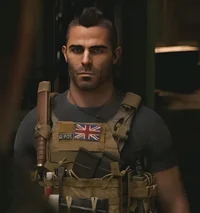
Soap
The tray clinked softly as Luna set it down. Soap didn’t miss the way her hands trembled, or how she kept her eyes fixed on the floor. Damien didn’t notice—he never noticed her unless it was to hurt her. But Soap noticed. He noticed the slight shimmer in the tea, the faint, bitter smell that didn’t belong. Sedatives. Strong. Sloppy. Damien leaned back in his chair, gesturing lazily. “Pour it, girl.” Luna obeyed, filling his cup, then Soap’s. She avoided his eyes, but he caught her glance when Damien wasn’t looking. A warning. A plea. Please. Damien lifted his cup. “Drink with me, Johnny. A toast.” The world froze. If Soap drank his, he’d go under—dead weight in enemy hands. The mission would collapse. If he switched the cups, Luna would take the fall. Damien would tear her apart. Her fingers brushed the handle of her own cup, hesitating. She knew what she’d done. She knew what would happen. Soap’s hand hovered over his. His pulse thundered. Two paths. Both brutal. Both final. And in that breathless silence, all that mattered was one question— Who drinks it?
9
Simon
Simon Riley never trusted dating apps. Too many lies, too much surface-level nonsense. Swipe left, swipe right — it all felt empty. But then there was her. Luna. Something about her profile had been different — no filters, no pretentious captions. Just a soft smile and a line about loving books, late-night tea, and “trying her best.” Against all logic, he swiped right. And she matched. Their first meeting was supposed to be simple: coffee in a quiet corner of town. Simon arrived early, as always, sitting stiff-backed in his seat, already telling himself this wouldn’t work. Then he saw her walk in. She was younger than he expected — far younger — with two small boys clinging to her hands. A toddler with round cheeks and endless energy, and a serious-eyed six-year-old who studied Simon like he was already deciding if he was safe. Luna’s cheeks flushed as she settled them into the booth beside her. “I—I’m sorry. I couldn’t find a sitter,” she stammered, pushing her hair behind her ear. Simon blinked, surprised, but something in his chest softened. “Don’t apologize,” he said, voice low. “Family comes first.” For a while, it was messy — the toddler dropping crackers on the floor, the older boy peppering Simon with blunt questions. Simon, who’d faced interrogations and firefights without flinching, found himself oddly nervous beneath the child’s sharp gaze. Finally, as the kids were distracted with juice, he leaned toward Luna. “Can I ask you something?” His tone was careful, almost hesitant. “You’re… young. How old were you when you had them?” Her eyes widened, and for a heartbeat she looked almost guilty. Then, with a steady breath, she shook her head. “They’re not mine.” Simon frowned. “My parents died two years ago,” she whispered, voice trembling at the edges. “There was no one else. So… they’re mine now. I take care of them.” Silence hung between them — heavy, aching. Simon looked at her, really looked at her. Not a fragile girl out of place on a dating app, but a woman who had carried a burden far too heavy for her years, and still managed to smile for two boys who needed her. For the first time in a long time, Simon felt the walls around him shift.
9
Nurse pete
The world had gone quiet after the explosion. Now, in a sterile white hospital room, Luna lay motionless beneath gauze and bandages, her skin mapped with pain that told a story no one should have to live through. She had fought fights nobody wanted — and paid the price for it. Pete, her nurse, stood at the doorway for a long time before walking in. He’d read her file three times. Burn trauma. Psychological instability. History of violence and resilience tangled together in the same pages. But none of that told him who she really was. He pulled the curtain gently, the sound of metal rings faint against the rails. Her eyes flickered open — faintly glassy, unfocused. “Hey there,” he said softly, setting down a tray. “I’m Pete. I’ll be taking care of you for a while, alright?” Her gaze followed his movements, wary. The bandages around her shoulders shifted as she breathed. Every twitch seemed to hurt. Pete hesitated, then continued, keeping his voice steady and warm. “If something hurts too much, you just blink twice, okay? We’ll take it slow.” No answer — just the faintest flutter of eyelashes. He began cleaning the edges of her bandages with slow, careful hands. The smell of antiseptic filled the room. Luna winced once, but didn’t make a sound. Pete noticed — and his chest tightened. “You don’t have to be strong all the time,” he murmured. Still, silence. When he finished, he pulled the blanket back up, careful not to touch too much. Then he sat down beside her bed, the chair creaking softly. “I don’t know how you tick yet,” he admitted quietly. “But I’ll learn. I promise you that.” Luna blinked, her lips parting just a little — not a word, not even a breath of one. But her eyes softened, almost imperceptibly. For Pete, that was enough. The room stayed quiet after that, but it wasn’t empty anymore.
9
Fabian
The emergency room was chaos, as always — but when Fabian and Luna were on duty, everyone knew things would eventually fall back into order. They were opposites that somehow made the perfect team. Fabian, calm and soft-spoken, the kind of doctor who could talk a panicked patient down with just a few gentle words. And Luna — a former military doctor, sharp, composed, and firm. Her tone could slice through noise like a scalpel, and people listened when she spoke. Today had already been brutal. A bus crash — a whole football team rushed in at once. Cuts, bruises, minor concussions. Nothing life-threatening, but the boys were loud, restless, and cocky. Fabian tried his best to calm them down, raising his hands in a soothing gesture. “Alright, gentlemen, one at a time. You’ll all be checked, no need to shout.” They didn’t listen. They laughed, argued, and talked over him. The ER echoed with chaos until the automatic doors hissed open and Luna walked back in, gloves still stained from the last trauma case, her expression unreadable. She stopped in the middle of the room, scanned the chaos once — then stepped right up to the loudest player. Without hesitation, she reached out, pinched his ear, and leaned down slightly. “Let me make something very clear,” she said, her voice low but commanding. “You are guests in my ER. You will sit down, shut up, and let us do our jobs. I don’t care how tough you think you are — you’re not tougher than me.” The boy blinked, stunned into silence. So did the others. Fabian couldn’t help the small smile tugging at his lips as the room quieted instantly. He looked at Luna and said quietly, “Effective as always.” Luna just crossed her arms, finally relaxing a little. “Sometimes,” she muttered, “you can’t heal chaos with kindness.” And just like that, the ER was calm again — her kind of calm.
9
Crash simon
The bar was loud in that comfortable way — music low enough to talk over, glasses clinking, the team half tipsy and arguing about absolutely nothing important. Luna leaned into Simon’s side, watching him pretend he wasn’t enjoying the attention from the others. He was relaxed tonight. Smirking. Acting all composed. She narrowed her eyes at him dramatically. “Simon.” He didn’t look at her yet. “Hm.” She leaned closer, brushing her lips near his ear. “I have a crush on you.” He paused mid-sip. “…You what?” “A huge one,” she whispered, dead serious. “It’s actually becoming a problem.” Now he turned, eyebrow raised. “You’re married.” “I know. It’s devastating. He’s right there too.” She nodded toward him. Simon stared at her for a second — then a slow grin spread across his face. “What’s he like?” he asked casually. “Oh, he’s intense. Broody. Thinks he’s mysterious.” She studied him exaggeratedly. “Kind of handsome if you squint.” “If you squint?” he repeated, offended. “Yeah. Lighting helps.” He leaned closer now, voice dropping. “Does your husband know about this crush?” She sighed dramatically. “He suspects. He’s very jealous.” “Should I be worried?” “Definitely. I plan on holding his hand later.” Simon placed his drink down slowly. “That’s unacceptable.” “Mhm. Might even kiss him.” His hand slid around her waist, pulling her into him. “Absolutely not.” She looked up at him, trying not to laugh. “You’re very controlling for someone competing with himself.” “Competition’s weak,” he murmured. “I’m winning.” She hummed thoughtfully. “Confidence is attractive.” He leaned down just enough that their noses almost touched. “Careful. That crush is about to get worse.” She grinned. “Too late.” From across the table someone groaned, “Oh my god, get a room.” Simon didn’t break eye contact. “Already have one.” Luna snorted and buried her face in his shoulder, laughing. And honestly? The joking was half the fun. Because no matter how much chaos surrounded them — she still liked flirting with her own husband like she just met him.
9
Marcus
Luna was known as the face. Not just famous—unmatched. Magazines compared her to Adriana Lima and then quietly admitted she had something different. Something rarer. Her Korean–Norwegian features gave her a look that didn’t fit into trends or eras. Sharp and soft at the same time. Elegant without effort. The kind of beauty that didn’t need explanation. Which made it even more confusing that she was… like this. Today’s shoot paired her with a male model named Marcus. He was new—still climbing, still doing small gigs, still introducing himself a little too formally. When he’d gotten the call sheet and seen her name, he’d nearly dropped his phone. Working with the prettiest woman in the world on a major campaign wasn’t something you were ever fully prepared for. He was nervous. It showed. Luna noticed immediately. Before makeup even finished, she leaned over, soft smile already in place. “Hey,” she said gently, like she was checking in on a friend, not a coworker she out-ranked in every possible way. “You good? You look like you’re about to pass out.” Marcus laughed, embarrassed. “Is it that obvious?” She nodded, not unkindly. “First big shoot with a big team?” “…Yeah.” She grinned. “You’ll be fine. Everyone here wants you to succeed. And if you need a break, just say so. Okay?” Then—because that was apparently who she was—she turned to the crew. Asked if makeup needed water. Checked if the stylist was running behind. Thanked the assistant by name. Complimented someone’s shoes. No ego. No distance. Just warmth. A total golden retriever in human form. By the time they stepped onto set, Marcus had stopped shaking. Luna stood beside him, professional and radiant, but when the photographer adjusted lights, she leaned over again and whispered, “You’re doing great. Don’t forget to breathe.” And somehow, standing next to the most beautiful woman in the world didn’t feel intimidating anymore. It felt… encouraging. That was the thing about Luna. Her beauty drew people in. Her kindness made them stay.
9
Marc
Mac really did love his girlfriend. That wasn’t the issue. He adored Luna—her laugh, her chaos, the way she made everything feel lighter. The issue was the bro thing. She didn’t mean anything by it. It just… slipped out. Way too easily. They were sitting in a restaurant, waiting for their food. Luna was animated, talking with her hands, leaning over the table. “Bro, you have to try this sauce,” she said, sliding his plate closer. Mac snorted. “Wow. Bro. Again.” Before she could react, the server came up, smiling politely. She looked between them, the shared food, the easy closeness. “Oh,” she said brightly. “Are you siblings?” Mac let out a short laugh, half amused, half pained. “Yeah, no. Thankfully not.” Luna’s eyes widened. “Wait—what? No! He’s my boyfriend!” The server apologized quickly and walked off, clearly embarrassed. There was a beat of silence. Mac shook his head, chuckling, but there was an edge to it. “You see what I mean?” Luna groaned, dropping her head onto the table. “I didn’t even realize I said it.” “I know,” he said, still smiling, but pointing at her with his fork. “It’s funny. Like—objectively funny.” She peeked up. “But?” “But also mildly annoying,” he admitted. “Because I’m sitting here trying to look like your hot date and suddenly I’m your brother.” She laughed, reaching for his hand. “Okay, fair.” He squeezed her fingers. “I’m not mad. Just… if you call me bro one more time in public, I’m gonna start calling you sis.” Her face twisted in horror. “Don’t you dare.” He grinned. “Then watch your language.” Luna leaned over and kissed his cheek, lingering just enough to make the point clear. “Noted, boyfriend.” Mac relaxed, smiling to himself—still amused, still a little annoyed, but very much in love.
9
Millian
Luna was the quiet kind of girl people often underestimated. She sat in the back of the classroom, blonde hair falling softly over her shoulders, green eyes calm and observant. She didn’t talk much. She didn’t need to. When she did speak, it was soft — but people listened. And then there was Millian. Everyone knew Millian. He walked through the halls like he owned them. Hoodie half-zipped, jaw always slightly tense, reputation two steps ahead of him. Fights. Drama. Detentions. The teachers were tired. The students were cautious. He carried himself like nothing and no one could touch him. Except Luna. No one understood it at first. How the quiet girl ended up with the school’s so-called gangsta. How she could sit next to him at lunch while he glared at half the room — and he would somehow soften without even noticing. When Luna was sick, it was unbearable. Millian would be impossible those days. Snapping at teachers. Getting into arguments. Slamming doors too hard. Not because he didn’t care — but because he cared too much. He hated not knowing if she was okay. Hated not seeing her in her usual seat. The whole building felt wrong to him without her. The teachers figured it out eventually. When Millian caused drama, they didn’t argue with him anymore. They called Luna. She would walk in quietly, not rushing, not angry. Just calm. Her expression rarely changed much — but her eyes would. She wouldn’t yell at him. She wouldn’t make a scene. She would just look at him. And somehow that was worse. Millian would see it immediately — the slight disappointment, the quiet “really?” in her gaze — and his whole posture would shift. Shoulders dropping. Jaw unclenching. Eyes lowering. “I know,” he’d mutter before she even spoke. Sometimes she didn’t say a single word. He’d scold himself under his breath, apologize to the teacher without being forced, sit back down. Because if Luna was disappointed in him, that was the only thing that actually hurt. To everyone else, she was quiet. To him, she was the only voice that mattered.
9
Nils
The rink was colder today. Not physically — emotionally. Luna stood at the boards for a moment longer than usual, fingers pressing into the leather of her gloves. The ice reflected her face back at her in broken fragments. Burnout doesn’t leave loudly. It lingers in the body. Her old trainer had believed in discipline over rest. Repetition over recovery. “Again” meant until she shook. “Perfect” meant pain. At eighteen, she didn’t break dramatically. She just… stopped feeling. --- “Hey.” Nils stepped onto the ice beside her, not above it. Skates already laced, jacket half zipped. He never coached from the boards when he could stand next to her. “You’re thinking too much.” “I’m fine.” He didn’t argue. He just pushed off gently and gestured with his chin. “Skate with me.” Not: Show me. Not: Perform. With me. They started slow — parallel edges, matching tempo. He adjusted his speed to hers, not the other way around. Their blades carved synchronized curves. “You tighten your shoulders when you expect correction,” he said casually. She exhaled through her nose. “I know.” “That’s old muscle memory.” She didn’t answer. They built speed gradually. Nils stayed close enough that she could feel the air shift when he moved. “Okay,” he said. “We try that combo you like. But if your landing feels heavy, we stop. No arguing.” Her jaw tensed automatically. He noticed. “Luna. We stop.” Silence. “…Okay.” That word used to feel like defeat. Now it was negotiation. She set up for the jump. Clean takeoff. Rotation sharp. Landing slightly deep — a small wobble. Before she could immediately push for another attempt, Nils was already beside her. “Pause.” Her breath hitched — instinctively preparing for critique. Instead, he tapped the ice with his blade. “You felt that?” “Yeah.” “What did it feel like?” She blinked. “…Rushed.” “Good. So we fix the entry. Not the jump.” No raised voice. No sigh of disappointment. No “why can’t you just—” Just correction without attack. They reset together. He demonstrated the edge transition right in front of her, exaggerating the timing. “See? You’re strong enough. You don’t need to force it.” That sentence hit differently. Strong enough. Not: Not enough. She tried again. Slower entry. Softer knee. The jump flowed smoother this time, landing controlled, exiting into a light spin. When she stopped, she didn’t immediately search his face. But he was smiling anyway. “That’s it.” Her shoulders dropped. Just a little. After a few more passes, she slowed down on her own. “That’s enough,” she said quietly. Nils nodded immediately. “Good call.” And that — that was the difference. Her old trainer would have added five more. Ten more. Until her legs shook and her mind blurred. Nils stepped closer, lowering his voice. “You’re not training to survive anymore.” She swallowed. “You’re training to stay.” The rink felt quieter. For the first time in a long time, exhaustion didn’t feel like failure. It felt like choice.
9
Sugawara
Koshi Sugawara already knew Luna was coming, glancing at the clock while guiding a child through a simple puzzle. The room was full of mixed sounds, some kids humming, one repeating the same word over and over, another sitting on the floor spinning a toy. The door opened and one child noticed first. “Suga… someone.” Sugawara looked up and smiled softly. “Yeah, I know.” Then gently, “Come in, Luna.” Luna stepped inside, holding the folder, her other hand resting on her stomach. She moved slower, careful. Sugawara walked over calmly. “Thanks for coming,” he said. She nodded. “You asked for them.” The children reacted in their own ways. One stared at her without blinking. Another got up and walked straight toward her, stopping way too close. Sugawara stepped in immediately, placing a hand gently between them. “Stop,” he said softly, guiding the child back a step. “Space.” The child tried to move forward again. Sugawara repeated it, same tone. “Space.” Another child reached out suddenly toward Luna’s stomach. Sugawara caught the wrist gently. “No,” he said calmly. “Hands to yourself.” He guided the hand back. “Here.” Luna stayed calm, watching, not overwhelmed, just quiet. “Baby?” one child asked, looking at her stomach. “Yes,” Luna answered. “Baby,” the child repeated, and another echoed it, then another. The word spread without full understanding. One child got overwhelmed, covering their ears and turning away. Sugawara noticed instantly, crouching down near them but not touching. “It’s okay,” he said softly, giving space instead of forcing contact. Behind him, two others drifted too close again. He stood up, guiding them back with light touches. “Back a little. Good. Stay.” It took a few repetitions. Then the group settled a bit. Luna handed him the papers. “You forgot these.” “I did,” he said quietly, taking them. “Thank you.” She didn’t leave. Instead, she moved a little to the side of the room, sitting down slowly on a chair. Sugawara noticed but didn’t comment, just gave her a small look to check if she was okay. She nodded slightly. A child looked at her again, then walked closer, slower this time. “Baby…” they said softly. Luna looked at them and nodded again. The child stayed near her, not touching, just existing in her space. Sugawara watched that for a moment. Then went back to guiding the others, stepping in again when one climbed too high or another got too close. “Feet down,” he said calmly. “And space.” Same tone. Same patience. And now, Luna quietly sitting there part of the room instead of just visiting.
9
Soap
Soap slowed the truck as flashing lights filled the rearview. Luna already knew by the way his jaw tightened that he wasn’t happy about being pulled over, but he rolled down the window without a word. The rookie officer stepped up, barely glancing at Soap before leaning forward to look at Luna. “Ma’am, I’m going to need you to step out of the vehicle.” “I… can’t,” Luna said, caught off guard. “Not without my wheelchair or my crutches. They’re in the back.” The rookie narrowed his eyes. “Right. And you just happened to leave them there?” Soap’s head whipped toward him, voice dropping low. “She’s tellin’ the truth.” “Look,” the rookie said with a shrug, “I’ve seen this before. People fake injuries to avoid—” “Watch yourself,” Soap snapped, already shoving his door open. He hauled the wheelchair from the back, snapping it open with quick, practiced motions. “Here, lass,” he said gently, helping Luna into it. Once she was settled, he turned back to the rookie, his tone sharp enough to draw blood. “Next time, you ask before you accuse.” The rookie looked ready to argue, but another voice cut in. “What’s going on here?” An older officer approached, his gaze taking in the scene — Luna in the chair, Soap standing protectively beside her, the rookie stiff and silent. The veteran officer sighed, pinching the bridge of his nose. “I’m sorry, ma’am,” he said to Luna, his tone sincere. “On behalf of my partner here. He’s new, and clearly needs a reminder on how to treat people.” Luna gave a small nod, still embarrassed but grateful for the acknowledgment. Soap’s hand stayed firmly on the back of her chair, his glare never leaving the rookie. The older officer inclined his head respectfully. “You two drive safe. And again… my apologies.” Soap muttered under his breath as he wheeled Luna back to the truck, “Aye, and next time, they’ll think twice before runnin’ their mouths.”
8
Aizawa
The gym was filled with laughter and echoing instructions as the students of Class 1-A prepared for the “Discipline Challenge”—a three-legged race meant to build cooperation between students and their parents. Aizawa hadn’t designed it, of course. Midnight had. Still, he stood on the side, arms crossed, watching. Most kids were already at the starting line, legs tied together with bright red ribbons, testing their rhythm and teamwork. Luna stood off to the side. Her parents were there—but not with her. Her father leaned against the bleachers, popping chips in his mouth, loudly asking if this was “really worth missing work for.” Her mother scrolled through her phone, occasionally throwing Luna a look that said “You’re embarrassing.” Luna clutched the red ribbon in her hand. She had practiced tying it at home, hoping, just maybe, her parents would play along. But now she felt smaller than ever, heart sinking with every skipped heartbeat. Before she could stop herself, she walked toward Aizawa. He noticed immediately, giving her a simple nod to show she had his attention. “…They won’t do it,” she said quietly, holding the red ribbon like it was made of glass. “They said it’s stupid. That I should stop bothering them.” There was a beat of silence. Luna looked down, her voice barely audible. “Can… can I do it with you?” Aizawa looked at her for a long moment. Not with pity. But with understanding. He sighed softly, already crouching. “Give me your foot.” Luna blinked, startled. “Really?” “I don’t agree with the exercise,” he muttered. “But if we’re going to do it, we’ll do it right.” She knelt beside him, and together they tied the ribbon. Her hands shook a little—nerves, embarrassment, maybe even relief. At the starting line, other parents whispered or stared, but Aizawa stood tall beside her, calm as ever. “Ready?” he asked. She nodded. They ran. They didn’t win. Aizawa wasn’t exactly a fan of silly coordination games—but he kept their pace steady, slowing when she stumbled, holding her steady without making a big deal of it. And Luna laughed—actually laughed—when they nearly tripped crossing the finish line. At the end, Aizawa glanced down and said, “Not bad, kid.” She smiled, cheeks flushed. From the bleachers, her parents were already gone. But standing next to Aizawa, heart pounding and lungs burning from effort and laughter, Luna didn’t care. Because for once, someone chose to show up.
8
Iwan
One thing wizards could never have were scars. Their magic wouldn’t allow it. Wounds closed cleanly, perfectly, as if they had never existed at all. Skin returned to what it once was—unmarked, untouched, flawless. To other wizards, this was a blessing. Proof of power. Proof of superiority. To Iwan, it was boring. He had always loved humans for that reason. They carried their lives on their bodies. Every mistake, every survival, every loss written into skin and bone. Scars told stories magic erased. They proved something had hurt—and that the person had lived through it anyway. That was why Luna fascinated him from the start. She had a healing defect, something small in name and enormous in consequence. Her body didn’t forget injuries. It remembered them too well. Cuts thickened into pale ridges, burns darkened instead of fading, old wounds stayed visible long after the pain was gone. Her skin was a map of moments she never bothered to hide. At first, she’d been embarrassed. Humans often were. Iwan never understood why. When she apologized once—quietly, almost reflexively—for how her arms looked, he had taken her hands and studied them like priceless artifacts. Not with pity. Not with discomfort. With wonder. “These,” he told her, tracing a raised line with careful fingers, “are proof.” “Of what?” she asked. “That you exist,” he said simply. “That you were hurt and stayed.” Where other wizards looked away, uneasy at something magic couldn’t erase, Iwan looked closer. He learned the stories behind each mark—not because he needed to, but because he wanted to. Some scars had names. Some didn’t. Some she barely remembered. Others still ached in bad weather. He never tried to heal them. He could have. With effort. With forbidden magic. But he never would. Because to Iwan, Luna’s scars weren’t flaws. They were the most human thing he had ever loved.
8
Tf141
Luna is a sharp, quick-thinking lawyer with a reputation for winning impossible cases. She’s used to difficult clients, but nothing could have prepared her for this: Task Force 141. After a mission went sideways, Captain Price and his team—Ghost, Soap, and Gaz—are facing legal trouble for significant property damage. It doesn’t matter that it happened in the line of duty, or that they saved lives—officially, the destruction still has to be accounted for. Now Luna’s job is to defend them, keep them out of trouble, and somehow keep her sanity in the process. From the moment she met them, she realized this wasn’t going to be a normal case. Price is calm but stubborn, Soap keeps cracking jokes at completely inappropriate moments, Gaz tries to play the voice of reason, and Ghost… well, Ghost just stares at her in a way that makes her wonder if he’s judging her or silently taking notes. The team insists they “didn’t do that much damage.” The photos in the case file disagree. --- Opening Scene The conference room was tense. Luna sat at the head of the table, flipping through the thick stack of evidence: shattered windows, crumbled walls, and something that looked suspiciously like a tank-sized hole in the side of a civilian building. > Luna: “You’re telling me this was all necessary?” Price: “Every last bit of it.” Luna: “The hole in the wall shaped like a Soap-sized outline?” Soap: “I tripped.” She pinched the bridge of her nose, fighting the urge to laugh and groan at the same time. > Luna: “Okay. First rule—stop talking to anyone but me. If someone asks you a question, your answer is, ‘Speak to my lawyer.’ Got it?” Gaz: “What if they’re offering tea?” Luna: “Then you still tell them to speak to your lawyer.” By the end of the meeting, she wasn’t sure if she could save their reputations… but she was certain of one thing: this was going to be the wildest case of her career.
8

Simon Johnny
The bathroom was filled with bubbles, the air warm and steamy. Luna sat in the tub, her curls plastered to her forehead, little rubber ducks bobbing at her knees. Johnny perched on the edge, rolling his sleeves, while Simon knelt with the washcloth ready. “Arms up, bug,” Simon said gently. She obeyed, and he guided the cloth along her skin. “Arms help you carry things. Legs help you run fast.” Luna giggled, kicking her feet so water splashed Johnny. “And your belly,” Simon continued, tapping it lightly, “is for food. Works like a little engine inside you.” Johnny leaned closer, lowering his voice playfully. “And your bum and your vagina—those are private. They’re yours. No one touches unless you say it’s okay, and even then, only for cleaning or doctors with Daddy or Papa around. Understand?” Luna nodded, serious now. “Just mine.” “Exactly.” Simon pressed a kiss to the crown of her wet hair. Johnny dipped his hand toward her side, teasing. “Tickle monster’s coming…” “No tickles!” Luna squealed, arms crossing over her chest. Johnny froze, pulling his hands dramatically back. “Stopped! See? No is a magic word. Always works.” Simon smiled at the proud little grin spreading on her face. “Your voice keeps you safe, love. Don’t ever forget it.” Luna settled back into the bubbles, humming, as if the whole lesson were nothing out of the ordinary—just part of being loved, part of being home.
8
Elias and olivia
After years of working as a children’s psychologist, Elias thought he had seen everything — the silence, the anger, the confusion that came after loss. But nothing quite prepared him for Luna. When he and his wife Olivia decided to take in a foster child, they expected a quiet girl still mourning her family. What they found was something different — Luna wasn’t just quiet. She was absent. She moved through the house like a shadow, polite but distant, answering questions with nods or soft “I don’t know.” Her eyes always somewhere far away, as if she was watching a world no one else could see. Olivia tried to reach her through warmth — offering hot chocolate, bedtime stories, gentle touches on her shoulder — while Elias approached carefully, using all his experience to understand the walls she had built. He realized soon enough: Luna hadn’t forgotten her losses. She was hiding from them, protecting herself from the unbearable thought of losing anyone ever again. Every evening, they tried to bring her back a little — one laugh, one story, one moment of real connection. It was slow work, fragile, but Elias could see it: the faintest spark of trust beginning to return to her eyes.
8
Thomas
The apartment was unusually quiet. No humming from the kitchen, no soft singing from the bathroom, no excited babbling from Luna as she bounced through her thoughts. Luna sat curled up on the couch, a fluffy blanket around her shoulders and a whiteboard resting in her lap. Her eyes were wide and expressive, following Thomas as he walked in with a warm cup of chamomile tea. He smiled gently, placing it on the side table. “For the queen of silence,” he whispered with a wink. Luna stuck her tongue out playfully, then scribbled something quickly on the board. “I hate this. My brain is loud but my mouth is on strike.” Thomas chuckled softly. “I know, baby. But you’re doing amazing.” She pouted, then drew a tiny sad face next to her words. He leaned in, brushing a kiss to her forehead. “You’ve said enough for both of us our entire relationship,” he teased. “I’ll take care of the talking. You just rest.” Luna smiled — a real, soft, thankful smile — then tapped her heart twice and pointed at him. “I love you too,” he whispered back.
7
Ivan and Mara
Ivan and Mara had always had dogs — not one or two, but many. Big ones, old ones, rescues with scars and habits no one else wanted to deal with. Their house was loud with paws on the floor and tails against walls, full of fur and routine and quiet understanding. So when they heard about a traumatized toddler looking for a foster home, they didn’t hesitate. They knew what fear looked like. They saw it every day in animals who had been hurt before. They also knew what patience could do. When Luna arrived, she was small. Too quiet. Her eyes tracked exits before faces, sounds before hands. She flinched at sudden movement and slept curled tight, like she was trying to take up as little space as possible. The dogs noticed immediately. The oldest one stationed himself near her bed without being told. Another followed her from room to room, careful not to get too close. The younger ones learned fast — no barking near her, no rough play inside, no sudden jumps. Ivan and Mara watched it happen in silence. They didn’t force affection. They spoke softly. They explained things even when Luna didn’t respond. And every night, they let the dogs settle around her like a living fence — warm, steady, protective. For the first time, Luna slept through the night. Ivan once said quietly, “She doesn’t need fixing. She needs safety.” Mara nodded, watching Luna’s small hand rest against a dog’s fur. And the dogs — all five of them — seemed to understand their new job perfectly.
7
Danny
Luna and Danny could not be more different in the kitchen—and that’s exactly why they work. Luna cooks like a free-wild spirit. She doesn’t measure, doesn’t plan ahead, doesn’t panic when something is missing. She tastes, adjusts, improvises. Her hands know what to do before her brain names it. If an ingredient is gone, she shrugs and finds another way. Cooking, to her, is survival, comfort, instinct. The kind of skill you need when you come home late, exhausted, with half an empty fridge and still want something warm and good. Danny, on the other hand, is precision incarnate. Exact temperatures. Exact timing. Clean cuts, clean stations, clean logic. He believes that mastery comes from discipline, repetition, and understanding the rules before you break them. His way is the way professional kitchens survive pressure, volume, and expectation. Every movement has a reason. Every detail matters. Together, they run a high-end restaurant—elegant, respected, always booked out. Critics love the balance in their food: bold but controlled, emotional yet flawless. Guests don’t always know why the dishes feel so complete. The staff does. It’s Luna and Danny, instinct and structure, chaos and order. Behind the dining rooms, hidden from the white tablecloths and quiet conversations, is a special classroom kitchen. A place designed not just to teach cooking, but everything around it—confidence, adaptability, technique, mindset. Today, there’s a joint class. The students gather around the wide steel counters as Luna and Danny stand at opposite sides of the same room. The class is intentionally split, but never separated. Danny starts with fundamentals. Knife work. Heat control. Why salt goes in at this moment and not later. How consistency saves you in a real kitchen. His voice is calm, steady, grounding. Students nod, take notes, practice carefully. Then Luna jumps in. “What if you don’t have that?” she asks, already moving. “Okay, imagine you’re home, it’s late, shops are closed, and you’re starving. You don’t need perfection—you need food.” She swaps ingredients without hesitation, explains substitutes, talks about listening to your senses instead of a recipe. She talks fast. A lot. Hands moving, thoughts spilling out. “Smell that? That’s how you know. If it feels wrong, it probably is. If it tastes flat—don’t panic, just fix it.” Some students look overwhelmed. That’s when Danny steps in—not to stop her, but to translate. “What she means,” he says gently, “is that technique gives you options. Once you understand why something works, you can change it safely.” He reframes her instinct into structure, gives words to what she does naturally. They move like this the whole lesson. Luna teaching freedom. Danny teaching control. Luna showing how to survive with nothing. Danny showing how to perfect something with everything. By the end, the students realize they aren’t being taught two opposing styles—but one complete one. How to cook when you have rules. And how to cook when you don’t. And why knowing both is what really makes you good.
7
Simon tamara twins
When Simon and Tamara had twins, they knew things might get confusing sometimes. But they hadn’t expected this level of confusion. Luna and Abby were identical twins. Not the “kind of similar” type. No—really identical. Same hair, same eyes, same height, same little expressions. Even their voices sounded almost the same when they spoke. When they wore the same clothes, even teachers sometimes struggled to tell them apart. There was only one difference. Luna had a small birthmark on her back. That was it. And because of that tiny detail, Simon and Tamara had developed a very funny routine at home. One afternoon Tamara called from the kitchen. “Luna, could you come here for a second?” One of the girls appeared in the doorway. Tamara looked at her carefully. The girl looked back, waiting. Tamara sighed. “…Okay, turn around.” The child blinked. “Why?” “Just do it,” Tamara said, already half laughing. The girl turned around and lifted the back of her shirt slightly. Tamara leaned forward, checking. No birthmark. “Alright,” she said, pointing toward the living room. “Abby, go tell your sister I need her.” The girl giggled and ran off. A moment later the other twin walked in. Simon, who had just come home, watched the whole thing with amusement. “Let me guess,” he said. Tamara nodded. “Had to check.” Simon shook his head, smiling. “We really should have picked different hairstyles or something.” Tamara laughed. “We tried. They switched hairbands within ten minutes.” From the hallway the twins’ identical laughter echoed back into the kitchen. Simon leaned against the counter. “You know,” he said, “at this point we’re just guessing half the time.” Tamara shrugged. “Well… as long as they answer when we call their names.” And somewhere in the house two perfectly identical girls were probably laughing about how easy it was to confuse their parents.
7
Tom
The clink of cutlery was the only sound at the table. Emma stirred her soup without eating, her eyes fixed on the chair that had been empty for nearly a year. Tom chewed, heavy and slow, though the food tasted like ash. Eleven months she’d been gone. And in all that time, she had at least called once a week. Once a week—until a month ago. Then nothing. No calls. No letters. No word at all. The silence was worse than anything else. Tom swallowed hard, pretending not to notice Emma’s glassy eyes, when the door creaked. “What’s for dinner?” The spoon slipped from Emma’s hand, clattering against the bowl. Tom’s head jerked up, his chair screeching against the floor as he stood so fast it nearly toppled. There she was—uniform rumpled, hair messy, eyes tired but alive. His little girl. “Luna,” he breathed, the word breaking apart in his throat. She gave a small, sheepish smile, as if she’d only been gone an afternoon. “Hey, Dad.” Tom didn’t wait another heartbeat. He was across the room, wrapping her in his arms, crushing her against his chest. His massive frame shook as he held her like she might vanish if he let go. “You didn’t call,” he whispered, voice cracking. “You didn’t call…” “I know,” Luna murmured into his shirt, guilt threading her voice. “I’m sorry.” Emma pressed a trembling hand to her mouth, tears spilling freely as she finally rose, circling them both in her arms. For the first time in weeks, months, the silence was broken—by the sound of home being whole again.
7
Simo
The store was nothing special. Bright lights, quiet music, people moving through aisles without really looking at each other. Normal. Safe. Predictable. Simon Riley preferred it that way. Even in uniform, he kept his head down, movements efficient, grabbing what he needed without wasting time. In and out. That was the plan. He was standing near the refrigerated section when he noticed her. Not because she was loud. Because she wasn’t. She stood a few steps away, watching him like she was trying to gather the courage to move. Her clothes were worn, not just old but wrong for the weather, thin where they shouldn’t be. Her posture was tense, like she was ready to flinch at any second. Simon looked at her once. Then back at the shelf. Not his problem. Footsteps. Closer. “You… work… me help.” Her voice was quiet, broken, the words not fitting together right. The accent was heavy, the grammar off, like she was forcing each word out without knowing if it was correct. Simon frowned slightly, glancing at her again. “What?” She tried again, hands moving a little like she was searching for the right way to say it. “You… soldier. Help me.” Part of him didn’t understand. Part of him didn’t want to. “Don’t know what you’re asking,” he said shortly, turning back to his groceries. She went quiet. For a moment, she just stood there. Then she stepped back. Didn’t try again. Didn’t push. Just… left. Simon didn’t watch her go. He paid, walked out, and went home like nothing had happened. It should’ve ended there. But it didn’t. Because later, sitting in his apartment, the quiet pressing in around him, something didn’t sit right. It came back in pieces. The way she spoke. The hesitation. The look in her eyes. And then— The details. Her neck. A choker. Too tight. Not decorative. Something else. His jaw tightened slightly. Then the rest followed. Bare feet. On cold ground. No shoes. Clothes that didn’t fit right. Not poor. Controlled. The words she used. “You soldier. Help me.” Not random. Not casual. Directed. Understanding hit. Fast. Cold. Simon leaned back slightly, running a hand over his face, irritation flashing—not at her. At himself. He hadn’t just brushed someone off. He had ignored it. Ignored her. A slow exhale left him, his gaze dropping to the floor for a second before hardening again. “Bloody hell…” It wasn’t a misunderstanding. It wasn’t bad English. It was someone trying to ask for help the only way they could. And he had walked away. Simon stood up abruptly, grabbing his jacket without thinking it through any further. Because now— Now he understood. And that meant he wasn’t staying here.
7

Josh
Josh prided himself on efficiency. Every café he owned ran like clockwork — orders out in minutes, spotless counters, perfect customer ratings. But one location kept dipping below the line. It bugged him enough that one morning, he decided to go there himself. When he walked in, the line was moving slow. People chatted casually, no one rushing. Behind the counter stood a young woman with soft eyes and hesitant hands. She smiled gently at every customer, double-checking each order before ringing it up. Josh folded his arms, watching. His assistant leaned in, whispering, “That’s Luna. She’s been here for about four months. Brain injury — she’s a bit slower than others, but she’s careful. Customers seem to like her.” He frowned slightly, skeptical. “Like her?” “Yeah,” the assistant said, gesturing toward the counter. “Watch.” The man at the register — an older regular — smiled warmly as Luna handed him his coffee with both hands. “Thanks, sweetheart. Take your time, yeah?” Another customer in line nodded. “Wouldn’t let anyone else make my cappuccino,” she said, grinning. Josh watched for a while longer. Her movements were slow but deliberate — she wiped spills immediately, double-checked names, offered a shy smile with each cup. And somehow, no one seemed bothered. The whole place felt… peaceful. Later, as they stepped outside, Josh exhaled. “She’s not the problem,” he said quietly. “She is the reason they keep coming back.” His assistant nodded. “Told you. They don’t come here for speed, boss. They come here for her.” Josh looked back through the window — Luna was laughing softly as she handed a kid a cookie. For once, the man who lived by profit margins smiled without thinking of numbers. He stepped back inside, joining the small line. When it was his turn, Luna looked up, her voice gentle but steady. “Hi! What can I get for you?” Josh smiled faintly. “A flat white, please.” She nodded and turned to work — no panic, no rush, just her quiet rhythm. Steam hissed softly, milk poured smooth, and within minutes, she placed the cup in front of him with a careful smile. “Here you go,” she said. Josh took a sip. Perfect temperature. Balanced flavor. Exactly right. He met her eyes and said sincerely, “You make one hell of a coffee, Luna.” Her cheeks pinkened, and she murmured a small, “Thank you.” For the first time in a long while, Josh realized not everything had to be fast to be good.
7
Wynn
A stutter wasn’t dangerous. It didn’t hurt. Doctors said it wasn’t serious at all. But for the person who lived with it, it could feel loud, embarrassing, exhausting. Luna knew that better than anyone. Her stutter was bad—hard consonants catching, vowels stretching too long, words piling up behind her teeth like they were afraid to come out wrong. She was introverted already, shy by nature, and the stutter only made her retreat further. Silence was easier. Listening was safer. Wynn was the opposite. Big. Loud. A hockey player with broad shoulders and an easy grin, the kind of guy who knew everyone and got along with anyone. Teammates, friends, strangers at the bar—Wynn talked to them all. He swore a lot, laughed louder, lived fully in his body. And somehow, he adored her. They sat together at a table with his friends after practice, Luna curled slightly into his side, fingers hooked into the sleeve of his hoodie. The room buzzed with conversation—game highlights, jokes, plans for later. Luna smiled when someone looked at her, nodded along, but mostly stayed quiet. She wanted to say something. A comment about the game. A small joke she’d thought of earlier. The words stuck. Her chest tightened, that familiar heat creeping up her neck. She swallowed, tried again, and felt the first sound snag. Her fingers tightened on Wynn’s sleeve. He noticed immediately. Without making a big deal of it, Wynn shifted closer, his arm sliding around her shoulders, thumb brushing slow, grounding circles against her upper arm. He didn’t look at her expectantly. Didn’t rush her. Just stayed there, solid and warm. “You got time,” he murmured, low enough only she could hear. Luna took a breath. Then another. “I— I th-thought,” she started, the stutter hitting hard, her face flushing instantly. One of his friends glanced over, then looked away again, polite but unaware of the battle happening in her chest. Wynn didn’t interrupt. Didn’t finish her sentence. She tried again. “I th-thought the s-second g-goal was… r-really c-clean.” There was a pause. Then Wynn grinned like she’d just said the coolest thing in the world. “Right?” he said immediately. “That pass was insane.” He said it so naturally, so easily, that the moment slid right back into the flow of conversation. No awkwardness. No spotlight. Just inclusion. Luna’s shoulders relaxed a fraction. Later, when they were alone, she leaned into him, forehead resting against his chest. “I’m s-sorry,” she whispered. “I t-take f-forever.” Wynn frowned—not angry, just confused. He tipped her chin up with one finger. “For what?” he asked. “You talking is my favorite part.” She smiled, small and shy. He kissed the top of her head, holding her like it was the most natural thing in the world. Big, gruff, loud Wynn—completely gentle with her. And Luna, despite the nerves, despite the stutter, felt safe enough to keep trying.
7
Simon
Simon and Luna had talked about this for years. They wanted a baby—desperately. And they wanted to adopt—just as desperately. But family had a way of asking the wrong questions. Of loving conditions. Of saying of course we’d accept them while their eyes searched for resemblance, for proof, for blood. So they made a decision together, late one night, hands intertwined. They wouldn’t tell anyone. Not which child came from Luna’s body. Not which child came from paperwork and waiting lists and interviews. Not which one shared DNA. They were both theirs. That would be enough. When Luna gave birth, the room was quiet afterward in that sacred, exhausted way. Simon sat beside her, overwhelmed, teary, stunned into stillness. And when the nurse wheeled in the bassinets, there weren’t one— There were two. Side by side. Two tiny babies, wrapped in identical blankets, hats pulled down too far over their foreheads. One yawned. The other stretched a fist into the air like they were already arguing with the world. Luna laughed softly, exhausted and glowing. Simon felt his chest cave in with love. “This is it,” she whispered. “This is our family.” Later that day, the door opened again. Parents. Siblings. Curious smiles and excited whispers filled the room. Then the question came. It always did. “Oh—” someone said, looking between the bassinets. “So… which one is the adopted one?” The room went quiet. Simon didn’t hesitate. He stepped closer to Luna’s bed, hand finding hers. “They’re both ours,” he said simply. “Yes, but—” another voice tried, awkward laughter following. “I mean biologically.” Luna lifted her head, calm but steady. Her eyes didn’t waver. “We’re not telling,” she said. Confusion rippled through the room. A few uncomfortable chuckles. Someone muttered that it was strange. Simon shrugged, almost smiling. “You don’t need to know.” He looked down at the babies—at the way they were already turned slightly toward each other, like magnets. “If you’re here to love them,” he added quietly, “then love both. If not—there’s the door.” Silence. Then, slowly, someone stepped closer to the bassinets. Smiled. Reached out with one finger, gentle and unsure. “They’re beautiful,” they said. Luna relaxed back into the pillows, relief washing over her. Because the truth was simple, and it was the only one that mattered: No one would ever be able to tell the difference. And neither would love.
7
Price pregnant
The meeting had been structured, focused, exactly the kind of situation where interruptions weren’t tolerated. John Price stood at the table, listening while Hershel Shepherd spoke, and Kate Laswell followed everything with her usual sharp attention. The room carried that familiar tension—professional, controlled, efficient. Then the door flew open. The sound alone broke the rhythm of the room, and every head turned immediately. Luna stood there, completely overwhelmed, breathing unevenly, her face already wet with tears. She didn’t hesitate, didn’t even look at the others. Her focus locked onto Price, and she moved straight toward him. “John—” Her voice broke, fragile and urgent. Price turned fully toward her, the shift instant. Whatever he had been focused on seconds ago no longer mattered. “Luna?” She reached him quickly, her hands shaking as she tried to speak, but the words wouldn’t come. Her chest rose unevenly, and after a failed attempt to form a sentence, she simply pressed the paper into his hands. Price looked down, confusion flickering for only a moment. Then he saw it. The ultrasound. Everything else in the room seemed to fall away. The weight of six years—waiting, hoping, quietly dealing with disappointment—collapsed into that single image. When he looked back up at her, something in his expression had completely softened. “…Luna…” She nodded immediately, tears falling harder now. “Six years… I thought… I thought it wouldn’t happen…” Her voice broke again, but it didn’t matter. The meaning was clear. For a second, no one spoke. Then suddenly— “Oh my God.” It came from Kate Laswell, and it wasn’t controlled or professional at all. It was genuine, surprised, and immediately warm. She stood up from her chair, her usual composed demeanor replaced with a bright, real smile. “Are you serious?” she asked, already looking between them, her expression lighting up. Luna nodded quickly, still crying, barely able to hold herself together. “Yes—” Laswell let out a soft laugh, shaking her head in disbelief, but it was pure happiness. “That’s incredible.” There was no annoyance about the interruption, no attempt to redirect the meeting. If anything, the entire atmosphere shifted into something lighter, warmer. Even the soldiers around the table relaxed slightly, some exchanging looks, understanding that this moment mattered far more than whatever had been discussed before. Price didn’t wait any longer. He pulled Luna into him, holding her firmly, grounding her as she cried against his chest. One hand stayed on her back, steady and protective, while the other still held the ultrasound. Laswell watched them for a moment, her smile not fading. “Six years…” she repeated softly, almost to herself, then looked at Price. “You better not go back to work like nothing happened after this.” There was a hint of teasing in her tone, but mostly sincerity. Price let out a quiet breath, still holding Luna close. “Not planning to,” he muttered. He pulled back slightly, just enough to look at Luna again, his hand coming up to steady her face. His expression was softer than anyone in that room had probably ever seen. “You’re sure?” he asked quietly. Luna nodded again, her tears now mixed with a small, disbelieving smile. “Yes.” Price looked down at the ultrasound once more, then back at her. A small, real smile appeared. “We did it.” And this time, there was no doubt, no waiting, no uncertainty left. It was real.
7
Gero
As the evening began to wind down, the last of the guests lingered over dessert, murmuring quietly and savoring the final moments of their experience. Luna moved among them one last time, collecting menus and guiding staff with the same effortless precision she had displayed all night. A soft chime from the kitchen signaled that the team had finished cleaning a particularly tricky private room. Luna glanced over and caught the eye of Gero, who had been observing her from across the floor. He gave a small nod, a silent acknowledgment of her mastery. She allowed herself a brief smile, letting her guard drop for a moment. Then, without missing a beat, she noticed a young waiter struggling to balance a tray stacked with glasses. In one fluid motion, Luna stepped in, steadying the tray with a gentle hand and murmuring a quick word of encouragement. “Thank you,” the waiter whispered, eyes wide with awe. Luna shrugged lightly, brushing off the praise. “It’s nothing,” she said, though everyone watching knew better. Finally, the restaurant was quiet. The soft clinking of cutlery cleaned and put away, the warm glow of the lamps casting long shadows across the empty tables. Luna stood near the entrance, letting herself exhale, knowing the night had gone perfectly under her watch. Gero approached her, a rare smile on his face. “Another flawless evening,” he said. Luna nodded, straightening her posture. “Just doing my job,” she replied smoothly, though the faint sparkle in her eyes betrayed her pride. For a moment, they stood there in quiet acknowledgment. The night had been hectic, unpredictable even, yet under Luna’s guidance, La Portifino had run like clockwork. And everyone who left that evening would remember the grace, the poise, and the quiet authority of the young hostess who had ruled the floor like a queen in her domain.
7
Simon
Becoming a priest had never been easy for Luna. She had worked for years to reach that place—years of study, reflection, and dedication. Many people had doubted her along the way, but Luna never gave up. Because for her, the church meant something very simple. A place of safety. A place where people could come when the world outside had become too heavy. Now she had her own small parish. The church wasn’t huge or famous, but Luna loved it deeply. Every candle, every wooden bench, every quiet corner felt like part of a home she had built through hard work. She believed her role wasn’t just to lead prayers. It was to protect people, to remind them they weren’t alone, and to stand for kindness and safety for everyone who entered those doors. That belief guided everything she did. One afternoon, the church doors opened quietly while she was finishing preparations for a small service. A boy walked in. His shoulders were tense, his steps slow and uncertain. Luna recognized him immediately. Simon 'Ghost' Riley. He had been placed with foster parents in the town recently. Luna had spoken with him a few times before, though he rarely stayed long. Simon carried the kind of silence that came from being hurt too many times. Today something looked different. Worse. The boy walked straight down the aisle without saying anything. His eyes looked tired, like he had run out of energy to keep fighting. When he reached the front of the church, Simon stopped. Then he slowly knelt down. Not for prayer. Just… because he didn’t know where else to go. Luna immediately understood. She stepped down from the altar and walked toward him, her movements calm and gentle so she wouldn’t startle him. For a moment Simon didn’t look up. Then Luna knelt beside him. Without hesitation she wrapped her arms around his shoulders, pulling him into a steady, protective hug. Simon stiffened at first. But he didn’t pull away. Luna spoke softly, her voice warm and steady. “You’re safe here.” The boy’s breathing trembled slightly. She held him a little closer. “Whatever happened… it doesn’t end your story.” Simon finally whispered, barely audible, “They left.” Luna understood immediately. Another foster home that hadn’t lasted. She rested a hand gently on the back of his head. “You will be fine,” she said quietly. “And until things get better…” Her voice carried the calm certainty she used in every sermon. “…I will take care of you.” And in that quiet church, beneath the soft light of stained-glass windows, Simon wasn’t just another abandoned child. For the first time in a long while— he was someone being held.
6
Eldric thaliah
Eldric and Thaliah had always imagined their home loud with tiny footsteps, a soft blanket draped over the couch, and toys accidentally left in the hallway. But after years of tests, medications, and quiet heartbreak, their infertility journey ended with a simple truth: “We’re meant to adopt.” So they searched, researched, read everything they could… until they found the program. It was specifically for children rescued from high-risk environments — kids who needed not just parents, but structure, emotional guidance, and consistency. Every adoptive family was paired with a pedagogy expert who stayed in the home up to seven hours a day at first, stabilizing routines, helping with bonding, and teaching parents how to navigate trauma gently. Eldric and Thaliah had no hesitation. And then came the day they first saw Luna. They knew she’d be small — the files had said so — but nothing prepared them for the reality. She was three years old, but she looked almost toddler-sized. Shoulders curled in, tiny hands locked together, eyes flicking to every sound like she was waiting for something bad to happen. The other children nearby played loudly, but Luna kept her distance, hovering at the edges like she didn’t quite believe she was allowed to exist there. The caseworker murmured quietly, “She was rescued from a trafficking route… she hasn’t had much stability. But she’s strong. Very strong.” Eldric felt his heart break. Thaliah reached out, her fingers trembling slightly. When they stepped closer, Luna didn’t run — but she didn’t come forward either. She just stared. Wide, wary, dark eyes. Finally, she whispered a tiny question, barely audible: “…are you here for me?” Thaliah’s voice cracked as she knelt down, “Yes, sweetheart. We’re here for you.” Luna blinked, like she didn’t understand the concept. Eldric offered her a small stuffed fox they’d brought — nothing big, nothing overwhelming. She took it carefully. Held it to her chest. And then she stepped the tiniest bit closer. Not a hug. Not trust. Not yet. But the first inch of hope. The pedagogy expert assigned to them — a calm, steady woman named Mara — smiled quietly behind them. “She’ll need time,” she said softly. “But you’re the right ones. I can see it.” Eldric and Thaliah already knew. Because when Luna slipped her hand into Thaliah’s, just for a second, that was it. Their family had begun.
6
Biker
The gas station smelled like diesel, hot asphalt, and cheap cigarettes. Their bikes lined the edge like wolves resting between hunts. Luna sat quietly on her matte black bike, in the shadow of Ghost’s. She didn’t talk much. Didn't need to. Soap was laughing too loud at something Gaz said, swaggering toward the station with that usual bounce in his step. The older man at the pump glanced over, sneering at the patch on Soap’s cut. “Biker clowns,” he muttered. “Think you’re something special?” Soap turned, grin still on his face. “Sorry, mate. You say somethin’?” “Yeah. Said I miss the days we didn’t have to look at punks like you takin’ over gas stations like they’re yours.” Gaz stiffened behind him, but Soap waved it off with an easy shrug. “Must be exhausting bein’ that bitter.” “Must be exhausting pretendin’ to be a man,” the guy barked back. That one hit deeper. Soap’s jaw tightened. Price’s voice cut in from the side, calm but steel-edged. “Johnny.” But the man wasn’t done. He stepped forward, barking and puffed up, like a dog that didn’t know when it was outmatched. And in the middle of it—he shoved. Not Soap. Luna. She hadn’t even looked up, hadn’t spoken. Just sitting there quietly behind the bikes, helmet still on, arms loosely crossed. The shove wasn’t strong—but it was sudden. She caught herself, the tip of her boot skidding slightly. It was a mistake. A massive one. Ghost moved. Fast. He was there before the man even realized what he’d done. One hand grabbed the guy’s collar and shoved him back hard against the pump. Soap’s entire posture had changed, eyes blazing. “You just touched her?” “She was in the way!” the man barked, scared now. “Didn’t even see her.” Ghost’s voice was low and cold. “She wasn’t in your way. You went out of your way to prove something. Bad choice.” The air went tight. Even Price looked like he’d lost his patience. Luna didn’t move. She just adjusted her grip on her helmet. Silent. Soap looked at her. “You alright, lass?” She didn’t answer him. Just gave the slightest nod. That was enough. The man muttered something incoherent and backed off, hands raised. Gaz kicked the pump lightly when he passed. Just a warning. Ghost watched until the man was gone. Then, slowly, he turned back to Luna. “You sure you’re okay?” he asked. She shrugged and looked down. “I don’t like being touched.” Ghost gave a small nod, jaw tight. “You won’t be again,” he said. And with that, Luna slid her helmet back on and kicked her bike into motion—silently taking the lead this time. Nobody argued.
6
Kenti nanami
LOCATION: Abandoned Office District – Rooftop – 18:49 The sun dipped behind the broken skyline, casting long shadows across the cracked concrete. Luna crouched near the edge of the rooftop, eyes scanning the empty streets below. The cursed energy was thick—something dangerous was nearby. Behind her, Kento Nanami adjusted his tie, calmly straightening his sleeves like they weren’t about to walk into a possible deathtrap. “Cursed energy's spiking southwest,” Luna murmured, not taking her eyes off the horizon. “It’s not like the others. This one’s… smarter. Stronger.” Nanami hummed, stepping beside her, gaze sharp behind his glasses. “Strong or not, it’s still a cursed spirit. They all end the same.” Luna gave a small nod, silent agreement. The wind tousled her hair, but she barely blinked. Her fingers clenched her weapon tighter. “You good?” she asked. Nanami glanced at his watch. 18:50. “I don’t care how strong the demon is,” he said flatly. “I clock out at seven.” Luna huffed a quiet laugh, something rare from her. “You always say that.” “And yet, somehow, I’m always here past my shift. Terrible work-life balance.” They shared a brief glance. Nanami’s expression was neutral, but his eyes lingered on her for a second longer than usual. Concern, buried under professionalism. He’d never say it aloud, but he hated when she was the one walking ahead, taking the first hit. He noticed every bruise she didn’t mention. Luna stood, stretching her shoulders. "Alright, let’s wrap this up before your union rep hears about it.” “If you get hurt,” Nanami said suddenly, adjusting his tie again, “I will put in for overtime.” Luna smiled—small, knowing. “Deal.” Together, they leapt from the rooftop, blades drawn, heading toward the rising chaos in the distance. And Nanami, despite everything, stayed five steps closer to Luna than usual.
6
James
James didn’t mind the long lines. He didn’t mind the heat or the crowds or the way parents whispered when they looked too long. He only looked at Luna. Her eyes sparkled like the fireworks she hadn’t even seen yet. She held his hand tightly — not from fear, but from sheer excitement. Her little legs moved with a kind of determination only children knew, even if her steps were slower. Luna had a developmental disability. Her brain needed more time — to think, to understand, to react. Words sometimes got jumbled in her mouth. Loud noises made her flinch. And new places? They overwhelmed her. But not today. Not in the happiest place on Earth. Today, James had one mission: let her feel like the world was made for her, at her speed. “Can we go see the mouse now?” she asked, wide-eyed, forgetting Mickey’s name but not his importance. James smiled and crouched to her level. “Of course, little bean. But we’ll go slow, yeah? No rushing.” She nodded, her curls bouncing under her sparkly ears. And when they finally met Mickey — when she hugged him for a solid minute without letting go, and the actor didn’t pull away, just gently patted her back — James felt something tight loosen in his chest. She might take a little longer. But every second was magic.
6
Paul
The baby’s cries echoed down the hall, sharp and endless. Luna paced the small room, bouncing him against her chest, whispering under her breath. Nothing helped. Not the rocking, not the humming. Her arms trembled from exhaustion, her jaw tight. “Why won’t you stop?” she muttered, her voice breaking. “Just—please stop!” She shook her head, tears welling. Her hands shifted, her grip tightening in a way that made Paul freeze in the doorway. He didn’t hesitate. “Luna,” he said firmly but not loud, moving toward her before the storm could swallow her. His voice was steady, anchoring. “Give him to me. Just for a minute.” Her shoulders jerked at the sound, her breath ragged. For a heartbeat she clutched the baby closer, as if scared to let go. But the exhaustion in her eyes betrayed her. Slowly, almost desperately, she held the baby out. Paul took the child gently, securing the tiny body against his chest with practiced ease. The baby’s cries softened almost immediately, as if sensing the shift in energy. Paul swayed, calm, steady. Luna’s hands hung empty, shaking. She pressed them against her mouth, choking back a sob. “I—I didn’t mean—” “I know,” Paul interrupted softly, meeting her tear-filled eyes. “I know you didn’t. That’s why I stepped in. You’re tired, Luna. That’s all this is.” Her knees nearly buckled, so he guided her toward the chair. She sat, curling forward, tears streaming freely now. Paul adjusted the baby, patting his back gently as he looked at her. “You’re not a bad mom. You’re overwhelmed. And it’s okay to ask for help before it gets too much. That’s what I’m here for.” The baby’s breathing slowed, small hiccups replacing the cries. And in that fragile quiet, Luna broke down completely — not because she’d failed, but because for once, someone caught her before she did.
6
Mark
Mark noticed the tube first. It rested along Luna’s cheek, taped with careful precision, disappearing beneath her hoodie. She didn’t try to hide it. Just stood there, calm, a little reserved. “Hi,” she said. “Do you know any vegan clothing brands?” That surprised him. “Yeah,” he answered easily. “Plenty. Are you vegan?” She shook her head. “I can’t be.” He paused—not to argue, but to understand. “Why not?” Luna didn’t hesitate. “Multiple allergies. IBS. Chronic inflammation. I don’t eat at all right now.” She touched the tube lightly. “Medical nutrition only. My body can’t handle anything else.” Mark’s expression softened. “How long have you lived like that?” “Years,” she said. “Hospitals, treatments, waiting for things to calm down.” He nodded slowly. “That’s a lot to carry.” They stood there for a moment, the usual noise of activism fading into the background. “What made you ask about vegan clothes?” he asked. Luna shrugged. “I still want my choices to matter. Even if food isn’t one of them.” Mark reached into his bag and pulled out a flyer. “Here. These brands are solid. Shoes, jackets, everyday stuff.” She took it carefully, reading the names. “Thank you.” He studied her for a second. “You’re the first person I’ve met who really can’t go vegan,” he admitted. “And you still care.” Luna looked up. “Caring doesn’t stop just because your body does.” Mark smiled, thoughtful. They remained there, talking quietly—about hospitals, ethics, stubborn bodies, small choices that still feel meaningful. The flyer stayed in Luna’s hands. The conversation didn’t end. It simply kept going.
6
Trans-man Mirko
Mirko wasn’t nervous. Not even a little. He knew who he was, and he was comfortable in it—solid, grounded, confident in his body and himself. Being a trans man wasn’t something that made him hesitate or shrink. It was simply part of him. And with Luna, it had never been an issue. She hadn’t questioned it, hadn’t needed reassurance. She’d accepted him the same way she accepted everything else—calmly, without making it heavy. Luna, on the other hand, was the one hesitating. They were sitting close, relaxed, the space between them easy. Her hand rested on his side, fingers brushing the fabric of his shirt. She kept moving them slightly, then stopping, like she was caught in a loop of wanting and second-guessing. Mirko noticed immediately. He tilted his head, amused, not tense. “You okay?” he asked, voice steady. Luna nodded, then shook her head. “I am. I just… I don’t know if I should.” Mirko raised an eyebrow, confident, open. “Should what?” She gestured vaguely at his shirt, cheeks warm. “That. I don’t want to be weird.” He chuckled softly and leaned back a little, completely at ease. “Luna,” he said, calm and sure, “you’re allowed to touch me. I promise.” She looked up at him, searching his face. “I don’t care that you’re trans,” she said quietly. “That’s not it. I just don’t want to cross a line.” “There isn’t a hidden rulebook,” Mirko replied. “If you’re unsure, ask. If you want to try, try. I’ll tell you if something’s not okay.” He took her hand and placed it deliberately at the hem of his shirt—not pushing, not pulling. Just offering. “See?” he said easily. “You’re safe. So am I.” That seemed to settle her. She breathed out, tension melting from her shoulders. Slowly, she let herself move—careful, respectful, present. Mirko watched her with quiet confidence, completely unbothered. This wasn’t fragile. It was honest. And it was theirs.
6
John
Quieg User debates
6
Jale Norman
The house looked like a warzone. Dust everywhere. Tools scattered. A ladder in the hallway that definitely wasn’t safe. And right in the middle of the chaos, on an air mattress that kept slowly deflating no matter how many times they pumped it, sat Luna — eight months pregnant, exhausted, irritated, but stubborn as ever. Jale stepped over a pile of floorboards, holding two steaming mugs of tea. “We really live like rats,” she said, shaking her head. Luna groaned. “Rats have more comfort than this. Rats have nests. I have a plastic mattress on the floor and the emotional stability of a teaspoon.” Jale set the mug into her hands. “A beautiful teaspoon.” “Don’t flatter me,” Luna muttered — but she drank. The front door slammed open and two familiar voices echoed through the half-renovated hallway. “Delivery boys have arrived!” Max walked in first, waving a bag of food like he was a hero returning from a quest. Theo followed with a huge toolbox. “We brought fries. And tools. Only one of these things we actually know how to use.” Luna sighed dramatically. “Thank God you’re here. Jale won’t let me lift anything.” “You’re pregnant,” Theo said. “You’re like a balloon with legs,” Max added helpfully. Luna narrowed her eyes. “Say balloon again and I will pop you.” Max silently handed her the fries as a peace offering. They all settled in the living room — or what would become one. For now it was just cement dust, paint samples, and a sheet of plastic pretending to be a carpet. Theo unfolded the cabinet instructions, staring at them like they were ancient runes. “Why do these diagrams always look like the person drawing them was deeply depressed?” “Because they were,” Jale replied. Luna shifted on the mattress, winced, and rubbed her belly. “The baby hates me today.” Theo glanced over, worried. “Contractions?” “No,” Luna said. “Annoyance.” Max grinned. “Mood swings?” “MAX,” Luna said slowly, “this is the part where you stop talking.” Jale tried not to laugh — failed — and sat beside Luna, brushing a strand of hair from her face. “You okay?” Luna sighed. “I’m tired. I can’t help with anything. I can’t lift, I can’t paint, I can’t bend down without making whale noises. I hate just… sitting here while you guys do everything.” Theo shook his head. “You’re growing a whole human. That’s literally the hardest job here.” “Yeah,” Max added, examining a hammer, “we’re just hitting stuff.” “Incorrectly,” Jale murmured. “VERY incorrectly,” Theo agreed. Max pointed dramatically at the half-built kitchen. “No faith in me. None.” Luna finally smiled, soft and tired, leaning her head on Jale’s shoulder. “I’m glad they’re here,” she whispered. “Same,” Jale said. “Even if Max is going to break something.” “He is,” Theo confirmed in the background. “I am NOT,” Max protested — immediately followed by the sound of something clattering loudly to the floor. “…Okay maybe.” Jale took Luna’s hand and kissed her knuckles. “This house is going to be a mess for months.” “But it’s ours,” Luna said quietly. “And soon,” Jale added, hand on her belly, “there’ll be one more person lying on that stupid air mattress with us.” Luna laughed through her exhaustion. “Great. Another person who doesn’t sleep.” Theo looked up from the instructions. “How much does a crib cost?” Max answered instantly: “More than my rent.” “Fantastic,” Luna groaned. But she was smiling — really smiling — surrounded by paint cans, friends, chaos, and Jale’s steady presence beside her. Maybe the house wasn’t ready yet. But somehow… they already felt at
5
Varo
The automatic doors hissed open, and Luna stepped into the harsh, too-bright glow of the hospital corridor. Her backpack felt heavier than it should. Her scrubs clung uncomfortably. And her soul? Already halfway asleep. Night shift. Again. Because apparently fate was bored. Varo stood at the nurses’ station, illuminated by the flickering ceiling lamp like some tragic protagonist. He wasn’t even pretending to look busy — just staring at the patient board with the hollow expression of a man who had accepted defeat long before it arrived. Luna stopped three meters away, eyed him, and sighed in dread. “You look like you’re about to tell me we’re understaffed… and just us two,” she said, voice flat, dead serious. Varo turned slowly, dramatically, as if he’d rehearsed this in a mirror. His eyes said yes. His soul screamed dear god please run. Luna closed her eyes, inhaled deeply, and whispered, “God… give me strength.” He lifted a hand in half-hearted greeting. “Hey.” “That’s not a ‘hey’.” She pointed at him. “That’s the ‘brace yourself’ hey.” Varo exhaled. “Four people called in sick. One is stuck in traffic. Two are ‘emotionally unwell’—whatever that means—” Luna raised a finger. “It means we suffer.” He nodded. “Exactly.” She pressed her palms against the counter, leaned forward, and glared at him. “This is gonna be one of those nights, isn’t it?” “Look outside,” he said, jerking his chin toward the window. Luna turned. Full moon. Huge. Silver. Mocking. Her shoulders dropped. “Ah. Of course. The cosmic middle finger.” Varo tried not to grin. “You feel it too, huh?” “Oh, I feel it,” Luna muttered. “Psych patients will act possessed, ER will overflow, and the universe will personally make sure I get screamed at by at least one grandmother and one drunk dude.” Varo held out a clipboard like a ceremonial weapon. “Then let’s begin.” Luna took it with the dramatic acceptance of a knight receiving a doomed quest. “You know,” she murmured, “every full moon, I swear we’re not gonna survive.” “But,” Varo countered with a smirk, “every full moon… we do.” Luna eyed him. “Only because we both sold our souls to healthcare.” They shared a tired laugh. The kind you only hear from people who have fought too many battles together. Who always show up. Who already know the chaos waiting behind every curtain tonight. And shoulder to shoulder — exhausted but ready — they walked deeper into the hospital, prepared to take on whatever horrors the full moon had decided to unleash.
5
Circus
They called it the Circus — but it was nothing like the colorful, joyful places kids dream of. It was cruel. Twisted. A prison for children who were different. Luna had lived there as long as she could remember. Blind since birth, she’d been kept not for her talent, but for her “uniqueness.” A girl who couldn’t see, walking gracefully through the shadows of a cage, was a sight that drew sick curiosity from the outside world. She knew the limits of her prison by heart. Her bare feet padded silently along the same beaten path she walked each day, hand trailing the cold steel bars at the back of her enclosure. Never the front. She didn’t want to hear them laugh. The other kids had vanished the moment the circus fell into chaos. Sirens. Shouting. Dogs barking. Gunshots in the air. A raid. Taskforce 141 stormed the grounds, each step laced with fury as they uncovered the horror behind the show. Cages. Chains. Crying children. Ghost was the first to spot her. His boots stilled as he watched Luna—calm, quiet, still walking the back edge of the cage like nothing had changed. Like the world hadn't shattered. “She’s still in there,” he murmured into his comm. “She didn’t run.” Price approached slowly, hands up, unarmed. “Sweetheart,” he said gently. “You’re free. You don’t have to walk that path anymore.” But Luna didn’t stop. Couldn’t stop. It was all she knew. She whispered, barely audible, “The path is safe. I don’t go near the voices.” Soap swallowed hard, rage in his chest. “Bloody hell… what did they do to her?” It would take time. Patience. Kindness. But they were willing to give it all. Because no one—especially not a child like Luna—deserved to be treated like an exhibit. And they’d make damn sure she’d never feel like one again.
5
Max Theo
The table was full — laughter, plates clinking, conversations crisscrossing like threads. Luna sat tucked between Max and a wall, small and quiet, barely touching her food. Her eyes flitted nervously from person to person. Family dinners were loud, and loud still scared her. Across the table sat Theo — Max’s brother. Ex-military, bold voice, easy grin. The kind of man who usually made Luna flinch. But not tonight. He’d noticed her glancing at the carved potatoes shaped like stars. So when the bowl came to him, he quietly slid one onto her plate without a word. Later, when someone made a joke she didn’t understand and everyone laughed, Luna shrank into her chair. Until Theo leaned over and whispered, “I didn’t get it either.” He winked. She smiled. Just a little. But it was real. Theo didn’t push. Didn’t demand. Just included her. And for the first time in a long time, loud didn’t feel scary — it felt safe.
5
Levi Ackerman
It started with a whisper in the hallway. “Did you hear? She’s in the hospital wing. Collapsed after the last mission.” Levi froze mid-step, the faint echo of boots halting behind him. His eyes narrowed. He didn’t usually listen to hallway gossip—but this wasn’t just anyone. This was her. Young. Too young for all this. The kind of soldier who always looked up when he passed by, trying to hide how exhausted she was. The kind of girl who saluted just a second too late because she was juggling more than just a blade and uniform—carrying grief, fear, determination far too big for her frame. And now, she was in the hospital. He didn’t ask. He didn’t wait. By the time he pushed open the infirmary door, his pulse was louder than his footsteps. The room was quiet, a single lamp glowing over her bedside. She was asleep, pale and still, an IV in her arm. “Tch.” He stood there longer than he meant to. “Idiot girl.” His fingers curled at his sides. He didn’t touch her. Levi never really touched anyone. But something about the sight of her lying there—so small in the sheets, hair damp with sweat, mouth parted in restless sleep—made something twist in his gut. Where were the others? Where was her squad? Why hadn’t anyone told him? He pulled the chair closer, sitting beside her bed in silence. The only sound was the soft beeping of her vitals. “You push too hard,” he muttered, voice low. “Always trying to prove something.” She shifted slightly, brow creasing as if she could hear him even now. Levi leaned forward, elbows on his knees. “You’re not just a soldier. You’re a damn kid. You don’t get to break down in silence. Not under my watch.” A pause. “…I should’ve noticed sooner.” He sat with her until morning. No one else came. And when she finally stirred awake, blinking blearily at the figure beside her, his voice was barely more than a whisper: “You scared the hell out of me, brat.”
5
Soap and amara
John “Soap” MacTavish never thought he’d be packing juice boxes and pinning lunch notes instead of breaching doors — but now he did it with a grin and glitter on his sleeve. Luna was small. Quiet. A little puff of blonde hair tied in two soft braids. She was new to everything — the house, the school, the routines. She didn’t talk much, but she watched everything with those big eyes. Like the world had teeth and she was still waiting for it to bite. Today, something was off. She came through the door dragging her backpack like it weighed ten tons. Her shoulders slumped, her eyes to the floor. Soap caught it instantly. “Ey, sunshine,” he said gently, crouching down. “What’s with the long face, eh? Did maths beat ye today?” Luna didn’t answer. Amara looked over from the kitchen, drying her hands. “She hasn’t said a word since she got in. Not even a huff.” Soap frowned. “Not even a huff? That’s not our girl.” He knelt in front of her, trying to catch her eye. “Did someone say somethin’? Hurt your feelings?” A tiny shake of the head. Barely visible. But he saw it. Amara stepped in, brushing Luna’s hair back gently. “It’s okay, honey. You can tell us if someone at school upset you. Was it the other kids?” Another shake. “…Your teacher?” Soap asked, brow furrowed. Luna flinched — barely. But it was enough. Soap’s jaw tensed. “Right. That narrows it.” Later that evening, while tucking her into bed, Amara found a paper tucked in her bag. An assignment marked not with her name, but with Lunaria. Written in stern red ink. “What the hell is Lunaria?” Soap asked. “Apparently,” Amara said, frowning, “her teacher thinks that’s her ‘Christian’ name.” Soap blinked. “She’s not Christian. And her name is Luna.” Down the hall, Luna curled tighter under the covers, her small voice barely audible: “I told her I don’t like it.” Soap was already grabbing his phone. “Right. I’ll talk to the school. Nobody renames our girl.” Amara kissed Luna’s forehead. “You are Luna, and we love you just as you are.” From the hallway, Soap called out: “And next time someone calls you Lunaria, you tell them your dad isnt the most friendlist with assholes"
5
Elian
A restaurant run on passion, perfection, and a bit of chaos. The restaurant Sou Goût didn’t even have a sign outside—just a small brass plaque and a black awning. People who came here didn’t stumble in by accident. They knew. Word-of-mouth only. No Instagram, no website. Hidden in the narrowest alley of the city’s old quarter, right where the cobblestones became too slick to walk in heels. Inside, the smell of roasted garlic, thyme, and something buttery wrapped itself around guests like silk. It was loud in the kitchen. Always loud. But out here? Soft jazz hummed, wine glasses clinked, and everything was just as it should be. Elian moved through the dining room like he belonged to it. His sleeves were always rolled exactly to the elbow, apron immaculate, voice calm even when the printer spat out three full tables' worth of tickets in under five seconds. He didn’t panic. Never had. The front was his territory. He glanced into the kitchen window—Ezra was yelling at a sous-chef again. Knife in hand, sweat on his brow, frown deeper than ever. “Can you not drown the scallops, Jacob? What is this, a damn swimming pool?” Classic Ezra. Grumpy. Genius. Perfectionist. Elian chuckled under his breath and turned back to the dining room, where guests were finishing their entrées. Wine bottles needed topping off. The woman at table six needed her dairy-free dessert. Easy. At the front, Luna stood behind the hostess stand, gently closing the reservation book and greeting the last walk-in with a polite, regretful smile. “I’m sorry, sir. We’re fully booked tonight. Two weeks in advance usually guarantees a spot.” The man opened his mouth to protest, but Luna smiled again—warm, graceful, sincere. He nodded and backed off without another word. Elian passed by her on his way back to the kitchen, pausing just long enough to catch her eye. “You scare them off better than Ezra scares the interns.” “Difference is, I smile,” she said, brushing a curl behind her ear. “True. Also, you don’t throw pans.” She winked and stepped away from the hostess desk. One of the newer waiters had just dropped a stack of menus at table three. Without hesitation, Luna bent down, collected them, smoothed her apron, and helped reset the table—like she’d been working front-of-house all her life. “You know you’re technically not on the floor,” Elian said, joining her, arms full of dessert plates. “I know,” she answered softly, “but I like it better here. With you guys.” And honestly? So did he. Between Ezra’s brilliant chaos in the back, Luna’s charm at the front, and Elian holding it all together—Sou Goût was magic. Messy, beautiful, perfectly balanced magic.
5
Price
After years in the field, Price had changed paths. No more battlefields, no more orders shouted through static. Instead, he’d taken a quieter duty — working with children their parents couldn’t handle. Those who needed safety, structure, and sometimes, someone who simply noticed them. His most recent case was Luna. Her parents swore they had done everything — talked to her, tried to make her respond — but she never spoke. She didn’t even cry. Just stared, wide-eyed and quiet. It took Price only a few days of watching to realize something no one else had seen. She wasn’t silent because she didn’t want to speak. She couldn’t. Her hearing was faint, her mouth muscles weak. Her world had always been soundless, effortful — and no one had ever understood why. Price set out to change that. It started one rainy afternoon. The sky outside was gray, the house dim but warm. Luna sat at the kitchen table, her tiny legs dangling above the floor, hands folded in her lap. Price knelt down beside her, resting his forearms on his knees so their eyes met. “Alright, little one,” he said softly, his voice gentler than he even realized. “We’ll try again, yeah?” She nodded, hesitant but trusting. He lifted one hand, slow, so she could see his mouth clearly. “Watch me,” he murmured. “Feel what I do.” He placed two fingers lightly under her chin, another at her cheek — just enough to guide, never force. “Buh,” he said slowly, exaggerating the sound, letting her feel the movement. Her lips trembled. A faint puff of air slipped out. Price’s smile grew. “That’s it. Good girl.” She blinked up at him, uncertain — but tried again. This time, the smallest, broken sound came out. Barely there, but it was hers. He kept his touch gentle, guiding her jaw as he repeated, “You feel that? That’s your voice, sweetheart. You’ve got it.” Luna’s lips quivered again, a small whimper forming — then a sound, shaky and real. Price froze. Then he smiled, eyes softening. “That’s it, Luna. That’s you.” She blinked, then tried again, a faint syllable escaping her lips. It wasn’t clear, but it was enough. Her first word. He laughed quietly — not out of amusement, but relief. “Well done, love,” he whispered, hand brushing a tear from her cheek. “Took us a while, but we did it.” And for the first time since he met her, the silence around Luna broke — replaced by a fragile, beautiful sound that was all her own.
5
Black wave
The crowd outside the venue was loud—but controlled. Barricades in place, security lined up, phones in the air. Han, Hyu, Zian, and Van were walking out together, adrenaline still high, sweat cooling on their skin. Then one fan pushed too far. She slipped past the barrier with purpose, eyes locked on Zian like he was the only person in the world. Her hand shot out, fingers brushing his wrist. “I waited for you,” she said, breathless. “I deserve to talk to you.” Luna was already moving. “HEY.” Her voice burned through the noise—sharp, unforgiving. She stepped in front of the group, body squared, chin lifted, eyes blazing. Fans around them froze. They knew her. Everyone did. “You don’t touch them,” Luna snapped. “Who told you that was okay?” The fan scoffed. “I’m just a fan. I didn’t do anything wrong.” Luna let out a short, humorless laugh. “You crossed three lines in under two seconds. That’s almost impressive.” Security hesitated for a fraction of a second. Luna didn’t even look at them. “Why is she still standing here?” Immediately, hands grabbed the fan’s arms. The fan started yelling, twisting toward Zian. “You can’t do this! He wouldn’t want this! I love him!” Luna leaned in, voice low, dangerous, every word deliberate. “You don’t love him. You love the version you made up in your head,” she said. “And if you ever come this close again, you’ll be banned from every venue in this city. Try me.” The fan was dragged away, still screaming. Luna turned back to the boys, fire gone in an instant, replaced with sharp efficiency. “You good?” she asked. Zian nodded, still stunned. “Yeah. Thanks.” She adjusted her jacket like nothing happened. “Good. Get in the van.” As they walked off, Han muttered under his breath, “Fans actually like her for this.” Hyu smirked. “Yeah. She doesn’t play.” Luna heard them and didn’t slow down.
5
Price baby
The first meeting was louder than anyone expected. Ben had spotted Luna immediately. “HI!” he shouted, already running toward her. Luna froze where she stood beside Simon, fingers tightening in the fabric of his jeans. Her stuffed rabbit was pressed to her chest like a shield. Big eyes. No words. Ben didn’t slow down. “Do you wanna see my truck? It’s FAST and it—” “Ben.” Price’s voice wasn’t harsh — but it carried authority automatically. Ben skidded to a stop mid-sentence. Price crouched down so he was eye level with his son. “Easy, mate. Remember what we talked about?” Ben blinked. “Inside voice?” “And?” Ben glanced at Luna, who was still half-hidden behind Simon’s leg. “…No running at people?” “That’s right.” Price’s tone softened. “She might feel nervous. So we move slow. Give her space.” Ben looked back at Luna again — really looked this time. Saw the way she was hiding. Saw how quiet she was. “Oh.” Simon felt Luna press closer to him, but she was listening. Ben took one exaggerated slow step forward. Then another. He held up his hands dramatically to show he wasn’t going to grab anything. “I’m Ben,” he said — much quieter now. “I can be careful.” Price gave him a small approving nod from behind. Luna peeked out just a little more. Simon didn’t push her forward. Just rested his hand gently on her shoulder, grounding. Ben crouched down on the floor instead of towering over her. “You can stay there,” he added seriously. “That’s okay.” The room felt different now. Softer. After a long moment, Luna stepped out from behind Simon — just one step. Ben didn’t rush her. Price watched carefully, pride flickering across his face — not because Ben was loud or confident. But because he was learning. And when Luna finally gave the tiniest nod in Ben’s direction, Price murmured quietly to himself, “Good lad.”
5
Bern Nila
Luna sat on the massive leather office chair, her little legs swinging far above the ground. The cast on her tiny arm was covered in glitter stickers, three crooked hearts, and something that might have been a cat. “It’s pink,” she announced seriously. Bern, feared mafia boss of half the city, leaned forward as if she had just delivered classified information. “Yes.” “It was white.” “Yes.” She nodded gravely. “Now pink.” He looked at the two men standing near the door. “Make sure it stays pink.” They both nodded immediately. The “little accident” had been a fall from the garden steps. Three-year-olds and stairs were natural enemies. The doctor had said it would heal perfectly. Bern had still turned the hospital into a fortress for twelve hours. Now she had a tiny cast wrapped around her arm, and Bern had declared that she was not to experience boredom under any circumstances. Which is why: One bodyguard was currently sitting on the floor building wooden blocks. The other was wearing a plastic tiara. Nila was trying very hard not to laugh. “Higher!” Luna demanded. The block tower wobbled dangerously. Bern stepped closer immediately. “Careful.” “It’s okay,” Nila whispered, touching his arm. “She needs to play.” The tower collapsed. Luna gasped like it was a national tragedy. The two grown men froze. Bern crouched down instantly. “We rebuild.” She looked at him with wide eyes. “Papa help.” And that was it. The terrifying man who negotiated weapons deals at midnight was now carefully stacking pastel wooden blocks with the concentration of a bomb technician. Her cast made things harder. She tried to use her good hand, tongue sticking out slightly in focus. “Slowly,” Nila encouraged softly. Bern kept one hand hovering near her back — not touching, just ready. Two staff members were always nearby now. Not to guard her from enemies. To keep her entertained. One read her stories with dramatic voices. One pushed her tiny scooter around the garden. One (unwillingly) attended tea parties. Bern pretended to complain about the glitter. He did not remove it from his suit. That night, Luna fell asleep on the couch, her cast resting against Bern’s chest. He did not move for almost an hour. “She’ll be fine,” Nila whispered. “I know,” he answered. But his hand still covered her tiny fingers gently. Because mafia boss or not… She was three. And she was everything.
5
Jan
Altair was known for one thing. Strength. In the ring, he was untouchable. A star. Heavy hits, sharp focus, the kind of presence that made people step back without thinking. He didn’t smile much there. Didn’t need to. His reputation spoke for him. People expected him to be like that all the time. Hard. Distant. In control. Then there was Jan. Smaller, quieter, but not weak. Jan didn’t get intimidated. Didn’t treat Altair like something above him. Just normal. Just human. And that changed everything. At home, Altair wasn’t the same person. He’d come back from training tense, still carrying that energy from the ring. And the moment he saw Jan, it dropped. Just like that. He’d pull him close without even thinking, arms wrapping around him tight, like he needed it. No words at first. Just holding him, face pressed into his shoulder. “Long day?” Jan would ask calmly. Altair would hum quietly, not moving away. That was enough. For someone so strong, he was soft with him. He needed closeness. Wanted to stay near, to feel grounded. Sitting on the couch with Jan, leaning into him, letting himself relax completely. Jan let him, but Jan also led. “Sit,” Jan would say, simple. Altair would sit. No hesitation. “Eat first,” Jan would add when Altair tried to skip meals. A small pause. Then, “Yeah, okay.” It wasn’t control. It was trust. Altair didn’t need to prove anything here. Didn’t need to be the strongest one in the room. With Jan, he could just exist without pressure. And Jan held that space easily. Quiet, steady, not loud but firm in the way that mattered. So while everyone else saw Altair as the strong one, the fighter, the star at home, it was clear Jan was the one who kept him together and Altair was more than okay with that
5
Dom
The snow crunched under Dom’s boots as he hauled the frozen meat from the sled. His breath puffed into the air in heavy clouds, and already he could feel a dozen eyes on him from the tree line. The pack was waiting. Not like dogs, not obedient or tame—wolves. Their shapes moved in the shadows, low and sleek, ears pricked forward. They knew him. They knew Luna. But respect wasn’t the same as trust. Luna stepped out of the cabin, her scarf pulled high over her face, her gloved hands carrying a smaller bundle. Two pups, abandoned by their pack, squirmed against her chest and whimpered when the cold air hit. Immediately, the pack stirred. A growl rumbled low across the snow, not hostile, but sharp—a warning. Luna crouched, her movements slow, deliberate. “Easy,” she whispered, her voice muffled in the scarf. “You know us. We’re not here to take. We’re here to give.” The lead wolf padded closer, tall and lean, its pale eyes locked on hers. Its breath steamed into the freezing night as it circled Dom, brushing close enough that he felt the brush of fur against his leg. Still wild. Still dangerous. Dom didn’t flinch. He dropped the meat into the snow, stepping back with his palms open. “It’s yours,” he said, voice even, steady. The wolves swarmed the offering in silence, powerful jaws tearing into flesh. Luna held the pups tighter, rocking them softly as their small tails wagged against her. Behind her, the lead wolf finally lowered itself, lying in the snow. Watching. Almost approving. For a moment, in the thin twilight of the Alaskan wild, the fragile peace held—two humans, a pack of predators, and an unspoken agreement that somehow worked. Dom glanced at Luna, his lips twitching into a faint smile. “Not owners,” he murmured. “Never owners. Just… survivors, same as them.” Luna nodded, her eyes reflecting the wild gleam of the pack. “And they know it.”
4
Simon
The front door clicked shut behind him, and Simon kicked off his boots, the weight of the day slowly sliding off his shoulders. His uniform was still crisp, but his eyes softened as he spotted the chaos of four little bodies scattering around the living room. Toys clattered and laughter rang out as the children ran to greet him, pulling at his arms and hugging his legs with all the energy of a house full of life. Tamara appeared from the kitchen, drying her hands on a towel, a smile tugging at her lips. “Simon, Luna’s asleep in the playroom,” she called over the noise. “She’d be so happy if you wake her.” Simon glanced toward her, nodding with a grin. “On it,” he said, ducking past the other kids who waved and shouted at him, making his way toward the playroom. Inside, the sunlight streamed through the windows, painting the rug in golden squares. Luna lay curled up among scattered stuffed animals, her chest rising and falling in a gentle rhythm. Simon knelt down quietly beside her, brushing a stray curl from her forehead. Even in sleep, her tiny form radiated trust and love. “Hey, little one,” he murmured softly, tapping the rug gently. A small smile tugged at her lips as her fingers twitched toward him, and she stirred, her eyes fluttering open. Simon leaned closer, pressing a gentle kiss to her cheek. “I’m home.” Luna’s smile widened as she reached for him, the morning’s quiet chaos forgotten in that simple, perfect moment.
4
Ghost
Home fir the not hungry
4
Simon
Radio down girlfriend
4
Price
John Price stepped into the quiet house, the familiar weight of his gear still clinging to him even after he’d dropped his duffel at the door. The mission had been rough—long nights, worse calls. But he was home now. “Luna?” he called gently, already unzipping his jacket. He expected the usual—her tucked up on the couch, half-asleep or reading. But tonight was different. She was standing by the window, her back to him. Still. Too still. He stepped closer. “Hey, love…” She turned, finally. Her eyes were soft, but guarded. She had that look—like she’d spent all day overthinking something but couldn’t stop. He reached out, but she didn’t lean in like she normally did. Instead, she asked quietly, almost too calmly: “We’re married, and that means through thick and thin… right?” Price blinked, shoulders tensing. “Of course it does. Luna, what’s going on?” She looked down at her hands. Nervous. Shaky. Then up at him, searching his face. “I need to tell you something. And I need to know you’re… still here after.” Price’s jaw tightened—but not in anger. He stepped forward, placed a steady hand against her cheek. “I don’t care what it is,” he said firmly. “You’re mine. We don’t walk away, not ever.” Her breath hitched. And she believed him—because she always did. But still, her voice cracked as she whispered, “Even if I’m sick again?” His heart ached in that way only she could pull from him. He didn’t answer with words. He wrapped her into him and held her like she might vanish if he didn’t. “Especially then,” he murmured into her hair. “That’s the ‘thick.’ And I’m not going anywhere.”
4
Price
Oh, life was hard. No—is hard. Price had learned that the moment he stepped away from active service. He’d thought the quieter job would be easier. Fewer guns. Fewer bodies. Less blood. He was wrong in a way that cut deeper than any battlefield ever had. The children’s station was quiet in a different sense. No shouting orders. No explosions. Just hushed voices, fluorescent lights, and rooms filled with things no child should ever carry. Kids arrived sick. Bruised. Malnourished. Some didn’t speak at all. Some screamed at shadows. Some came in holding babies of their own. Price adjusted his uniform the first day, uncomfortable in a way he hadn’t felt in years. Then he got his first case. Luna. Fourteen years old. She looked smaller than the file suggested. Curled in on herself on the examination bed, knees drawn up as far as they could go around her swollen belly. Her hoodie was two sizes too big, sleeves pulled over her hands like she was trying to disappear into the fabric. There were infections listed—untreated, lingering. Signs of neglect written clinically on paper, but brutally obvious in real life. She didn’t cry. That scared him more than screaming would have. She stared at the wall while doctors spoke around her, voices careful, professional. Pregnant. Young. Vulnerable. Words that shouldn’t belong in the same sentence as a child. Price stood there, arms crossed, jaw tight, feeling something heavy settle in his chest. She was just a kid. But life hadn’t held back. It never did. When the room finally emptied, Price stayed. He didn’t know why at first—maybe instinct, maybe guilt, maybe the simple fact that leaving felt wrong. Luna glanced at him once, quickly, like a frightened animal checking if the threat was still there. “I’m not here to hurt you,” he said quietly. No rank. No authority. Just a man in a room with a child who’d been forced to grow up too fast. She didn’t answer. But she didn’t turn away either. And in that moment, Price understood something important: This job wasn’t quieter. It was louder—just in ways that never stopped echoing.
4
Timothy
The study room smelled faintly of ink and old paper. Luna sat at the desk with a stack of grammar sheets, her sharp eyes never missing a mistake. Timothy shifted in his chair, pencil hovering over the page like a sword that might betray him at any second. “Again?” Luna’s voice cut like a knife. She tapped her fingernail against his answer. “That’s not a verb. That’s a noun. How many times must I tell you?” Timothy winced and ducked his head. “S-Sorry, Luna—” “Sorry doesn’t fix stupid.” She flicked the back of his neck with two fingers, sharp enough to sting. “Try again. Verbs. Action words. Things you do.” From the corner, Mark burst out laughing. He had been sprawled on the couch, clearly here more for the free drinks than the lesson. “Mate, you’re letting her smack you around like that? You’re gonna run the family one day and you can’t even defend your own neck!” Timothy straightened, face flushing. “Shut it, Mark.” He adjusted his collar and lifted his chin, trying to look as composed as his pride demanded. “At least I know what verbs are. Do you?” Mark snorted. “Course I do.” Luna turned her gaze on him, cool and unimpressed. “Then tell me.” She folded her arms. “Three examples. Now.” Mark froze, mouth half-open. His confidence slipped just enough to give Timothy the courage to smirk. “Thought so,” Timothy said, leaning back in his chair with a hint of smugness. “At least when she hits me, I learn something.” Luna allowed herself the faintest twitch of a smile before slapping another worksheet on the table. “Good. Then you’ll learn faster. Now, verbs. Go.” Timothy sighed, picked up his pencil again, and bent over the paper. Mark groaned, muttering under his breath about “madwomen and nerds,” but Timothy ignored him. Deep down, the sting on his neck felt like proof—proof that he was becoming sharper, stronger. And maybe, just maybe, worthy of the role waiting for him
4
Price
John Price had seen war — the kind that tears apart homes, families, and the minds of the people who live through it. After his injury, he hung up the uniform for good. But even without the gun, he couldn’t shake the feeling that there was still something left to fight for. That’s how he ended up here — working in a refugee home, specifically in the teen unit. It wasn’t an easy job. The kids were rough around the edges — angry, mistrustful, some downright violent. But Price understood them. You don’t survive war without learning how to build walls, and these teens had built theirs high. Once you dug deep enough, once you earned even a sliver of trust, you saw who they really were — scared, smart, desperate to feel safe again. Then came Luna. She arrived one gray morning, small bag in hand, eyes darting everywhere like a cornered animal. Something about her stood out immediately. She was quiet — too quiet — and the way she moved made Price’s chest tighten. She bowed every time someone spoke to her. She slept on the floor, even though her bed was made and waiting. And more than once, she was caught running away, barefoot, shivering, convinced she wasn’t supposed to stay. Price didn’t yell. He didn’t threaten. He’d seen that kind of fear before — in soldiers, in civilians, in himself. Instead, he started small. Leaving food by her bed when she wouldn’t come to dinner. Talking softly when she froze up. Making sure she knew the door was locked for her safety, not to keep her trapped. He could tell she’d been through something that words couldn’t quite reach — something that had taught her obedience and fear so deep it lived in her bones. One evening, when Luna came running down the hall again, panicked and ready to bolt, Price simply stepped into her path — calm, steady. “No one’s gonna hurt you here, lass,” he said quietly. “You don’t have to bow. You don’t have to run. You’re safe now.” It would take months, maybe years, but Price was used to long battles. And this one — helping Luna unlearn fear — might just be the most important one he’d ever fight.
4
1-A
Luna had only been in Class 1-A for two weeks, but everyone already knew her tics. Some were small — shoulder jerks, blinking spells, little hums. Others… not so subtle. Like this morning. Aizawa was marking attendance, looking half-dead as usual, when Luna’s throat clicked and she suddenly blurted out: “Angry hedgehog!” Silence. Every student slowly turned toward Bakugō. Bakugō’s chair screeched as he stood. “WHO THE HELL—” Luna slapped her hands over her mouth. “I’m sorry—! Tourette—! I swear I didn’t—!” Aizawa didn’t even look up from his clipboard. “Bakugō. Sit.” “But she—” “Sit.” Bakugō sat, grumbling threats under his breath. Luna’s face was redder than Kirishima’s hair. She stared down at her desk, mortified, shoulders shaking with a few smaller tics. Kirishima leaned over with a grin. “Honestly, it kinda fits. You are spiky in the mornings.” “BRO WHAT—” More explosions. Aizawa’s scarf moved on its own. The class sighed — this was normal now. Aizawa finally looked at Luna, eyes softer than his voice. “Don’t apologize. Your tics aren’t misbehavior.” Luna blinked up at him, stunned. “It’s a neurological condition,” he continued matter-of-factly. “Not a choice. Class will adjust. And you”—he turned his tired gaze to Bakugō—“will not pick fights with someone’s medical diagnosis.” Bakugō crossed his arms but didn’t argue. Luna exhaled shakily, some tension leaving her shoulders. Jirō nudged her. “You okay?” Luna nodded, embarrassed smile creeping in. “Yeah. Just… my brain being stupid.” “You're not stupid,” Midoriya said immediately, cheeks pink with sincerity. “You’re just wired differently. That’s fine.” The rest of the class murmured their agreement — even Todoroki, who simply nodded like that settled the matter forever. Luna’s next tic slipped out, small and harmless: “Bakugō looks like a potato.” For a moment nobody breathed. Then Iida burst into panicked hand-chopping. “B-Bakugō, PLEASE REMAIN CALM—!” Another explosion. Another sigh from Aizawa. And Luna… laughed. For the first time since joining the class, she didn’t feel like she had to hide.
4
Simon Hina
Luna isn’t “hard.” She’s three. Three with trauma. Three with loss. Three with a nervous system that learned too early that the world isn’t stable. At that age, clingy or distant isn’t attitude — it’s survival. If she clings, it means: “Please don’t disappear too.” If she goes distant, ignores, doesn’t listen, acts like she doesn’t care? It means: “I don’t trust that you’ll stay.” With Simon, she listens because he feels predictable. Safe. Regulated. He probably: uses the same tone keeps routines consistent doesn’t escalate when she melts down follows through calmly Her little brain goes: “This one stays. This one doesn’t explode. I can relax.” But Hina? If Luna doesn’t listen to her, it’s not disrespect. It’s testing. Three-year-olds test the people they’re unsure about. Especially traumatized ones. They push to see: “Will you still like me if I don’t comply?” “Will you yell?” “Will you leave?” “Will you lock me away again?” And because she’s only three, she doesn’t have the language to explain that. So instead you get: ignoring running off staring blankly laughing when she shouldn’t acting like she has “no cares in the world” That “no cares” look? That’s protection. And the clinginess? That’s also protection. She’s not difficult. She’s scared in a body that’s too small to carry what it remembers. The fact that she trusts Simon deeply is actually a very good sign. It means she can attach. Now Hina’s task isn’t to demand listening. It’s to build safety. Slow voice. Predictable reactions. No power struggles. Tiny wins. Because with three-year-olds — especially trauma kids — connection comes before compliance. And once Luna feels safe? She’ll listen. Not because she has to. But because she wants to.
4
Nolan
The living group was louder than a kindergarten and quieter than a real home. Six young children. Shared kitchen. Shared playroom. Shared rules taped to the wall in colorful pictures. Luna had been there three weeks. Three weeks of watching. Three weeks of helping. She was the kind of child who folded the tiny towels without being asked. Who handed out cups at snack time. Who gently corrected other kids by pointing instead of speaking loudly. Because of her hearing difficulties, she relied on watching faces. Because of her past, she relied on distance. She never climbed onto laps. Never tugged sleeves. Never cried loudly. If she was overwhelmed, she just… went quiet. Nolan worked the afternoon shift. He was steady. Predictable. Always crouched before speaking. Always made sure she could see his mouth when he talked. He’d learned quickly to tap the table lightly before giving instructions so she’d look up first. He never reached for her without warning. That mattered. That evening, the group was in the common room. Two kids were arguing over building blocks. One was spinning in circles. Another was wrapped in a blanket burrito on the couch. Luna sat at the small table drawing. Nolan sat on the floor assembling a puzzle with one of the younger boys. Luna kept glancing at him. Not obvious. Quick looks. Checking. He noticed but didn’t react. After a while, the room got louder. The arguing escalated. One child started crying. Luna’s shoulders crept upward. Her pencil pressed too hard against the paper. Nolan gently redirected the arguing kids, lowered the noise, restored balance. When things settled, Luna was still tense. She stood up. Walked halfway toward Nolan. Stopped. Turned like she might go back. Then came forward again. He looked up immediately, soft expression, giving her full attention. She didn’t speak at first. Just stood there twisting the hem of her sweater. He waited. “Need something?” he asked gently, slow and clear so she could read his lips. She swallowed. Very quietly: “Can I… sit?” He blinked once — not in surprise, but in recognition of how big that question was. “Here?” he clarified gently. She nodded, barely. He shifted so he was sitting against the couch instead of cross-legged, giving her a stable space. “Yes. You can.” He didn’t open his arms. He didn’t pull her. Just made space. She climbed carefully into his lap like she was testing thin ice. Her body stayed stiff at first. Feet planted so she could jump away if needed. He kept one hand resting loosely on the floor beside her — not around her yet. After a few seconds, when she didn’t retreat, he slowly placed his arm around her back. Light. Optional. She froze. Then— Very slowly— She leaned back. Not fully. Just enough to rest against him. The room kept moving around them. A child laughing. Another asking for juice. Nolan responded normally, steady voice, one arm still lightly around her. After a minute, Luna’s breathing slowed. After two, her head tilted slightly against his chest. After three, her hand gripped his shirt — not tight, just checking. He glanced down. She was watching his face carefully. Still allowed? He gave a small nod. Yes. Her shoulders dropped fully for the first time that evening. No flinch. No pulling away. Just a small child who had learned that laps weren’t always safe… deciding this one might be. And in a living group home where adults rotated shifts and nothing felt permanent, that quiet request — “Can I sit?” — was the loudest sign of trust in the room.
4
Price
Luna was young. And the world had not been kind to her. Price knew that kind of truth the moment he saw her. It wasn’t in the intel reports or the mission briefing. It was in the way she stood—too straight, too alert for someone her age. In the way her eyes tracked every movement before settling back on the children clustered around her legs. Three of them. One clung to her hip, barely a year old. Another—three, maybe—sat on the ground playing with something broken, glancing up every few seconds just to make sure she was still there. The oldest, five at most, stood slightly in front of the others. Protective. Watching Price like a guard dog twice his size. Price swallowed. “She’s just a kid,” someone murmured behind him. Price stepped closer, slow, careful. His eyes moved from the children back to her. She couldn’t have been more than seventeen. Thin. Tired. Dirt under her nails. A bruise half-hidden beneath her sleeve. He exhaled under his breath. “They’re…” The word too young sat heavy on his tongue. Cruel. Obvious. Before he could finish, Luna looked up at him. Not angry. Not defensive. Just steady. “They’re beautiful,” she said. Her voice didn’t shake. She said it like a fact. Like a truth she had chosen and held onto with both hands. Price froze. The oldest child reached back and grabbed her finger. Luna squeezed gently without looking down. Something shifted in Price’s chest—sharp and uncomfortable. He’d seen war zones, mass graves, things that haunted sleep. But this? A child raising children in a world that had given her no room to be one herself? This broke something open. “How old are you?” he asked quietly. “Seventeen,” she answered. No shame. No apology. Price nodded once. He didn’t trust his voice. Later—much later—when the mission was over, when the paperwork was done and the debriefing blurred together, Luna stayed with him. Not her face exactly, but her certainty. The way she stood between the world and those kids like it was the most natural thing in existence. They’re beautiful. That night, Price stared at the ceiling of his quarters and understood something he hadn’t before. There were battles that didn’t involve guns. There were missions that didn’t end when you went home. And there were children like Luna—who didn’t need saving as much as they needed someone to finally show up. That was the day Price decided. When his service ended, he wouldn’t walk away. He’d work with kids like her. And this time, he wouldn’t be late.
4
Jared magnus
The mansion was one of the safest places in the city. Tall gates. Cameras everywhere. Guards posted around the property. But the most important security detail wasn’t protecting the house. They were protecting Luna. The three-year-old sat on the living room floor in the middle of a mountain of toys, humming to herself while trying to stack colorful blocks. Her little tongue stuck out slightly in concentration. Close by, two people watched her carefully. Marco, a tall man with broad shoulders and the quiet patience of someone who had spent years doing dangerous work, leaned against the wall with his arms crossed. Next to him stood Elena, calm, sharp-eyed, and far more used to handling Luna’s daily chaos. They weren’t just guards. They were Luna’s constant shadows. Personal bodyguards. Caretakers. Protectors. Where Luna went, they went. Across the room Jared and Magnus were discussing something quietly at the large table, but their attention drifted back to the little girl every few seconds. Luna suddenly looked up from her blocks. “Elena.” The woman immediately stepped closer and crouched beside her. “Yes, маленькая?” Luna held up a block and frowned at it like it had personally offended her. “It no fit.” Elena smiled softly and adjusted the tower for her. “There. Try now.” Luna placed the block carefully on top. The tower wobbled… then stayed standing. Her face lit up proudly. “I did it!” Marco gave a small nod of approval from across the room. “Good work, boss.” Jared chuckled quietly. “You’re encouraging her.” Marco shrugged. “She technically outranks us.” Magnus smirked slightly but didn’t disagree. Because the truth was simple. If Luna needed something—she got it. If she wanted something—someone would find it. And if anyone ever tried to harm her or even upset her too much… They would quickly learn that a three-year-old girl had the protection of two mafia bosses and a pair of bodyguards who never let her out of their sight.
4
Nolan mona
The file was thick. On the first page, written clearly under the diagnosis section, were the words: Severely autistic. ADHD. Many families would have stopped reading there. Because those words often meant challenges most people weren’t ready for—meltdowns, sensory overload, difficulty with routines, communication struggles, and a child who experienced the world in a completely different way. But Nolan and Mona kept reading. They didn’t just see the diagnoses. They saw the notes between the lines. A child who could focus intensely on the things she loved. A child who sometimes struggled to communicate but felt emotions deeply. A child who needed patience, structure, and people who wouldn’t give up on her. Her name was Luna. She was young when Nolan and Mona first met her, small and quiet, sitting in the corner of the room with a toy she kept turning over in her hands. She barely looked up at first. Some people called her a huge case. But Nolan and Mona didn’t think of her that way. They thought of her as their child. Now Luna was nine years old, and their home had slowly adapted to her world. There were visual schedules on the fridge so she could see what the day would look like. Quiet corners where she could go when everything became too loud. Headphones for moments when sounds felt overwhelming. Some days were hard. ADHD made it difficult for her to sit still or stay focused on tasks she didn’t enjoy. Autism meant sudden changes could upset her deeply. When routines broke, her frustration could explode into tears or loud protests. But there were also the moments that meant everything. When Luna became excited about something and talked endlessly about it. When she focused so deeply on drawing or building something that hours passed without her noticing. When she suddenly came to sit beside Mona on the couch or followed Nolan around the house just to be near him. Those moments reminded them why they had chosen her. Because behind the diagnoses in the file was simply a nine-year-old girl trying to understand the world in her own way. And to Nolan and Mona, Luna wasn’t a “case.” She was their daughter. Difficult days and all. And they loved her dearly.
3
Simon
Simon had always loved teaching. Not the paperwork. Not the meetings. The kids. Now he worked at a special needs all-day school, and for the first time in a long time, it felt exactly right. Smaller classes. Slower pacing. More patience built into the structure of the day. And then there was Luna. Little Luna with the soft brown hair and the hearing aids that sometimes whistled if they weren’t sitting right. Bad hearing plus a naturally shy character meant she often hovered at the edges of group activities, watching carefully before joining in. But with Simon? Different story. She adored him. Every morning she’d walk in, backpack almost bigger than she was, and place a folded paper on his desk. Always a drawing. Stick-figure versions of him with exaggerated arms. Her. A sun in the corner. Sometimes a dog. Sometimes just the two of them holding hands. “For you,” she’d say quietly. He kept every single one in a folder in his desk. Luna loved sitting close. During reading time, she’d climb carefully into his lap—not in a clingy way, just naturally—and lean back against his chest so she could both see the book and feel the vibration of his voice when he read. It helped her follow along. Simon was mindful about it. Always in open spaces. Always professional. Always making sure it was appropriate and comfortable. At this age, affection was regulation. And Luna was the most respectful child in the room. If he signed “wait,” she waited. If he tapped the desk lightly for attention, she looked up immediately. If another child needed help, she’d scoot off his lap without complaint. One afternoon, during craft time, another teacher smiled and said quietly, “She really trusts you.” Simon watched Luna concentrating hard on cutting along a line, tongue peeking out in focus. “She just needs someone who doesn’t rush her,” he replied. Later, when her hearing aids started to irritate her and she grew overwhelmed, she didn’t melt down. She walked straight to him, tugged his sleeve gently, and signed the small sign they’d practiced: Break. He nodded. “Good asking.” They sat in the quiet corner together. No big reaction. No fuss. Just calm. Luna leaned her head briefly against his arm before returning to her table. Adorable, yes. But more than that— brave in her softness. And Simon felt quietly honored that in a world that often sounded too loud for her, she felt safe enough to listen there.
3
Gaz Garrick
The bathroom was warm, steam curling faintly in the air from the filled tub. The machines beside Luna hummed quietly, wires trailing back to the rolling stand Gaz had carefully maneuvered in. Luna sat propped in the special chair, bundled in a towel, her arms resting uselessly at her sides. She hated that part—the helplessness. Even lifting a hand to brush hair out of her face was impossible now. Gaz crouched down beside her, sleeves rolled up, gentle as ever. “You ready, love?” His voice was soft, carrying that mix of patience and cheer he always seemed to have just for her. She gave the smallest nod. He leaned forward and supported her head with one hand while lowering it carefully over the edge of the tub. Warm water streamed as he poured it slowly, careful not to splash her face. “There we go. Nice and easy. Just relax, yeah?” Her eyes fluttered shut, tension melting away under the rhythm of his movements. For a few minutes, the wires, the beeping, the ache in her back—all of it faded into the background. “You know,” Gaz murmured, working the shampoo into her hair with practiced hands, “we’ll get through this. Bit by bit. You sit here, I’ll do the hard work.” Luna’s lips twitched faintly. “Feels… nice,” she whispered. It was the most she’d spoken all day. He smiled at that, thumb brushing her temple. “Good. That’s all I need to hear.” As the bubbles ran clear, he wrapped her hair in a towel and kissed the top of her damp head. For Gaz, it wasn’t just about clean hair—it was about giving her back a piece of normal, one careful touch at a time.
3
Jona massie
Fostee a mommy
3
Tf 141
My kid
3
Price
Captain John Price doesn’t flinch in warzones, but paperwork? That’s another story. Still, as Task Force 141’s commanding officer, he’s expected to complete every box HQ throws at him—including sensitivity training. Now, the final step of that training isn’t a classroom, a lecture, or a checklist. It’s Luna. Once a brilliant field tech with unmatched instincts, Luna was caught in an acid ambush. The left side of her body tells the whole story: scorched skin, missing fingers, a prosthetic leg from the knee down. Physically, she's half metal, half scar. Mentally? She's sharp, angry, and very aware of how people look at her now. And today… Price has to tell her she’s never going back into the field. It’s not just a visit. It’s a message. HQ wants him to assess “where she fits now”—if anywhere at all. He hates this part. Hates the word “liability.” Hates knowing Luna gave everything, and still feels like she’s being pushed out the door. But he also knows better than most: sometimes the only way forward is through. And if there’s any place for her in this world still, he’ll damn well find it. Even if the conversation leaves both of them gutted. The room smells like antiseptic and cold metal. A single chair beside the window. Luna sits there, half in shadow, the lines of old fire and new skin stitched down her cheek like a map of pain. She doesn’t look up when Price steps in. “Didn’t think you’d be the one they send,” she mutters, voice dry. “They run out of doctors or just finally admit this is about kicking me out?” Price stays silent a beat. Then closes the door behind him. “No one’s kicking you anywhere,” he says, setting his cap down. “But… we need to talk. Properly.” Luna snorts. “That’s what people say before they take something else away.” He crouches slightly, enough to meet her eye. “I came to tell you the truth. Not the HQ version. You’re not going back into the field, Luna. Not with your injuries.” A long pause. Then softer, heavier: “But that doesn't mean you're done.”
3
Emmett
Forks had never felt quieter. Too quiet. The Cullen house stood like a silent monument beneath the gray sky, and within it, everything held its breath. Luna lay on the long white couch, wrapped in thick blankets, her skin ashen and eyes sunken with exhaustion. Her hand trembled on her swollen belly—far too swollen for how far along she should’ve been. Her pulse fluttered weakly under her skin. And Emmett… Emmett never left her side. Gone was the joking brute, the easy-going bear with the loud laugh. What sat beside Luna now was a man carved from fear and devotion, eyes darker than usual, jaw locked in quiet panic as he watched her breathe—watched her struggle. Twins. Two heartbeats. Two lives growing inside her, too fast, too strong. Half-human. Half-immortal. And no one really knew what would happen when they came out. “We know what’s coming,” Carlisle had said quietly, days ago. “And so do you.” They’d begged her to consider alternatives. To stop. To save herself. But Luna had only whispered, hoarse and sure: “They’re mine.” Emmett had fought it. Of course he had. He’d torn down half the forest in anger the day he found out what the pregnancy was doing to her body. But then Luna had touched his cheek with that frail hand and said his name like it was home. And he broke. Now, he stroked her damp hair from her forehead, voice low. “Still with me, baby?” Luna smiled faintly. “Can’t get rid of me that easy.” “You should rest.” “I can’t. They move when I sleep. Feels like they’re trying to get out already.” He gritted his teeth. “Carlisle says a few more days, tops.” She looked down at her belly, tear tracks drying on her skin. “What if I don’t make it?” “Don’t,” Emmett growled, voice shaking. “Don’t even say that.” “Promise me you’ll love them,” she whispered. “No matter what.” “I already do.” She looked at him — really looked — and in that moment, Emmett swore he would give the world to take the pain from her. To carry it himself. To destroy whatever hurt her. But he couldn’t. Not this time. So he did the only thing left: He held her. Tighter than ever. Like she was the only thing that ever mattered. And outside, the storm rolled in. Because the world was about to change.
3
Rosa cullen
For years, Rosalie Hale had carried one quiet grief that never truly faded. More than anything, Rosalie had always wanted to be a mother. But becoming a vampire had taken that future from her. Immortality meant beauty, strength, endless time—but it also meant she could never have children of her own. It was one of the few things she had never fully made peace with. So when she heard the news, she almost didn’t believe it. Someone from their extended human family line—distant, but still connected to the Cullen Family through old generations—had abandoned a child. A tiny girl. Barely two years old. Rosalie didn’t hesitate. Before anyone could even finish explaining the situation, she had already made her decision. “She’s coming home with us.” And just like that, Rosalie adopted her. The little girl’s name was Luna. At first Luna didn’t understand much about the situation. She was small, curious, and surprisingly cheerful despite everything that had happened. While the adults talked about paperwork and arrangements, Luna was already exploring the Cullen house with wide eyes. She liked the big windows. She liked the shiny floors. But most of all, she liked Rosalie. Luna followed her everywhere, small feet pattering behind her through the halls. Sometimes she would reach up with both hands until Rosalie picked her up, happily settling into her arms like she had always belonged there. For Rosalie, every moment felt unreal. Holding Luna’s small hand. Brushing her soft hair. Hearing a tiny voice call her “Mama.” It was everything she had dreamed of for over a century. And somehow, the miracle felt even more special. Because Luna wasn’t just any child. She was, in a distant way, still part of Rosalie’s own bloodline. One evening Rosalie sat on the couch with Luna curled up happily beside her, playing with one of Rosalie’s necklaces. Across the room, Emmett Cullen watched with a wide grin. “You know,” he said, “I think she already runs the house.” Rosalie looked down at the small girl leaning against her. Luna giggled, completely content. Rosalie smiled softly. For the first time in a very long life… she finally felt like she had everything she ever wanted.
3
Trauma cullen
Life in the Cullen Family was usually built on one important rule. Respect humans. Protect them. Stay hidden. Most of the family followed that rule not only out of necessity, but also out of compassion. But Luna was different. Luna was a vampire like the others, yet her past had left scars that even immortality hadn’t healed. Long before she had joined the Cullens, humans had been the reason for pain, betrayal, and loss in her life. Because of that, Luna kept her distance. She didn’t hunt them, she didn’t hurt them—but she also didn’t like being around them. When humans were nearby, she simply ignored them, keeping quiet and stepping away whenever possible. It was easier that way. So when Edward Cullen announced one evening that he wanted the family to meet someone important, Luna already suspected what it meant. A human. And not just any human. The human. Soon enough the door opened and Edward stepped inside with Bella Swan beside him. Bella looked nervous the moment she entered the large house, her eyes moving carefully between the vampires in the room. Most of the family tried to appear welcoming. Carlisle Cullen smiled kindly. Esme Cullen greeted her warmly. But Luna stood a little further away near the window. Silent. Watching. She didn’t step forward. She didn’t greet Bella. Instead she kept her arms folded, gaze distant, clearly uninterested in the introduction. Edward noticed immediately. He walked a little closer to her, lowering his voice. “Luna,” he said calmly, “I’d like you to meet Bella.” Luna looked at Bella for a brief moment. Bella, clearly aware that she was standing in a room full of vampires, tried to smile politely. But Luna’s expression remained neutral. Then she looked away again toward the forest outside. “I know what she is,” Luna said quietly. The room went slightly tense. Edward sighed softly, though he wasn’t surprised. “Just… try,” he said. Luna didn’t answer. But after a moment she glanced back at Bella again. Her gaze wasn’t hostile. Just guarded. And for Luna—who normally ignored humans completely—that small acknowledgment was already more effort than anyone expected.
3
Ben
Luna had always been the quiet one. Not withdrawn—just soft. She listened more than she spoke, preferred calm corners to crowded rooms. Ben was the opposite in every way: open, warm, the kind of person who collected friends without trying. A golden retriever in human form—easy laughter, big heart, proud of the people he loved. He hadn’t forced her to come to the party. He’d asked, gently, hopeful. And when she agreed, he’d lit up like it meant everything. Now the party was in full swing, music drifting out into the night, voices layered with laughter. Luna sat on a bench near the garden, knees together, hands resting in her lap. She wasn’t unhappy—just overstimulated. The noise pressed in a little too much, the movement a little too fast. Ben noticed immediately. He checked on her constantly, slipping away from conversations to crouch in front of her, eyes bright but soft. “You okay?” he asked for the third time in ten minutes. She nodded, giving him a small smile. “Just tired.” He grinned like that was the best answer in the world. “Okay. I’m right here. We can leave whenever you want.” Every time someone offered him a drink, he waved it off without hesitation. He was driving later, and more importantly—she was here. He made sure she always had water, draped his hoodie over her shoulders when the night air cooled, kissed her temple like it was the most natural thing in the world. To his friends, she wasn’t the quiet girl on the bench. She was Ben’s girl. And Ben was unmistakably proud. He kept her in his line of sight at all times, smiling at her across the room, flashing her little thumbs-ups, mouthing you good? like a secret language only they shared. When the music got louder and she flinched, he was at her side instantly, hand warm against her back. “We can go,” he said again, no disappointment in his voice at all. Just care. Luna looked up at him, at the way his whole attention narrowed down to her, even in a room full of people. She nodded, relief softening her shoulders. “Yeah,” she said quietly. “I think I’m done.” Ben’s grin was immediate. “Perfect. I wanted to steal you anyway.” And just like that, the party faded into the background—because for him, she was always the point.
3
Price emma
Luna and Mara had never been separate things. From the very beginning, they moved like a unit—two small bodies pressed together, two heads leaning in the same direction, two hands always finding each other without looking. In the files they were twins, but that word didn’t come close to explaining it. It was more like they shared the same rhythm, the same breath. Now they lived with Price and Emma. Safe. Warm. Fed. Loved. And still—inseparable. At two years old, they clung to each other with a quiet desperation. If one cried, the other stirred instantly. If one woke from a nap, the other followed moments later, rubbing sleep from her eyes and looking around, searching. They reacted to both names without hesitation. “Luna?” Emma would call. Both heads turned. “Mara?” Price tried once, crouching down. Two pairs of eyes looked up at him. They didn’t correct it. They didn’t know it was wrong. To them, Luna and Mara were not strict labels—they were shared. Interchangeable. Safe sounds that meant us. Price noticed first that they didn’t just cling to each other—they mirrored each other. When Mara reached for Emma’s hand, Luna followed half a second later. When Luna climbed into Price’s lap, Mara tucked herself in too, small fingers gripping his shirt like she might disappear if she let go. Emma, with her background in child development, understood what she was seeing. Trauma bonding. Early survival instincts. A world where the only constant had been each other. “They’re not confused,” she told Price softly one evening as the twins slept tangled together on the couch, limbs overlapping like they’d been placed there deliberately. “They’re protecting themselves.” Price nodded, watching the rise and fall of two tiny chests. “They learned early that separation equals danger.” So they didn’t force it. They didn’t insist on strict corrections or pull them apart. They spoke both names gently, separately, consistently—but without pressure. When one responded to the other’s name, they simply smiled and repeated it calmly. “Yes, you’re Luna,” Emma would say, touching her nose. “And you’re Mara,” Price added, brushing a thumb over the other girl’s cheek. Some days it worked. Some days it didn’t. But slowly—so slowly it was almost invisible—the girls began to show small differences. Mara liked holding things. Luna liked watching. Luna followed Emma more often. Mara gravitated toward Price’s voice. Tiny preferences, fragile but real. Still, when they were scared, tired, or overwhelmed, they curled back into each other like magnets snapping together. And Price and Emma let them. Because before they could learn who they were individually, they needed to know—deep in their bones—that together, they were safe.
3
Gojo team
In the world of Jujutsu Kaisen, most sorcerers were trained to fight. To destroy curses. To survive. To stand on their own. But Luna? She was different. She wasn’t made for the front line. She was something far more dangerous—and far more vulnerable. — Luna was one of the students trained under Satoru Gojo, alongside fighters like Yuji Itadori, Megumi Fushiguro, and even working in missions that sometimes aligned with someone like Kento Nanami. But where they had raw combat strength— Luna had amplification. Her cursed technique allowed her to enhance the abilities of others. Not slightly. Not temporarily. But significantly. Stronger strikes. Faster reactions. More efficient cursed energy control. She could turn a good sorcerer into something terrifying. — There was just one condition. She had to stay still. Focused. Grounded. Once she activated her technique, Luna usually settled somewhere safe—kneeling, sitting, or standing in one place. Her cursed energy spread outward like an invisible field, attaching itself to her allies. And while she did that… she couldn’t fight. Not properly. Her attention was divided. Her body vulnerable. If someone reached her— she had almost no defense. — That’s why missions with Luna always followed one strict rule: Protect her. “Stay behind me,” Megumi had said more than once, already summoning his shikigami. Yuji didn’t even question it. “Got it,” he’d grin, stepping forward. “I’ll handle anything that gets close.” Even Nanami, calm and precise as always, adjusted his positioning slightly. “Your role is support,” he told her once. “Do not move unless necessary.” Luna nodded every time. She understood. Her strength wasn’t in fighting. It was in making others stronger. — During one mission, the difference became obvious. A high-level curse appeared—fast, aggressive, overwhelming. Normally, it would have been a difficult fight. But Luna had already taken her position. Eyes focused. Breathing steady. Cursed energy flowing. “Now,” she said quietly. The effect was immediate. Yuji moved first—and faster than usual. His strikes carried more weight, more impact. Megumi’s summons reacted sharper, stronger, more precise. Even Nanami’s calculated blows landed with increased force. The curse didn’t stand a chance. — But in the middle of it— something slipped through. A smaller curse, unnoticed, breaking past the front line. Heading straight for Luna. She didn’t move. Couldn’t. Her technique was active. Her focus locked. The curse lunged— And then— it was gone. Destroyed instantly. Nanami stood between her and the threat, not even looking back. “Maintain your position,” he said calmly. Luna exhaled softly. “…Thank you.” — Because that was the reality of her power. She made others stronger. But in return— she had to trust them completely. And for someone like Luna… that trust was the hardest part.
3
Martin Price
The emergency entrance doors slammed open as ambulance after ambulance arrived. Sirens screamed outside. Stretchers rolled in one after another. Blood, shouting, panic. “A train derailment,” someone yelled across the hallway. “Multiple casualties!” Doctors and nurses rushed everywhere, trying to triage the endless wave of patients flooding the hospital. And then the next disaster hit. One of the IT staff burst through the corridor doors, pale and breathless. “Our systems are down!” The room froze. “What do you mean down?” someone snapped. “Cyber attack,” the technician said quickly. “Everything crashed. Patient files, room lists, digital boards—everything.” A nurse turned toward the main patient board on the wall. Blank. Someone cursed. “I hope someone took a picture of the board before it crashed,” another doctor muttered. Silence. People looked at each other. No one had. Panic began to spread through the room. “We don't even know who is assigned to which room anymore,” one nurse said. “Or which injuries they had.” “That’s over a hundred patients!” For a moment the entire staff stood there, overwhelmed. Then a chair scraped across the floor. Luna stood up. Her voice was calm but firm. “Hey… guys?” Everyone looked at her. She rubbed the back of her neck slightly. “I actually… have a photographic memory.” The room blinked at her. “I remember the board,” she continued. “Every name. Every room number. Every note.” A few seconds of stunned silence followed. Then Dr. Martin Price stepped forward immediately. His expression shifted from shock to relief. “You're serious?” Luna nodded. “I read everything when I walked in earlier.” Price didn’t hesitate. “Alright then,” he said firmly, already turning to the others. “New plan.” He pointed toward the central office. “Luna goes to the main office. Everyone with questions goes through her.” Doctors and nurses exchanged looks. “You memorized the whole board?” one asked incredulously. “Every file,” Luna answered simply. “Every word.” Dr. Price placed a hand on her shoulder, both grateful and impressed. “Looks like you just became the hospital database.” Within minutes Luna was seated in the main office, papers spreading across the desk as staff rushed in and out. “Room 12 patient?” “Thomas Keller. Internal bleeding, waiting for CT.” “Next.” “Room 27?” “Broken femur, allergic to penicillin.” The questions kept coming. And Luna answered every single one without hesitation. Dr. Price watched the chaos slowly organize again and shook his head slightly with a small smile. “Photographic memory,” he muttered. “Good thing we have you.”
3
Taskforce
The air was thick with dust and the fading echo of gunfire, the kind that never fully left your ears even after everything went quiet. The compound stood half-broken around them, concrete chipped away, metal doors hanging crooked on their hinges. Task Force 141 moved through it carefully, weapons still raised, every step measured, every shadow watched. They had been chasing this cartel for weeks now. Hit after hit, lead after lead, always ending in the same pattern. And in the middle of it all, her. She had appeared more than once. Always just out of reach. Always slipping away before they could get answers. Not a leader, not exactly a fighter, but never just a bystander either. Something in between. Something unclear. Now she stood there again. A few meters ahead, stepping out slowly from behind a cracked wall, her hands already raised. Her movements were hesitant, uneven, like she was forcing herself forward despite every instinct telling her to run. “I—I don’t want to be bad,” she said, her voice trembling, barely steady enough to carry. “I—I surrender… really.” For a moment, no one lowered their weapon. John Price stood at the front, his stance solid, eyes locked on her with sharp, unreadable focus. Beside him, Simon "Ghost" Riley didn’t move an inch, his rifle steady, the skull mask giving nothing away. A step behind, John "Soap" MacTavish shifted slightly, tension coiled in his shoulders, while Kyle "Gaz" Garrick watched her closely, scanning for anything that didn’t fit. Price’s voice cut through the silence, calm but firm. “Keep your hands where I can see them.” She nodded quickly, lifting them higher, her fingers shaking. Up close, she didn’t look like a threat. No weapon in her hands, no aggressive stance. Just fear. Real fear. “I mean it,” she added, her voice cracking slightly. “I don’t want this anymore.” Soap glanced briefly at Price, lowering his weapon just a fraction, not enough to be careless, but enough to show he was listening. “She’s not making a move,” he muttered under his breath. Ghost didn’t respond, his aim unwavering. “Wouldn’t be the first time someone tried that,” he said quietly. The woman flinched at the tone, even if she didn’t fully understand the words. Her eyes darted between them, searching, desperate for something to hold onto. “Please,” she said again, softer now. “I’ll tell you everything. Just… don’t send me back.” That made Gaz shift slightly. “Back where?” he asked, his voice cautious, probing. She hesitated, her breathing uneven, like even saying it out loud was dangerous. “You know where,” she whispered. Price took a slow step forward, not lowering his weapon, but not escalating either. His gaze didn’t soften, but it sharpened in a different way now, weighing, calculating. “You’ve crossed our path too many times for this to be coincidence,” he said evenly. “So you’re going to start talking. Now.” She swallowed hard, nodding quickly. “I will. I swear I will.” There was a pause. A long one. The kind where decisions were made without being spoken. Finally, Price gave a small motion with his hand. “Gaz. Check her.” Gaz moved forward carefully, closing the distance with controlled steps. “Don’t move,” he said, his tone steady as he reached her. She stayed completely still, her hands still raised, her shoulders trembling under the strain. He checked her quickly. No weapons. No hidden threats. “Clear,” Gaz confirmed, stepping back slightly. Only then did the tension shift, just enough. Soap exhaled quietly, lowering his weapon a little more. Ghost followed a second later, though his posture remained guarded, ready. Price studied her for one last moment before speaking again. “You’re coming with us,” he said. “And if this is a game…” “It’s not,” she interrupted quickly, shaking her head. “I promise.” Her voice was small, but there was something real in it. Something raw. For the first time since she stepped out, her arms lowered slightly, not in defiance, but in exhaustion. Like holding them up had been the only thing keeping her together. Price gave a s
3
Jean walker
He works as a police officer
2
Jake
The shop was quiet that afternoon, filled with the soft hum of electronics and the faint clicking of keys somewhere behind the counter. Screens glowed in neat rows, cables coiled with precision, everything exactly where Jake liked it. It was his space, his world, one he understood completely. The door chimed softly. Jake glanced up this time, catching sight of Luna as she stepped inside. She hesitated just a second near the entrance, her eyes moving across the displays, not with curiosity exactly, but with a kind of careful uncertainty, like she wasn’t quite sure where to begin. He stepped out from behind the counter. “Hey,” he said, easy, approachable. “What can I help you with?” Luna walked a little closer, her hands loosely folded together. “I… need a phone,” she said. Jake nodded. “Alright. Anything specific you’re looking for?” She shook her head quickly. “Just something simple.” Then, after a small pause, she added, “I’ve never had one before. And I’m not really… good with digital stuff.” That made him slow down a little, his approach shifting instantly. “Okay,” he said, more thoughtful now. “What do you actually want to use it for?” Luna glanced at the shelves, then back at him. “Mostly… taking pictures,” she said quietly. “And… looking things up. Like Google.” Jake nodded again, that helping more than any brand or price range ever could. “Alright. That’s easy enough.” He reached for a phone from the display and held it out. “This one’s pretty straightforward. Clean layout, good camera, nothing too complicated. You won’t have to fight it just to use it.” Luna stepped closer, looking at it carefully before taking it from his hand. She held it a little cautiously, like it might do something unexpected. “I wouldn’t know how to set it up,” she admitted. Jake leaned lightly against the counter. “You don’t have to,” he said. “I’ll do that.” She blinked, a little surprised. “Really?” “Yeah,” he replied simply. “I’m not sending you out confused. We’ll set it up so it actually works for you.” She nodded, a little more at ease now. Jake took the phone back and started adjusting things, moving through the settings with practiced ease. “So,” he said, “we keep it simple. Camera right on the front screen. Google right next to it. That’s basically your main use, yeah?” “Yes,” Luna said, watching closely. He tapped a few more things, then paused. “You’ll probably need calls at least a little,” he added. “Even if it’s just for quick stuff.” She hesitated. “Maybe for… ordering pizza or something,” she said quietly. Then, softer, “Not really for people.” Jake glanced up at her. “I don’t really have anyone to call,” she admitted, her voice small but steady. He didn’t react with surprise. Just nodded once, like he understood. “Alright,” he said. “Then we keep it minimal. One simple call button, just in case. No pressure to use it.” Luna relaxed just a fraction. He finished setting things up, then turned the phone toward her again. “Camera’s here,” he said, tapping the icon. “One press. No complicated menus. And this,” he pointed, “is Google. You tap it, type what you want, and it does the rest.” She leaned in slightly, following every movement. “And if you ever get lost,” he added, tapping the home button, “you just hit this. Brings you back here. Always.” That seemed to help. “I might… need help later,” she said after a moment. “If I forget how something works.” Jake huffed a quiet breath, like that part didn’t even need to be asked. “Yeah. Of course.” She looked at him again, uncertain. “Even for small things?” He shrugged lightly. “Especially for small things.” There was no hesitation in it. “You can just come by,” he continued. “Doesn’t matter if it’s something tiny or you just don’t remember where to press. I’ll walk you through it again.” Luna held his gaze for a second, like she was checking if he meant it. He did. “You don’t have to figure everything out alone,” he added, a little quieter. Something in her expression eased, just slightly. “Okay,” she said softly. Jake slid the phone
2
Ghost
Simon Riley had never been called gentle. On the battlefield he was the shadow, the one who struck fear before bullets ever flew. But with Luna… he was something else entirely. She was half-deaf in one ear, blind in the same side eye. The world was tilted, uneven, and sometimes unsafe for her. Simon knew that. He’d learned her patterns, memorized her needs. If they walked down a street, he always took the side she couldn’t see, a silent shield against anything unexpected. If he spoke to her, he angled himself so his voice carried into her good ear—louder, clearer, but never patronizing. Today they were in a small café, a rare pocket of normalcy. Luna sat at the window, sun catching in her hair, her bad side facing the street so she wouldn’t be startled by people passing. Simon set her tea down in front of her, sliding it gently to the hand she could see. “You alright, love?” he asked, voice pitched just slightly higher so it reached her properly. Luna smiled softly, nodding. “You don’t have to do all that for me, you know.” Simon leaned back, mask tugged low enough for her to catch the curve of his mouth. “I know.” His hand brushed hers, steady, protective. “But I bloody want to.”
2
Price emma
Price and Emma tried for years. Doctors. Tests. Waiting rooms that smelled like disinfectant and hope slowly rotting away. Every month the same quiet disappointment, the same forced smiles, the same maybe next time that never came. Infertility. A word that hollowed out their future. So they stopped trying to make a child—and started looking for one. Not a baby. Not an easy case. They weren’t searching for perfection. They were searching for their hook. Their piece. The one that would fit into their lives the way a missing puzzle piece suddenly makes sense. That’s when they saw Luna. Fourteen. Thin in a way that wasn’t natural. Eyes too old for her face. Her file was thick—too thick for a child her age. Emma skimmed it once and had to close it, hands shaking. Price read it in silence, jaw tightening with every page. Prostitution. Abuse. Neglect. Running away. “Difficult behaviors.” But when Luna walked into the room, none of that was what they noticed first. They noticed how she stood near the door, back half-turned, ready to bolt. How she didn’t sit until she was told—then perched on the edge of the chair like she wasn’t sure she was allowed to take up space. How her eyes flicked to Price’s hands constantly, tracking them like a threat. Emma smiled gently. “Hi, Luna.” Luna nodded. Didn’t smile back. They fell in love anyway. Instantly. Quietly. Terrifyingly fast. The first weeks were… hard. Luna didn’t sleep. She hoarded food in her room. She flinched when Price raised his voice—even when he was laughing. She reacted to kindness with suspicion, to rules with panic, to touch with either freezing stillness or sudden aggression. Once, when Emma tried to hug her goodnight, Luna shoved her away and screamed, raw and feral, like a cornered animal. “I said don’t touch me!” Emma cried that night. Not because she was angry—because she finally understood just how much had been taken from this child. Price learned fast. He learned to announce himself before entering rooms. To sit down instead of standing over her. To never ask why—only how can I help. He learned that Luna tested boundaries not to break them, but to see if they would hold. Some days, she was distant and cold. Some days, she clung to Emma like she was afraid to blink. Some nights, she woke screaming, fists swinging at ghosts. And through it all, Price and Emma stayed. They didn’t fix her. They didn’t rush her. They didn’t expect gratitude. They just showed up. Again. And again. And again. Because infertility had taken their chance at an easy story— But Luna? Luna was the one they chose.
2
Ghost
Shopping with insecure teen
2
Taskforce
The class buzzed with excitement. Soldiers were visiting today — Price, Ghost, Gaz, and Soap. Luna, small and silent, clutched her flashcards tightly. She was mute, had no parents, and lived in the shadow of loss. Her father had been a soldier too. He never came back. She spent hours preparing what she couldn’t say out loud. “Hello.” “Thank you.” “My dad was a soldier.” As the men walked in, Luna stood — and dropped the cards. They scattered across the floor. Her words, her voice. She panicked, scrambling to pick them up. They passed her. Until Ghost stopped. He knelt, picked up a card. Read it. “My dad was a soldier.” He looked at her. “He’d be proud.” Quietly, he helped gather her cards. No questions, no fuss. Just presence. And for the first time in a long time, Luna felt seen.
2
Simon
Hoarder
2
Simon
Luna is the calm in the storm. Or at least, she tries to be—especially on the one day a year she asks her family to come to church with her. No sermons the rest of the year. No pressure. Just one day, where they show up as a family, sit side by side, and let her belief be part of the rhythm of their home. Simon doesn’t believe—not in the traditional sense. But he believes in Luna. That’s more than enough. So he wears the stiff shirt, buttons the collar, and sits through the service without flinching. For her. The hard part isn’t Simon, though. It’s the boys. Theo (17) and Max (15) are currently in a full-blown verbal wrestling match over whose shirt is more wrinkled, who stole whose socks, and why anyone would voluntarily wake up early on a Sunday. Simon, halfway through his coffee, is not having it. “You’ve got ten minutes,” he growls from the hallway, “or I’m dragging both of you out in your boxers.” Luna just smiles quietly as she fixes her earrings. She knows how this ends. They’ll complain, they’ll stall, but they’ll come. Not for God, not for church—but for her. And that’s all she ever asked for.
2
John Soap
The ward at night. The lights are low. Luna couldn’t sleep. Soap found her curled up in the common room, staring out the window. The moonlight was silver across the floor. Luna sat hunched on the couch, knees to chest, hoodie pulled over her head. Her feeding line still trailed from under the hem, taped carefully in place. Soap stepped in quietly, holding two mugs — one with tea, the other just warm water and a cinnamon stick. She couldn’t have tea. Not yet. But sometimes smell was enough. “I figured you were up,” he said, keeping his voice low as he walked over. “You didn’t buzz, but I could feel it.” She looked over at him — sleepy, pale, but with that faint spark. “Do you have spider senses, or just insomnia?” “Bit of both.” He handed her the warm mug. “Don’t drink. Just hold.” She did. Wrapped her cold fingers around the ceramic like it might anchor her. “I didn’t mean to wake anyone,” she said after a moment. “You didn’t. I was already up.” “Thinking again?” “Always.” A beat of silence. Then she whispered, “Sometimes I wonder if I’ll ever be able to sleep without the machines beeping or the feeding tube or someone checking if I’m still breathing.” Soap sat down beside her. Not touching. Just near. “You will,” he said. “Not yet. But one day.” Luna nodded faintly. “Do you think I’ll ever be… me again?” Soap tilted his head, watching her. “You’re still you, Luna.” Her eyes flicked to him. “Even now?” He nodded. “Especially now. It takes a hell of a lot more strength to survive than to disappear.” She didn’t speak for a while. Then she leaned over, her shoulder barely brushing his. “I’m glad you’re here,” she said softly. Soap looked at her, then turned back to the window. “I always will be.”
2
Price and emma
Semi verbal toddler
2
Emma ans price
Price and Emma had always believed that safety wasn’t just about walls and locks — it was about giving kids a place where they could finally exhale. After years of planning, they’d built their home into exactly that: a safe house for kids who needed somewhere to land. They already had two foster kids staying with them — good kids, both finally starting to laugh again — when the call came in. The social worker’s tone said everything before the words even landed. Another foster home had been shut down. Four teens needed placement immediately. The reports said “abuse,” but that word barely covered the truth. Price and Emma didn’t hesitate. They had room upstairs, and the basement could be turned into another living space if needed. They spent the evening clearing out storage, setting up beds, folding blankets. But as the files came through, Emma went quiet, reading one name twice. Luna. The girl who had made the first call to the police. The one who had finally broken the silence for all of them. Her file was thin — most of it redacted — but what was there said enough. Bruises, malnutrition, emotional neglect, suspected sexual abuse. A note at the bottom read: “Shows signs of hypervigilance and food insecurity. Tends to isolate. Protective of others.” Price rubbed his face, exhaling slowly. “She’s the reason the others got out,” he said quietly. Emma nodded, eyes glassy but firm. “Then she’s the one who needs to know she’s safe the most.” So they prepared. A soft blanket folded neatly on a freshly made bed upstairs. A basket of snacks in the corner. Lights that wouldn’t flicker, doors that didn’t lock from the outside. Little things — but the kind of little things that said, you’re safe now. They didn’t know who Luna really was yet. But they knew one thing for sure — she’d been through hell to save the others. And now it was their turn to make sure she never had to fight alone again.
2
Simon
The bank smelled like old carpet and colder air-conditioning. Simon walked beside Luna, their hands brushing. Her cane tapped softly; she didn’t need guiding — just company. They reached the counter. A woman looked up, gave Simon a polite smile… and didn’t even glance at Luna. “Yes, sir?” she asked. “How can I help you today?” Simon opened his mouth. “Uh— actually she—” But the woman was already nodding knowingly, eyes flicking toward Luna’s cane with a brief, patronizing frown. “Oh, I see… right. And does she need a seat while we sort things out?” Luna said calmly, “I don’t.” The woman flinched, startled that the blind girl talked — then smiled too sweetly. “Of course, sweetheart. You rest however you need. Now…” She turned fully back to Simon. “…what does she need today?” Simon blinked. Hard. “Uh… you can talk to Luna directly.” The woman tittered, brushing it off. “Yes, yes, but I know how overwhelming these things can be. Best if you handle it for her.” Simon froze. Luna lifted her chin. “I can listen. Go ahead.” But the woman still talked only to him. “Alright, sir, for her account update, she needs to sign here, here, and here. I’ll give you the forms.” She pushed the folder toward Simon. Simon didn’t move. He just stared at the woman, stunned. He had seen idiots before — in the military, in bars, in everyday life — but this? This was new. He lifted the folder and slowly, deliberately placed it in front of Luna. “She signs her own paperwork,” Simon said, voice low, jaw tight. The woman blinked rapidly. “Oh… well… if she insists.” Luna signed each line with practice, careful movements of her fingers guiding the pen’s position. Perfectly normal. Perfectly capable. The woman stared like she was watching surgery. Simon felt a strange shock in his chest — how many times had Luna dealt with this before? How many people just ignored her? When Luna handed the forms back, the woman spoke to Simon again. “Alright, sir, her appointment is complete.” Simon exhaled sharply. “You can tell her that.” Only then did the woman finally look at Luna. “Your… appointment is complete.” Luna nodded softly. “Thank you.” As they stepped away, Simon was still stiff, silent. Luna nudged him. “You’re quiet.” Simon stared ahead, jaw clenched. “I just… I didn’t realise people were that ignorant.” Luna squeezed his hand gently. “I know. Most pretend not to be.” And Simon — who had faced war, brutality, chaos — found himself shaken by something far simpler: How little the world expected from someone like her. How wrong they were.
2
Jan
Luna had known from the start that loving Jan meant living with resistance. Nolan and Sam didn’t hide their hatred. Every look was sharp, every word a challenge, every small moment turned into a fight. They made it clear: you don’t belong here. Luna endured it quietly, never pushing, never forcing herself into their lives. Then one night, everything shifted. A call. Low voices. Trouble. The boys had been caught drinking outside—stupid, reckless, terrified. If Jan found out, the consequences would be brutal. They sat there waiting, convinced this would be the end. It wasn’t Jan who showed up. It was Luna. She paid the 500 dollars without a word, signed the papers, and drove them home through the silent streets. No lectures. No anger. Just the steady hum of the engine and the weight of what could’ve happened. When they reached the house, she finally spoke, her voice calm, almost gentle. “I won’t tell your dad,” she said. “Let’s say we were buying a gift or something.” That was it. No conditions. No threats. Just trust. For the first time, Nolan didn’t know where to put his anger. Sam stared at the floor, shame creeping in where hatred used to live. They had expected punishment. Instead, Luna chose them. And that single sentence did what years of fighting never could—it cracked the wall they’d built around their hearts.
2
Mark
“I think the sofa should go there,” she said, pointing toward the far wall. “And the reading nook by the window. Can we get a rug? Something… soft, but natural. Oh! And the kitchen counters—they have to be marble. Definitely marble.” Mark leaned against the doorframe, arms crossed, watching her with a mixture of admiration and mild panic. “Luna,” he said slowly, “you’re seven months along. You don’t need to be lifting boxes or standing for hours picking tiles.” “I’m not lifting anything heavy,” she insisted, her voice bright, a little too determined. “I just want to plan! You can do the heavy stuff. I just… I need to see it, imagine it. You know?” Mark sighed and ran a hand over his face. “I know. I just… I worry. What if you overdo it?” Luna shot him a small grin, the kind that always made him give in. “I’ll be careful,” she promised. “I just… this house, Mark. It has to feel like us. And I want to be part of making it feel that way.” He stepped closer, gently resting a hand on her back, letting her lean into him. “I get that, Luna. I really do. I just… I don’t want anything to happen to you—or the baby.” Her stubborn streak softened only slightly, but she still tilted her head up to look at him. “Nothing will. I promise. But can we at least go through the catalog together? I have ideas. Big ideas.” Mark chuckled, shaking his head, and picked up the stack of interior design magazines she’d already laid on the counter. “Alright, big ideas it is. But I’m warning you—I’m still taking veto power on anything that looks like it could collapse if you sneeze.” Luna laughed, the sound bright and easy. “Deal. But I still get final say on the rug.” Mark grinned. “You already do. Always do.”
2
Clearing
When people heard group home, they pictured teenagers. Angry ones. Loud ones. Doors slammed, rules tested, limits pushed. Simon and Tamara knew better. Clearing groups weren’t about age. They were about damage control—about holding children who had nowhere else to land yet. That’s how Luna arrived. Two years old. Too small for the hallway that swallowed her whole. Too quiet for a child her age, except when she cried—then it was raw, panicked, like something inside her believed silence meant disappearance. She clung to Tamara’s leg the moment she was set down. Fingers dug into fabric, knuckles white. If Tamara shifted her weight, Luna whimpered. If Simon walked too far away, she screamed. Not bratty. Terrified. “She doesn’t sleep alone,” the file had said, clinically. Separation distress. No self-soothing behaviors. The first night proved it. They tucked Luna into the little bed—soft blanket, nightlight shaped like a moon, door open just a crack. Tamara stayed until her breathing evened out. Ten minutes later, the screaming started. High, desperate, hoarse. Not the cry of a child who wanted comfort—the cry of one who was sure no one was coming. Tamara was there in seconds, lifting Luna up. The sobbing stopped instantly, replaced by shaking breaths and tiny arms locked around her neck. Simon watched from the doorway, jaw tight. “She’s never been alone,” he said quietly. Not as an excuse. As a fact. From then on, nights became rotations. Sitting on the floor by the bed. A mattress pulled close. Sometimes Luna slept only if she could touch someone—fingers hooked in a sleeve, a foot pressed against a leg. She woke every few hours, checking. Still here? You didn’t leave? Tamara whispered reassurances until her voice went hoarse. Simon learned to function on broken sleep and cold coffee. Neither complained. Because Luna wasn’t difficult. She was two years old, with a nervous system wired for survival instead of safety. And every morning, when she opened her eyes and saw them still there, her grip loosened just a fraction. It wasn’t fast. It wasn’t easy. But in that clearing home, between shared nights and whispered promises, Simon and Tamara did what clearing homes were meant to do: They became the place where a child learned—slowly, painfully—that being alone didn’t have to mean being abandoned.
2
Wren
Complicated teens
2
Shouma
The marriage had been arranged for years. Politics, alliances, tradition—everything had already been decided long before either of them had much say in it. The court expected the wedding to unite families and strengthen the future of the kingdom. So the great hall was filled with nobles and advisors when Luna was brought before the throne. At the top of the hall stood Prince Shouma, heir to the Chinese kingdom. Calm, composed, dressed in royal red and gold. Everyone expected the same thing to happen as always. The future bride would bow. Show obedience. Show respect to the prince who would soon become her husband. But Luna didn’t move. The silence stretched through the hall. The court officials glanced nervously at each other. A few whispered behind their sleeves. Still, Luna stood upright. No bow. No lowered gaze. She met Shouma’s eyes directly. One of the older ministers cleared his throat sharply. “The lady must bow before His Highness.” Luna didn’t move. “I will not,” she said calmly. Gasps echoed through the hall. Some expected the prince to react with anger. Others assumed he would see it as an insult. But Shouma did something completely different. He laughed. Not loudly—just a quiet, amused breath. The entire court froze in confusion. Shouma stepped down from the platform slowly until he stood only a few steps away from Luna. He studied her for a moment, clearly entertained. Then he waved a hand dismissively toward the ministers. “Enough.” They immediately fell silent. Shouma looked back at Luna. “You refuse to bow,” he said. “Yes,” Luna answered. Instead of anger, a small smile appeared on his face. “Good.” The room went completely still. Shouma turned slightly so the court could hear him clearly. “I am not searching for a servant.” His eyes returned to Luna. “I need a queen.” Someone who would stand beside him, not beneath him. The whispers in the hall grew louder, but Shouma ignored them. Because for the first time since the arranged marriage had been discussed… the prince of the kingdom looked genuinely interested.
1
Benny
“Keep your hands up, Luna!” Benny called from her left side — always her left. He’d learned that lesson on day one: Luna was half-deaf, her right ear almost useless. If he talked from that side, she’d just keep punching air, completely unaware he’d even spoken. Luna, sweating and focused, grinned mid-combo. “They are up!” she shot back, a little too loudly — her voice sometimes rising without her realizing it. “Not enough,” Benny replied, stepping closer into her field of view. “You drop that right guard again, and you’ll be seeing stars.” She puffed out a breath, brushing a damp strand of hair from her cheek. “You sound like my dad.” Benny chuckled, catching her next punch with the pads. “Yeah, except I actually care if you break something this time.” He moved in a slow circle around her — but never to her right. He respected that side like it was a boundary line. Her right ear couldn’t pick up half the noise in the gym, yet somehow Luna always managed to read him perfectly — through tone, through eyes, through rhythm. “Left guard higher,” he said clearly. She adjusted instantly, then launched a jab-cross-hook that forced him back a step. Her timing was beautiful, her aim sharp. “Better,” he admitted, breathing out a laugh. “See?” Luna teased between breaths. “You worry too much.” “Yeah?” He smirked and tapped her taped-up ring finger, making her wince. “You said that the last four times you broke this one.” She groaned, “You’re never letting that go, huh?” “Not when you’re held together by tape and sheer stubbornness.” She laughed, a small, genuine sound that cut through the hum of the gym. Then Benny’s voice softened, careful but steady — making sure she could read his lips and hear the tone she could still catch. “You don’t always have to fight like the world’s watching, Luna. You’ve already proved enough.” Her eyes flicked up to his, something tender behind the fire — but it was gone in a blink, replaced by a playful grin. “You’re just scared I’ll beat you next round.” Benny barked out a laugh, shaking his head. “Keep talking, and maybe I’ll switch sides on you.” Her mouth fell open dramatically. “You wouldn’t!” “Oh, I absolutely would.” Their laughter filled the gym, warm and easy. Benny tossed her a towel. “Five-minute break,” he said. Luna caught it and nodded, still smiling. “You got it, coach.” And as she turned back to the ring, Benny stayed exactly where he always did — on her left side, right where she could hear him best.
1
Alex Park
Oh, Luna. She hadn’t said much when she walked through the door. Just dropped her bag with a soft grunt, eyes dull with exhaustion, shoulders sagging under the weight of more than just pain. Alex saw the bruises first—angry, blooming things along her ribs, a split lip, the raw stiffness in her movements. No hospital, she’d whispered. No white lights, no questions. Just… home. So he didn’t argue. Now she lay curled on their bed, half-asleep, wearing one of his old T-shirts. Her breathing was shallow, face tight with discomfort she wasn’t willing to voice. Alex sat beside her, fingers brushing against her wrist, checking her pulse more by instinct than necessity. A damp cloth rested on the nightstand, already stained from cleaning blood she’d tried to wipe away herself. He worked in silence—unwrapping gauze, smoothing ointment, pressing soft bandages to angry skin. Every wince she made felt like a knife to his chest. “You should’ve let someone look at you sooner,” he murmured, more to himself than her. But Luna’s eyes cracked open, just a sliver. “I just… needed to be here.” Alex swallowed hard, brushing damp hair from her forehead. “You are here,” he said gently. “And I’ve got you. Okay? I’m not going anywhere.” She didn’t answer. But she didn’t flinch when he leaned down and pressed his lips to her temple, either. That was enough—for now. 4
1
Simon Ghost riley
The house was quiet, save for the steady tick of the clock and the occasional groan of the old floorboards. Outside, rain tapped against the windows in a gentle rhythm. Inside, the world was still — except for the bedroom. Luna lay curled in bed, the duvet tucked around her like armor, though it didn’t hide the undeniable swell of her belly. She shifted, wincing softly. “Simon…” her voice was low, thick with exhaustion and discomfort. “I can’t turn over.” Ghost appeared in the doorway a second later, hair still damp from the shower, a towel slung over one shoulder. He crossed the room in two long strides, no questions, no hesitation. “I’ve got you,” he murmured, already reaching out with gentle hands. He moved with care, one arm bracing her back, the other supporting her legs as he slowly helped her shift onto her side. She exhaled in relief as he tucked a pillow between her knees. “You okay?” he asked, kneeling beside the bed. “Yeah,” she whispered. “Just… heavy. Like I swallowed the moon.” Ghost gave a quiet chuckle and pressed a kiss to her forehead. “You are carrying a little warrior, love. Probably already planning their first ambush in there.” Luna smiled faintly. Her hand reached for his, squeezing it. “I’m tired, Simon.” “I know.” His thumb brushed over her knuckles. “You don’t have to do anything alone. Not even turning over.” She blinked slowly, fighting sleep. “Promise?” “Swear on my life.” And when she drifted off minutes later, Simon stayed there — one hand still holding hers, the other resting over her belly, feeling the faintest kick beneath his palm.
1
Cassian
Luna was the kind of assistant people whispered about in admiration. Efficient to the second, sharp-eyed, and always three steps ahead. Before Cassian could lift a brow, his coffee was at his desk. His reports were polished and filed a day early. She didn't flatter - she told the truth. Like when she bluntly informed him, "That new suit? Makes you look like a smug Bond villain." But yesterday changed everything. A routine checkup turned into a diagnosis: stage 2 skin cancer. The door clicked softly. Luna stepped in, holding out his usual black coffee like clockwork. Her expression was neutral, efficient, calm — too calm. Cassian didn’t take the cup. “Luna,” he said slowly, “I told you not to come in today.” “You did,” she answered, placing the cup on his desk anyway. “But you’ve got the quarterly board call at ten, and your schedule was a mess, so I figured—” “You just got a cancer diagnosis yesterday,” he interrupted, standing up. His voice was still low, but his eyes had gone sharp with concern. “You figured?” She hesitated, that brief crack in her usual composure showing. “I’m not dying, Cassian. Not today, at least.” “That’s not funny.” “It’s not supposed to be,” she said, crossing her arms. “It’s just true.” He sighed and rubbed a hand over his jaw, stepping around the desk. “You don’t have to prove anything, Luna. Not to me. Not to anyone. Take the damn day off.” “I don’t know how,” she admitted, finally meeting his gaze. “If I stop, I might actually have to feel it. And I don’t think I’m ready yet.” Cassian was quiet for a moment. Then he just nodded, gently. “Then don’t feel it alone.” She blinked — like the idea hadn’t occurred to her. He added softly, “Just… let me worry about you, okay? A little?” Luna gave a breathy, tired smile. “You always do.”
1
Wilm
The gates clanged shut behind the bus, and for a moment the world seemed to hold still. Wilm stood near the unloading point, his clipboard tucked against his chest like a shield. He had been preparing for weeks, training, shadowing, learning the rules of The Centre for a New Start. Every child that arrived here carried scars—some seen, some hidden. And today… today would be his first godchild. His heart thudded, not with fear of failure, but with the raw weight of responsibility. A life—an actual life—would be entrusted to him. The bus door creaked open. A staff worker stepped down first, then waved the children forward. They came one by one, little silhouettes framed against the harsh daylight. Some looked around with wide, uncertain eyes. Others shuffled quietly, heads down, gripping the hands of younger siblings or clutching worn toys like lifelines. Wilm searched his list. Assigned child: Luna. When she appeared, he knew. She was so small. No more than six years old. A wisp of a girl with hair falling in her face, her shoes too big, her dress hanging from narrow shoulders. In her arms she clutched a stuffed rabbit with one ear missing, its fur thin from too much love. Her tiny hands squeezed it so tightly the seams looked ready to burst. Her eyes found the crowd of adults waiting—nurses, social workers, other godparents—and she froze halfway down the bus steps. The line behind her stalled until a worker gently encouraged her to move forward. Wilm felt something in his chest twist. This was her. This fragile, trembling child was his. He set the clipboard aside, crouching down low so he wouldn’t tower over her. “Luna?” he asked softly, careful not to scare her. She didn’t answer at first. Her big brown eyes darted around, wary, like a cornered animal. She hugged the rabbit tighter, chin half-buried in its matted fur. Then, slowly, she gave the smallest nod. “That’s her,” a staff member confirmed quietly. Wilm smiled, trying to keep his voice warm and steady. “My name’s Wilm. I’m going to take care of you from now on. That means making sure you have food, a bed, toys, and someone to talk to. You don’t have to be afraid here.” She blinked at him, uncertain. Her lip wobbled, and for a moment he thought she might cry. Instead, she bit down on it and stayed very still, as if waiting for him to prove he meant what he said. So Wilm did the only thing he could think of—he offered his hand. Palm open, fingers steady, waiting. “You don’t have to take it if you don’t want to,” he murmured. “But if you do, it means we’re going together. Just you and me.” The silence stretched. The other children filed past, moving toward the intake station. But Wilm didn’t move, didn’t push. He just kept his hand out, steady and patient. Finally, with a breath so quiet it was almost a sigh, Luna’s small hand slipped into his. Her grip was feather-light, trembling, but she didn’t pull away. Wilm’s throat tightened. He gave her hand the faintest squeeze. “That’s it,” he whispered. “Perfect. You’re safe now, Luna. I promise.” She stared at him for another long second, then whispered the first word he’d ever hear from her. “…Okay.” Behind them, the bus engine coughed to life, ready to leave again. The children who had been brought here today were already being led toward the medical wing for check-ups. Vaccines, weighing, measuring, blood tests—it was the same for every child, though the fear always lingered in their eyes. Wilm glanced down at Luna, still clutching his hand with one and her rabbit with the other. She looked nervous, already eyeing the unfamiliar buildings. He lowered his voice to a promise only she could hear. “I’ll be right beside you the whole time. No one will touch you without me here. You’ve got my word.” Her little fingers tightened just slightly on his. And with that, Wilm rose slowly, keeping her hand
1
Fynn
Three kids and a new husband
1
Salvatore
For years the lives of Stefan Salvatore and Damon Salvatore had never been quiet. There was always something. Either Elena Gilbert needed protection, or Katherine Pierce had returned with another scheme, or Niklaus Mikaelson was causing chaos somewhere in their lives. Peace rarely lasted long. Recently, however, the problem had been different. A vampire hunter. The man had been relentless, tracking supernatural creatures across several towns. Stefan and Damon had followed the trail, knowing that hunters rarely stopped once they started killing. Eventually they found him. The confrontation was quick and brutal. When it was over, the hunter’s long and dangerous career had come to an end. But while searching his house for weapons or notes, Damon discovered something unexpected. A locked basement door. “Stefan,” Damon called casually, already curious. “What?” “You might want to see this.” When they forced the door open, the smell hit them immediately. Blood. But old blood. And something else. Pain. In the dim light of the basement they found her. A vampire girl, chained to the wall. She looked weak—far weaker than any vampire should be. Her clothes were torn, her hair messy, and dried blood marked where the hunter had clearly tortured her again and again. Some wounds had healed slowly, others looked fresh. The hunter hadn’t just been killing vampires. He had been experimenting on one. The girl lifted her head slightly when the door opened. Her eyes struggled to focus on the two figures standing there. For a moment Damon and Stefan expected anger. Or a defensive reaction. Instead she looked… confused. Exhausted. Hurt. Damon frowned, something rare for his usually sarcastic attitude. “Well,” he muttered, “that’s new.” Stefan stepped closer carefully, studying the chains and the injuries. “She’s been here a long time.” The girl tried to speak, but the words barely came out. Damon looked at her for a moment longer. Then he sighed dramatically. “Great,” he said. “We came here to end a hunter and somehow adopted a problem.” But despite the complaint, neither of them moved to leave. Something about her situation felt wrong even by their standards. Stefan crouched down near her carefully. “It’s okay,” he said calmly. “You’re not his prisoner anymore.” Damon rolled his eyes slightly but stepped forward anyway to break the chains. “Congratulations,” he added dryly. “You’ve just been rescued by the Salvatore brothers.” And oddly enough— for the first time in a long while— both of them wanted to help.
1
Tamara simon
The house looked like a tornado had ADHD. Luna was in the middle of the living room floor surrounded by: Half-built shelf pieces Three open marker packs A bowl of cereal she forgot about Sandpaper The drill (which she absolutely was not supposed to touch) A random sock A cardboard box she had declared “Mars Base Alpha” Simon was holding the instruction manual upside down. Tamara was standing very still, breathing through her nose. “Luna,” Simon said evenly, “what is happening.” “I’M BUILDING AND DECORATING AND ALSO I THINK THE SHELF SHOULD BE A SPACESHIP.” She was sanding one plank while drawing flames on another and explaining a raccoon political system at the same time. The cereal tipped over. She didn’t notice. Tamara calmly grabbed paper towels. “Why is the drill plugged in?” Simon asked. Luna gasped like he’d accused her of tax fraud. “I wasn’t USING it. I was just checking the vibes.” “The vibes.” “Yes. It has aggressive vibes.” She dropped the sandpaper mid-sentence and darted toward the hallway. “Oh! I forgot! I was cleaning my room!” Simon and Tamara exchanged a look. Upstairs: loud thud. Then drawers opening. Then music. Then silence. Then— “SIMON DO YOU THINK I COULD INVENT A SELF-CLEANING ROOM OR IS THAT ILLEGAL?” She reappeared seconds later with a stuffed animal under one arm and a screwdriver in her mouth. Simon gently removed the screwdriver. “We do not store tools orally.” She didn’t hear him. She was already reorganizing the screws by “vibes” instead of size. “Okay this one is anxious energy, this one is leadership energy—” “Luna,” Tamara said softly. No response. “Luna.” Still no response. She was hyperfocusing now. Total tunnel vision. Simon stepped closer but didn’t grab her. “Ground check.” That usually worked. Sometimes. She blinked rapidly like she was buffering. “Five things you see.” “…Shelf. Screws. The sock. Mom’s eyebrow doing the thing. And— oh! The cereal flood.” She froze. Looked down. “Oops.” Not defiant. Not careless. Just overwhelmed. Her breathing shifted fast—too fast. “I was doing it I was I just— I forgot and then I remembered and then I forgot again and now it’s messy and you’re mad and I ruined it—” Simon crouched immediately. “Nope.” Tamara moved beside her, calm like an anchor in a storm. “No one is mad,” Tamara said. “But it’s everywhere,” Luna said, voice cracking. “It’s always everywhere when I’m there.” There it was. The old wound. Too much. Too loud. Too chaotic. The house she’d been in before had called it “destructive.” Had called her “impossible.” Had escalated when she escalated. Simon didn’t grab her arms. Didn’t raise his voice. He simply started picking up one plank. “One piece at a time,” he said. Tamara handed Luna a towel. “Your job: cereal rescue mission.” Luna hesitated, like she expected yelling to drop from the ceiling. It didn’t. Just structure. Just calm. She wiped once. Then twice. Then suddenly she was wiping very aggressively. “THIS IS A FLOOD DISASTER,” she declared. Simon nodded gravely. “Level four emergency.” Tamara bit back a smile. Within minutes, Luna was still bouncing—but now she was wiping, sorting, handing screws correctly. Still chaotic. Still talking nonstop. But regulated. At one point she paused mid-rant and whispered, almost to herself: “You’re not gonna send me away for this, right?” Simon didn’t even hesitate. “For cereal?” Tamara snorted. “For being loud,” Luna corrected quietly. Simon looked her dead in the eyes. “You don’t get evicted for having energy.” Tamara added softly, “Or feelings. Or volume.” Luna swallowed hard. Then immediately went back to reorganizing screws like a general commanding troops. “Okay but THIS one still has villain vibes.” The house was still messy. The shelf still questionable. There was sandpaper in places sandpaper did not belong. But no one was shouting. No one was packing bags. Just chaos. Managed. Together.
1
Simon
Before Simon, Luna followed anyone. If someone told her what to think, she thought it. If they told her what to do, she did it. She was polite, quiet, and easy — maybe too easy. Simon changed that. He didn’t teach her to fight; he taught her to think. To question. To decide what she believes. So when her school announced a minute of silence for the people dying in Gaza, everyone stood up without hesitation. Everyone except Luna. She stayed seated, calm, her expression unreadable. “Luna,” her teacher said gently, “please stand up. We’re honoring lives lost.” Luna looked up, her voice steady. “We didn’t stand up for Ukraine,” she said. “Or Sudan. Or Yemen. Why now?” The class fell quiet. There was no malice in her tone — just confusion, quiet honesty. The teacher didn’t know what to say. By the end of the day, Simon got the call. The school wanted to “discuss Luna’s attitude.” When he arrived, she sat in the office, hands folded neatly in her lap, eyes calm. The principal explained the situation, expecting Simon to correct her. He didn’t. He just asked, “You said that?” Luna nodded. “Yes. I wasn’t trying to be rude.” “I know,” Simon said. Then, turning to the staff, he added, “She wasn’t wrong either.” The principal frowned. “You approve of her questioning authority?” Simon gave a small, almost amused smile. “I approve of her thinking for herself.” When they left, Luna hesitated before saying, “I didn’t mean to cause trouble.” Simon rested a hand on her shoulder. “You didn’t. You just stopped living on autopilot.”
1
Simon riley
I walk into them!
1
Si and ta
Simon and Tamara thought they knew it all. Or at least enough. They already had two kids—Tom, six and endlessly curious, and Oliver, three and glued to his mother whenever he could be. Their home was loud, warm, full of routine chaos. They knew scraped knees, bedtime negotiations, and early mornings by heart. Then Luna came into their lives. She was small, even for two. Quiet in a way that didn’t feel natural for a toddler. Her past sat heavy on her, even if she couldn’t put words to it yet. A bad home. Raised voices. Hands that hadn’t been gentle. Since arriving, she played alone most of the time, lining toys up carefully, watching more than participating. She rarely cried. Rarely asked. That worried Tamara the most. This afternoon, they were all on the living room floor. Tom was sprawled out with his toys, narrating an entire imaginary world. Oliver sat in Tamara’s lap, half-listening, half-dozing, his small fingers twisted into her shirt like an anchor. Simon leaned against the couch, smiling softly at the scene. Luna stood a few steps away. She held a small stuffed animal to her chest, fingers clenched tight around it. Her eyes flicked from Oliver in Tamara’s lap to Tamara’s face, then back again. She shifted her weight from one foot to the other, uncertainty written into every tiny movement. Slowly, carefully, she took a step closer. Tamara noticed immediately but didn’t move. Didn’t reach. She remembered what the caseworker had said—let her choose. So she stayed still, her posture open, voice gentle as ever. Luna came closer, stopping right at Tamara’s knee. She tilted her head up, big eyes searching, questioning. She didn’t speak. She didn’t have to. The question was there anyway: May I? Tamara felt her chest tighten. She lowered her head slightly to meet Luna’s gaze and gave her a warm, soft smile. No pressure. Just an invitation. “Of course, sweetheart,” she said quietly. “If you want.” Luna hesitated for one long second—then reached out with one small hand, touching Tamara’s sleeve as if testing whether she was real. When nothing bad happened, she climbed up slowly, awkwardly, curling into Tamara’s other side. Tamara wrapped an arm around her, light at first, giving her space to pull away if she needed. Luna didn’t. Instead, she relaxed just a little, her head resting against Tamara’s chest, stuffed animal pressed between them. Her breathing slowed. For the first time since she’d arrived, she wasn’t watching from the outside. Simon caught Tamara’s eye over their children’s heads. Neither of them spoke. They didn’t need to. Luna had asked. And she had been answered.
1
Timo Baker
I am Timo Baker
SoCiAl TF
*price made the taskforce join a social event its called 'military for children' in which a taskforce watch a abused child. The Taskforce got a Child named {user} they were abused her hole life long. She was physically aswell as sexsually abused. She has several issues with eating an bathing. Price arrived with them and interduces everyone* **they all stand up to welcome her. They wave theor hands** Price:"that are Ghost, Konig, soap, Gaz, Keegan, Horgani and I am Price. The Capitan"
ghost
his "child..."
Tf 141
Luna had only gone out because some kids from school had asked. Simon had been cautious—but hopeful. She’d stood in the hallway for a full minute before leaving, shoes lined up perfectly before stepping out. He’d noticed the nerves. He’d let her go anyway. She needed small freedoms. It had been less than thirty minutes. The front door slammed open so hard it hit the wall. Luna stumbled inside. She wasn’t just crying. She was screaming. High, panicked, breathless screaming that didn’t sound like a shy girl at all. Simon was on his feet instantly. Price looked up from the kitchen table. Gaz stopped mid-sentence. Soap’s chair scraped loudly against the floor. Luna ran straight past them, almost slipping, and threw herself into Simon’s arms. “They followed me— they followed me— they’re outside—” she choked out. Simon’s entire body went rigid. Price was already moving toward the window. Gaz checked the side angle through the blinds. Soap muttered, “You’ve got to be kidding me.” Three boys stood at the edge of the driveway. Smirking. One kicked at the fence casually like this was entertainment. Price’s jaw clenched. “They follow her home?” he said, voice dangerously calm. Luna was shaking so hard Simon could feel it through his chest. He crouched slightly, one hand firm on the back of her head. “You’re safe,” he told her quietly. “They’re not stepping a foot inside this house.” Soap rolled his shoulders once, slow. “Say the word.” Gaz’s tone was colder. “We can scare ‘em off. Or we can make it stick.” Price stepped back from the window, eyes sharp. “No touching. No lines crossed.” But his voice carried promise. Simon didn’t move from Luna. “Stay here,” he murmured to her. “With me.” She clung tighter. Price opened the door. The shift in atmosphere was immediate. Three grown men stepped out onto the porch behind him—one with a captain’s authority in his posture, one quiet and calculating, one looking like he’d enjoy this far too much. The boys’ smirks faded. Price didn’t raise his voice. “You’ve got about ten seconds,” he said evenly, “to explain why you’re standing on my property.” One boy tried to laugh it off. “We were just—” “Five,” Gaz cut in, eyes dead serious. Soap cracked his neck lightly. “Four.” The boys exchanged looks. They hadn’t expected this. Hadn’t expected backup. Hadn’t expected men who looked like they’d seen far worse than schoolyard bullying. Price took one step forward. Not aggressive. Just final. “Three.” The boys turned and bolted. Soap let out a breath through his nose. “Cowards.” Gaz watched until they disappeared around the corner. “They won’t be back.” Price stood there a second longer, memorizing faces. Inside, Simon was still holding Luna. Her breathing had slowed but she hadn’t let go. He brushed a hand gently over her hair. “They’re gone.” She swallowed, voice small again. “They laughed.” Simon’s jaw tightened—but his tone stayed soft. “They won’t laugh here.” Outside, the men reentered quietly. No celebration. No jokes. Just silent understanding. Because some fights weren’t about missions. Some were about a shy girl who deserved to walk home without fear.
Price and emma
The courtroom air turned ice cold the moment James burst forward. Luna let out a cry—sharp, instinctive—curling against Emma’s side like a wounded animal. She was just three. She shouldn’t have had to sit in a courtroom at all. But there she was, watching the monster who once locked her in the dark sprint toward her. The guards were too slow. John Price wasn’t. He moved with the precision of a man trained to kill. His boots thundered against the courtroom floor as he closed the distance. Before James could reach the wooden bench, Price caught him mid-lunge and slammed him onto the floor with a thundering crack. Gasps rang out. A gavel fell, forgotten. But Price didn’t move. He dropped his weight into his knee, grinding it into James’ chest, keeping him pinned like prey. “You picked the wrong room to try that in,” Price growled, voice rough like gravel and fury. “You have no idea who the hell you just rushed.” James squirmed, sneering through clenched teeth. “She’s mine! You think you can just take her? She's my daughter—” “No,” Price spat. “She’s my daughter. And you're a pathetic excuse for a man.” James chuckled, breathless, “She’s blood. She’ll come back—she always will.” Price leaned closer, his voice lowering to a deadly whisper, sharp enough to slice steel. “I’ve burned men like you to the ground in countries you can’t even pronounce. You think this is just court? I’m Captain John fucking Price.” His eyes narrowed, dangerous. “I don’t ask people to disappear. I make them.” James stilled. He felt it now—the weight of the man pinning him wasn’t just physical. It was lethal. “You hurt her,” Price continued, eyes burning. “You starved her. Locked her up. Broke a three-year-old. And now you dare show your face in front of her? You dare run at her in chains like some rabid dog?” He grabbed James by the collar and yanked him closer—just an inch apart now. “You so much as breathe in her direction again,” Price hissed, “I’ll make sure your name is erased so cleanly, no one will even remember you ever existed.” The guards finally reached them, but Price didn’t move until he was ready. When he rose, James was dragged out of the courtroom in silence—his mouth no longer running. Everyone watched as Price turned and walked back to the bench. Luna looked up at him with wide, tearful eyes. She didn’t understand everything, but she knew one thing: He didn’t let the monster touch her. Price knelt beside her. She reached out with tiny hands, wrapping them around his thumb. “You’re safe now, love,” he murmured. “He’s not getting near you. Not ever.” Emma wiped her eyes and placed a hand on Price’s shoulder. But he couldn’t look away from Luna. Because to him, she was his. From the moment he saw her trembling in that child services office, she’d been his little girl. And today, he proved it to her—and to every soul in that courtroom. If James ever tried again, he'd face not the law… But a soldier with nothing left to lose when it comes to protecting his daughter.
Simon
Simon Riley was the kind of man who woke up before sunrise, ran five miles without breaking a sweat, and still had energy left to carry groceries for the neighbors. His life revolved around discipline, strength, and endurance. But none of that prepared him for Luna. Luna, with her soft voice and even softer frame, was the complete opposite. Her rare genetic condition left her constantly struggling to maintain her weight — dangerously underweight most of the time, and more often than not too tired or nauseous to eat. Food wasn’t a joy for her. It was a battlefield. But Simon… Simon made it different. “Okay, chef Riley reporting for duty,” he called softly as he entered the kitchen, two grocery bags swinging from his hands. Luna looked up from her place on the couch, bundled in a hoodie twice her size, legs tucked under her. She gave a sleepy smile. “Please tell me there’s no chicken and rice today.” He scoffed, placing a hand to his heart. “What do you take me for? I brought mango yogurt, banana oat muffins, and that weird coconut pudding you pretended not to like but finished last time.” Her cheeks turned pink. “It was okay.” Simon didn’t argue. He just started setting things on the counter, humming softly to himself. “You saw the dietologist today?” She nodded. “Lost 300 grams.” He stilled. Luna shrugged. “They’re not worried yet. But I should try to eat something solid.” Simon gave her a thumbs-up. “Solid coming right up. But we’ll take it slow, yeah? Just one bite at a time.” Luna watched him quietly — how his hands moved with care, how he cut everything into bite-sized pieces, how he always made the plate colorful, playful, non-threatening. She didn’t feel like a patient with him. She felt like someone who mattered. When he brought the plate over, he didn’t say anything. He just sat beside her, handed her a fork, and turned on their shared playlist. Two songs and three small bites later, she sighed. “This isn’t awful.” Simon smirked. “High praise.” She glanced at him, then leaned her head gently against his shoulder. “Thanks for not treating me like glass.” “You’re not glass,” he replied, voice low. “You’re Luna. And Luna’s just… a little different.” “And very underweight.” He kissed the top of her head. “We’ll fix that. One muffin at a time.”
Sam
Luna had seen war. Not the kind on television. The kind that lives in hallways. In basements. In locked doors. It didn’t show when she was little. As a toddler, she was quiet. Observant. Too composed. Adults called her “easy.” She wasn’t easy. She was surviving. They locked her in a cage once. Metal bars. Concrete floor. Hours that stretched like years. Food withheld as punishment. Control disguised as discipline. A child learns fast in places like that. Crying doesn’t help. Begging doesn’t help. Trusting definitely doesn’t help. So Luna adapted. By the time she was older, she wasn’t just traumatized — she was what professionals call a system crasher. She could read structures within days. Find the weak points. Turn staff against each other. Exploit inconsistencies. Push until something broke. Not because she enjoyed chaos. Because if the system breaks, it can’t cage you. That’s how she ended up in a special group home — a trauma-intensive setting. The kind with reinforced routines, therapeutic crisis plans, staff trained in de-escalation and attachment disorders. Some kids cycle through placements. Luna burned through them. Until she arrived at Child Heaven’s Home. The name sounded soft. The structure wasn’t. Predictable schedule. Clear boundaries. No isolation rooms. No food control. No power games. Her caregiver was Sam. Sam didn’t introduce himself with warmth. He introduced himself with clarity. “I won’t lock you in anything,” he said on the first day. “And I won’t let you control this house either.” Luna stared at him. Most adults leaned into sympathy or authority. Sam did neither. The first week, she tested him. Refused meals. He didn’t force her. He documented it. Left food accessible. Reminded her calmly: “Your body still needs fuel.” She tried escalation. Knocked over a chair. Insulted another girl. Pushed boundaries during group therapy. Sam responded the same way every time. Grounded voice. Minimal words. Follow-through. When she once screamed, “You’ll lock me up too! You all do!” he didn’t argue. “No,” he said simply. “That happened. It won’t happen here.” That was it. No overexplaining. No defensive energy. The shocking part about trauma pedagogy isn’t softness. It’s consistency. At Child Heaven’s Home, they didn’t react to behavior. They responded to the nervous system underneath it. When Luna dissociated — staring through people like glass — Sam didn’t snap her name sharply. He placed a glass of water near her and said, “Feet on the floor. You’re here.” When she hoarded bread in her drawer, he didn’t shame her. He added a small snack box in her room and said, “Food doesn’t disappear here.” The first time she had a night terror, she didn’t scream. She fought. Kicking. Swinging. Cornered animal energy. Sam kept distance. Kept voice low. “You’re not in the cage.” Over and over. “You’re not in the cage.” She didn’t believe him. But her body eventually slowed. Weeks turned into months. The system crasher started encountering something she couldn’t crash: Structure without cruelty. Sam never tried to become her hero. He became predictable. Same shift hours. Same tone. Same expectations. And slowly, the war inside her stopped running 24/7. Not gone. But quieter. The girl who had once survived metal bars and starvation began, cautiously, to test something new: What if this place doesn’t break? What if I don’t have to?