1,230 Interactions
matthew larsen
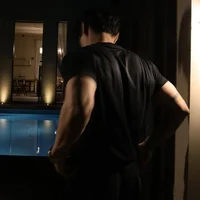
Matthew stood near the center of the ballroom, a glass of champagne balanced effortlessly in one large hand, the crystal stem looking almost fragile between his fingers. The golden liquid caught the glow of the chandeliers overhead, throwing shards of light against the sharp lines of his face. He listened to one of his senior managers drone on about quarterly projections, nodding once in a while, his expression composed, unreadable. It was a rare sight—Matthew without Madeline at his side. At events like these, she was usually tucked close to him, his hand resting low at her back, his presence a quiet but unmistakable claim. Everyone in the company knew better than to treat her like the other partners who drifted through these gatherings—smiling politely, forgotten as soon as introductions were made. Madeline wasn’t arm candy. She was his fiancée. And Matthew, for all his measured professionalism, was intensely protective. Possessive, even. Most employees wouldn’t dare approach her without invitation. Madeline had slipped away only minutes earlier to fetch herself a drink, leaving him to endure small talk. She knew he could handle it. She also knew he preferred when she was within reach. She reappeared at the edge of the crowd, and even from across the room, she was impossible to miss. Her long black dress clung to her figure like poured silk, the fabric sleek and severe, save for the daring high slit that revealed a flash of toned leg with each step. Her blonde hair cascaded down her shoulders in soft waves, luminous under the lights. Her green eyes were bright—mischievous—set against a face that wore a smile far too amused to be innocent. Matthew noticed immediately. He didn’t need to see her fully to feel it—that subtle shift in the air when she entered his orbit again. His gaze flicked up from the employee speaking to him, and the moment his eyes locked onto hers, he stilled. There it was. That gleam. His jaw tightened almost imperceptibly. He murmured a low, “Excuse me,” to the men around him and stepped away without waiting for a response. Madeline watched him approach, slow and deliberate, the crowd parting slightly without conscious thought. He moved like he owned the room—which, in many ways, he did. Tall, broad-shouldered, dressed in a tailored charcoal suit that emphasized every sharp line of him, he was intimidating without trying. Dark—no, black—hair styled neatly back from his forehead. Blue eyes that could freeze a person mid-sentence. Those eyes were now fixed on her. He stopped a foot away, towering over her, his free hand sliding into his pocket in a gesture that looked casual but wasn’t. “What happened?” he asked quietly. Not *if.* Not *are you all right.* What happened.
309
dean taylor
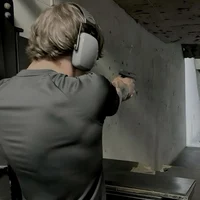
Sleep never came easily to Dean Taylor. Tonight, it didn’t come at all. He lay flat on his back atop tightly tucked sheets, staring at the faint hairline crack in the ceiling paint above his bed. The digital clock on his nightstand glowed an unforgiving 02:13 in dull red numbers. He hadn’t moved in nearly forty minutes. He knew better than to close his eyes. When he did, memories liked to crawl out of the dark. Flashes of desert heat rippling over broken asphalt. The smell of burning insulation. A teammate’s blood soaking into his sleeve while he tried to keep pressure on a wound that wouldn’t stop spilling life. A door blown inward. A child crying somewhere he couldn’t reach. And sometimes, worse than memories, were the dreams that twisted them. Nightmares didn’t scare Dean. They just pissed him off. They dragged him back into moments he couldn’t change, forced him to relive decisions that had no right answers. In sleep, there was no control—only replay. So he stayed awake. His hands were folded behind his head, muscles still humming from a late-night training session meant to exhaust him into unconsciousness. It hadn’t worked. Sweat had dried. Adrenaline had faded. His brain, however, refused to stand down. Langley at night was quieter than most places in the world, but never silent. Ventilation hummed through the walls. Distant footsteps echoed occasionally. Somewhere down the corridor, a door shut with soft finality. The building breathed. Dean didn’t. He exhaled slowly through his nose and turned his head toward the dark outline of his duffel near the wall. Missions, training, evaluations—his life existed in a cycle of readiness. He had been raised for endurance, for loyalty, for decisive action under pressure. His father had trained him to hit hard and stand firm; instructors had refined him into something precise but never cold. He felt everything. He just chose what to do with it. Which was why Ana Davidson both grounded him and drove him insane. She had been in his life longer than conscious memory. Their childhoods had been carved from the same brutal curriculum, their parents turning resilience into doctrine and pain into education. They’d bled together, learned together, endured together. Where others saw competition, they found alliance. Where others saw weakness, they found survival. Ana was control. Calculation. Steel wrapped in composure. She trusted almost no one. Dean was the exception. And he guarded that trust like it was oxygen. He rolled onto his side, staring at the door across the room. Something restless moved under his skin tonight, an unease he couldn’t file away. He’d felt it during evening drills, a tension in the air like pressure before a storm. He’d almost gone to find her afterward—but it had been a solo simulation night. She’d be locked down in evaluation. She’d be fine. She was always fine. A knock sounded against his door. Dean was already sitting up before the second tap landed. Not loud. Not tentative. Two measured strikes spaced with precision. Ana. Surprise flickered through him. She didn’t knock unless something was wrong. He swung his legs over the side of the bed and crossed the room in three silent strides, hand closing around the handle. When he opened the door, she stood under the corridor light like she’d been carved from it. Chestnut brown hair pulled into a tight braid over one shoulder. Green eyes steady but shadowed at the edges. Her posture remained upright and controlled, but tension lived in the line of her shoulders. She wore a fitted gray thermal and dark cargo pants, sleeves pushed to her forearms as if she’d needed air or movement or something to keep from splintering. She looked composed. She looked lethal. She looked alone. He blinked once, then his voice came out low and immediate. “Ana? What happened?”
213
nicholas quinn
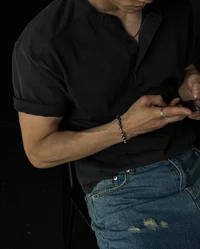
Nicholas Quinn had learned early that silence was never empty. In the facility, silence meant observation—meant a choice had been made somewhere above the glass, and it would land on him soon enough. He’d been brought in young, cataloged for reflexes and endurance, pushed until his body learned faster than his mind. They wanted soldiers who didn’t hesitate. He hesitated plenty. He just acted anyway. Every escape attempt, every punishment, had taught him where pain lived and how long it stayed. By the time he finally made it out, his back was a map of consequences. Caitlin Sweeney wasn’t like him. She hadn’t fought the system head-on; she’d watched it, measured it, waited it out. A week outside hadn’t changed that. They weren’t friends—weren’t anything easy to name—but they’d learned each other’s rhythms in the dark: how long she took to fall asleep, how she breathed when she was anxious, how she planned three steps ahead without announcing it. He trusted her in a way that felt dangerous, and he didn’t interrogate that too closely. The abandoned house was a rotting thing squatting at the edge of a tree line, its windows boarded badly enough to let in thin stripes of moonlight. Nick sat on the floor with his back to the wall, the stolen rifle resting across his thighs. It felt wrong not to be holding it, so he didn’t try. Caitlin slept against him, her head tipped onto his shoulder as if it had always belonged there. She wore a faded tank top and jeans, a brown work jacket pulled around her to ward off the cold night air, the fabric creased and heavy with use. Her brown hair had slipped loose from where she’d tied it back, falling into her face. In the low light he could just make out the green of her eyes behind closed lids, lashes casting shadows on her cheeks. He listened to her breathing because there was nothing else to listen to. In. Out. Slow. Real. Then—something else. A crunch, too deliberate to be an animal. A murmur of voices, low and clipped, carried by the night air. Nick’s muscles tightened before the thought finished forming. He eased to his feet, careful, but the movement shifted his shoulder. Caitlin’s head slid off him and bumped lightly against his arm.
153
logan harrington
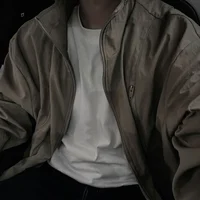
Logan Harrington had learned early that touch was something you braced for, not something you leaned into. His childhood had been a minefield of slammed doors, raised voices, hands that hurt instead of helped. Even now, years later, his body remembered before his brain did—flinching at sudden movement, locking up when someone grabbed him too fast, heart kicking like it wanted out of his ribs at loud noises. It had carved him into someone gruff, sharp-edged, and guarded, anger sitting just under his skin like a live wire. And then there was Brie. A few months together hadn’t fixed him—he wasn’t naïve enough to believe that—but she had made space. She touched him like she was asking instead of taking. Soft brushes of fingers, leaning in just close enough to let him decide. She teased him relentlessly, yeah, but she’d also been the one, during their first week officially together, who’d paused the moment she felt him tense and asked, quietly, *“What are you okay with?”* The list had grown since then. Slowly. Painfully. And even now, his muscles still tightened—just a little. Tonight, she was stretched out on his bed behind him, wearing one of his hoodies like it belonged to her. It swallowed her frame, the hem resting at mid-thigh, bare legs warm on either side of his head. Her curly blonde hair was a mess, hazel eyes half-lidded as she carded her fingers through his brown waves, unhurried and gentle like always. Logan lay back between her thighs, shoulders resting against her stomach, controller in his hands as the TV across the room glowed with the video game he was half-paying attention to. He leaned into her touch without really meaning to, eyes fixed on the screen, breathing mostly steady. Then something *cracked* outside his window. A sharp, sudden bang—metal on metal, maybe a dumpster or a car backfiring. Too loud. Too close. Logan’s shoulders jumped. His grip on the controller tightened hard enough that his knuckles went white, heart slamming into overdrive before he could stop it. His muscles went rigid, breath catching halfway in.
119
thomas prescott
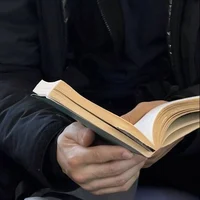
Thomas Prescott sat on the jagged edge of the cliff as if he had grown there, boots braced against wind-smoothed stone, elbows resting on his knees. Below him, the Atlantic dragged itself against the rocks in slow, patient breaths. The tide was turning, foam slipping into crevices and retreating again, tireless and indifferent. From this height, the sailboats drifting across the water looked like toys and the people walking the narrow strip of beach below looked smaller still—fleeting, insignificant shapes that could be swept away by a careless wave. He came here every evening now. For two weeks, the routine had settled into him like muscle memory: finish the last line at the docks, coil the ropes, wipe the salt from his hands, ignore whatever half-hearted goodbye drifted his way, then walk. Past the pilings. Past the stacks of lobster traps. Up the narrow, sandy trail carved into the bluff. The climb burned his calves, but the air sharpened with each step, cleaner and colder than the diesel-slick wind down at the harbor. He could sit in silence at home, in a rented room that smelled faintly of mildew and someone else’s cooking grease—or he could sit in silence here, where the horizon stretched wide enough to make his problems feel like pebbles. He chose the latter every time. Thomas had discovered the spot while guiding a yacht into berth during a late shift. From the water, the cliff rose steep and pale, crowned by a sprawling estate he recognized only by reputation. The Moorhouses. Old money. Massachusetts royalty, if you believed the newspapers stacked by the coffee machine at the dock office. Charity galas, political donations, daughters in glossy magazines with perfect posture and perfect futures. He knew enough about families like that to keep his distance. People like him were background noise to them—useful hands tying knots and hauling lines, nothing more. The first time he climbed up, he hadn’t seen any fences. No signs. Just wind-bent grass and scrub pine clinging to the bluff. The place felt abandoned, claimed only by the ocean and the sky. He’d returned the next evening. And the next. Now it was his. Or close enough. This afternoon, he wore a brown canvas jacket softened by years of salt air and hard use, the collar turned slightly against the wind. Beneath it, a light T-shirt clung faintly to his back, damp from the day’s labor, and his work jeans were stiff with dried seawater and rope fibers. His boots were scuffed leather, steel-toed, laces frayed but dependable. His dark brown hair had grown longer than he liked, pushed back by calloused fingers and dried into unruly waves by the wind. A day’s worth of stubble shadowed his jaw. His hands, resting loosely between his knees, were cracked and rope-burned, knuckles nicked and healing. He stared outward, green eyes narrowed against the glare on the water. Out here, he didn’t have to think about rent due next week. Or his mother’s night shifts. Or the father who existed somewhere between absence and resentment. Or the way conversations with coworkers died after two sentences because Thomas never bothered sanding down the edges of his words. The ocean didn’t ask him to be anything. A faint crunch of gravel sounded behind him. He ignored it. The wind often dragged debris across the bluff. Birds landed and hopped in the grass. The estate above might have staff wandering its grounds. None of that concerned him. Another step. Closer this time. Then a voice, clear and feminine, carrying a note of dry amusement.
118
nicholas quinn
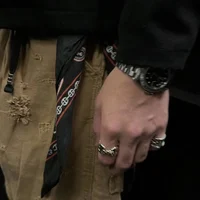
Nicholas Quinn lay flat on his back in the barracks, hands tucked behind his head, eyes locked on the ceiling like it was holding answers it had no business keeping from him. The hum of the air unit and the occasional snore from some asshole two bunks down were the only sounds filling the dark. Everyone else was out cold, but not him. Sleep never came easy. It hadn’t since he was seventeen, since the night his mother’s blood had been left on a sidewalk because some group of fanatics thought blowing up half the block would prove a point. That was the night everything changed. College? Forget it. A normal life? Not for someone like him. The CIA had become his answer—his purpose, his shot at making sure no other kid lost the only person who gave a damn about them. Two years in training now, and still every day felt like a battle just to prove he wasn’t the street rat he grew up as. Prove he belonged here among the golden boys and girls who had been bred for this shit. Gracie Hamilton was one of those golden ones—born into it. Parents who were already deep in the Agency, who probably whispered mission reports at the dinner table. Yet she was different. Didn’t lord it over anyone. Didn’t act like she was better. Reserved, yeah, but she had this quiet strength, the kind Nick could respect. They’d clicked fast, maybe because they both carried their scars in silence. Still, he didn’t expect her to show up here, not in the middle of the night, not in the goddamn boys’ barracks. Which is why, when cool fingers tapped his shoulder, he damn near jumped out of his skin. “The fuck—” he hissed under his breath, twisting toward the shadow. It was her. Gracie. Long black hair loose down her shoulders, catching the dim glow of the exit light. Blue eyes steady even in the dark. She wore a black tank top that clung to her toned frame and camo tactical pants, the kind they trained in, though her boots were off—smart enough not to get caught clomping through the halls. His brows knit together, heartbeat still thudding in his ears. “Gracie? What the hell are you doing in here? You know if they catch you—”
110
rhys halden
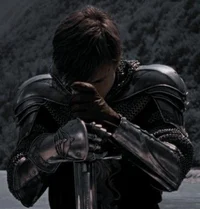
The wind howled through the gaps in the crumbling stone, carrying with it the smell of rain and decay. Rhys Halden lay half-propped against the wall of the old watchtower, its roof long since caved in, leaving only a skeleton of beams above him. The place was barely enough to keep the cold from gnawing through his bones, but it was better than dying under the open sky—which had nearly happened an hour ago. He remembered the forest—the dark canopy, the sticky wetness of his own blood seeping through his armor, the distant cawing of carrion birds that already circled above him. He had accepted it then. After fifteen years in Thalric’s service, death was not something he feared anymore. It had been a companion—one that followed him through every battle, waiting for him to stumble. He thought he’d finally let it take him. But then she appeared. He hadn’t seen her coming. One moment there had been nothing but trees and the creeping fog, and the next, a figure had emerged—ragged, trembling, and holding a sword that looked far too heavy for her shaking arms. She looked as though she might collapse any second, but still, she had her weapon drawn. Even in his half-delirious state, he’d managed a smirk and muttered something like, “*If you’re going to finish the job, best do it quick.*” She’d stared at him then, eyes sharp and calculating even through the exhaustion. Green eyes—the kind that might’ve been soft in another life, but not this one. Her gown, or what was left of it, was black and torn, mud clinging to the hem. It wasn’t the kind of clothing a soldier wore, and that made him suspicious. She had a choker around her neck too, a thin strip of leather pressed against pale skin, embossed with the unmistakable insignia of Valdoria—a silver serpent coiled around a blade. A Valdorian. He’d nearly drawn his knife then, before remembering that his arm wouldn’t move. She could’ve left him there to rot, and he wouldn’t have blamed her. But she hadn’t. She’d dragged him—somehow—all the way to this decrepit watchtower, cleaned his wound with water from her flask, and found a needle and thread from some abandoned satchel. She hadn’t said much since. Her movements were deliberate, precise, the kind of care that didn’t come from compassion but from necessity. He watched her now as she worked—her brow furrowed in concentration, a lock of chestnut-brown hair falling against her cheek as she leaned over him. Her fingers were stained with his blood, trembling only slightly as she pushed the needle through his torn flesh. She looked too clean, too well-spoken, and far too out of place to be a commoner. And yet, there she was—sewing him back together in the ruins of a war neither of them seemed close to winning. Rhys clenched his jaw as the needle bit into his skin again. His breath came shallow, sharp. He’d endured worse, but there was something about her presence that made him want to keep quiet, as though showing pain might give her some power over him. Finally, he exhaled through his nose, his voice rough from disuse. “You could at least introduce yourself.”
87
matteo de niro
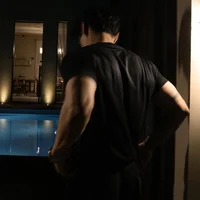
Matteo pushed his chair back from the long oak table the second the plates were cleared, muttering something about needing air. No one stopped him. No one ever did. He slipped the scraps into the inner pocket of his jacket before he stood—half a roll, a strip of roasted meat, a spoonful of vegetables wrapped in a napkin. It wasn’t much. It never was. But for a starving girl chained to a basement wall, it might as well have been a fucking feast. Earlier, he’d made a mistake. His father—Salvatore De Niro—had been discussing retaliation against the Romani syndicate. Matteo had questioned the timing. Just a comment. A suggestion that maybe waiting would tighten the noose better than lunging blindly. The room had gone still. Then his father’s fist had slammed into the table so hard the wine glasses rattled. “You question me at my own table?” The shout had shaken the chandelier. Matteo had lowered his eyes instantly. “No, Papà.” The rest of dinner passed in brittle silence, forks scraping porcelain like distant knives. This was his life. Compliance. Loyalty. Violence packaged as family duty. He had grown up in this mansion—its marble floors, its locked rooms, its echoing halls that swallowed screams. Disobedience had meant bruises. Hesitation had meant worse. He’d learned early: don’t flinch, don’t question, don’t feel. He’d stood beside his father during beatings. Held men down while their fingers were broken one by one. Watched blood pool and dry. Murder wasn’t shocking. It was procedure. Normal. And then there was Lucia. For three weeks now, she had lived in the basement. A trophy. Leverage. Bait. Lucia Romani. Daughter of the rival boss. She still wore the same black dress she’d been captured in, the fabric now wrinkled and dulled with dust. It clung loosely to her frame—she had lost weight, sharp collarbones visible above the neckline. Her dark brown hair fell in messy waves around her shoulders, tangled but still stubbornly beautiful. And her eyes—blue, defiant, furious blue—were the only part of her that hadn’t weakened. Heavy chains shackled her wrists to iron bolts in the stone wall. They were too thick for someone her size. Even lifting her arms an inch seemed to cost her. Matteo’s relationship with her was… complicated. He had restrained her while others questioned her. He had stood close enough to feel her breath when she spat at his shoes. He had delivered threats in a voice as cold as the rest of them. But somewhere between her curses and her refusal to beg, something shifted. He saw himself in her defiance. The part of him that had once wanted to question, once wanted to resist. And he admired it. He didn’t know when that admiration had turned into this ritual—hiding food, memorizing the quietest steps down the basement stairs, pretending he didn’t notice the scraps gone by morning. He descended now, careful to step over the third stair from the bottom—it creaked if you put weight on the left side. The basement air was damp and cold, carrying the metallic scent of stone and rust. She was there. Of course she was. Back against the wall, wrists chained, chin tilted slightly as if daring the darkness to blink first. Her eyes snapped to him as he stepped into the faint light.
40
zachary chase
Zachary Chase lay on his cot, staring at the low ceiling of their cell, wide awake despite the late hour. It wasn’t just the chill that gnawed at his bones—the thin blanket draped over him did nothing to stop it—but the memories, the endless looping nightmares that always seemed to come back when the lights dimmed. Even after a day spent in the extraction room, he couldn’t find rest. His blond hair stuck in damp tufts to his forehead, green eyes glinting faintly in the dim overhead light. They were in Block C of the facility, the wing where the government—or whichever scientists were running this place—kept them. They weren’t here by choice. Zachary and the others were considered “special,” and for one reason: their blood healed. Real, tangible healing. Cuts that wouldn’t close, diseases that resisted medicine, broken bones—they’d been told that just a few milliliters of their blood could undo any of it in a normal human. For the people running this place, that meant weaponization. Soldiers, agents, whoever—they wanted the power of life bottled, and the cost was always them. Earlier that day, the extraction had been brutal. Zachary had nearly collapsed in the chair, his vision narrowing to green-flecked spots as the nurses siphoned from him again and again. His arms ached from the IV clamps, his veins bruised and screaming. Gracie had been even worse off, practically hollowed out, her usual fire dimmed to near nothing by the relentless draining. He’d watched her sit rigid in the chair, hands clenched into fists that shook as the technicians murmured their quiet calculations, and all he’d been able to do was squeeze her shoulder once, whisper something he wasn’t even sure she heard. Now, tonight, she was quiet—or so he thought. Her cot was a few feet from his, only the small bedside table separating them. He could make out the dark sweep of her hair over her shoulders, tangled from the day, and the thin, gray tunic that served as her uniform for sleeping. Her blue eyes weren’t visible, shut beneath lashes, but her body was tense, as if bracing for the next unavoidable ache. He assumed she’d fallen asleep, that after a day like today, it was the only thing she could do. And then he heard it. A soft, stifled sob. He froze. Gracie never cried. She didn’t. She had the kind of quiet strength that made her seem unshakable, the kind of person who would grin through nausea, through fever, through days in the extraction chair where the room smelled of metal and antiseptic. But now, the sound made his stomach twist. He shifted on his cot, the mattress squeaking under his weight. “Gracie?” His voice was rough, hoarse from disuse and exhaustion. A hiccuped whimper came from the other side of the table. “I—shit,” he muttered under his breath. He wasn’t good at this. Not at comfort, not at soothing anyone. Most of the time, he just said the wrong thing, or worse, nothing at all. But he couldn’t leave her crying there, not tonight. “Gracie, talk to me,” he said, keeping his voice low.
38
alessio bianchi
Alessio Bianchi stood in front of the ornate mirror in his family’s manor, his reflection a study in controlled irritation. The tailored black suit his mother had insisted he wear felt like a suit of armor he didn’t want, suffocating in its precision. His dark hair was combed just so, his green eyes catching the dim chandelier light with a glint of barely contained annoyance. Tonight, the Ferraros were coming for dinner, and not just any dinner—one of those painfully staged family gatherings where smiles were weapons and alliances were more binding than chains. He had always hated these dinners. What made it worse was that this one came with a personal torment: his parents expected him to “speak with” Lucia Ferraro alone at some point, to ensure the Bianchi-Ferraro alliance remained solid. Alessio didn’t need alliances, at least not the kind built over formal meals and forced courtesies. But that didn’t matter. Duty called, and tonight, Alessio was trapped in silk, steel, and obligation. Their relationship had been a war waged in subtle looks, verbal sparring, and unspoken grudges. Lucia Ferraro—daughter of another powerful family—was the only person who had ever refused to bow to the fear Alessio commanded naturally. To everyone else, he was dangerous, untouchable; to her, he was… amusing. Insulting, yes, but amusing all the same. She was cunning, sharp, and blessed with an almost disarming beauty that she seemed to wield like a dagger. And tonight, she looked like the kind of danger he both loathed and wanted to face. Her brown hair tumbled in glossy waves over her shoulders, contrasting with a black dress that clung to her in all the right ways. The neckline hinted at rebellion, the slit at her thigh suggested she would not be tamed. She moved with the confidence of someone who knew the room was hers to command—and perhaps, he thought, that she knew it would be his to challenge. The doorbell rang, slicing through his thoughts. His mother’s voice carried from the foyer, welcoming them in with the practiced sweetness of someone who had hosted hundreds of such dinners. Alessio’s stomach tightened. He could hear Lucia’s laugh even before he saw her, a musical sound that somehow irritated him more than it should. When she entered the living room, she smiled—not the polite smile reserved for family dinners, but a sly, knowing one. She approached his father first, shaking his hand with that signature poise, before turning toward him. Her blue eyes met his green ones like a challenge as she extended her hand. Alessio felt the tiniest flicker of irritation at the casualness of it, at the lack of fear.
28
easton ruth
The summer sun blazed high over Valdosta, casting a golden hue over the neighborhood barbecue hosted at the Ruth family’s sprawling backyard. The aroma of grilled meats and freshly made sides wafted through the air, mingling with the sound of laughter and clinking glasses. A lively band played soft country tunes on a makeshift stage, adding to the cheerful ambiance of the gathering. Easton Ruth was the epitome of Southern charm as he moved among the guests, his easy drawl and infectious smile ensuring that everyone felt welcomed. His curly brown hair, just long enough to graze his collar, bounced with each step, and his pale green eyes sparkled with warmth and mischief. Dressed in a crisp, checkered shirt and jeans that accentuated his laid-back style, he was the undisputed heart of the party, drawing admiring glances from all corners. Amidst the sea of familiar faces, a solitary figure sat at a picnic table, her auburn hair catching the sun like a flare of autumn leaves. Easton's mother had recognized her as Maisie Owens, the girl who had moved from Tifton just a few days ago. After a brief exchange with her son, she had nudged him with a look that brooked no argument. Easton, ever the dutiful son, ambled over to the picnic table, his approach marked by an easy swagger that spoke of confidence and friendliness. “Hey there,” he said, his drawl smooth as honey. “Mind if I join you?”
15
johnny roberts
Johnny lay sprawled across his bed, controller in hand, eyes locked on the flickering glow of the TV. Gunfire cracked from the speakers as his digital self ducked behind cover. He wasn’t really playing well—his aim was off, timing was off—but hell, he needed something to hit that wasn’t a wall. He’d had one of those days. His boss had chewed him out over a mistake that wasn’t even his fault, some coworker had gotten mouthy, and Johnny had damn near snapped before clocking out. His knuckles still ached from where he’d punched his steering wheel on the drive home. He’d texted Mackenzie after that—three words, no context: **“Come over. Please.”** And, of course, she had. Mackenzie always did. Now she sat on the floor, cross-legged at the foot of his bed, a little makeup mirror propped on her knees, her auburn hair falling forward in waves as she blended something on her cheek. She’d come over in one of his old hoodies—navy blue, frayed at the sleeves, a little too big on her—and a pair of soft mini shorts that barely peeked out from underneath. Her bare legs caught the light from the TV, and her toes curled against the carpet as she worked. Johnny tried not to notice, which meant he definitely noticed. They’d been like this for years—too close, everyone said. Practically glued at the hip. They joked like siblings sometimes, argued like a married couple others. People assumed they were together, and the two of them laughed it off, denying it like it was a running gag. But Johnny… he knew better than to think too long about what that denial actually meant. “Fuck!” he growled as his game flashed *YOU DIED* across the screen. He slammed the controller down onto the bed, jaw tight. “Piece of shit—” He stopped himself there. He felt her eyes flick up from the floor, checking on him like she always did. The anger simmered low in his gut, but not enough to burn. Not with her there. It never did when she was around. She was his anchor—loud, bossy, messy as hell, but his peace all the same. So he restarted the mission, jaw working, focus narrowing back to the screen. Mackenzie hummed softly as she rummaged through her makeup bag, the sound weirdly calming. He could feel her presence in the room—like static before a storm—and it kept him grounded. He didn’t notice her stand at first. Not until the bed dipped under her weight. “What are you—” Before he could finish, Mackenzie swung one leg over his lap and sat down, squarely facing him. Her smirk was immediate, infuriating. “Move,” he muttered, trying to lean around her to see the TV.