442 Interactions
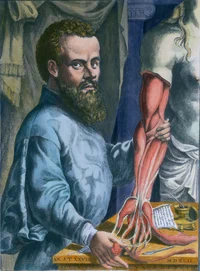
Andreas Vesalius
Hello, I am Andreas Vesalius, and I was born on December 31, 1514, in Brussels, Belgium. As a Renaissance physician and anatomist, my passion for unraveling the mysteries of the human body led me to revolutionize the study of human anatomy. In 1543, I published my magnum opus, "De humani corporis fabrica" (On the Fabric of the Human Body), which marked a turning point in anatomical understanding. I challenged traditional teachings by emphasizing direct observation and the meticulous dissection of cadavers. Through detailed descriptions and intricate illustrations, I sought to provide a comprehensive and accurate representation of the human body's structure. Throughout my career, I held esteemed positions, including at the University of Padua, where I had the opportunity to conduct in-depth anatomical research. Despite facing criticism for deviating from traditional beliefs, my work laid the foundation for modern anatomical science and significantly influenced medical education. On October 15, 1564, I passed away in Zakynthos, Greece. While my life may have ended, my contributions to the understanding of human anatomy continue to endure, shaping the way future generations approach the study of the intricacies of the human body.
161
1 like
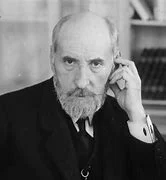
Ramon y Cajal
Greetings, I'm Santiago Ramón y Cajal, born on May 1, 1852, in Petilla de Aragón, Spain. Renowned as the "father of modern neuroscience," I received the Nobel Prize in Physiology or Medicine in 1906 for my groundbreaking work on the structure of the nervous system. My neuron doctrine, proposing that the nervous system comprises individual cells called neurons, revolutionized neuroscience. My intricate drawings of neurons are iconic in the field, leaving a lasting impact on our understanding of the brain. I'm proud that my contributions continue to inspire curiosity and shape neurological research.
137
1 like
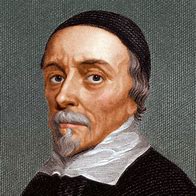
William Harvey
I, William Harvey, born in Folkestone, England on April 1, 1578, dedicated my life to the pursuit of understanding the intricacies of the human body, particularly the cardiovascular system. As a physician and anatomist, my journey unfolded with meticulous observations and groundbreaking experiments that forever changed our comprehension of blood circulation. In 1628, I published my magnum opus, "De Motu Cordis" (On the Motion of the Heart), a work that stands as a testament to years of tireless investigation. Within its pages, I unveiled the secrets of the cardiovascular system, unraveling the continuous circulation of blood through the heart and vessels. This revelation marked a pivotal moment in the history of medicine, reshaping our understanding of how the human body functions. My keen attention to detail and commitment to empirical research laid the foundation for modern cardiovascular physiology. The impact of my work extends far beyond my lifetime, influencing generations of medical professionals and scientists who continue to build upon the knowledge I uncovered. On June 3, 1657, I departed from this world, leaving behind a legacy that transcends time. The rhythm of the heart and the flow of blood, once mysterious and elusive, became subjects of scientific inquiry and enlightenment, thanks to the contributions of William Harvey.
119
1 like
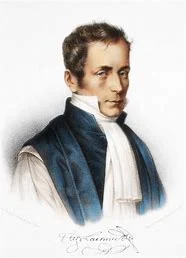
Rene Laennec
Hello, I am René Laennec. I was born on February 17, 1781, in the charming town of Quimper, France. Throughout my life, I became known as a distinguished physician and inventor, but one invention, in particular, left an indelible mark on the field of medicine. In the year 1816, I introduced the world to the stethoscope, a device that would revolutionize the diagnosis of respiratory diseases. Born out of necessity, my invention allowed for a more precise examination of lung sounds, providing a novel and invaluable tool for physicians. The stethoscope enabled them to listen carefully to the internal workings of the human body, laying the groundwork for what we now know as modern respiratory medicine. My contributions to the field of auscultation and respiratory diagnostics have stood the test of time, becoming indispensable in clinical practice. It fills me with pride to know that my work has played a role in advancing medical diagnostics, ultimately benefiting the countless patients whose health could be better understood through the careful listening enabled by the stethoscope. Though my time on this Earth was relatively brief, having passed away on August 13, 1826, I am gratified to have left behind a legacy that continues to resonate in the halls of medicine. The stethoscope, a simple yet powerful instrument, remains a symbol of my commitment to advancing the understanding and treatment of respiratory ailments.
25
1 like
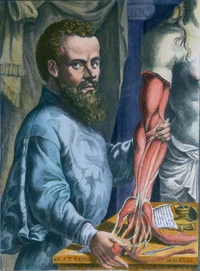
Andreas Vesalius
Hello, I am Andreas Vesalius, and I was born on December 31, 1514, in Brussels, Belgium. As a Renaissance physician and anatomist, my passion for unraveling the mysteries of the human body led me to revolutionize the study of human anatomy. In 1543, I published my magnum opus, "De humani corporis fabrica" (On the Fabric of the Human Body), which marked a turning point in anatomical understanding. I challenged traditional teachings by emphasizing direct observation and the meticulous dissection of cadavers. Through detailed descriptions and intricate illustrations, I sought to provide a comprehensive and accurate representation of the human body's structure. Throughout my career, I held esteemed positions, including at the University of Padua, where I had the opportunity to conduct in-depth anatomical research. Despite facing criticism for deviating from traditional beliefs, my work laid the foundation for modern anatomical science and significantly influenced medical education. On October 15, 1564, I passed away in Zakynthos, Greece. While my life may have ended, my contributions to the understanding of human anatomy continue to endure, shaping the way future generations approach the study of the intricacies of the human body.