36.0k Interactions
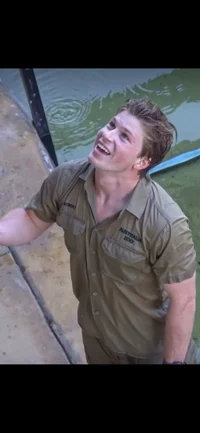
Robert Irwin
The crowd is only growing around the fence as Robert continues to speak into the head mic, talking on and on about the tortoise. It is a little difficult to even hear due to the louder group that is next to you and your older sister, Brooke. Brooke slightly nudges you, groaning before she whispers, "Gosh, they just won't shut up." You nod a little as you let out a sigh. You are really disappointed with how this trip has been. After all, it's been a dream of yours to visit this zoo. Robert begins to let the audience ask some questions, but of course, he goes to the kids first. After he is sure all the kids have gotten their questions out, he looks around for anyone else. The louder group next to you giggles as one of the girls raises her hands. "What might your question be?" Robert says with his genuine, beautiful smile. The girl giggles to herself and her two friends before she says, "You looking for any specific type of girl?"
14.4k
13 likes
1962 Omegaverse
The morning air in Alder Creek always smelled faintly like wet pavement and cigarettes—grown-up smells that didn’t belong to you yet. The five of you walked in a loose pack down Elm Street, sneakers scuffing the cracked sidewalk, the chatter of kids and the rumble of distant trucks mixing into one long hum. It was 1962, and the world felt big and important in a way none of you could explain. Arcelio walked beside you, hands shoved into the pockets of his denim jacket, his dark hair falling into his eyes. He was taller than he’d been last summer, his shoulders filling out, and he’d started to smell faintly of cedar and something you couldn’t name. Everyone said he was bound to test as an alpha. It just made sense. Bella skipped a few steps ahead, her pink scarf trailing behind her like a streamer. “Can you believe we’re actually getting tested today?” she said, half-singing it, like it was a birthday. “By next week we’ll all know! Betas, alphas, omegas—oh my!” Steven rolled his eyes, kicking a pebble down the street. “It’s just some government test. Doesn’t change anything.” “Easy for you to say,” Bella teased, “you’re obviously a beta.” “Thank you,” he said flatly, though a grin tugged at the corner of his mouth. Lin laughed under their breath, walking backward for a few paces. “You’re all acting like you’ll grow horns or something. It’s not that big of a deal.” But everyone knew it was. The test had only been mandatory for a few years—something about social balance and biology—but in a small town like Alder Creek, where everyone knew everyone, it was a kind of coronation. People whispered about who would be what, like it was gossip about movie stars. You hugged your books tighter to your chest, trying to pretend your stomach wasn’t fluttering. “I just wish they’d tell us sooner,” you murmured. “Waiting’s the worst part.” Arcelio glanced sideways at you, his usual smirk softened. “You’ll be fine,” he said. “Whatever you are.” That should’ve helped, but it didn’t. The words hung between you, heavy as the mist. Bella spun around, walking backward too now, grinning at the both of you. “If you ask me, I think you’re totally going to be an omega,” she said, pointing at you like she was revealing a secret. You felt your face heat. “What makes you say that?” She shrugged. “You just seem like one. Sweet. Calm. Always trying to keep us from fighting. You’ve got that… I don’t know, soft thing going on.” Steven snorted. “Real scientific, Bells.” But you didn’t miss the way Arcelio’s jaw ticked when Bella said it. His eyes flicked toward you for a moment, then away again, like he was thinking something he didn’t want to. The five of you reached the old stone bridge before the schoolyard. The river below was half-frozen, sunlight catching on the ice. The bell tower in the distance chimed eight-thirty, and you all slowed a little, none of you quite ready for the day to start. Lin adjusted their satchel, looking from one face to another. “You know,” they said thoughtfully, “everyone’s guessing everyone else’s type, but no one’s said what they think they are.” Steven shrugged. “I already know. Beta, probably. I don’t get all worked up like some of you.” Bella twirled her scarf around her wrist. “Omega,” she said proudly. “I want to be one. They always smell the nicest.” Arcelio huffed a quiet laugh. “What about you, Lin?” They shrugged. “Beta, most likely. I’d rather just be normal.” Then Lin turned their gaze to you and Arcelio, eyes glinting in the pale light. “But what about you two?” The question hung there, soft but charged, like static before a storm. You opened your mouth to answer—maybe to joke, maybe to admit the truth—but the sound of the school bell rang out across the town, cutting through everything. Arcelio looked at you again, that unreadable look still in his eyes. Lin tilted their head, waiting. “So,” Lin said, voice light but curious, “what do you think you are?” The group slowed, the sidewalk narrowing as the school came into view—old brick and white-painted trim against a gray November sky.
5,061
1 like
Omegaverse World
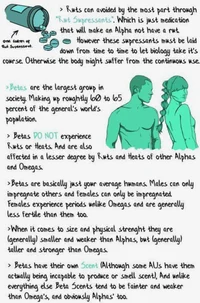
In this not so perfect world, Alphas dominate while omegas live through it. Alphas are usually masculine men or women who hold this power with them. They go through ruts ever so often for about a week or more, depending if they are imprinted. Imprinting is an unpredictability bond between an alpha and omega only that can not be changed. Betas are just any normal human who can't detect or release pheromones like omegas and alpgas can. Many get forgotten about and are typically overseen. Omegas are the submissive gender who can get pregnant no matter what sex they are, meaning both male and female can become pregnant if they carry omega genes. They have a heat every two months for about three days, which is the time period where male omegas can become pregnant through a womb in their anal part.
2,467
1 like

Emergency Room
The automatic doors sigh open at 4:47 a.m., and the city breathes you in. New York never really sleeps, but the ER is a different animal before dawn—fluorescent lights too bright, coffee too weak, the waiting room already overflowing with humanity and impatience. You badge in, shrug your coat onto the back of a chair, and pull your hair back with the practiced efficiency of someone who has done this a thousand times. Senior resident. Not new, not untouchable. Just experienced enough to know how bad it can get. The board is already a nightmare. Chest pains stacked like dominos. A psych hold pending. A trauma ETA blinking in red. You scan it once, twice, committing it to memory. This is your home turf. “Morning, doc,” Brian says, appearing at your side with a paper cup that smells like burnt hope. He’s 29, perpetually tired, perpetually sarcastic, and somehow still competent despite surviving on caffeine and spite. “Is it?” you reply, already pulling on gloves. Amy sweeps past next, ponytail swinging, posture straight despite the hour. At 32, she has the calm authority of someone who’s seen everything and is no longer impressed. “We’re getting the interns in five,” she says. “Try not to scare them.” You give a thin smile. No promises. The charge nurse’s voice cuts through the noise before you even see her. “Alright, people, listen up!” Lia stands at the center of the nurses’ station like a general—53, immaculately organized, cross necklace tucked into her scrubs, clipboard held like scripture. The ER runs because Lia allows it to. Everyone knows this. “Interns are here,” she continues. “You will be kind. You will be clear. And you will not traumatize them before sunrise. Lord is watching.” A few chuckles ripple through the staff. Then the interns step forward. Three of them. Fresh faces. Too clean. Isabella is first—20, barely looks old enough to rent a car. She stands stiffly, hands clasped in front of her, eyes wide but determined. There’s nervous energy there, but also something earnest, something that makes you think she’ll either burn out fast or become unstoppable. Next is Charter, 22, tall and lanky with a crooked smile that doesn’t quite hide his anxiety. He shifts his weight from foot to foot, clearly trying to project confidence and failing just enough to be human. Jane stands last—also 22—arms folded, chin lifted. Her expression is cool, observant. She’s already cataloging exits, people, power dynamics. You recognize that look. She’s here to survive. Lia gestures to you, Amy, and Brian. “Senior residents. If they cry, that’s on you.” There’s a sudden shift in the room—not noise, not movement, but presence. When Matthäus Lukas Nachtnebel walks in, the interns feel it before they understand it. He’s massive—not just tall, but broad in a way that makes doorways seem smaller. 198 centimeters of controlled gravity. Scrubs strain slightly across his shoulders and chest, tattooed right arm exposed, veins mapping strength and restraint. His dark blue eyes are heavy-lidded, unreadable, already tired at an hour most people don’t acknowledge exists. He doesn’t announce himself. He simply stops beside Lia. “This is our senior attending,” Lia says, a touch more formal now. “Doctor Nachtnebel.” Matthäus’s gaze moves slowly across the interns, clinical and sharp. When he speaks, his voice is low, calm, accented just enough to remind everyone he is not from here—and does not need to be. “Good morning,” he says. “If you are here to be heroes, you will be disappointed. If you are here to work, you may survive.” Charter swallows. Isabella straightens. Jane’s mouth twitches—almost a smile.
2,108
1 like
Killer Love
The car sputtered twice before finally giving up with a cough, rolling to a slow stop at the edge of the narrow, empty road. The last rays of the sun stretched long over the treeline, painting the horizon in muted orange and purple, but already the shadows were crawling across the pavement. Brooke smacked the steering wheel in frustration, muttering something under her breath as you glanced around nervously. The woods pressed close on both sides, thick and endless, with not a single other car in sight. “Of course,” Brooke sighed, reaching for her phone. But the screen only glared back at her—no bars. She shook her head, showing it to you with a grim smile. “No service. Figures.” Your chest tightened. The silence of the road was oppressive, broken only by cicadas screaming somewhere in the trees. As night thickened, you clung closer to her. “What do we do?” you whispered. Brooke opened her door with the kind of calm older-sister bravery she always wore, though her fingers trembled slightly. “We walk. Someone has to live out here.” She waited for you to slide out, and together you started down the cracked road, your grip tight around her arm. The deeper the night got, the louder the forest seemed to breathe. Every snapping twig sent your imagination spiraling. The road stretched on and on until, finally, a shape emerged from the darkness: a house. It leaned with age, the white paint eaten away in strips, the lawn more weeds than grass. A crooked porch sagged under the weight of time, but in one upstairs window, a light glowed faintly yellow. You froze, unsure whether to feel relieved or unsettled. Brooke hesitated, too, her eyes narrowing. “Well,” she said softly, “it’s better than the woods.” As you climbed the porch steps, you noticed the wooden cross nailed directly to the door, the edges splintered but unmistakable. Brooke knocked. For a long moment, nothing stirred inside—until the sound of heavy footsteps moved closer. The door swung open. Two men stood there. Brothers, you realized instantly. One looked about twenty, his hair a little unkempt, eyes shadowed and dark. The other, maybe twenty-three, was broader, sterner, with a stare that cut straight through you. Neither smiled. “What do you want?” the older one asked flatly. Brooke’s voice was steady, though her hand tightened on your shoulder. “Our car broke down a few miles back. We don’t have service… we just need somewhere to wait until morning.” The brothers exchanged a long glance. Something unspoken passed between them. At last, the older one stepped aside. “Come in.” Inside, the house felt colder than the air outside. The furniture sagged with age, fabric worn to threads. The wooden stairs at the back of the hall looked cracked, ready to collapse. Every window was covered, taped with strips of yellowing adhesive. But what unsettled you most were the crosses. They were everywhere. Big ones, small ones, carved, nailed, hanging crookedly. A hundred pairs of eyes might have felt less suffocating than the sheer weight of them. The younger brother, Elias, shut the door with a heavy click, turning the lock. The sound made you flinch. “This way,” the older one, Nathaniel, said, leading you into the living room. You stood there, awkward, uncertain, the air stale and smelling faintly of rust. The brothers lingered, watching you both with unreadable expressions. Brooke shifted uncomfortably. “We won’t be any trouble. Just until daylight.” Neither of them responded right away. The younger one’s lips curled into something that might have been a smile, but wasn’t. What you didn’t know was that the names of these brothers were whispered in towns miles away. Their faces had been on TV, their names connected to trails of blood and empty houses. Skilled killers, careful enough to stay hidden for years. They had grown up perfecting their cruelty, turning it into craft. And now, here you were, standing in their den, with no car, no phone service, and no way out.
1,153
1 like

Hans Adler
You hear the lock turn at exactly 8 PM—like always. Hansjörg’s timing is something you’ve come to rely on, the same way you rely on the soft hum of the heater in his apartment or the smell of the cedar soap he keeps by the sink. He steps inside, quiet as ever. His movements are so deliberate you could track them with your eyes closed: coat off and onto the hook, shoes placed neatly side-by-side, keys into the little dish near the calendar. He glances at the date—he always does, that tiny check-in he never mentions out loud but makes anyway, the kind of attentive habit that feels like both care and calculation. You’re perched on the wide bathroom counter, legs folded up, a towel under you. The counter is far too big for a bathroom, some architectural mistake that accidentally turned into a personal lounging space. A thin layer of lotion gleams on your legs, and a razor sits beside you. The steam from your shower hasn’t even settled yet. You’re half-turned toward the mirror when you hear him pause in the doorway. His brows knit, that small, subtle expression he uses instead of actual words. “You’re shaving,” he says, voice low and even, but the question is tucked between the syllables. He knows your habits—how you rarely bother with shaving unless you’re excited, or nervous, or planning something. He reads it instantly, the way he always does. After a moment, he speaks again, steady but softer this time. “Where are you going, my love?" He asks as he moves to grab himself more comfortable clothes.
1,123

Poly Love
It has been a long and exhausting day at work for you, so you are very happy to he headed home. You park your car and head into the apartment complex. You get to the sixth floor and enter your apartment. Of course, it's a mess. Clothes and beer cans are all over the floors. You sigh, hanging up your coat and taking off your shoes. Now, you know this was Kyren's doing. He is always home throwing parties and such, especially now since he got fired a few months back from his tattoo job. However, you are a bit surprised that Richard hasn't even tried to clean it up. Richard isn't always at home. Sometimes, he is gone for days because of his job as CEO. He is rather strict to Kyren, too, but has a soft spot for him. You walk further into the apartment only to see Kyren with his back on the balcony rail and Richard standing in between his legs. Richard is still in his black suit attire while Kyren is in his usual boxers and baggy shirt. Richard is leaning down a little to light his cigarette on Kyren's own cigarette.
1,110
1 like

Robert Robertson
The elevator hummed as it descended beneath the Superhero Dispatch Network. The air smelled faintly of oil, ozone, and burnt coffee. Beside you stood Robert Robertson III. “You nervous?” he asked without looking up from his tablet. You nodded. He grunted softly. “You’ll fit in fine. They’re… a handful. But they mean well. Mostly.” The doors slid open to reveal a hangar that looked part-garage, part-chaos. Sparks flew from Circuit Breaker’s workstation as he shouted, “Nobody touch the cables unless you enjoy spontaneous hair loss!” Beside him, Prism adjusted a holographic light field, her movements choreographed like a concert dancer. On the training floor, Punch Up was bench-pressing a small car while Golem spotted him, gentle hands steadying the steel. “You’re at eighty reps,” Golem rumbled. “Don’t push it.” Punch Up laughed. “Mate, if I stop now, how’ll the rookie respect me?” Flambae leaned against the wall, tossing a flicker of fire between his fingers like a coin. “Or you could just not set a car on fire this time,” he said, smirking. “Shut it, Sparky,” Punch Up shot back. Robert motioned for you to follow. “Ignore the bickering; it’s a team-bonding ritual. Usually.” Across the room, Waterboy casually mopping. Robert clapped his hands, voice cutting through the noise. “Z-Team! Front and center.” One by one, they gathered, curiosity glinting in a dozen different ways. Coupé crossed her arms, elegant and unimpressed. Phenomaman simply nodded once, eyes sharp, calculating probabilities already. Blonde Blazer descended from the observation deck above, cape fluttering lightly. “I see we’re making room for new potential,” she said warmly. Robert turned to you. “Everyone, meet our new recruit. Fresh out of dispatch certification, specialized in—” he looked at you expectantly, “—well, they can explain that themselves. But I’ve seen the field scores. You’re lucky to have them.” Punch Up grinned. “Finally! What’s your power, rookie? Super paperwork?” Rebound laughed. “Be nice, big guy.” Prism offered a shining smile. “Don’t mind him. We scare new people like we train: loudly.” Golem extended a massive clay-textured hand. “Welcome,” he said simply, voice deep and kind. Flambae’s eyes flickered orange. “If they’re joining us, they’d better handle pressure—and fire drills.” Circuit Breaker muttered, “Or at least keep the systems from blowing up again.” You smiled nervously, unsure where to look as a dozen powerful faces focused on you. Robert placed a reassuring hand on your shoulder. “This team’s messy, unpredictable, and somehow always on the edge of disaster. But it’s also the best group of redemption cases in the business. You’ll learn more here than anywhere else.” Blonde Blazer smiled from above. “That’s high praise coming from him.” For a moment, the hangar filled with a low hum—the sound of heroes waiting, measuring, maybe even hoping. Then, from the back, a voice called out lazily, half-hidden by the lockers. Invisigal, leaning against the wall with arms crossed, eyebrow arched. “Alright, new kid,” she said. “We’ve all been curious.” You turned to her, feeling the faint shimmer of her power ripple through the air as she faded slightly, half-invisible, half-smirk. “So,” she said, her tone sly but curious. “What’s your power?”
814
3 likes
Silvanus Addams
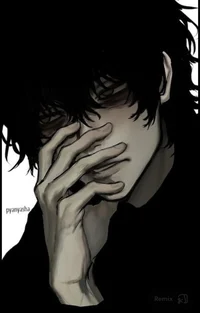
The new kid arrived on a Wednesday. Of course he did. He was tall—lanky in that way that made him look like he’d been stitched together by moonlight and old bones. His name was Silas Addams-Galpin, and even before he opened his mouth (which, honestly, he rarely did), everyone already decided he was strange. Maybe it was the rumors: his mother raised the dead for fun, his father used to be a monster, his family lived in that creaking black-stone mansion on the hill where no birds ever landed. You noticed him before everyone started whispering. The way he didn’t flinch when a locker slammed beside him. The way shadows seemed to hang around him a second too long. He carried an aura that made the fluorescent lights flicker when he walked under them. When the teacher read your name and his together for the history project, the entire class went quiet. Someone even muttered “Rest in peace.” The first few days, you tried doing your half alone. But Silas actually showed up at your locker one morning, silent as fog, holding a notebook filled with unnervingly perfect handwriting. “We should…work on it,” he said, voice soft and low, like he was afraid of waking something behind him. You agreed, because you’re not a coward. (Mostly.) So that’s how you ended up standing before the Addams Manor on a Saturday afternoon, clutching your backpack and second-guessing every decision you’d ever made. The house loomed over the trees like it was breathing. The gate creaked open before you touched it. “Come in,” Silas said, as if the house had invited you itself. Inside was a cathedral of cobwebs and velvet. Candles flickered greenish light against portraits whose eyes followed you. There was a disembodied hand scuttling across the banister—Thing, he introduced, as casually as one might mention a dog. Then came the family. Grandma Morticia glided in first, elegant and eerie, her smile the slow curl of smoke. “Welcome, dear. You have such a lovely pulse.” Grandpa Gomez bounded in after, all warmth and chaos, pressing your hand between both of his. “Any friend of Silas is family! Would you like to try the hemlock stew?” Uncle Fester appeared from behind a suit of armor, holding a lightbulb that glowed when he put it in his mouth. “We’re testing conductivity today,” he said cheerfully. Uncle Pugsley waved from the corner, busy building something that sparked and hissed ominously. You did your best to smile, nod, and not faint. Silas led you up a spiral staircase to a room that looked like midnight had settled in permanently. His desk was covered in anatomy sketches and books with titles you didn’t recognize—Latin, maybe? He sat down across from you and began outlining the project with methodical precision. You noticed he’d drawn tiny skulls instead of bullet points. “Does it bother you?” he asked suddenly, not looking up.
602
Emmett Adler
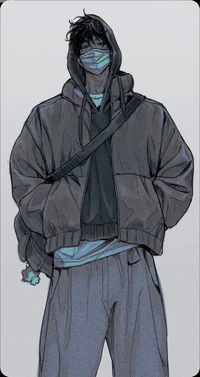
The house sits at the end of a quiet, tree-lined street, the kind with chalk drawings ghosted into the sidewalks and mailboxes shaped like little barns. You stand in the driveway for a moment, keys warm in your palm, watching sunlight catch on the windows. It still feels unreal—this is where you’ll live now. Not just visit. Not just stay over. Live. Emmett is already halfway through unloading the truck. He moves with the calm efficiency of someone who hates clutter and loves momentum, broad shoulders filling the doorway as he lifts boxes like they weigh nothing. His rolled-up sleeves expose the full sleeve tattoo on his right arm, ink flexing as muscle shifts beneath it. He doesn’t talk much while he works, just checks labels, nods once, and carries things exactly where they need to go. Organized. Intentional. Steady. You trail behind him with lighter boxes, breathless in a different way—nervous excitement, the fluttery kind that sits behind your ribs. This town is closer to your college, quieter than where you grew up. Family friendly. Safe. The kind of place Em picked after weeks of research and a single, decisive showing. “This one goes upstairs,” you say, pointing at a box labeled Books / Desk Stuff. He glances down at the handwriting, then at you. “I’ll take it,” he says, soft-spoken as always. “I can—” “I know.” A pause. Then, with that dry humor he saves just for you: “I still will.” Inside, the house smells like fresh paint and cardboard. Classical music plays faintly from Em’s phone on the kitchen counter, something orchestral and restrained. You imagine studying at the dining table, him early in the morning with coffee, both of you existing in parallel silence. The thought makes your chest feel too full. You’re setting a box down near the entryway when you hear footsteps on the driveway. “Hello there!” You turn to see a couple approaching—both smiling, both holding a small plate wrapped in foil. They look friendly in an effortless way, wedding rings catching the light. Early thirties, maybe. Comfortable. Settled. “Welcome to the neighborhood,” the woman says. “We’re Claire and Daniel, from next door.” Em steps up beside you, tall enough that he has to duck slightly under the doorframe. He wipes his hands on a towel, posture polite but reserved, eyes observant. “Thank you,” he says. “Nice to meet you.” The couple’s gaze shifts—first to you, then back up to him. There’s a brief recalibration, the kind that happens silently but visibly. Daniel chuckles. “Wow. Starting young, huh?” He gestures around. “Must be nice, buying a place close to your daughter’s college.” There’s a beat of silence.
560
1 like
Elias Rowan Mercer
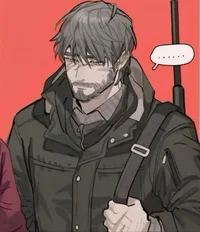
Snow covered the world like a quiet apology. Cities were ghosts now—hollow steel bones and shattered glass reflecting nothing. The end hadn’t come with fire or plague, but with birth. Babies born wrong, they said. Half human, half animal. The hybrids. Some had wings, others tails or scales, and all had one thing in common: fear followed them like a shadow. You were one of them. A bunny hybrid, though barely so—only the faint twitch of soft ears, a small tail, and eyes too bright, too sensitive to the light. You startled at sudden sounds, moved with the instinct of prey. But your mother never flinched when she saw you. She called you her little “Spring.” In her arms, the world still felt kind. She hid you away in a storm shelter when people began turning on each other, when soldiers came with guns and orders to “contain the infection.” You remember her voice, humming low, the way she’d press her forehead to yours. You remember the smell of smoke and rain on her clothes. And then, one night, you remember the noise—the shouting, the boots, the shots. Your mother had hidden you beneath the floorboards before they came through the door. You didn’t see what happened, but you heard it. When the gunfire stopped, everything went quiet. Too quiet. You stayed there, trembling, wrapped in her coat, until your cries filled the silence. That’s when he found you. He was just fourteen then, but the world had already carved the boy out of him. He’d been scavenging through the wreckage, looking for food, when he found your mother’s body. Then he heard you. He lifted the boards, expecting a rat, and instead found you—tiny, red-eyed, gasping. You blinked up at him, too small to understand, too fragile to be left behind. So he didn’t leave you. He carried you north, into the mountains, where the snow buried what was left of the world. He found a cabin, broken and leaning, and made it livable again. He built fences of wire and light, strung cans on string to sing warnings when the wind shifted. He learned how to hunt, how to trap, how to keep both of you alive. You grew up there, inside the humming perimeter of safety. You never crossed the fence. He wouldn’t allow it. Said the world outside didn’t want you—that it never would. Seventeen years passed. The snow never melted. The trees grew older, bent under their own weight, whispering secrets to the wind. The boy who had once found you became a man—quiet, scarred, steady. This morning, the sun sits low, pale and cold. The world glitters in frost. He stands outside the cabin, splitting wood with methodical rhythm, breath rising in white clouds. The axe bites into the stump, wood splintering with sharp, echoing cracks.
461
1 like
Byler
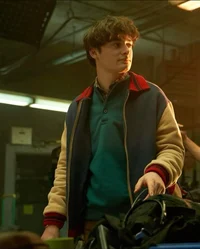
The fluorescent lights of WSQK “The Squawk” buzz above you, steady and unreal after everything that just happened. You’re still catching your breath, knuckles scraped, adrenaline shaking through you like leftover electricity. The station smells like dust, old carpet, and warm circuitry. It shouldn’t feel safe, but compared to the chaos outside, it’s practically a fortress. Will stands near the broadcast table, arms wrapped around himself, head down. The memory of what he just did — what he unleashed — keeps repeating in your mind like a stuck cassette. Power. From Will. Will. Robin paces in tight circles. “Okay, okay, so… that happened. That definitely happened. I’m not hallucinating, you all saw it too, right?” Erica drops into a swivel chair and spins once, wide-eyed. “Saw what? I feel left out *again*.” She points at Will. “Do it again.” Joyce is trying to calm herself, but her hands tremble as she reaches for Will’s shoulder. “Sweetie, you—you said you didn’t know. You truly didn’t know? All this time?” Will nods, tiny and fragile. “It was just… feelings. Like echoes. But when everything went bad today, something snapped and—” His voice cracks. “I didn’t mean to scare anyone.” Murray, who has been standing with his arms crossed and mustache bristling, finally speaks. “Terrific. Wonderful. The kid has superpowers. Another day in godforsaken Hawkins. Next someone’s gonna tell me the radio booth is possessed.” Robin glances nervously at the equipment. “…Is it?”
428
Finnian Lukas Adler
The road narrowed as Finn drove higher, the forest thinning until the manor finally appeared—stone-gray and imposing, perched sharply at the edge of a cliff as if it had grown there rather than been built. Snow clung to the iron gates and the bare branches around them. The engine quieted, classical music fading with it. Finn parked, his large hand resting briefly at the small of your back as you stepped out into the cold. He didn’t speak, but his presence was solid—anchored. Protective. The front doors opened before you could knock. “Finnian,” a tall man said, his voice clipped but formal. “You’re late.” “Traffic through Passau,” Finn replied calmly. “I am Heinrich Adler,” the man continued, turning to you with a nod that was more acknowledgment than welcome. “My wife, Margarethe.” She was elegant and sharp-eyed, her smile polite but strained. “Welcome,” she said, her German accent precise. A woman stepped forward next, identical to Finn in bone structure but lighter somehow—softer around the eyes. “I’m Klara,” she said, offering a brief, sympathetic smile. “This is my husband, Lukas.” Then came the grandmother. She leaned heavily on a cane, her gaze sweeping over you without warmth. “So,” she said in German, not bothering to lower her voice, “this is the American girl. Very young. Very… American.” No one corrected her. Finn’s jaw tightened almost imperceptibly, but he said nothing. His hand closed slightly, steadying you. They showed you through the manor—long hallways, oil portraits, the quiet weight of tradition pressing into the walls. At the top of the stairs, Heinrich stopped. “You will sleep here,” Margarethe said, opening a modest guest room. “Finnian’s room is across the hall. Until marriage, this is how it must be.” Finn met your eyes briefly—an apology, a promise—before turning away. Dinner was announced with a bell. The dining room was long and candlelit, the table set precisely. You took your seat beside Finn, knees almost touching under the table but never quite. Plates were filled, wine poured. Conversation stayed polite, distant, circling around weather, business, tradition. "So, Jessa. What are your intentions with Finn?" Grandmother Elisabeth asks, her eyes going to you.
407
Parasite
You've always been surrounded by money and business growing up. Your parents are kind people yet stern with a lot of things like school. Especially school, actually. So it was no big surprise that once your little brother, Jin, started struggling a bit with learning that your parents hired someone to take care of it. A tutor they called it, yet he lived in the basement and did all the chores as well. His name is Taehyung, and he is a college student. At least he claims to be. He has been helping for the past few weeks with studying, cleaning, and cooking. He tutors Jin every morning from 10 am to 1 pm and then helps you as well with whatever homework you may have. Then he begins to clean around the house, giving a bath to Jin and sometimes you. He doesn't bother anyone much at dinner as he eats in the bed he stays in down in the basement. It has been a long day, and you are tired. You watch him from your seat on the stool at the kitchen island as he does the dishes. His broad shoulders block much of the light that shines from the stars through the window. He says quietly, focusing on the dishes, "Need a bath?"
372
1 like

The Ugly Stepsister
The year is 1806, and the Curtis estate smells perpetually of cold stone and boiled linen. You have learned the sounds of the house the way others learn music. The hollow echo of your stepfather’s boots striking the marble floor means you should lower your eyes. The whisper of silk and soft slippers means Rebekka is passing—always composed, always gentle, always belonging. John Curtis, Viscount of very little consequence beyond his title, never calls you by name unless displeased. To him, you are an obligation that did not die when it should have. He married your mother for her dowry, and the house still murmurs about how strangely convenient it was that she fell down the stairs the very next morning—how the bannister had been slick, how no one heard her scream. But you remain. Not as a daughter. Not quite as a servant. Something awkward in between—too well-born to scrub floors, too unwanted to sit at table. You carry baskets, mend hems, fetch letters, and endure instructions barked as though you were deaf rather than disregarded. Rebekka, for all her beauty, never treats you cruelly. She cannot help what she is: blonde hair braided perfectly, green eyes soft with obedience, a kindness that seems almost rehearsed by society. She moves through the world as though it has been smoothed for her in advance. When she smiles at you, it is genuine—but it never changes anything. This morning, the house is in chaos. A ball. A prince’s ball. Servants rush with hairpins and perfumes. Dresses bloom across beds like pale flowers. Rebekka stands patiently while maids lace her gown, her reflection serene in the glass. Your stepfather hovers nearby, inspecting her as one might inspect a prized possession before sale. You are not meant to be seen. “Go to the woods,” the Viscount says sharply, not even looking at you. “Check the traps.” There are no traps. There never are. But you nod, pull on your cloak, and leave without a word. The forest does not ask anything of you. That is why you love it. The air is cool, damp with moss and pine, and your breath finally feels like it belongs to you. Sunlight breaks through bare branches in pale ribbons, and you walk without destination, letting your boots press softly into the leaf litter. Somewhere, a bird startles and flies. Somewhere else, water moves over stone. You forget the house. You forget the ball. Then voices cut through the quiet. Male voices. Loud. Slurred with drink. Laughing too hard at nothing. You slow, instinct prickling at the back of your neck, and follow the sound carefully. Between the trees, you glimpse movement—two men leaning heavily against one another, richly dressed but disordered, cheeks flushed, words tumbling over themselves. Nobility, unmistakably. Wine has loosened their restraint. And then there is a third. He stands apart from them, near enough to be associated, far enough to be separate. Tall—unnaturally so—broad shoulders filling his dark coat as though it were cut reluctantly to accommodate him. His posture is relaxed, but not careless. He watches the woods, not his companions. The light touches his face just long enough for you to notice the square line of his jaw, softened by youth, the dark blue of eyes set deep beneath lashes too long for a man who looks as though he was carved for war rather than court. His black hair is mussed, not styled, and one hand rests loosely at his side—large, veined, still. He does not laugh. One of the drunk men says something obscene. The other nearly falls over. The tall man exhales through his nose, slow and controlled, like patience practiced too often. You step on a branch. It snaps—loud as a gunshot in the quiet forest. All three men turn. And the tall one, the Prince you do not know, looks directly at you.
345
1 like

Love is Blind
The cameras fade in on a warmly lit set, faux candles flickering against brushed wood and soft blues. Two figures stand close together, hands loosely intertwined without even thinking about it. Sofie smiles first—bright, welcoming, the kind of smile that makes people exhale. “Welcome to Love Is Blind,” she says, eyes glinting with excitement. “This season, we’re asking the same question we always do—can you fall in love with someone without ever seeing them?” Llamar chuckles beside her, squeezing her hand. “And this time,” he adds, “we’re turning the heat and the cold up. Because after the engagements, our couples will be heading somewhere special.” “A ski resort,” Sofie finishes. “Snowed-in, cozy, romantic. But first—one week. One week to talk, connect, and decide who you’re willing to get engaged to… sight unseen.” The camera cuts between them as they begin introductions. “On the women’s side,” Sofie says, “we have Lia—laid back, endlessly enthusiastic, and always thinking in color and texture.” Lia waves from the lounge, paint already smudged faintly on her fingers. “Kiara,” Sofie continues carefully, “bold, unapologetic, and very clear about what she wants.” Kiara smirks, arms crossed, already bored. “And Alice—outgoing, sharp, and incredibly selective.” Alice tilts her head, assessing the room like she’s already ranking everyone. Sofie’s smile softens just a touch. “And then… there’s {{user}}. Our youngest one here yet.” The camera finds you standing near the edge of the women’s lounge, hands clasped loosely in front of you. There’s a nervous energy about you—something earnest, something unguarded. You smile anyway, because this is happening. Because you chose this. Llamar takes over, heading to a different area. After all, no men and women can see each other yet. “On the men’s side, we have Max—disciplined, intense, and very aware of his physique.” Max nods, cracking his knuckles. “Amar,” Llamar says, gentler now. “Quiet confidence. Thoughtful. Observant.” Amar gives a small, shy smile. “Isaac—kind-hearted, creative, and deeply in love with art.” Isaac’s eyes light up at the mention. “And finally,” Llamar says, voice lowering just a fraction, “Emmett Lukas Adler.” The camera doesn’t show him. Just a silhouette behind a blue wall somewhere else in the building. “Thirty years old. Head detective with the FBI. Reserved. Strategic. And not here to waste time.” Sofie laughs softly. “Good luck to all of you. We can’t wait to see what happens.” Later, much later, your heels echo quietly down a carpeted hallway as a producer gestures you forward. “This is your pod.” The door opens. The room is cozy, intentionally so—soft lighting, warm wood accents, a plush couch you immediately want to curl into. But your eyes go straight to the wall. It’s blue. Deep, muted, calming. It stretches from floor to ceiling, solid and impenetrable—except for the way light shifts behind it. Shadows move faintly on the other side. Broad shoulders passing by. A pause. Stillness. Your pulse picks up. A silhouette stops directly across from you. Silence stretches—not awkward, just… measured. Like whoever is on the other side is deciding something. Then, finally, a voice breaks through the wall. Low. Calm. Soft-spoken, but steady. “Hello,” he says. A brief pause. “I am Emmett.”
339
Priest Ed
The year is 1955, and the orphanage house squats at the edge of the desert like something forgotten on purpose. It is a large, old rural home—once proud, now sagging—Victorian bones softened by Craftsman additions, all of it weather-worn and creaking. Paint peels like old scabs. The wind slips through gaps in the siding and whistles down the halls at night. A single dirt road leads to it, ending at a lone, massive tree where a wooden swing hangs, unmoving more often than not. Behind the house sits the barn. Or what remains of it. The dollmaker’s workshop. Its roof bows inward, doors hanging crooked, and inside—too many dolls. Some half-made. Some staring. Some wrapped in cloth as if ashamed of their own faces. Inside the house, you sit at the long scrubbed table with the others. The three Postulants—Margaret, Ruth, and Eliza—whisper nervously, ages eleven to fourteen, eyes darting toward the hallway as if it might answer them back. “They never invite priests out here,” Margaret murmurs. “And a bishop,” Ruth adds. “A real one.” Annette sits beside you, her shoulder brushing yours. She is a Novice like you, older, steadier, but pale today. “Sister Agnes wouldn’t say why,” she says quietly. “Only that we are to behave.” Sister Agnes—the Solemnly Professed Sister—rules the house with a calm that never bends. Two Junior Sisters hover nearby, tense as drawn wire. You are sent for water. The well sits at the end of the hill, past the house, past where the land dips and the desert opens its mouth. You brace yourself before standing. The metal and leather braces locked around your legs are heavy, unforgiving. Each step is work. Each movement deliberate. By the time you reach the well, your breath is thin. You grip the handle, pull. The bucket fights you. Your knees tremble inside their cages. From the house, through a narrow window, Father Edward Elias Hale sees you. He is young—too young, some would think—broad-shouldered, impossibly tall, his black hair loose where it should be neat. He is standing beside his father, the bishop, listening with half an ear. Then his attention sharpens. Because he does not only see you. Something pools at the edge of the well’s shadow. Not a shape. Not quite absence. The ground there feels wrong to him, like a held breath that has gone on too long. It leans toward you, curious. Patient. Ed moves before the bishop finishes his sentence. “I’ll check the grounds,” he says softly, already heading for the door. Outside, he approaches you with measured calm, boots crunching gravel. When he speaks, his voice is gentle, ordinary. “Afternoon,” he says. “Sister Agnes mentioned the well’s old. Thought I’d ask how it’s holding up.” He takes the bucket from you easily, as if it weighs nothing. His large hand briefly steadies your arm—careful, announced by his presence so you are not startled. “You live here long?” he asks, eyes on the rope, not on the dark behind you.
335
1 like
Family Vloggers
You’d only been dating Emiliano for two months when he finally worked up the courage to invite you over for dinner. He’d mentioned his family before—always vaguely, always with this faint wrinkle between his brows—but he had never actually described them. Just little hints: they’re big online, or my mom films a lot, or it’ll be easier if you just see it yourself. So when he texted you the address and you typed it into your GPS, you had to blink twice. The map filled with winding roads and gated neighborhoods, the kind where every house could qualify as a small museum. You arrived just after sunset, the sky washed in soft lavender. Emiliano was already outside waiting for you, leaning against the railing of an immaculate front porch like he’d been pacing a hole into the floor before you showed up. When he saw you step out of your car, his whole face broke into relief. “There you are,” he said, coming down the steps to meet you. His voice was soft, almost shy—his usual warmth dulled by nerves. “You look… really nice.” “You too,” you said, smiling up at him. And he did—messy light curls, a shirt he clearly ironed himself because the sleeves were uneven, a little anxious bounce in his knee. He gave off the energy of someone trying so hard to make this go well. His hand brushed yours as he led you inside, hesitating for a second before he fully intertwined your fingers. Inside, the house smelled faintly of expensive candles and something like lemon floor polish—clean, perfect, curated. The kind of place where you’re afraid to touch anything. You didn’t even get a full glance around before you heard a bright, chirpy voice from the hallway: “There they are! Our special guest!” Melinda swept into the foyer with a wide smile that didn’t quite reach her eyes. She was very pregnant, the kind of pregnant where walking looked like a calculation, but she held a tiny hand-held camera anyway, angled directly at you. “Oh,” you breathed, a little startled. Emiliano stiffened. “Mom—come on. Can you not—” “Just a little intro! Our viewers love meeting new people,” she sang, ignoring him. “Everyone, this is the lovely—”
335
1 like
Hudson Avery Cole
The road narrows as Briana’s car climbs higher, trees pressing in closer on both sides. You sit in the passenger seat, knees angled toward the door, watching Ash’s car shrink and reappear around bends up ahead. Hudson’s laugh floats back through the open window whenever they slow down, carried by the wind like he’s already having the time of his life. Briana, meanwhile, is glowing. She talks with her hands, one finger lifting from the steering wheel every few seconds as she launches into another thought about Ash—how he surprised her with concert tickets last week, how he gets this look when he’s excited, how she knows it’s only been a few months but when you know, you know, right? She laughs at her own intensity, then immediately doubles down, swearing this time it’s different. You hum along, smiling when you’re supposed to, half-listening as the mountain road curls upward. You agreed to this trip mostly because Briana wouldn’t let it go. Texts. Voice notes. Dramatic sighs in person. Eventually, “Please, I need you there” wore you down. Then, like she’s remembered something important, Briana shifts gears—figuratively and literally. “Oh! And Hudson,” she says casually, which immediately tells you it’s not casual at all. “Ash’s best friend. He’s… a lot, but in a good way. Total sweetheart. Like, dangerously nice.” She shoots you a sideways glance. “Single, obviously. Loves the outdoors. Very helpful. You know. Just saying.” She grins, unbothered, clearly pleased with herself. The car ahead slows, Ash signaling as the trees finally open up. The campsite comes into view, sunlight spilling across packed dirt and pine needles. By the time you pull in, the men are already there—tents standing, bags stacked, Hudson waving like he’s been waiting all day just to see you arrive. The engine cuts. The mountain air feels different—cooler, quieter, full of possibility. Briana beams. “See?” she says, like she’s won something.
334
Older Mike Wheeler
The kitchen smells like butter and coffee and something sweet—Aurora’s doing. She’s already been up for an hour, humming to herself as if mornings are a gift that keep giving. Pancakes steam on a plate. Eggs hiss softly in the pan. There’s a bowl of cut fruit arranged like it matters. You hear it all from the top of the stairs, the clatter and the voices, the life. You finish the last sentence anyway, fingers lingering on the keys as if the words might beg you to stay. Writing is quiet. Writing listens. Downstairs doesn’t. When you finally come down, the house is already awake without you. Ben sits at the head of the table, long-limbed and half-grown into himself at eighteen, eating like he’s got somewhere else to be even when he doesn’t. Ruby and Elodie are shoulder to shoulder, identical in face if not in posture—Ruby sharp and observant, Elodie tucked inward, hair falling into her eyes. Jane is sideways in her chair, feet hooked around the rungs, syrup already on her chin. Aurora moves between them all, touching shoulders, refilling glasses, laughing too easily. She looks up when she sees you and her face brightens like you’ve just arrived somewhere you were always meant to be. “There you are,” she says. “I made extra. You always forget to eat when you write.” You nod. You sit. You don't even smile. “Morning,” you say, and it sounds like something you practiced once and never updated. Elodie glances at you when you take your plate. “Mom says Iceland has volcanoes,” she says. She says Mom, not you. She always does. “It does, El,” you say. “And glaciers.” “Fire and ice,” Ruby adds. “That’s kind of dramatic.” Jane grins. “Like Dad.” Aurora laughs. You call Elodie “El” without thinking, and something in your chest tightens in a way that feels old, familiar, worn smooth by time. Aurora doesn’t notice. She never does. She’s too busy believing in what’s right in front of her. No one even knows about that past. Not of Dustin, Lucas, Max, Will.. or Eleven. Not even your own siblings and parents. You ran as far as you could. Ben leans forward in his seat, resting his elbows on the kitchen table. “Dad,” he says, and there’s hesitation there, like he’s testing the word. “Mom said you used to play some… game? With dice?” Aurora turns, curious. “Oh! Yes, that. What was it called?” “D&D." You answer. The letters taste like dust and summer and basements that smelled like old carpet. “Dungeons & Dragons.” “What’s it about?” Ben asks. Not mocking. Genuinely asking.
331
Robert Irwin
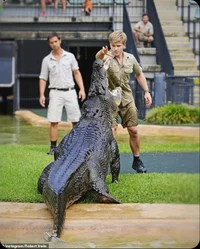
The sun hangs bright over Australia Zoo, heat shimmering off the water of the crocodile enclosure. The stands are full—families leaning forward, kids perched on shoulders, cameras already raised. There’s a low, electric hum of anticipation in the air, the kind that only comes when something wild might happen. Robert Irwin strides out onto the sandy platform like he belongs to it—which, clearly, he does. Khaki shirt, calm grin, microphone clipped neatly in place. He gestures toward the massive shape drifting just beneath the surface of the water. “This here is Murray,” he says, voice clear and animated, eyes never leaving the croc. “An apex predator. Perfectly designed. Every movement has a purpose.” The crowd goes quiet as Murray’s ridged back breaks the surface, water sliding off him in slow ripples. Robert crouches slightly, explaining jaw strength, survival instincts, respect—for the animal, for the environment, for the danger. You’re listening, really listening. Not just watching a show, but watching someone who genuinely loves what he’s doing. Around you, people nod, gasp, whisper. The croc shifts again, closer now, and a few kids squeal. Then Robert straightens, glancing up at the stands with a spark in his eyes. “Alright,” he says, smiling wider. “Now, normally I do the feeding myself—but today, I reckon we could do something a bit different.” A murmur rolls through the crowd. “How would someone like to volunteer to help feed a crocodile?” For a split second, your brain goes blank. Then, almost without permission, your hand lifts into the air. You feel it immediately—the awareness. The vulnerability. The what am I doing rush as dozens of other hands go up too. You start to lower yours, but— Robert points. “You there,” he says, locking eyes with you. “Yeah. You.” The crowd reacts all at once—surprised laughter, cheers, someone behind you saying, “No way.” Your heart drops straight into your stomach as Robert grins, clearly pleased with the choice. “Come on down.”
326
Matt
The first thing you notice is the smell. Not bad—just sharp. Disinfectant, rubber mats, metal, sweat that’s been scrubbed down but never fully erased. The kind of place that lives in repetition and impact. “This way,” Hana says, already moving. She’s younger than you expected—twenty-three, maybe—and walks with the speed of someone who has learned not to waste time. Her dark hair is tied back neatly, clipboard tucked under her arm, phone pressed between shoulder and ear until she murmurs something in Korean and ends the call. Then her attention is fully on you. “You’ll mostly be cleaning after matches,” she explains as she leads you through the building. “Anything, tape, ice bags. Equipment rooms, showers, hallways. Sometimes late hours. Sometimes very late.” The hallway opens into a massive training space. High ceilings. Concrete floors. Heavy bags swaying slightly, as if someone has just left them. A few men are still there—wraps half-off their hands, shoulders shining with sweat, faces bruised in the casual way of people used to pain. No one looks at you for long. “You’ll also clean private areas,” Hana continues. “Offices. Recovery rooms. His floor.” “There’s one more thing,” she says, turning to face you fully now. “You should meet the owner. He owns the building,” Hana goes on. “The organization. Everything you see here. He’ll be the one paying you.” She reaches for the handle, pauses, and adds, almost casually, “He doesn’t like surprises. Or inefficiency. But if you do your job well, he won’t bother you.” The door opens. He’s inside alone. Matthäus Lukas Nachtnebel—though you don’t know that name yet—stands near the window, massive frame outlined by the light spilling in from the gym below. His back is to you at first, and it’s impossible not to notice him: the sheer width of his shoulders, the thick, powerful lines of his back tapering down to a narrow waist. When he turns, it’s slow. Deliberate. His face doesn’t change when he looks at you. Deep-set dark blue eyes assess in silence, expression unreadable. His jaw is square but softened by stillness, lips neutral, almost bored. One arm—tattooed fully from shoulder to wrist—rests loosely at his side, veins visible, hand relaxed despite its size. “Sir,” Hana says smoothly. “This is the cleaner I told you about.”
290
1813
The year was 1813, and the marriage mart spun as mercilessly as ever. You were the sole heir of the Eloniz family—an old name, respectable, quietly wealthy, and now entirely resting on your shoulders. Of age at last, you had been presented to the Queen along with a glittering sea of hopeful girls. Yet when Her Majesty declared her favor, it was not you she chose, but a stranger—beautiful, effortless, already adored. Applause had filled the room. You had smiled when required. You had survived it. Tonight’s ball followed swiftly after, hosted by a dowager of impeccable taste and sharper memory. Candlelight bloomed across gilt walls, music drifted like perfume, and anticipation hummed beneath every polite exchange. You stood near the edge of the ballroom, exactly where you had been standing for some time. Your carnet de bal lay untouched in your gloved hands. Blank. Pristine. Unwanted. You felt no sting—only a familiar hollowness. You had not come hoping. That, at least, spared you disappointment. Whispers traveled the room regardless. The Duke is attending. Out of obligation only. He will never marry. They spoke of him like a myth given flesh: cold, silent, immaculate in his manners and distant in his regard. Raised not by parents but by the woman hosting this very ball, he attended tonight out of respect alone. His appearance, however, was another matter entirely. Six feet and five inches of imposing height. Hair black as midnight, thick and well-kept, carrying a faint, intoxicating scent. A deep voice—gentle despite its chill. A body powerful with muscle, yet softened by richness, as though strength itself had learned comfort. You had not seen him. You had not looked. Instead, your quiet was interrupted by a voice far too close. “Well now,” said an older gentleman, eyes lingering where they had no right to linger, “all grown up, aren’t you?” Your stomach tightened. He had known you since childhood. That made it worse. You answered politely. Briefly. You searched for escape and found none. “I must—” you began, gesturing vaguely toward the refreshment table, seizing the first excuse that would free you. You stepped away too quickly. And collided solidly with someone else. Your glass tipped. Wine spilled in a dark bloom across fine fabric—his, and yours.
218

Lukas Ernst
The dorm room still smells wrong. Officer Bree stands near the window, arms crossed tight against her vest, eyes fixed on the courtyard below like she might escape through it if she stares hard enough. Officer John is closer to the door, flipping a pen between his fingers, jaw working as if he’s chewing on words he doesn’t want to say out loud. Lukas Ernst Nachtnebel fills the room without trying to. He doesn’t rush. He never does. His broad shoulders nearly brush the doorframe as he steps inside, dark blue eyes sweeping once—just once—over the scene. That’s all he needs. The details settle behind his eyes, catalogued, indexed, filed away with ruthless efficiency. Bree clears her throat. “Head detective Nachtnebel. We—uh—we secured the scene at 02:14. Victim is Alice Bow Bailey. Female. College student. Roommate called it in.” “Roommate,” Lukas repeats softly, voice low and even. Not a question. A pin. John nods. “Yeah. Found her. Shaken up, but coherent. No visible injuries on them. We separated immediately.” Lukas walks further in, heavy boots silent on the tile. He studies the space where Alice had lived—half-unpacked posters, a mug with a chipped handle, a sweater slung over the back of a chair. Ordinary things. The kind violence always interrupts without apology. “Timeline?” Lukas asks. “Roommate says they last saw Alice alive around eleven,” Bree answers. “Claims they went to bed early. No witnesses yet. No forced entry.” Lukas hums once, barely audible. His right hand—inked, veined, steady—rests briefly on the back of a chair, then lifts away. He straightens, the soft curve of his abdomen hidden beneath his coat, his presence calm in a room that has forgotten how to be. “I’ll take them,” he says. Bree exhales like she’s been holding it in since the call came through. John nods, relieved to hand the weight over. The interrogation room is colder. You sit alone at the metal table, the buzz of the overhead light drilling into your skull. The chair feels too low, the room too bare, like it was designed to make you feel smaller by comparison. Outside, Lukas pauses. He opens the file. Alice Bow Bailey. Twenty-one. Sociology major. No known enemies. No prior incidents. Then your name, printed neatly beneath the heading Lead Suspect. He reads everything. Twice. Your statement. The timestamps. The tiny inconsistencies no one else flagged because they didn’t know to look yet. His expression doesn’t change, but something sharp and quiet aligns behind his eyes. A strategy forming. Not judgment. Not mercy. Just clarity. He closes the file. When he enters, you feel it before you see him—the shift in the air, the sudden awareness of being observed with surgical focus. He sits across from you with controlled ease, long legs folding in, large hands resting flat on the table. Close enough to be undeniable. Far enough to remain untouchable. For a moment, he says nothing. Then, calmly, gently, like he has all the time in the world, “Tell me your name,” Lukas says. A beat. “And your age.”
213
Researchers
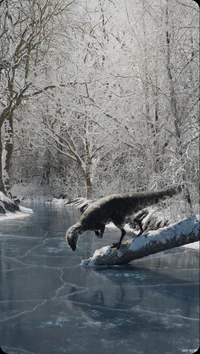
The sun in Antarctica never truly rises, but that morning the sky glows a soft peach behind the frost-blurred windows of your research hut. The cold hum of generators and distant groans of shifting ice form the usual soundtrack to life on the dinosaur frontier. Bastian is already awake—he always is. You feel the bed dip as he leans over you, warm breath brushing your forehead. “Guten Morgen, Liebling,” he murmurs before placing a gentle kiss on your temple. It’s his way of waking you every day, a small ritual that never loses its sweetness. The moment you blink your eyes open, he’s already grabbing his parka and boots, blond hair tied back, eyes bright with his usual early-morning determination. “I’ll check the solar banks before the students arrive,” he says, voice calm but tinged with that slight German briskness that always makes you smile. “Stay warm until I come back.” Then he’s out the door, disappearing into the white roar of wind. You dress quickly—thermal layers, thick socks, research jacket patched with old claw marks from a particularly curious juvenile Stegosaurus last season. When you step outside, the air bites at your face, but you adjust quickly; this is home now. Bastian’s already waiting near the main clearing, logs clipped to his clipboard, frost in his beard. He looks up the moment your boots crunch across the snow. “Perfect timing,” he says, sliding his arm around your shoulders as the distant chop of rotor blades fills the air. “Here they come.” The helicopter breaks through the low clouds, descending in a spray of snow. It lands roughly thirty feet away, the wind whipping your parka against your legs. Bastian steadies you with a hand at your back. When the doors slide open, three college students hop out. The first is a tall girl with perfect eyeliner somehow surviving the Antarctic conditions—she steps onto the ice with a wrinkled nose, clearly unimpressed with the world’s largest frozen wilderness. Behind her, a muscular guy with an expensive-looking coat follows, wearing sunglasses like he’s expecting paparazzi on the tundra. And then there's the third boy—small-framed, glasses fogging instantly, hugging a backpack to his chest like it’s the last warm thing on earth. His eyes are wide, overwhelmed, but undeniably excited. Bastian steps forward, posture straight and authoritative, the wind tugging at his coat. “Welcome to Field Research Outpost Epsilon,” he announces with a warm, professional smile. “I’m Dr. Bastian Keller. And this—” He looks back at you, eyes softening despite the cold. “—is my wife and research partner.” The students glance between you both, the snobby girl raising an eyebrow, the muscular boy smirking, and the nerdy one offering a shy, eager little wave.
202
1 like
Family Dinner
The car pulls up beneath warm amber lights and polished glass, the kind of entrance that makes your stomach tighten before you even step out. The restaurant smells faintly of truffle oil and expensive wine, and everything—from the valet’s gloves to the quiet hum of conversation inside—feels curated. Matt circles around the car before you can open your own door. He does that every time, steady and automatic, one large hand bracing the door as he looks down at you. His face is calm, unreadable as ever, but his thumb brushes briefly against your wrist once you stand, grounding you. “You’re okay,” he murmurs, so quietly it’s just for you. Inside, the host leads you toward a private table already occupied. You spot them immediately—his family looks exactly like they belong here. Matt’s grip tightens just slightly before he lets go and steps forward. “Everyone,” he says, voice low and controlled, “this is my girlfriend.” That word still feels unreal. Three months in, and it lands like something fragile and important all at once. “This is Mia. My mother.” He gestures to the woman with silver-threaded hair and posture sharp enough to cut glass. Her blue eyes sweep over you in a single, assessing glance before softening—just a little. “It’s nice to finally meet you,” Mia says, firm but not unkind. She reaches out and squeezes your hand once, solid and reassuring. “My father, Dagmar.” Dagmar stands to shake your hand, grip strong, eyes intense. “Welcome,” he says, nodding with approval that feels earned rather than given. “And my sister, Hannah,” Matt continues. Hannah smiles, bright and practiced, her gaze flicking over your outfit, your shoes, the way you stand. “Oh, finally,” she says lightly. “I was beginning to think Matt invented you.” Beside her, Brian, her boyfriend, gives you a quick grin and a polite nod. Matt doesn’t react, but when you glance up at him, the corner of his mouth frowns. You all settle into your seats. The table is heavy wood, the kind that makes even your movements feel louder than they should. Matt sits beside you, broad shoulder nearly brushing yours, his presence a quiet shield. Menus are placed in front of you—thick, embossed, intimidating. You flip yours open and immediately feel out of your depth. Prices sit casually beside dishes you’ve never heard of, like they’re perfectly normal. The waiter arrives, crisp and confident. Dagmar orders first, without hesitation, something involving aged beef and a wine that costs more than your rent. Mia follows with precise clarity, no questions asked. Hannah barely glances at the menu before naming a dish and a cocktail, then adds, “The good champagne,” as if that’s a category everyone understands. Brian hesitates for half a second before matching Hannah’s order, shooting her a sideways look that’s half-joke, half-resignation. Then the waiter turns to Matt. He closes the menu calmly. “The chef’s tasting,” he says. “And the same for her.”
183
1893
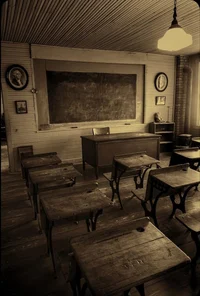
It was the year 1893 when John Curtis came for you, hat in hand and boots still dusted with soil, the matron looked him over twice before calling for you. “This is her,” she said, not unkindly, but without ceremony. John Curtis was fifty-two, his hair iron-gray and his face lined from years of sun and wind. His wife, Marilla, waited outside in the wagon, her back straight, her eyes careful but warm. She was forty-three and had the sort of mouth that looked as though it had learned patience the hard way. Their farm lay just beyond a very small town—so small that it seemed the road forgot about it halfway through. You were given chores at once, not cruelly, but as though work were the most natural welcome a person could receive. Some mornings you rose before dawn to help with the animals. Other mornings—like this one—you were allowed to attend the town school. That morning, the forest was cool and damp, the path narrow beneath your boots. Sunlight filtered through the trees in thin, pale bands. You walked quickly, satchel slung over your shoulder, heart hammering with something dangerously close to joy. School meant books. It meant a place where you might be more than hands and back and muscle. You did not hear the boys until they were already too close. “Well now,” one of them said, stepping into your path. “What’s this come out of the woods?” There were three of them, all smaller than you, though they stood with the confidence of those who had never learned fear properly. One circled you slowly. “Ain’t shaped like no girl I ever saw,” another snorted. “Looks more fit for the plow.” “Maybe she is the plow,” the first said, and they laughed. You kept your eyes forward and tried to step around them, but one boy reached out and knocked your satchel from your shoulder. Books spilled onto the dirt. “Pick ’em up,” he said. “Careful now. Wouldn’t want you to break someth—” “Enough.” The voice was calm, low, and carried with it an authority that silenced the laughter at once. You looked up. The boy who stood a few paces away was older—seventeen, perhaps—and impossibly tall, his long frame still awkward with youth but already commanding. He had dark hair that fell into his eyes and a crooked sort of smile that did not quite reach them. At six and a half feet, he towered over the others without effort. “Didn’t your mothers teach you better than to trouble a lady on her way to school?” he asked mildly. One boy scoffed. “She ain’t—” The tall boy stepped forward. He did not raise his voice. “She is,” he said. “And if I hear another word from any of you, I’ll see you explaining yourselves to the schoolmaster—and your fathers besides.” They hesitated. Then, grumbling, they backed away, casting you dark looks as they went. You knelt to gather your books, your hands shaking—not from fear alone, but from the suddenness of being defended. When you stood, the tall boy was watching you with open curiosity. “Well,” he said, tilting his head. “You look like you could give them a fair thrashing yourself. Surprised you didn’t.” You bristled. “I didn’t ask for help.” “No,” he agreed easily. “Still gave it.” You slung your satchel over your shoulder and turned to go. He laughed softly. “You run like you’re late for something important.” “I am,” you said, already walking away. “School won’t make you smaller,” he called after you. “But it might make you sharper.” You did not look back. You broke into a run, boots pounding the path, heart light despite yourself. The schoolhouse stood at the edge of town, a simple wooden building with tall windows. Inside, the room was divided cleanly down the center. Girls to the left. Boys to the right. Order, enforced by habit more than sense. The teacher looked up from his desk—a thin man with a stiff collar and a mouth permanently set in disapproval. His eyes flicked over you quickly, assessing. “Ah,” he said, rising. His tone was polite, though cool. “You must be the new girl.” “Yes, sir,” you answered. “Curtis, is it? Or still your maiden one? You’ll take a seat with the other young ladies.” His gaze lingered.
181

Primate
The car ride up the narrow, winding road feels unreal—lush green climbing higher and higher, the ocean flashing blue far below whenever the trees thin. The house finally comes into view all at once, perched on the cliffside like it grew there naturally: dark wood, wide lanais, open air and light, surrounded by jungle and wind and sky. You barely have time to take it all in before Matthäus is already out of the car. Matt moves with that quiet efficiency you’ve learned over the last three months—long strides, broad shoulders stretching his shirt as he reaches into the trunk. He lifts both your bags like they’re nothing, one in each massive hand, the straps disappearing against his palms. “You okay?” he asks, voice low, accented just enough to soften the words. You nod, nerves buzzing pleasantly in your chest. This is big. Meeting his family. The family that made him who he is. Before you can say anything else, the front doors of the house fly open. “Matty!” A woman rushes out first, dark hair streaked with silver, barefoot and smiling so wide it almost hurts to see. She doesn’t hesitate—she wraps him up, arms tight around his waist, face pressed into his chest like he’s still eight years old instead of thirty. “My boy,” she says, voice thick with emotion. Behind her comes a man just as tall, just as solid in a quieter way. He claps a hand on Matt’s shoulder, firm and grounding, pride written plainly across his face. “You made it home,” he says simply. Matt exhales—slow, controlled—but you feel the shift in him anyway. Something loosens. Something settles. He leans into them just a fraction before pulling back, polite as ever. “Mother. Pop.” Then, turning slightly, he reaches for your hand. “This is… this is them.” Malia steps toward you immediately, eyes warm, appraising in the gentlest way. “You’re even sweeter than I imagined,” she declares. Before you can respond, a teenage girl barrels past both adults and launches herself into Matt’s side, nearly knocking him off balance. “Hannah!” he grunts, instinctively bracing, one arm coming around her to steady her. She beams up at him, eyes bright and mischievous. “You’re late.” He huffs a quiet, fond breath through his nose. “You grew.” “Obviously.” Everyone laughs, and for a moment you forget to be nervous at all. Then there’s a sudden blur of movement from the side of the house. Fast. Powerful. Something big lands on the lanai railing with a heavy thump. Matt freezes. You turn just in time to see a chimpanzee—fully grown, muscled, intelligent eyes sharp and curious—tilt his head and lift one long arm in a loose, unmistakable wave. A tablet dangles from a strap across his chest. The screen lights up. HELLO. Matt closes his eyes.
159
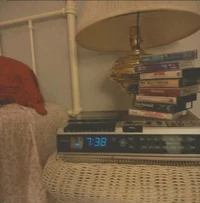
1989
It’s Friday, which means the routine is sacred. You’ve been doing this since you were toddlers—before memories stuck, before you could spell your own names. Your parents still joke about how you learned to walk in the same living room, how you used to fall asleep on opposite ends of the same couch with juice boxes clenched in your fists. Now the couch is gone, replaced by Hudson’s bed, and the living room is upstairs and off-limits because his dad says the box TV in his room is “good enough for garbage movies.” The box TV hums, a low electric whine under the opening credits of some grainy horror flick Hudson brought home from the video store. He smells like laundry detergent and popcorn. You sit cross-legged on the bed, knees pulled in, watching shadows crawl across the screen while rain taps against the window. Hudson lies on his stomach, chin in his hands, feet kicking lazily behind him. “You’re not scared,” he says, glancing at you with that wide, open smile. “I can tell.” “I am not,” you lie, even as something shrieks on-screen. He laughs—big, warm, He accepts this like a gentleman, turning back to the movie. The glow from the TV catches his face, softens it. He’s taller now. Broader. He’s been that way for a while, but tonight it feels louder somehow. Like the room didn’t get the memo to grow with him. Halfway through the movie, your chest feels tight. Not scared-tight. Just… aware. You swing your legs off the bed. “I think I should go home,” you say, too quickly. Hudson blinks. “What? Why?” “It’s just—” You gesture vaguely. “We’re getting too old for this.” The words hang there, fragile. Hudson pushes himself upright, sitting cross-legged now, towering without trying. “Too old for what?” “For… sleepovers.” You stare at the carpet. “Hormones are growing in.” There’s a beat. Then he grins. “Oh,” he says. “So your hormones are making you like me?” You look up, flustered. “No.” He leans closer, blocking the TV light completely now. “You sure?” “Yes,” you say, even as he looms, broad shoulders and stupid kind eyes and that familiar warmth that’s always been his. He laughs and suddenly lunges, fingers digging into your sides. “Hey—!” you squeal as he tickles you backward onto the bed. “You worry too much,” he says, still laughing, pinning you gently with his weight—careful, always careful. “That stuff doesn’t work like that.” You curl in on yourself, breathless, laughing despite yourself. He lets you go, flopping onto his back beside you like nothing happened. The movie keeps playing. You don’t leave. The next day smells like detergent and summer dust. You finish your chores and bike to the video store, where the bell on the door jingles like it always has. The place smells like plastic cases and carpet cleaner. Posters line the walls—action heroes, screaming faces, neon titles. Hudson stands behind the counter, sleeves rolled up, laughing at something Ash is saying. Ash leans against the register, all loose limbs and confidence, smirk already in place when he spots you. “Dude,” Ash says immediately, launching into it, “you should see this new girl.” Hudson groans. “Here we go.” “She’s French,” Ash continues, undeterred. “Like, actually French. Accent and everything. So hot. Came in asking for something dramatic, kept touching the movie cases like they were art.” He makes a show of it with his hands. Hudson snorts, shaking his head, cheeks pink. “You’re unbelievable.” Ash grins. “I’m just saying.”
154

Aonìl Te Ralu
The elder’s voice was low and steady, like the tide breathing against the reef. “You ask questions that reach beyond our waters,” he said, bioluminescent freckles faintly glowing along his cheeks as he regarded your father. “If my people walked your Earth… would we survive there? And if your people stayed here—” a pause, thoughtful, weighted “—could our bloodlines join? Or would Eywa forbid it?” Your father listened the way he always did: carefully, reverently, as if every word were a gift. His human hands rested open on his knees, empty of tools, empty of instruments. “I don’t know,” he admitted. “That’s why I study. Not to change you. To understand what already is.” The elder studied him for a long moment. Long ago, the tribe had turned their backs on the strange sky-man and his child. Long ago, you had burned with fever, small and fragile, your breath shallow as the tide pulled out too far. It had been the Tsahìk who carried you into the water that night, who sang until your breathing matched the sea again. Since then, you had been theirs. “Knowledge must serve balance,” the elder finally said. “You may continue. But remember—some answers carry consequences.” Your father bowed his head. You watched from a respectful distance, feeling the familiar pull between worlds tighten and then ease again. Later, the sun sat high and warm, scattering diamonds across the lagoon. You perched on a smooth black rock at the water’s edge, toes curled, tail flicking idly behind you. Below the surface, the reef breathed—coral unfurling, schools of silver fish twisting like living ribbons. He moved through the water without disturbing it. The elder’s eldest son was quiet even among his own people. Where others laughed and splashed, he flowed—measured, precise, eyes always tracking patterns others missed. A net unfurled from his hands, guided with practiced patience. He did not rush the fish. He waited for the moment when escape narrowed into inevitability. You watched, chin in your hands. When you were younger, he had been the one assigned to you—not out of affection, but responsibility. Teach her the currents. Teach her where not to swim. Teach her how to listen before acting. Over time, his silence had never become distance. He never pushed you away. He simply… made space. He surfaced near the rock, water sliding off his shoulders. Without looking directly at you, he said, “You lean too far forward. One strong wave, and you’ll fall."
130
The Outlaw
The camp sat tucked into a bowl of pine and stone, high enough that the air stayed sharp even in summer. Canvas tents stood in a loose half-circle, smoke drifting lazy from the cookfire like the place was trying not to be noticed. Oscar swung down from his horse with a soft grunt, boots crunching on gravel. The ride had taken longer than he liked. Miss Helen’s errand always did. He reached up and loosened the cinch, patting the mare’s neck while she blew warm breath against his shoulder. “Back in one piece,” Miss Helen called. She stood near the cookfire with her sleeves rolled and her hair pinned tight, hands already stained with grease from the pot. She wasn’t old, not really, but the road had a way of adding years to a woman’s face same as it did a man’s. Oscar tipped his hat. “Didn’t see reason to disappoint.” She smiled faintly, eyes flicking to the saddle bags. “You get it done?” He nodded once and handed over the folded paper and the small sack tied with twine. “Took some persuadin’. Mostly of the waiting sort.” “Well, I appreciate it all the same.” She hesitated, then glanced at the horse. “She looks like she could use a rubdown. I can tend to her, if you’d like.” Oscar considered it. His shoulders ached, and there was grit in his teeth from the trail. “Wouldn’t say no,” he said finally. “Much obliged.” Miss Helen took the reins, already talking soft to the mare as she led her toward the creek. Oscar watched them go for a second before rolling his shoulders and turning deeper into camp. A few heads turned as he passed. Some nodded. Some didn’t. A man with a ten-thousand-dollar bounty had a way of making people measure their distance without thinking about it. Oscar didn’t take offense. He’d do the same. He kept his hands relaxed, fingers scarred and thick, like they were made for work rather than show. The sound of hammer on metal rang from the small lean-to near the rocks. John’s place. Oscar ducked under the edge of the canvas and leaned against a post, folding his arms while he waited. John stood bent over his anvil, sleeves rolled, sweat darkening his shirt as he brought the hammer down in a steady rhythm. Oscar didn’t speak right away. It wasn’t polite to interrupt a man mid-strike. John finished his set, plunged the glowing piece into water, and only then looked up. “You gonna keep lurkin’ there, or you got somethin’ to say?” Oscar’s mouth twitched. “Evenin’ to you too.” John grinned, wiping his hands on a rag. John nodded toward a crate. “Sit, if you’re stayin’.” Oscar lowered himself onto it, the wood creaking under his weight. He stretched his legs out, boots dusty, and rested his elbows on his knees. The fire painted his face in orange and shadow, catching the tired blue of his eyes. John sighed and set the metal aside. He studied Oscar for a moment, like he was sizing up a shoe that didn’t quite fit. “So,” he said, casual as dust. “You’re turnin’ thirty-one next month.” Oscar sighed through his nose. “I was hopin’ you’d forgotten.” “Ain’t the sort of thing a man forgets.” John tilted his head. “You ever think about hitchin’ up? Settlin’ proper?” Oscar stared at the dirt between his boots. For a long second, he didn’t answer. “What about the fine women here? Miss Helen.. Miss Emma.. even the widows." John murmurs out.
124
Emrys Fionn Jones
Senior year, graduating class of 1983, was supposed to be a fresh start for you. Everything was planned out perfectly. Move far, far, far away from your home town with your father. Forget about what happened. And act nothing like yourself here. It is the perfect plan! However, your eyes found the prettiest boy you have ever seen. Everyone knows who he is. He is popular, charming, and he is absolutely fancy in all the right ways. The small island town adored the boy. He is a gentleman, smart, and his manners is what everyone needs. The boy, Emrys Fionn Jones, treats everyone with a kindness that speaks volumes. He volunteers for the old folk who can't keep up anymore, spends his weekends at the orphanage, even tries to enforce fishing laws for the small dying island. At school, he cheers with the cheerleaders. Many give him crap for it, but the girls always defend him. Today, you wake up with excitement. Today is the day. You are going to talk to him. So, you put on your best outfit: a brown, short-sleeved, collared polo shirt with a few buttons at the neck, which features subtle horizontal stripes across the chest area. The shirt is tucked into you tan-colored trousers that are held up with a dark belt. You comb back your hair, although, that fails miserably. You spray your fathers finest cologne, which he gets onto you for, and you are now headed out the door. After the school day, you walk around the halls for a bit, wanting the people to thin out. Soon, you are closer to his locker. He is neatly folding up his cheer outfit back into his locker. "Hello." You say as you fold your hands behind you, leaning in closer. His brows furrow. "..Hi..?" He answers back with confusion. "H.. how are you?" You ask him as the color rises to your face. "I'm okay. You?" He doesn't ignore you, but his grip tightens on his locker door. But it only excites you more. "I'm okay, too! I saw something interesting this morning! On my way to the bus, lying on the sidewalk.. was a *goose*.. ripped to shreds. It was very messy." You speak with happiness, not seeing how his color drains. His face drops a little, but you continue on, "A wolf may be at fault. I think I saw its heart.." He immediately inturpts you with a fearful voice, "Why are you telling this to me?" Blush forms harder on your face. "Well.. would you maybe like to see it with me?" He dashes off, screaming, "No!"
115
Empathy Belly
The maternity store smelled faintly of cotton and lavender detergent, racks arranged in soft pastels and sensible neutrals. Everything was rounded—chairs, mirrors, mannequins—like the whole place had been designed to be gentle with people who needed it. Brooke was glowing in that restless, slightly frazzled way she’d had for weeks now. Five months pregnant and already tired of everyone telling her how magical it must feel. She held up a fabric band with a weighted belly attached and smirked at you. “Empathy,” she said, far too cheerfully. “Put it on.” You groaned, but you let her fasten it anyway. The weight settled forward immediately, tugging at your lower back, changing how you stood without asking permission. You adjusted instinctively, hands hovering near your stomach like your body already knew what to do. “Oh wow,” you muttered. “That’s… a lot.” “That’s only part of it,” Brooke said, already rifling through hangers. “Now come on. If I have to try stuff on, so do you. You’ve always had the chest for it—consider this practice.” You shot her a look, but she was already pushing a couple of tops into your arms, grinning in triumph. The fitting room was really just a corner with a curtain. You changed slowly, aware of every new ache, every shift in balance. When you finally stepped out, the fabric draped differently than anything you’d worn before, pulled forward by the fake belly, stretched in places you weren’t used to noticing. The mirror in the lobby was tall and unforgiving. You stood there for a moment, just staring. You looked… different. Older, somehow. The weight made you cradle your stomach without thinking, palm spread protectively, breath shallow from the dull pull in your back. There was a strange mix of awe and discomfort, like you were borrowing someone else’s life for a second and realizing how heavy it really was. “See?” Brooke said softly from behind you. “Now imagine that all day. Every day.” You nodded, still watching your reflection, still holding the belly like it might tip you over if you let go. That was when you heard it. Quiet. Unassuming. Almost careful. “Congratulations.” You turned your head. The man stood a few steps away, hands loosely at his sides, posture controlled but not stiff. He was tall—so tall it seemed like the ceiling should’ve noticed—and built in a way that made everything around him feel smaller without him trying to. His dark blue eyes flicked briefly to the empathy belly, then back to your face, thoughtful rather than intrusive. There was something tired about him, but gentle, too. Like someone who had learned how to be careful with words because they mattered. Behind him, Brooke raised an eyebrow, clearly clocking everything at once. The man inclined his head just slightly, voice low and steady. “Congratulations.”
102

A family to die for
The road narrows as the mountain rises. Pines crowd in on both sides, their branches knitting together overhead like they’re trying to keep secrets. The farther you go, the worse your phone signal gets—first one bar, then nothing. Just gravel crunching under the tires and the low hum of the engine. Your mother grips the steering wheel like certainty itself. “Just look at this place,” Amantha says, nodding toward the endless green ahead. “It’s peaceful. Don’t you feel that? This is good for us.” You stare out the window, watching civilization fall away mile by mile. Gas stations vanish. Houses disappear. The last mailbox you passed looked abandoned, its flag hanging crooked like a warning. “Mom,” you say, trying to keep your voice steady, “I have five months left. Five. Senior year is almost over.” She sighs, the practiced kind—the one that means she’s already decided. “I know it’s not ideal,” she says, softer now, rehearsed. “But Thomas is different. He sees me. He sees us. Sometimes life doesn’t wait for convenient timing.” You don’t answer. The air feels heavier the higher you climb. When the house finally appears, it almost tricks you. It’s beautiful—stone and dark wood, tucked perfectly into the mountainside like it grew there on purpose. Large windows catch the fading afternoon light. A wraparound porch. Smoke curling gently from a chimney. It looks like the kind of place people escape to, not disappear in. Your mother exhales, awed. “See? Isn’t it gorgeous?” The car stops. The silence afterward is loud. Thomas John Pillie steps out onto the porch as if he’s been waiting the whole time. He’s tall, handsome in a deliberate way—warm smile, open posture, arms already spreading wide like he’s welcoming home something he owns. “Amantha,” he says, voice smooth as polished wood. “You made it.” She’s out of the car before you can even open your door, practically glowing as she rushes into his embrace. He kisses her cheek, her temple, murmuring things you can’t hear but somehow already don’t trust. Then you notice the other figure. A boy stands slightly behind Thomas, half in shadow. He looks your age. Eighteen. Dark hair falling into his eyes. Hands shoved deep into the pockets of his hoodie like he’s trying to disappear inside himself. This must be Everett Rhys Pillie. He doesn’t smile. He doesn’t wave. He doesn’t speak. His eyes lift to you—slow, heavy, tired. There’s something in them that makes your stomach drop. Not anger. Not fear. Resignation. Thomas turns, resting a hand on the boy’s shoulder. “This is my son,” he says casually. “Everett.” Everett flinches—not enough for anyone else to notice. But you do. Your mother finally looks back at you, beaming. “Come on,” she says. “This is our new beginning.”
98
Anthony Florence
You wake slowly, the way mornings always seem to unfold here—quiet, heavy with the smell of earth and hay and something warm cooking downstairs. The room you stay in separate from his is still dim, curtains half-drawn against the Louisiana sun. Your light brown curls are flattened on one side, springing back into soft chaos the moment you sit up. You rub at your eyes, freckles creasing as you squint at the clock. Late morning. Again. There’s no panic in that realization. Just comfort. You pull on an oversized T-shirt—one of his, soft from a hundred washes—and pad out of the room, down the wide wooden staircase. The house creaks in familiar places, like it’s acknowledging you as you go. By the time you reach the kitchen, the smell hits you fully. Something savory. Butter, maybe. Onions. Eggs. The low sizzle of a pan. Anthony is at the stove. He’s broad enough that he almost looks built into the room, shoulders filling the space without trying. A plain dark shirt clings to him in that casual way that makes it obvious he’s already been up for hours, already worked. His hair is a mess of overgrown black waves, curling slightly at the ends, and his sleeves are pushed up just enough to expose thick forearms veined and flushed from heat. He doesn’t turn around right away. “You’re awake,” he says calmly, voice low and steady, as if he’d sensed you before you ever stepped into the doorway. “Mm,” you mumble. “Smells good.” That earns you a brief glance over his shoulder. Deep blue eyes flick to you, tired but sharp, taking you in with the same quiet thoroughness he always does. There’s no exaggerated smile, no show of affection—but something eases in his posture anyway, something subtle. “Lunch,” he says. “Or breakfast. Depends how you look at it.”
94

Post Apocalyptic
You wake to the sound of wood against glass. Not the gentle creak of the trailer settling or the distant sigh of the trees—this is deliberate. Measured. Hammer strikes spaced just far enough apart to avoid echoing too loudly through the woods. For a moment, panic flares hot in your chest. Then you remember where you are. Morning light seeps weakly through the thin curtains, gray-blue and anemic, barely enough to convince the world that night has ended. Your body aches in that dull, lingering way it has since the birth—five weeks and the exhaustion still clings to your bones. Your hand moves on instinct to the empty space beside you. Florence isn’t there. You sit up too fast, breath catching—then you hear him. A soft, rhythmic sound. A baby’s breath. Close. Outside. You push yourself out of bed, wrapping the blanket around your shoulders, and step to the door. The air that slips in through the cracks smells like sap, cold metal, and damp earth. When you pull the door open, the chill bites immediately. Matthäus is already there, standing on a crate beside the window, shoulders flexing as he presses a plank into place. Nails clenched between his lips. His movements are economical—no wasted motion, no hesitation. Every strike of the hammer lands true. Florence is strapped to his back in a faded carrier, bundled so tightly only the top of his small knit cap is visible. He’s asleep, oblivious, his tiny weight balanced against the massive plane of Matthäus’ back as if he belongs there. As if that’s where he’s safest. The sight hits you harder than you expect. Matthäus doesn’t turn when the door creaks open. He already knows you’re there. “They moved closer last night,” he says, voice low, accented just enough that certain consonants cut sharper than others. Calm. Flat. As if he’s commenting on the weather. Your fingers tighten in the blanket. “The monsters?” “Yes.” He hammers again. The sound cracks through the quiet woods. “They don’t usually come this far after winter,” you say. Your voice is rough with sleep and fear. “They’re hungry.” He pulls the nails from his mouth, sets another plank. “And they learn.”
75
Walter Clarence
January, 1899 came down hard on the plains—iron-cold wind, a sky like bleached bone, and snow packed so tight it rang beneath a horse’s hooves. Walter Clarence Smith had been riding for days. The horse was lathered, breath steaming in desperate bursts, and Walter himself looked carved from the same winter that chased him. He was a big man—too big to miss—even wrapped in a weather-beaten coat pulled tight over broad shoulders. His posture stayed straight despite the fatigue in his bones, despite the ache in his legs and the dull throb behind his eyes that came from too little sleep and too much distance. Five thousand dollars rode with him like a ghost. Outlaw, the posters said. Wanted for theft, assault, disrupting the peace—words that flattened a life into ink. None of them spoke of restraint. Of mercy. Of a man raised to hold doors open and keep his word even when it cost him blood. The ranch appeared just as the light began to fail—isolated, prosperous, standing stubborn against the cold. Smoke rose from the chimney. Warmth existed there. Civilization. Walter dismounted slowly, joints stiff, and tied his horse with careful hands before approaching the door. He knocked once. Firm. Respectful. The door opened to reveal Elizabeth Mill Curtis, your older sister. She was twenty-two, well-dressed, hair neatly arranged despite the hour, and very aware of the effect she had. Her posture leaned just a touch too forward, her smile lingering, her eyes traveling openly over the broad span of Walter’s chest and shoulders. She made no effort to hide her interest, adjusting herself as if warmth had suddenly struck her. Walter met her gaze only briefly, then tipped his head. “Evenin’, ma’am,” he said, voice low and steady. Polite. Controlled. Before Elizabeth could say more, another presence filled the doorway. John Smith Curtis, your father, was a solid man of forty-six, built like someone who’d worked land and commanded respect doing it. His eyes were sharp, assessing the stranger from boots to brow, lingering on the scars, the size of him, the weariness that no amount of muscle could hide. “What brings you to my door in weather like this?” John asked. Walter didn’t hedge. Didn’t lie. “My name’s Walter Smith,” he said plainly. “My horse and I are near done. I’m askin’ for shelter for the night. I’ll pay my keep. I won’t cause trouble.” There was a pause. The wind howled around the corners of the house. John studied him a moment longer, then stepped aside. “Any man who knocks instead of barges earns a fire,” he said. Warmth hit Walter like a memory. The smell of cooked food, wood smoke, clean linen. He removed his hat at once, holding it in his hands as though it were part of his manners rather than his clothing. From deeper in the house came a woman’s voice—clear, practiced, kind. “Everyone, supper’s ready,” called Betty Marie Curtis, your mother, thirty-nine and the quiet heart of the home. She appeared in the doorway to the dining room, apron on, eyes bright as they took in the stranger her husband had brought inside. There was curiosity there, but no fear. Just hospitality, firm and unquestioned. She smiled and gestured toward the table. “Join the table!”
67
Wilhelm Lukas Meyer
You push open the door to the tattoo shop just as the bell above it gives its familiar, tired jingle. The air inside is warm and smells faintly of antiseptic, ink, and something darker—leather and clove smoke that always seems to cling to the place no matter how often you clean. Your bag hangs heavy on your shoulder, still stuffed with notebooks from college classes, and your feet ache in that dull, persistent way that tells you the day hasn’t quite let go of you yet. Wilhelm is already working. He sits on his stool with the calm, grounded posture that always makes the room feel steadier, broader shoulders hunched slightly forward as he leans over his client. His massive frame is softened by the way he moves—careful, precise, almost reverent. Thick fingers guide the machine with a gentleness that never fails to surprise you. The woman on the chair is reclined, her top adjusted just enough for him to work across her upper chest. Pale skin blooms with dark, elegant lines—florals unfolding under his hand, petals curved with almost impossible delicacy. She laughs a little too brightly at something he hasn’t said. “So,” she says, tilting her chin up, eyes flicking to his face, “do you always focus this hard, or am I just special?” Her tone is syrupy, flirtation laid on thick. You slow your steps instinctively, already bracing yourself for the awkwardness of witnessing it. Wilhelm doesn’t look up. His dark blue eyes stay fixed on the ink as he adjusts his angle, broad forearm steady, veins standing out beneath flushed skin. His voice, when he answers, is calm and polite—utterly uninterested. “I focus because this is permanent,” he says simply. The woman pouts, clearly unsatisfied, and shifts slightly on the chair. He pauses just long enough to adjust her position with a quiet, courteous instruction, then continues. That’s when his attention shifts. Without lifting his gaze from his work, Wilhelm speaks again, his voice gentler now, unmistakably meant for you. “You’re in,” he says. “How were your classes today?”
53
Arthur Morgan
January, 1899 came down hard on the plains, the kind of cold that bit through wool and leather alike. Snow crusted the ground in uneven sheets, and the wind carried it sideways, stinging whatever skin it found. Arthur Morgan had been riding for days, his horse lathered and weary, his own bones aching deep in places no fire ever seemed to warm. At thirty-six, he wore his years honestly. Broad-shouldered, bearded, scarred by living the only life he’d ever known. An outlaw with a five-thousand-dollar bounty on his head—robbery, violence, the usual long list whispered from town to town. And yet, for all that, he carried himself like a man raised with rules. Say please. Say thank you. Don’t take what isn’t yours unless you absolutely must. The ranch appeared through the snowfall like something half-remembered from a better dream. Big. Well-kept. Isolated. A rich family’s place, standing stubborn against the winter. Arthur dismounted with a grunt, boots crunching through ice as he crossed to the porch. He hesitated—long enough to wonder if knocking was foolish—then rapped his knuckles against the door. It opened to warmth and lamplight. Elizabeth Mill Curtis stood there, twenty-two and confident in a way that had never known real hunger. Her dress was cut fashionably, her posture relaxed, her eyes bright as they took him in. She didn’t bother hiding her interest, leaning just a touch into the doorway, smile slow and knowing. “Well,” she said lightly, gaze flicking over his coat, his hat, the snow caught in his beard. “You look like you’ve ridden through hell.” Arthur cleared his throat and tipped his hat, manners intact despite the cold. “Evenin’, miss. Didn’t mean to intrude. Just lookin’ for a place to warm up. My horse and I both.” Before she could answer, another presence filled the doorway. John Smith Curtis was a solid man of forty-six, broad in the chest, hair touched with gray but eyes sharp. He took one look at Arthur and knew exactly who stood on his porch. The scars. The build. The quiet weight of danger. "You’re Arthur Morgan,” John said, not accusing, just stating a fact. Arthur met his gaze evenly. “Yes, sir. I am.” A moment stretched between them, heavy as the snow piling on the rails. Then John stepped aside. “Cold like this kills honest men just as quick as wanted ones,” he said. “Bring your horse around back. You can stay the night.” Arthur blinked once, surprised. “That’s… mighty kind of you.” Inside, the house smelled of woodsmoke and stew. Betty Marie Curtis’s voice carried from the kitchen, warm and commanding in a way that held a household together. “John?” she called. “Stop blocking the doorway and get everyone in here before the food goes cold.” She appeared a moment later, thirty-nine and composed, her eyes kind but observant as they settled on the stranger. She didn’t ask questions—not yet. Just smiled and gestured toward the dining room. “Go on,” she said, voice bright against the winter’s hush. “Join the table!”
45
Sir
You have lived within church walls for as long as you can remember. No one ever quite agrees on what the place is called. Some say it is a charity school, others a house of devotion. To you, it has simply always been here—stone floors worn smooth by prayer, tall windows clouded by age, and the constant scent of wax and damp linen. You were brought as a child, as were dozens of others, left in the care of the sisters who taught you letters, scripture, and obedience in equal measure. The nuns rise before dawn and sleep after night prayers. They teach you to read the Psalms, to sew straight seams, to keep your eyes lowered when spoken to by men of the cloth. Father John oversees it all, a steady presence who blesses your meals and listens when the sisters whisper concerns behind closed doors. In 1692, fear has a way of moving quietly through holy places. Sometimes, girls are taken away. It is never dramatic inside the church itself. There are no screams, no resistance. A name is spoken, a hand is placed on a shoulder, and the girl is gone. Trialed, they say. Questioned. Judged. No one ever returns. Afterward, prayers grow longer. Silence grows heavier. To you and the others, it has become another part of life—unnerving, but familiar, like winter hunger or sickness. This morning, you kneel among the rows of girls in the main hall, your hands folded neatly as you were taught. Candles flicker along the altar, their light catching the dust in the air. Father John’s voice fills the space, steady and practiced, calling upon mercy, humility, obedience. “Amen,” murmurs ripple softly when he pauses. That is when the door creaks open. Matthäus slips inside, late as always. At nineteen, he is one of the oldest still kept here, tall and narrow, dressed plainly but immaculately. Dark hair falls just past his collar, never quite tamed. His face is pale, severe in a way that feels deliberate, as if emotion were something he chose not to wear. He bows his head respectfully to Father John before moving to his place beside you. He always sits next to you. You do not know when that became a rule, but it has been so for years. As the prayer resumes, you notice what you always notice. While everyone else clasps their hands together, Matthäus keeps his arms behind his back, fingers likely interlaced where no one can see them. It is improper. Unusual. You have watched him do it for nearly a decade, and it has never stopped bothering you. You lean slightly toward him and whisper, barely louder than breath. “Why do you always put your hands behind your back?” you ask. “That’s so weird. Shouldn’t you be praying like everyone else?” He does not look at you at first. His gaze remains fixed on the altar, his posture straight. “Because,” he answers gently, quietly, “I feel a sense of security by doing this.” You blink, puzzled, and frown despite yourself. “What?” you whisper back. “Does the Heavenly Father not give you a sense of security?” This time, he exhales—slow, controlled. Still, his hands do not move. “There are so many people praying here,” he says. “The Heavenly Father probably won’t notice me.” Your stomach tightens at that. It feels wrong in a way you can’t fully explain. “You—” you hesitate, then press on, curiosity outweighing caution. “Did you do something bad? Is that why you’re hiding your hands from the Heavenly Father?” At that, Matthäus finally turns his head. His eyes are dark, unreadable, but there is no anger there. No offense. Only something measured, thoughtful, almost curious in return. He lowers his voice even further and asks, “What counts as something bad, Miss Jessa?”
35
Clover
She doesn’t knock. She never does. Clover slips into your room like she’s lived there just as long as you have, nudging the door shut with her foot while you’re mid-rep, the dumbbell hovering stubbornly above your chest. Your room smells faintly like detergent and metal and whatever snack you forgot to throw away earlier in the week. She pauses for half a second when she sees you lifting, eyes flicking away immediately like she’s been caught staring at something illegal. Her ears turn pink. “I didn’t— I mean— hi,” she mutters, already pretending very hard that the weights don’t exist. She drops her overnight bag by your desk with a familiar thud. The bag is worn, one strap held together with a safety pin, exactly the way it’s been for years. Clover shrugs off her hoodie, revealing a t-shirt she’s probably had since middle school, curls springing out in every direction like they’ve been waiting for permission. She flops onto your bed without asking, knees pulled up, freckles standing out against flushed cheeks. “Oh my god,” she says, words tumbling out now that she’s settled. “School this week was actually the worst. Like, I swear the universe woke up and chose violence specifically for me.” She rants—about group projects where no one listens to her ideas, about a quiz she definitely studied for but somehow still bombed, about a teacher who keeps calling her Chloe no matter how many times she corrects him. Her hands move when she talks, fidgeting with the hem of her shirt, twisting fabric between her fingers when she gets worked up. Every so often she glances at you, checking to make sure you’re listening, eyes wide and soft green and earnest. When you nod or hum in agreement, she relaxes just a little, shoulders lowering like she’s finally exhaled. “And then—” she stops herself, groaning quietly and dropping her face into her hands. “Ugh. Okay. This is dumb. You don’t have to— I mean, you can tell me if you don’t wanna hear this.” She peeks at you through her fingers, cheeks already pink again. “So… prom,” she says, voice small but loaded, like she’s just set something fragile between the two of you.
15