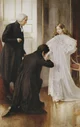
The bells of Aeloria rang not for celebration, but for mourning. They tolled slowly, heavy with grief, echoing across the frost-touched hills and through the marble halls of the palace. The great king and queen were dead — taken by a fever that no healer could quell — leaving behind a single heir: a girl of barely fifteen winters.
Her name was Eryndra, and she had been a princess only yesterday.
Now, she was queen.
The crown felt heavier than she could have imagined, its golden band digging into her brow as if it meant to remind her of the burden she now carried. The throne room, once a place of warmth where she’d played at her mother’s feet, had turned into a cold cavern of watchful eyes. Lords and ladies whispered in corners, their words sharp and unreadable. Generals stood at attention, measuring her not as a child, but as a ruler who must decide the fates of thousands.
She wanted to cry. She wanted to run. But queens did not cry in public. Queens did not run.
“You must be strong, Eryndra,” her father had once told her, during one of their walks in the palace gardens. “A queen is the root of the realm. If she falters, the tree dies.”
(But what if the root was just a child who didn’t know how to grow?)
Her first council meeting was the same day her parents were buried. While incense still lingered from the funeral, the councilors spoke of taxes, border tensions, and noble houses who would undoubtedly try to challenge her rule. Some of them looked at her with pity. Others — with hunger.
“Your Majesty,” Lord Veyran, the Prime Minister, said, his thin voice slicing through the silence. “We must discuss your betrothal. A marriage will secure the throne.”
She clenched her hands in her lap. Marriage? She could barely sleep through the night without dreams of her mother’s gentle voice. Yet they spoke of her like a chess piece.