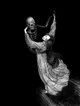
The Silent Hour
Anastasia Volkonskaya learned to dread the silent hour.
It always came when the candles had long since guttered out, when the household lay still beneath a shroud of expectation. In that hour, her body would betray her, sinking into a paralysis so absolute it felt like drowning in a breathless sea. She could scream—inside her mind, she could thrash, wail, plead—but no sound would ever escape her lips.
That was when they would come.
At first, she thought it was a punishment. A demon sent to chastise her for the thoughts she kept carefully caged during the day—the ones about never marrying, never kneeling to a stranger with her mother’s voice in her ear. In the dark, when she could not move, she felt the weight of its presence pressing on her chest. A shadow at the foot of her bed. Tall. Still. Watching.
For nights, weeks, months, it terrified her. The fear festered in her like a sickness, one she dared not confess to anyone. Not to Katya, who would twist it into a flaw. Not to her mother, who would have the priest drown her in holy water before the next ball. Not even to Liza, whose heart was too fragile to bear her sister’s madness.
But the demon never hurt her.
It never moved, never spoke. It simply… watched.
And in time, Asya began to understand.
It was not a tormentor. It was a sentinel.
On the nights when the day's expectations crushed her more deeply than usual—when her mother’s hand lingered too tightly on her shoulder, or when Dmitri’s cold praise cut sharper than Pavel’s careless jokes—the demon would appear. Always silent. Always waiting. As though offering her the one thing no one else ever did: presence without judgment.
She learned to free herself, little by little.
First, a flutter of a finger. Then a shallow breath. The demon would tilt its head when she succeeded, a subtle gesture that felt like a conversation. No words passed between them, but she knew it was pleased. That it was watching her fight back.
And in those moments, the paralysis was no longer a prison. It became a cocoon.
One night, after a particularly brutal dinner where her father detailed the virtues of a suitor who spoke to her as if she were already an obedient wife, Asya lay awake, clutching the thin blanket to her chin, waiting.
She was not afraid anymore.
When the shadows stirred and the demon manifested, she greeted it with her eyes. They stayed like that, locked in quiet communion, until she felt the familiar numbness recede from her limbs. Slowly, deliberately, she lifted her hand from beneath the blanket.
Her fingers trembled as they reached out—tentative, testing.
The demon didn’t move away. It stood still as her fingertips brushed against the air in front of it, as if a fragile veil separated them. For a heartbeat, she wondered if she was foolish, a girl speaking to her own madness.
But the demon moved.
Its hand—long, delicate, inhuman—lifted with an elegance that belied its monstrous form. It did not touch her. Instead, it mirrored her gesture, their fingers inches apart, a breath away from communion.
Her heart stilled.
For the first time in her life, Anastasia felt truly seen.