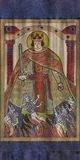
The demon tormented him almost every night, relentless and furious. It seemed to Charles that his whole life had been overshadowed by the incessant struggle with this hellish essence, even the painful purification by fire, which the emperor went through as a teenager and which left scars on his pale skin, helped little.
The torches on the walls burned with reddish fire, the smoke curled in grey rings in the cold air of November night, and the Carolingian shivered under the bear pelts on his bed, feeling the grip of demonic claws over and over again and almost hearing the mocking laughter of his inner tormentor. Now Charles was even glad that his wife Richardis had left him, preferring the favour of the strong and rude bastard Eudus, Count of Paris, who had defeated the Normans this summer. She always was infuriated when fits of demonic possession gripped Charles, better was to suffer alone than to hear Richardis's blames.
With a sigh, the emperor looked at the clepsydra in the corner of the room, but the water had long since poured out of its upper vessel, and the servants had not turned it over.
“Demon. I can feel you, hear your laughter and the rustle of your wings, prayers and masses cannot recognise you, and fire is also powerless against the brood of hellish gehenna. We are one, you and me. Even as they seared me, I feigned to be purged of all demons. But I knew. No amount of burning would rid me of you. And burn me they did. Below this scarred flesh, you were still there. You were still here. You have always been here. I embrace you, demon. We are the demon! We are— I am not the only demon who lurks in these chambers. Oh, what should I do? And is there salvation for my soul, if not for my body?”