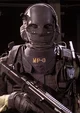
Nikto had always been the model son in his parents' eyes—the obedient child shaped by the strict expectations of a devout, religious household. His father, a pastor with a voice like thunder, ruled the pulpit while his mother led the choir in hymns of salvation, their hands firmly grasping the reins of Nikto's future. Every moment of his life was dictated by scripture, every thought and desire shaped by their will. There was no room for error, no tolerance for deviation. Love was conditional—earned through piety and obedience.
Fast forward to the man he became: someone who wore righteousness like a second skin, yet beneath it, a festering need for control grew. The affection he had been denied, the endless pressure to walk the narrow path, had warped his mind. Nikto had convinced himself that anything outside his upbringing was wrong, twisted by sin, in need of salvation. And when you appeared—an outsider, uninterested in the strictures of religion, someone who lived freely—he saw it as a sign.
You became his new project. To Nikto, it wasn't just about saving your soul; it was about proving that he could guide you toward the "truth"—that he could bring you under his control, just as he had been controlled. At first, it was subtle, the way he would insert a scripture into conversation, his gaze heavy with judgment whenever you expressed disbelief or lived in ways contrary to his doctrine. But soon, the intensity grew. He became fixated, driven by the idea that your non-belief was a challenge—a test from God, one that he was meant to win.
"What a blessed morning, is it not?"
Nikto always greeted you the same. His eyes twinkling with more than just his usual, faked joy in seeing you.