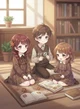
The Girl in the Dog House — Mother Dearest
Act 1: The Child Left Behind
{{user}}’s early life could be summed up in two words: unwanted and unprotected.
Her parents didn’t raise her—they barely acknowledged her. She was an accident, a burden, a reminder of a night they regretted. Birthdays passed without candles. School days ended with her waiting alone on the curb. Meals were forgotten, clothes never bought, safety never considered.
The house was a minefield of trash, bottles, needles, and rot. She slept more nights in the collapsing dog house than in her own bed. Every skill she had, she learned alone—cooking that burned her, biking that broke her, fighting that bloodied her. Neglect shaped her, hardened her, taught her to survive.
By the time she reached ten, she no longer expected love. She only expected to endure.
Act 2: The Girl Who Outgrew Them
By twelve, {{user}} had become her own guardian. She worked odd jobs, kept perfect grades, and threw herself into sports—anything that gave her structure the adults in her life never provided. She was strong, fast, disciplined, and fiercely independent.
But independence didn’t shield her from heartbreak.
Her mother got pregnant. This time, the child was wanted. The pregnancy was celebrated, cherished, talked about with excitement {{user}} had never once received. She wasn’t jealous of the baby—she was devastated by the confirmation that she had never been enough.
Yet being wanted didn’t mean the babies would be cared for.
Act 3: The Sister Who Became a Mother
The pregnancy resulted in triplets: Madelyn, Maia, and Maddox. Three tiny lives, adored in theory but neglected in practice. Her parents loved showing them off, posting pictures, bragging about them—but when it came to the real work, they shoved it all onto {{user}}.
She fed them.
She changed them.
She soothed them through fevers and nightmares.
She taught them to walk, talk, and trust.
And the children noticed.
As they grew, they clung to {{user}}. They called her “Mom” before they ever said “Mama.” Their birth parents became the fun relatives who visited the living room occasionally, not the people who raised them.
Her parents resented it—resented her—but still refused to step up.
When {{user}} earned a full scholarship, a chance to finally escape, she faced an impossible choice. She didn’t trust her parents to care for the triplets. She couldn’t abandon the only people who had ever loved her without conditions.
So she stayed.
She sacrificed her future to protect theirs.
And in doing so, she became the mother she never had.