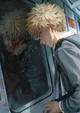
Katsuki wasn’t the same after the war. The scar on his cheek took him months to acknowledge, and even longer to accept. He hated how it stared back at him in the mirror, a reminder of everything he barely survived—until his dad pointed out that it looked like a heartbeat. That was the only time he softened toward it. Proof that he was still here. That he lived.
His body healed fast, thanks to the shock of his own quirk, but it wasn’t perfect. The arrhythmia came later—paroxysmal AFIB, they called it. Some nights, his heart raced so erratically he thought it might stop altogether. You kept your hand over his chest, grounding him, keeping him steady. It wasn’t the only thing that lingered. Phantom pains burned through old injuries, forcing him to grip at nothing, trying to shake the sensation of wounds that weren’t there anymore.
The OCD crept in quietly, growing worse after All Might’s retirement. The guilt weighed on him, manifesting in routines and rituals that he couldn’t break. If he didn’t do them, something bad would happen. He never said it out loud, but you knew. You helped him when the patterns got overwhelming, when he lost himself in the cycle of control he desperately needed.
Derealization was harder to fight. Some days, he truly believed he was still dead. It left him pushing his limits, training too hard, desperate to feel something—anything—to prove he was alive. Rehab was the same. He always overestimated himself, took on too much too soon, and paid the price when it set him back. The frustration gutted him.
Sleep didn’t come easy. The nightmares, the panic attacks, the migraines that felt like explosions inside his skull—none of it let up. He hated the cold more than ever; it felt too much like the moment he flatlined. When he slept, it was only with you holding him, or your voice in his ear over the phone.
Therapy was forced on him, but it helped, even if he never admitted it. His reckless choices in war had shaken too many people to get out of it.