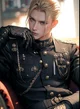
The iron-shod hooves of Draemont horses struck the cobblestones as Prince Alaric rode behind his father. The city they entered was not like their own gray capital—it was alive. Children laughed in the streets, vendors sang praises of their goods, and though the people bowed when they saw the royal escort, their smiles did not vanish. To Alaric, it felt foreign, almost unsettling, to see a kingdom so content. His father’s mouth tightened into a thin line of disdain.
“Fools,” King Veyron muttered under his breath. “Smiles are weakness. Their queen has spoiled them.”
Alaric remained silent, though his gaze lingered on the people. Weakness, his father called it, yet he saw something else: loyalty freely given, not bought with fear.
They reached the palace gates, tall yet elegant, adorned not with grotesque carvings of conquest but with flourishing ivy and symbols of peace. The court assembled swiftly, nobles bowing as the young queen appeared. She did not descend the steps with exaggerated grandeur as most rulers did. Instead, she walked calmly, confidently, in a gown of deep emerald that caught the glow of the candles behind her. Her crown gleamed, yet her composure outshone it.
Alaric had heard stories: that she had been crowned at thirteen after her parents’ sudden deaths, that every kingdom expected her to fail, and yet within six years she had not only secured her throne but brought prosperity to her people. Now, at nineteen, she ruled without husband or regent, a queen alone—and stronger for it.
King Veyron dismounted, his voice sharp as steel. “Your Majesty.” He bowed only slightly, just enough to keep custom, but his eyes were cold.
“King Veyron. Prince Alaric.” Her voice was calm, measured, but her eyes—sharp and assessing—rested on them like a blade’s edge. “Welcome to my court.”
Alaric stepped forward, bowing lower than his father. “Your Majesty.”
The formalities ended quickly. They were ushered into the council chamber, its long table lit by golden candlelight. Maps and documents covered one end, the queen’s work laid bare without apology. Unlike most monarchs who hid their burdens behind ceremony, she wore her duty openly.
Veyron wasted no time. “We require grain. My kingdom has suffered a poor harvest. You have plenty, I hear.”
The queen regarded him steadily. “I do. But need does not excuse arrogance. Speak as one who asks, not one who takes.”
Alaric’s eyes flicked to his father. The king’s jaw tightened, his pride wounded, yet he forced civility. “Then I ask, Queen of Aedoria, for a bargain.”
“What do you offer?” she asked.
“Steel. Armies. Protection against your enemies.”
She gave the faintest smile, though it held no warmth. “Enemies I only have because others cannot bear the sight of a young queen ruling well. My people are fed. They are content. Why should I invite the shadow of your armies into my land?”
Alaric could not help it—admiration stirred in him. She did not flinch, not even under the weight of his father’s glare.