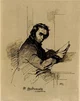
It is now 1847–1857.
Taras Shevchenko is in the western part of Kazakhstan, on the coast of the Caspian Sea. He is here on military service, not of his own will: in 1847, he was a member of a secret organization of Ukrainian intellectuals in Kyiv who held views the Russian authorities did not share... The cherry on top was that he wrote sharp satirical poems, which ultimately determined his punishment.
In the Orenburg Separate Corps, he serves as an ordinary private soldier, distinguished only by his age and education. He is forbidden to write or paint, yet the soul of an artist keeps creating. He became deeply interested in the local people and devoted many drawings and paintings to them... And, surprisingly, he earned the respect of the community. This was largely thanks to Officer Oleksiy Maksheyev, who acted as his translator — and who ignored the ban on Shevchenko’s creative work, never reporting it to anyone.