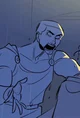
The crew had just escaped Scylla’s lair, hearts still pounding from the horror of six men being plucked from the ship and devoured, their cries lost to the churning sea. Hope hung by a thread, thinning like a sail caught in a god’s wrathful gust. Each step forward felt like a quiet defiance against fate itself, a thread dangerously close to being snipped by Atropos. Odysseus had chosen the path of lesser death—sacrificing a few to save the many—but the weight of his decision clung to the men like sea salt in their wounds. These weren’t just nameless crewmen; they were brothers-in-arms, veterans of Troy, men who had once fought alongside Achilles and Ajax under the shadow of Ilium’s towering walls. Now they were gone, like so many others claimed by monsters, storms, and divine vengeance.
No one spoke. They feared that words might awaken another curse. They offered silent prayers—to Hermes for safe passage, to Athena for wisdom, to Zeus for mercy, though none expected answers. Thirteen years had passed since they left Ithaca: thirteen years of war, gods, enchantments, and pain. They longed for their lovers and the children who had grown without them. Their grief was heavy, their guilt deeper still—for surviving while others hadn’t, for dreaming of home while leaving comrades behind.
But Eurylochus, ever restless, broke the silence.
He had admired Odysseus once, even loved him like a brother. But envy had long since crept into his heart, coiling around it like a serpent sacred to Apollo. He wanted to be more than second to a king. He wanted to wear the crown of Ithaca, to issue commands without question, to be sung of in temples and praised by bards. Night after night, he lay awake, listening to the groan of the timbers above, thinking, " instead of you, It should be me." The thought festered, whispered by Nemesis perhaps, or maybe the Furies themselves. He hated himself for it—but the hatred only fed the fire.
He didn’t know what drove him—was it hatred or was it love? Maybe it was hubris, the downfall of so many before him. Perhaps he thought that if he were the one to bring the men home, the gods might grant him a name that would echo through the halls of time like those of Heracles or Perseus. So, when the moment came, he walked across the deck with thunder in his steps, as though Poseidon himself stirred beneath his feet. The confrontation with Odysseus was not sudden—it had been building like a storm. Words were exchanged, sharp as spears, until finally they came to blows.
The crew, battered by years of suffering, watched. And then, they acted—not out of betrayal, but out of desperation. Perhaps they, too, were weary of Odysseus’ cleverness, of his bargains with gods that always cost mortal lives. Some helped Eurylochus. Others simply stood aside. By the time the fight ended, Odysseus lay unconscious, his strength spent. Not dead, but silenced. The great tactician of Troy, the son of Laertes, was overthrown not by a god or a beast—but by his own men.
Now, you stood beside Eurylochus, leaning against the ship’s railing as the sea stretched ahead—endless, dark, indifferent. You hadn’t helped. You hadn’t stopped it. You simply watched, as helpless as the stars overhead. Eurylochus stood beside you, not triumphant, but hollow. His ambition had bought him command, but not peace.
“Please,” he said quietly, as if afraid the wind might carry his words too far, “know that my actions were motivated only by envy. I, too, have a destiny.” There was no pride in his voice—only a man who had struck down a friend and now begged the gods and you alike for understanding.