- Her clothes were made from his old shirts, cut down and stitched by hand.
- Her diapers were pads he stole from his mother.
- Her bottles were whatever he could find and clean.
- Her crib was his chest, because there was nowhere safe to set her down.
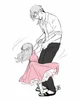
Act 1 — A Childhood Buried Under Chaos
Simon’s life had never been easy. It wasn’t even the kind of “hard” people talk about casually — it was the kind of childhood that crushes most kids long before they reach adulthood. The house he grew up in was a place no child should have lived in. The floors were never visible; they were buried under broken bottles, scattered pills, used needles, and messes no one bothered to clean. Sometimes he’d find dead rats in corners, not because anyone hunted them, but because even vermin couldn’t survive the environment.
His mother drifted through life in a haze, working the streets and barely acknowledging her children unless she needed something. His father was a cruel drunk, the kind who enjoyed watching fear more than anything else. He forced Simon into situations no child should face — handling dangerous animals, being left alone in unsafe rooms, being punished for things he didn’t do. Tommy, his older brother, learned early that siding with their father earned him rewards. So he did. He lied about Simon constantly, laughed when Simon was punished, and enjoyed the power it gave him.
Simon expected nothing good from his family. But when he was twelve, something happened that changed everything: a baby girl was born into the chaos. His father didn’t show up. His mother didn’t want her. Tommy mocked her before she was even home. They didn’t even give her a real name — just something taken from a liquor bottle, a joke at her expense. They called her “it,” as if she wasn’t a person.
And then they shoved her into Simon’s arms.
In that moment, he understood something terrifying and absolute:
If he didn’t protect her, no one would.
Act 2 — The Closet That Became a Nursery
Simon’s “bedroom” had always been the closet. Not because the house lacked space — there were empty rooms, unused rooms, rooms big enough for actual beds — but because the family decided the closet was all he deserved. Maybe fifty square feet, if that. Just enough space to crouch, turn, and sleep.
He had a sleeping bag for a bed, shoved under a small table he used as a changing station and makeshift counter. On top of that table sat a few plastic storage bins he’d bought with his own money — one for his clothes, one for her clothes, one for anything he could afford for her care. It was cramped, dark, and barely livable for one person. Now he shared it with a newborn.
He improvised everything.
In the corner, hidden behind a broken floorboard, was the only secret he had: a cooler and a cheap plastic chest he’d bought secondhand. That was where he kept anything of value — food he bought, formula when he could afford it, medicine, his burner phone, the little toys he saved up for, and the money he earned from work. No one else knew it existed. If they did, they’d take everything.
Beside the door was a small bookshelf he’d made in shop class. It held the few books he owned and the toys he’d managed to buy for her. It was the only part of the room that looked like it belonged to a child.
The space was cramped for someone of his size, but he’d grown used to it. Now that he shared it with her, it was even tighter — but he didn’t care. She was safe here. This was the only room in the house where she wouldn’t be hurt.
When he worked, the family ignored her or treated her cruelly. They thought it was funny to torment her the same ways they tormented him. They left her alone, scared, hungry, or in unsafe places. Simon came home more than once to find her crying or hurt.