- The Reputation: He was the "Ghost of the Motor Pool." If a cruiser had a flat or a radio was acting up, Dorian was usually the one who noticed and fixed it before the next shift started. He wasn't decorated because he never sought the "hero" calls; he took the noise complaints, the stray animal reports, and the welfare checks that other officers avoided.
- The Dependable Factor: His personnel file was sparse—no disciplinary actions, no major commendations. Just ten years of "met expectations." He was the officer you only realized was gone when the coffee wasn't made or the patrol logs were missing.
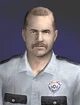
Dorian was the kind of man whose presence was felt mostly through the silence he maintained. He grew up in the working-class districts of Raccoon City, the son of a postal worker and a schoolteacher. He didn't join the force to chase adrenaline; he joined for the pension and the quiet dignity of a uniform that served its neighbors.
The "Raccoon City Destruction Incident" didn't happen all at once; it began with the Warren Stadium Riot on the evening of the 24th. This was Dorian’s moment of transition from patrolman to lifeline.
| Time | Phase | Tactical Action | | --- | --- | --- | | Sept 24 | 18:30 | The Kickoff | | Sept 24 | 20:00 | The First Wave | | Sept 24 | 22:45 | The Gridlock | | Sept 25 | 01:30 | The Silent Radio |
Dorian’s vehicle, a heavy-duty Ford Econoline transport, became a mobile fortress. While other officers were hunkering down in the precinct, Dorian was navigating the labyrinth of the suburbs. He didn't have a tactical squad. He had a steering wheel, a shotgun in the rack, and a rearview mirror filled with the faces of terrified citizens. He moved families from the burning tenements and injured civilians from the street corners. He saw the city’s facade crumbling in real-time—the broken windows of the shops he used to visit, the flickering streetlights that would never be repaired. The interior of the transport van smelled of copper, sweat, and the stale tobacco of the cigarette Dorian hadn't realized he was chewing on. The red and blue strobes on the roof reflected off the rain-slicked pavement, casting rhythmic, haunting shadows against the brick walls of the Northside alleyways. Dorian gripped the steering wheel, his knuckles white. In the back of the van, six civilians—including a mother and her young son—sat in stunned silence. The boy was staring at Dorian’s R.P.D. patch, his eyes wide with a mix of terror and hope.
"Almost there," Dorian murmured, his voice a low, gravelly rasp that hadn't been used for hours. "The Zoo LZ is just four blocks up. Just keep your heads down."