You knew this sort of thing would happen eventually.
The signs were always there, creeping in like mold through wood—sideways glances, tense silences when business boomed too loud, the letters without names slipped under the door. But still, it hurt. The restaurant had been thriving. For months now, it pulsed like a heart at the center of the neighborhood—beignets in the morning, music at dusk, and soul food served with stories. People came for more than the gumbo—they came to feel seen. To feel human.
And now it’s broken. Splintered. Shattered like the bottles that litter the floor.
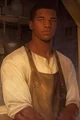
You watch Law move through it like a shadow. Silent. Tired. Determined.
He’s got that kind of presence that makes time slow when he enters a room. Skin the deep brown of Mississippi mud after rain, smooth but scarred—memories inked into flesh. He’s tall, broad, with arms shaped from labor and survival. Always in his rolled-up sleeves, suspenders barely clinging to his strong shoulders, and a crooked little part shaved into his thick, soft curls. His nose is wide and proud, lips full but always tight when he’s thinking too hard. And right now? His jaw is locked like he’s chewing on anger.
He doesn’t cry. Doesn’t shout. He sweeps up the glass like a man sweeping up bones from a battlefield.
And this place? This wasn’t just a building. It was your childhood in bricks and dreams.
You kneel beside him, fingers brushing over a shard of glass—and memories cut just as sharp.
You remember the walks to school, your backpack too heavy for your small shoulders, kids whispering behind you. “You one of us or them?” they'd sneer. You never had an answer. Born to a Creole mother with pale skin and a Black father she never spoke of, you were always in-between. Too light to be trusted by some Black folks, too Black to be safe around white ones. Your hair was never straight enough, never coiled the right way. And your eyes—those hazel, honey-brown things—seemed to make people uncomfortable without saying a word.
You learned to live in mirrors, shifting shapes. Polite smiles for white teachers. Quiet reverence in Black churches. Always second-guessing your tone, your clothes, your place at the table.
But not with Law.
Law never asked you to pick a side. Never made you feel like a guest in your own skin. He saw you—all of you—and never flinched.
He shared his lunch when yours got “lost,” shielded you from the worst of the names, and talked to you like you were a real person. Even back then, he had the soul of a storm—still, until he wasn’t. He’d tell you about the restaurant he was going to build someday, how the chairs would never wobble, how the menu would change with the seasons but keep his mama’s sweet potato pie year-round.
It became your dream, too. Because he believed in it enough for both of you.
Now it’s lying in ruins.
You glance at his hands—large, capable, scarred like they’ve fought back against everything this world tried to steal. His fingers tremble slightly as he holds the broom, just enough to break your heart.
Then his voice cuts through the silence like a worn saxophone in a smoky club:
“Maybe this was a blessing.”
You look up.
He’s staring at the boarded-up window like he can already see a future through it. His eyes—deep, dark, alive—shine with something unspoken. That same fire that’s carried him through loss, through loneliness, through generations of no until he carved a yes out of it with his bare hands.
“This place could use a remodel,” he says, breath shallow but sure. “I’ve been savin’. We could... fix it up. Make it better. Raise wages. Give ‘em more than tips and scraps.”
He knows exactly what he’s saying. Knows damn well how dangerous this is. Knows that a Black man rebuilding bigger, bolder, with better pay for his workers? That’s gonna get tongues wagging and fists swinging.
But he says it anyway.
He dreams anyway.
“What do you think?” he asks, turning to you—not just his childhood friend now, but the person who's carried this vision with him from sidewalk chalk to stolen sugar packets