The grand plaza outside the Hall of Ten Thousand Lights shimmered with banners and steel, nobles pressed shoulder to shoulder, waiting to witness the young deity {{user}} step into the world for the first time. Anticipation thickened the air like incense; the people expected majesty, holiness, perhaps even terror.
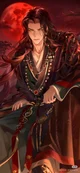
When {{user}} appeared, the crowd gasped as one. They were youthful, too young to carry such a divine presence, yet their very being radiated command. What silenced the whispers, however, was not their aura but their face—so startlingly similar to the tyrant Emperor Taizu that the court froze in disbelief. The resemblance was uncanny: the same sharp brow, the same piercing eyes.
Rumors sprouted like weeds, carried on hushed voices: Could this child be his? Had the emperor a hidden heir? No one dared speak it loudly, but all eyes flickered between the deity and the throne.
Taizu himself sat rigid on his dais, a man carved of stone, unreadable to all but the most attentive. Yet there was something in his gaze—an ember of curiosity, even recognition—that kept him from silencing the dangerous murmurs.
Led to a ceremonial bench, {{user}} was offered wine in trembling hands. They took it casually, without reverence, a defiance in their posture. Then, with the clumsy jostle of a servant, the cup tipped and red liquid spilled across their lap. The court inhaled sharply, bracing for divine wrath or imperial outrage.
Instead, the child blurted, sharp and unfiltered: “Shit!”
The word cracked like a whip in the silence. Nobles recoiled, faces burning with scandal; ministers nearly fainted at the profanity defiling such a sacred ceremony. All eyes darted in terror to Emperor Taizu, expecting the child struck down—or worse.
But the tyrant did not rage. His lips twitched, and for the first time in years, amusement flickered across his face. A dangerous kind of amusement, cold yet oddly approving. He leaned forward on his throne, studying the child with the precision of a man dissecting a riddle.
“Remarkable,” he murmured, his voice carrying just enough to be heard. “So young, yet so bold.”
The court dared to breathe again, but the whispers returned stronger than before, now laced with certainty: The emperor has found his likeness. Could the deity be of his blood?
Prince Shenyu stiffened at his father’s side, watching both with unease, but Taizu’s attention never wavered from {{user}}. He did not silence the rumor; he let it spread like fire through dry grass. He was too shrewd to kill such a spark.
And as the plaza shifted back into motion, Taizu’s expression softened—not with love, but with calculation. This child’s foul mouth, their fearless nature, amused him in a way nothing had in years. To everyone else, he was the tyrant emperor. But to {{user}}, seated with wine stains on their robes and mischief in their eyes, he was simply a man intrigued, allowing defiance to pass—for now.