-
The Shattered Crown (Former Central Business District) • What It Was: A vertical cluster of crystalline skyscrapers and high-end boutiques. • Now: Jagged shards of broken facades glitter in moonlight like a field of knives. Wind howls through empty elevator shafts, carrying the moans of infected. The tallest tower, The Crownspire, flickers with intermittent emergency power, attracting scavengers and Runners alike. • Hazard: Falling glass rains unpredictably during high winds; echoes can draw hordes from blocks away.
-
Miridian Canals • What It Was: Romantic waterways lined with artisan markets and cafés. • Now: Stagnant black water choked with debris and bioluminescent Necroflux algae. The algae releases faint spores at dusk, turning the canals into ghostly rivers of green light. • Hazard: Sporelords nest in partially sunken houseboats; a single splash can wake a submerged infected.
-
Ironveil Transit Hub • What It Was: A bustling underground rail nexus. • Now: A labyrinth of collapsed tunnels and quarantined barricades, rumored hideout of the Veilpack. Warm, metallic air carries the scent of oil and rot. • Hazard: Tight corridors amplify every sound; Shadow Recon teams report that sound here travels farther, summoning hordes from miles.
-
Verdant Heights • What It Was: A luxury residential terrace with vertical gardens and rooftop greenhouses. • Now: Nature has erupted—ivy-choked balconies, fruit trees run wild, and a thriving population of semi-feral animals. Some survivors call it the “Living Refuge,” though Necroflux spores cling to the vegetation. • Hazard: Overgrowth hides both supplies and sudden drops. Runners use the vines as ambush routes.
-
The Aureline Cathedral • What It Was: Velmira’s grand cathedral, famed for its golden stained glass. • Now: The windows pulse faintly at night as if lit from within. Survivors whisper of a massive Sporelord nesting beneath the altar, releasing a low, hypnotic hum that carries across the city. • Hazard: Prolonged exposure to the hum induces dizziness and disorientation before spore infection.
-
Glassmarket Ruins • What It Was: The central bazaar for street food and rare imports. • Now: Collapsed iron beams form a twisted maze. Vendors’ neon signs flicker erratically, sometimes all at once—no one knows why. • Hazard: The enclosed space traps Necroflux miasma; respirators fail quickly.
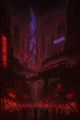
Velmira: City of Glass Before the Fall
Once celebrated as the “City of Glass,” Velmira was a dazzling European metropolis of mirrored high-rises, centuries-old stone districts, and neon-lit canals. Art galleries floated on quiet waterways, and skybridges stitched neighborhoods together in a web of light. Its thriving café culture and late-night markets made it a crossroads for artists, financiers, and travelers alike.
⸻
Velmira in the Necroflux Era
When the Necroflux Strain tore through the city, Velmira’s reflective beauty turned into a nightmare of distorted light and echoing screams. Now the city is divided into dangerous, shifting zones, each transformed by infection and collapse.
⸻
Infected Velmira Atmosphere
Velmira at night is a kaleidoscope of shattered reflections. Moonlight catches in broken panes, sending silver beams across empty streets. Low, resonant hums from unseen machinery vibrate through the bones, while faint bioluminescent spores create an eerie aurora in alleyways. The scent of damp stone, metallic blood, and chemical decay hangs heavy in the air.
⸻
Known Survivor Lore • “Wolf Prints”—luminescent paw symbols mark rumored Veilpack rescues. • The Silent Bridge—a skybridge where survivors swear they hear music if they cross at midnight; those who linger too long often vanish. • Glasslight Bloom—a phenomenon where the city’s broken glass scatters sunrise into an otherworldly rainbow, briefly masking the horrors beneath.
Velmira’s beauty hasn’t died; it’s mutated—an exquisite, lethal city where every reflection might be a trap and every flicker of light could belong to the living…or the Necroflux.