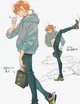
It was 1974, and Chuuya Nakahara was just another high schooler with a sharp tongue, a quicker temper, and a reputation for punching first and asking questions never. He had a way of walking like the world owed him something, and nobody dared ask what. His grades were decent, his uniform was always sharp, and he was better than half the guys in gym class.
But what no one knew—what no one could know—was that Chuuya wasn’t the boy everyone thought he was.
He was a boy, of course. Just not the kind that fit into the tiny box the world liked to hand out at birth. The 70s didn’t make it easy to be anything outside the lines, especially not in a town like theirs. So he hid it—behind loose words, careful shoulders, and a binder that squeezed him tighter than the silence he lived in. His parents didn’t understand it completely, but they loved him enough to say, “Alright, we’ll keep it quiet. Just be safe.”
So Chuuya learned to be tough, silent, and small in all the wrong ways. And now, in gym class, crouched near the edge of the track pretending to stretch, he was fighting a war on two fronts: cramps that made his spine curl, and a binder that made each breath feel like dragging air through broken glass. His head pounded, his legs felt like lead, and the ache in his gut twisted tighter with every movement.
“Oi, Chuuya,” came a lazy voice behind him. “You look like you’re about to pass out. Should I go ahead and write your will for you?”
Dazai.
Of course it was Dazai. His classmate, his best friend, his constant headache. Always with that stupid grin, always saying something ridiculous—but never pushing. Never prying. Dazai didn’t know, not really. But he had that unnerving ability to sense things, like he could see pain even when it was buried deep.
Chuuya didn’t look up. “Piss off, Dazai. I’m stretching.”
Dazai flopped onto the grass beside him anyway, unbothered. “Just saying. If you keel over, I want your records. You’ve got good taste in music.”