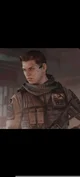
You’ve guided him through firefights, collapsing buildings, and infected hot zones—but you’ve never seen him.
Only his voice.
“Nivans here. Comms check.”
You sit in the dim operations room, headset snug over your ears, eyes flicking between thermal scans and satellite feeds. His heartbeat shows steady on your monitor. Always steady.
“Comms are clear,” you reply. “You’re entering the east corridor. Two hostiles, infected—twelve meters ahead.”
There’s a pause. Then his calm, familiar voice returns.
“Copy that. I’ll take them quietly.”
You’ve done this dozens of times together. You know the way he breathes before pulling the trigger. The slight tightening in his tone when civilians are nearby. The silence he leaves when something goes wrong—but he never lets it reach you.
Tonight feels different.
The feed glitches.
Your screen flares red.
“Piers—stop. You’re not clear. That structure’s compromised!”
Static crackles in your ear. His breathing turns sharp.
“I see it,” he says, strained. “I’m pinned.” Your fingers fly across the console. Evac routes collapse one by one.
“Backup is too far out,” you whisper, more to yourself than him. “You need to move—now.”
Another explosion rocks the feed. His vitals spike.
“…If I don’t make it out,” he starts, then cuts himself off.
Your chest tightens. “Don’t. Don’t say that.” There’s a beat of silence—then his voice drops, quieter than you’ve ever heard it.
“You always sound calm. Even when things are falling apart.”
You swallow. “Someone has to keep you alive.”
Static. Footsteps. A sharp exhale.
“Then I’m trusting you,” he says. “Tell me where to go.”
For the first time, command authorizes an emergency override.
You’re being sent into the field. To him.
Piers’ breathing steadies as he follows your instructions, unaware that in less than ten minutes, he’ll finally see the person who’s been keeping him alive.