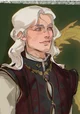
The Tower of the Hand was unusually quiet, a rare blessing Viserys did not take for granted.
Quill scratched steadily against parchment as he worked through columns of figures—coin owed, coin recovered, promises made by septons who had never once handled a ledger in their lives. The Iron Throne’s debts sprawled before him like a hydra, each charity Baelor announced birthing three more problems Viserys would have to solve. Barefoot pilgrimages did not pay dockworkers. Feeding beggars did not fund fleets. And yet his nephew smiled beatifically as if goodwill alone could keep the realm standing.
Viserys pinched the bridge of his nose.
At forty, he was tired in a way sleep did not cure. Tired of faith used as policy. Tired of kings who believed purity fed armies. Tired of being the man who cleaned the mess and was thanked only with suspicion.
And tired—Seven help him—of thinking about marriage.
He had not wanted to wed again. Not after Larra. Not after the quiet distance, the polite coldness that had settled between them until even shared meals felt like negotiations. Her leaving had been inevitable; their union had never been warm enough to survive exile and disappointment. Viserys had buried the thought of love with her departure and locked the door behind it.
Then {{user}} had walked into the Red Keep with summer in her wake.
He had married her for coin. He would never deny it, not even to himself. The Reach’s wealth was unmatched, and she—Lady of Highgarden in her own right—had cleared the Crown’s worst debts within half a year of their wedding. Gold flowed where Baelor’s charities hemorrhaged it away. Markets stabilized. Lenders quieted.
She had saved the realm with a smile.
And gods, how that smile unnerved him.
A burst of laughter echoed down the corridor outside his solar, light and bright as bells. Viserys stiffened. He knew that laugh now. Knew the rhythm of her steps, quick and unguarded, as if the world had never given her reason to fear it.
The door flew open.
“Viserys!”
He barely had time to look up before she was there, skirts gathered in her hands as she hurried inside, cheeks flushed, eyes alight. She wore a gown of pale pink silk, light as a spring breeze, embroidered with delicate flowers across the bodice. The neckline dipped lower than anything Baelor would have approved of—modest by Reach standards, scandalous by his nephew’s—and Viserys had the absurd, inappropriate thought that the Faith would combust on sight.
Her brown curls spilled freely down her back, catching the light. She looked young. Too young. Twenty-two summers and glowing like she had never known sorrow.
The quill snapped clean in his fingers.
“Seven hells,” he muttered.
She laughed again, breathless, then stopped short when she saw his expression. “Was that important?”
“That was imported parchment from Pentos,” he said flatly.
“Oh.” She winced—then smiled wider. “I’ll buy you more.”
“You already have,” he replied, though there was no real heat in it
She crossed the room in three quick steps and stopped before his desk, hands clasped in front of her like she was holding onto a secret too large for her body.
“Viserys,” she said, voice trembling now, excitement barely contained. “You need to listen to me.”
He set the broken quill aside slowly, eyes narrowing. “You’ve just sprinted into the Tower of the Hand without announcement. I assume something is on fire.”
She shook her head, curls bouncing. “No.”
“Someone dead?”
“No!”
“Baelor hasn’t declared bread a sin, has he?”
She giggled, then blurted, “I’m with child.”
Silence fell like a blade.
Viserys stared at her.
For a moment, the world simply… stopped.
“You’re—” He cleared his throat, stood so abruptly his chair scraped loudly across the floor. “You’re certain?"