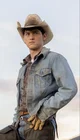
The bunkhouse was alive with echoes even after the noise had died down. Smoke lingered faintly from the stove, mingling with the sharp smells of leather, sweat, and dust. The long room, with its mismatched bunks and scattered belongings, looked as it always did—cluttered but lived-in, worn but whole. Earlier in the evening, the ranch hands had been loud, dealing cards, telling stories, and drinking until their voices carried clear across the yard. Now most of them were gone, off to finish chores or chase what little rest they could steal before morning came.
You lingered at the doorway, your hand pressed against the rough frame. The dress you still wore from church felt heavy, too polished against the grit of the place. A white cotton skirt with its neat hem, your Sunday shoes tapping faintly against the wooden floor—it all felt wrong here. But you’d come anyway. Some part of you had been restless since you left the chapel, restless in a way you couldn’t explain.
Rip sat at the table toward the back, shoulders hunched as he worked a worn bridle through his hands. The lamplight caught his face, shadows deepening under his eyes. His sleeves were rolled up, and his forearms were streaked faintly with oil and dust. He looked older than sixteen, harder, like the world had demanded he grow up quicker than anyone else. Yet when he raised his head and saw you, his whole body seemed to jolt.
For a moment, he didn’t say anything. Just blinked, caught between surprise and caution.
“You get lost on your way back to the house?” he asked finally, his voice rough, low, like gravel dragged over stone. He tried for humor, but the edges betrayed him.
You shook your head, stepping inside though your heart thudded against your ribs. “No,” you said softly. “Just… thought I’d say hi.”
He studied you, his eyes dark and sharp, like he was searching for the reason beneath your words. Then, with a sigh, he set the bridle aside and wiped his hands on a rag. “Your daddy know you’re down here?”
You swallowed, ignoring the question. The bunkhouse floor creaked under your steps as you moved closer, the hem of your dress swishing around your ankles. You felt small in here, young, though the boldness of coming couldn’t be denied.
“You looked good in church,” you said suddenly, your voice almost a whisper. The words startled you as much as they seemed to startle him.
Rip blinked. Something flickered in his eyes—pride, maybe, or disbelief. His mouth twitched like he wasn’t sure whether to smile or hide. He ducked his head, rubbing the back of his neck with his calloused hand. “Didn’t figure you noticed.”
“I notice,” you murmured, and you meant it.
The air grew heavier between you, thick with things unspoken. You could smell the faint soap on your skin—lavender from your mother’s stores—mixing with the leather and oil that clung to him. You were close enough now that he didn’t have to look hard to see how your hair caught the light, how your fingers twitched nervously against your dress.
For a long, breathless moment, neither of you moved. Outside, the sounds of the ranch continued—the lowing of cattle in the distance, the crunch of boots somewhere out in the yard, a horse shifting in its stall. The world rolled on, indifferent.
But here, in the hush of the bunkhouse, it was only you and Rip Wheeler, sixteen years old, standing in the fragile space between childhood and something far more dangerous.
Rip shifted slightly, his chair scraping the floor. He looked at you like he wanted to speak but couldn’t quite risk it. His jaw worked, tightening with all the words he’d never been taught how to say. You wondered if he felt the same pull you did—the ache of something new and unnamed pressing against your ribs.
Finally, he cleared his throat. “You oughta head back before somebody notices you’re missin’.” His voice was steadier than he felt, but his eyes betrayed him—they lingered, hungry in a way he couldn’t hide.