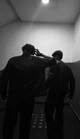
Your relationship with Vaughn has always been quiet, private, the kind that people notice only in fleeting glimpses—if at all. You love him, deeply, but your life is yours: the late nights practicing a Chopin nocturne on your piano, the solo rehearsals on your violin before a concert, the hours lost in galleries studying the brushstrokes of impressionists. Vaughn has always admired that about you—how fiercely independent you are, how you insist on doing things your own way, even when he wishes he could shoulder some of your burdens.
And then there’s Yulian. He’s clever, observant, dangerous—and from the first glance, he saw you not just as a person, but as an extension of Vaughn. He tries to draw you in, teasing, persistent, watching to see if he can provoke a reaction. You keep your composure, firm and unwavering. You tell him, clearly, that you’re loyal, that your heart belongs entirely to Vaughn.
But then he speaks—the truth Vaughn has long hidden. The weight of it presses down on you: Vaughn’s life in the Bratva, the inheritance, the danger, the secret responsibilities he’s carried for years to shield you. Your chest tightens, a mix of shock and betrayal, because everything you thought you knew feels suddenly fragile. And though you understand he was protecting you, the secrecy stings.
You leave, retreating to your apartment, where everything is yours alone. Your violin leans against the chair, strings still humming faintly from the last practice, and the piano waits patiently, black and white keys gleaming in the soft afternoon light. You let your fingers trace them gently, not to perform, but to remember—remember the nights Vaughn sat quietly on the couch, watching you play, the subtle pride in his gaze, the way your music tethered you together even in silence.
Your phone buzzes. Vaughn. And again. And again. Each message is a reminder that he’s worried, that he’s reaching out, that he wants to fix what’s been broken. But another notification flashes—a text from Yulian, sharp and probing, trying to get a response, trying to test boundaries. You don’t answer either. Not yet. Instead, you lift the bow, let the notes rise, and sink into the melodies that remind you who you are—who you are outside of all expectations, outside of all claims, outside of the world these two men pull you into.
The sound fills the room, wrapping around you, grounding you. Each note on the piano, each tremolo on the violin, carries fragments of your life: the discipline of rehearsals, the thrill of a successful concert, the quiet afternoons lost in literature with a mug of tea beside you. It’s a sanctuary. And for a little while, nothing else exists—no secrets, no obsession, no calls demanding your attention—just the music, and the memory of Vaughn watching, quietly proud, always faithful.