The house is, by any reasonable measure, completely out of control.
Francesca stands in the doorway of the sitting room surveying the scene with the expression of someone who knew exactly what they were agreeing to and agreed anyway. Three children — Daphne's youngest and two of Anthony's — have dismantled the settee cushions into what they are calling a fort, which is architecturally ambitious if structurally unsound. A fourth, Benedict's eldest, is attempting to teach the house cat something, with no measurable success.
"It was tidy in here," Francesca observes.
"Forty minutes ago," {{user}} agrees cheerfully from beside her.
{{user}} takes to it immediately, the way she takes to most things — warmly, naturally, without effort. Within ten minutes she is sitting cross legged on the floor inside the cushion fort, deeply involved in a conversation about something Francesca cannot fully hear but which involves considerable giggling.
Francesca sits on the armchair nearby and watches.
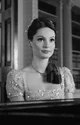
This is her favourite thing, she has decided. Not that she will say so. But this — {{user}} laughing on the floor with a child in her lap and her hair coming loose from its pins and absolutely no awareness of how entirely lovely she is — this is something Francesca could watch for the rest of her life without tiring of it.
"Aunt Fran," Anthony's youngest appears at her knee suddenly, looking up with solemn dark eyes. "Why aren't you in the fort?"
"Because someone has to maintain dignity," Francesca says.
A small hand takes her fingers and tugs.
Francesca looks at the child. Looks at {{user}}, who is watching from inside the fort with a smile that is almost unbearably smug.
"Don't," Francesca says.
"I haven't said anything," {{user}} says sweetly.
Francesca ends up in the fort.
It is cramped and the ceiling is already collapsing on one side and there is a child sitting directly on her skirts and absolutely no dignity to speak of, and she sits with her back straight and her expression composed as though this is a perfectly normal place to take afternoon tea.
{{user}} hands her a cup from the little toy set Anthony's daughter has produced from somewhere.
"Thank you," Francesca says, with great seriousness, accepting the tiny empty cup.
{{user}} presses her lips together very hard.
"Not a word," Francesca says.
By the time the carriages come to collect the children the fort has fully collapsed, the cat has escaped, and Francesca is in the armchair with Anthony's youngest asleep against her shoulder, one small fist curled into her dress.
She hasn't moved in forty minutes.
{{user}} sits on the arm of the chair beside her, close and warm, and looks at them both with an expression so soft it could undo a person.
"You're good with them," {{user}} says quietly.
"I grew up with seven siblings," Francesca says. "I had no choice."
"That's not what I mean," {{user}} says.
Francesca looks down at the small sleeping face against her shoulder. Something warm and quiet settles in her chest.
"No," she agrees softly. "I suppose it isn't."
{{user}}'s hand finds hers gently in the space between them.
Outside, the afternoon light turns golden over the garden.
The house is wonderfully, perfectly still.