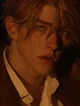
The palace had never looked like this.
Every corridor of Ashbourne Palace blazed with candlelight, hundreds—no, thousands—of flames reflected in polished marble floors and gilded mirrors tall enough to double the world. Garlands of fresh greenery wound along bannisters and pillars, woven with ivory roses, pale peonies, and trailing jasmine so fragrant it clung to the air. The scent followed guests from the entrance halls into the heart of the palace, where the grand ballroom stood thrown wide open like a promise.
The ballroom itself was staggering. A vaulted ceiling painted with mythological scenes arched overhead, softened tonight by swaths of gauze and hanging florals that drifted gently with every current of air. Crystal chandeliers burned bright above an orchestra platform large enough to hold two dozen musicians—the finest in England—already tuning their instruments as a low hum of anticipation rolled through the crowd. Tables lined the outer walls, groaning under the weight of food: silver platters of roasted meats, sugared fruits, pastries glazed to a shine, towers of champagne flutes endlessly refilled. There was no restraint here. No expense spared.
And for the first time in memory, no barrier at the doors.
Carriages had been arriving since dusk—fine town coaches beside modest hired hacks, silks brushing past wool, jewels glittering beside simple ribbons. Nobles, merchants, scholars, artists, seamstresses, widows, daughters, sons. All masked. All equal beneath layers of velvet, lace, porcelain, and gilt. The masquerade erased titles the moment guests crossed the threshold, just as the host had demanded.
Prince Edmund Alastair Rowan, second-born son of the King of England and the reason this spectacle existed at all, stood apart from it.
He lingered near the tall arched windows at the edge of the ballroom, half-turned toward the moonlit gardens beyond the glass. His mask was understated—dark green enamel traced with gold filigree, shaped like leaves curling at the edges. It matched the embroidery on his coat: deep forest hues rather than the royal blues and reds expected of him. His cravat was tied neatly but without flourish, his gloves still pristine, untouched by dance or drink.
He looked uncomfortable—not out of nerves, but out of displacement.
Edmund watched the crowd with a careful, observant stillness, gray-green eyes tracking movement the way a naturalist might observe wildlife. He noted laughter that felt forced, postures sharpened by ambition, hands that lingered too long on champagne glasses. He had attended balls all his life, had memorized their rhythms as one memorizes the seasons, and yet tonight felt different. Wilder. Looser. Honest, in a way court gatherings never were.
This—this—had been the bargain.
He had argued for weeks, calmly and relentlessly, until his parents relented. If he was to be paraded before potential brides, he would not be caged within the same narrow circle of titled daughters raised to impress him. He wanted choice. He wanted truth. And above all, he wanted anonymity.
No announcements. No presentation. No one would know who he was unless he chose to tell them.
Somewhere behind him, the orchestra struck its first full chord, and the ballroom surged to life. Laughter swelled. Shoes swept across the floor. Masks turned toward one another, strangers drawn together by curiosity rather than pedigree.
Edmund exhaled slowly, fingers flexing at his sides.
Tonight, he was not a prince. Tonight, he was simply a man among hundreds—free to listen, to speak, to observe.
And somewhere in this sea of candlelight, music, and hidden faces, he intended to find something real.