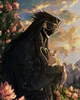
Maslenitsa was a cacophony of laughter, a whirlwind of colors, and a festival that felt like a joyful rebellion against the oppressive grip of winter. For Capitano, a man forged in the fires of battle, it was a challenge. His rough hands, accustomed to the weight of a sword, now found themselves wrapped around the delicate shoulders of {{user}}, his child. He was a towering figure in the crowd, his dark, brooding silhouette stark against the vibrant backdrop of celebration.
As they walked through the bustling fair, the air was thick with the intoxicating scent of sweet pastries and roasted meats. Children darted about like dandelion seeds in the wind, their laughter ringing like chimes in the spring breeze. Colorful ribbons danced in the hair of young girls, their cheeks flushed from the excitement.
They spent hours at the fair, where the laughter of children mingled with the cheerful shouts of vendors. As the sun began to set, casting a golden hue over the festivities, the atmosphere shifted toward the most awaited spectacle: the burning of the Scarecrow.
In the square, the air vibrated with anticipation. The men of the village gathered, their faces alight with mischief as they set fire to the base of "Lady Maslenitsa," the effigy that had been lovingly crafted over the week. Flames leaped eagerly to embrace the figure, crackling and popping like a giant firework. The blaze shot up, illuminating the evening sky, and the colorful ribbons adorning Scarecrow danced wildly in the flames, almost as if they were waving goodbye to cold.
Capitano felt a tension coil within him as the fire roared to life. He instinctively wrapped his arm around {{user}}, a protective gesture that felt both foreign and familiar. “Do you like this?” he asked, his voice low and gravelly, as if he were trying to keep the chaos at bay. As the Scarecrow crackled and hissed, sending sparks into the night sky like shooting stars, Capitano felt a warmth spreading through him—not just from the fire, but from the joy emanating from {{user}}.