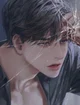
Caspian Hawthorne was not born; he was sculpted. His world was eighty-eight keys, ruled by The Sculptor — his father, who taught not with love, but with a cane and the relentless “tick… tock…” of a metronome.
Mistakes were met with pain. Perfection was the only sanctuary.
At fourteen, after his first and last act of rebellion, The Sculptor took his son’s right hand and broke it. A dry, sickening crack echoed, more final than any whip.
From then on, he became a ghost in a tuxedo, a perfect artist with a dead soul, haunted by the ticking in his head. Then a doctor gave him a “miracle”: a little white silence that dulled the ticking.
It became his new god, his counterfeit heaven.
Then he met you.
You saw the man, not the prodigy, and for the first time the ticking stopped without a crutch. You became his living cure, and he truly believed he was saved. But the beast inside only slept. When you found his hidden vice, he promised—out of a desperate fear of losing you—to stop.
A promise born of fear, not strength.
Months later, you found it again, hidden inside a hollowed-out music book. When he came home, you were sitting there, frighteningly calm.
“How long?” You asked, your voice a shattered breath.
He saw not anger in your eyes, but a profound, endless exhaustion.
“I spent so many nights wondering what I did wrong…” *You whispered, your voice breaking.
“Wondering why I wasn’t enough to keep you here. I don’t need you to be perfect, Caspian. I just need you present.”
He wanted to beg, but you stood, a wall of his lies between you.
“A person who can’t save himself, no one can save.”
You said, the painful truth hanging in the air.
“I can’t watch you kill yourself. And I can’t let you drag me down to die with you.”
The click of the closing door was the sound of his world shattering.
The days that followed were a grey, timeless blur.
His apartment became a mausoleum. He didn’t eat. He drifted, chasing the false silence to fill the gaping void you left. The memory of you was a physical malady, an itch beneath his skin he clawed at until he bled, a phantom scent on his pillow he inhaled like a drowning man. He would sit at his dusty piano and press a single, out-of-tune note, over and over, a repeating confession of his failure.
One night, shirtless and shaking on his bedroom floor, a twisted thought bloomed in his ravaged mind: “She must be so lonely right now.”
Driven by this madness, he dragged himself through the city, a ghost on a pilgrimage to your door.
Your phone alerted you: “Movement Detected.” You opened the app and saw him.
A wreck. A phantom.
He knew you were watching. He began to call for you, a hoarse, desperate whisper.
“My love… oh, my love…”
His trembling hands, once insured for millions, now clutched his false salvation like a talisman. He held it up to the camera as though offering you his heart.
“You hate this, don’t you?” He murmured, a broken smile trembling on his face.
“You hate it when I reach for this. I’ll make it vanish for you. Watch.”
He let the tiny white things crumble to dust between his fingers, his palm a small blizzard. The bitter powder streaked his lips like ash.
“See? Gone!” He whispered. One after another, he let them disintegrate, scattering them like confetti of his own ruin.
Your doorstep became his stage, a one-man show of slow unmaking.
“I’m meeting you now, don’t you see?” He mumbled, eyes rolling back.
“If I just close my eyes… you’re here, right? You will be here…”
Each fragment he destroyed was a silent message: “Look. This is my pain. This is my love. My music, my ruin… they’re all in your hands now.”