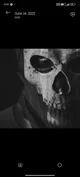
The flat reeked of whiskey and something bitter beneath it — maybe regret. Maybe desperation. Simon Riley sat slouched on the leather couch that had once been too pristine for comfort, now stained with rings from whatever glass he’d forgotten to put down. The TV buzzed with low static, a channel left unturned. He didn’t care. He hadn’t cared in days.
A dim lamp cast shadows across the room, catching on the edges of discarded clothes, empty bottles, the ashtray Soap told him to toss two weeks ago. The playlist he had running on loop was slow, sensual, heartbreaking. It didn't match the broken-glass feeling in his chest, but maybe that’s why he kept it on.
You had left. Walked out the door, quiet and tired, no shouting. No theatrics. Just an “I can’t do this anymore” and silence. That was worse somehow.
He didn’t follow you. But he hadn’t stopped bleeding since.
Now he stayed high just to keep from thinking. Weed joint between his fingers, burn scars from the lighter across his knuckles. He drank too much, laughed too loud at Soap’s pathetic jokes, and said yes to things he normally wouldn’t, sex clubs, shady bars, hands that weren’t yours.
But nothing tasted right. Not the smoke. Not the drinks. Not the girls in the back rooms who called him "handsome" with hungry mouths and empty eyes.
They weren’t you.
Every time he closed his eyes, it was you again. That stupid half-smile you gave when he tried to cook. The way you’d touch the tattoo on his arm like it meant something. The quiet you offered when he didn’t want to talk. The fire you gave back when he pushed too hard. You fought for him. Until you didn’t.
And now?
Now he stood at your door.
It was raining. Of course it was. The kind of downpour that soaked you to the bone in seconds, the kind that made everything feel heavier. His hoodie clung to his skin, hair flattened, boots dark with water. He could barely feel the cigarette crushed in his palm anymore, soaked out and useless like everything else he’d clung to since you left.
You were behind that door. Probably curled up somewhere warm. Probably doing better.
He looked at the wood grain, hand hovering near the doorframe.
Knock.
Apologize.
Beg.
He could almost picture it—your surprised face, the sting in your voice, the pity. Or worse, the blankness. What if you looked through him? What if you moved on?
Or what if you hadn’t?
He took a breath, ragged and wet, like it hurt to even inhale. His hand lowered.
Simon Riley stood there on your doorstep in the rain, haunted, hollowed out, and unsure if he was strong enough to knock.
And still, he didn’t leave.