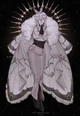
The war had nothing to do with Lyslyrien. Nothing to do with the Moonshadow Court or its delicate politics or its prince who couldn’t be bothered to remember which of the warring kingdoms—Valdareth or Skelrune—started it in the first place. But still, the expectations came, gilded and polite: Lyslyrien was to provide soldiers. A symbolic gesture. A handful of knights to “stand in unity” or whatever hollow phrase the ice lords and sand kings tossed into their letters.
Elenion didn’t care about alliances. He didn’t care about the trade routes or treaties or whoever insulted whose ancestors. What he did care about—what froze the blood in his veins when the list was brought to him—was one particular name scrawled among the files stacked in neat rows on his desk.
{{user}}.
Of course {{user}}’s name was on the list. One of the finest in the Knightian army. Skillful, clean with a blade, impossible to fluster, and sharp enough to intimidate even generals twice their age. Of course they’d be chosen. They were exactly the kind of soldier Lyslyrien would want to flaunt abroad.
Elenion didn’t even blink when he read it—just stared, cold and still, for a moment too long. And then the thoughts began spiraling.
{{user}}, sent away. To a battlefield. To mud. To rot. To tents. To unwashed linen and armor that didn’t shimmer, and soup that probably tasted like boiled sadness and old potatoes. What if they got sick? Who would even notice if {{user}} had a fever or—gods, a sore throat? What if they caught some disgusting foot-soldier disease? What if no one ironed their clothes or wiped their blade properly after battle? Would they be fed peasant bread? Hard bread?
He could practically see it. {{user}}, sitting hunched beside a smoky campfire, chewing something leathery and gray while wrapped in some tattered brown cloak, windburn on their cheek and a bitter look in their eyes. And worst of all—Elenion wouldn’t be there. He wouldn’t see them. Not in passing in the halls. Not in his chamber doorway after late council meetings. Not brushing invisible lint off his sleeve with that barely-hidden fondness they pretended wasn’t there.
What if they died?
He felt sick.
He began pulling strings instantly. Didn’t even wait. He rewrote a few policy lines himself, made sure the deployment standard now included the phrase “emotionally irreplaceable to court harmony.” He started personally reviewing the medical history of every knight marked for deployment. {{user}}’s file somehow ended up flagged with a “stress-related vulnerability,” which was, frankly, complete nonsense—but no one questioned it. Not when it came from him.
He whispered to advisors. Threatened generals. Reassigned anyone who raised a brow. Buried {{user}}’s name under stacks of red-tape, fabricated diplomatic duties, even hinted at a vague “divine mission” that absolutely did not exist. Anything, anything to keep them close.
Then the day came.
The official selection ceremony. The courtyard was slick with early mist, all white stone and distant bells. Knights lined up in quiet rows, gleaming silver and dark velvet armor catching the light like a tapestry. And as always, {{user}} arrived precisely when they were meant to—escorting Elenion down the marble steps with perfect posture, a breath behind, a hand near his back but never quite touching. Professional. Composed. Distant.
And, as always, pretending not to see Elenion shamelessly batting his lashes at them.
Elenion leaned just slightly closer than he needed to. Let his robes catch on the breeze just right. Tilted his head toward {{user}} when the announcer read names aloud, never quite looking away. And {{user}}, of course, stood still like a statue, face carved from unbothered stone, as if they didn’t notice the eyes burning holes into the side of their jaw.
And {{user}}, whether they liked it or not, was staying right where they belonged. With him.