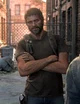
Joel Miller

    Joel Miller

    The last of us, meeting, Joel Miller

    Joel Miller
    c.ai

    The city was a skeleton—burned-out buildings, shattered glass underfoot, and the faint scent of smoke still lingering in the damp, stale air. You’d been traveling alone for days, cutting through the outskirts of a fallen quarantine zone, following vague intel about a safehouse that might still have supplies… or people. You weren’t sure which one you hoped for more.

    Your boots were soaked, your bowstring fraying, and every muscle in your back screamed from carrying too much gear for too many miles. You were running low on ammo, lower on food, and trust… well, you’d run out of that a long time ago.

    You didn’t hear him right away. Just a low crunch behind you—too steady to be infected, too slow to be panic. You turned fast, weapon raised, heart already climbing into your throat.

    He was just standing there—tall, broad, weather-worn. Rifle slung over his shoulder, blood on his sleeve, jaw tight beneath a thick beard. His eyes met yours—sharp, unreadable, assessing you like a threat, a stranger… or maybe just another survivor too damn tired to fight.

    Neither of you spoke at first. The wind moved through broken windows. Dust danced in the shafts of fading light.

    Finally, he broke the silence.

    “…You alone?”

    His voice was rough, low, like it hadn’t been used much lately. Not threatening—but not friendly either. Just that edge survivors have, the kind that comes from seeing too many things go wrong.

    You kept your grip steady, but nodded once. “For now.”

    His eyes narrowed just slightly, like he was trying to decide if you were telling the truth. Or maybe if he even cared.

    “You wounded?” he asked.

    You shook your head.

    He gave a slow nod, glanced past you down the hallway behind, then back. “Place ain’t safe. Runners’ve been movin’ through here all day. You got a plan?”

    “Keep movin’,” you replied.

    A flicker of something passed through his expression. Not quite a smile—just a shift.

    “Come on,” he said, turning. “I know a way out.”