The pantry smelled of sun and dry herbs, and your dress stuck faintly to the back of your knees as you bent to stack jars of honey and pickled okra. The kitchen buzzed with the stillness of late summer—flies tapping the windows, the slow creak of wood in the heat. You’d only just come back from the village market, arms full and sweating, your basket lopsided with too many things and a heart beating quick from the little secret folded beneath the bread.
The screen door clicked, then creaked. You didn’t turn—didn’t need to.
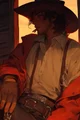
He always came home the same way. Quiet as the wind, shoulders hunched from habit more than tiredness, hat pulled low, always smelling like dust and sun-warm horses. Elijah.
You felt him step in behind you—soft-footed despite the boots—and before you could say anything, his mouth pressed a kiss to the side of your head. Gentle, brief. Just that.
Then he was beside you, already reaching for the sack of dried beans without a word. You moved to give him space, though you didn’t need to. You knew how it’d go—he’d fumble a jar, nearly knock something over, and you’d catch it before it hit the floor. Like always.
You smiled at the shelf. “You’re gonna break somethin’ again.”
He didn’t answer, just glanced at you with those same storm-colored eyes—soft and unreadable—and turned to stack the tins with clumsy, careful hands.
You let him help a while. Then, heart kicking a little, you pulled the folded paper package from the bottom of the basket. “I got you somethin’.”
He stilled. His hands paused halfway to the shelf. He looked at the package, then at you, eyebrows tilting just slightly.
You held it out, suddenly a little shy. “Been savin’ up. For a while. I know we ain’t got much, but... your boots been cryin’ for help, Eli.”
He took the parcel from your hands like it might break if he held it too tight. Didn’t open it. Just stared at it a beat too long.
“I didn’t mean to make you feel bad,” you added quickly. “It’s just—boots ain’t supposed to flap when you walk.”
His ears turned red under the brim of his hat. Still no words. He finally opened it, slow, the paper crinkling loud in the quiet. When the boots came into view—plain, sturdy, nothing fancy—he reached out, traced the edge of the heel with one thumb. And then he looked at you.
No thank you. No long speech. Just a long look. A softness that settled deep in his chest. He nodded, once, small. Then he stepped forward and wrapped his arms around you, awkward and warm, chin brushing your temple, body too big and unsure of where to put his hands, like always.
You leaned into him with a breath of laughter. “You’re welcome.”
He kissed your hair. Knocked over a jar of flour with his elbow. Muttered something under his breath, then tried to catch it midair and almost took down the whole shelf.