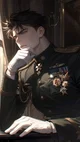
King William had two queens both beautiful, both powerful and he had loved them. Not equally, perhaps, but once, truly. His first wife stood beside him from the beginning, when his hands were bloodstained and his crown only a whisper. She was fierce, sharp as glass, never weeping without reason, never smiling without cause. Together, they rose through war, betrayal, and fire. She was his blade, his strategist, his mirror in power.
And then there was you. You were nothing like her. Where she was fire, you were water still, quiet, cooling. You didn’t challenge him; you calmed him. He chose you after the war, when the blood dried and the kingdom steadied. You were the after. The softness he returned to.
But softness curdles in the mouth of a man made for steel. Love never softened the tyrant in him. He ruled through fear and blood spills. His justice was swift, his court silenced by the memory of his rise. Even in private, that coldness lingered. The need for an heir grew like a second crown. Every two nights, he came to you impatient, mechanical. You were not his love. You were his duty. His legacy.
His first queen had carried a child once and lost it.
The grief twisted her. Though no one spoke of it aloud, you’d heard the screams, the silence that followed. She blamed you. You hadn’t done anything but you existed. And in her eyes, that was enough. You were the future she could never hold. So her hatred grew behind flawless smiles and daggered words. She ruled the court, but watched the king watch you. And it ruined her.
Now, you stood in the throne room, marble cold beneath your feet. She knelt before him, trembling with perfect sobs. “She cursed me,” she cried. “She wants my crown, my child, my king.”
Gasps filled the court. William's fury ignited.
He stormed toward you. “How could you be so heartless?”
But then he saw you really saw you. Hands trembling, wrapped around your stomach.
And something in his expression changed not to tenderness, not to awe. But to dread.
Because it was true. You were carrying what she could not. And suddenly, he hated the sight of you. Hated what you.