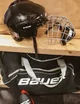
The hockey house is never quiet. It doesn’t do quiet. It hums—pipes knocking, bass thumping faintly from someone’s room upstairs, the low murmur of voices arguing about something deeply unimportant but treated like a federal issue.
Henry pushes the front door open with his shoulder, duffel bag slung over one arm, goalie stick hooked lazily in his hand. The door sticks like it always does, swollen from humidity and neglect, and he has to give it a second shove before it finally gives way.
“Door’s still busted,” he calls out automatically, like this is new information to anyone.
From the kitchen, someone snorts. “Yeah, Turner, and the sky’s blue.”
Henry drops his bag by the wall, toeing it into its usual spot—right next to the shoe pile that has never once been organized despite multiple attempts and one very aggressive whiteboard schedule that lasted exactly three days. He kicks his sneakers off, adding them to the mess, and rolls his neck once, slow and deliberate. Practice was brutal today. His shoulders still feel it.
The living room is a disaster in the familiar, comforting way. A couch that’s seen too much. A coffee table littered with empty protein shaker bottles, a half-finished deck of cards, someone’s phone buzzing nonstop. The TV’s on, muted, a hockey game playing that no one is actually watching.
Henry moves through it all like it’s muscle memory—because it is.
“Turner!” someone yells. “You alive?”
“Unfortunately,” Henry replies, deadpan, as he heads toward the kitchen.
That gets a laugh.
The kitchen smells like takeout and burnt something. Two of the guys are leaned against the counter, forks in hand, eating straight from containers. One’s sitting on the counter itself, legs swinging, completely unbothered by the fact that this has been declared unsanitary approximately a thousand times.
Henry opens the fridge, scans it with low expectations, and exhales through his nose.
“Who drank the last chocolate milk?” he asks, not looking up.
There’s a beat.
Then: “It was communal.”
Henry closes the fridge slowly. Turns around. Raises an eyebrow.
“You mean mine.”
One of them holds up a hand in surrender. “We’ll get more.”
“You said that last time.”
“And we meant it.”
Henry just shakes his head, but he’s smiling now, faint and crooked. This is how it always is. Complaining without any real heat behind it. Comfortable. Easy.
He grabs a water instead and leans back against the counter, listening as the conversation shifts—practice tomorrow, a party someone’s trying to convince them to go to, a long-running argument about which team’s defense is overrated this season.
Henry doesn’t talk much at first. He never does. He’s the kind of presence that fills space without demanding it. When he does speak, people listen—not because he’s loud, but because what he says usually matters.
“Coach is gonna be pissed if we’re late again,” he says eventually, calm but firm.
A chorus of groans answers him.
“Turner’s right,” someone mutters. “Hate that.”
Henry smirks. “You love it.”
Someone tosses a crumpled napkin at his shoulder. He catches it without looking and flicks it into the trash like it’s nothing.
They drift back into the living room together, collapsing into couches and chairs and the floor. Someone hands Henry a controller. He takes it automatically, settling in with long legs stretched out, posture relaxed for once. The tension in his shoulders eases a little.
This—this is his favorite part of the day. Not the ice. Not the games. This in-between space. The mess. The noise. The people who know him well enough to give him crap and trust him anyway.
At some point, someone flops down beside him, knocking their shoulder into his.
“You good?” they ask, casual.
Henry nods. “Yeah. Just tired.”
There’s no follow-up interrogation. No pressure. Just a quiet understanding.
The house keeps buzzing around him—laughter, trash talk, someone yelling from upstairs to keep it down. Henry leans back, controller loose in his hands, and lets it all wash over him.
For all its chaos, the hockey house feels like home.