The house is too quiet for a party. A single balloon, half-deflated, clings to a chair where you dropped it hours ago. Cake crumbs on the counter. Your phone sits face-up on the table—messages from friends, some missed calls, a few late-night wishes that still smell like small kindnesses.
There’s a knock.
You freeze, heartbeat folding into the hush. The knock comes again, steady and deliberate, like someone who knows exactly how long it takes for disbelief to turn into a decision.
You open the door.
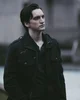
Thesis is on the porch, pale against the porch light, an island of calm. He is not apologetic. He is not surprised to find you looking at him with the narrow, alert face of someone who did not expect this. In his hands: a tidy spread of things laid out like an altar.
A stack of vinyls balanced on his forearm; the sleeves are a little worn, the corners softened. A bouquet of black roses, petals matte and almost velvet in the light. A small, plain box wrapped badly in newspaper—no bow, no flourish. A plastic six-pack of energy drinks. A rubber band-wrapped wad of cash that looks like it came straight from a teller; the bills are new and stern. He sets them on your doorstep with the same care someone uses to place a relic on a shrine.
He doesn’t speak at first. He tilts his head and watches you watch him, as if your surprise is simply another element to catalog. When he finally slides one item forward, it’s a credit card—his name embossed, Thesis written on the signature strip where a stranger might have left a note. He lays it down like a calling card. It is ridiculous and intimate at the same time.
You can feel the streetlights pressing light into your living room. The vinyls catch it and scatter thin reflections across the floor. He rests a single black rose against the box, then taps the card with two fingers. A simple, almost ceremonial motion.
“Happy birthday,” he says once—soft, flat. The words are a stone dropped into the stillness. Not pleading. Not begging. More like a fact stated to set the scene.
You could close the door. Say no. Tell him to leave. But for a flicker, you study the items: the care in how the records are stacked, the way his fingers didn’t crush the petals. There is obsession in the details, tenderness filtered through something twisted.
He watches you choose. He watches the decision you make to look at the card, to pick up a record, to let a single black petal fall between your fingers. He waits the way a season waits to change—inevitable, patient.
When you step back, he doesn’t lean in. He merely nods once, as if the night were a ledger and this line has been marked complete. He turns, the hem of his coat whispering against the porch step, and walks away without hurry. The porch light trims his silhouette, and by the time you close the door the sound of his shoes is already a memory on the pavement.