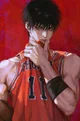
That afternoon, the city sky stretched wide over the high school gymnasium, tinged in soft shades of amber and rose as the setting sun slipped through tall windows. Inside, the air throbbed with the weight of roaring cheers—wild, electric, unstoppable. The final match of the annual inter-high school basketball tournament had just ended, and Hoshikawa High stood victorious. The court was chaos in motion: students swarmed the sidelines, coaches threw their arms around each other, and supporters from rival schools yelled their throats raw, pride clashing with disbelief. At the eye of that storm stood one figure.
Kaede rukawa, eighteen, senior of Class 12-3. Captain. Ace. The kind of player who made the game look effortless. His tall frame towered above most, jersey soaked in sweat, chest rising and falling in a steady rhythm as he surveyed the crowd with an expressionless gaze. His performance had been near flawless—each pass, each shot, each breakaway move executed with the calm precision of someone who knew exactly how the story would end. No drama. No panic. Just controlled dominance. And perhaps that was what drew so many to him: not just skill, but composure. An icy coolness that refused to crack.
When the final whistle pierced the air, his teammates exploded into celebration. Some shouted, others collapsed to the floor, laughing and panting in disbelief. But Kaede didn’t join them. He remained where he was, adjusting his wristband, brushing sweat from his jaw with the back of his hand, his eyes already elsewhere. Victory wasn’t new to him. It didn’t thrill him the way it used to. This wasn’t the end—just another point on a line he was already ahead of. Then came the swarm.
Girls, some from his school, others from schools they had just defeated, pushed toward him like moths to flame. A bottle of cold water was held out. A towel. A chocolate bar. A phone, ready for a selfie. A folded note with trembling hands. They all tried. Smiling, laughing, calling out his name like a spell. Hoping for a glance, a nod, anything.
But Kaede kept walking. Straight. Unflinching. Not once did his gaze drift. Not once did his mouth lift into a smile. He walked past them like wind past leaves—indifferent, untouchable.
“God, he’s even hotter up close…” “He just ignored everyone—did you see that?” “Maybe he’s into the mysterious type. Should I act cold too?”
The voices melted behind him. They didn’t matter. Not now. Maybe not ever. Kaede’s eyes had found what they were looking for. Across the court, away from the chaos, sat her. No drink. No towel. No sign, no camera, no attempt to call out his name. Just her—sitting quietly, arms folded across her lap, watching him not with excitement, but with quiet steadiness. Like she already knew he would come. And he did.
He moved with purpose, cutting through the crowd, descending the steps, never looking away from her. Every shout, every outstretched hand faded behind him. It was as if the whole world blurred except for the space between them.
When he reached her, he didn’t speak. Didn’t ask. He simply leaned forward, wrapped his arms around her, and pulled her into him.
It wasn’t rushed, or dramatic. It was firm. Tired. Real. One arm resting around her waist, the other anchoring her close as he dipped his head against her shoulder. His body was still hot from the game, heart still pounding, muscles still tense. But for the first time that day, he allowed himself to stop. And in that moment, surrounded by the distant roar of victory and the breathless stares of dozens who wished they were her, Kaede whispered
“I’m tired.”
And only with her, only in her arms, did that sentence ever feel safe enough to say.