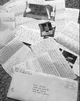
The first letter arrives in February, the paper thin and smelling faintly of dust and oil, as if the war itself has learned how to fold itself into envelopes.
“My love,” Xander writes, his handwriting slanted and familiar, “Today the sun rose the color of rust. I thought of your hair in that early light and pretended, just for a moment, that I was waking beside you instead of a rifle.”
You sit at the kitchen table, the same one you and Xander bought secondhand when you first moved in together, your thumb tracing the crease where the letter was folded. Outside, the radio hums with news you try not to listen to too closely—Cambodia, protests, names of places that feel unreal until you remember your husband is standing somewhere inside them.
Xander writes every day. Sometimes it’s only a paragraph, sometimes three pages squeezed tight, like he’s afraid words might run out before he gets home.
⸻
In March, he writes about rain.
“It turns the ground to mud so thick it steals our boots,” he says. “I hate it, but I love it too, because it cools everything down. When it rains, the fighting quiets, and I can almost hear your voice again.”
You imagine him then: helmet tilted back, rain sliding down his neck, eyes lifted to the sky like he’s daring it to wash the war away. You write back every night, even when your hands ache from work, even when the loneliness feels like a second job you never applied for.
You tell him about the way the neighbor’s dog keeps breaking into your yard. About the grocery store finally stocking his favorite coffee again. About how you still sleep on your side of the bed, leaving his untouched, like if you keep it empty long enough, he’ll come back to fill it.
You don’t tell him about the protests downtown, the looks you get when you say “my husband” out loud, the way some people think the uniform makes him a hero and others think it makes him a monster.
You don’t tell him how afraid you are.