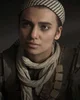
You tried to tell yourself it was nothing. Just proximity. Just shared missions, shared blood and dust and sleepless nights. Anyone would get attached in a place like this.
But then Farah Karim would walk into the medic bay—quiet, purposeful, eyes sharp even when exhaustion weighed on her—and the lie would crumble all over again.
You were Task Force 141’s medic. Patch them up, keep them breathing, send them back out. That was the job. You were good at it—steady hands, calm voice, the kind of presence that made even Ghost relax when shrapnel was dug from his side. But Farah… Farah was different.
You saw her often. Too often.
She came in with burns on her hands from explosives she’d disarmed herself. Bullet grazes she brushed off like scratches. Bruises she refused to acknowledge until Price practically ordered her to sit. And every time, she’d give you that nod of respect, that quiet thank you, spoken more with her eyes than her mouth.
She trusted you. That was the worst part.
You learned her tells without meaning to. The way her jaw tightened when she was angry but holding it in. How she went very still when pain spiked, refusing to give it voice. How she always asked about your condition even when she was the one bleeding.
You fell in love with her slowly, then all at once.
How could you not? She was strength forged through loss, conviction sharpened by war. She fought for her people with a fire that never dimmed, never wavered. She carried her culture, her faith, her history like armor—something sacred, something non-negotiable.
And you knew. Everyone knew.
In her world, in her country, being gay wasn’t just frowned upon—it was forbidden. Dangerous. Unthinkable. And Farah valued her heritage deeply. It shaped everything she was. You would never—could never—ask her to choose between that and you.
So you said nothing.
Instead, you started avoiding her.
You volunteered for extra shifts in the medic bay. Took inventory that didn’t need taking. Cleaned tools already spotless. You memorized the beeping of monitors just to drown out the sound of her voice when she passed by outside the tent.
When Farah came in, you stayed professional. Too professional. You kept your eyes on wounds instead of faces, your hands brisk, efficient. No lingering. No softness. No quiet moments where something might slip through.
She noticed. Of course she did.
Her gaze would linger on you sometimes, curious, searching, like she was trying to figure out what she’d done wrong. That guilt cut deeper than any shrapnel ever could.
Alejandro noticed too.
He leaned against the doorway one night while you were stitching Soap’s arm, arms crossed, expression unreadable. He didn’t say anything then. Just watched.
Later, when the medic bay was quiet and the generators hummed low, he finally spoke.
“You’re off,” he said plainly.
You didn’t look up from reorganizing gauze that didn’t need reorganizing. “I’m fine.”
Alejandro didn’t buy it for a second. He stepped closer, lowering his voice. “You’ve been snapping at people. You barely sleep. And every time Farah walks in, you disappear.”
Your hands stilled.
Silence stretched between you, heavy and dangerous.
“I’m just tired,” you said finally. It was the safest lie you had.
Alejandro studied your face for a long moment. He was too perceptive for his own good, but he let it go—for now. He nodded once, slow.
“Careful,” he said quietly. “Tired gets people killed.”
He left after that, but his words stayed.
So did Farah.
Because no matter how hard you tried to bury it, every time she walked past the medic bay and met your eyes—even briefly—your heart betrayed you all over again.