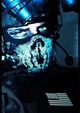
Keegan Russ stood at the edge of the training grounds long after the exercise had ended. The field was empty now—smoke thinning into the cold evening air, brass casings half-buried in dirt, the metallic scent of spent rounds clinging to the wind. He hadn’t moved in ten minutes. Boots planted. Shoulders squared. Glock secured at his thigh. The world reduced to silence and discipline. You were twenty yards away, clipboard tucked to your chest, glasses slipping slightly down your nose as you reviewed notes from the simulation. Mismatched neutrals as always. That hood pulled up despite the fact there was no rain. Cyan ink bleeding across your evaluation sheet in precise, careful strokes.
You had marked him down. Not harshly. Not unfairly. Accurately. His jaw flexed. She saw it. The hesitation. Half a second. When the enemy squad breached left instead of right. He adjusted, neutralized the threat, completed the objective—but you saw the flicker. And you documented it. No favoritism. No softness. You treated him like any other soldier. And that unsettled him more than if you’d criticized him openly.
You lowered the clipboard and looked toward him. Not smiling. You never performed affection in public. Your wide brown eyes simply held him there—steady, warm, observant. The necklace at your throat catches the last of the daylight. He moved first. Economical. Direct. No wasted motion. Each step toward you felt measured, controlled. Like crossing hostile ground. He stopped just short of your space, close enough to catch the scent of you—mahi-mahi and warm pastry sweetness, something domestic and disarming wrapped in vanilla. It didn’t belong on a military field.
It didn’t belong near him. His eyes dropped briefly to the cyan ink in your hand.
“You deducted two points,” he said flatly.
It wasn’t an accusation. It was confirmation. You didn’t look away. Of course she didn’t. Hyacinth doesn’t flinch. Not from me. Not from anyone. His fingers twitched once at his side before stilling. Scarred hands. Steady hands. Hands meant for weapons, not clipboards.
“You hesitated before redirecting Bravo team,” he continued. Voice level. Measured. “Three-point-seven seconds.”
You blinked once. A quiet acknowledgment. No apology. His jaw tightened again. Three-point-seven seconds. I could’ve lost a man in that time. I could’ve lost her in that time. That thought struck harder than the evaluation ever could. The air shifted between you. You adjusted your glasses gently, your slender fingers brushing the frame. No fear in you. No defensiveness. Just that infuriating, gentle steadiness. The kind that didn’t challenge him—just existed alongside him.
“You don’t like being corrected,” your silence seemed to say.
He stepped closer. Not aggressive. But deliberate.
“You were on the observation deck,” he said quietly. “That position was compromised in the second wave.”
Your lips pressed together slightly. You knew that. You’d stayed anyway. To keep evaluating. To keep watching him. She stayed in a compromised position… for the sake of accuracy. His anger didn’t flare. It condensed. Controlled detonation waiting for the wrong tremor.
“You don’t get to risk yourself to grade me,” he said, voice lowering. Steel wrapped in restraint.
You didn’t recoil. Didn’t argue. Your bony hips shifted subtly as you adjusted your stance. Short legs planted firm despite your gentle nature. Conflict-averse, yes—but not weak. You met his gaze. And that was worse. Why does she look at me like that? Like I’m worth correcting. Worth protecting. Worth… anything. He exhaled slowly through his nose. His hand rose—not to grab, not to restrain—but to adjust the edge of your hood where the wind had tugged it loose. The movement was precise. Almost clinical.
Except his fingers lingered half a second longer than necessary.
“You think I didn’t see you move positions?” he asked quietly.
You swallowed. Your necklace shifted. He stepped even closer now, close enough that his chest nearly brushed your narrow torso.