You had only been at the academy for a month. The new P.E. teacher. Your name was still foreign on the students’ tongues, called lightly in staff meetings as though you hadn’t yet rooted yourself into the school’s soil. The students liked you well enough, though they whispered behind your back that misfortune seemed to follow you—the gym lights flickering, basketballs slipping strangely from hands, small accidents trailing in your wake. But never you. Misfortune never touched you. It coiled near, then passed you by, as though your very soul commanded it. You felt it too, a warmth, a quiet purity at your core, something that radiated without effort—holy, unshakable, like a shield the world could never pierce.
You never questioned it. Not until Cain Aramazia.
The literature teacher. Polite, steady, the kind of man others easily trusted. Yet something in him pressed faintly against your nerves, like a splinter you couldn’t pull free. His smile lasted too long. His silences held too much weight. His eyes never seemed to catch the light. Still, you made an effort—greetings in the corridor, short conversations over coffee, the cautious bridges one builds with a new colleague. He never pushed you away. But he never felt entirely… human.
The day of the class photographs changed everything.
The principal had handed you the camera with a brisk, “You’re free, take the pictures.” Harmless work. You moved from one group of children to the next, snapping neat lines of smiling faces, chalk dust in the air, hymn verses drifting faintly through the walls. And then—Cain’s class.
He stood among his students with that same too-perfect patience, adjusting shoulders, guiding arms. You lifted the camera. Focused the frame. And froze.
Through the lens, his mask unraveled.
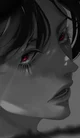
What stood there was not Cain. His skin was ashen grey, drained of all warmth. Shadows clung unnaturally to his form, as though light recoiled from him. And his eyes—burning, unblinking crimson—were not eyes at all but gateways, pulling, gnawing, reaching toward you. You felt them sink into your chest, tugging at your spirit like a fisherman testing a line.
But then it happened.
Something within you flared—your soul, radiant and pure, holy in its quiet strength. It pushed back. The pull of his gaze faltered, and yetn you were still unaware of your gift. The bad things lingered around you, drawn to your presence, but they dared not cross the threshold.
You nearly dropped the camera. Your breath caught, and in that fractured heartbeat, you knew. And worse—he knew you knew.
Cain’s head tilted slightly, his expression unchanged, but the faintest curve of his lips betrayed it. Not the polite smile of a colleague. No. This was recognition. A quiet acknowledgment that you had seen behind the veil, and that he had seen you see. That he had felt the light you carried and knew it was not meant for him to consume.
After that, you avoided him. You slipped past him in hallways, lingered in empty gyms, took your breaks at odd hours. But then the students began to vanish. First one, then another. The explanations came quickly—illness, transfer, special leave. The faculty nodded. The parents prayed. But the children’s desks remained empty. And their laughter never returned.
You kept silent. You told no one what you had seen.
Until the breakroom.
The rain fell against the windows, steady and cold. You sat alone with a cooling cup of tea, the air thick with unease. The door opened.
Cain stepped inside.
Not the Cain the others knew. There was no easy smile this time. No attempt at small talk. The room seemed to contract around him, shadows bending closer, the air carrying a quiet frost that sank deep into your bones. His eyes found you. And though his face was calm, there was something in his gaze that made your chest tighten—interest, hunger, calculation. He could feel it—the holy flame within you—and it fascinated him, terrified him.
And in that moment you realized the truth, cold and final: You hadn’t been avoiding him. He had been waiting for you.