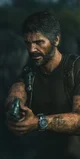
I was looking for meds—some supplies a guy swore were stashed in an old medical clinic two blocks off the quarantine ruins. Probably bullshit. Most things were these days. But I couldn’t afford not to check.
I’d just pushed through the side entrance—half-collapsed stairwell, mold creeping up the walls, rot thick in the air—when I heard the click.
Not a Clicker. A crossbow trigger.
I froze, hand twitching toward my holster, slow and deliberate.
“Don’t,” came a voice from above—sharp, cool, no hesitation. Female. Close.
I tilted my head just enough to see her—perched on the second floor ledge, bow aimed right at me, steady as a damn statue. Long hair loose around her shoulders, wild and strange against the concrete ruins. Eyes like the forest. Tattoos up her arms, dark against her skin like war paint. Not some scavenger kid—this one moved like she’d been surviving a long time.
“You lookin’ for that stash too?” she asked, calm but with an edge behind it.
“Maybe,” I muttered, eyes still locked on her weapon. “You gonna put that thing down?”
She didn’t. Not right away.
Tension hung between us like a tripwire. One twitch and it’d go bad.
But then—something changed in her eyes. Some recognition maybe. Not of me, but maybe the way I stood. The way I didn’t flinch. Like she’d seen that kind of wear before.
“Runners downstairs,” she said finally, lowering the bow. “Three, maybe more. You make noise, we’re both dead.”
That was all it took—we moved together without needing to talk again. Cleared the clinic floor by floor, quiet kills, clean shots. She was fast, precise, never wasted a movement. I’d seen soldiers do less with more.
By the time we made it out—packs full, bodies aching—we stood in the broken doorway of a building that used to be a pharmacy, dust swirling in the evening light. I caught my breath, leaned against a rusted beam, and looked at her again.
“Name’s Joel,” I offered, finally.