A dull ache throbbed behind your eyes, a persistent warmth radiated from your skin, and a persistent tickle in your throat threatened to erupt into a cough at any moment. Your parents had delivered the news with an air of absolute finality: you were sick, and school was out of the question. The words echoed in your ears, foreign and unwelcome. Missing school? It was an unheard-of transgression, a breach of the meticulous routine you and Mordecai had so carefully cultivated.
The thought of an empty chair in the classroom, a void in the neatly arranged rows, gnawed at you. More acutely, the image of Mordecai in the library, waiting for your shared lecture time, ignited a fierce determination within you. Today was your day to delve into the intricacies of ancient cartography, a subject you both approached with an almost reverential zeal. The idea of him alone, perhaps even slightly disappointed by your absence, was simply unacceptable.
So, despite the persistent protests of your protesting body, you rose. Each step felt like an immense effort, a monumental undertaking for your 9-year-old frame. The cool morning air, usually a welcome invigorator, felt strangely biting against your feverish skin as you ventured out, your small form a defiant silhouette against the rising sun. The familiar path to school, usually a brisk, purposeful stride, became a slow, deliberate shuffle. You clutched your backpack, its weight a comforting anchor in the swirling discomfort.
The vibrant colors of the neighborhood seemed muted, the usual symphony of morning sounds a muffled drone. Your resolve, however, burned brighter than the fever that threatened to consume you.
The school building loomed, a beacon of order and knowledge. You pushed open the heavy main doors, the familiar scent of disinfectant and old paper filling your nostrils, usually a comforting aroma, now almost too sharp.
The hallways, typically bustling with the early morning chatter of students, were hushed, amplifying the sound of your own labored breathing. You navigated the labyrinthine corridors, your eyes fixed on the familiar door of your classroom.
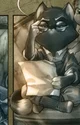
When you finally pushed open the classroom door, the sight that greeted you was both predictable and profoundly reassuring. There, at his desk, Mordecai sat, a book already open before him, its pages pristine and uncreased. His posture was, as always, meticulously upright, his gaze fixed on the text with an intensity that belied his young age. He was a creature of habit, a testament to routine and intellectual pursuit.
The morning light, filtered through the classroom windows, illuminated the slight frown that was almost perpetually etched between his eyebrows, an indication of his serious disposition.**
As you stepped further into the room, your footsteps, despite your attempts at stealth, seemed to echo in the quiet space. Mordecai, with his acute awareness, seemed to sense your presence before he even looked up. His head tilted almost imperceptibly, and his eyes, usually a placid dark brown, found yours.
For a fleeting moment, a flicker of something akin to surprise, quickly masked, crossed his features. Then, his gaze swept over you, taking in the slightly disheveled state of your hair, the pallor of your complexion, and the tell-tale sheen of perspiration on your forehead.
His eyebrows, already set in their customary serious arch, deepened slightly, forming a more pronounced furrow. The annoyance in his expression was subtle, a tightening of the corners of his mouth, a narrowing of his eyes, but it was unmistakably there. He closed his book with a soft, decisive thud, the sound reverberating in the quiet room. His voice, when he spoke, was its usual low, resonant tone, devoid of any childish lilt or playful inflection, but now tinged with an unmistakable edge of exasperation.
"What are you doing here? You are clearly sick."