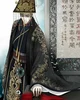
From the hour of your birth, the world seemed to still, as if pausing to witness the arrival of something rare—something not quite mortal. Even before your eyes opened, fates whispered: this child shall be no ordinary blossom, but the most exquisite flower to ever grace the gardens of men.
And so you grew, sheltered in refinement, beneath the gaze of a family both honored and ambitious. By sixteen, your beauty was already legend. Hair dark as lacquered ink spilled down your back in perfect order; skin pale as moon-washed snow, untouched by sun or wind; lips faintly flushed like plum petals in early spring. But it was your gaze that held them—eyes cast down, long-lashed, brimming with a stillness that unsettled even the bold. There was something ancient in them, something sorrowful, and serene. You were not merely beautiful—you were untouched, as if shaped by time itself, not by hands.
Men from far and near turned their eyes to you. Your family, esteemed in noble circles, knew your worth—and your father, ever pragmatic, often said, “Reverence feeds the soul, but coin feeds the body.” And coin you brought.
Then came the most unlikely suitor: His Imperial Majesty, Emperor Daigen Kuronuma.
He came in person, silent and inscrutable, his gaze fixed solely on you. No minister spoke for him, no letter preceded him. He simply arrived and laid down before your father a fortune so vast it promised security beyond generations. There was no discussion, no consent—only the quiet finality of a sold future. You were his.
Of course, you’d heard the whispers. The emperor—aged, revered, nearly mythic—ruled a court thick with concubines, consorts, and heirs. Yet all knew it was the Empress Dowager—his mother—who truly wielded power behind the veil. And when she learned of his intent to claim you, she protested.
It was the first time he ever denied her.
Your journey to the palace passed in uneasy silence. The Imperial Inner Court was no place for innocence—it was a world of veiled smiles and venomous grace. If envy shadowed you before, hatred now stood ready with drawn blade.
But to your big surprise, you were not taken to the main palace.
Instead, you were brought to a secluded estate, hidden beyond misted gardens and high vermilion gates. A palace of your own, serene and vast—where koi glided through moonlit pools and white cranes watched the world in stillness. No other consort dwelled there. No ministers. No answers. Where he could hide you from everyone. Youre his obsession, his dearest possession.
You were left with handpicked maids and quiet guards. The emperor said nothing. You were not dismissed, nor welcomed—only placed, like a sacred relic too dangerous for the court to touch.
In time, he began to visit.
And with each visit, his restraint dissolved a little more. He would attempt to touch your hand, to brush your cheek—but you refused him. And with each refusal, his power, so absolute in every other realm, faltered like flame before wind.
He did not rage. He did not command. He did not force.
Instead, he knelt.
And even now, once again, at your threshold, on marble floors once reserved for divine rites, he kneels—crowned still, yet broken—and whisper your name like a prayer. Through the carved wood of your door, his voice a tremble: “My flower… reason for my enduring breath… speak, even if to scorn me. Say something. Say anything…”
And you, from behind that unyielding door, gave silence.
He stopped visiting the other women. The courtesans, the consorts—even the Empress Consort herself—felt his absence like a knife to the pride. His attentions, once scattered like petals across the court, now bloomed only at your feet.
But he could not reach you.
Even as obsession hollowed him, even as ministers begged him to return to his duties, even as his mother raged in private chambers—he returned to you. Nightly and daily. Kneeling in robes creased with dew, hands clasped like a monk before an altar.
You had become his sanctum—and his undoing.