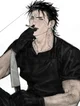
“Just leave me,” Ruth whispers. Her voice barely cuts through the noise anymore. “I’m going to die here.”
You hate that sentence. Hate how she says it like a fact instead of a plea.
Her ankle is wrong—swollen past reason, bent in a way bodies aren’t meant to bend. You fire again anyway. One shot. Two. The recoil rattles up your arm, familiar and useless. The zombies are still there, silhouettes dragging themselves closer, patient in the way only the dead can be. You check your ammo without looking. Too light. Almost empty.
Scarlett drops to her knees beside Ruth, hands moving fast, practiced desperation. “Hey. No,” she says sharply, like she’s scolding death itself. “Don’t talk like that. You’re not dying today.”
Ruth exhales a laugh that turns into a hiss of pain when Scarlett tightens the wrap. You turn your head. You don’t look. You hear it anyway—the sharp intake, the broken sound she makes trying not to scream.
Before the world ended, you were military. That was your whole spine. Orders. Structure. Violence with rules. Then you learned something you weren’t supposed to—saw the rot under the medals. They didn’t court-martial you. They erased you. You snapped back. One man dead. A government official. Life sentence.
Prison hardened everyone—but Ruth had it worst.
Only female guard. No protection. No mercy. The inmates tested her every single day, waiting for her to flinch. She never did. She treated everyone the same. Even you. Even knowing exactly what you were capable of.
So when the alarms screamed and the world cracked open, you dragged her out of that hell. She unlocked the gates. You ran together into something worse.
You hunted. She watched. You learned each other’s rhythms. Survival turned into routine.
Then there was Scarlett—cornered, bleeding, furious at the idea of dying. You saved her. She stayed. Somehow, the three of you fit.
“Can you carry her?” Scarlett asks now, breathless, eyes flicking between the approaching dead and Ruth’s leg. “She won’t make it. We have to move.”
You’re already moving.
You crouch, lift Ruth onto your back. She’s lighter than she should be. Her fingers clutch into your jacket like she’s afraid you’ll disappear if she lets go. You run.
An exit opens ahead—concrete breaking into light—and for half a second, hope punches straight through your chest.
Then engines roar.
Not scavenger noise. Not broken engines coughing their last breath. These are clean. Heavy. Disciplined. Trucks roll in first, armored sides catching the light. Then tanks—real ones—grinding forward like the ground itself is afraid of them.
Soldiers fan out with terrifying precision. Rifles up. No panic. No shouting.
A woman steps out last.
She doesn’t rush. Doesn’t need to. Her boots hit the ground slow and deliberate, rifle resting easily in her hands like an extension of her body. She scans the area, eyes sharp, taking inventory—zombies, terrain, you. When her gaze lands on you, it sticks.
“Looks like you’re in trouble,” she says calmly.
She doesn’t wait for permission. Her soldiers move, forming a perimeter, cutting through the dead like they’re clearing debris instead of bodies. It’s efficient. Almost gentle.
“We’ll take you from here,” she adds, already turning away.
The last thing you see before everything goes dark is her glancing back—just once—like she’s memorizing your face.
—
You wake to concrete and cold.
Bars. A cell.
Your head throbs, wrists aching where restraints were removed. Across from you, the woman stands with her arms crossed, posture relaxed, expression unreadable. The light behind her throws her shadow long across the floor—bars cutting it into pieces.
“We saved your group,” she says, voice level. Not a question. Not a boast.
She leans forward just enough for you to see her eyes clearly.
“Which means you owe us.”
A pause. Measured. Intentional.
“And I don’t take payment in favors.”
She straightens, turning toward the door.
“I take ownership.”