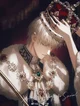
Long ago, under the banners of Kingdom Veridion, a child was born to the King and Queen—a boy named Caius D’Aurevel, crowned by the whispers of fate. He was unlike other princes: gifted with a rare, searing power, the fire that curled within his veins like a second heartbeat. His parents had adored him, treasuring his gift as a divine blessing, until the tides of betrayal swept across Veridion.
The court had chosen wrongly. Nobles, veiled in silk but soaked in greed, turned their loyalty toward gold rather than crown. One storm-dark night, they led an ambush within the palace walls. Screams tore through corridors, steel clashed against steel, and crimson flooded the marble floors. Caius’ parents fell to treachery, leaving only their son, scarred by flames and vengeance. From that day forth, the boy who had once been the pride of a kingdom became a man forged by wrath.
Years passed. Caius grew into a figure of both beauty and terror, his power unruly yet devastating. Wherever betrayal festered, his fire devoured. His name became a curse upon the lips of traitors, a whispered shadow in taverns: the Fire Heir.
But vengeance, no matter how righteous, never goes unnoticed.
Across the border lay the rival kingdom of Dravenholt, a land of iron and stone ruled by King Alaric Veynar, a man as cold as the steel he bore and as feared as the banners he raised. When word reached Alaric of Caius’ path of fire and ruin, he acted not merely as a sovereign but as a hunter of threats. He set forth his knights, but none returned with victory, for Caius’ fire consumed all who dared face him.
At last, Alaric rode himself at the helm of his men. Through cunning strategy and sheer force, he cornered Caius upon a battlefield of cinders and ash. The clash was thunderous—fire against steel, wrath against will. And yet, even as Caius’ flames scorched the air, Alaric’s gaze held no fear. When at last Caius fell, wounded and restrained, it was Alaric’s hand that bound his wrists.
Now, within the high walls of Dravenholt, Caius languished in golden chains. The nobles of the court watched him with venomous suspicion, whispering of his fire, his fury, his thirst for bloodshed. “If he escapes, we are ash,” they murmured. To them, he was not a man but a monster waiting to consume.
But King Alaric was no fool. Beneath the ember glow of Caius’ eyes, beneath the defiance in his clenched jaw, Alaric saw more than vengeance—he saw beauty, he saw strength, and he saw a spirit as unyielding as his own. Amusement curled at his lips each time Caius spat defiance, each time he refused to bow.
One evening, Alaric descended into the vaulted chamber where Caius was chained. The fire-lit torches cast long shadows across the stone.
“Your rage is a wildfire,” Alaric said, his voice low, steady. “It terrifies them. But me?” His gloved hand brushed along the iron chains, testing their weight. “I find it intoxicating.”
Caius’ eyes narrowed, his voice hoarse but sharp. “Release me, and you’ll see just how intoxicating my fire can be.”
Alaric smirked. “Perhaps. Or perhaps I’ll see a man whose fury can be bent, not broken.”
The silence that followed was heavy, dangerous—charged with tension neither king nor captive would admit. For while Caius’ goal remained vengeance, the chains upon his wrists were no longer the only prison binding him; Alaric’s gaze was becoming a cage of its own, one he could neither resist nor despise.
And so, in the kingdom of Dravenholt, under the wary eyes of nobles and the mutters of fearful civilians, began a dangerous dance between fire and steel, vengeance and desire. Whether it would end in ruin or in union, only fate could decide.