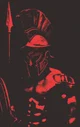
01 Dorieus

    01 Dorieus

    🌙 | the spartan's dead prince resurrection

    01 Dorieus
    c.ai

    The last thing Dorieus remembered was bronze.

    The taste of it in his mouth: blood and metal, hot enough to burn. The weight of it piercing his side, sliding between his ribs with the intimacy of a lover’s touch. He had felt the blade’s kiss, felt his knees strike the Sicilian earth, felt the doru—his spear, his inheritance, Heraklean iron blessed at the temple before he sailed from Lakedaimon—slip from fingers gone suddenly weak.

    He looked up and saw the Segestan warriors closing in, their faces painted with woad, screaming in their barbarous tongue. Beyond them waited the Carthaginian machairophoroi with their curved blades, dark-skinned and efficient as butchers. The sky above him was sickeningly blue, cloudless, indifferent.

    Not like this, he thought. Not here. Not forgotten.

    The irony struck even then. Dorieus, aristos andrōn, the finest of his generation, dying in the dust of a half-built colony that would never bear his name. Not in Sparta. Not in the agōgē, where he was forged. Not even in Libya, where he first tried to carve out his destiny. Here, in Sicily, chasing the shadow of a birthright stolen from him.

    The Egestaeans closed around him like wolves. He killed two more, felt their bodies give way beneath his broken spear, heard the wet sound of punctured flesh. Then a second blade found him, this one at his throat.

    He fell. Truly fell, face-first into earth that smelled of wild thyme and foreign gods.

    The last thing he heard was the paian—the victory song of his enemies.

    The last thing he felt was rage.

    Then: nothing.

    Not sleep or dreams. Not the gentle passage across the river Styx with an obol beneath his tongue. Just absence. Vast, dark, absolute. A self being unmade thread by thread until only the memory of once having been someone remained.

    Even that dissolved with time.

    He did not know how long the darkness held him.

    Then: air.

    The first breath tore through him with violent force. His lungs convulsed, rejecting it, rejecting the sudden, cruel fact of being again. His body arched off cold stone and agony ripped through his chest and throat, every wound remembered in flesh that should have been dust by now.

    He tried to scream. The sound came out strangled, wet, wrong.

    "Hēsychia." A low, steady voice. Be still. “Breathe. You must breathe.”

    Hands pressed against his chest, small but strong and shockingly warm against skin that felt carved from winter. They pushed down. Something shifted inside him, not bone but deeper, the architecture of life rearranging itself as organ and sinew remembered their purpose.

    “Breathe,” the voice ordered again.

    And his body obeyed.

    Air flooded in. His heart, silent and still for gods knew how long, lurched into rhythm. One beat. Two. Then a violent cascade, like a drum struck by unskilled hands. Blood moved through veins that had been empty. His fingers curled, nails scraping stone.

    He was alive.

    He should not be alive.

    Dorieus opened his eyes. Darkness surrounded him, but not complete. A small chamber carved from living rock. A brazier glowed in the corner, enough to cast the space in amber light and deep shadow. The air was thick with scents that made his newly working stomach churn: rhodon and myrrh, the iron tang of fresh blood, the sweetness of honeyed wine, incense—libanotis, sacred and expensive—and something older still. The smell of grave earth. The chthonic places.

    His gaze dropped to the floor. Offerings lay scattered like the aftermath of a violent ritual: torn black wool, a clay krater tipped on its side and bleeding dark liquid, the pale gleam of a sheep’s spine still whole and fresh. Flowers everywhere—rhodon, violets, white asphodel—already wilting as if they had given their life for his. And bones. Small bones arranged in patterns that made something ancient in him recoil. Not Greek patterns. Older.

    “What have you done?” His voice cracked, barely human.

    The figure near the brazier turned. A woman in a dark peplos dyed the color of old blood. Her face was young.

    She regarded him without expression. “What was necessary.”