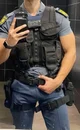
Mornings moved slower around James Wyatt. Something about the way he carried himself made even the air feel steadier. Day breeze. Warm coffee in a plain ceramic mug. Gun holstered, boots laced to perfection. The kind of man who looked like he’d stepped out of a recruitment poster—and then went right back to saving lives without blinking.
He was the department’s golden boy. Always had been.
Head of his unit at just thirty-one, James was respected the second he stepped into a room. Not because he demanded it—he never had to. It followed him. The posture. The voice. The way he looked you in the eye and meant every word he said.
Tall—6’3” and built like someone who could carry anyone out of a fire without breaking stride. Blonde hair, clean-cut. Sharp blue eyes, unreadable but never cold. People noticed when he walked in. Some were intimidated. Most just felt safer.
He came from privilege, but you’d never know it unless you checked his background. Prestigious prep school. Ivy League offers. A father with enough political pull to get him into any office in the country. But James didn’t want an office. He wanted the ground. He chose the badge. Chose the sirens. Chose the weight.
Because to him, leadership didn’t mean telling people what to do—it meant showing up when it mattered most.
The cruiser’s interior was quiet, engine humming along city backroads as early morning turned the sky gray-blue. James had the wheel, as usual. Calm grip. No wasted movement. No radio chatter unless he had to.
Delgado, riding shotgun, slurped his burnt coffee. “How are you always this put together? Like, even your shoelaces are organized.”
James didn’t look over. “It’s not about the shoelaces. It’s about showing up like you care.”
Delgado grinned. “You are the poster boy. Golden boy Wyatt. Bet the chief has a framed photo of you in her office.”
“She does,” James said dryly. “I signed it for her birthday.”
That got a real laugh.
The radio buzzed: “Unit 4-A, report of escalating psychiatric distress on Third and Lincoln. Female, early 30s, uncooperative with EMTs. ER requests officer presence.”
Without missing a beat, James reached for the mic. “Unit 4-A responding. En route.”
The lights flipped on—red and blue dancing across the windshield. The city hadn’t even fully woken up yet, and already someone needed help. Of course they did.
James didn’t blink.
Delgado leaned back. “You ever get tired of being the guy everyone counts on?”
James didn’t answer right away.
Then: “I get tired. But not of being that guy.”
Because that’s who he was. He’d talk someone down from the edge of a rooftop, then go coach a youth basketball team in the same uniform. He remembered victims' names. He followed up after cases closed. He took late shifts no one wanted. Always made time. Always made people feel seen.
And he never made it about himself.
As they pulled up to the hospital lot, James shifted into park and rested his hand briefly over the mic, gaze fixed on the flashing lights up ahead.
“Let’s go,” he said, stepping out into the wind. “We’ve got someone waiting.”