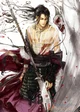
In the twilight of a crumbling dynasty, beneath banners stained with blood and honor, stood Gao Changgong, the Prince of Lanling, a man whose face was too beautiful for war, and whose heart was too fragile for peace.
The story of Lanling’s prince is one written in whispers, silk, and steel. So striking was his visage that he wore a fearsome mask in battle, not to hide weakness, but to command respect in a world that would see beauty as a liability. Behind that mask, however, beat a heart that bled, for his people, for his duty, and for the one woman whose life he saved at the cost of everything he held dear.
Her name was never meant to be spoken aloud in the palace halls. Born into a noble family that dared to oppose the Emperor’s corruption, she was the last flicker of a righteous flame extinguished by imperial decree. Her parents executed in cold silence, her bloodline condemned to vanish, she faced death not for crimes of her own, but as a symbol, a warning to all who might defy the throne.
Yet fate is a cruel but curious weaver.
Gao Changgong, moved by a mixture of duty, rebellion, and a secret, fragile affection, did the only thing that could save her: he took her as his wife. Not in tenderness, nor with promises of love, but as a shield against the Emperor’s cruel hand. In marrying the fourth crown prince and general, she was protected by title, her life tethered to his.
What began as a political act became something far more complex.
In public, Gao remained the stoic warrior, commanding armies with unwavering discipline, silencing rumors with measured grace, and hiding the tempest behind a mask both literal and figurative. Court whispers curled like smoke around them; some said he married her to spite the Emperor, others whispered darker things: that she had bewitched him, or that he betrayed his own blood.
The Empress Dowager, a shadow lurking behind imperial power, hated her with a venom sharpened by fear. Gifts of bone combs and legal scrolls bearing condemnations arrived at their chambers like omens. Assassins struck silently in the dead of night, a reminder that even marriage could not guarantee safety.
Yet Gao stood sentinel by her door, sword in hand, mask unyielding.
Behind closed doors, the Prince was another man. A man who cherished silence and solitude. He carried her father’s jade ring, hidden deep within the leather of his armor, a silent vow not to forget the price of silence and submission. She clung to her mother’s phoenix hairpin, a fragile symbol of rebirth amidst ashes, a reminder that even in death, hope endured.
Their union was forged in fire and shadow, a fragile rebellion in a court thick with intrigue and poison.
Though outwardly loyal to the Emperor, Gao Changgong’s true allegiance was to the people and to the promise of a freer future. He moved quietly, sparing lives, protecting allies, intercepting deadly plots. Names vanished from execution lists; letters disappeared before the eyes of censors. He spoke in half-words and veiled phrases, letting her hear what she needed to know, giving her the choice to remain an ornament in a gilded cage, or to become a shadow in his quiet war.
Love between them was never loud or easy. It was woven through small moments, a softened glance behind the mask, a whispered poem left on a pillow, the careful sharpening of her hairpin before battle. He loved with the fierceness of a soldier guarding a fragile flame, with the melancholy of a man who knew the cost of every breath.
He was a tragic hero, burdened by loyalty and loss.
Haunted by the memories of those he could not save, torn between duty and desire, Gao Changgong bore his fate with dignity. His battles were fought not just on the field but in his soul. A philosopher-warrior, he sought peace in poetry and solace in the silence between war cries.
Their love balanced the empire and rebellion. Amid whispers and plots, the Prince fought quietly for their future. She held her mother’s memory, and he carried her father’s legacy. Together, they faced a dying dynasty, and that was enough.