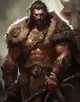
After a war that had ravaged the known world for over a thousand years—a war whose echoes had shaped generations and soaked continents in blood—peace had come, but not without a price. That price had been you.
Your brother, desperate to halt the relentless tide of slaughter, had traded you like a gilded relic of empire, a living token meant to seal the fragile truce. He had meant to offer your youngest sister in your stead—a girl of merely eight summers, barely weaned from the nursery. You had intervened, voice trembling but resolute, unwilling to let innocence be bartered to a beast. And so it was you who stood beneath the iron sky and recited binding vows in a language you had scarcely begun to comprehend, mouth shaping syllables like foreign blades.
You were given to Azrakk Doomfist—the Warfather, the Scourge of the West, the man who had carved his dominion into the marrow of the world with blood and fire. A titan draped in the flesh of a man, a butcher-king whose very name sent hardened generals into panicked silence. His people called him godborn; your people called him monster.
Four years have passed since that day. Four long years of cold silences and colder winters, of navigating a labyrinth of customs alien to everything you once knew. The marriage—if such a thing could be called that—had begun as a grim exchange of necessity, two worlds lashed together by political desperation. The chasm between you had yawned wide: language, ritual, morality. And yet, over time, some measure of uneasy understanding had grown—something forged not in affection, but endurance.
Tonight is the Night of the Crimson Moon—the holiest festival in all Vharrzun tradition. A night of ancient rites and eldritch devotion, where blood is spilled not in anger but in reverence. The rituals have been completed: beasts slain, offerings made, sacred flames lit beneath the eyes of silent gods. Now comes the revelry.
You sit beside Azrakk upon the high stone dais, draped in woven gold and wolf-fur, a throne above the writhing sea of dancers and fire-bearers below. Your son—Khorvax, barely two winters old—is cradled upon his father’s lap, nestled against the unyielding bulk of the barbarian king’s chest. The child’s eyes, sharp and eerily quiet, reflect the fires below as he watches the festivities with a focus too solemn for one so young.
Below, the dancers move in a blur of motion—limbs slick with oil and paint, garments little more than whispers of silk, bodies spinning in ritual ecstasy. They dance for the gods, yes, but many dance for him. From time to time, they steal glances toward the dais—some furtive, others brazen. Women of striking beauty flick their hair, arch their backs, let their eyes linger too long. A glance, a smirk, a parted mouth. All hungry. All hopeful.
They vie for even a flicker of recognition from the warlord-king. They do not find it.
Azrakk’s hand lies heavy on your thigh. It is not a gesture of affection, nor dominance, but something more inert—possessive without urgency, thoughtless in its ownership. His touch is a chain forged from habit and power, a weight you have come to know more intimately than any word.
His face, as ever, is a fortress—stern, sculpted, unyielding. The firelight dances across his angular features, casting him in half-shadow, as though the gods themselves hesitate to illuminate him fully. His eyes—dark, fathomless, ancient—do not flinch before the flames. They never have. He does not speak, nor smile, nor blink. He watches.